
Cross Sections of 3 D Figures EQ What
- Slides: 11
Cross Sections of 3 D Figures EQ: What is a cross section? What 2 d shapes are formed when you slice a 3 d figure? MCC 7. G. 3 Describe the two-dimensional figures that result from slicing three-dimensional figures, as plane sections of right rectangular prisms and right rectangular pyramids.
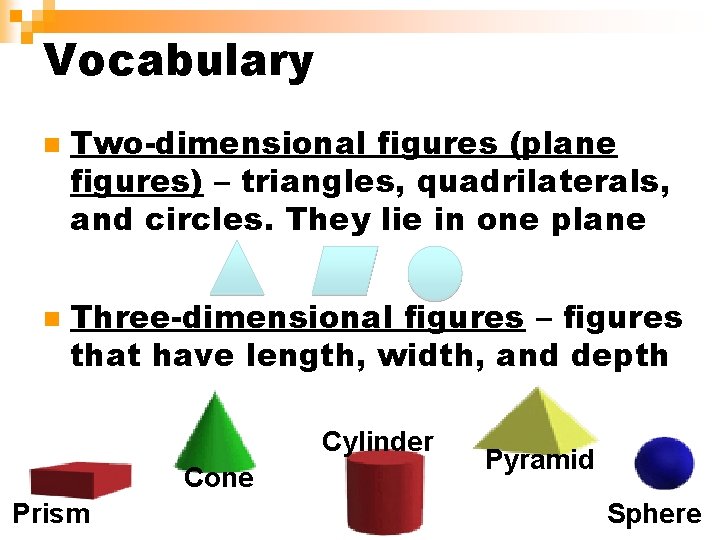
Vocabulary n n Two-dimensional figures (plane figures) – triangles, quadrilaterals, and circles. They lie in one plane Three-dimensional figures – figures that have length, width, and depth Cylinder Cone Prism Pyramid Sphere
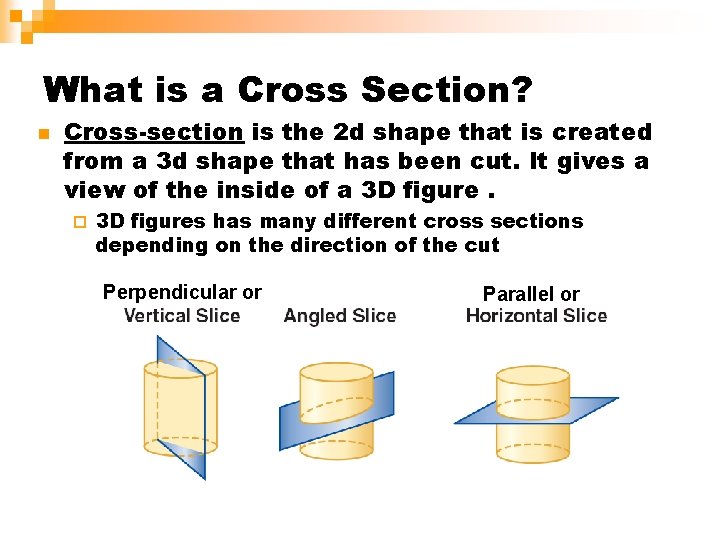
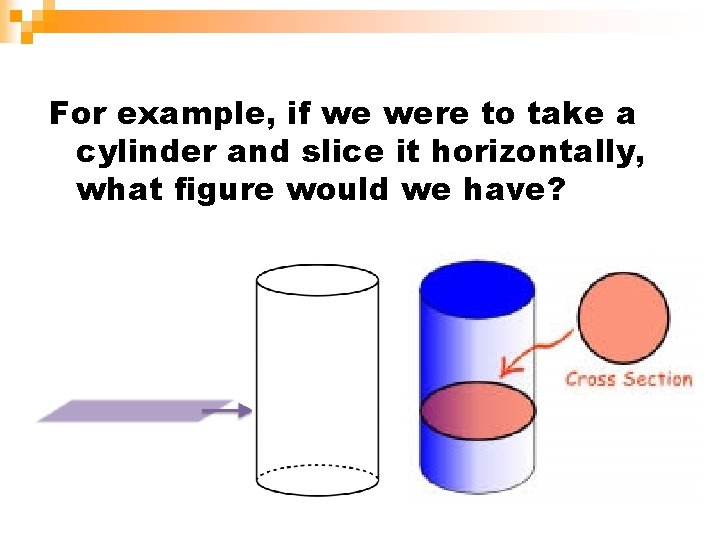
What is a Cross Section? n Cross-section is the 2 d shape that is created from a 3 d shape that has been cut. It gives a view of the inside of a 3 D figure. ¨ 3 D figures has many different cross sections depending on the direction of the cut Perpendicular or Parallel or
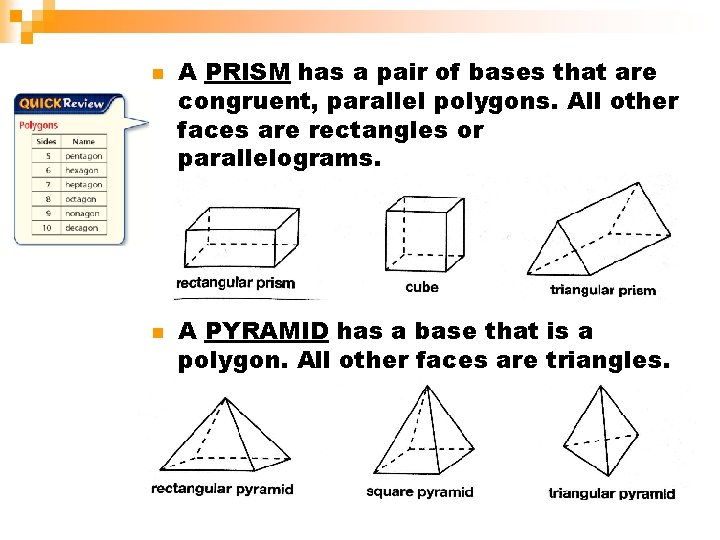
n n A PRISM has a pair of bases that are congruent, parallel polygons. All other faces are rectangles or parallelograms. A PYRAMID has a base that is a polygon. All other faces are triangles.
For example, if we were to take a cylinder and slice it horizontally, what figure would we have?
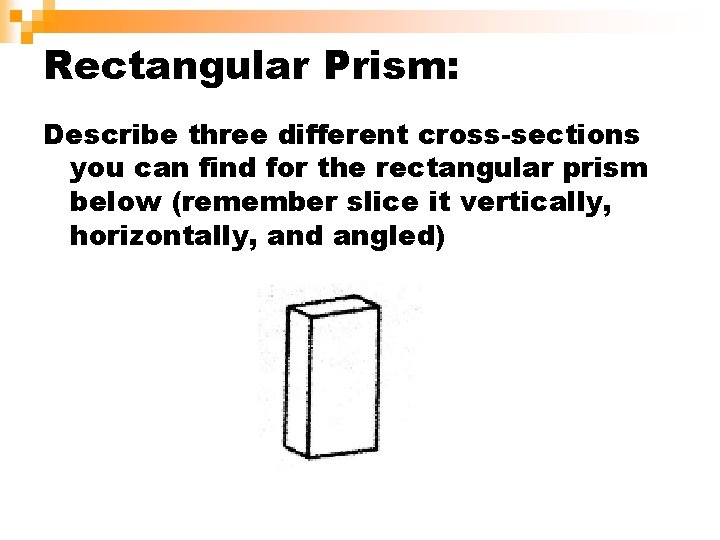
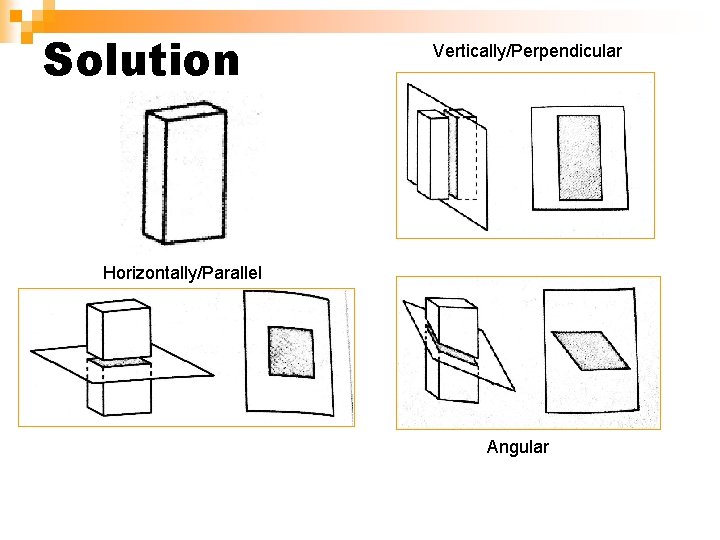
Rectangular Prism: Describe three different cross-sections you can find for the rectangular prism below (remember slice it vertically, horizontally, and angled)
Solution Vertically/Perpendicular Horizontally/Parallel Angular
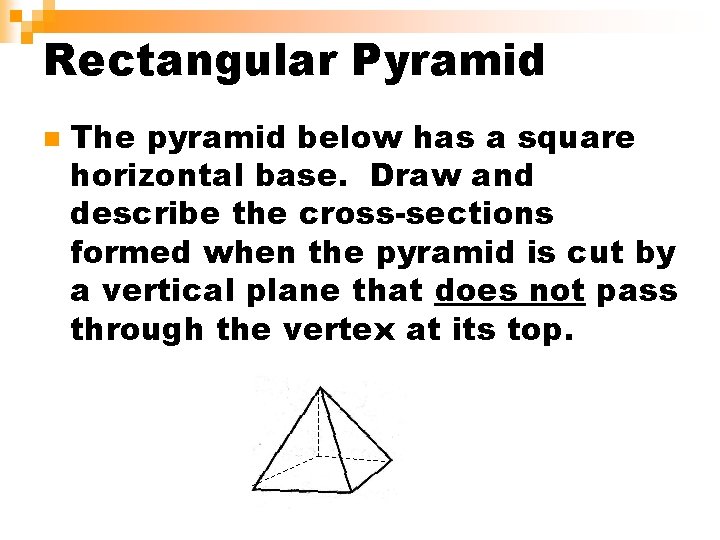
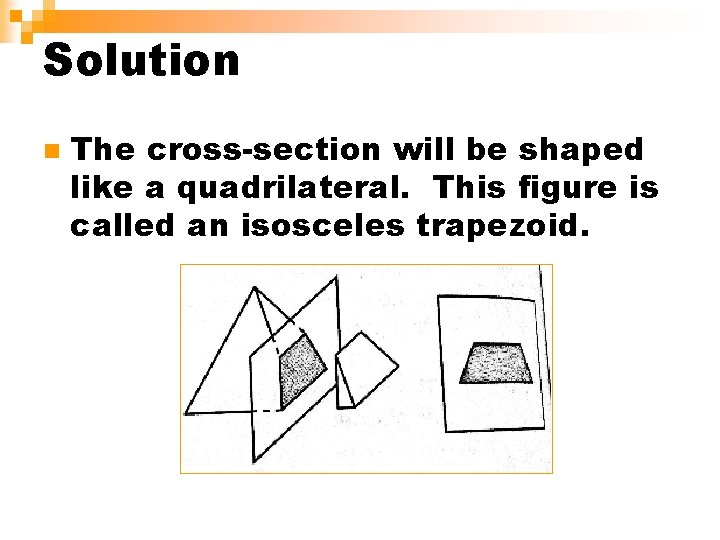
Rectangular Pyramid n The pyramid below has a square horizontal base. Draw and describe the cross-sections formed when the pyramid is cut by a vertical plane that does not pass through the vertex at its top.
Solution n The cross-section will be shaped like a quadrilateral. This figure is called an isosceles trapezoid.
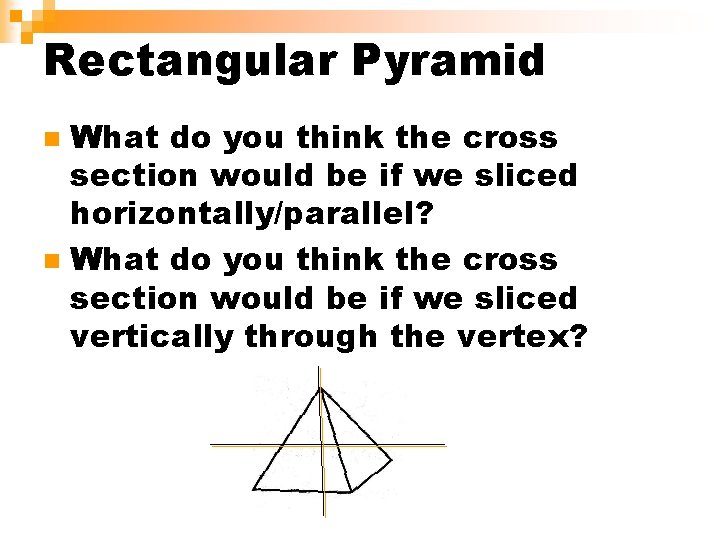
Rectangular Pyramid What do you think the cross section would be if we sliced horizontally/parallel? n What do you think the cross section would be if we sliced vertically through the vertex? n
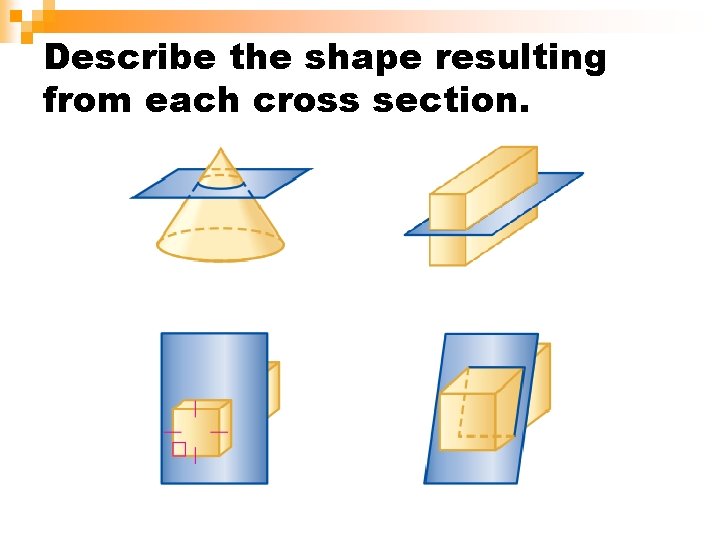
Describe the shape resulting from each cross section.