
Cross Elasticity of Demand XED Cross Elasticity of



- Slides: 8
Cross Elasticity of Demand (XED)
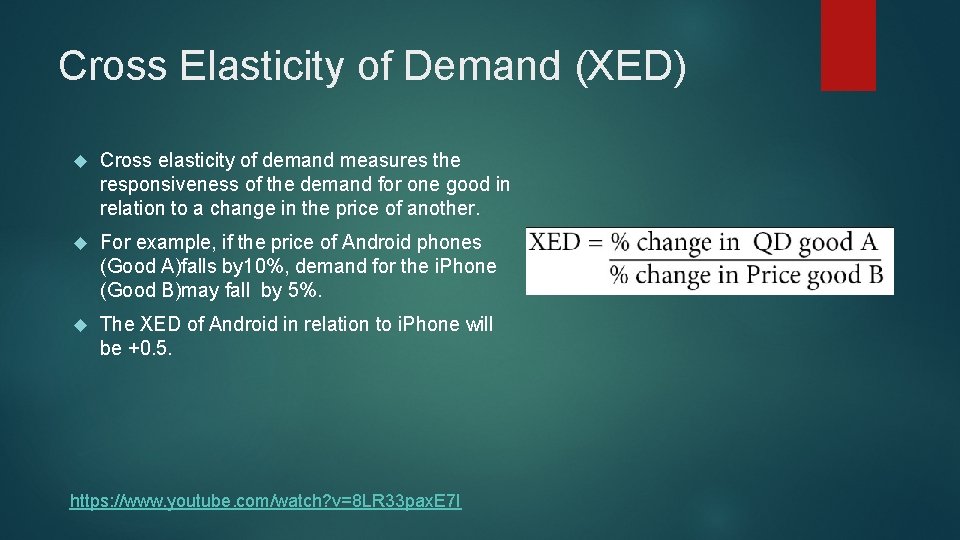
Cross Elasticity of Demand (XED) Cross elasticity of demand measures the responsiveness of the demand for one good in relation to a change in the price of another. For example, if the price of Android phones (Good A)falls by 10%, demand for the i. Phone (Good B)may fall by 5%. The XED of Android in relation to i. Phone will be +0. 5. https: //www. youtube. com/watch? v=8 LR 33 pax. E 7 I
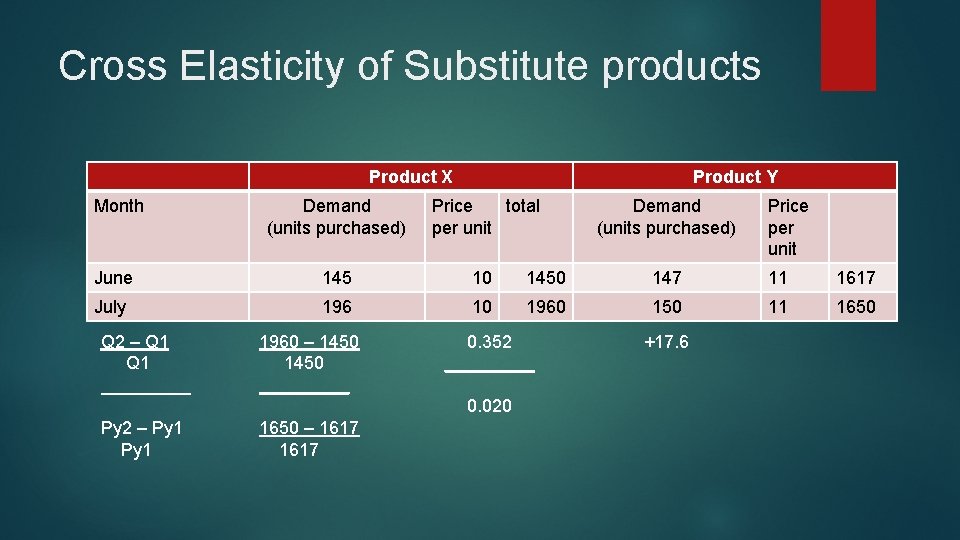
Cross Elasticity of Substitute products Product X Month Product Y Demand (units purchased) Price total per unit Demand (units purchased) June 145 10 1450 147 11 1617 July 196 10 1960 150 11 1650 Q 2 – Q 1 _____ 1960 – 1450 _____ 0. 352 _____ 0. 020 Py 2 – Py 1 1650 – 1617 +17. 6 Price per unit
Close Substitute Goods If two goods are close substitutes, there will be a high cross-elasticity of demand. Example, if the price of Sainsbury’s flour increases 10%, demand for Robin Hood flour may increase 20%. To consumers, there is little difference between the two goods. Therefore, the cross elasticity of demand is +2. 0
Weak Substitute Goods If goods are weak substitutes, there will be a low cross elasticity of demand. Example, if the price of The Chronicle increases 10%, the demand for the Guyana Times may only increase 1%. Therefore, the cross elasticity of demand is 0. 1. These two newspapers are weak substitutes. If the price of margarine increases 10%, demand for butter may rise 2%.
Perfect Substitutes Two goods are perfect substitutes if the utility consumers get from one good is the same as another. For example a using Buckleys or Red star rubs. The satisfaction from using Buckleys Rub is very similar to using Red Star as produced by a different company. A 4 paper from Office World gives same utility as A 4 paper from WHSmiths. Therefore, in theory, if one good was more expensive, there would be no demand as people would buy the cheaper alternative.
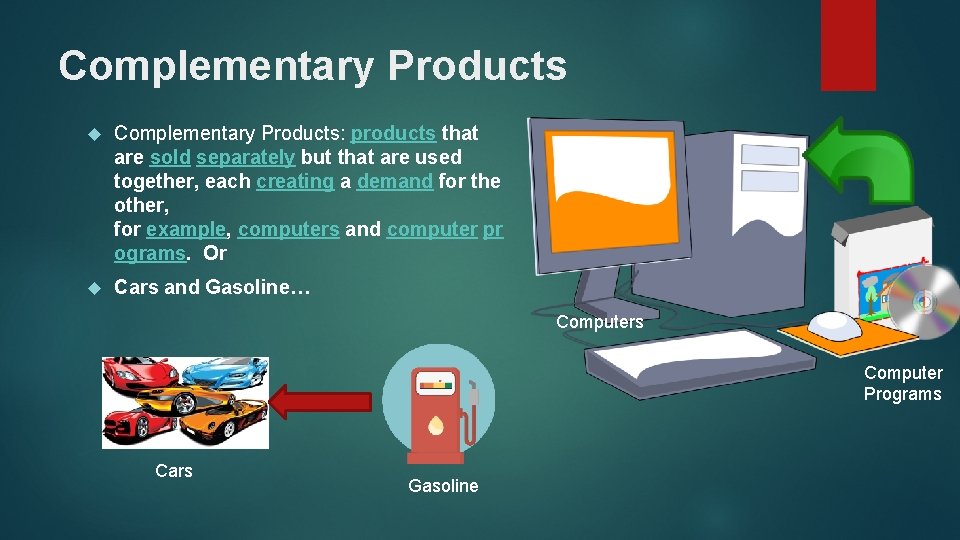
Complementary Products Complementary Products: products that are sold separately but that are used together, each creating a demand for the other, for example, computers and computer pr ograms. Or Cars and Gasoline… Computers Computer Programs Cars Gasoline
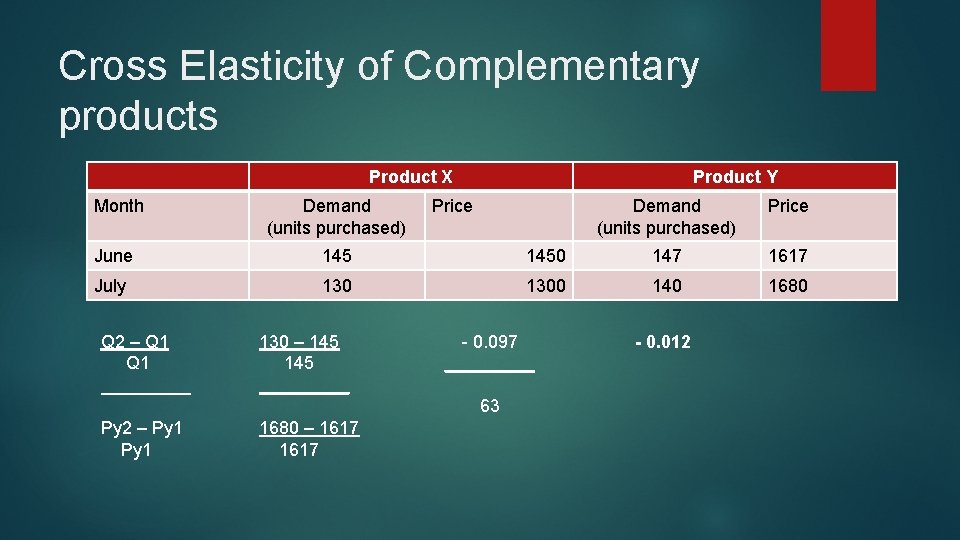
Cross Elasticity of Complementary products Product X Month Demand (units purchased) Product Y Price Demand (units purchased) Price June 1450 147 1617 July 1300 140 1680 Q 2 – Q 1 _____ 130 – 145 _____ - 0. 097 _____ 63 Py 2 – Py 1 1680 – 1617 - 0. 012