
Crop Science in Food Security Brian Diers Outline
Crop Science in Food Security Brian Diers

Outline • Role of Crop Science in food security • Crop Sciences Department research on increasing crop production • USAID soybean project in Africa

Global Crop Production Needs to Double by 2050 • Yield increases of 2. 4% / year needed to meet demand without putting more land in production Current 1. 6% 1. 0% 0. 9% 1. 3% Ray DK, Mueller ND, West PC, Foley JA (2013) Yield Trends Are Insufficient to Double Global Crop Production by 2050. PLo. S ONE 8(6): e 66428. doi: 10. 1371/journal. pone. 0066428 http: //www. plosone. org/article/info: doi/10. 1371/journal. pone. 0066428

Ray DK, Mueller ND, West PC, Foley JA (2013) Yield Trends Are Insufficient to Double Global Crop Production by 2050. PLo. S ONE 8(6): e 66428. doi: 10. 1371/journal. pone. 0066428 http: //www. plosone. org/article/info: doi/10. 1371/journal. pone. 0066428

US yield increases are approximately 1% / Year

Crop Sciences Department is Focused on the Crop Production Challenge • Diverse portfolio of research – Breeding/genetics – Molecular biology/genomics – Agronomy – Plant protection
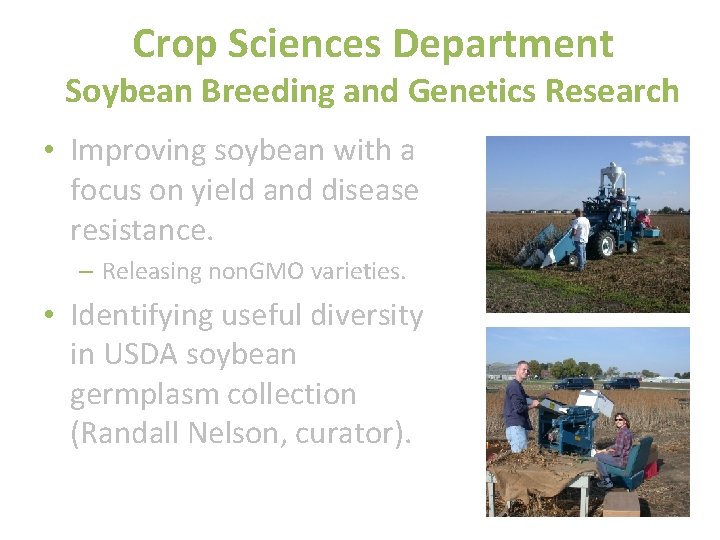
Crop Sciences Department Soybean Breeding and Genetics Research • Improving soybean with a focus on yield and disease resistance. – Releasing non. GMO varieties. • Identifying useful diversity in USDA soybean germplasm collection (Randall Nelson, curator).
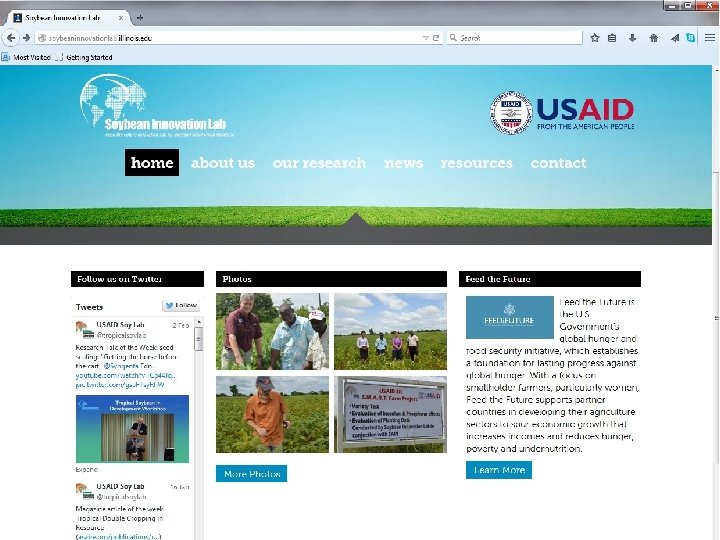
Soybean Innovation Lab Breeding Research in Africa
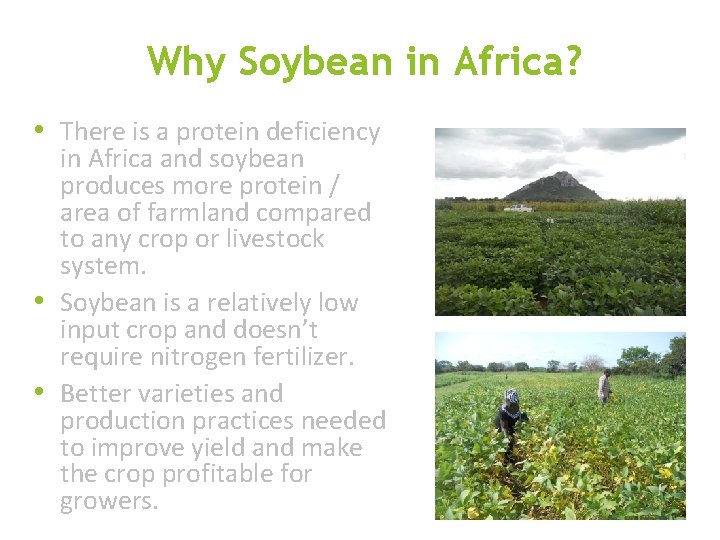
Why Soybean in Africa? • There is a protein deficiency in Africa and soybean produces more protein / area of farmland compared to any crop or livestock system. • Soybean is a relatively low input crop and doesn’t require nitrogen fertilizer. • Better varieties and production practices needed to improve yield and make the crop profitable for growers.
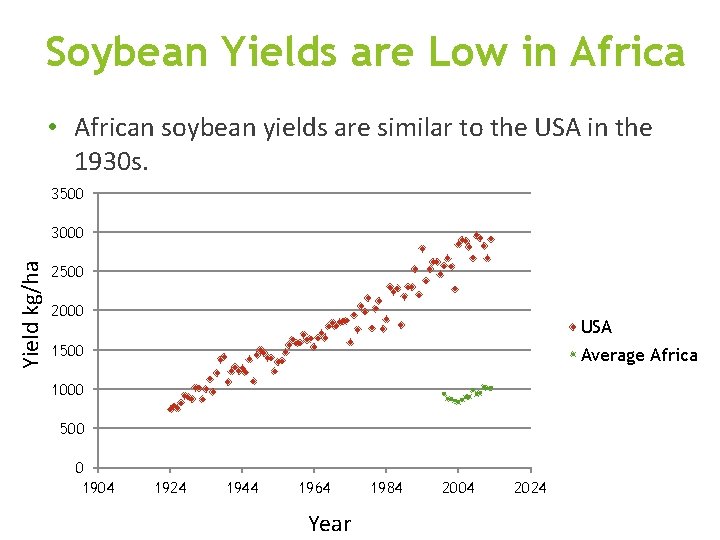
Soybean Yields are Low in Africa • African soybean yields are similar to the USA in the 1930 s. 3500 Yield kg/ha 3000 2500 2000 USA 1500 Average Africa 1000 500 0 1904 1924 1944 1964 Year 1984 2004 2024
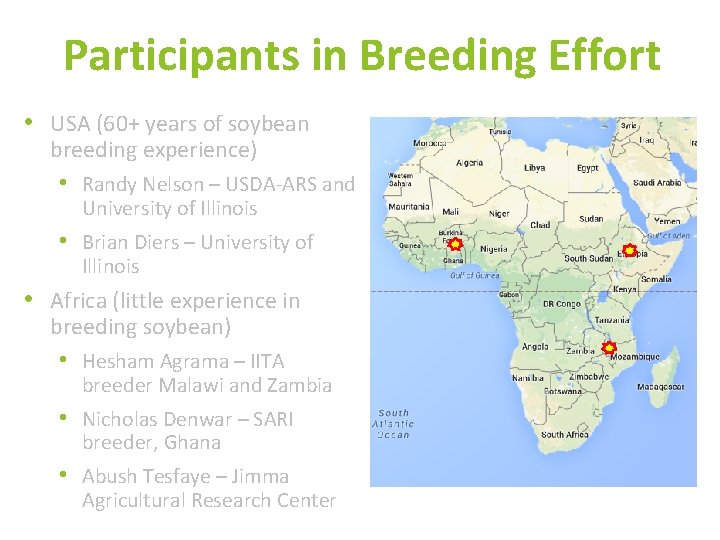
Participants in Breeding Effort • USA (60+ years of soybean breeding experience) • Randy Nelson – USDA-ARS and University of Illinois • Brian Diers – University of Illinois • Africa (little experience in breeding soybean) • Hesham Agrama – IITA breeder Malawi and Zambia • Nicholas Denwar – SARI breeder, Ghana • Abush Tesfaye – Jimma Agricultural Research Center
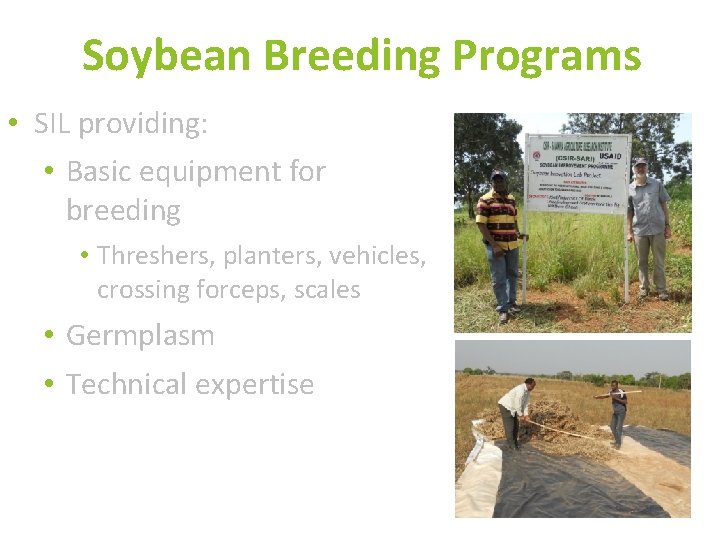
Soybean Breeding Programs • SIL providing: • Basic equipment for breeding • Threshers, planters, vehicles, crossing forceps, scales • Germplasm • Technical expertise
Conclusions • Crop Science has a critical role in food security • Crop yields are increasing, but not fast enough to meet growing demands • Crop Sciences Department research portfolio is focused on improving sustainable crop production • The Soybean Innovation Lab is working in increase soybean production in Africa
Need for Food Production Increase • Maize (corn), rice, wheat, and soybean produce nearly 2/3 of global agricultural calories. • We need increase of 2. 4% per year (noncompounding) for these crops globally. • Current global rates are 1. 6% (maize), 1. 0% (rice), 0. 9% (wheat) and 1. 3% (soybean). Ray DK, Mueller ND, West PC, Foley JA (2013) Yield Trends Are Insufficient to Double Global Crop Production by 2050. PLo. S ONE 8(6): e 66428. doi: 10. 1371/journal. pone. 0066428 http: //www. plosone. org/article/info: doi/10. 1371/journal. pone. 0066428
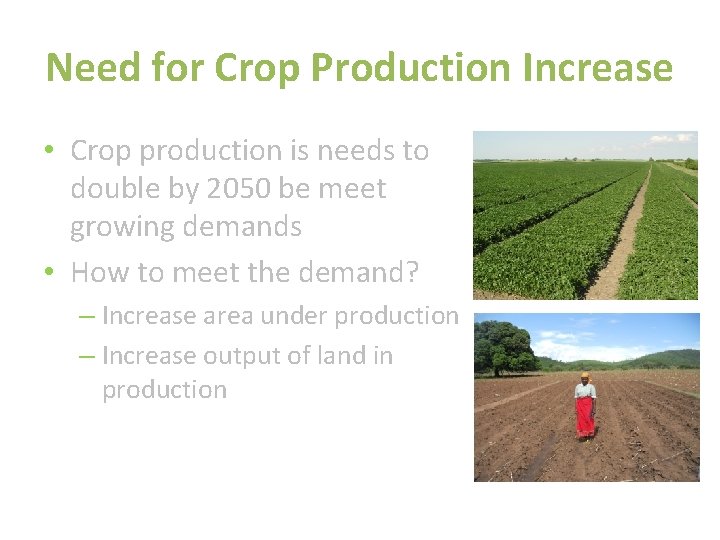
Need for Crop Production Increase • Crop production is needs to double by 2050 be meet growing demands • How to meet the demand? – Increase area under production – Increase output of land in production
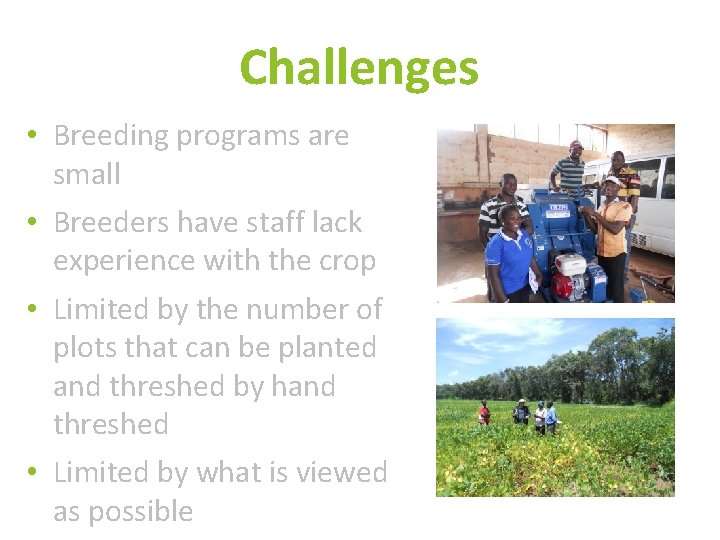
Challenges • Breeding programs are small • Breeders have staff lack experience with the crop • Limited by the number of plots that can be planted and threshed by hand threshed • Limited by what is viewed as possible
- Slides: 16