
Critical Thinking Processes Definition of key terms Critical
- Slides: 15
Critical Thinking Processes Definition of key terms
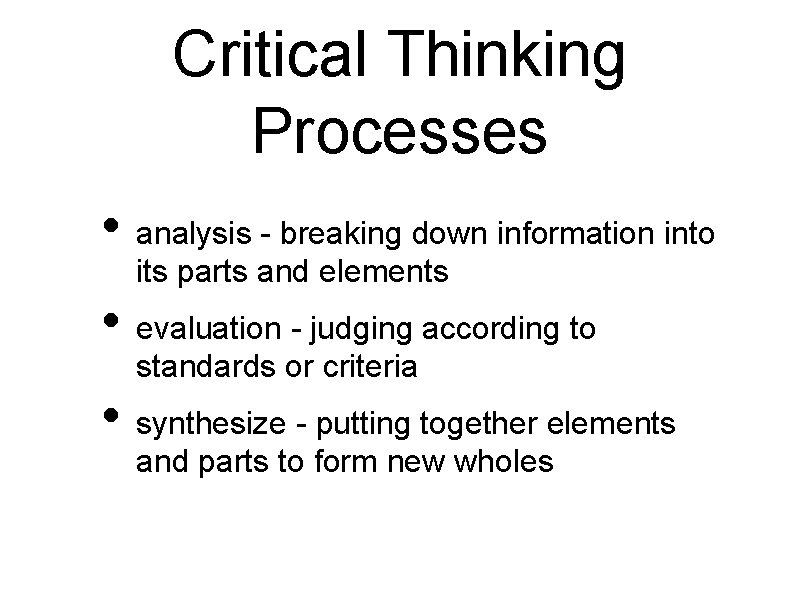
Critical Thinking Processes • analysis - breaking down information into its parts and elements • evaluation - judging according to standards or criteria • synthesize - putting together elements and parts to form new wholes
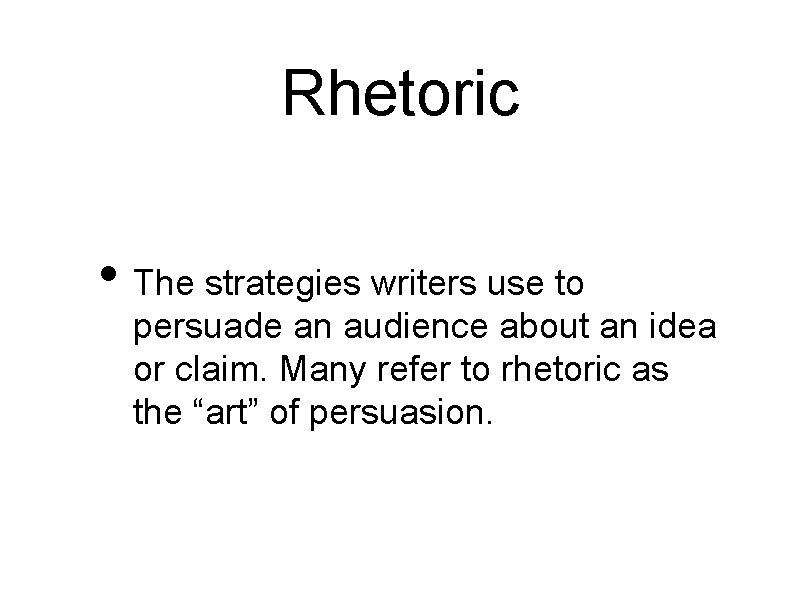
Rhetoric • The strategies writers use to persuade an audience about an idea or claim. Many refer to rhetoric as the “art” of persuasion.
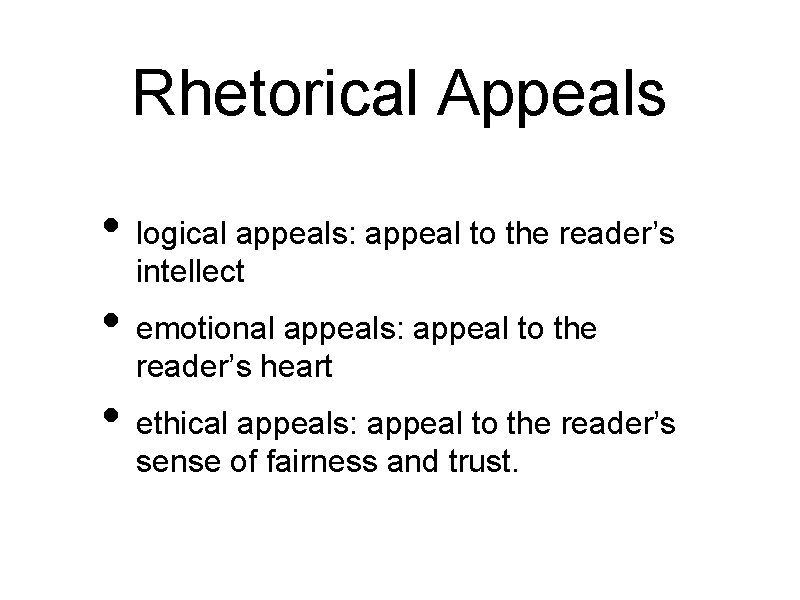
Rhetorical Appeals • logical appeals: appeal to the reader’s intellect • emotional appeals: appeal to the reader’s heart • ethical appeals: appeal to the reader’s sense of fairness and trust.
Claim • a concise statement or idea and the reasons to support it.
Generalization • a broad, general point, viewpoint, or conclusion
Types of Evidence • facts • statistics • first hand observations • expert testimony • examples, details, illustrations, opinions
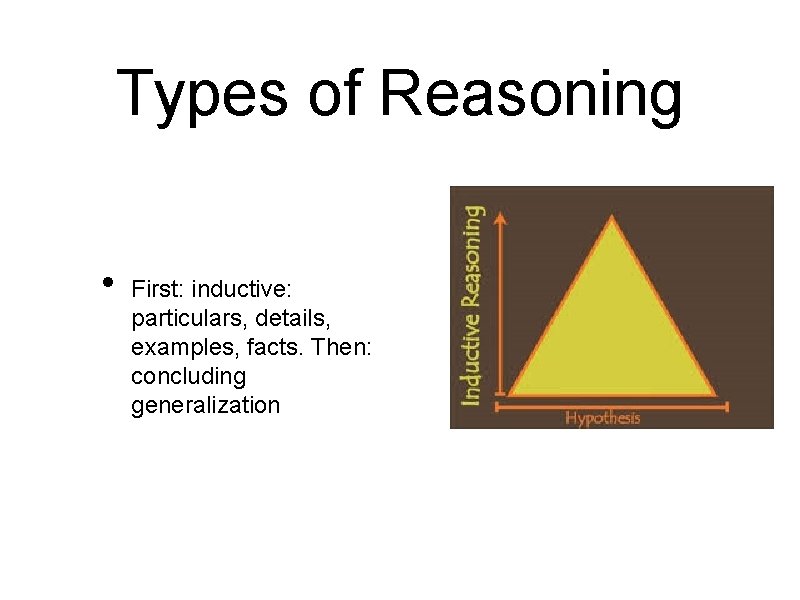
Types of Reasoning • First: inductive: particulars, details, examples, facts. Then: concluding generalization
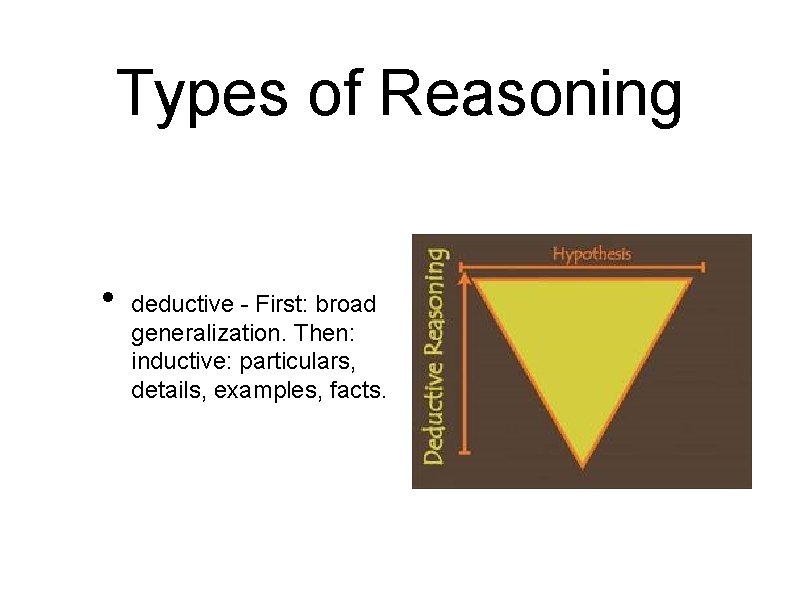
Types of Reasoning • deductive - First: broad generalization. Then: inductive: particulars, details, examples, facts.
Logical Reasoning Checklist • • • Have you developed your reasoning on a solid foundation? Are your initial assumptions sound? Do you need to identify, explain, or justify them? Is your thesis stated clearly? Are terms explained and defined? Have you presented your reasons for thinking in that your thesis is sound? Have you arranged them in a sequence that makes sense to your audience?
Logical Reasoning Checklist • • • Have you used evidence that your audience will respect? Have your favored objective, research based evidence rather than personal experiences or beliefs that others may not share? Have you enhanced your own credibility by acknowledging other points of view? Have you adjusted your tone and style so that you come across as reasonable and fair-minded? Have you avoided arrogant claims?
Critical Thinkers Analyze Purpose • • • Persuade Entertain Inform
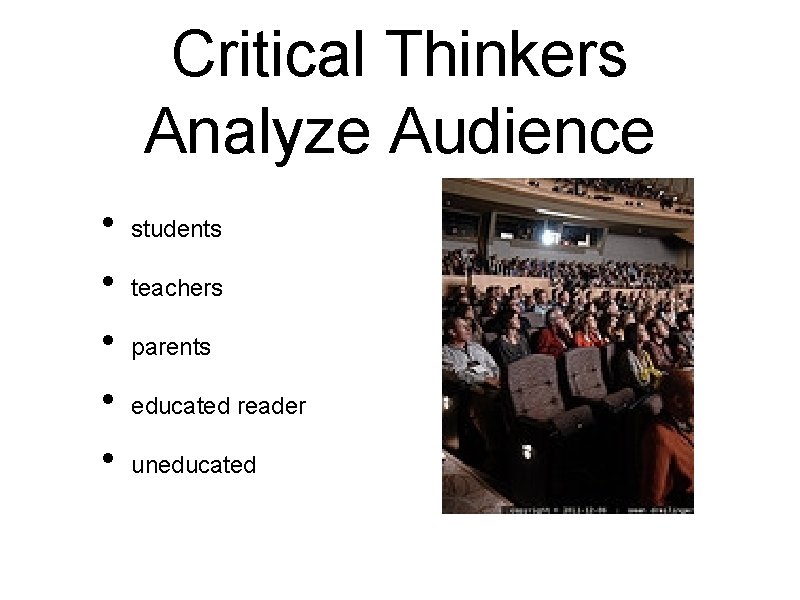
Critical Thinkers Analyze Audience • • • students teachers parents educated reader uneducated
Critical Thinkers Analyze Style and Tone • • Informal Formal Humorous Sarcastic
Source • Kennedy, X. J. , Dorothy M. Kennedy, and Marcia F. Muth. The Bedford Guide for th College Writers. 9 edition. Boston: Bedford/St. Martins, 2011. Print.