
Critical Skills in Conflictual Communication Course Objectives Listen
Critical Skills in Conflictual Communication
Course Objectives Ø Listen non-defensively in high pressure conflict situations. Ø Speak assertively and define boundaries in conflict. Ø Describe barriers to communication in conflict and identify qualities of effective communication in conflict situations. Ø Differentiate constructive/destructive communication patterns in conflict situations.
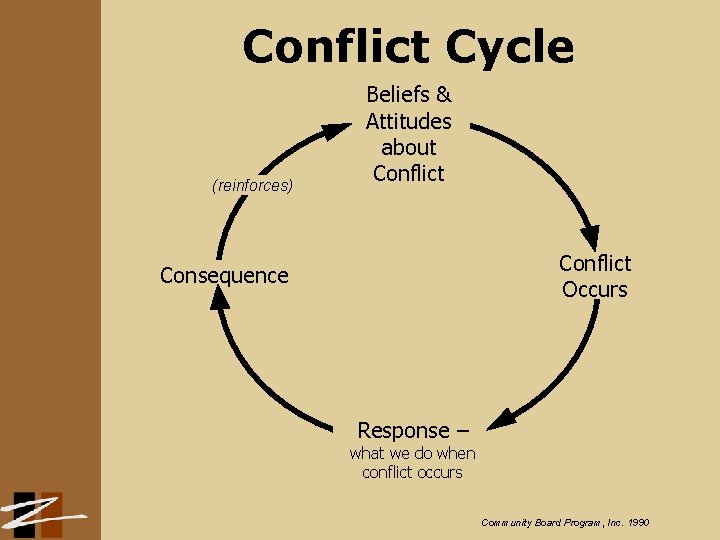
Conflict Cycle (reinforces) Beliefs & Attitudes about Conflict Occurs Consequence Response – what we do when conflict occurs Community Board Program, Inc. 1990

Conflict is… an expressed struggle between at least two interdependent parties who perceive … Ø Incompatible goals. Ø Different processes / routes to a goal. Ø Interference from another party in meeting their goals. Ø Scarce rewards/ resources.
Win - Lose Ø you vs. me Ø victory or defeat Ø personalized Ø narrow viewpoint Ø poor listening Ø judgmental Ø independent of each other Ø closed-minded Ø positional Ø compliance
Win – Win Ø lots of options Ø explore interests Ø interdependent Ø relationship focused Ø process valued Ø de-personalized Ø mutual air time Ø active listening promoted
Common Problems in Conflict Management Researchers have identified several problems that typically arise in conflict situations. 1. Parties will simply avoid the conflict. This can be damaging, because it can lead to greater problems in the future. It is usually best that the individuals discuss their differences. Gouran, Dennis, W. E. Wiethoff, & J. A. Doelger. (1994). Mastering communication. 2 nd ed. Boston: Allyn and Bacon.
Common Problems con’t. 2. Individuals involved in conflict may blame the other individual. Often, individuals go beyond the specific behavior in question and blame the character of the person. When people use words such as, "He's such a slob, " they are engaging in blame the other behavior. 3. A final problem that is often encountered in conflict management is adopting a win-lose mentality. Focusing on each individual's goals/outcomes will help avoid using a win-lose strategy. Gouran, Dennis, W. E. Wiethoff, & J. A. Doelger. (1994). Mastering communication. 2 nd ed. Boston: Allyn and Bacon.
Win/ Win Conflict Resolution Ø Win/Win conflict resolution strengthens relationship and builds understanding. Ø Win/Win strategies of active listening and assertive expression help overcome the defensiveness inherent to problemsolving. Ø People explore underlying interests, rather than surface positions, ‘real’ problems are addressed, and effective solutions are generated.
Win/ Win Conflict Resolution Ø It tends to generate many possible options, rather than two opposing positions. Ø People feel like they have participated in the process of problem-solving, and are committed to the solutions.
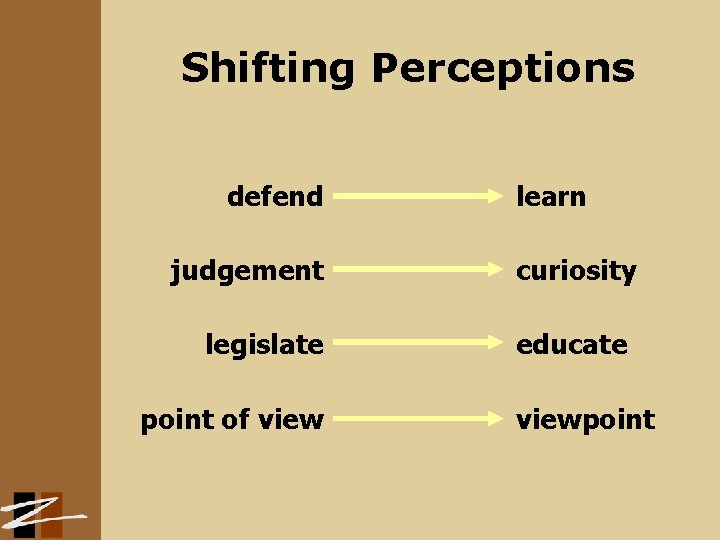
Shifting Perceptions defend judgement legislate point of view learn curiosity educate viewpoint
Supportive Climate Ø Description: presenting ideas or opinions. Ø Problem orientation: focusing attention on the task. Ø Spontaneity: communicating openly and honestly. Ø Empathy: understanding another person's thoughts. Ø Equality: asking for opinions. Ø Provisionalism: expressing a willingness to listen other the ideas of others.
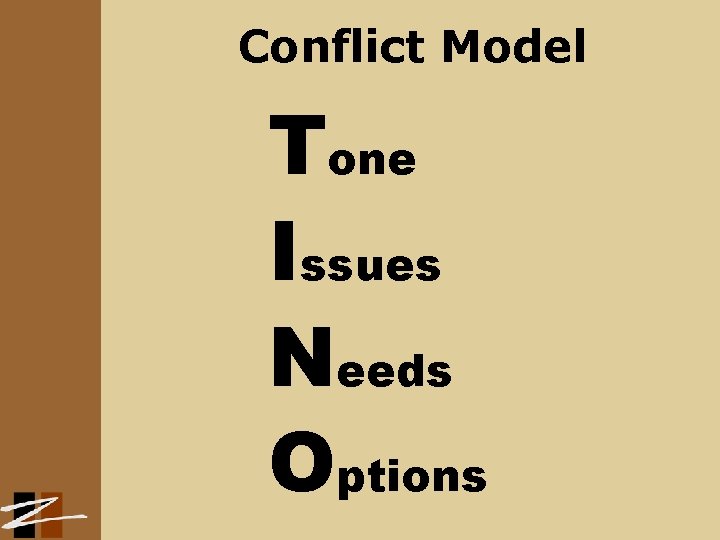
Conflict Model Tone Issues Needs Options
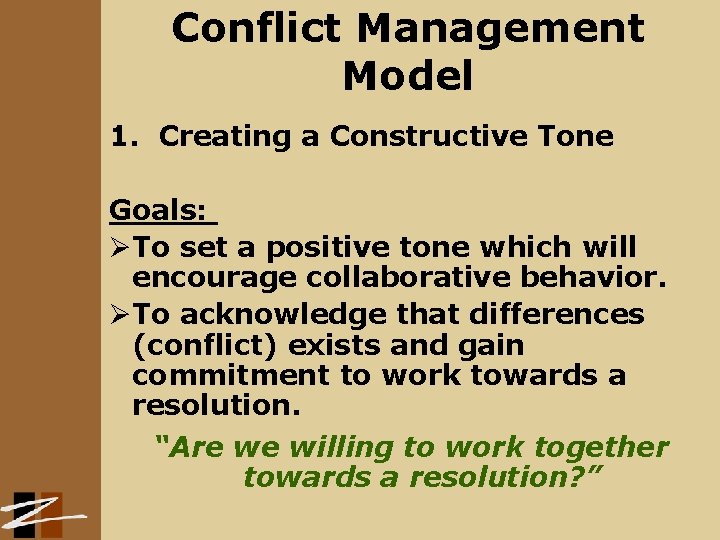
Conflict Management Model 1. Creating a Constructive Tone Goals: ØTo set a positive tone which will encourage collaborative behavior. ØTo acknowledge that differences (conflict) exists and gain commitment to work towards a resolution. “Are we willing to work together towards a resolution? ”
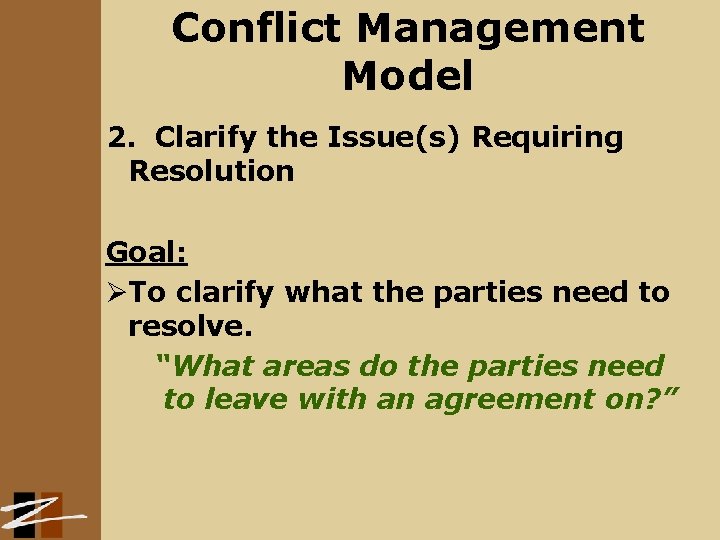
Conflict Management Model 2. Clarify the Issue(s) Requiring Resolution Goal: ØTo clarify what the parties need to resolve. “What areas do the parties need to leave with an agreement on? ”
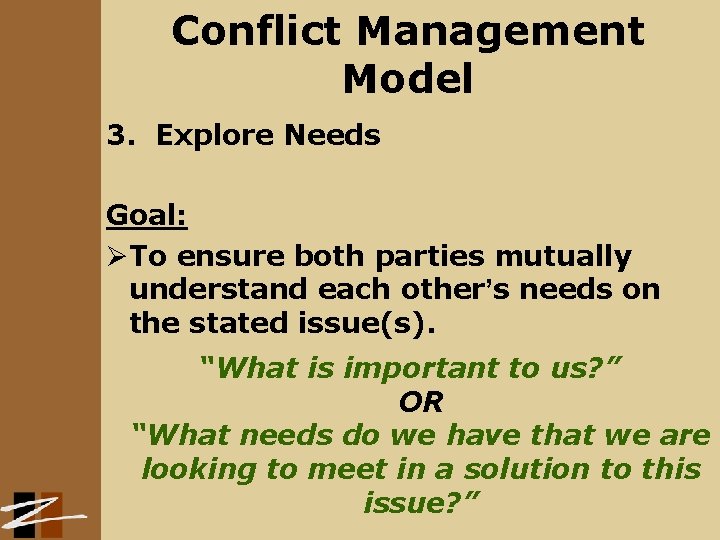
Conflict Management Model 3. Explore Needs Goal: ØTo ensure both parties mutually understand each other’s needs on the stated issue(s). “What is important to us? ” OR “What needs do we have that we are looking to meet in a solution to this issue? ”
Conflict Management Model 4. Problem-Solve Goal: ØTo find a solution which meets both parties’ needs to the greatest degree possible. “What option can we find that will meet our needs to the greatest degree possible? ”

Picture designed by the American Psychologist E. G. Boring Perception


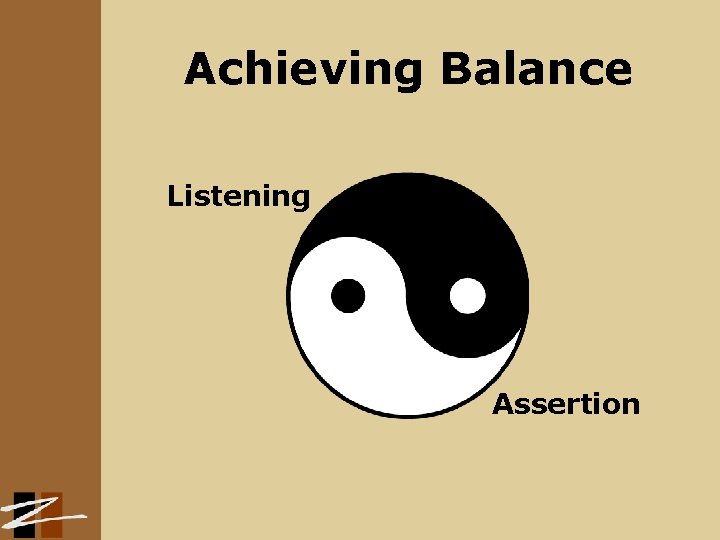
Achieving Balance Listening Assertion
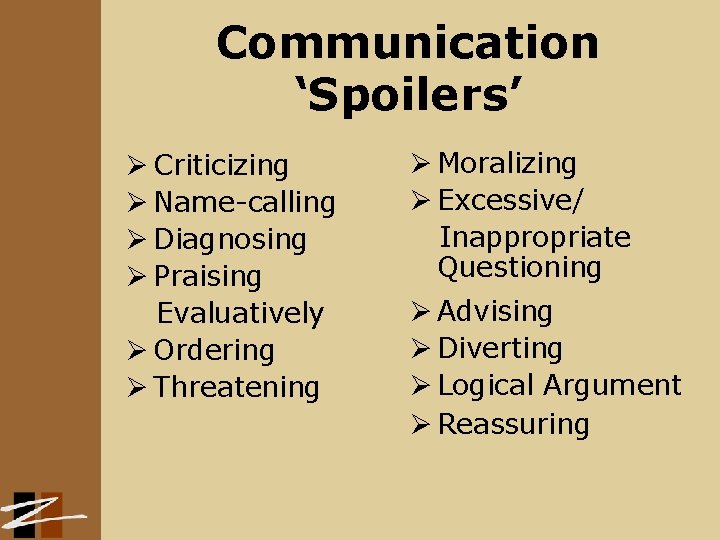
Communication ‘Spoilers’ Ø Criticizing Ø Name-calling Ø Diagnosing Ø Praising Evaluatively Ø Ordering Ø Threatening Ø Moralizing Ø Excessive/ Inappropriate Questioning Ø Advising Ø Diverting Ø Logical Argument Ø Reassuring
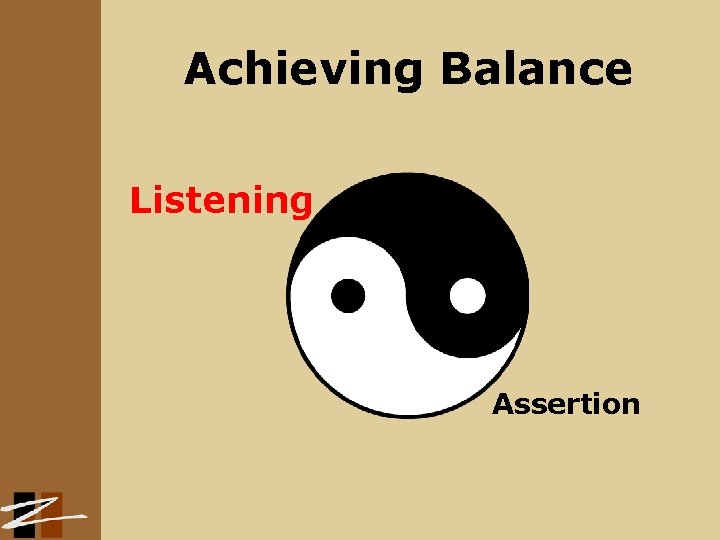
Achieving Balance Listening Assertion
Shift your internal stance from “I understand” to “Help me understand”…. everything else follows from that. - Source Unknown
Shift Judgement to Curiosity Instead of asking yourself. . . “How can they think that!? ” ? Ask yourself. . . “I wonder what information they have that I don’t? ”
“Nature has given man one tongue and two ears, that we may hear twice as much as we speak. ” - Epictetus, 108 A. D.
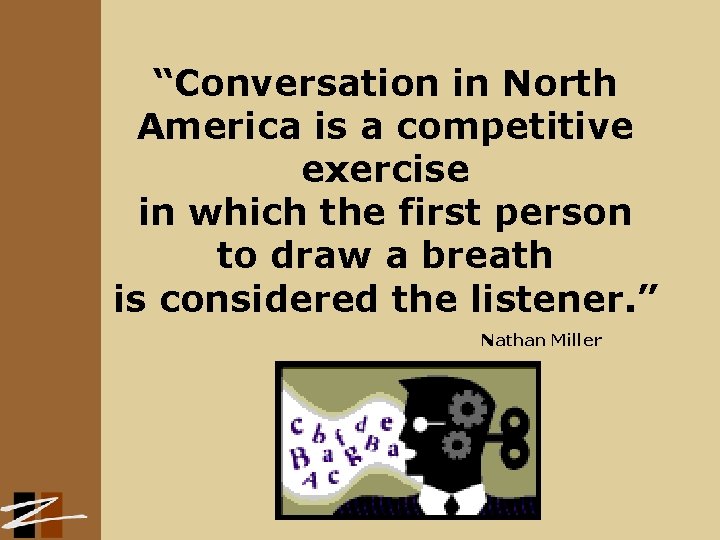
“Conversation in North America is a competitive exercise in which the first person to draw a breath is considered the listener. ” Nathan Miller
10 Commandments Stop talking Put the speaker at ease Show you want to listen Remove distractions Be patient Manage your anger Go easy on argument and criticism Empathize Paraphrase Ask questions
Active Listening doesn't mean sitting still with your mouth shut. It is an active process that requires us to participate – burn some calories! To fully understand another person we usually have to: Øprove our understanding; Øask questions; and Øgive feedback.
Active Listening Techniques Ø Encouraging Ø Paraphrasing Ø Empathizing Ø Open Questions Ø Reframing Ø Summarizing
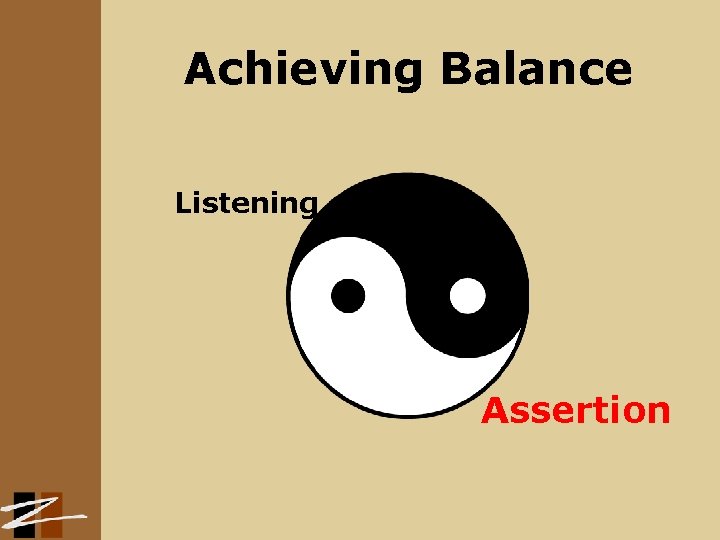
Achieving Balance Listening Assertion
Nonassertion is failing to stand up for oneself, or standing up for oneself in such an ineffectual manner that one's rights are easily violated.
Aggression is standing up for oneself in such a manner that the rights of the other person are violated in the process.
Assertion is standing up for oneself in such a way that one does not violate the basic rights of another person. It's a direct, honest, and appropriate expression of one's feelings and opinions.
Assertiveness Ø Positive and neutral intent. Ø Equalizing or balancing power. Ø Acknowledging what is important to them. Ø Expressing what is important to me. Ø Workable and fair solution Ø Honesty versus “Don’t mess with me”, or silence.
Assertive Expression 1. Your perspective of the situation (what you think or perceive). 2. Your feelings about the situation, its effect on you. 3. Your preference/ needs/ priorities regarding the situation.
“You” - Statements Definition: Blaming, judging, or attacking the other person. Ø “You” statements start with “You”, and “You” statements generally will trigger a defensive response.
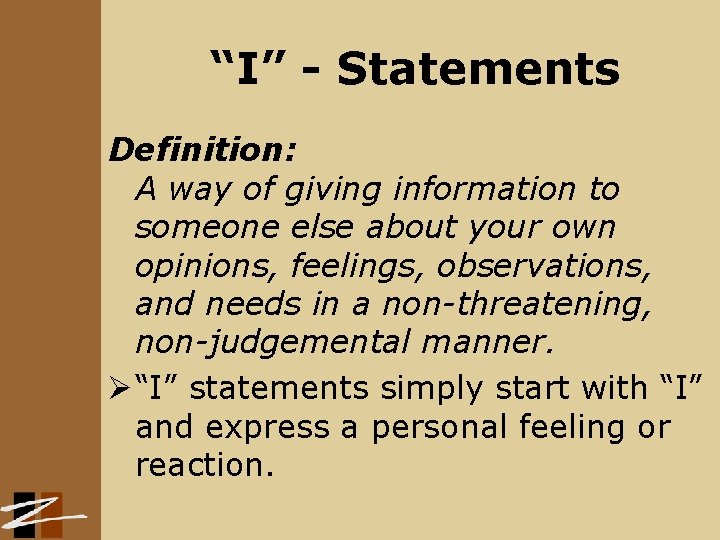
“I” - Statements Definition: A way of giving information to someone else about your own opinions, feelings, observations, and needs in a non-threatening, non-judgemental manner. Ø “I” statements simply start with “I” and express a personal feeling or reaction.
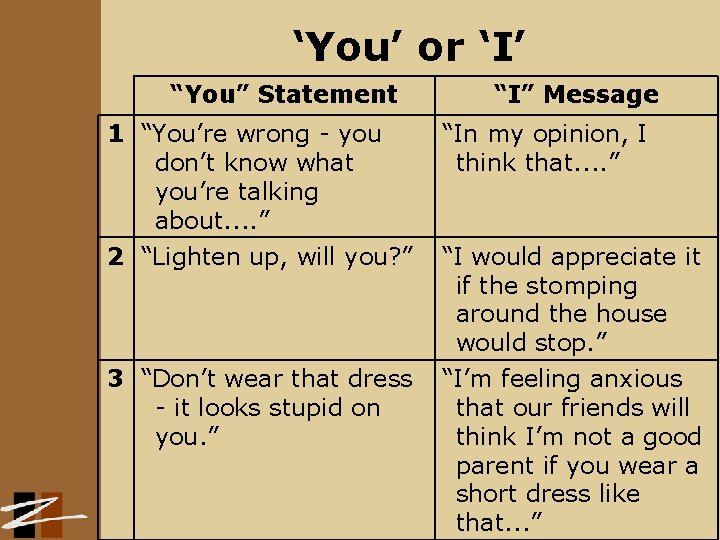
‘You’ or ‘I’ “You” Statement “I” Message 1 “You’re wrong - you don’t know what you’re talking about. . ” “In my opinion, I think that. . ” 2 “Lighten up, will you? ” “I would appreciate it if the stomping around the house would stop. ” “I’m feeling anxious that our friends will think I’m not a good parent if you wear a short dress like that. . . ” 3 “Don’t wear that dress - it looks stupid on you. ”
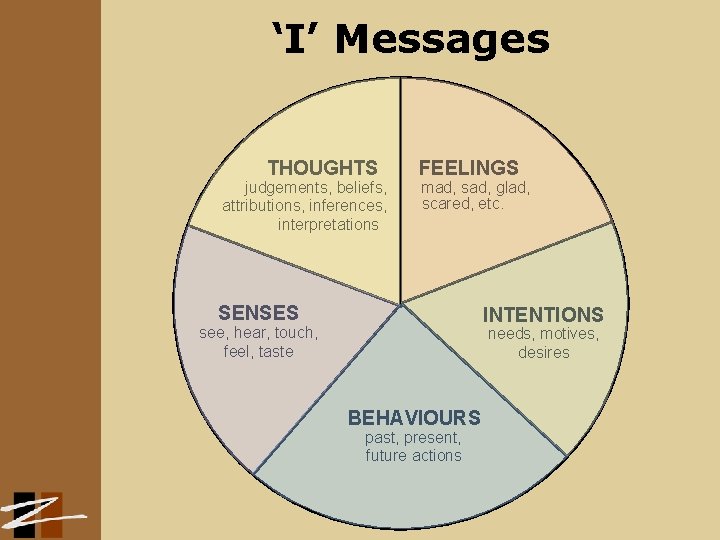
‘I’ Messages THOUGHTS judgements, beliefs, attributions, inferences, interpretations FEELINGS mad, sad, glad, scared, etc. SENSES INTENTIONS see, hear, touch, feel, taste needs, motives, desires BEHAVIOURS past, present, future actions
Responding Assertively
The Six ‘F’ Formula Ø Facts Ø Feelings Ø Fallout Ø Fair Requests Ø Follow-Up Ø Feedback
Describing Behaviour 1. Describe the behaviour accurately. 2. Specify the right behaviour. 3. Watch inflammatory language. 4. Watch use of generalizations. 5. Watch the use of adjectives and adverbs.
Request a Change in Behaviour 1. Be specific. 2. Be clear/direct. 3. Be positive.
Responding to an Angry Person 1. Manage your responses. 2. Seek to understand. 3. Demonstrate understanding. 4. Allow the other person the right to his or her own point of view. v Nonverbally attend. v Nod affirmatively, pay close attention, do not crowd the person. v React calmly, but demonstrate concern and interest. v Say only enough to show your acceptance of and your attention to the angry person.
Self-Awareness Ø What causes me the most difficulty in communicating is. . . Ø Things I know that I can do to assist me with this challenge are to: Ø Communication behaviours/skills which I need to… v. Stop v. Start v. Continue
HOLLOWAY ZAISER GROUP ‘Partners In Change’ Ø Ø Ø Ø Change Management Strategic Planning Workplace Assessments Addressing Workplace Conflict Skills Training Programs Coaching Individuals and/or Teams Keynote and Motivational Presentations www. hollowayzaiser. com 604 -531 -1859
- Slides: 50