
Critical Reading Strategies Moving from analysis to interpretation
- Slides: 10
Critical Reading Strategies Moving from analysis to interpretation Adapted from D. Rosenwasser and Jill Stephen, Writing Analytically (2006)
Notice and Focus
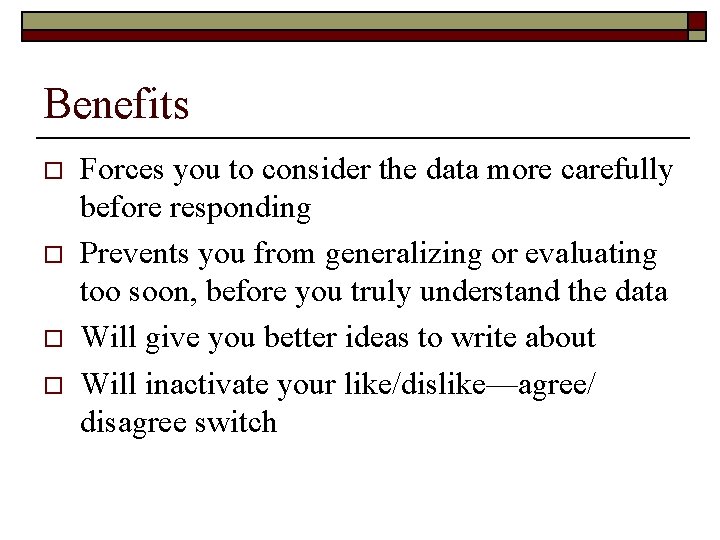
Benefits o o Forces you to consider the data more carefully before responding Prevents you from generalizing or evaluating too soon, before you truly understand the data Will give you better ideas to write about Will inactivate your like/dislike—agree/ disagree switch
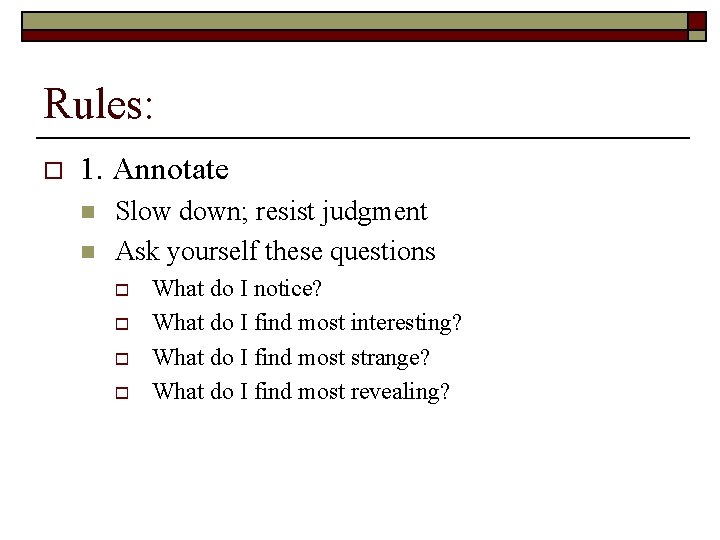
Rules: o 1. Annotate n n Slow down; resist judgment Ask yourself these questions o o What do I notice? What do I find most interesting? What do I find most strange? What do I find most revealing?
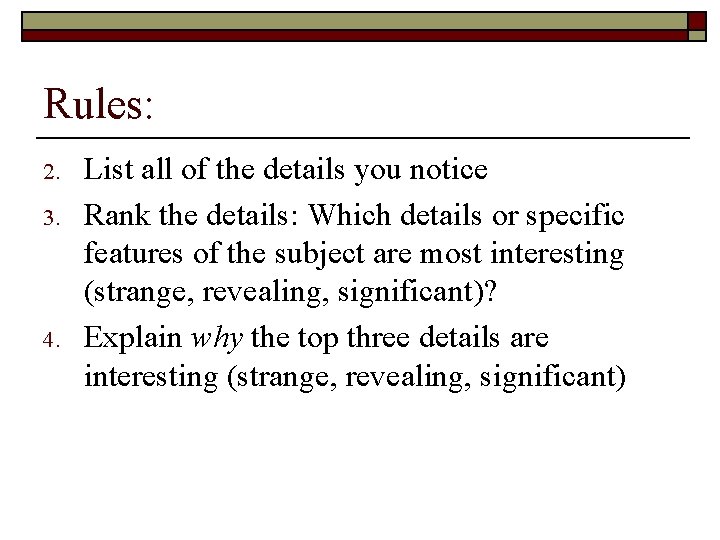
Rules: 2. 3. 4. List all of the details you notice Rank the details: Which details or specific features of the subject are most interesting (strange, revealing, significant)? Explain why the top three details are interesting (strange, revealing, significant)
Strands and Binaries
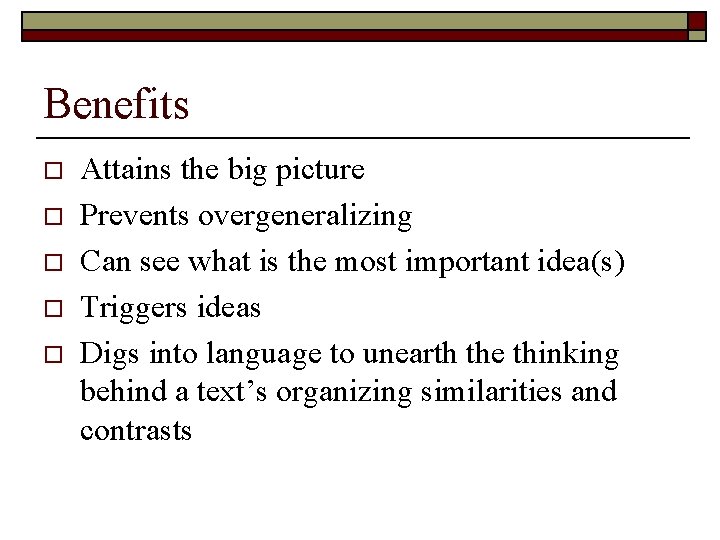
Benefits o o o Attains the big picture Prevents overgeneralizing Can see what is the most important idea(s) Triggers ideas Digs into language to unearth the thinking behind a text’s organizing similarities and contrasts
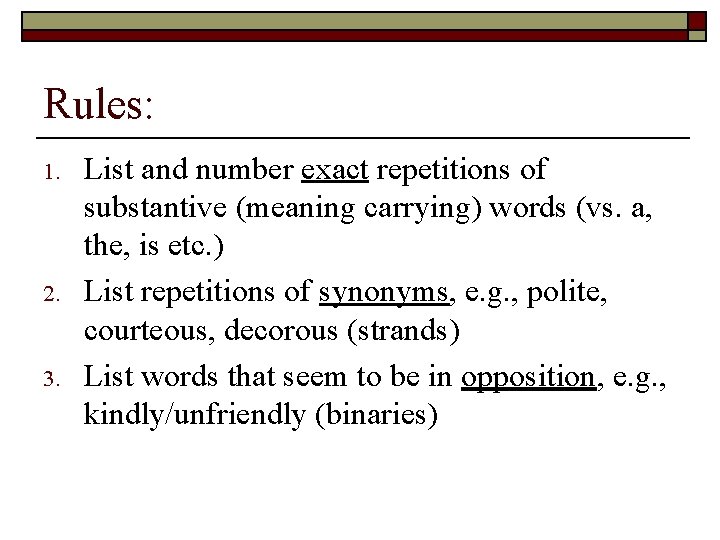
Rules: 1. 2. 3. List and number exact repetitions of substantive (meaning carrying) words (vs. a, the, is etc. ) List repetitions of synonyms, e. g. , polite, courteous, decorous (strands) List words that seem to be in opposition, e. g. , kindly/unfriendly (binaries)
Rules: 4. 5. Look for exceptions (anomalies) to the patterns you have discerned; they usually can be part of a strand or opposition. Choose one repetition, strand, or binary as most important, interesting, etc. and explain why.
Disclaimer o o Sometimes a struggle among points of view demonstrates that a number of binaries appear to be the primary organizing principle No one “right” answer exists