
Critical habitats for biodiversity in the Yellow Sea
Critical habitats for biodiversity in the Yellow Sea and their ecosystem services TOBAI, Sadayosi WWF Japan
3 topics l 1) Potential Priority Area Map – a guiding map for identifying critical habitats, for biodiversity l 2) Ecosystem services of critical habitats l 3) Management options for critical habitats
3 topics l 1) Potential Priority Area Map – a guiding map for identifying critical habitats l 2) Ecosystem services of critical habitats l 3) Management options for critical habitats
Introduction to YSEPP Yellow Sea Ecoregion Planning Programme (YSEPP) (2002 -2006) l Objective l – To logically prioritise conservation actions in Yellow Sea Ecoregion (YSE) based on scientific data l Implementing organisations – China: WWF – Japan: WWF – Korea: KORDI, KEI
Some pre-conditions for priority area analysis l Not all habitats are equally important – Areas that are critical for more than one species/community/criterion (overlaps) have higher priority; – Representation of large-scale habitat types is needed. l YSLME’s biodiversity objectives – Conservation of habitats of global significance – Conservation of species of global significance • (Final project document, “Success Criteria” 30 p)
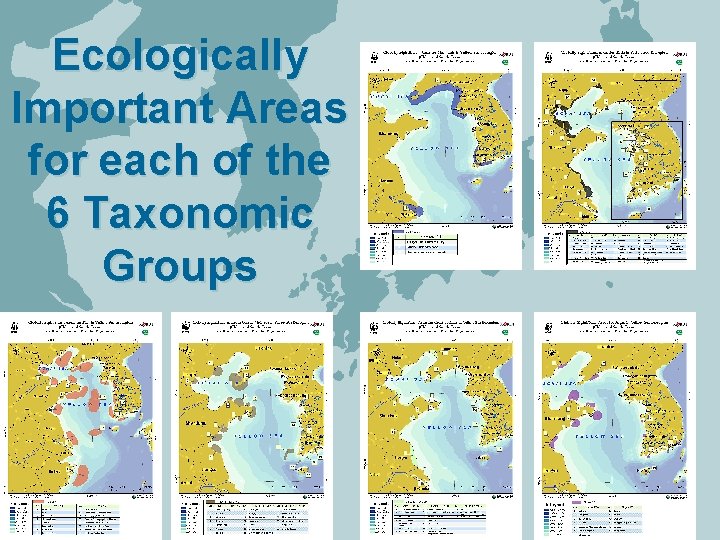
Ecologically Important Areas for each of the 6 Taxonomic Groups
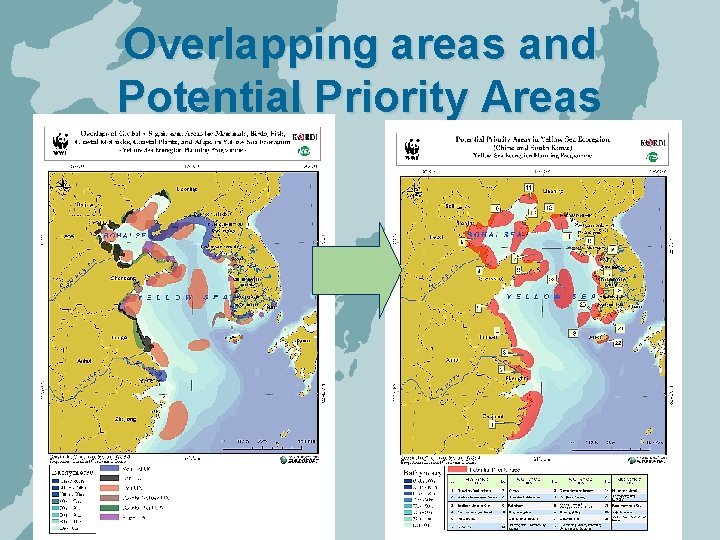
Overlapping areas and Potential Priority Areas
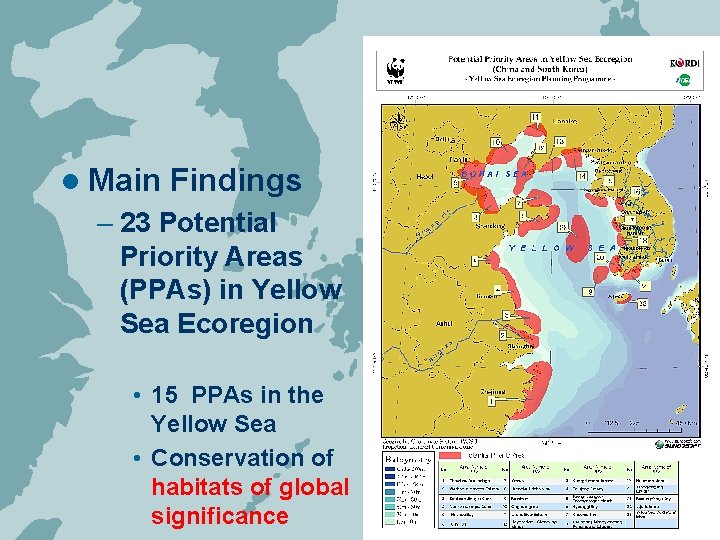
l Main Findings – 23 Potential Priority Areas (PPAs) in Yellow Sea Ecoregion • 15 PPAs in the Yellow Sea • Conservation of habitats of global significance
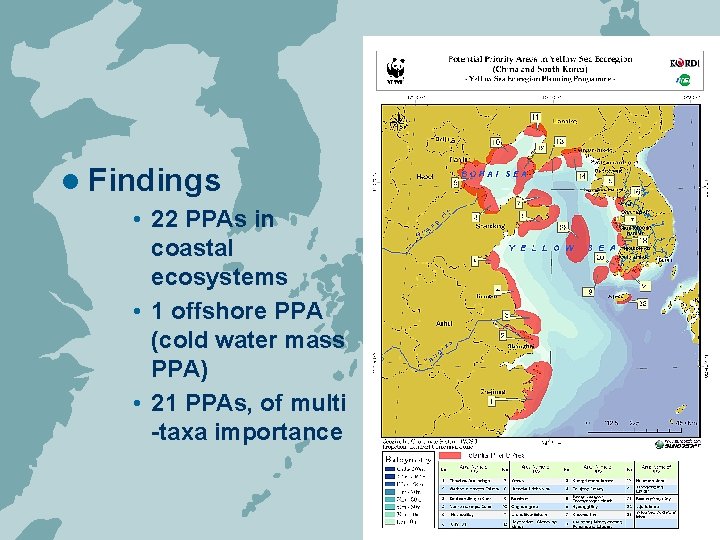
l Findings • 22 PPAs in coastal ecosystems • 1 offshore PPA (cold water mass PPA) • 21 PPAs, of multi -taxa importance
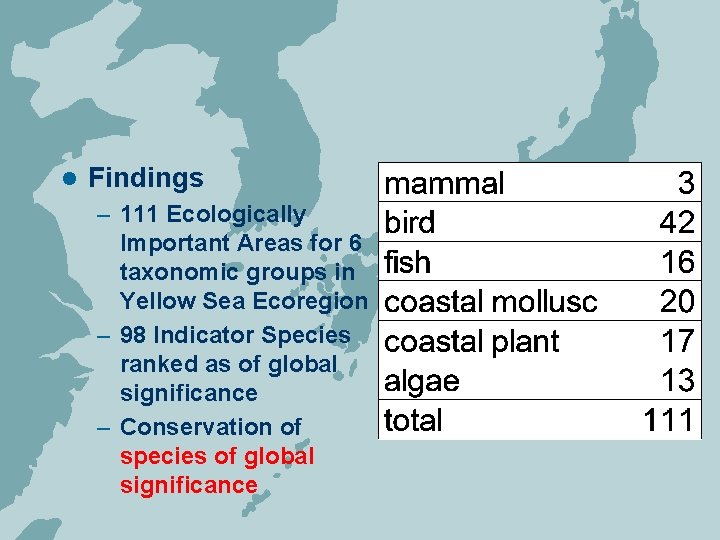
l Findings – 111 Ecologically Important Areas for 6 taxonomic groups in Yellow Sea Ecoregion – 98 Indicator Species ranked as of global significance – Conservation of species of global significance
l Analysis based on best available data and knowledge l Knowledge gaps exist on ecology of Indicator Species and need further surveys and research
3 topics l 1) Potential Priority Area Map – a guiding map of identifying critical habitats l 2) Ecosystem services of critical habitats l 3) Management options for critical habitats

Ecosystem Services l The benefits people obtain from ecosystems Source: Millennium Ecosystem Assessment
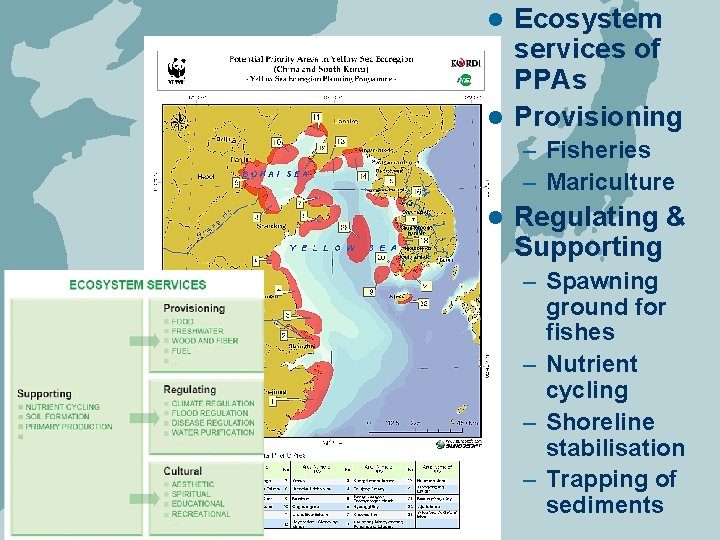
Ecosystem services of PPAs l Provisioning l – Fisheries – Mariculture l Regulating & Supporting – Spawning ground for fishes – Nutrient cycling – Shoreline stabilisation – Trapping of sediments
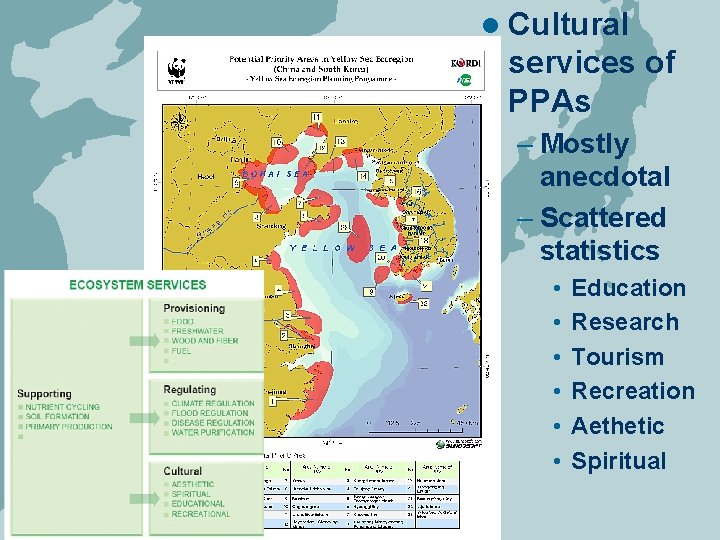
l Cultural , services of PPAs – Mostly anecdotal – Scattered statistics • • • Education Research Tourism Recreation Aethetic Spiritual
3 topics l 1) Potential Priority Area Map – a guiding map of identifying critical habitats l 2) Ecosystem services of critical habitats l 3) Management options for critical habitats
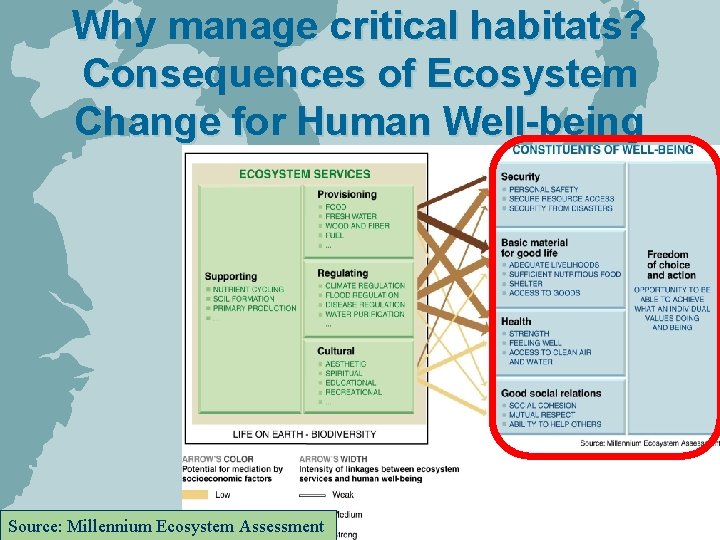
Why manage critical habitats? Consequences of Ecosystem Change for Human Well-being Source: Millennium Ecosystem Assessment
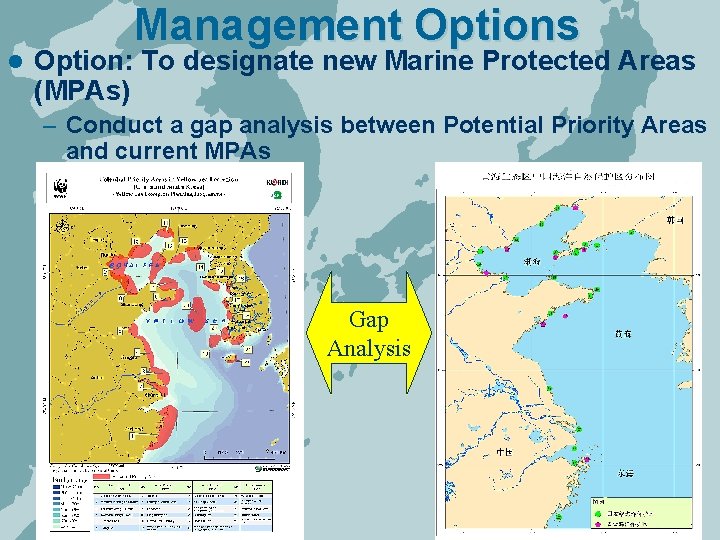
l Management Options Option: To designate new Marine Protected Areas (MPAs) – Conduct a gap analysis between Potential Priority Areas and current MPAs Gap Analysis
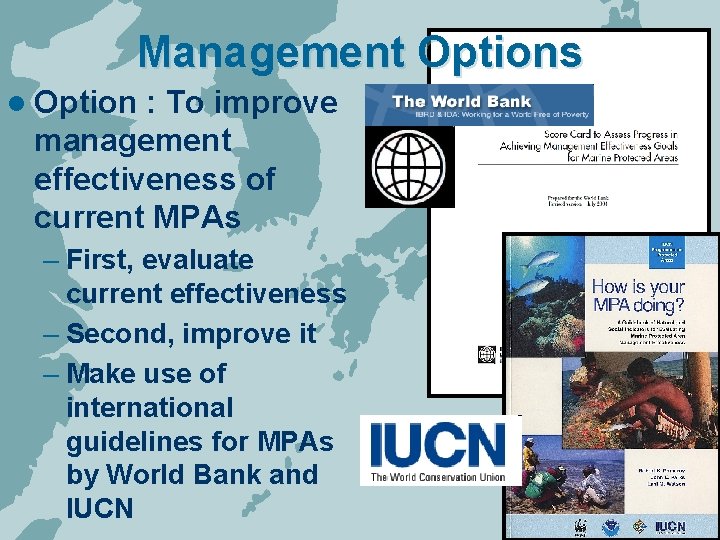
Management Options l Option : To improve management effectiveness of current MPAs – First, evaluate current effectiveness – Second, improve it – Make use of international guidelines for MPAs by World Bank and IUCN
Management Options l Integrated Coastal Management (ICM) – Planning needs to integrate critical habitats, Potential Priority Areas and their ecosystem services – e. g. Marine Functional Zoning (China) l Public Awareness – Local government agencies – Local communities – Users of biological resources e. g. fishers, mariculturalists
Future directions l Further prioritisation is required – Prioritisation of areas for selection of Demonstration Sites • Based on biological ranking • Based on opportunity for selected priority management options
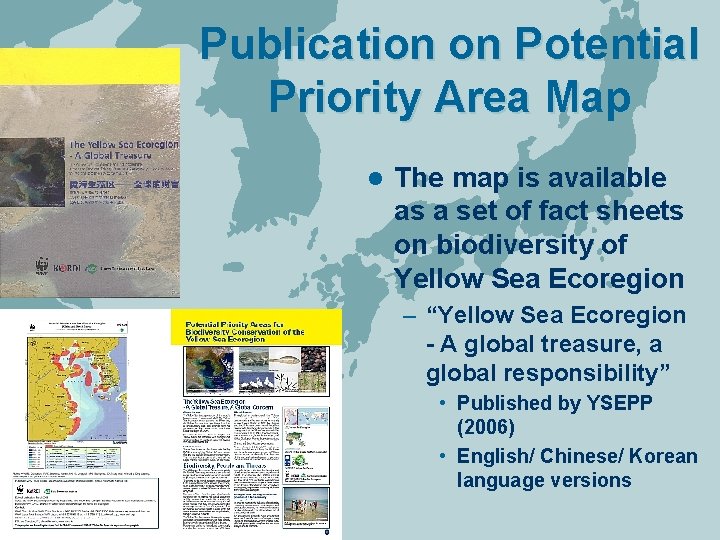
Publication on Potential Priority Area Map l The map is available as a set of fact sheets on biodiversity of Yellow Sea Ecoregion – “Yellow Sea Ecoregion - A global treasure, a global responsibility” • Published by YSEPP (2006) • English/ Chinese/ Korean language versions
Contact l For further information, contact: – TOBAI, Sadayosi (WWF Japan) • tobai@wwf. or. jpt – WANG, Songlin (WWF China) • slwang@wwfchina. org – CHOI, Youngrae (KORDI) • yrchoi@kordi. re. kr
- Slides: 23