
Critical Control Points Week Four 2 6 Control
- Slides: 10
Critical Control Points Week Four
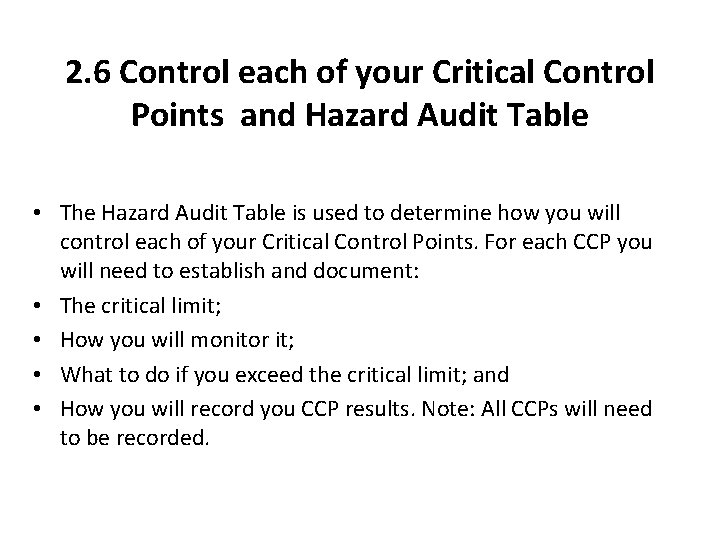
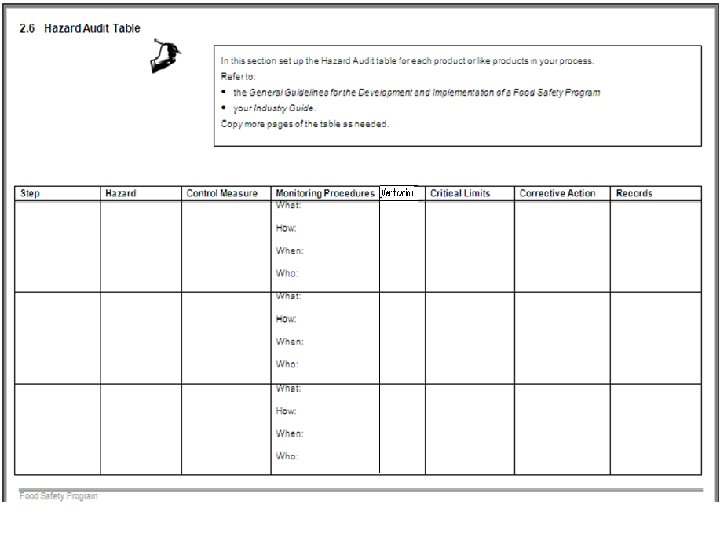
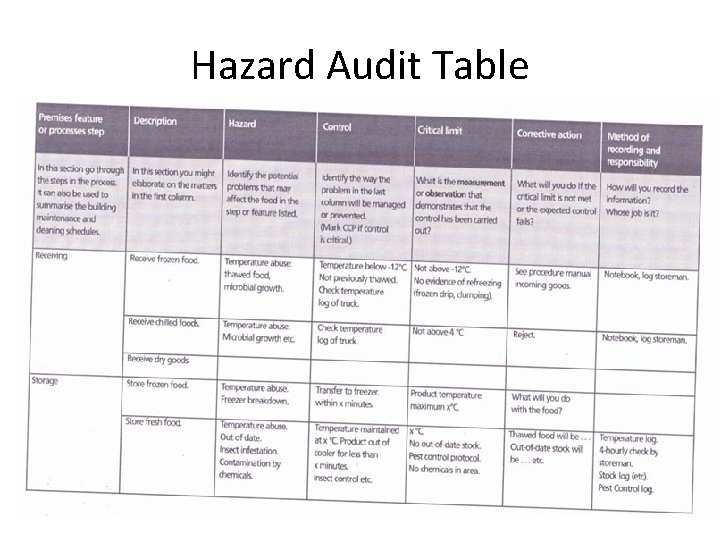
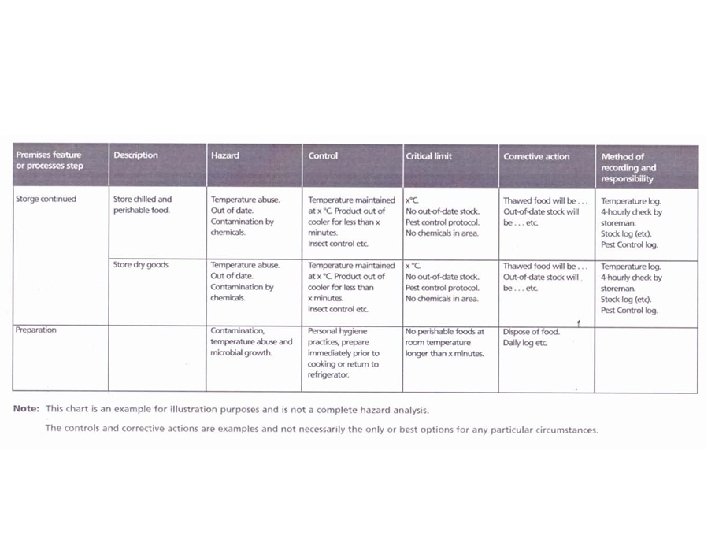
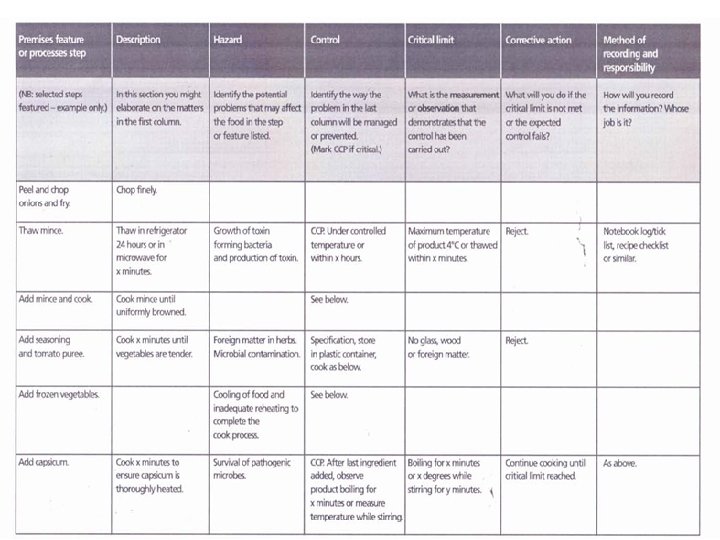
2. 6 Control each of your Critical Control Points and Hazard Audit Table • The Hazard Audit Table is used to determine how you will control each of your Critical Control Points. For each CCP you will need to establish and document: • The critical limit; • How you will monitor it; • What to do if you exceed the critical limit; and • How you will record you CCP results. Note: All CCPs will need to be recorded.
Hazard Audit Table
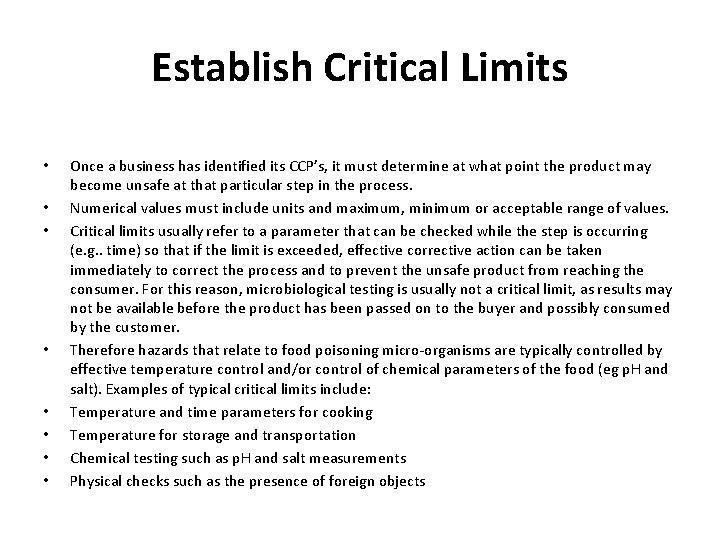
Establish Critical Limits • • Once a business has identified its CCP’s, it must determine at what point the product may become unsafe at that particular step in the process. Numerical values must include units and maximum, minimum or acceptable range of values. Critical limits usually refer to a parameter that can be checked while the step is occurring (e. g. . time) so that if the limit is exceeded, effective corrective action can be taken immediately to correct the process and to prevent the unsafe product from reaching the consumer. For this reason, microbiological testing is usually not a critical limit, as results may not be available before the product has been passed on to the buyer and possibly consumed by the customer. Therefore hazards that relate to food poisoning micro-organisms are typically controlled by effective temperature control and/or control of chemical parameters of the food (eg p. H and salt). Examples of typical critical limits include: Temperature and time parameters for cooking Temperature for storage and transportation Chemical testing such as p. H and salt measurements Physical checks such as the presence of foreign objects
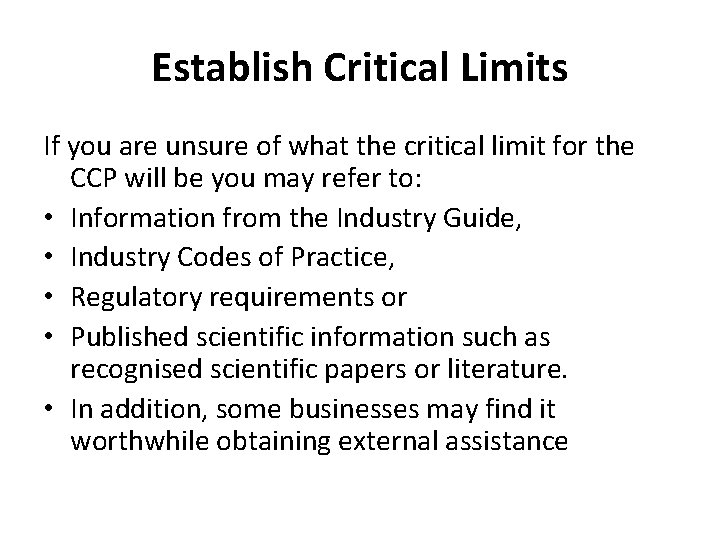
Establish Critical Limits If you are unsure of what the critical limit for the CCP will be you may refer to: • Information from the Industry Guide, • Industry Codes of Practice, • Regulatory requirements or • Published scientific information such as recognised scientific papers or literature. • In addition, some businesses may find it worthwhile obtaining external assistance
Assessment of Control measures • Validation (Justification) of Critical Limits. • It is important to remember that the critical limit must control the hazards. • Unless the critical limit is a commonly accepted limit, such as the storage temperature of foods in accordance with the Food Standards Code, businesses will need to show proof that the critical limit will differentiate between safe and unsafe food. • This will usually involve having some documented information outlining the source reference, or a validation study showing data, to justify each critical limit. A table summarising the justification for each CCP is recommended. TBC
Establish Monitoring Procedures • Once the critical limits have been determined, requirements for measuring against the critical limit needs to be established (eg monitoring procedure). The monitoring procedures must state: – What is to be monitored; – When the monitoring will occur (frequency); – Who performs the monitoring; and – How it will be monitored.