
Criteria for Assessment of Performance of Cancer Risk
![Definition of Absolute Risk for Cancer in [a, a+ ]](https://slidetodoc.com/presentation_image_h2/b78f7ec6b1b02abfec18ad95bd2fb0ff/image-3.jpg "Definition of Absolute Risk for Cancer in [a, a+ ]")

- Slides: 35
Criteria for Assessment of Performance of Cancer Risk Prediction Models: Overview Ruth Pfeiffer Cancer Risk Prediction Workshop, May 21, 2004 Division of Cancer Epidemiology and Genetics National Cancer Institute
Cancer Risk Prediction Models • Model input: – Individual’s age and risk factors – Age interval at risk • Model output: – Estimate of individual’s absolute risk of developing cancer over a given time period (e. g. the next 5 years).
Definition of Absolute Risk for Cancer in [a, a+ ]
Applications of absolute risk prediction models • Population level: – Estimate population disease burden – Estimate impact of changing the risk factor distribution in the general population – Plan intervention studies • Individual level: – Clinical decision-making: • Modification of known risk factors (diet, exercise) • Weighing risks and benefits of intervention ( eg chemoprevention) – Screening recommendations
Evaluating the performance of risk models • How well does model predict for groups of individuals: Calibration • How well does model categorize individuals: Accuracy scores • How well does model distinguish between individuals who will and will not experience event: Discriminatory Accuracy
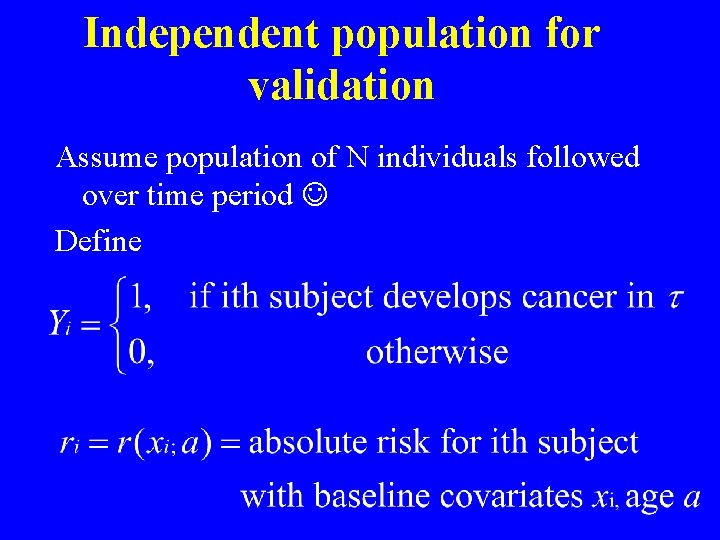
Independent population for validation Assume population of N individuals followed over time period Define
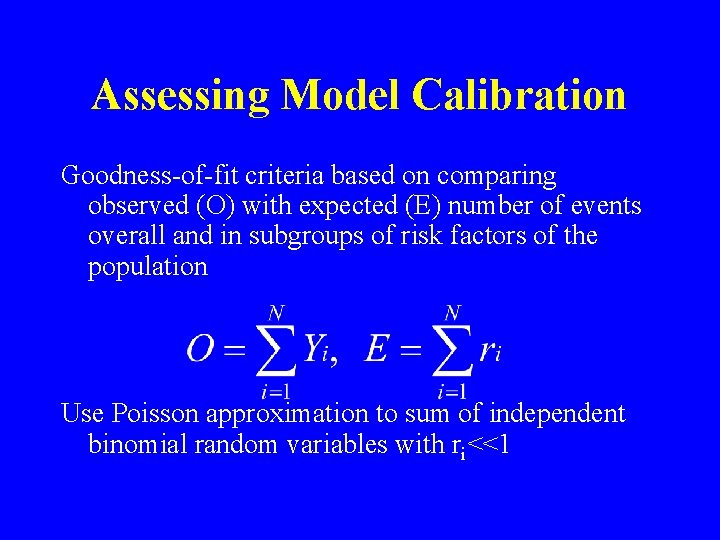
Assessing Model Calibration Goodness-of-fit criteria based on comparing observed (O) with expected (E) number of events overall and in subgroups of risk factors of the population Use Poisson approximation to sum of independent binomial random variables with ri<<1
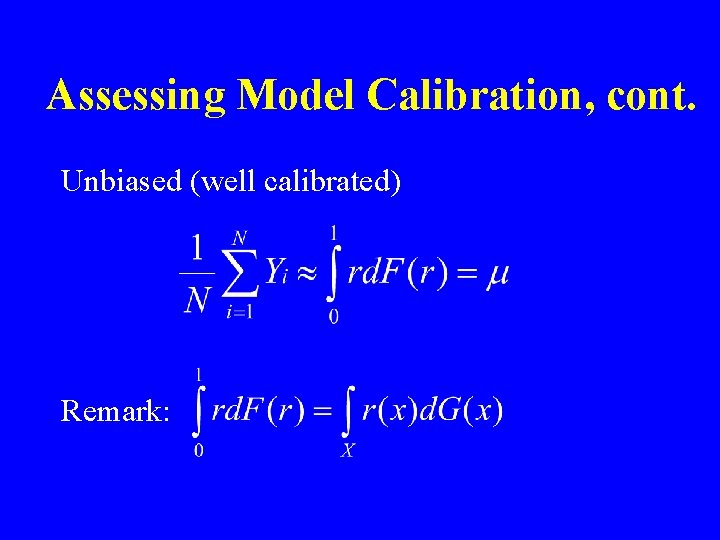
Assessing Model Calibration, cont. Unbiased (well calibrated) Remark:
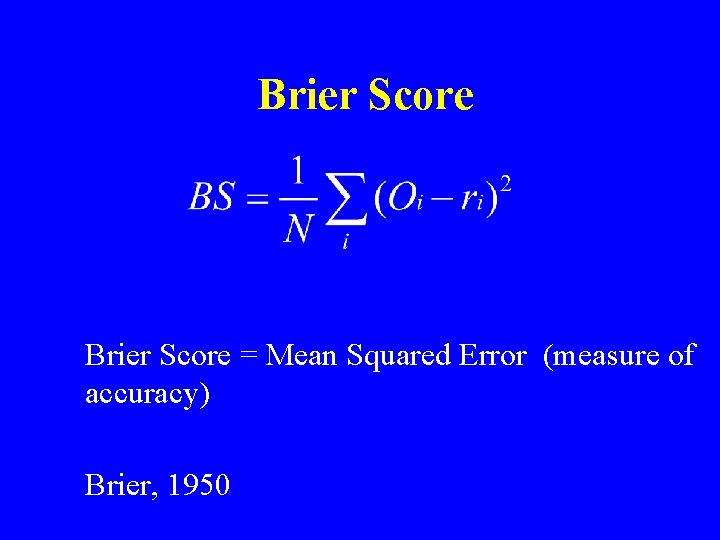
Brier Score = Mean Squared Error (measure of accuracy) Brier, 1950
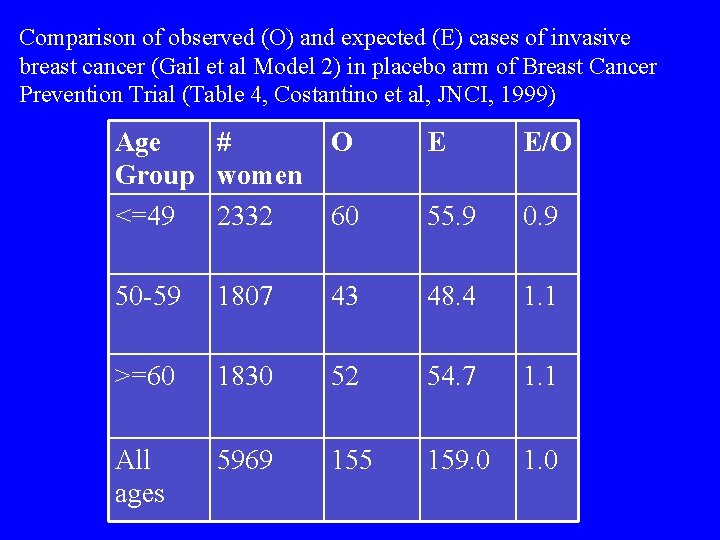
Comparison of observed (O) and expected (E) cases of invasive breast cancer (Gail et al Model 2) in placebo arm of Breast Cancer Prevention Trial (Table 4, Costantino et al, JNCI, 1999) Age # Group women <=49 2332 O E E/O 60 55. 9 0. 9 50 -59 1807 43 48. 4 1. 1 >=60 1830 52 54. 7 1. 1 All ages 5969 155 159. 0 1. 0
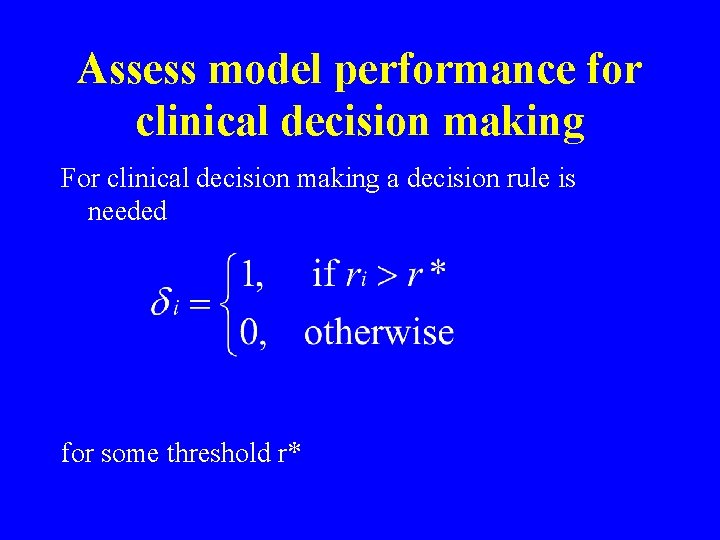
Assess model performance for clinical decision making For clinical decision making a decision rule is needed for some threshold r*
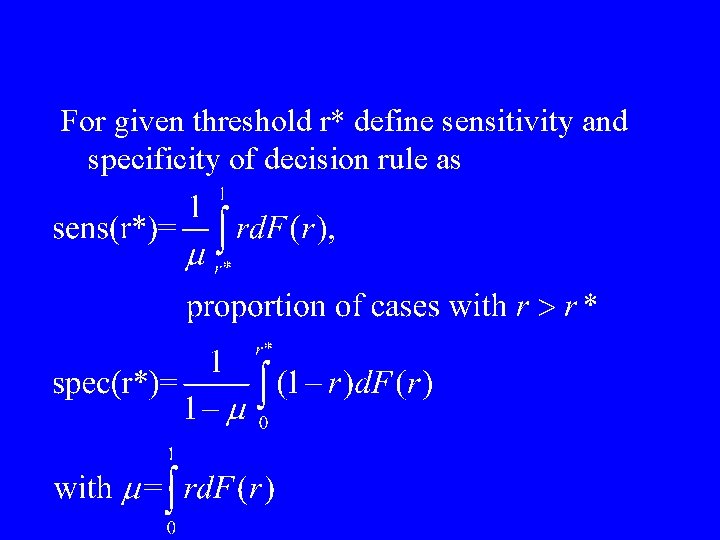
For given threshold r* define sensitivity and specificity of decision rule as
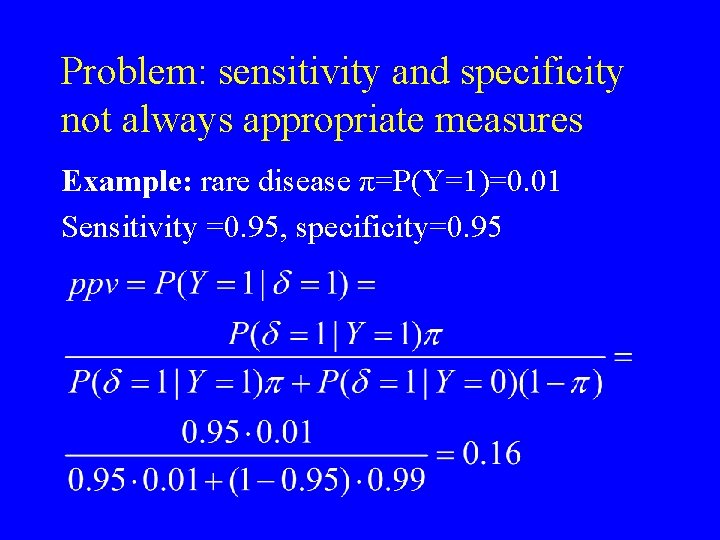
Problem: sensitivity and specificity not always appropriate measures Example: rare disease π=P(Y=1)=0. 01 Sensitivity =0. 95, specificity=0. 95
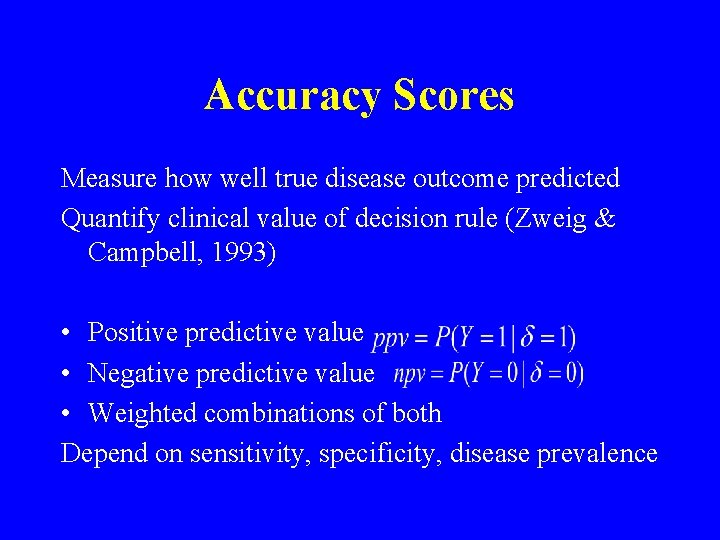
Accuracy Scores Measure how well true disease outcome predicted Quantify clinical value of decision rule (Zweig & Campbell, 1993) • Positive predictive value • Negative predictive value • Weighted combinations of both Depend on sensitivity, specificity, disease prevalence
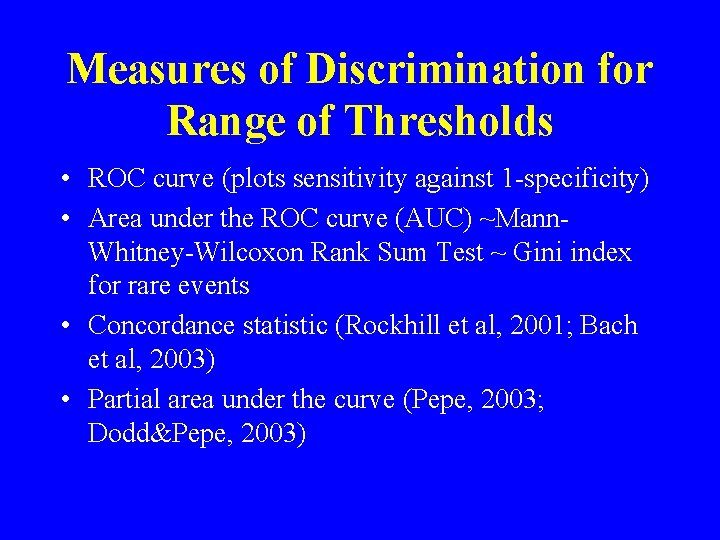
Measures of Discrimination for Range of Thresholds • ROC curve (plots sensitivity against 1 -specificity) • Area under the ROC curve (AUC) ~Mann. Whitney-Wilcoxon Rank Sum Test ~ Gini index for rare events • Concordance statistic (Rockhill et al, 2001; Bach et al, 2003) • Partial area under the curve (Pepe, 2003; Dodd&Pepe, 2003)
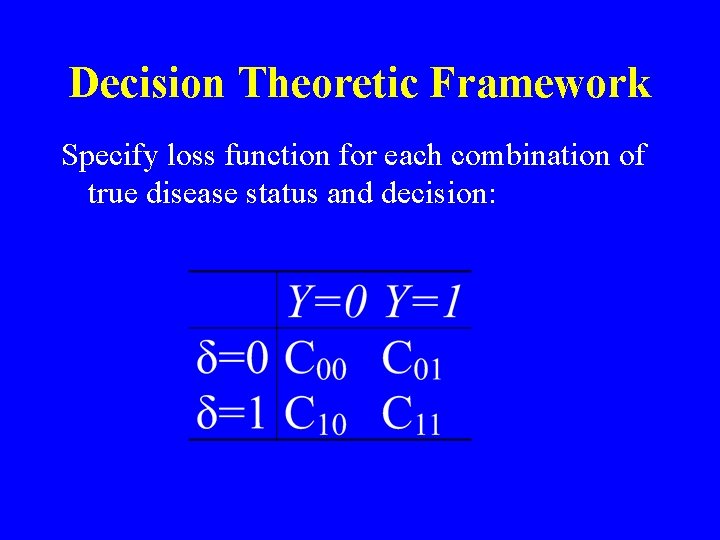
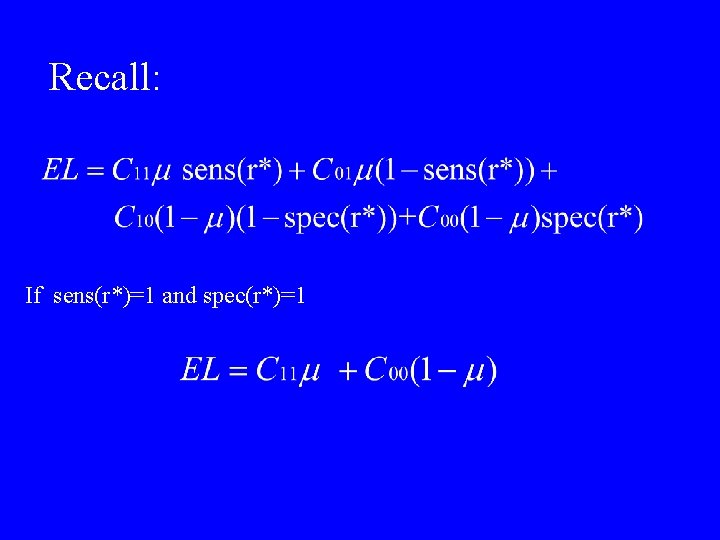
Decision Theoretic Framework Specify loss function for each combination of true disease status and decision:
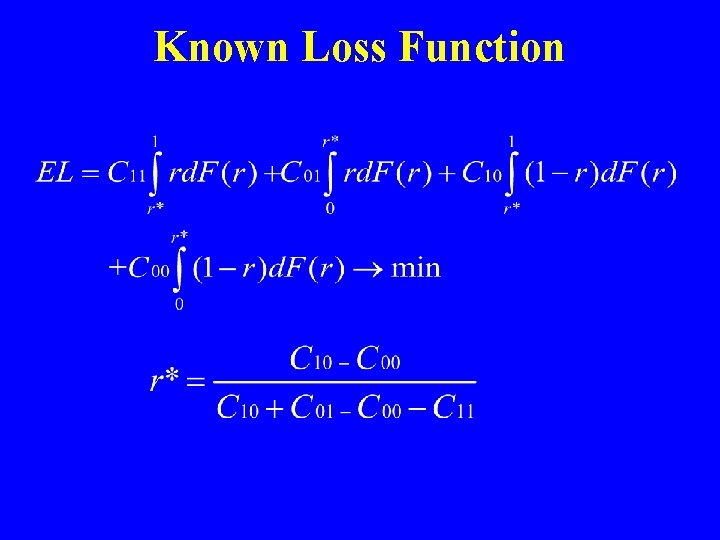
Known Loss Function
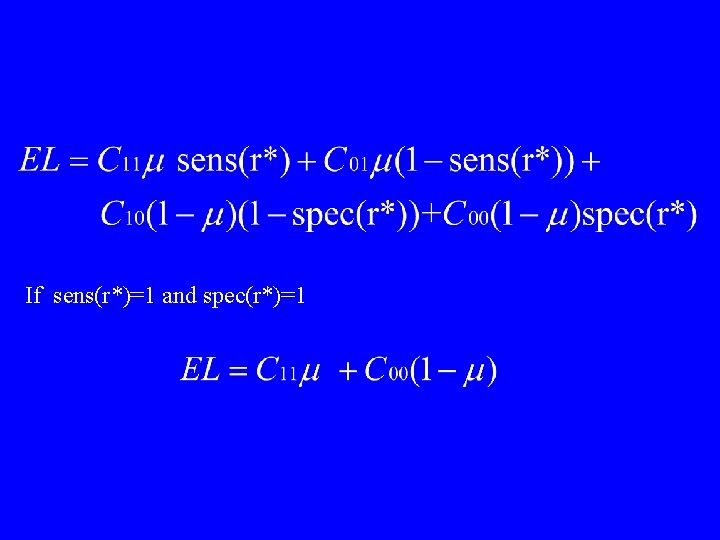
If sens(r*)=1 and spec(r*)=1
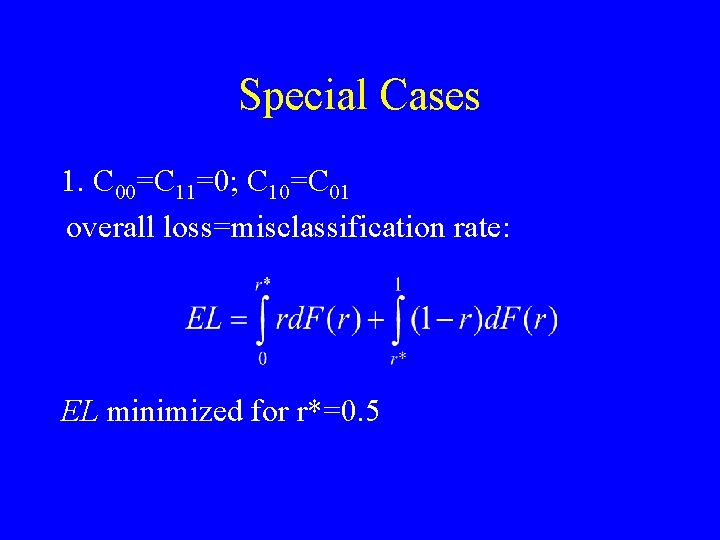
Special Cases 1. C 00=C 11=0; C 10=C 01 overall loss=misclassification rate: EL minimized for r*=0. 5
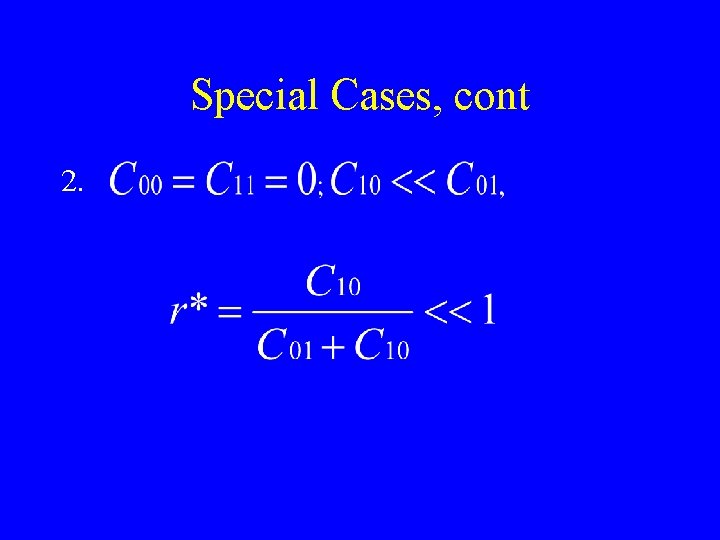
Special Cases, cont 2.
Recall: If sens(r*)=1 and spec(r*)=1
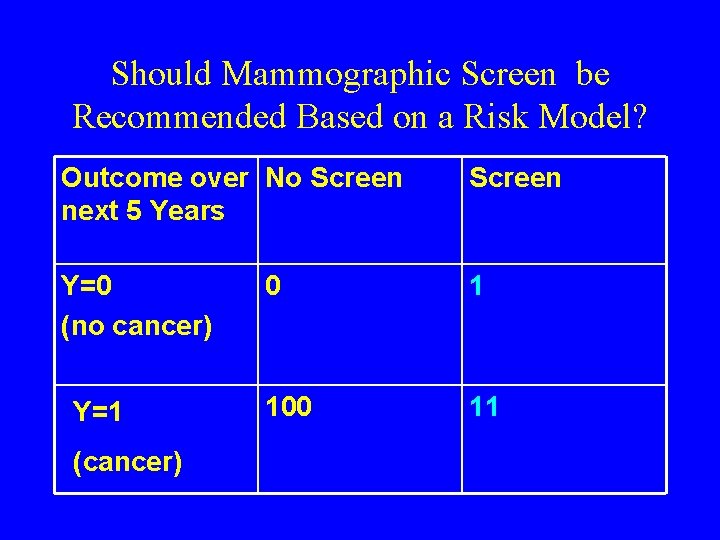
Should Mammographic Screen be Recommended Based on a Risk Model? Outcome over No Screen next 5 Years Screen Y=0 (no cancer) 0 1 100 11 Y=1 (cancer)
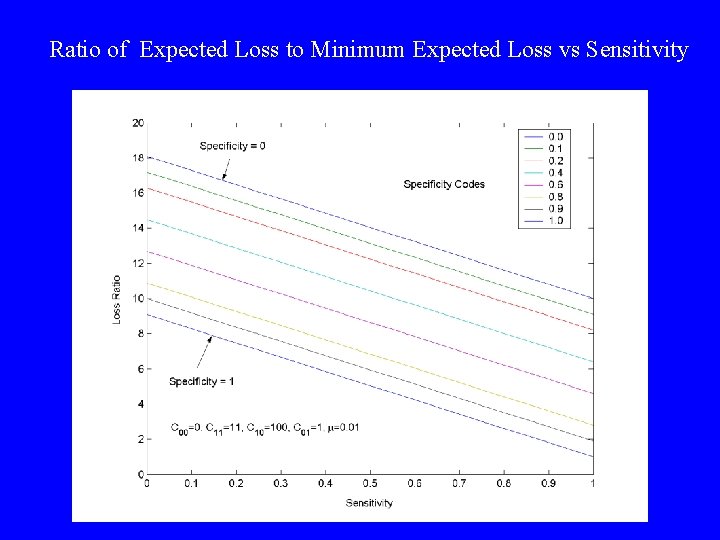
Ratio of Expected Loss to Minimum Expected Loss vs Sensitivity
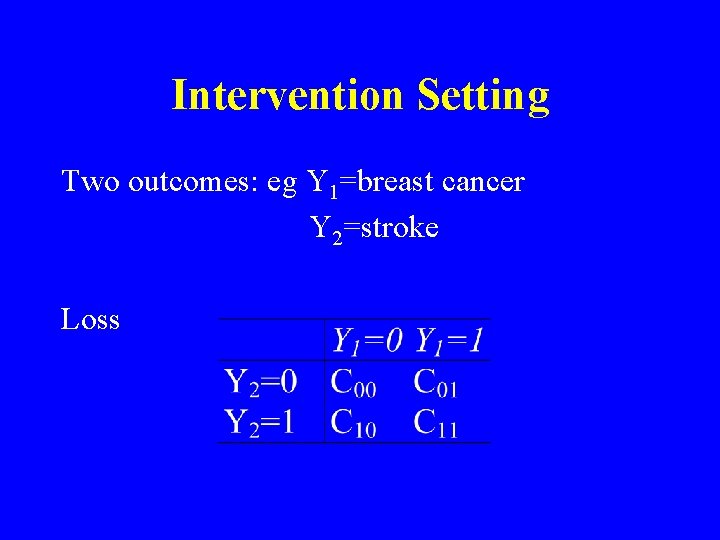
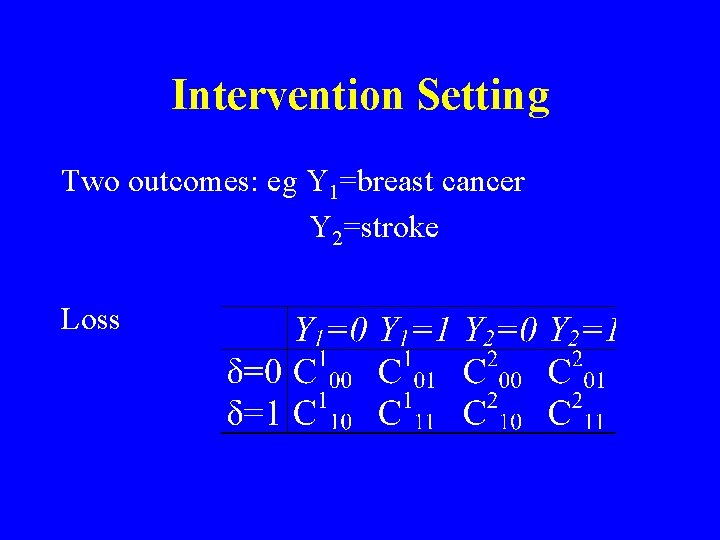
Intervention Setting Two outcomes: eg Y 1=breast cancer Y 2=stroke Loss
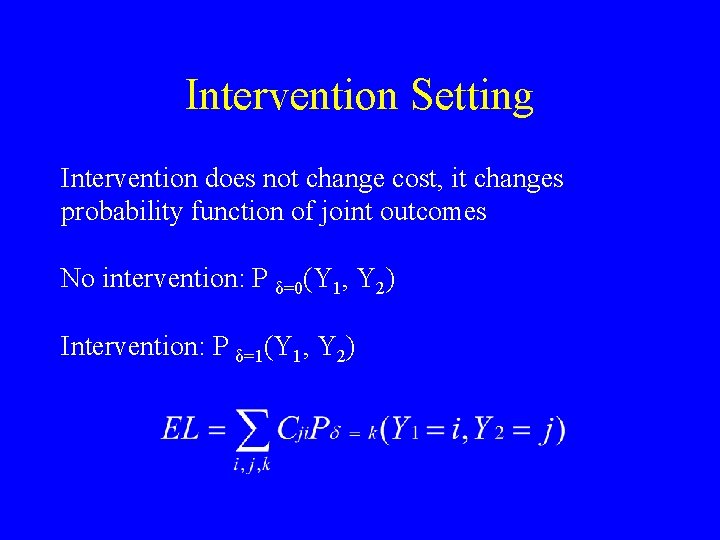
Intervention Setting Intervention does not change cost, it changes probability function of joint outcomes No intervention: P δ=0(Y 1, Y 2) Intervention: P δ=1(Y 1, Y 2)
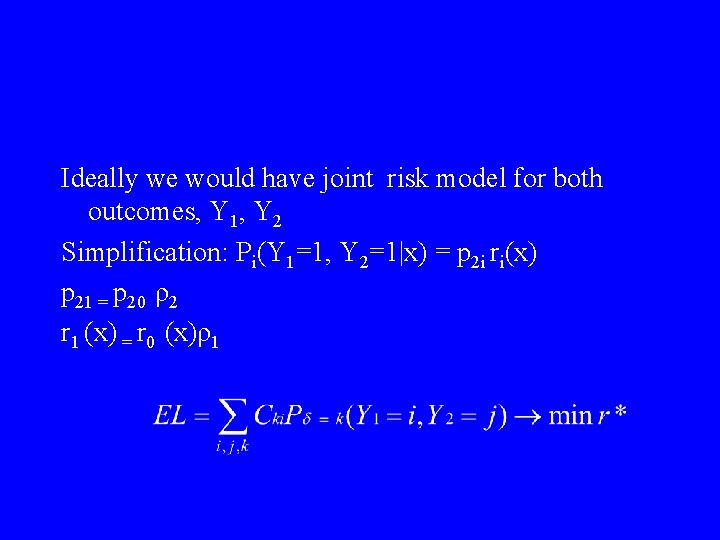
Ideally we would have joint risk model for both outcomes, Y 1, Y 2 Simplification: Pi(Y 1=1, Y 2=1|x) = p 2 i ri(x) p 21 = p 20 ρ2 r 1 (x) = r 0 (x)ρ1
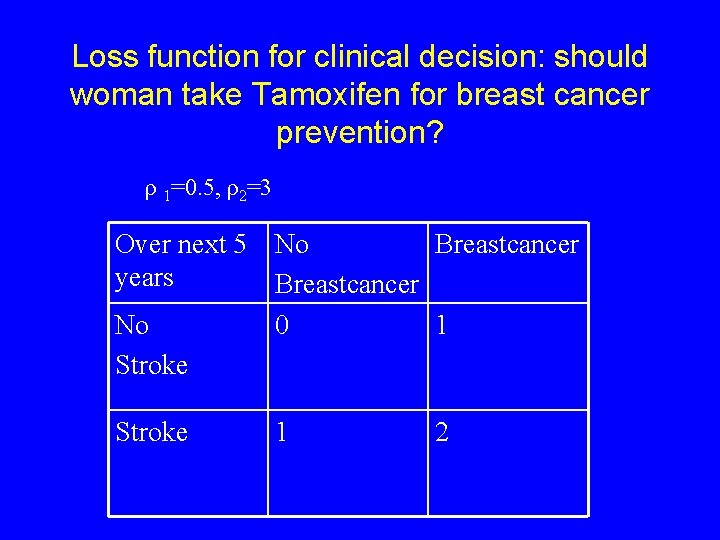
Loss function for clinical decision: should woman take Tamoxifen for breast cancer prevention? ρ 1=0. 5, ρ2=3 Over next 5 No Breastcancer years Breastcancer No 0 1 Stroke 1 2
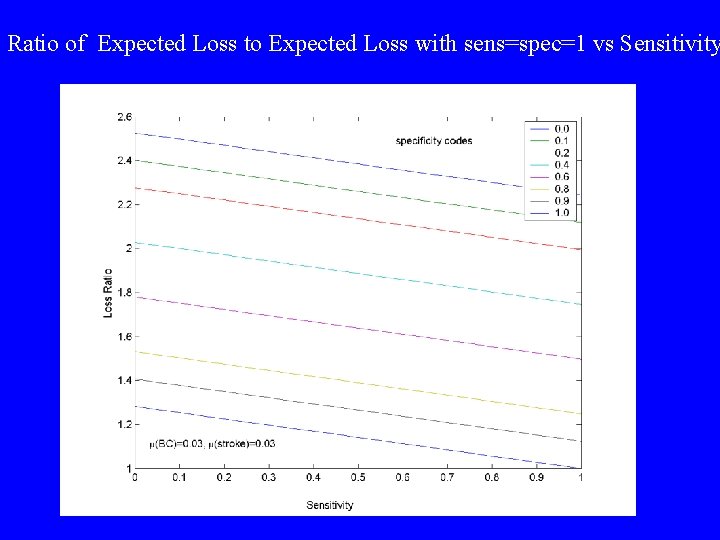
Ratio of Expected Loss to Expected Loss with sens=spec=1 vs Sensitivity
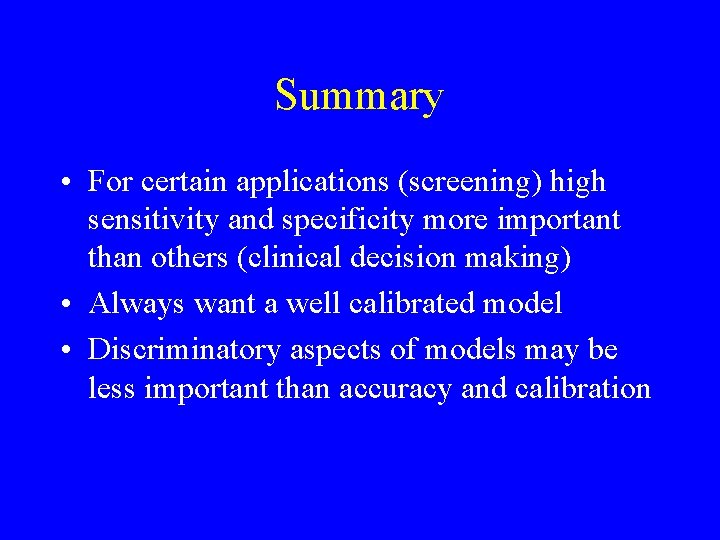
Summary • For certain applications (screening) high sensitivity and specificity more important than others (clinical decision making) • Always want a well calibrated model • Discriminatory aspects of models may be less important than accuracy and calibration
Collaborators Mitchell Gail, NCI Andrew Freedman, NCI Patricia Hartge, NCI
References Brier GW, 1950, Monthly Weather Review, 75, 1 -3 Dodd LE, Pepe M, 2003, JASA 98 (462): 409 -417 Efron B, 1986, JASA 81 (394): 461 -470 Efron B, 1983, JASA 78 (382): 316 -329 Gail MH et al, 1999, JNCI, 91 (21): 1829 -1846 Hand DJ, 2001, Statistica Neerlandica, 55 (1): 3 -16 Hand DJ, 1997, Construction and assessment of classification rules, Wiley. Pepe MS 2000, JASA, 95 (449): 308 -311 Schumacher M, et al, 2003, Methods of information in medicine 42: 564 -571 Steyerberg EW, et al, 2003, Journal of Clinical Epidemiology 56: 441 -447
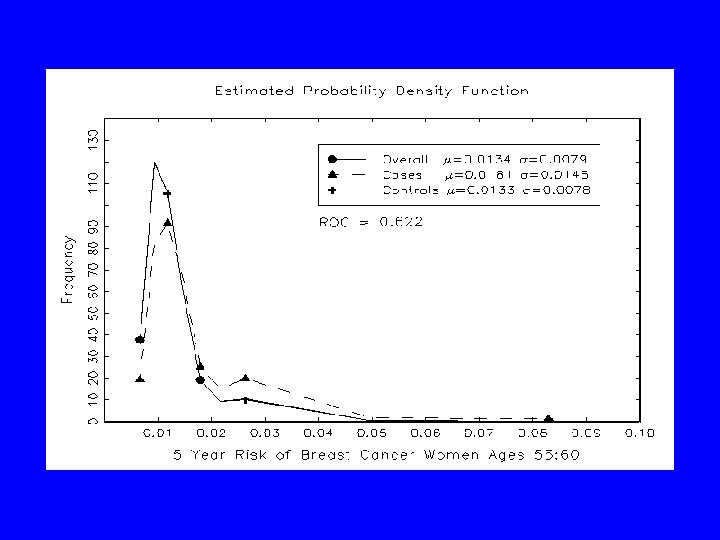
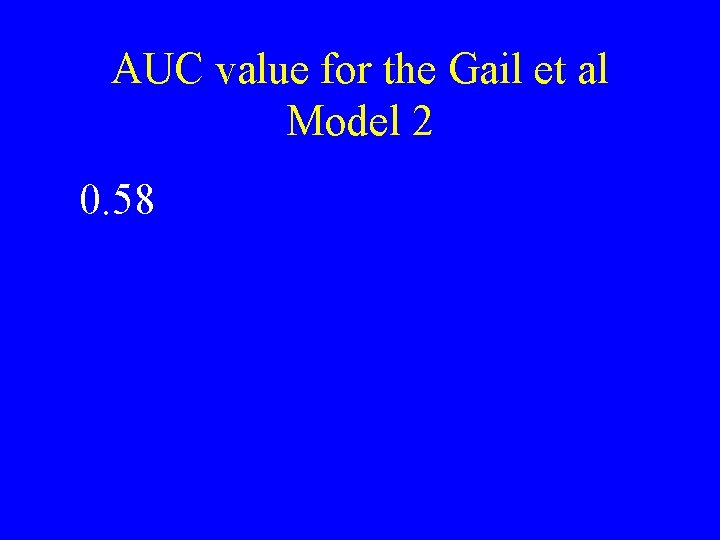
AUC value for the Gail et al Model 2 0. 58
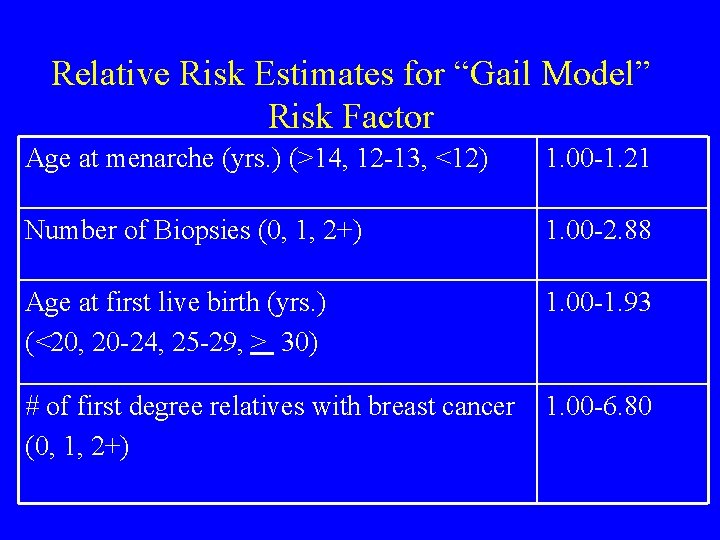
Relative Risk Estimates for “Gail Model” Risk Factor Age at menarche (yrs. ) (>14, 12 -13, <12) 1. 00 -1. 21 Number of Biopsies (0, 1, 2+) 1. 00 -2. 88 Age at first live birth (yrs. ) (<20, 20 -24, 25 -29, > 30) 1. 00 -1. 93 # of first degree relatives with breast cancer (0, 1, 2+) 1. 00 -6. 80
Intervention Setting Two outcomes: eg Y 1=breast cancer Y 2=stroke Loss