
CRISIS WHAT HOUSINGCRISIS Calderdale CLT 4 June 2018
- Slides: 10
CRISIS? WHAT (HOUSING)CRISIS? Calderdale CLT 4 June 2018 Dr Alison Wallace, Centre for Housing Policy, SPSW alison. wallace@york. ac. uk
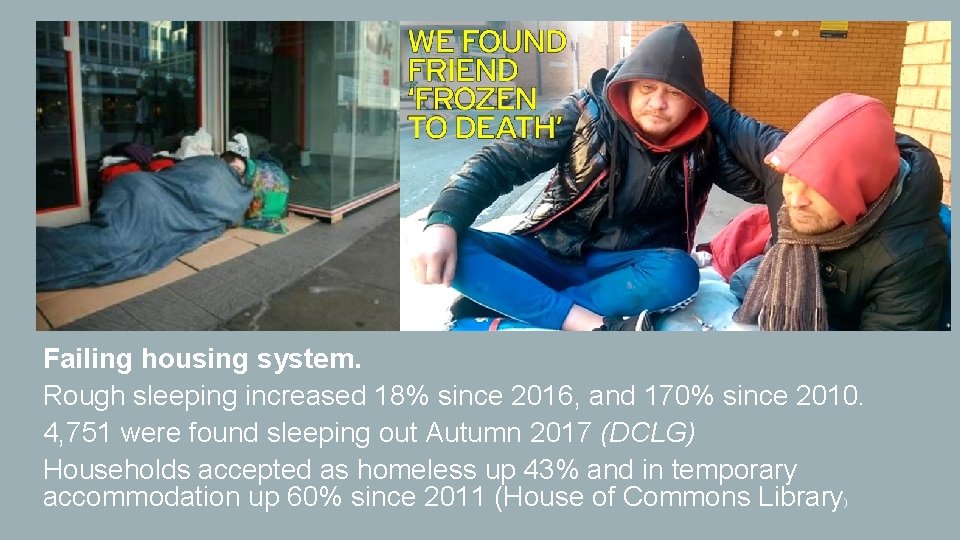
Failing housing system. Rough sleeping increased 18% since 2016, and 170% since 2010. 4, 751 were found sleeping out Autumn 2017 (DCLG) Households accepted as homeless up 43% and in temporary accommodation up 60% since 2011 (House of Commons Library )
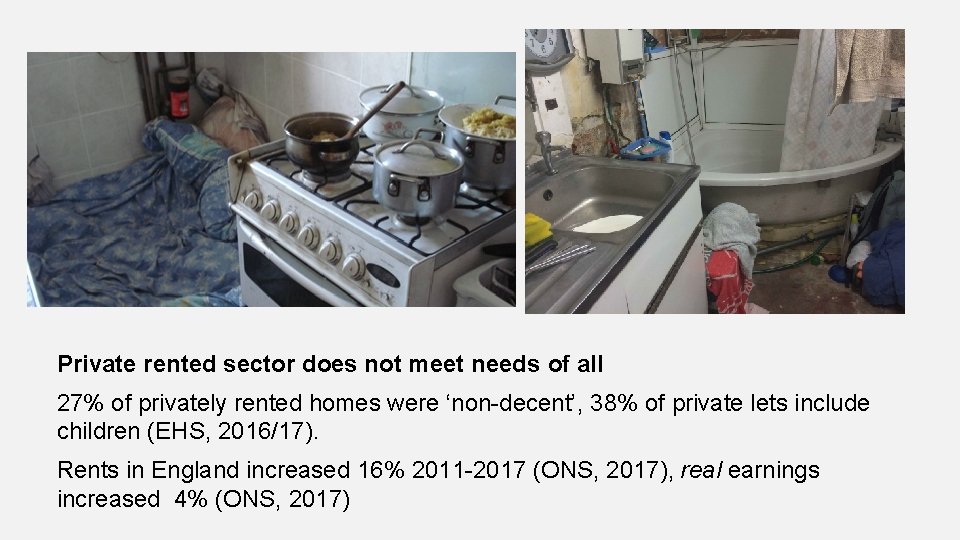
Private rented sector does not meet needs of all 27% of privately rented homes were ‘non-decent’, 38% of private lets include children (EHS, 2016/17). Rents in England increased 16% 2011 -2017 (ONS, 2017), real earnings increased 4% (ONS, 2017)
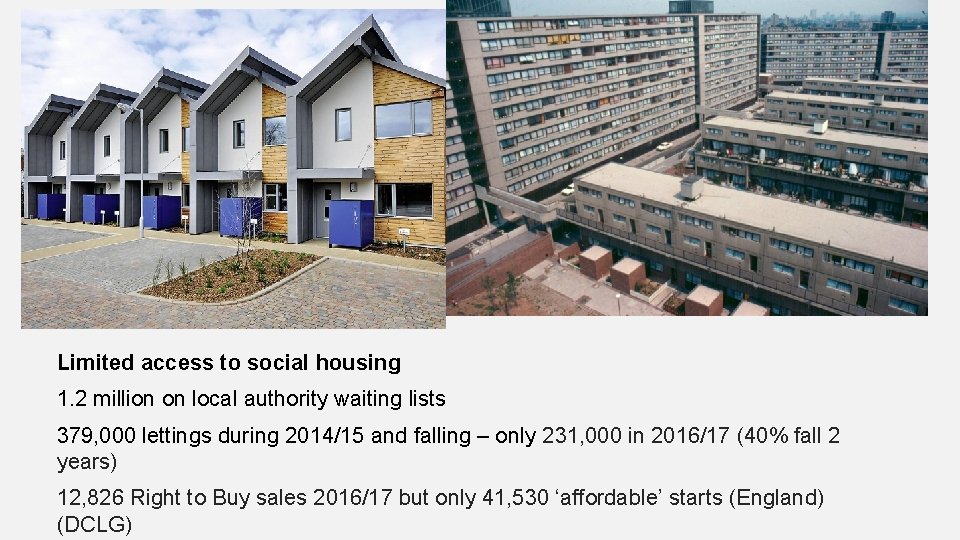
Limited access to social housing 1. 2 million on local authority waiting lists 379, 000 lettings during 2014/15 and falling – only 231, 000 in 2016/17 (40% fall 2 years) 12, 826 Right to Buy sales 2016/17 but only 41, 530 ‘affordable’ starts (England) (DCLG)
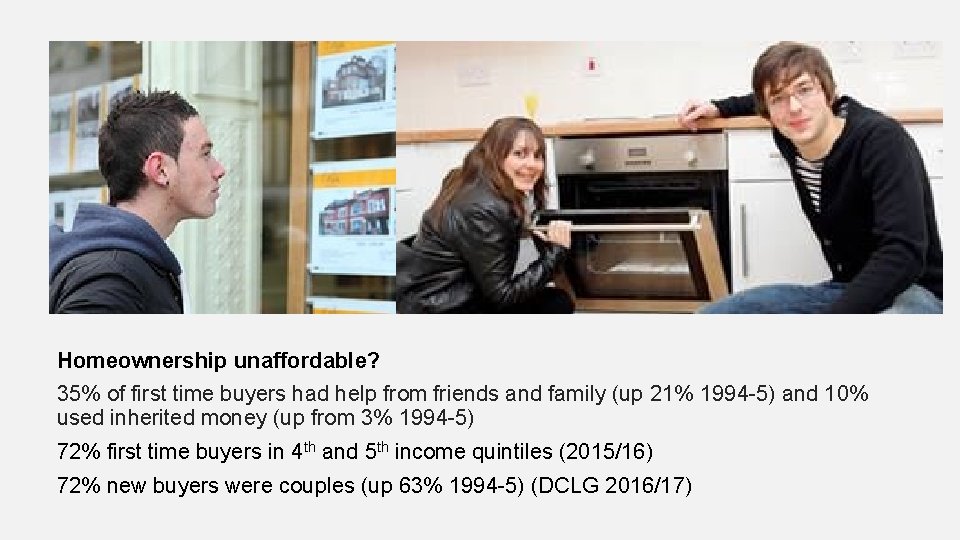
Homeownership unaffordable? 35% of first time buyers had help from friends and family (up 21% 1994 -5) and 10% used inherited money (up from 3% 1994 -5) 72% first time buyers in 4 th and 5 th income quintiles (2015/16) 72% new buyers were couples (up 63% 1994 -5) (DCLG 2016/17)
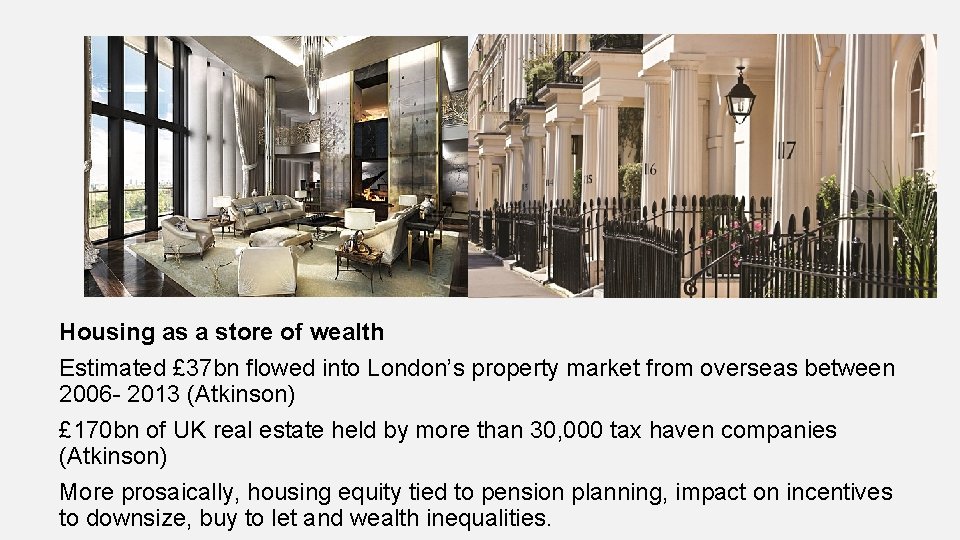
Housing as a store of wealth Estimated £ 37 bn flowed into London’s property market from overseas between 2006 - 2013 (Atkinson) £ 170 bn of UK real estate held by more than 30, 000 tax haven companies (Atkinson) More prosaically, housing equity tied to pension planning, impact on incentives to downsize, buy to let and wealth inequalities.
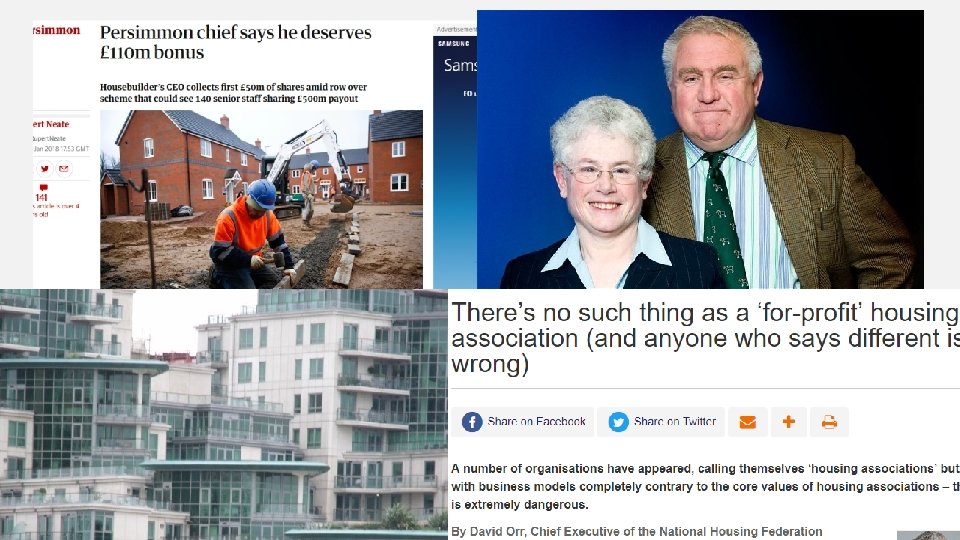
ARE WE BUILDING ENOUGH HOMES? • Estimated c. 240, 000 homes required annually, averaged 168, 000 since 2001 • Changing demography – divorce, ageing, migration, solo living produce more households • Absence of public investment in housing since 1980 s • Increasing over-reliance on speculative house builders • Housebuilding risky, uncertain and expensive long term endeavour • Land ownership and planning limit small and community builders • Cyclical outputs damage supply chains and contribute to skill shortages • Building for rent counter-cyclical – private and social rent – and speeds outputs • Shift from bricks and mortar subsidies to personal subsidies (£ spent on
‘FINANCIALISATION’ OF HOUSING • “… structural changes in housing and financial markets and global investment whereby housing is treated as a commodity, a means of accumulating wealth and often as security for financial instruments that are traded and sold on global markets. ” • (UN Rapporteur on Housing Leilani Farha 2016)
HOUSING POLICY MATTERS • Housing has long been a “wobbly pillar” of the welfare state as frequently privately provided • UK has a deeply dysfunctional housing system in the UK • 20 th century one of state intervention in failing market • But 30 years (or more) shift towards recommodification and marketisation of all sectors of housing system • Driving inequality as greater wealth accumulates for some while others homelessness or unsatisfactorily housed. • Policy levers on public and private players include land acquisition and control, direct provision, subsidies, underwriting debt, equity stakes, taxation • Need long-term cross party commitment to overcome entrenched