
Crisis Standards of Care A Wisconsin Initiative for
- Slides: 19
Crisis Standards of Care A Wisconsin Initiative for Better Overall Preparedness
Doug Hill Program Director, Wisconsin Crisis Standards of Care Initiative Ø 21 + years work in federal government § FEMA, NIH, CDC, State & Local EM, First Responders Ø 5 + years private work – consulting § Know Your Care (ACA), WI Association for Justice, Google, Century. Link Ø Extensive work in project management and policy adaptation Ø Extensive work involving diverse parties with competing objectives Ø
Who Is In The Room Partners in the room? Ø Public Health Ø Hospitals § & Providers MD, RN, Others Ø First Responders and EMS Ø Emergency Ø Legal Ø Ethics Ø Others Management
Crisis Standards of Care Knowledge Ø What do you feel is your overall knowledge of Crisis Standards of Care? Extensive § Some to a Fair Amount § Minimal to None § Ø What have you heard about Crisis Standards of Care and relevant issues?
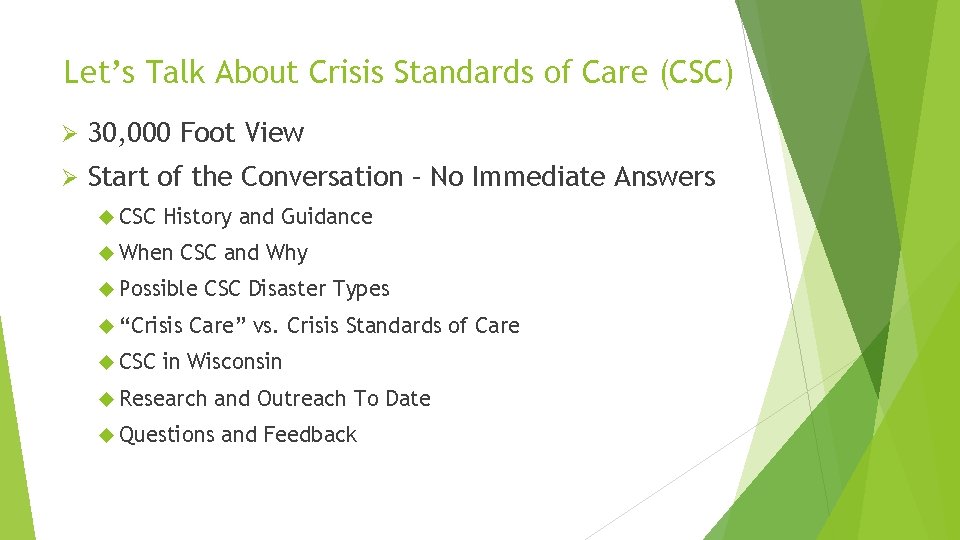
Let’s Talk About Crisis Standards of Care (CSC) Ø 30, 000 Foot View Ø Start of the Conversation – No Immediate Answers CSC History and Guidance When CSC and Why Possible “Crisis CSC Disaster Types Care” vs. Crisis Standards of Care in Wisconsin Research and Outreach To Date Questions and Feedback
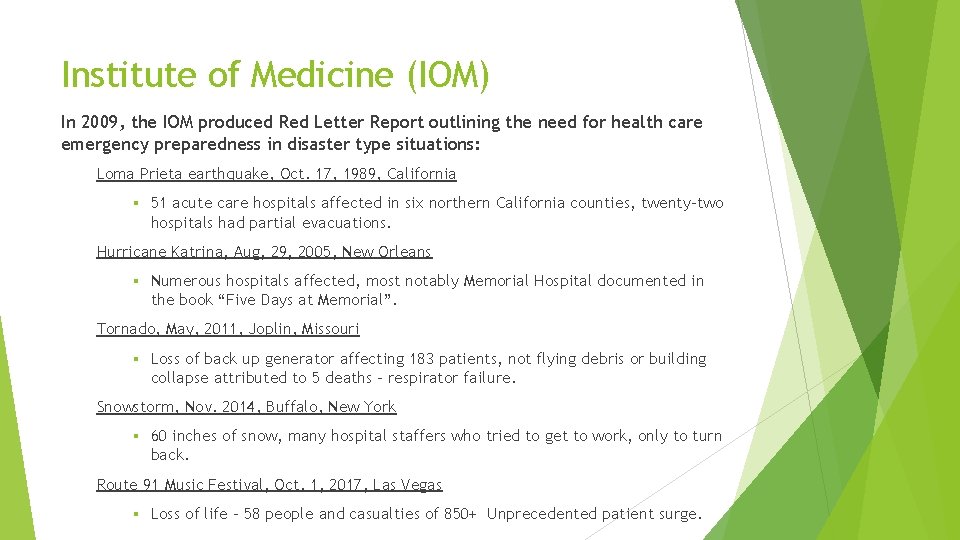
Institute of Medicine (IOM) In 2009, the IOM produced Red Letter Report outlining the need for health care emergency preparedness in disaster type situations: Loma Prieta earthquake, Oct. 17, 1989, California § 51 acute care hospitals affected in six northern California counties, twenty-two hospitals had partial evacuations. Hurricane Katrina, Aug, 29, 2005, New Orleans § Numerous hospitals affected, most notably Memorial Hospital documented in the book “Five Days at Memorial”. Tornado, May, 2011, Joplin, Missouri § Loss of back up generator affecting 183 patients, not flying debris or building collapse attributed to 5 deaths – respirator failure. Snowstorm, Nov. 2014, Buffalo, New York § 60 inches of snow, many hospital staffers who tried to get to work, only to turn back. Route 91 Music Festival, Oct. 1, 2017, Las Vegas § Loss of life – 58 people and casualties of 850+ Unprecedented patient surge.
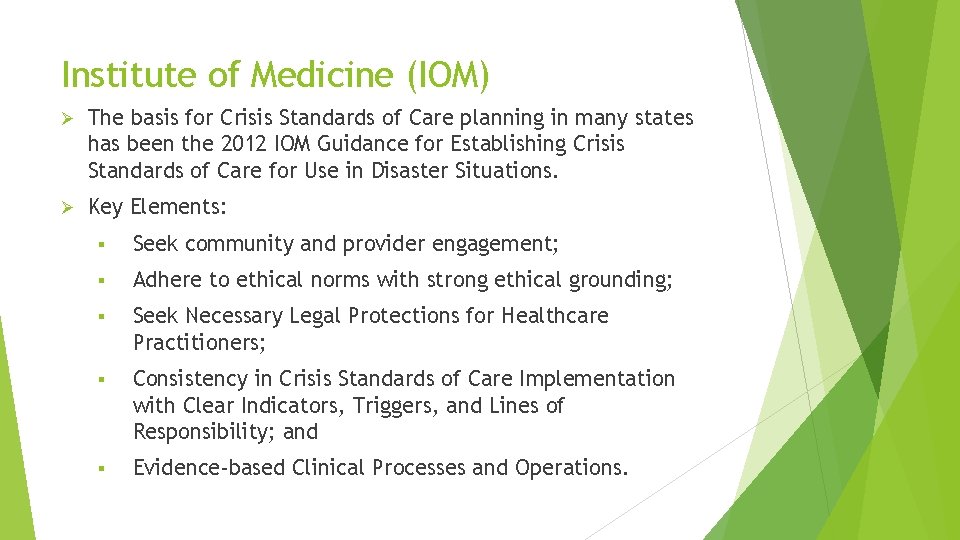
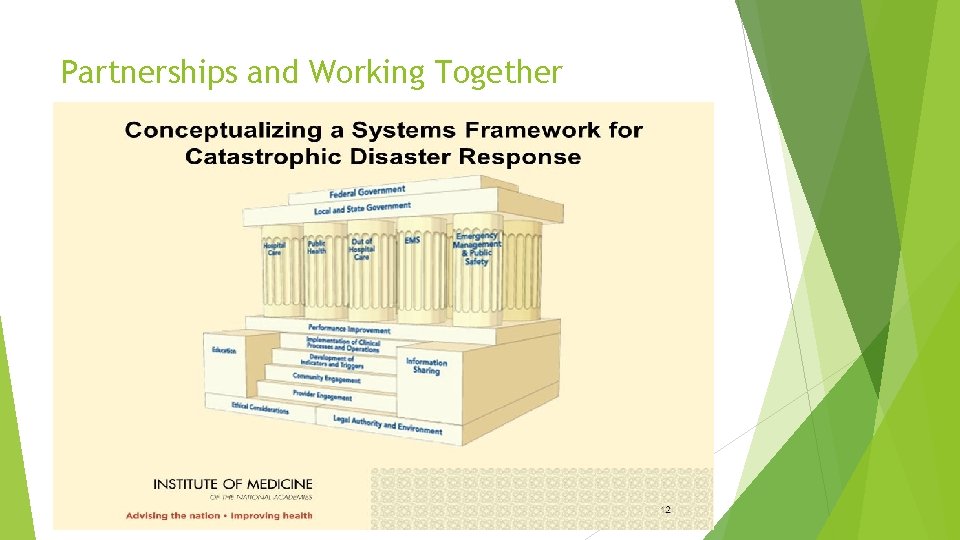
Institute of Medicine (IOM) Ø The basis for Crisis Standards of Care planning in many states has been the 2012 IOM Guidance for Establishing Crisis Standards of Care for Use in Disaster Situations. Ø Key Elements: § Seek community and provider engagement; § Adhere to ethical norms with strong ethical grounding; § Seek Necessary Legal Protections for Healthcare Practitioners; § Consistency in Crisis Standards of Care Implementation with Clear Indicators, Triggers, and Lines of Responsibility; and § Evidence-based Clinical Processes and Operations.
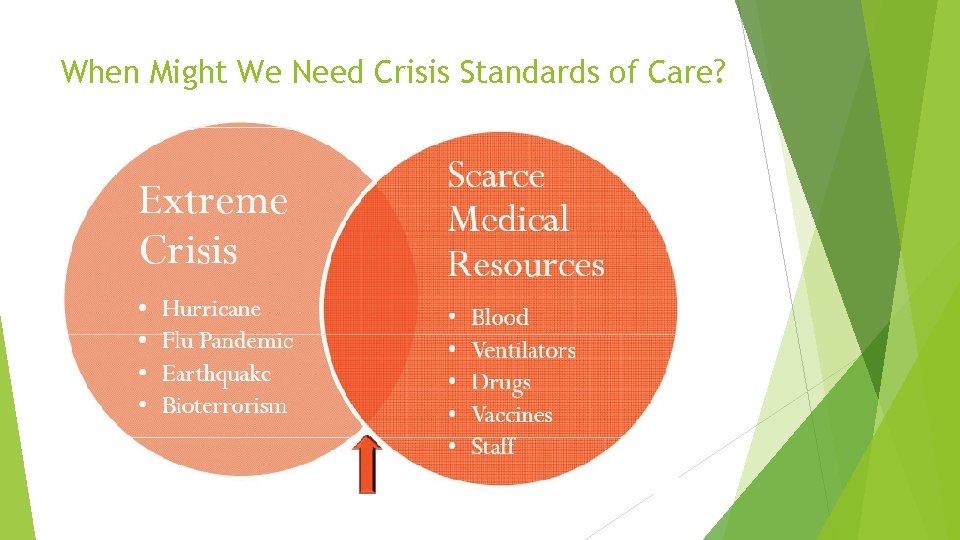
When Might We Need Crisis Standards of Care?
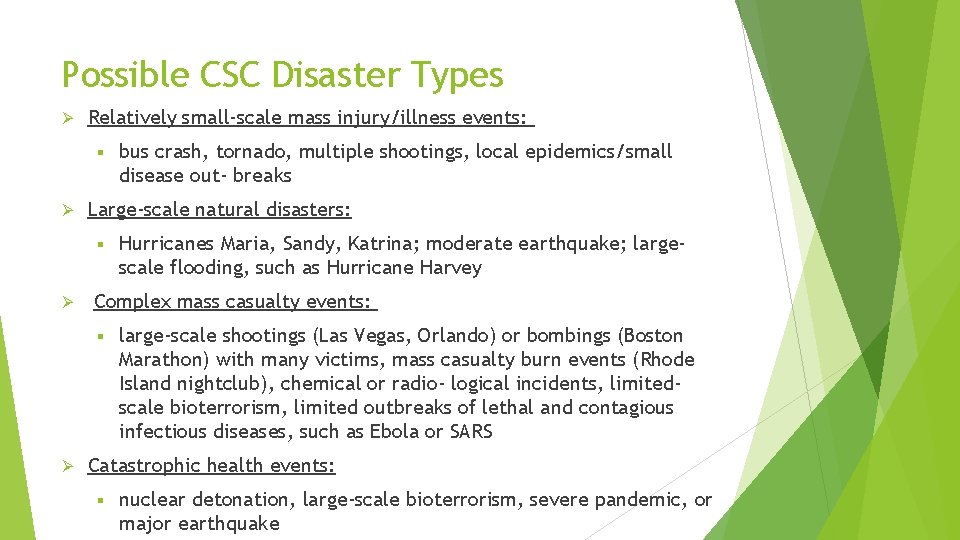
Possible CSC Disaster Types Ø Relatively small-scale mass injury/illness events: § Ø Large-scale natural disasters: § Ø Hurricanes Maria, Sandy, Katrina; moderate earthquake; largescale flooding, such as Hurricane Harvey Complex mass casualty events: § Ø bus crash, tornado, multiple shootings, local epidemics/small disease out- breaks large-scale shootings (Las Vegas, Orlando) or bombings (Boston Marathon) with many victims, mass casualty burn events (Rhode Island nightclub), chemical or radio- logical incidents, limitedscale bioterrorism, limited outbreaks of lethal and contagious infectious diseases, such as Ebola or SARS Catastrophic health events: § nuclear detonation, large-scale bioterrorism, severe pandemic, or major earthquake
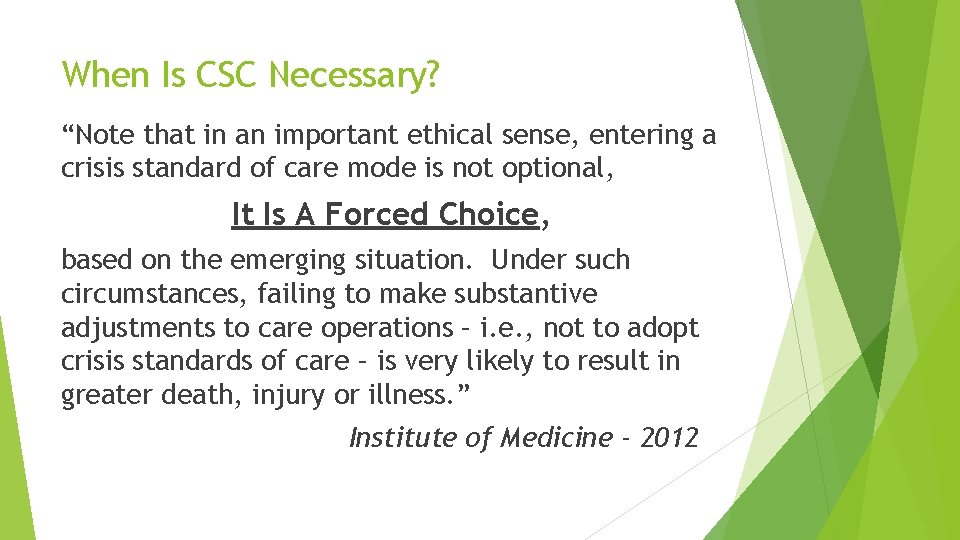
When Is CSC Necessary? “Note that in an important ethical sense, entering a crisis standard of care mode is not optional, It Is A Forced Choice, based on the emerging situation. Under such circumstances, failing to make substantive adjustments to care operations – i. e. , not to adopt crisis standards of care – is very likely to result in greater death, injury or illness. ” Institute of Medicine - 2012
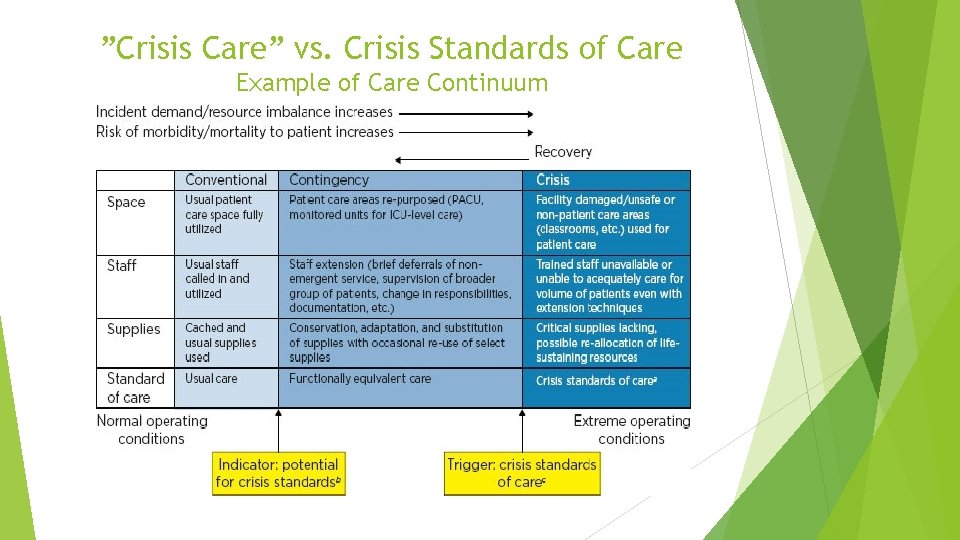
”Crisis Care” vs. Crisis Standards of Care Example of Care Continuum
Now What - CSC in Wisconsin?
CSC Initiative Goals in Wisconsin The CSC Initiative will not immediately seek to write standards, guidelines or rules. Ø Ø Ø Start of the Conversation Collaboration and Extensive Input Establish work groups to provide guidance, input and expertise on the initiative and potential paths of approach Research and report on currently utilized CSC policies and procedures in other states and WI. Convene partners to acquire a better understanding of utilized CSC best practices
CSC Initiative Goals in Wisconsin - continued Ø Work with partners to develop an inventory of CSC barriers and possible solutions. Ø Work with partners to identify possible CSC triggers Ø Seek to start a meaningful dialogue among partners of general CSC guidelines and principles Ø Develop outcome documentation for the purpose of presenting results to partners to educate and raise awareness of CSC initiative findings Ø Lay the groundwork for follow-on activities, if identified as necessary and desirable
Partnerships and Working Together
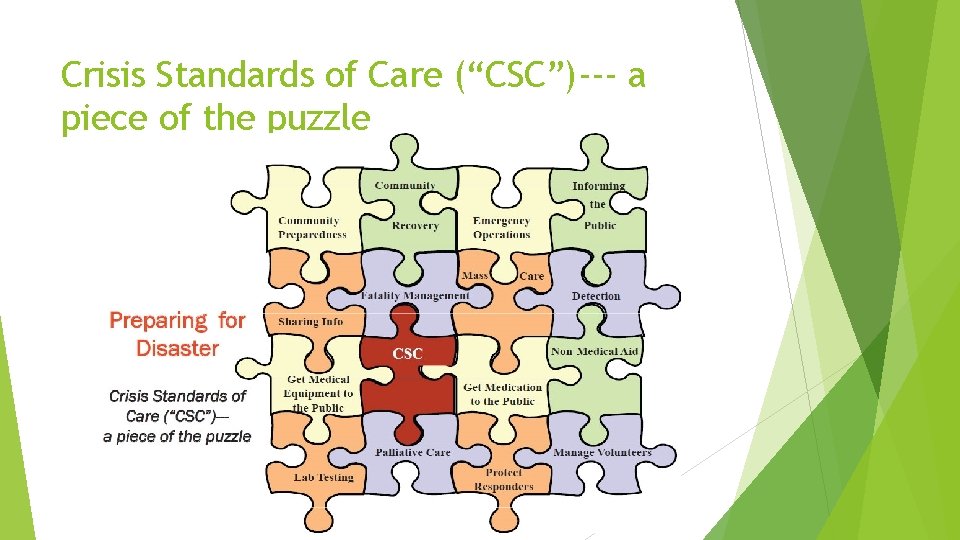
Crisis Standards of Care (“CSC”)--- a piece of the puzzle
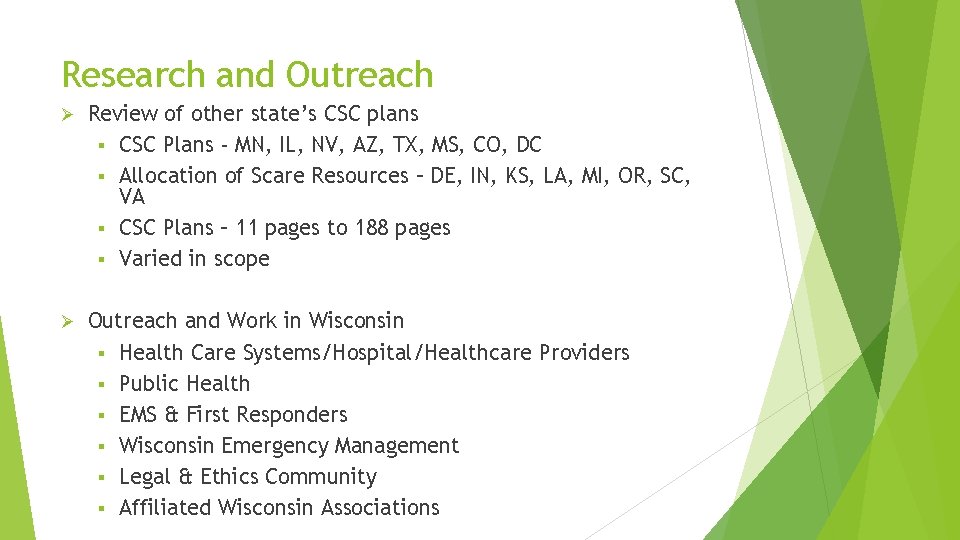
Research and Outreach Ø Review of other state’s CSC plans § CSC Plans - MN, IL, NV, AZ, TX, MS, CO, DC § Allocation of Scare Resources – DE, IN, KS, LA, MI, OR, SC, VA § CSC Plans – 11 pages to 188 pages § Varied in scope Ø Outreach and Work in Wisconsin § Health Care Systems/Hospital/Healthcare Providers § Public Health § EMS & First Responders § Wisconsin Emergency Management § Legal & Ethics Community § Affiliated Wisconsin Associations
Feedback and Questions Ø After the presentation do you feel that your overall knowledge of Crisis Standards of Care has improved? § Outstanding questions, additional questions or other issues? Ø What Crisis Standards of Care issues do you think about or worry about most? Ø Are there barriers in your scope of work, that during a disaster, would impede you from providing care? Ø Does your organization have set CSC guidance, plans or protocols? Ø § Are you familiar with them? § Do you exercise them? During a disaster situation what type of direction would be most helpful in making care decisions about patient treatment? § Ø General guidance or Specific Direction Would you be willing to participate in a work group to help develop Crisis Standards of Care in WI?
Contact Information Doug Hill djh 1967@gmail. com 715 -581 -5730