
Crisis Recognition Crisis Recognition Question to Consider What

- Slides: 35
Crisis Recognition
Crisis Recognition Question to Consider What are the key challenges police officers face when dealing with persons in behavioral crisis? 2
Crisis Recognition Recognizing a Person in Crisis 3
Crisis Recognition Behavioral Crisis: A Definition An episode of mental and/or emotional distress that is creating instability or danger and is considered disruptive by the community, friends, family or the person him/herself Adapted from the Seattle Police Department 4
Crisis Recognition How Does a Crisis Typically Occur? Precipitating event Person’s perception of the event Normal methods of coping fail Resulting in … Breakdown in control Inability to respond appropriately Feeling overwhelmed Adapted from Police Training Institute University of Illinois 5
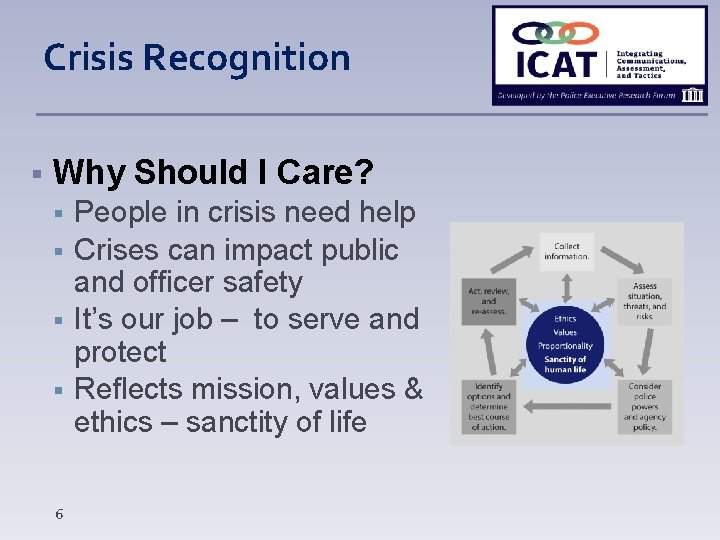
Crisis Recognition Why Should I Care? 6 People in crisis need help Crises can impact public and officer safety It’s our job – to serve and protect Reflects mission, values & ethics – sanctity of life
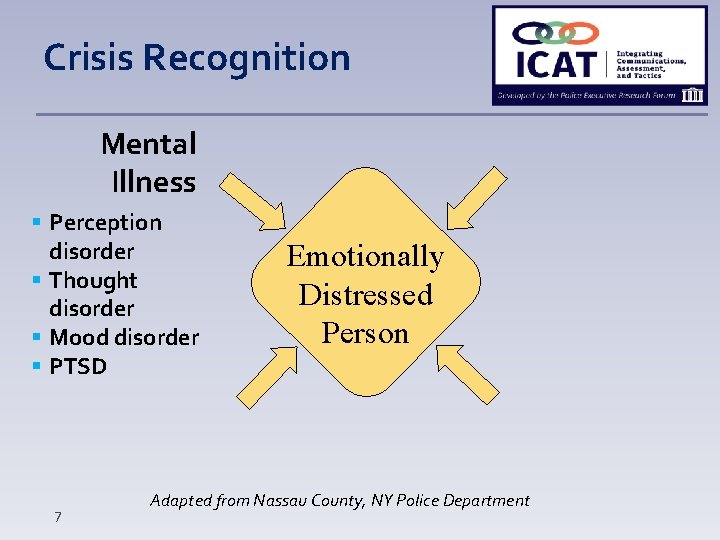
Crisis Recognition Mental Illness Perception disorder Thought disorder Mood disorder PTSD 7 Emotionally Distressed Person Adapted from Nassau County, NY Police Department
Crisis Recognition Optional Video – Tim Wynn, Mentor for the Philadelphia Veterans Court 8
Crisis Recognition Some Facts about People with Mental Illness 9 Biological illness like heart disease or cancer Nobody “chooses” to develop a mental illness There is no cure, but many people stabilize to live full, productive lives Medications help, but they are not perfect and there can be episodes or side-effects Adapted from Seattle Police Department
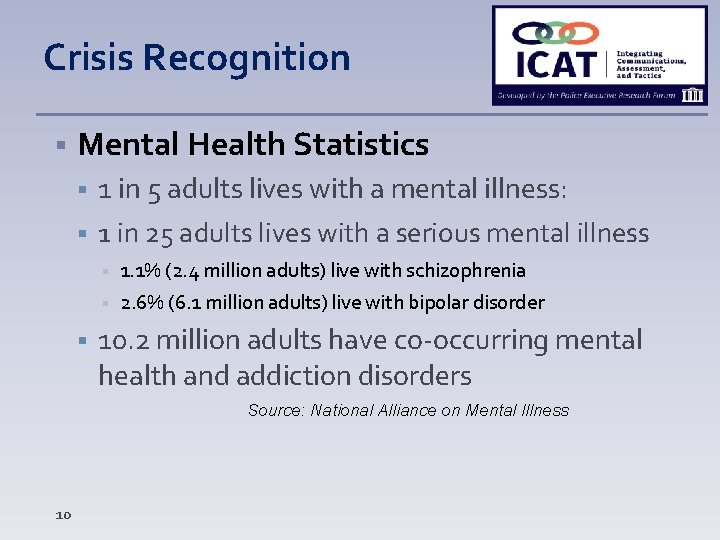
Crisis Recognition Mental Health Statistics 1 in 5 adults lives with a mental illness: 1 in 25 adults lives with a serious mental illness 1. 1% (2. 4 million adults) live with schizophrenia 2. 6% (6. 1 million adults) live with bipolar disorder 10. 2 million adults have co-occurring mental health and addiction disorders Source: National Alliance on Mental Illness 10
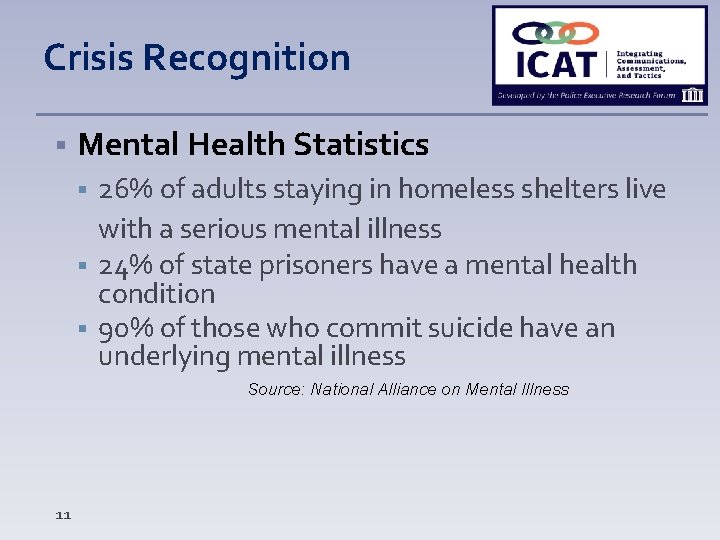
Crisis Recognition Mental Health Statistics 26% of adults staying in homeless shelters live with a serious mental illness 24% of state prisoners have a mental health condition 90% of those who commit suicide have an underlying mental illness Source: National Alliance on Mental Illness 11
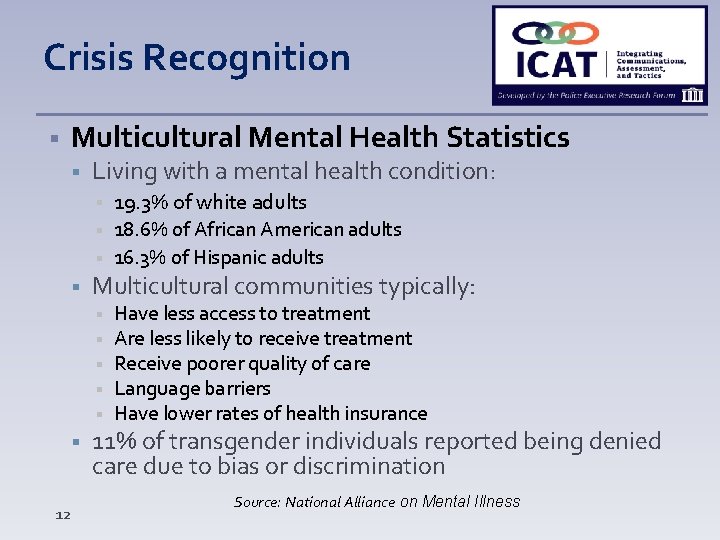
Crisis Recognition Multicultural Mental Health Statistics Living with a mental health condition: Multicultural communities typically: 12 19. 3% of white adults 18. 6% of African American adults 16. 3% of Hispanic adults Have less access to treatment Are less likely to receive treatment Receive poorer quality of care Language barriers Have lower rates of health insurance 11% of transgender individuals reported being denied care due to bias or discrimination Source: National Alliance on Mental Illness
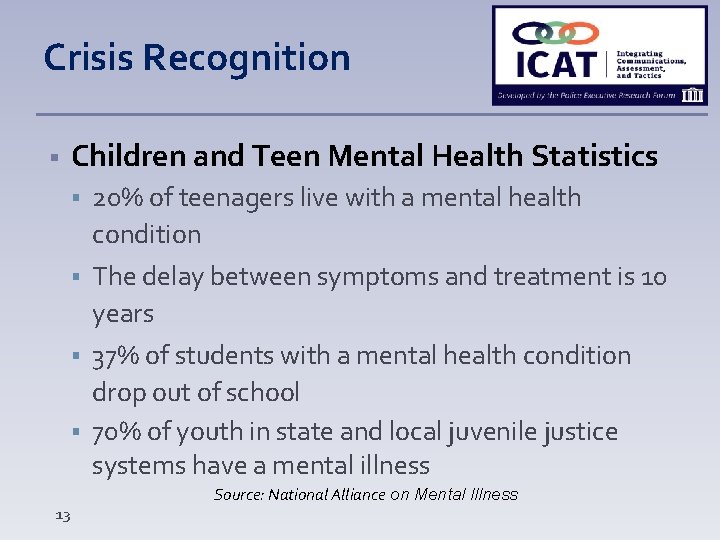
Crisis Recognition Children and Teen Mental Health Statistics 13 20% of teenagers live with a mental health condition The delay between symptoms and treatment is 10 years 37% of students with a mental health condition drop out of school 70% of youth in state and local juvenile justice systems have a mental illness Source: National Alliance on Mental Illness
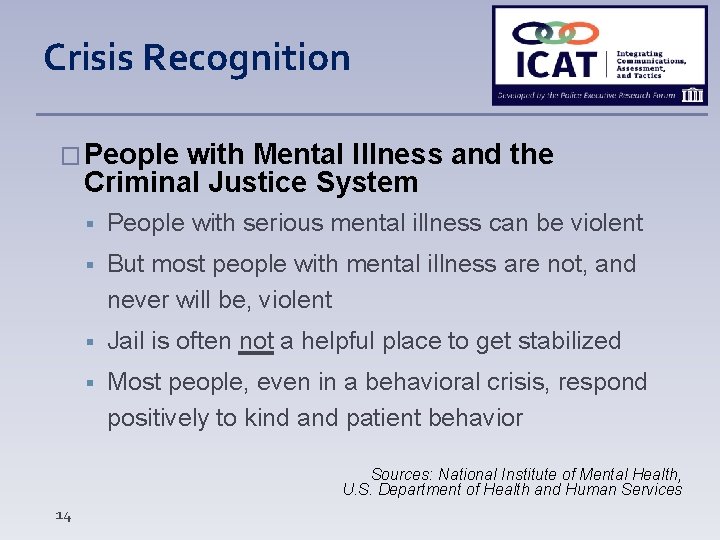
Crisis Recognition � People with Mental Illness and the Criminal Justice System People with serious mental illness can be violent But most people with mental illness are not, and never will be, violent Jail is often not a helpful place to get stabilized Most people, even in a behavioral crisis, respond positively to kind and patient behavior Sources: National Institute of Mental Health, U. S. Department of Health and Human Services 14
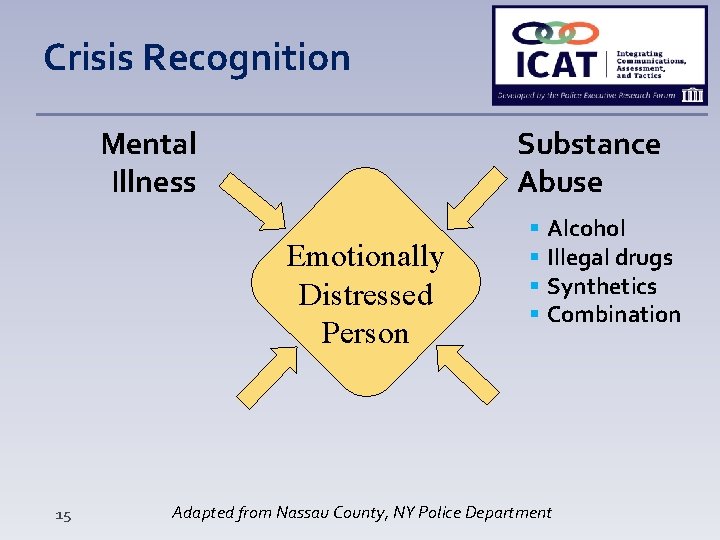
Crisis Recognition Mental Illness Substance Abuse Emotionally Distressed Person 15 Alcohol Illegal drugs Synthetics Combination Adapted from Nassau County, NY Police Department
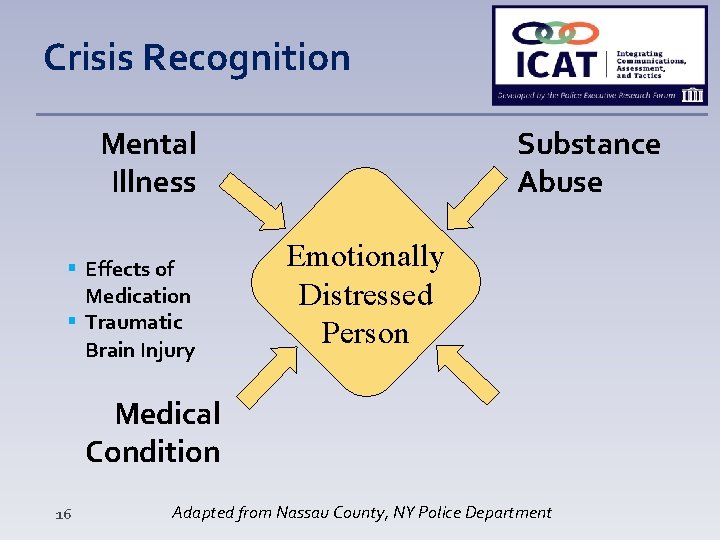
Crisis Recognition Mental Illness Effects of Medication Traumatic Brain Injury Substance Abuse Emotionally Distressed Person Medical Condition 16 Adapted from Nassau County, NY Police Department
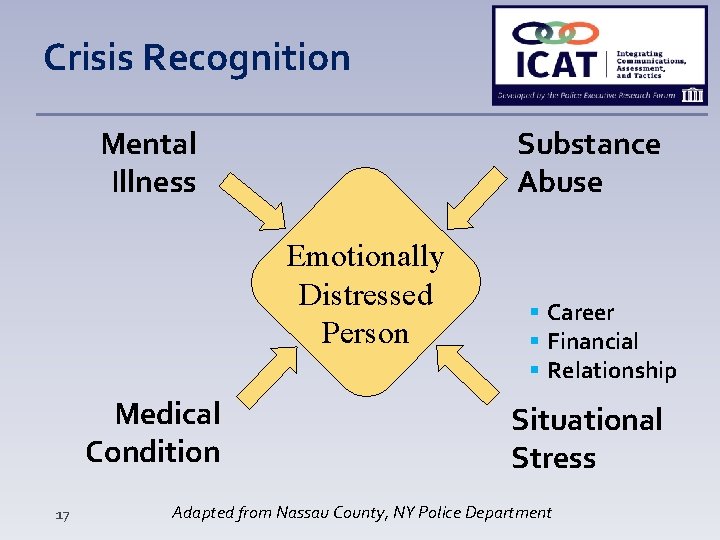
Crisis Recognition Mental Illness Substance Abuse Emotionally Distressed Person Medical Condition 17 Career Financial Relationship Situational Stress Adapted from Nassau County, NY Police Department
Crisis Recognition �Persons with Intellectual and Development Disabilities Autism spectrum disorder 18 Most common but not usually visibly apparent Persons living with autism may engage in “stimming”
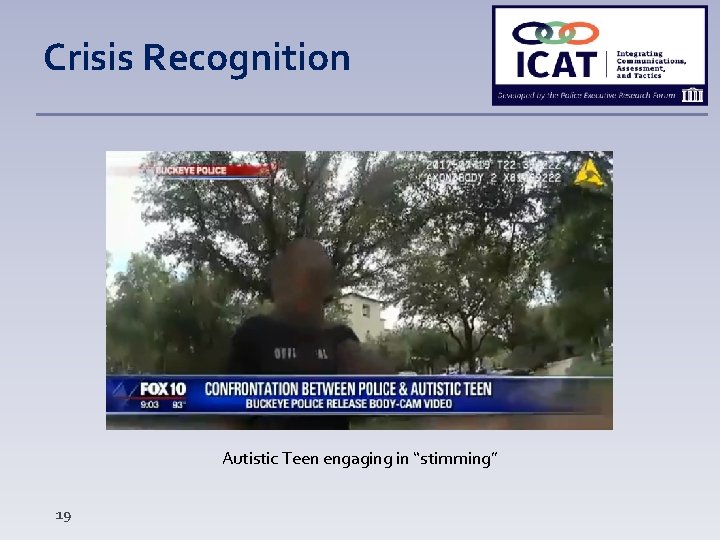
Crisis Recognition Autistic Teen engaging in “stimming” 19
Crisis Recognition �Persons with Intellectual and Development Disabilities Autism spectrum disorder Cerebral palsy Epilepsy Developmental delay May result in difficulties in communication, adaptive living skills, self -direction, mobility. 20
Crisis Recognition Persons with Physical Disabilities Deaf/hard of hearing Blind/low vision Muscular Dystrophy Multiple Sclerosis Stroke Alzheimer’s Huntington’s Disease Head/spinal cord injury May make it difficult for people to hear, comprehend and follow directions – and to respond back to you. 21
Crisis Recognition Persons with disabilities may exhibit same behaviors as EDPs Don’t always assume it’s mental illness Could be one of many factors – or a combination of several Focus on subject’s behavior 22
Crisis Recognition Another Approach Ask the person … Does the person have a mental health condition? A physical or developmental disability? Ask Dispatch 23 Are you on medication? Do you normally see a doctor? Ask family members or friends nearby … – Ask! Get more information, ask follow-up questions
Crisis Recognition Why do you want to know what’s behind someone’s erratic behavior? 24 Best approaches to help stabilize the situation What communications strategies to employ What additional resources you may need
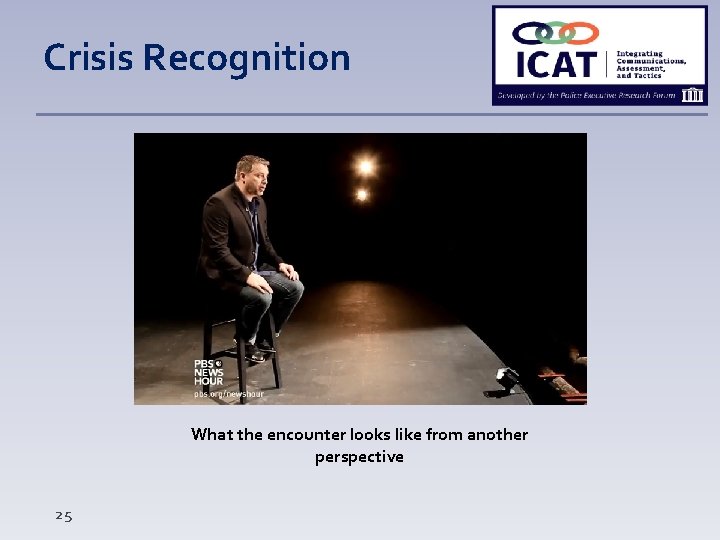
Crisis Recognition What the encounter looks like from another perspective 25
Crisis Recognition Suicide by Cop - Content Courtesy of NYPD Detective Jeff Thompson, Ph. D. 26
Crisis Recognition Suicide by Cop Definition: A deliberate act motivated, in whole or in part, by the subject’s desire to die by suicide, which provokes the law enforcement officer(s) to act, with the result being a justifiable homicide by the officer(s). -Detective Jeff Thompson, NYPD 27
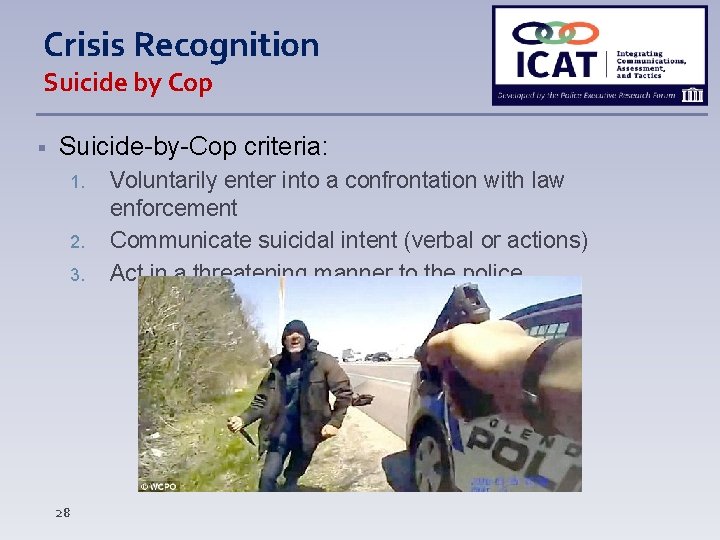
Crisis Recognition Suicide by Cop Suicide-by-Cop criteria: 1. 2. 3. 28 Voluntarily enter into a confrontation with law enforcement Communicate suicidal intent (verbal or actions) Act in a threatening manner to the police
Crisis Recognition Suicide by Cop Suicide by cop is prevalent … and often unpredictable Study of 700 officer-involved shootings 36% were suicide-by-cop incidents 17% of these suicides were planned 81% were spontaneous Mohandie, Meloy, and Collins. “Suicide by Cop Among Officer-Involved Shooting Cases. ” Journal of Forensic Science (2009) 29
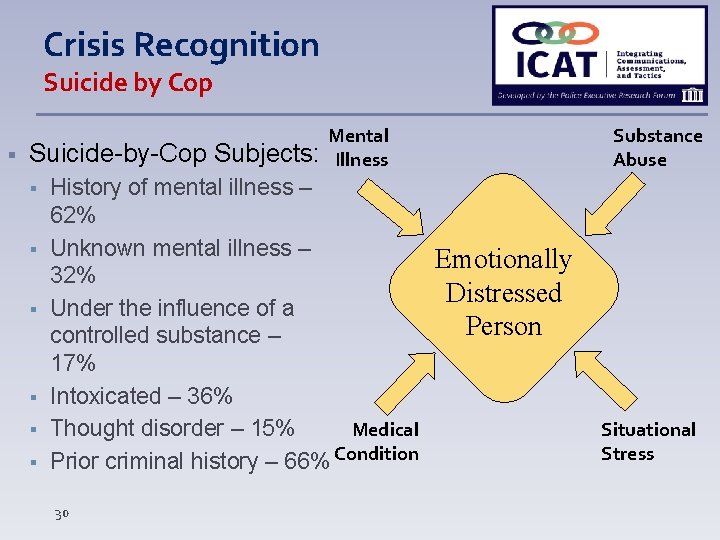
Crisis Recognition Suicide by Cop Suicide-by-Cop Subjects: Mental Illness History of mental illness – 62% Unknown mental illness – 32% Under the influence of a controlled substance – 17% Intoxicated – 36% Thought disorder – 15% Medical Prior criminal history – 66% Condition 30 Substance Abuse Emotionally Distressed Person Situational Stress
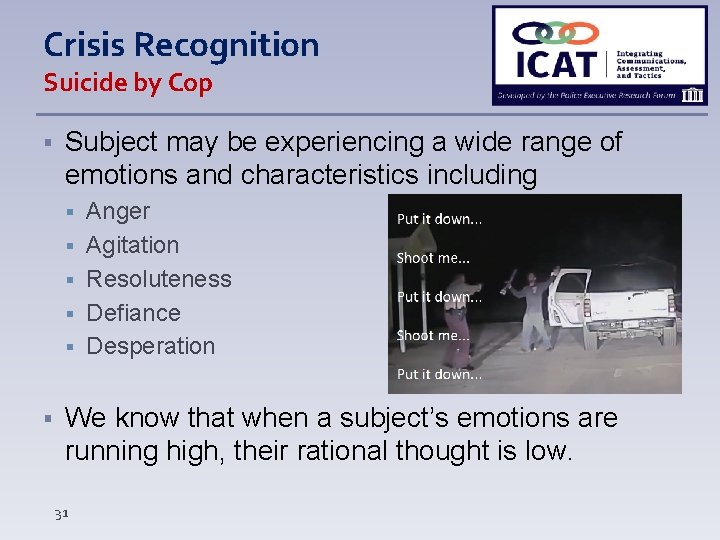
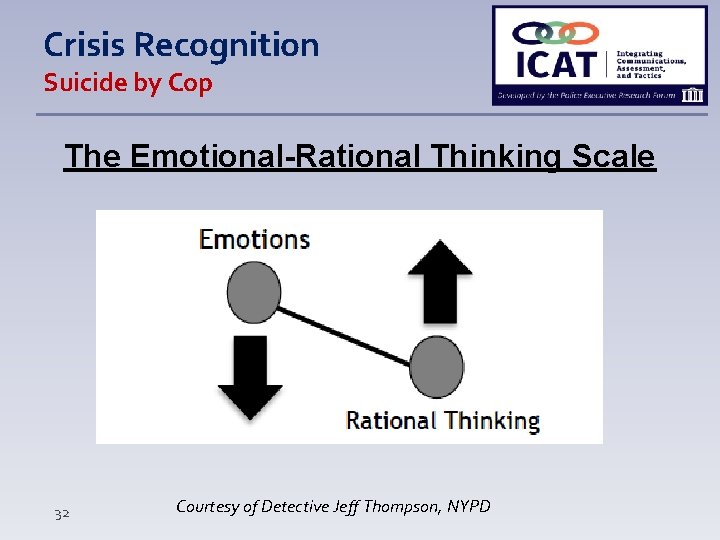
Crisis Recognition Suicide by Cop Subject may be experiencing a wide range of emotions and characteristics including Anger Agitation Resoluteness Defiance Desperation We know that when a subject’s emotions are running high, their rational thought is low. 31
Crisis Recognition Suicide by Cop The Emotional-Rational Thinking Scale 32 Courtesy of Detective Jeff Thompson, NYPD
Crisis Recognition �Quick Recap �There could be many causes for a person to be in crisis – mental illness is one of them �Your priority is not to diagnose and resolve the situation – it’s to defuse, stabilize and get help 33
Crisis Recognition �Quick Recap �As emotions rise, rational thinking declines – lowering their emotions helps people think more rationally �Empathy, communication, respect, making a connection – all about trying to get voluntary compliance 34
Crisis Recognition Thoughts? Questions? Observations? 35