
Crisis Negotiations Hostage Negotiation Development Definitions and Characteristics

- Slides: 16
Crisis Negotiations Hostage Negotiation: Development, Definitions, and Characteristics
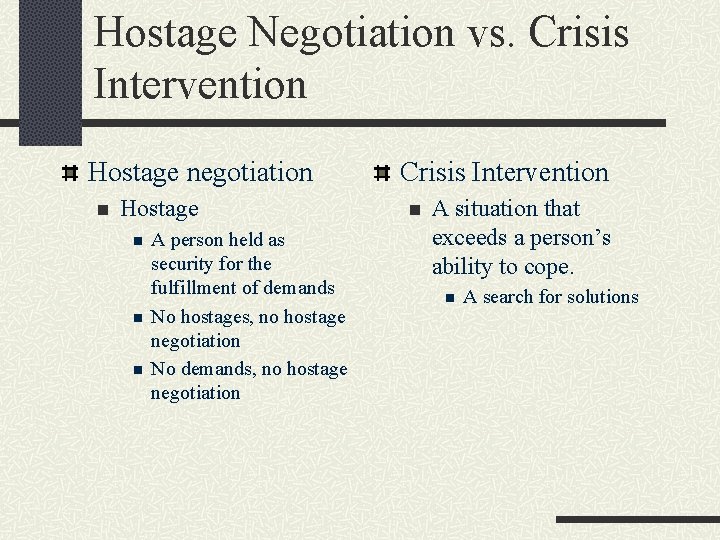
Hostage Negotiation vs. Crisis Intervention Hostage negotiation n Hostage n n n A person held as security for the fulfillment of demands No hostages, no hostage negotiation No demands, no hostage negotiation Crisis Intervention n A situation that exceeds a person’s ability to cope. n A search for solutions
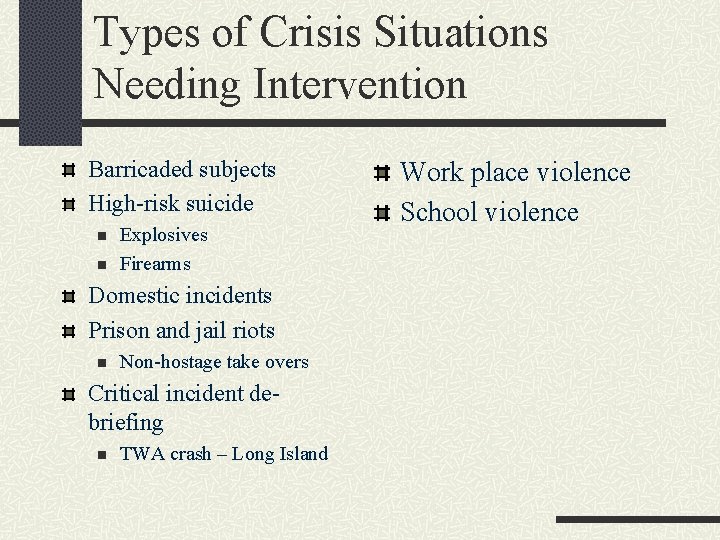
Types of Crisis Situations Needing Intervention Barricaded subjects High-risk suicide n n Explosives Firearms Domestic incidents Prison and jail riots n Non-hostage take overs Critical incident debriefing n TWA crash – Long Island Work place violence School violence
Historical Options Individual officer verbal and social skills Walk away Mass manpower and firepower
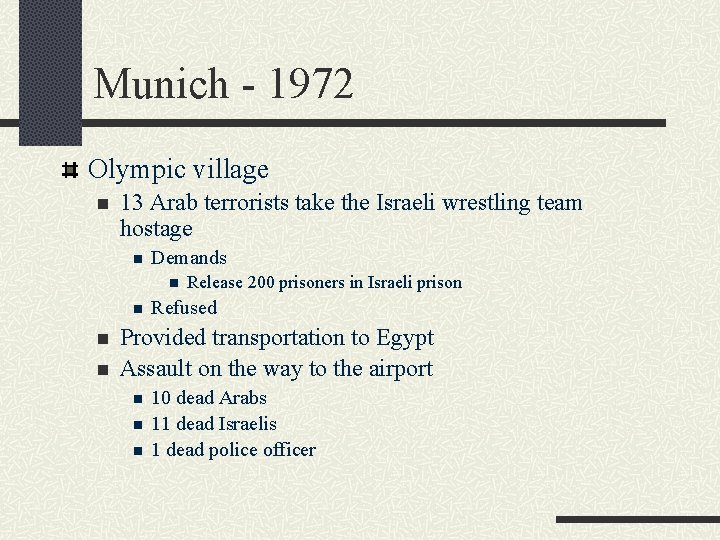
Munich - 1972 Olympic village n 13 Arab terrorists take the Israeli wrestling team hostage n Demands n n Release 200 prisoners in Israeli prison Refused Provided transportation to Egypt Assault on the way to the airport n n n 10 dead Arabs 11 dead Israelis 1 dead police officer
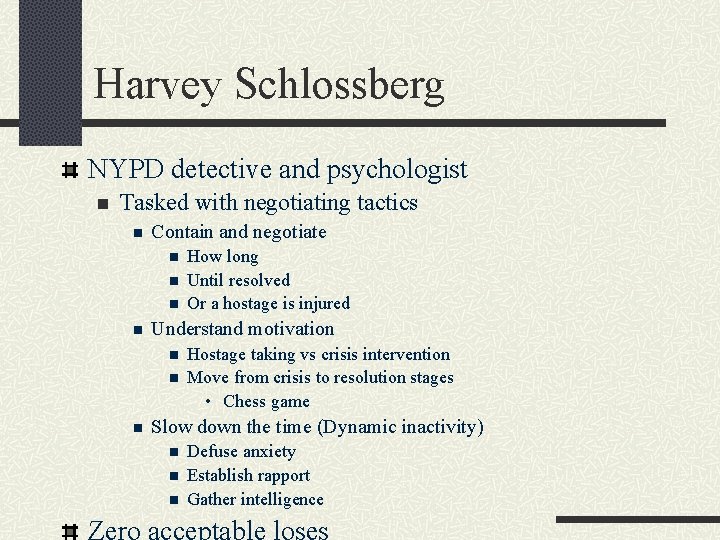
Harvey Schlossberg NYPD detective and psychologist n Tasked with negotiating tactics n Contain and negotiate n n Understand motivation n How long Until resolved Or a hostage is injured Hostage taking vs crisis intervention Move from crisis to resolution stages • Chess game Slow down the time (Dynamic inactivity) n n n Defuse anxiety Establish rapport Gather intelligence Zero acceptable loses
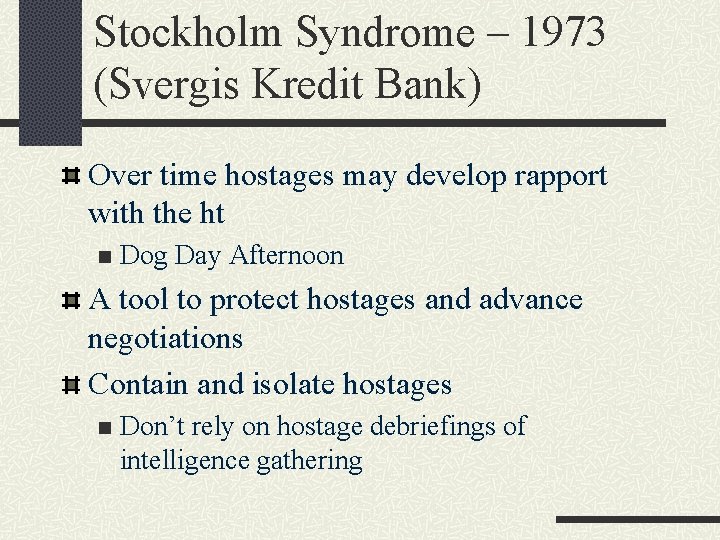
Stockholm Syndrome – 1973 (Svergis Kredit Bank) Over time hostages may develop rapport with the ht n Dog Day Afternoon A tool to protect hostages and advance negotiations Contain and isolate hostages n Don’t rely on hostage debriefings of intelligence gathering
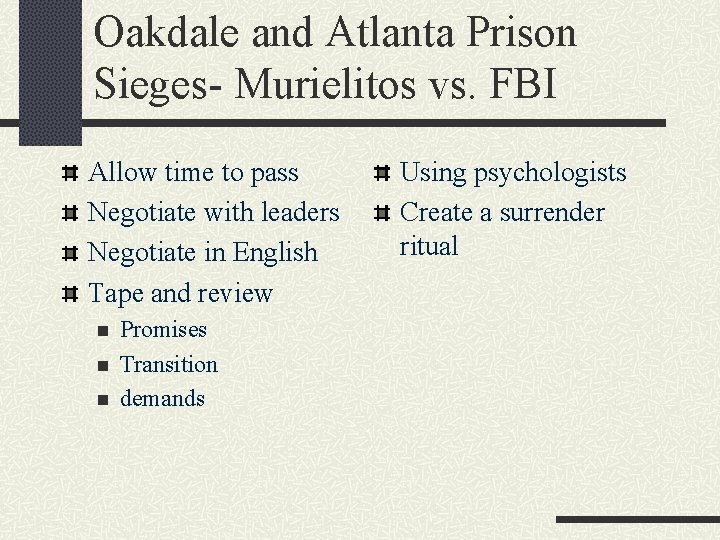
Oakdale and Atlanta Prison Sieges- Murielitos vs. FBI Allow time to pass Negotiate with leaders Negotiate in English Tape and review n n n Promises Transition demands Using psychologists Create a surrender ritual
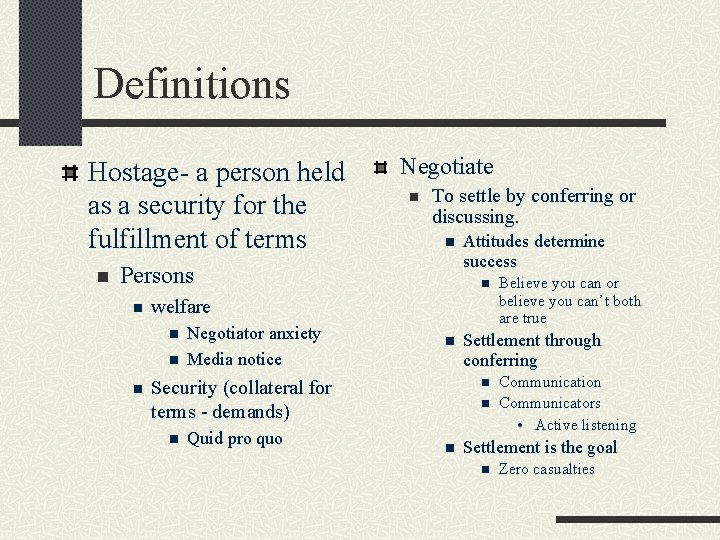
Definitions Hostage- a person held as a security for the fulfillment of terms n Negotiate n To settle by conferring or discussing. n Persons n n welfare n n n Attitudes determine success Negotiator anxiety Media notice n Security (collateral for terms - demands) n Quid pro quo Settlement through conferring n n n Believe you can or believe you can’t both are true Communication Communicators • Active listening Settlement is the goal n Zero casualties
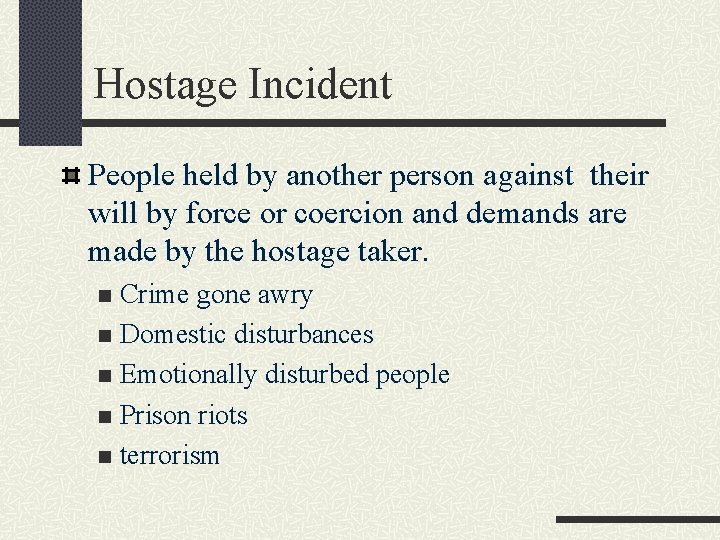
Hostage Incident People held by another person against their will by force or coercion and demands are made by the hostage taker. Crime gone awry n Domestic disturbances n Emotionally disturbed people n Prison riots n terrorism n
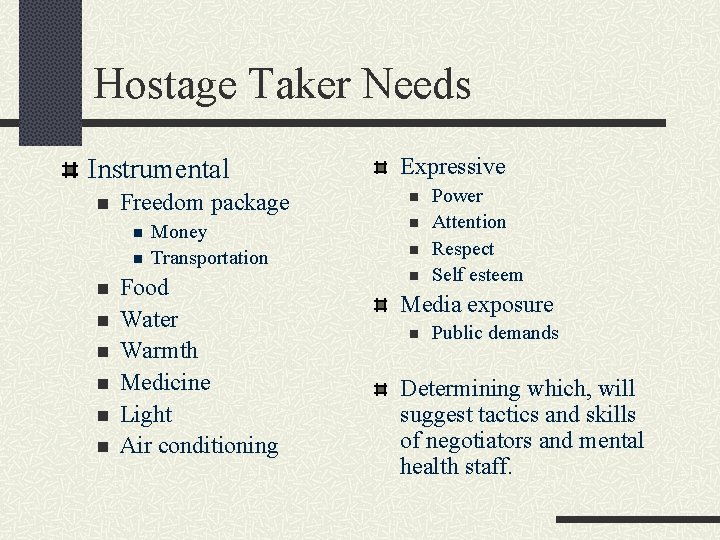
Hostage Taker Needs Instrumental n Freedom package n n n n Money Transportation Food Water Warmth Medicine Light Air conditioning Expressive n n Power Attention Respect Self esteem Media exposure n Public demands Determining which, will suggest tactics and skills of negotiators and mental health staff.
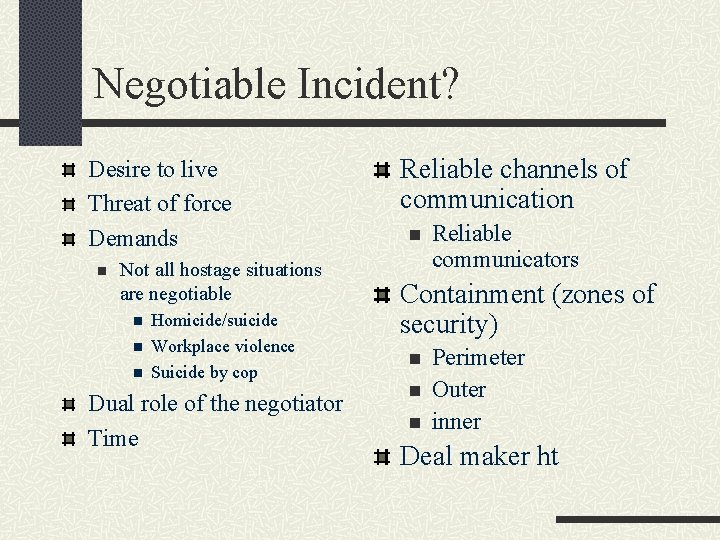
Negotiable Incident? Desire to live Threat of force Demands n Not all hostage situations are negotiable n n n Homicide/suicide Workplace violence Suicide by cop Dual role of the negotiator Time Reliable channels of communication n Reliable communicators Containment (zones of security) n n n Perimeter Outer inner Deal maker ht
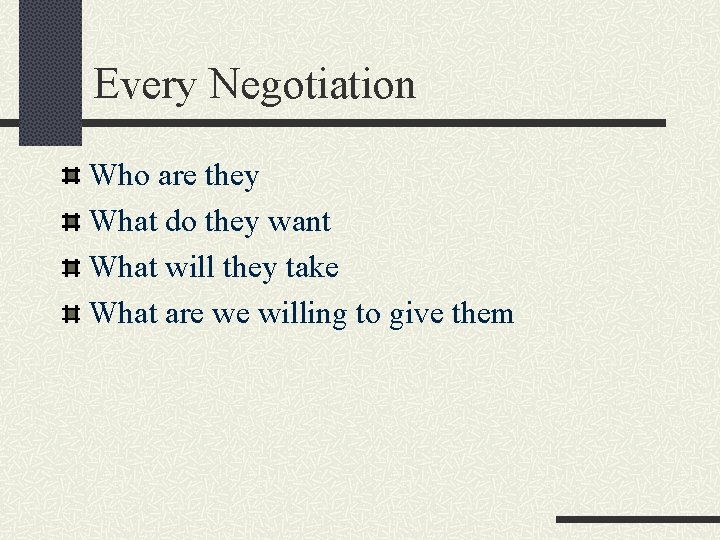
Every Negotiation Who are they What do they want What will they take What are we willing to give them
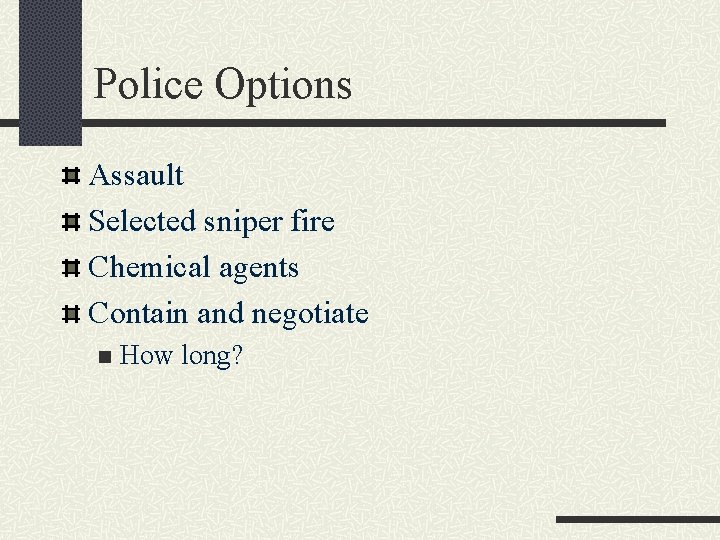
Police Options Assault Selected sniper fire Chemical agents Contain and negotiate n How long?
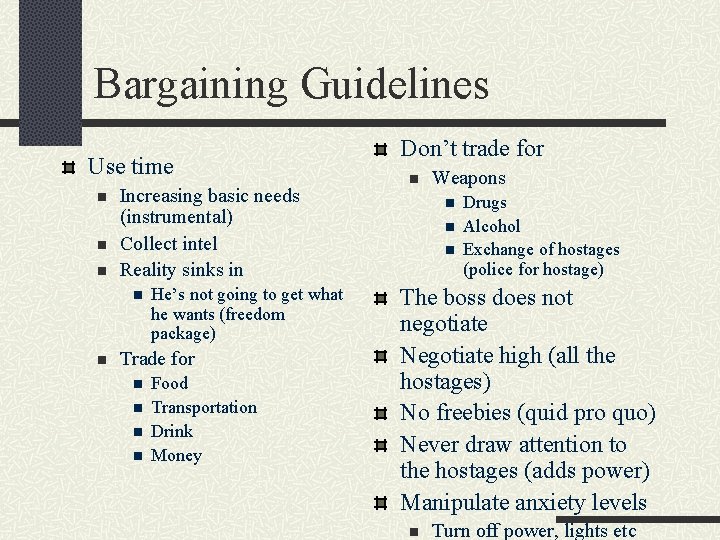
Bargaining Guidelines Use time n n n Increasing basic needs (instrumental) Collect intel Reality sinks in n n He’s not going to get what he wants (freedom package) Trade for n n Food Transportation Drink Money Don’t trade for n Weapons n n n Drugs Alcohol Exchange of hostages (police for hostage) The boss does not negotiate Negotiate high (all the hostages) No freebies (quid pro quo) Never draw attention to the hostages (adds power) Manipulate anxiety levels n Turn off power, lights etc
Chapter in Review Of what value is the cliché “ you can’t be rational and irrational at the same time”? What’s the difference between “instrumental needs” and “expressive needs” Would you handle a hostage taker who makes demands differently from one who does not? Why? How long do negotiations continue? Under what circumstances is a tactical response warranted? What’s the difference between crisis negotiation and hostage negotiation?