
Crisis Care Assessment Deescalation and Prevention Part 1

- Slides: 33
Crisis Care: Assessment, De-escalation, and Prevention Part 1 Presented by Daria Redmon, Psy. D & Kerry Bastian, RN
Disclaimer This presentation was prepared for the Mountain Plains Mental Health Technology Transfer Center (TTC) Network under a cooperative agreement from the Substance Abuse and Mental Health Services Administration (SAMHSA). All material appearing in this presentation, except that taken directly from copyrighted sources, is in the public domain and may be reproduced or copied without permission from SAMHSA or the authors. Citation of the source is appreciated. Do not reproduce or distribute this presentation for a fee without specific, written authorization from the Mountain Plains Mental Health Technology Transfer Center. For more information on obtaining copies of this presentation, call 701777 -6367. At the time of this presentation, Elinore F. Mc. Cance-Katz, served as SAMHSA Assistant Secretary. The opinions expressed herein are the views of Daria Redmon, Psy. D and Kerry Bastian, RN and do not reflect the official position of the Department of Health and Human Services (DHHS), SAMHSA. No official support or endorsement of DHHS, SAMHSA, for the opinions described in this document is intended or should be inferred.
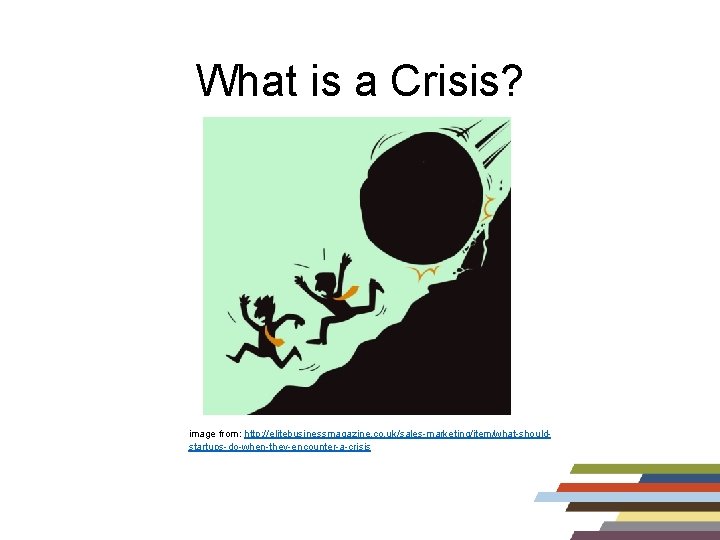
What is a Crisis? image from: http: //elitebusinessmagazine. co. uk/sales-marketing/item/what-shouldstartups-do-when-they-encounter-a-crisis
Crisis • A short-term and overwhelming situation; • Involves a change of an individual's normal and stable state where the usual methods of coping and problem solving do not work • Crisis may present in different ways • De-escalation is needed when subjects become agitated
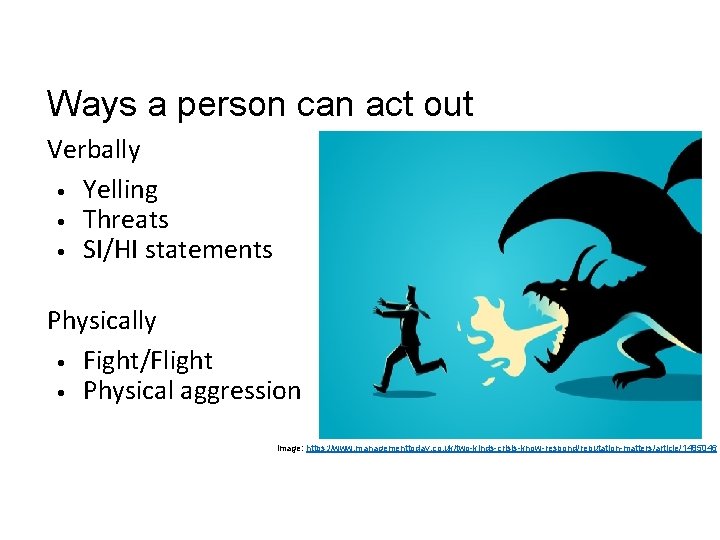
Ways a person can act out Verbally • Yelling • Threats • SI/HI statements Physically • Fight/Flight • Physical aggression image: https: //www. managementtoday. co. uk/two-kinds-crisis-know-respond/reputation-matters/article/1485046
Assessment
Safety First • Always provide easy egress for yourself and the subject • Physical space and distance • Risk assessment • • • Intent Plan Means image from: https: //www. meltwater. com/resources/demand-webinar-crisis-management/
When to involve help CIT Officers Co-responders image from: https: //digitaltraininginstitute. ie/crisis-management-solutions-for-digital-pr-situations/
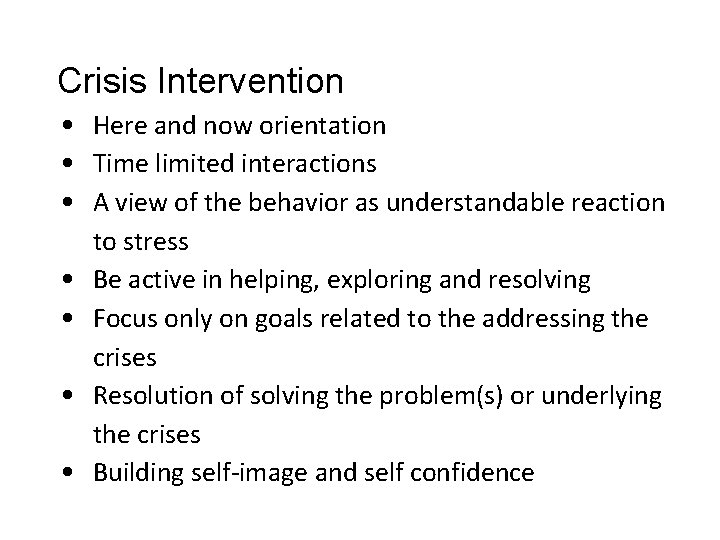
Crisis Intervention • Here and now orientation • Time limited interactions • A view of the behavior as understandable reaction • • to stress Be active in helping, exploring and resolving Focus only on goals related to the addressing the crises Resolution of solving the problem(s) or underlying the crises Building self-image and self confidence
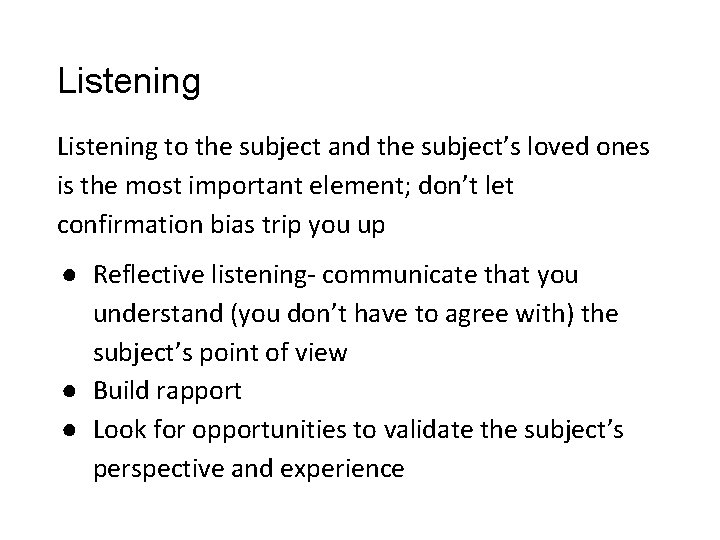
Listening to the subject and the subject’s loved ones is the most important element; don’t let confirmation bias trip you up ● Reflective listening- communicate that you understand (you don’t have to agree with) the subject’s point of view ● Build rapport ● Look for opportunities to validate the subject’s perspective and experience
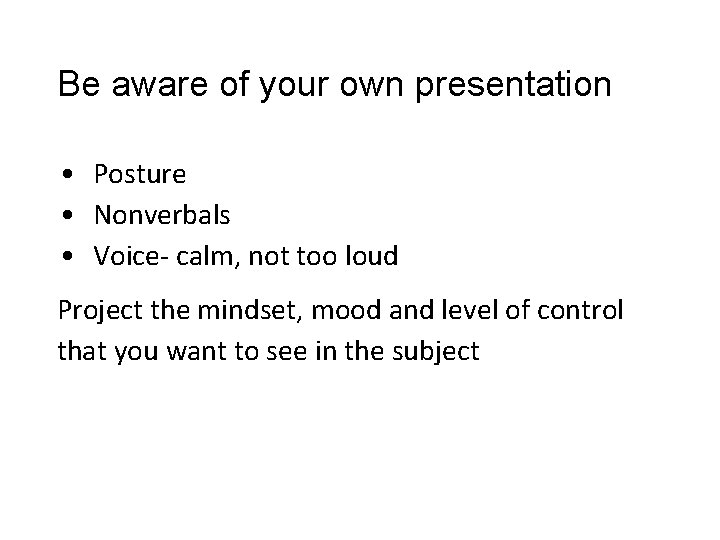
Be aware of your own presentation • Posture • Nonverbals • Voice- calm, not too loud Project the mindset, mood and level of control that you want to see in the subject
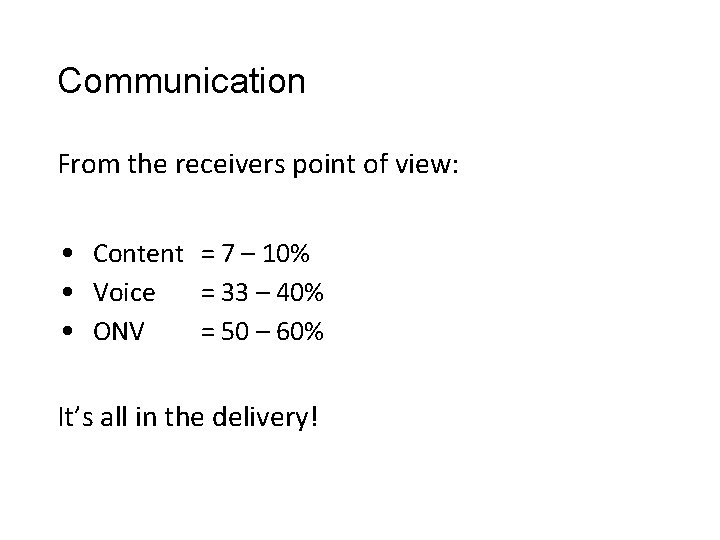
Communication From the receivers point of view: • Content = 7 – 10% • Voice = 33 – 40% • ONV = 50 – 60% It’s all in the delivery!
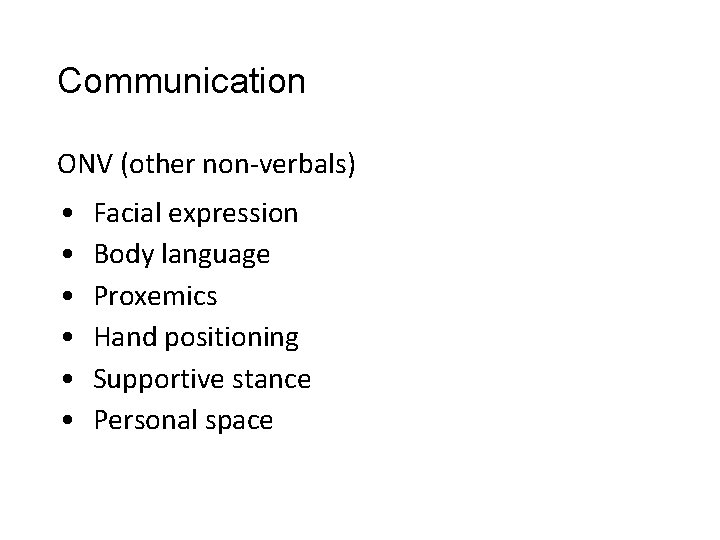
Communication ONV (other non-verbals) • • • Facial expression Body language Proxemics Hand positioning Supportive stance Personal space
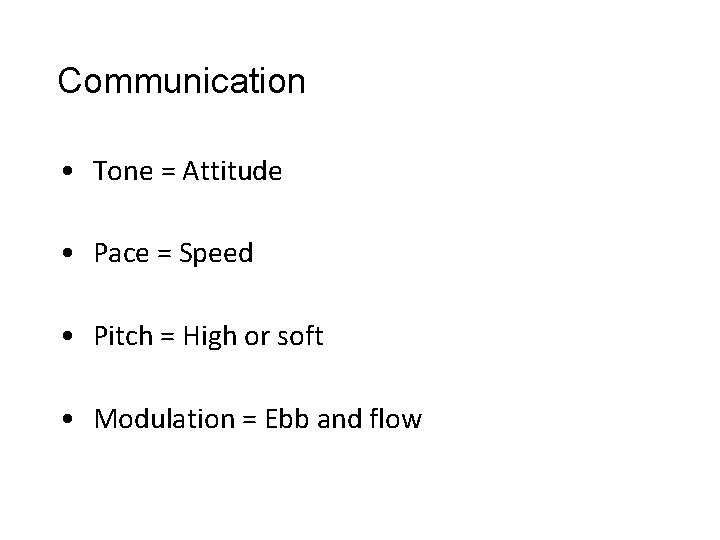
Communication • Tone = Attitude • Pace = Speed • Pitch = High or soft • Modulation = Ebb and flow
Building Relationships make the biggest difference in deescalating a situation • Do you have a relationship? • Do you have a therapeutic alliance? • What is your skill set?
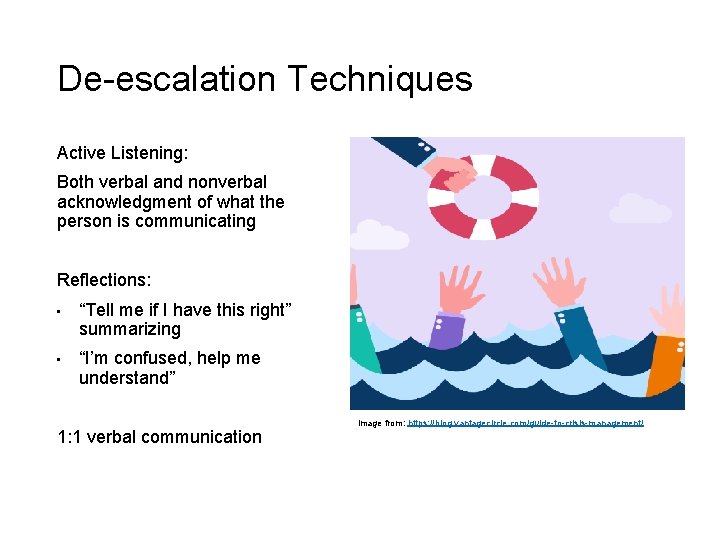
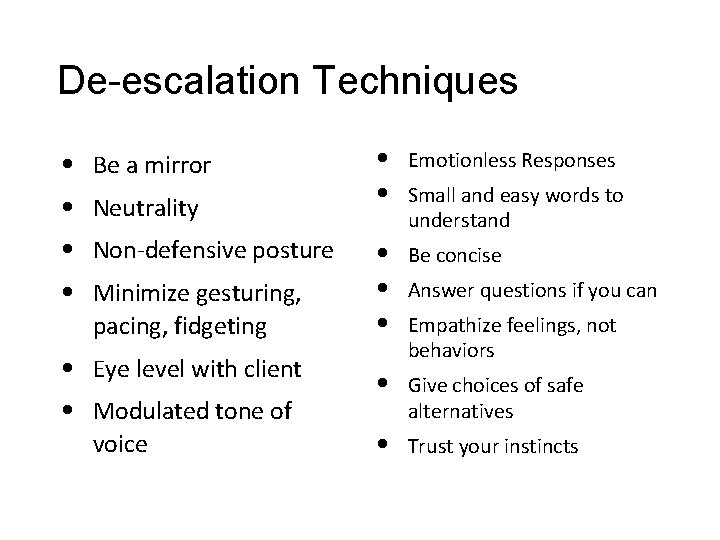
De-escalation Techniques Active Listening: Both verbal and nonverbal acknowledgment of what the person is communicating Reflections: • • “Tell me if I have this right” summarizing “I’m confused, help me understand” 1: 1 verbal communication image from: https: //blog. vantagecircle. com/guide-to-crisis-management/
De-escalation Techniques • • Be a mirror Neutrality Non-defensive posture Minimize gesturing, pacing, fidgeting • Eye level with client • Modulated tone of voice • • Emotionless Responses • • • Be concise • Give choices of safe alternatives • Trust your instincts Small and easy words to understand Answer questions if you can Empathize feelings, not behaviors
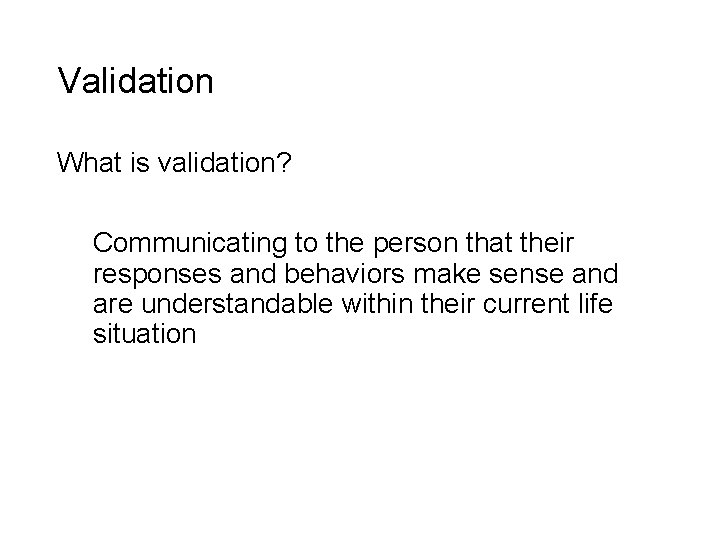
Validation What is validation? Communicating to the person that their responses and behaviors make sense and are understandable within their current life situation
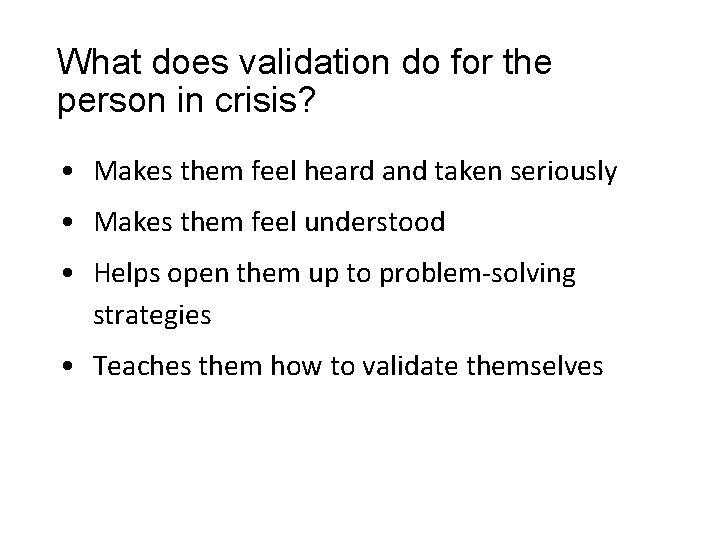
What does validation do for the person in crisis? • Makes them feel heard and taken seriously • Makes them feel understood • Helps open them up to problem-solving strategies • Teaches them how to validate themselves
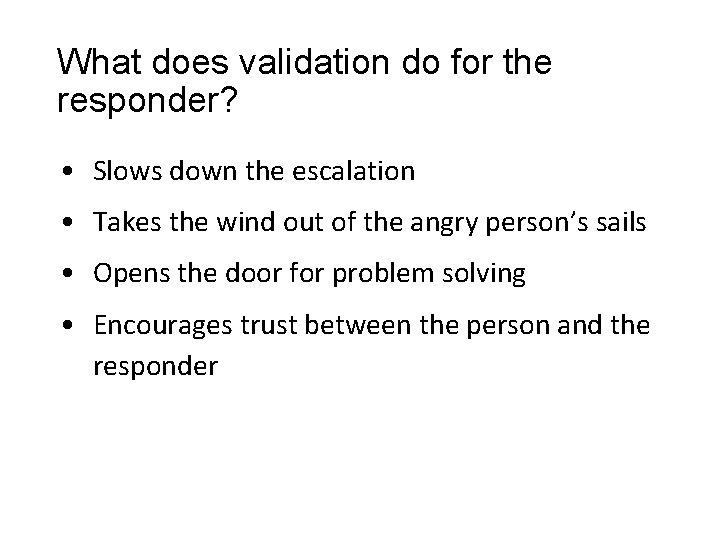
What does validation do for the responder? • Slows down the escalation • Takes the wind out of the angry person’s sails • Opens the door for problem solving • Encourages trust between the person and the responder
How do we validate? • 90% is our attitude • Active listening • Eye contact • Give your full attention • Accurate reflection of thoughts and feelings without interpreting or problem solving
Direct Validation • You don’t have to agree with their point of view • You don’t have to validate every communication or behavior • Shows the other person that they are important • Builds understanding and improved communication • Helps regulate emotions
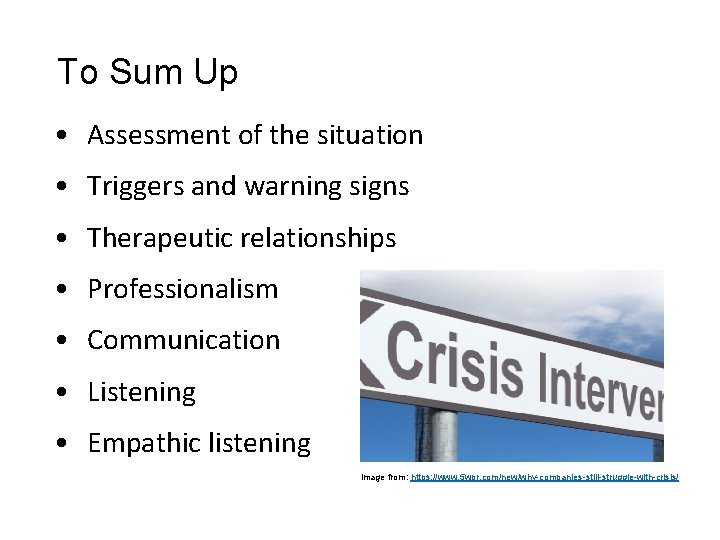
To Sum Up • Assessment of the situation • Triggers and warning signs • Therapeutic relationships • Professionalism • Communication • Listening • Empathic listening image from: https: //www. 5 wpr. com/new/why-companies-still-struggle-with-crisis/
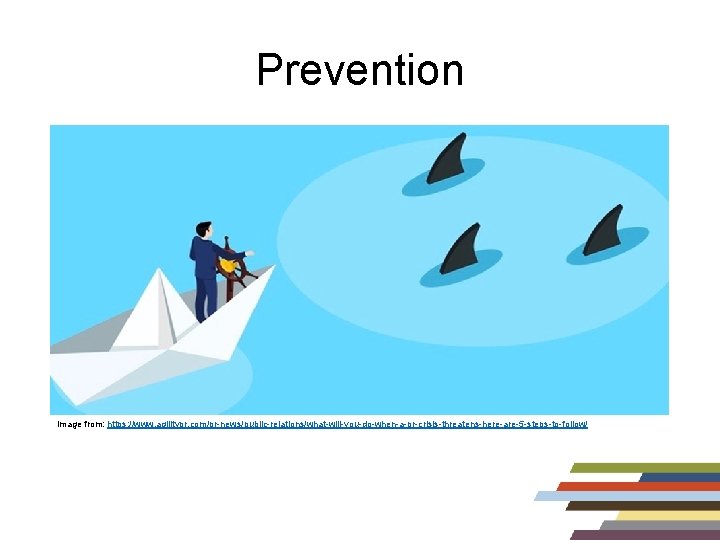
Prevention image from: https: //www. agilitypr. com/pr-news/public-relations/what-will-you-do-when-a-pr-crisis-threatens-here-are-5 -steps-to-follow/
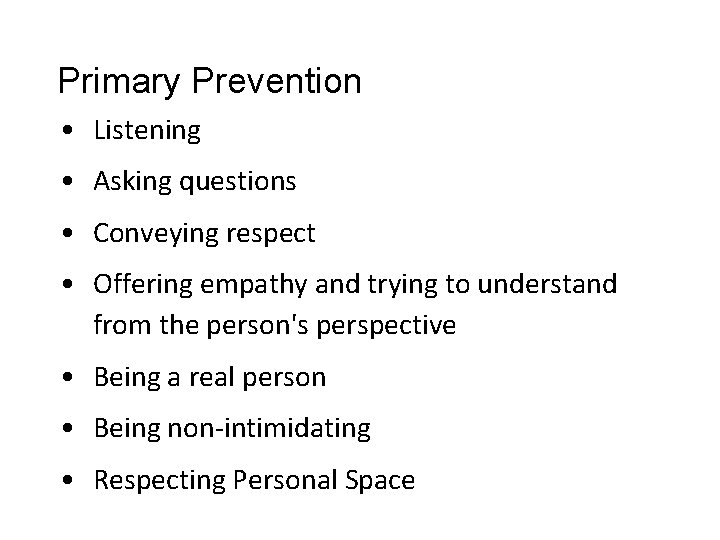
Primary Prevention • Listening • Asking questions • Conveying respect • Offering empathy and trying to understand from the person's perspective • Being a real person • Being non-intimidating • Respecting Personal Space
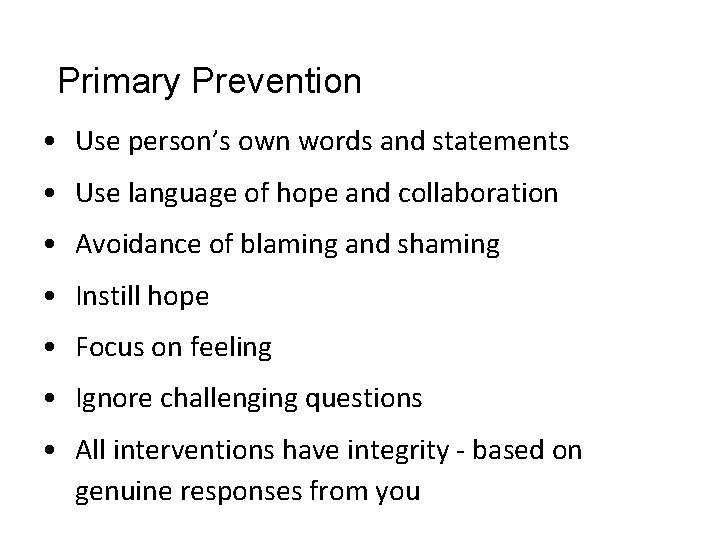
Primary Prevention • Use person’s own words and statements • Use language of hope and collaboration • Avoidance of blaming and shaming • Instill hope • Focus on feeling • Ignore challenging questions • All interventions have integrity - based on genuine responses from you
After Crisis
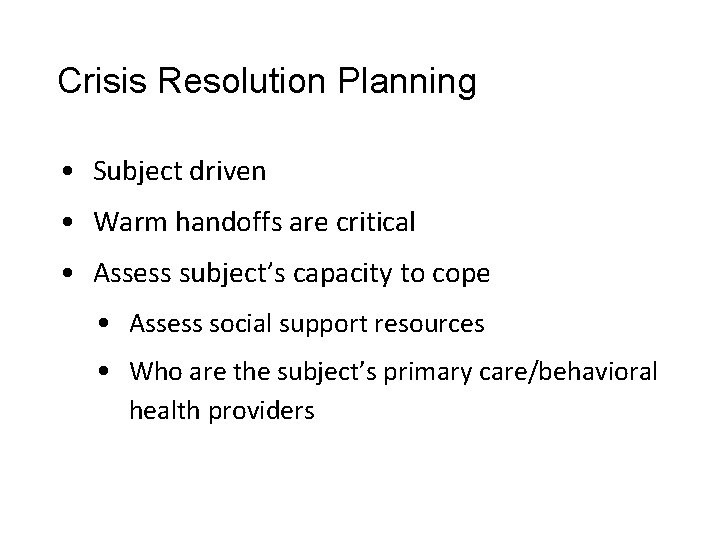
Crisis Resolution Planning • Subject driven • Warm handoffs are critical • Assess subject’s capacity to cope • Assess social support resources • Who are the subject’s primary care/behavioral health providers
Crisis Resolution Planning • Assess subject’s need for community supports • Safety First • Housing? Respite? • Medical needs? • Financial assistance? TANF, SNAP, Medicaid, utility assistance, etc.
Debriefing Events • Post de-escalation event • With team or colleague; involve as many participants as feasible • Structured approach vs less structured • Lessons learned- what will you do differently next time? What can others do differently? • Self-care • Understanding own limits and coping skills • Preventing burnout, compassion fatigue
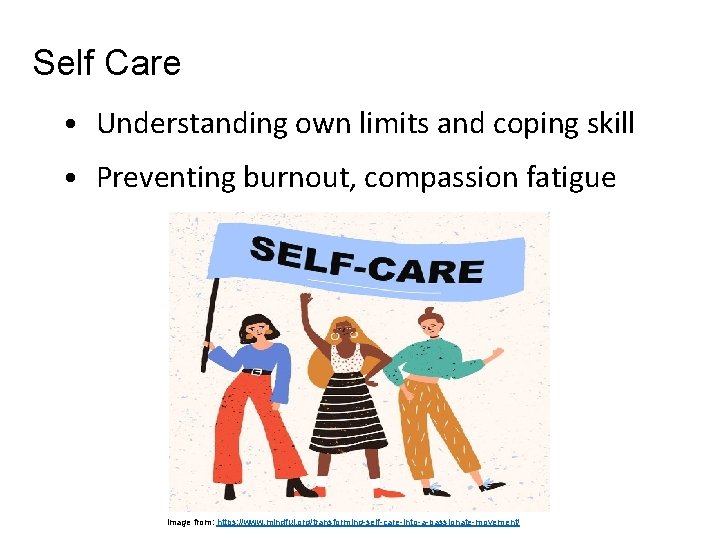
Self Care • Understanding own limits and coping skill • Preventing burnout, compassion fatigue image from: https: //www. mindful. org/transforming-self-care-into-a-passionate-movement/
Questions?
Thank you for attending! See you for Crisis Care Part 2 January 28, 2020 11 am Mountain/12 pm Central Please visit the MP-MHTTC website: https: //mhttcnetwork. org/centers/mountain-plains-mhttc