
Criminal Justice 400 TYPES AND CLASSIFICATIONS OF CRIMES


- Slides: 21
Criminal Justice 400 TYPES AND CLASSIFICATIONS OF CRIMES
Classification of Crimes q Source Ø Common Law Ø Statute Ø Case Law q Type Ø Felony Ø Misdemeanor q Harm that Occurs Ø Crimes against Persons Ø Property Crimes
Development of Criminal Law Code of Hammurabi Magna Carta Common Law (English)
Code of Hammurabi Earliest known written law Lex talionis – “Law of retaliation”
Magna Carta (1215) Delineated illegal behavior Granted rights to citizens Limited the capricious power of the king
English Common Law Judge-made Based upon precedent Similar cases should be decided in a similar manner Formed the basis for American law
Stare decisis “To stand by a decision” Precedent of previous case becomes the standard for subsequent cases
Sources of Law Common Law Constitutions/Statutes Case Law
Criminal Law Wrong against society Incarceration Fine
Civil Law Tort (personal wrong) Loss of privilege Monetary judgment
Substantive Law Behaviors defined as a crime Defines what individuals are allowed “to do” Includes elements of the offense and penalties
Procedural Law Prescribes methods for legal enforcement Specifies how the criminal justice system deals with offenders Due Process
Case Law Stare decisis Jurisdiction specific
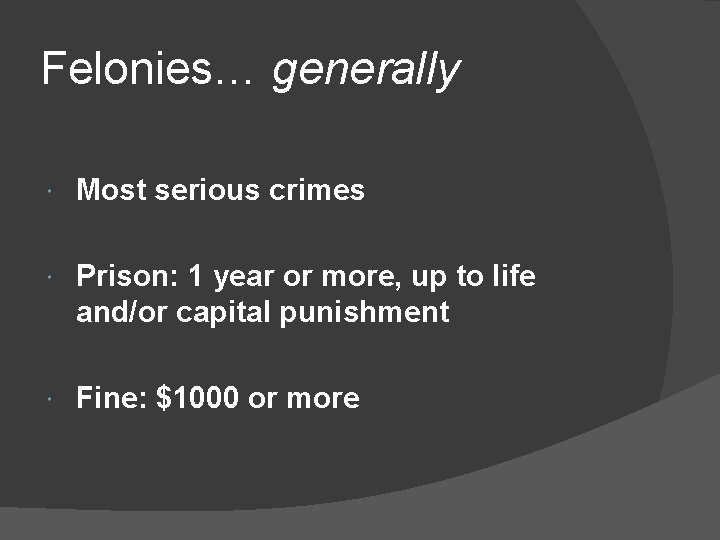
Felonies… generally Most serious crimes Prison: 1 year or more, up to life and/or capital punishment Fine: $1000 or more
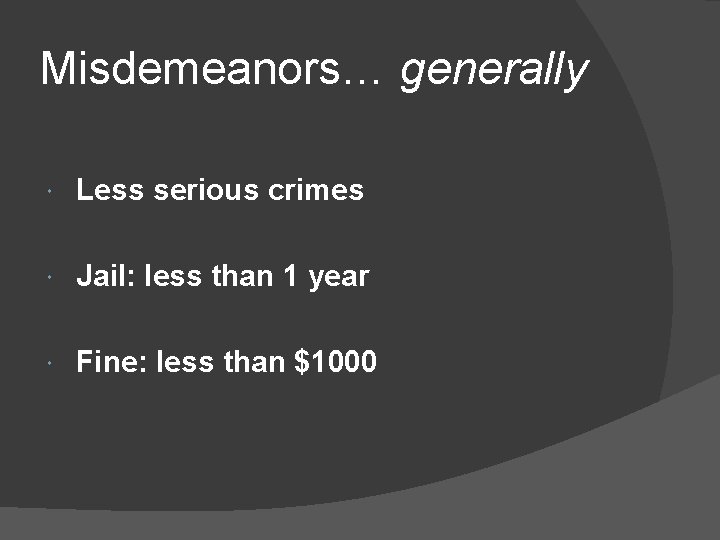
Misdemeanors… generally Less serious crimes Jail: less than 1 year Fine: less than $1000
Categorization of Felony vs. Misdemeanor ultimately is determined by STATUTE
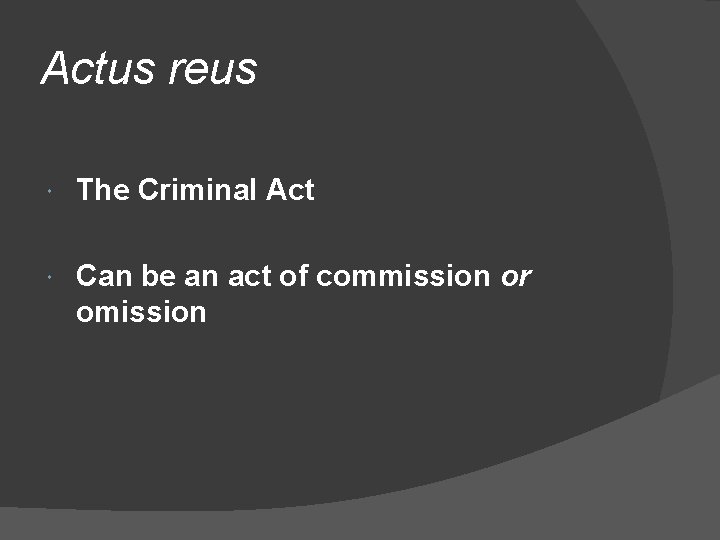
Actus reus The Criminal Act Can be an act of commission or omission
Mens rea The intent to commit a criminal act
Generally, Actus Reus AND Mens Rea must be present
Strict Liability Crimes Mens rea not required Only necessary to show that the act was committed Public welfare crimes (drugs, traffic, etc. )
Status Crimes Makes “status” or a “chronic condition” illegal Held to be Unconstitutional Can only punish what a person DOES, not what he IS