
Crime Waves and Trends What do we know









- Slides: 57
Crime Waves and Trends What do we know about recent crime patterns?
What’s a Crime Wave? Reading Guide: K&P Ch. 2 Question #1
Crime Wave “A crime wave is under way when there exists widely shared perceptions that a crime wave is under way. ” --V. Sacco (2005)
How can we tell if it’s a crime wave? Reading Guide: K&P Ch. 2 Question #2
Socially Constructing Crime with Statistics 1) Police Statistics F. B. I. ’s U. C. R. Canada U. C. R. from Centre of Justice Statistics 2) Victimization Survey Data U. S. N. C. V. S. Canada Victimization Survey (every 5 years)
Tricky Stats Reading Guide: K&P Ch. 2 Question #3
American Crime Trends What’s been happening and Who cares?
Why look at Aggregate Crime Rates? 1) Are crime patterns really mysterious and beyond public policy influence? 2) Can we identify major turning points? Search for “Multiple Causes” rather than “The Cause”
Why look at Aggregate Crime Rates? 3) Compare City and National Crime Trends 4) Forecasting Crime Trends is Hard to Do Ex. Baumer’s (2008) Longitudinal Cities Study—Like a “Coin Toss” Maybe combine Multiple Forecasts?
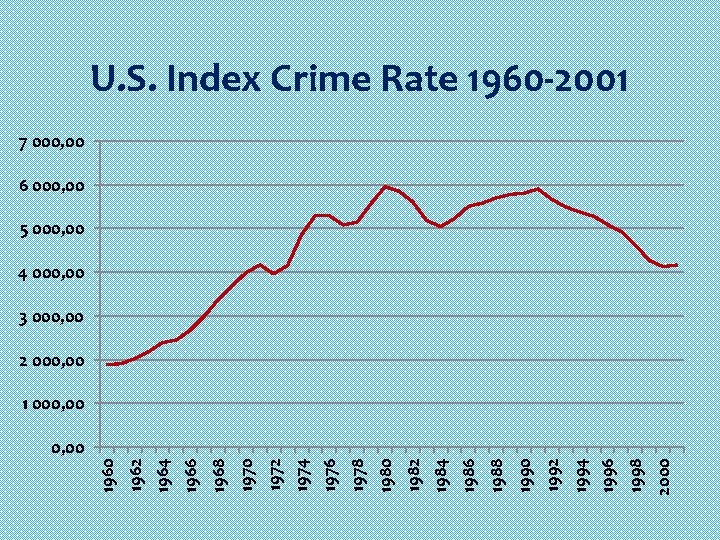
U. S. Index Crime Rate 1960 -2001 7 000, 00 6 000, 00 5 000, 00 4 000, 00 3 000, 00 2 000, 00 1 000, 00 2000 1998 1996 1994 1992 1990 1988 1986 1984 1982 1980 1978 1976 1974 1972 1970 1968 1966 1964 1962 1960 0, 00
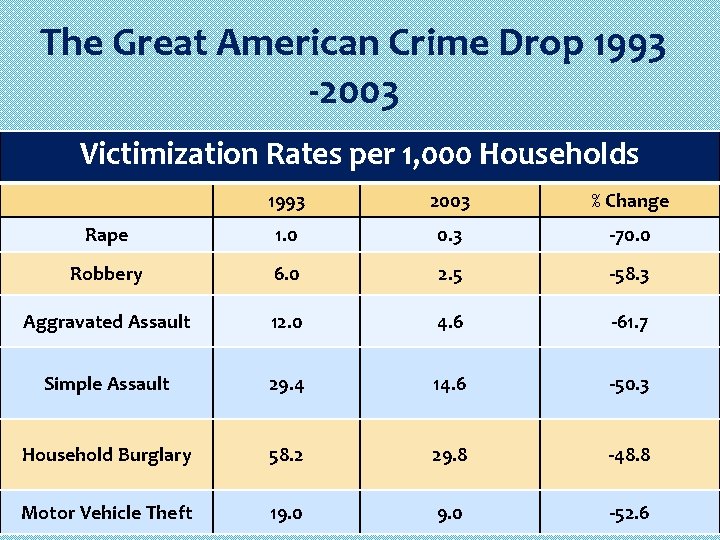
The Great American Crime Drop 1993 -2003 Victimization Rates per 1, 000 Households 1993 2003 % Change Rape 1. 0 0. 3 -70. 0 Robbery 6. 0 2. 5 -58. 3 Aggravated Assault 12. 0 4. 6 -61. 7 Simple Assault 29. 4 14. 6 -50. 3 Household Burglary 58. 2 29. 8 -48. 8 Motor Vehicle Theft 19. 0 -52. 6
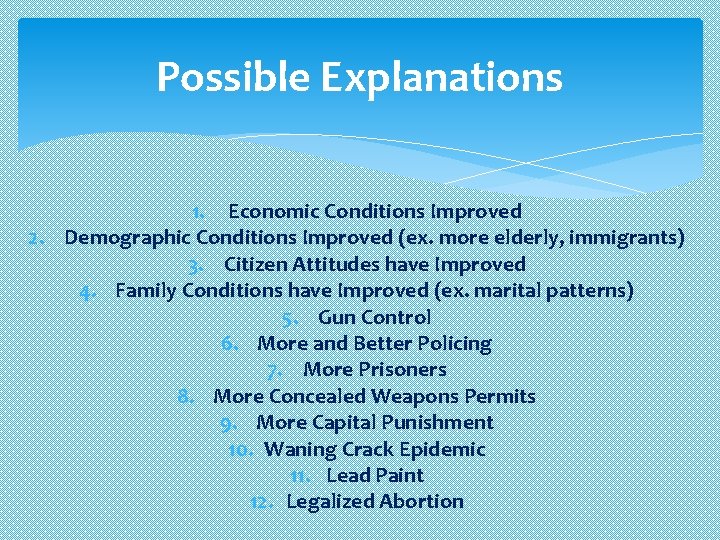
Possible Explanations 1. Economic Conditions Improved 2. Demographic Conditions Improved (ex. more elderly, immigrants) 3. Citizen Attitudes have Improved 4. Family Conditions have Improved (ex. marital patterns) 5. Gun Control 6. More and Better Policing 7. More Prisoners 8. More Concealed Weapons Permits 9. More Capital Punishment 10. Waning Crack Epidemic 11. Lead Paint 12. Legalized Abortion
How does the U. S. Compare Internationally?
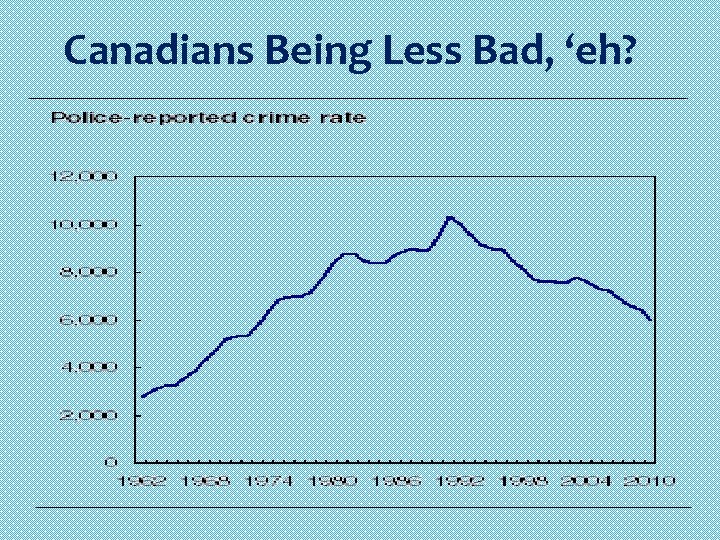
Canadians Being Less Bad, ‘eh?
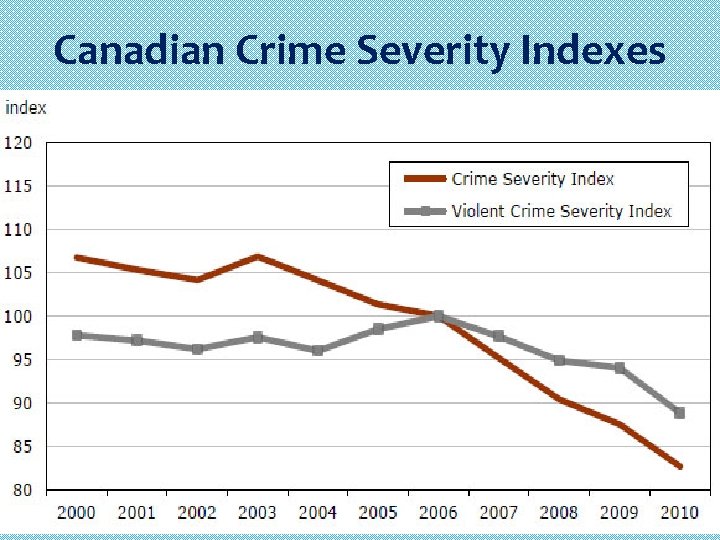
Canadian Crime Severity Indexes
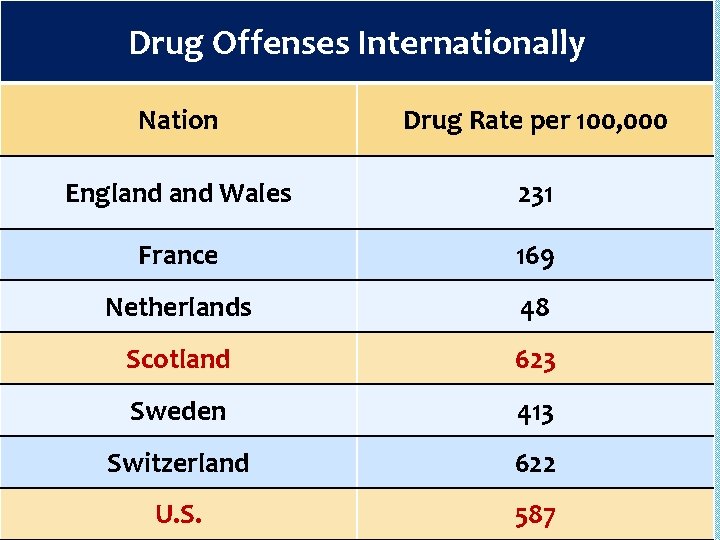
Drug Offenses Internationally Nation Drug Rate per 100, 000 England Wales 231 France 169 Netherlands 48 Scotland 623 Sweden 413 Switzerland 622 U. S. 587
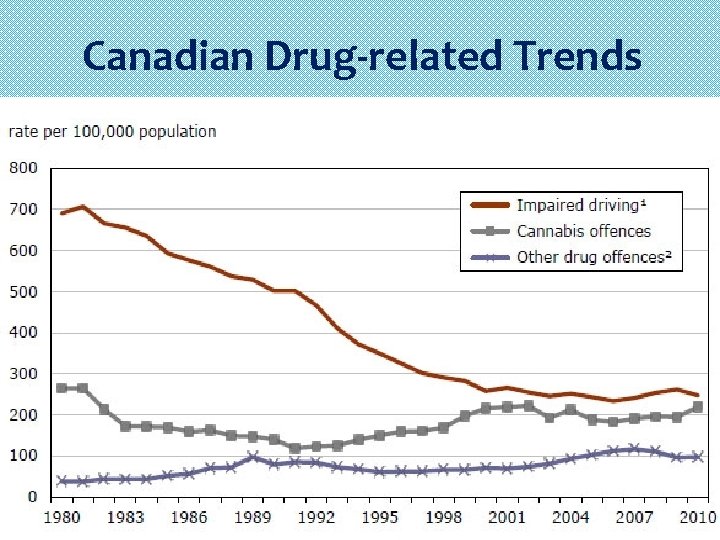
Canadian Drug-related Trends
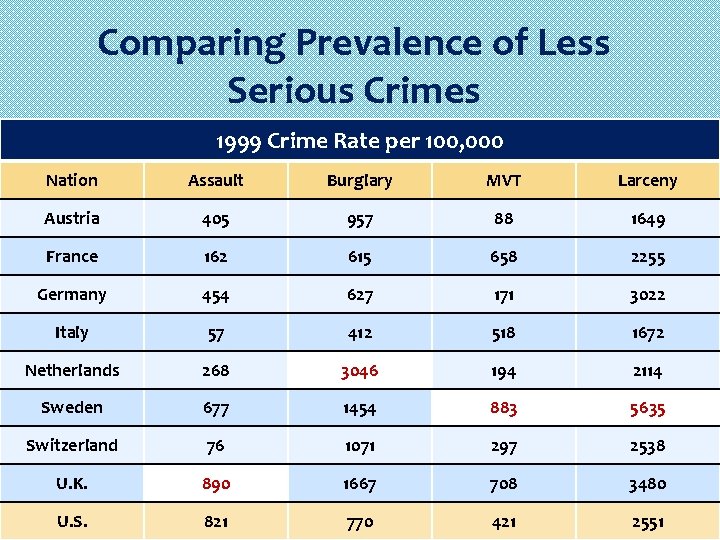
Comparing Prevalence of Less Serious Crimes 1999 Crime Rate per 100, 000 Nation Assault Burglary MVT Larceny Austria 405 957 88 1649 France 162 615 658 2255 Germany 454 627 171 3022 Italy 57 412 518 1672 Netherlands 268 3046 194 2114 Sweden 677 1454 883 5635 Switzerland 76 1071 297 2538 U. K. 890 1667 708 3480 U. S. 821 770 421 2551
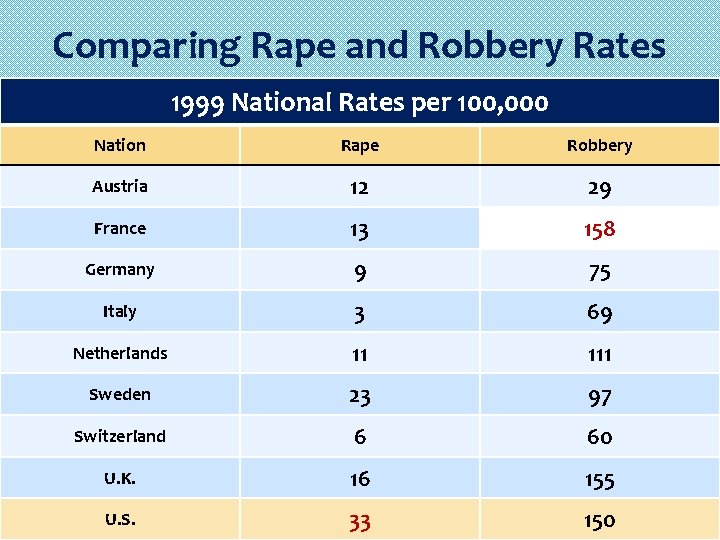
Comparing Rape and Robbery Rates 1999 National Rates per 100, 000 Nation Rape Robbery Austria 12 29 France 13 158 Germany 9 75 Italy 3 69 Netherlands 11 111 Sweden 23 97 Switzerland 6 60 U. K. 16 155 U. S. 33 150
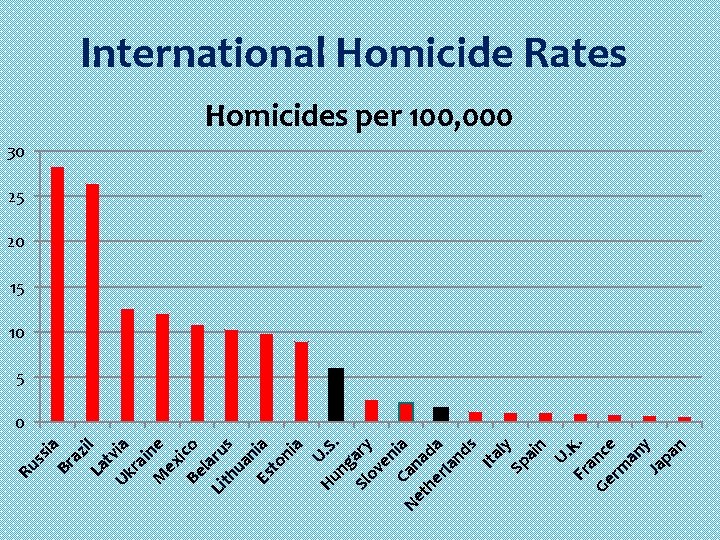
ia az La il t Uk via ra i M ne ex i Be co l Li aru th s ua n Es ia to ni a Hu U. S ng. Sl ary ov en ia Ne Can th ad er a la nd s Ita ly Sp ai n U. Fr K. a Ge nce rm an y Ja pa n Br ss Ru International Homicide Rates Homicides per 100, 000 30 25 20 15 10 5 0
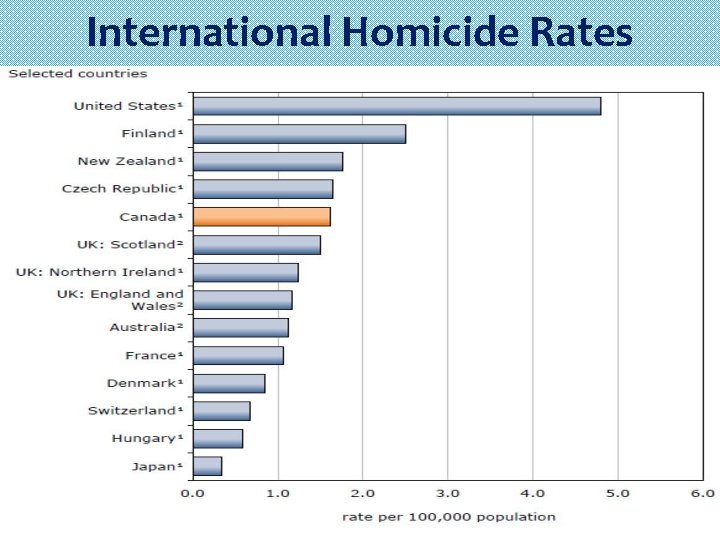
International Homicide Rates
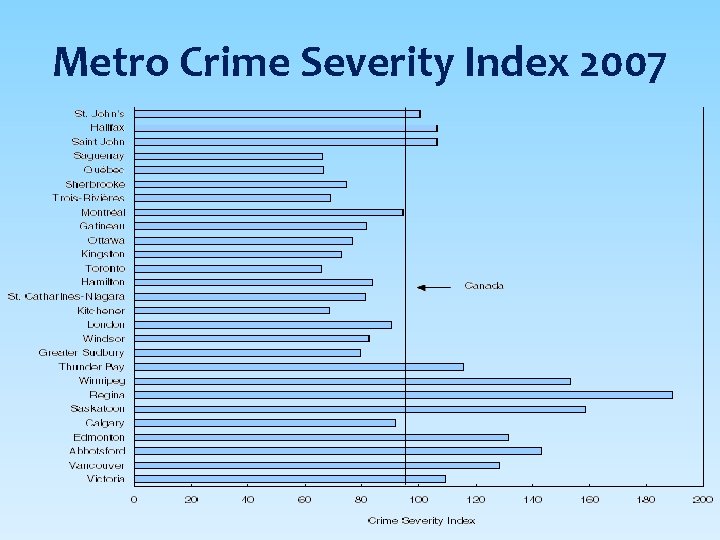
Metro Crime Severity Index 2007
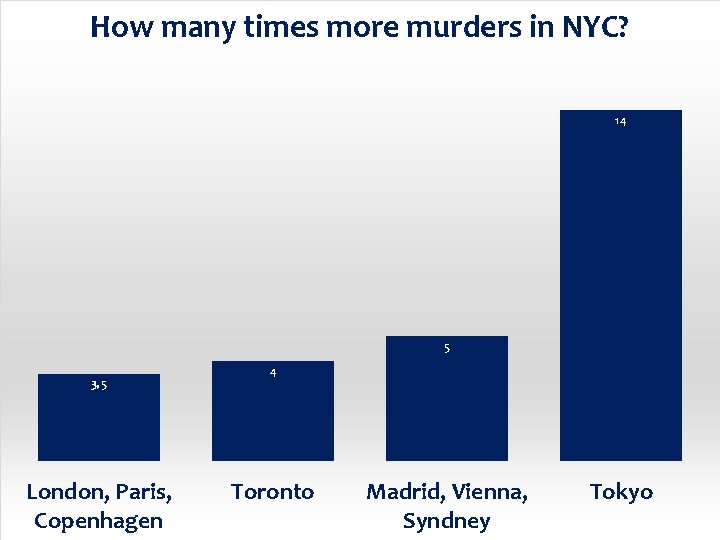
How many times more murders in NYC? 14 5 3, 5 London, Paris, Copenhagen 4 Toronto Madrid, Vienna, Syndney Tokyo
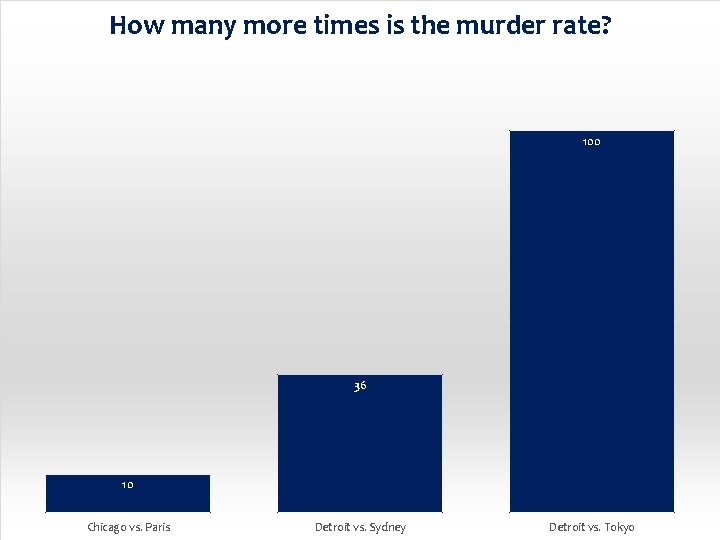
How many more times is the murder rate? 100 36 10 Chicago vs. Paris Detroit vs. Sydney Detroit vs. Tokyo
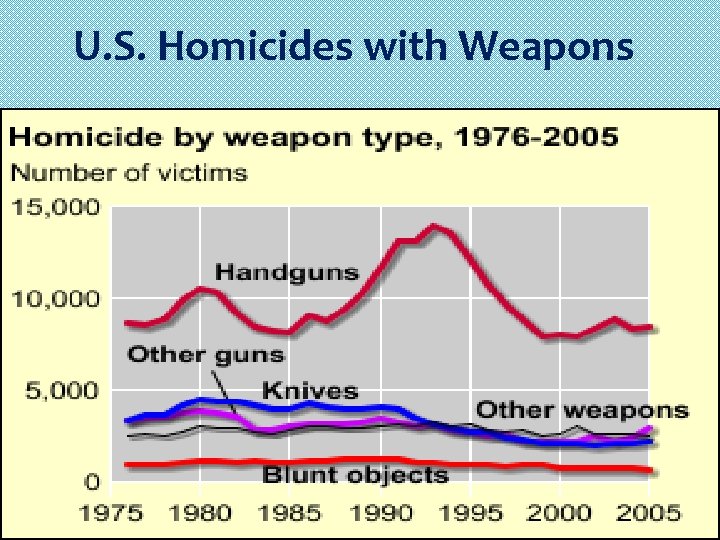
U. S. Homicides with Weapons
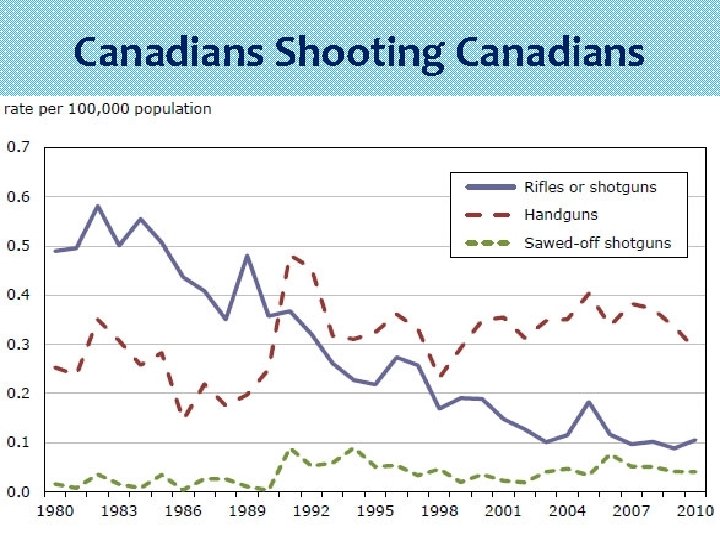
Canadians Shooting Canadians
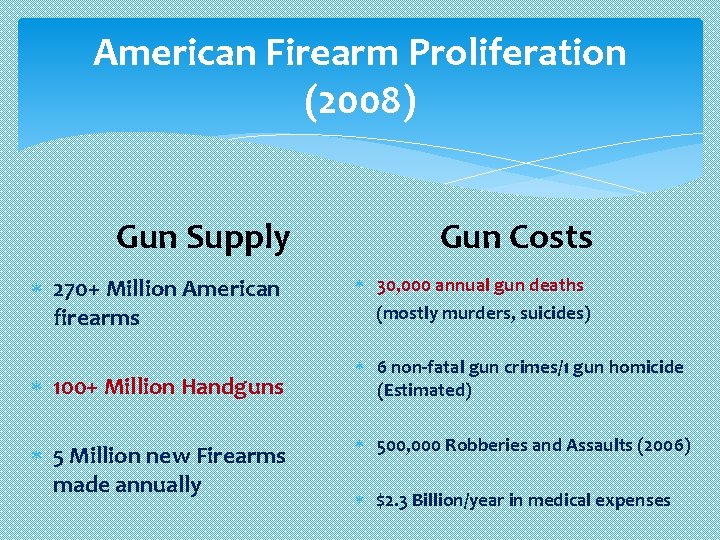
American Firearm Proliferation (2008) Gun Supply Gun Costs 270+ Million American firearms 30, 000 annual gun deaths (mostly murders, suicides) 100+ Million Handguns 6 non-fatal gun crimes/1 gun homicide (Estimated) 5 Million new Firearms made annually 500, 000 Robberies and Assaults (2006) $2. 3 Billion/year in medical expenses
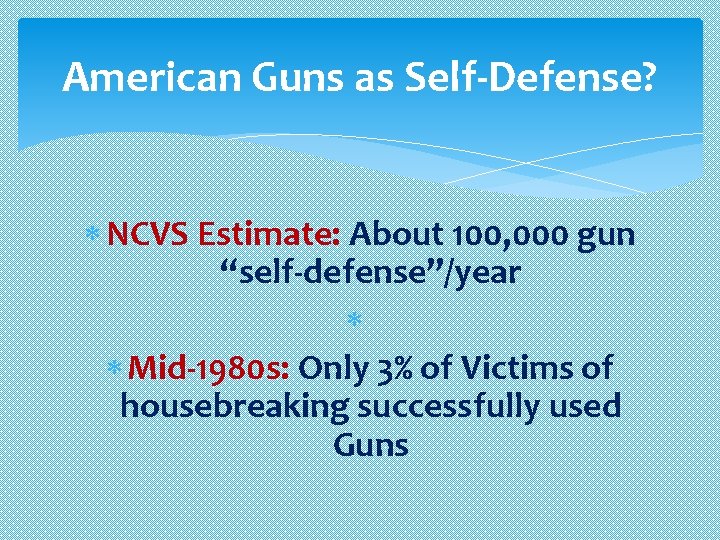
American Guns as Self-Defense? NCVS Estimate: About 100, 000 gun “self-defense”/year Mid-1980 s: Only 3% of Victims of housebreaking successfully used Guns
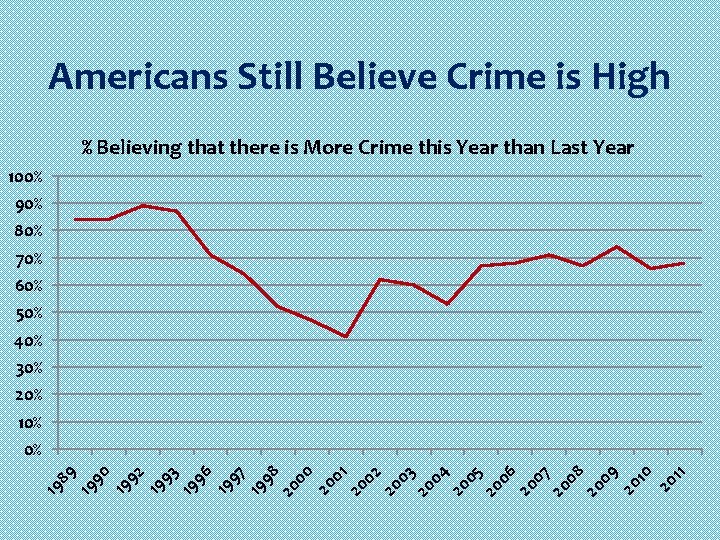
Americans Still Believe Crime is High % Believing that there is More Crime this Year than Last Year 100% 90% 80% 70% 60% 50% 40% 30% 20% 10% 00 20 01 20 02 20 03 20 04 20 05 20 06 20 07 20 08 20 09 20 10 20 11 20 98 19 97 19 96 19 93 19 92 19 0 19 9 19 89 0%
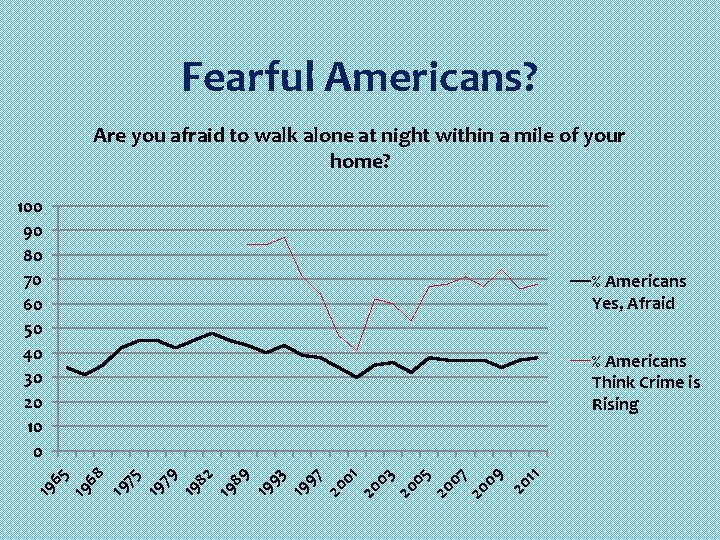
Fearful Americans? Are you afraid to walk alone at night within a mile of your home? 100 90 80 70 60 50 40 30 20 10 0 % Americans Yes, Afraid 20 03 20 05 20 07 20 09 20 11 01 20 97 19 93 19 89 19 82 19 79 19 5 19 7 68 19 19 65 % Americans Think Crime is Rising
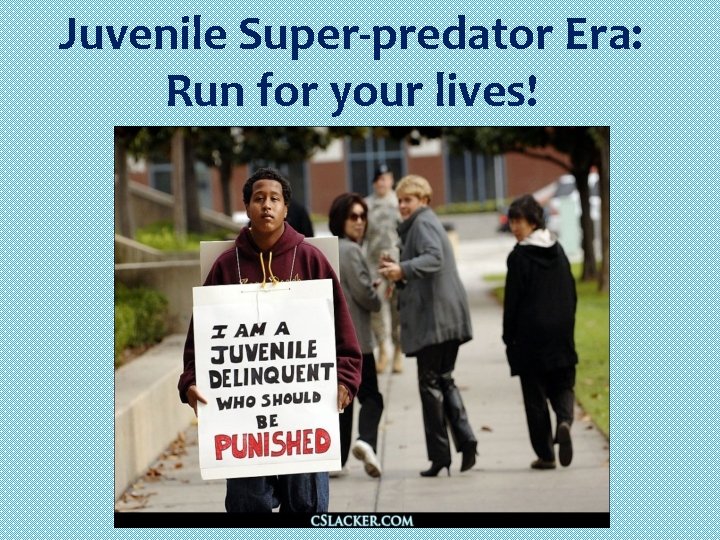
Juvenile Super-predator Era: Run for your lives!
Juvenile Super-predator Mythology Reading Guide: K&P Ch. 9 Question #1
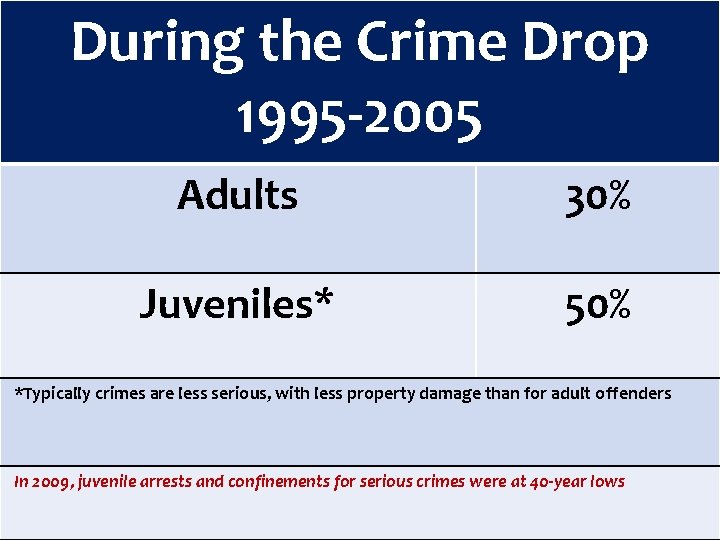
During the Crime Drop 1995 -2005 Adults 30% Juveniles* 50% *Typically crimes are less serious, with less property damage than for adult offenders In 2009, juvenile arrests and confinements for serious crimes were at 40 -year lows
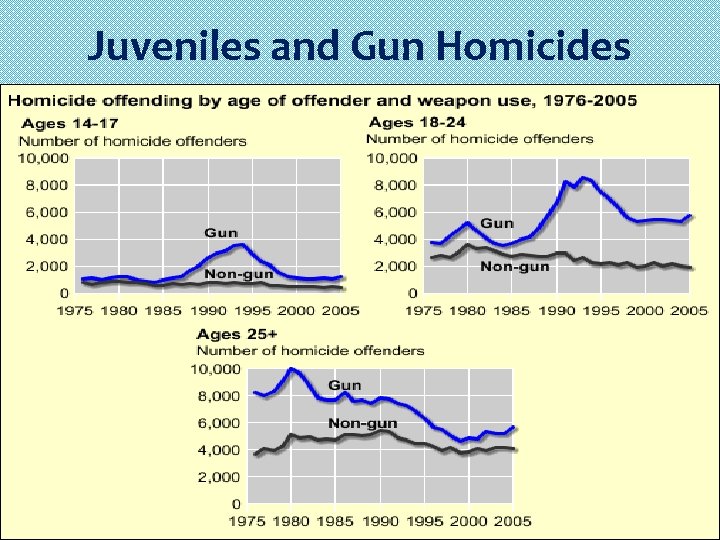
Juveniles and Gun Homicides
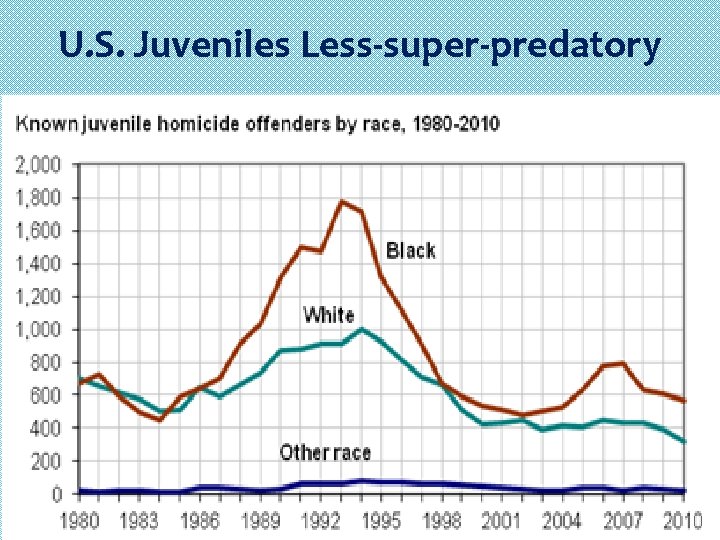
U. S. Juveniles Less-super-predatory
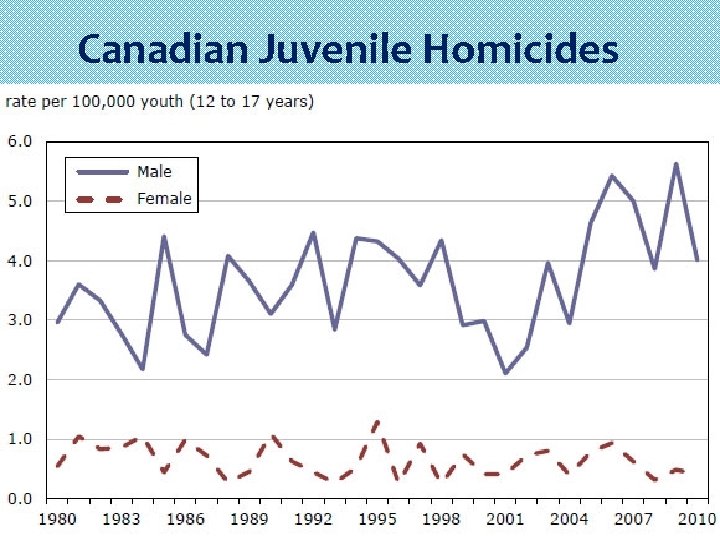
Canadian Juvenile Homicides
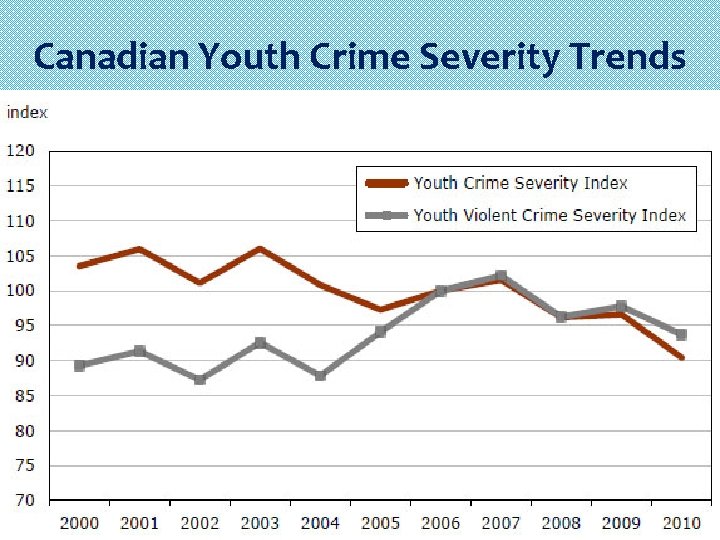
Canadian Youth Crime Severity Trends
“Super-predator” Impacts Reading Guide: K&P Ch. 9 Question #2
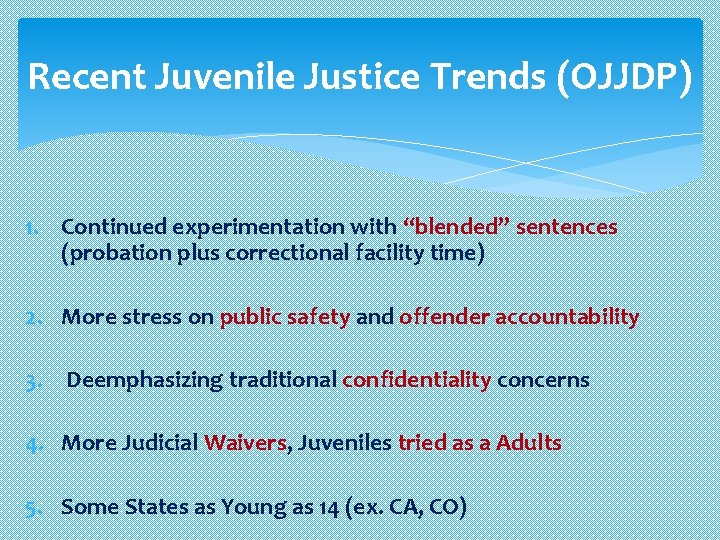
Recent Juvenile Justice Trends (OJJDP) 1. Continued experimentation with “blended” sentences (probation plus correctional facility time) 2. More stress on public safety and offender accountability 3. Deemphasizing traditional confidentiality concerns 4. More Judicial Waivers, Juveniles tried as a Adults 5. Some States as Young as 14 (ex. CA, CO)
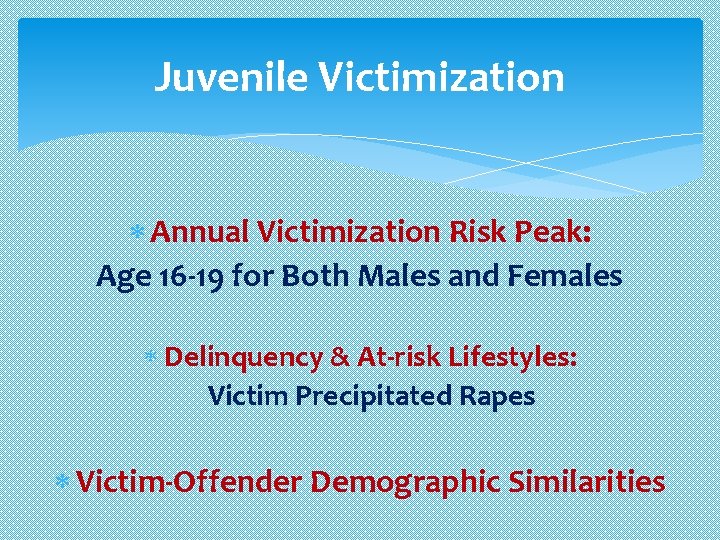
Juvenile Victimization Annual Victimization Risk Peak: Age 16 -19 for Both Males and Females Delinquency & At-risk Lifestyles: Victim Precipitated Rapes Victim-Offender Demographic Similarities
Juvenile Delinquency Research Insights
Research on Families and Delinquency is part of a larger syndrome of Antisocial Behavior (Relatively) Unreliable vs. Reliable Predictors
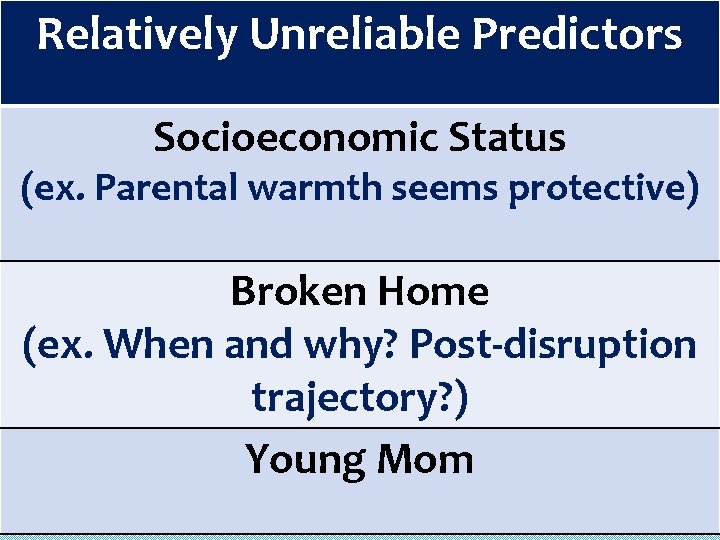
Relatively Unreliable Predictors Socioeconomic Status (ex. Parental warmth seems protective) Broken Home (ex. When and why? Post-disruption trajectory? ) Young Mom
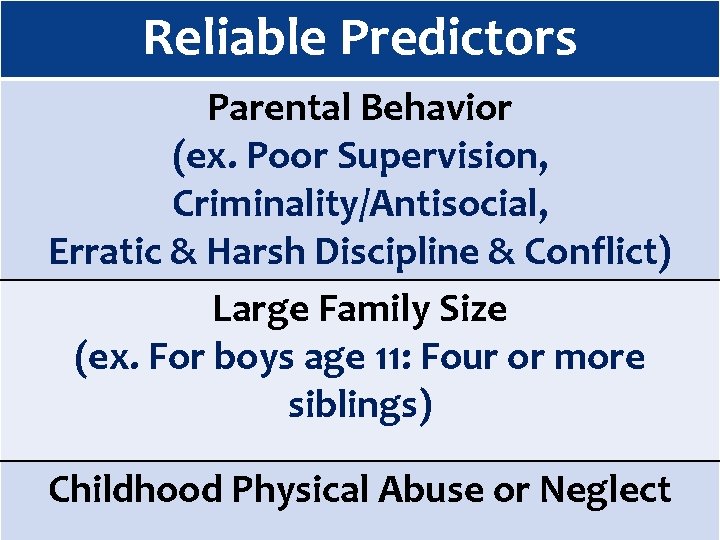
Reliable Predictors Parental Behavior (ex. Poor Supervision, Criminality/Antisocial, Erratic & Harsh Discipline & Conflict) Large Family Size (ex. For boys age 11: Four or more siblings) Childhood Physical Abuse or Neglect
Youth Gang Proliferation Research Insights
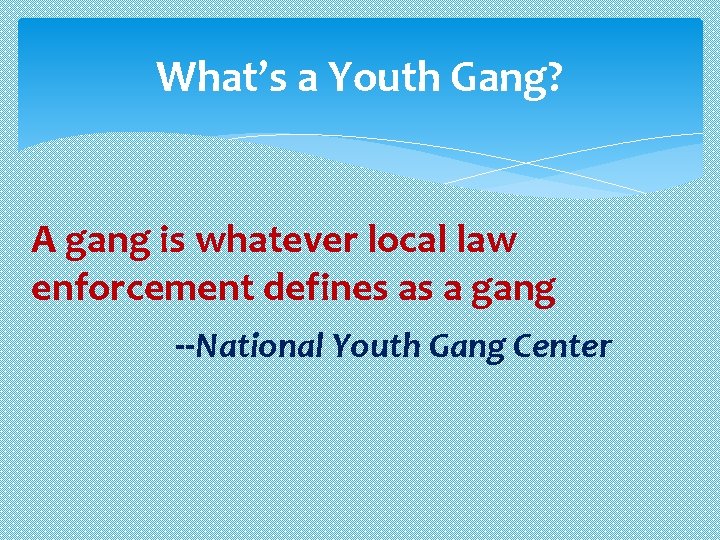
What’s a Youth Gang? A gang is whatever local law enforcement defines as a gang --National Youth Gang Center
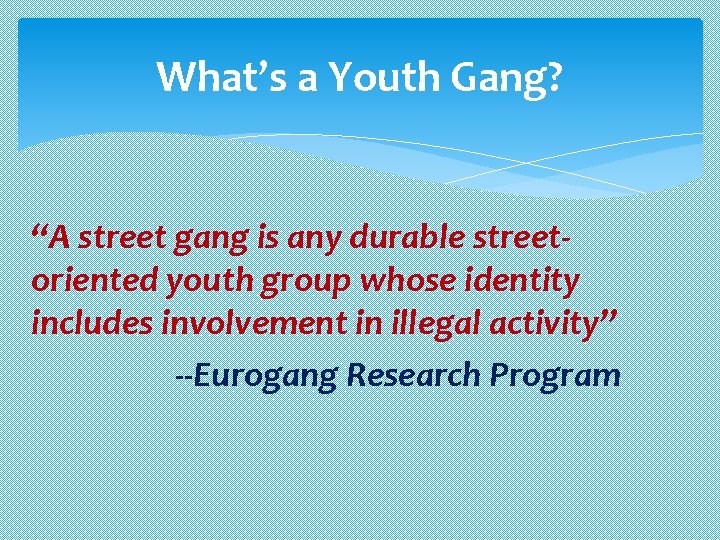
What’s a Youth Gang? “A street gang is any durable streetoriented youth group whose identity includes involvement in illegal activity” --Eurogang Research Program
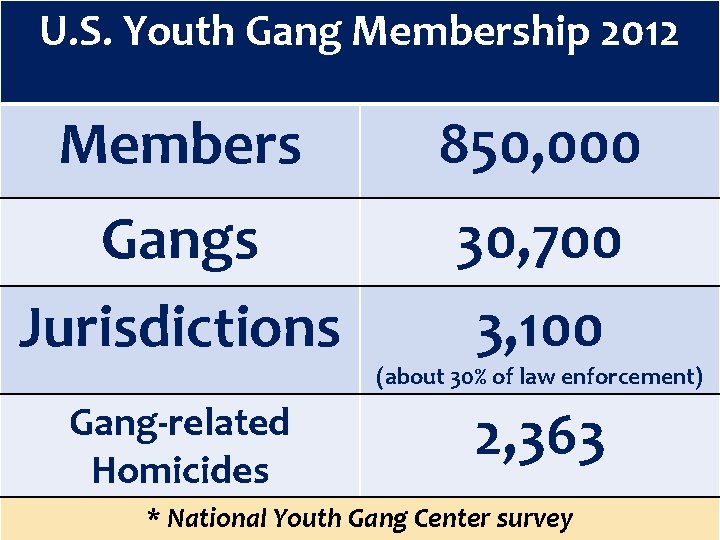
U. S. Youth Gang Membership 2012 Members 850, 000 Gangs Jurisdictions 30, 700 3, 100 Gang-related Homicides (about 30% of law enforcement) 2, 363 * National Youth Gang Center survey
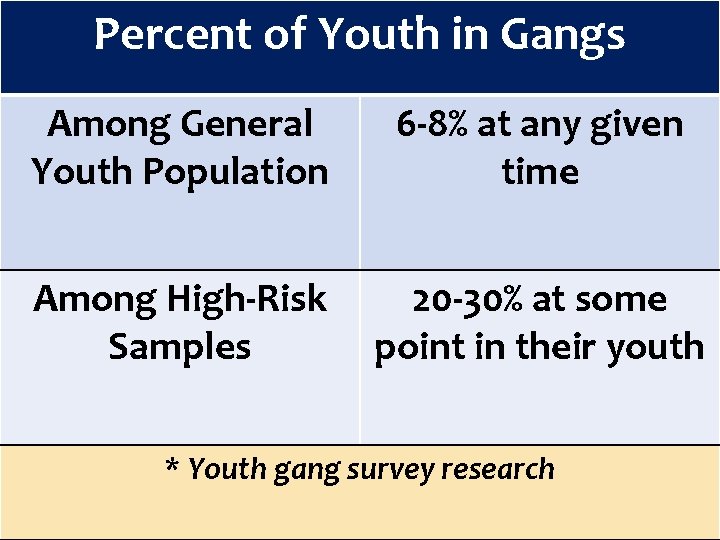
Percent of Youth in Gangs Among General Youth Population 6 -8% at any given time Among High-Risk Samples 20 -30% at some point in their youth * Youth gang survey research
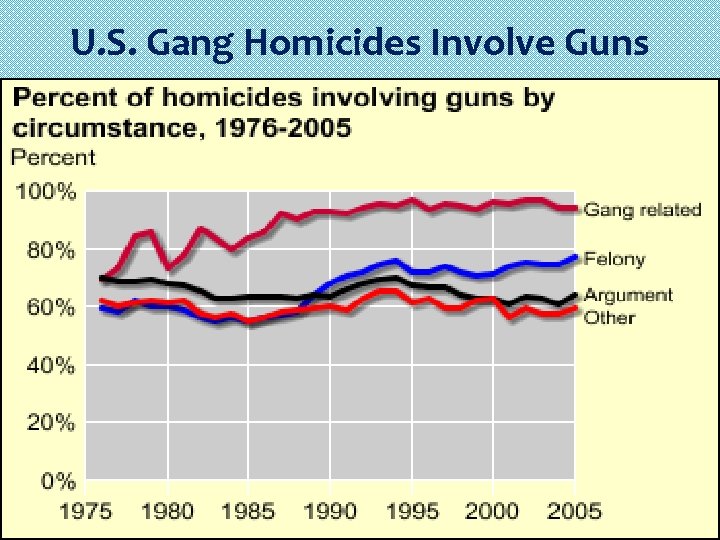
U. S. Gang Homicides Involve Guns
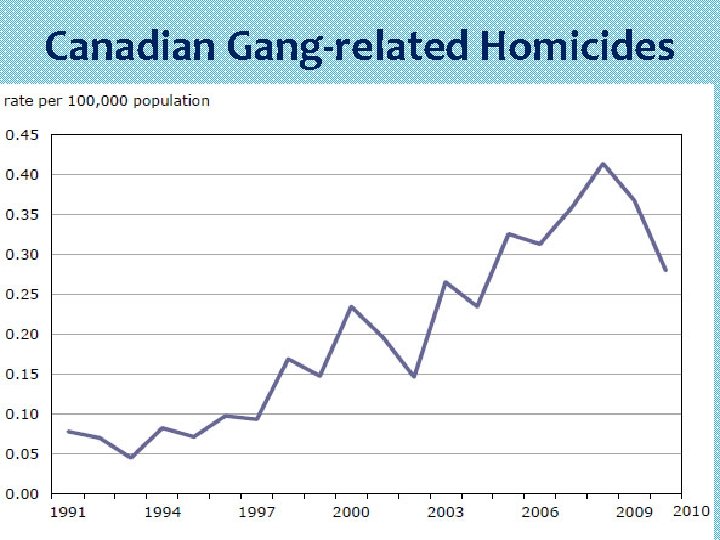
Canadian Gang-related Homicides
Insights from Research on the Causes of Joining Youth Gangs
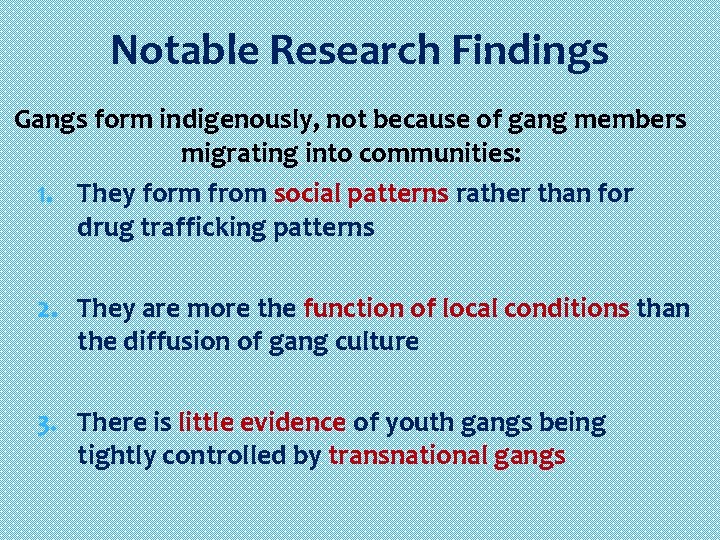
Notable Research Findings Gangs form indigenously, not because of gang members migrating into communities: 1. They form from social patterns rather than for drug trafficking patterns 2. They are more the function of local conditions than the diffusion of gang culture 3. There is little evidence of youth gangs being tightly controlled by transnational gangs
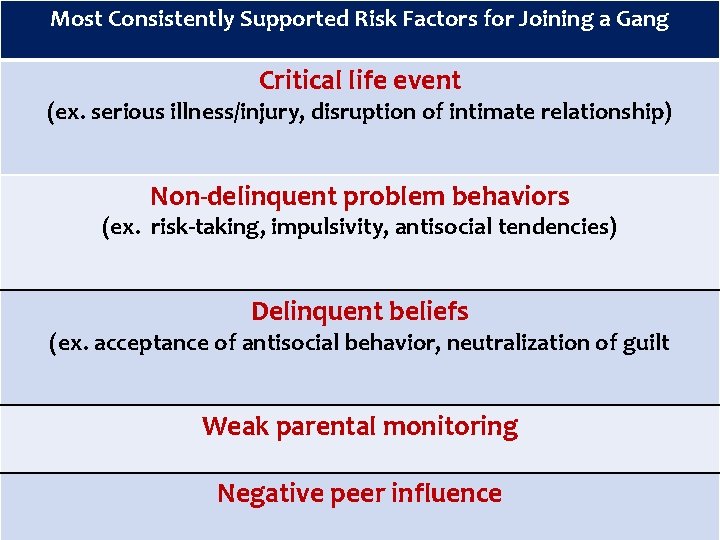
Most Consistently Supported Risk Factors for Joining a Gang Critical life event (ex. serious illness/injury, disruption of intimate relationship) Non-delinquent problem behaviors (ex. risk-taking, impulsivity, antisocial tendencies) Delinquent beliefs (ex. acceptance of antisocial behavior, neutralization of guilt Weak parental monitoring Negative peer influence
Next Reading Guide: Walker Ch. 2, 3, 4