
Crime Typologies Criminologists group crimes together into categories
- Slides: 20
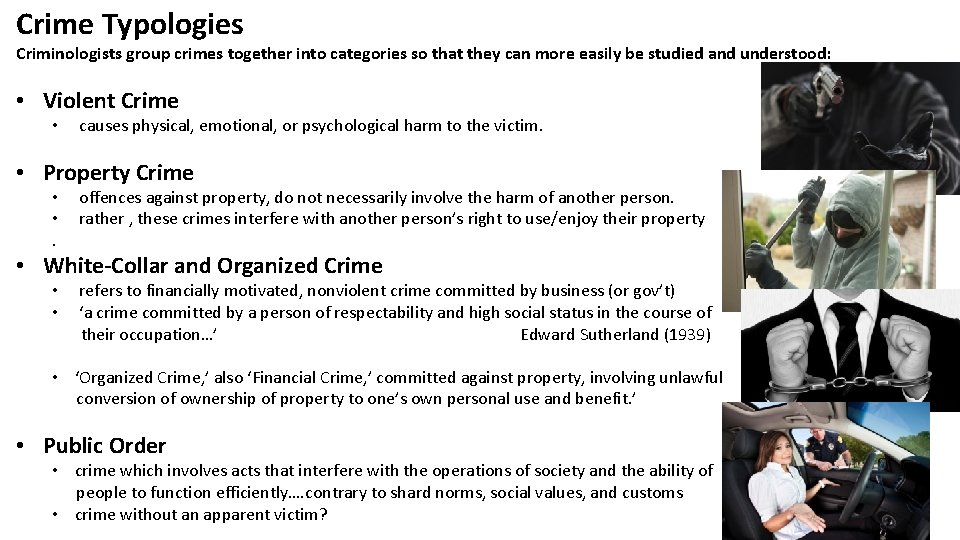
Crime Typologies Criminologists group crimes together into categories so that they can more easily be studied and understood: • Violent Crime • causes physical, emotional, or psychological harm to the victim. • Property Crime • • . offences against property, do not necessarily involve the harm of another person. rather , these crimes interfere with another person’s right to use/enjoy their property • • refers to financially motivated, nonviolent crime committed by business (or gov’t) ‘a crime committed by a person of respectability and high social status in the course of their occupation…’ Edward Sutherland (1939) • White-Collar and Organized Crime • ‘Organized Crime, ’ also ‘Financial Crime, ’ committed against property, involving unlawful conversion of ownership of property to one’s own personal use and benefit. ’ • Public Order • crime which involves acts that interfere with the operations of society and the ability of people to function efficiently…. contrary to shard norms, social values, and customs • crime without an apparent victim?
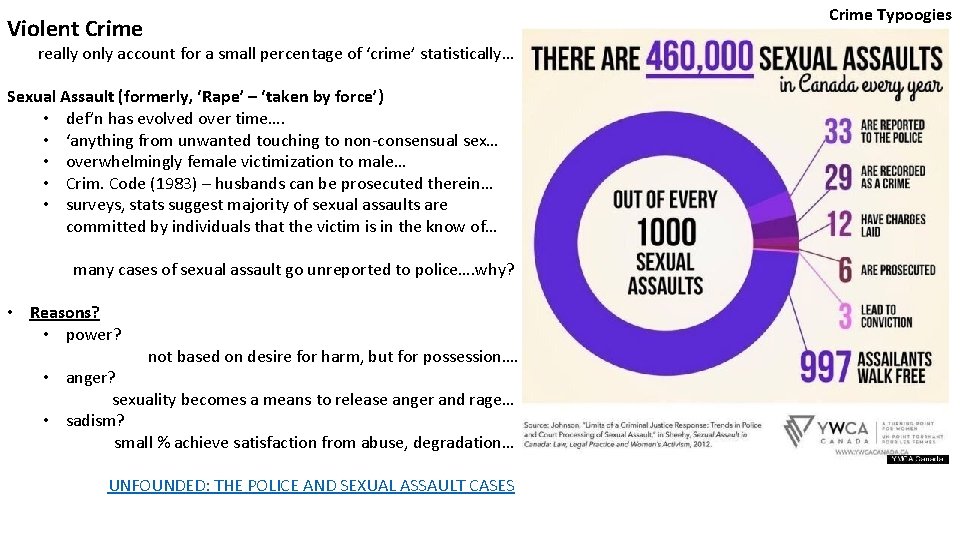
Crime Typoogies Violent Crime really only account for a small percentage of ‘crime’ statistically… Sexual Assault (formerly, ‘Rape’ – ‘taken by force’) • def’n has evolved over time…. • ‘anything from unwanted touching to non-consensual sex… • overwhelmingly female victimization to male… • Crim. Code (1983) – husbands can be prosecuted therein… • surveys, stats suggest majority of sexual assaults are committed by individuals that the victim is in the know of… many cases of sexual assault go unreported to police…. why? • Reasons? • power? not based on desire for harm, but for possession…. • anger? sexuality becomes a means to release anger and rage… • sadism? small % achieve satisfaction from abuse, degradation… UNFOUNDED: THE POLICE AND SEXUAL ASSAULT CASES
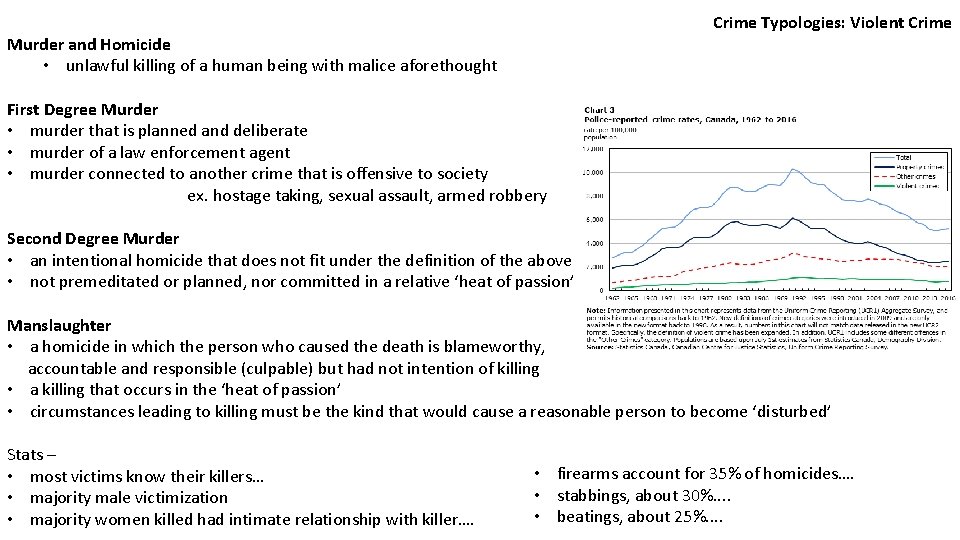
Crime Typologies: Violent Crime Murder and Homicide • unlawful killing of a human being with malice aforethought First Degree Murder • murder that is planned and deliberate • murder of a law enforcement agent • murder connected to another crime that is offensive to society ex. hostage taking, sexual assault, armed robbery Second Degree Murder • an intentional homicide that does not fit under the definition of the above • not premeditated or planned, nor committed in a relative ‘heat of passion’ Manslaughter • a homicide in which the person who caused the death is blameworthy, accountable and responsible (culpable) but had not intention of killing • a killing that occurs in the ‘heat of passion’ • circumstances leading to killing must be the kind that would cause a reasonable person to become ‘disturbed’ Stats – • most victims know their killers… • majority male victimization • majority women killed had intimate relationship with killer…. • firearms account for 35% of homicides…. • stabbings, about 30%. . • beatings, about 25%. .
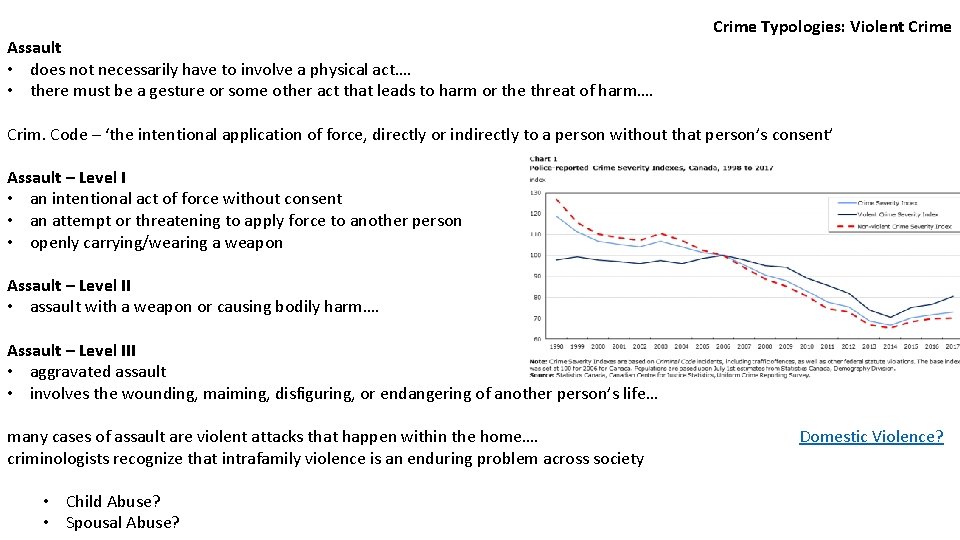
Assault • does not necessarily have to involve a physical act…. • there must be a gesture or some other act that leads to harm or the threat of harm…. Crime Typologies: Violent Crime Crim. Code – ‘the intentional application of force, directly or indirectly to a person without that person’s consent’ Assault – Level I • an intentional act of force without consent • an attempt or threatening to apply force to another person • openly carrying/wearing a weapon Assault – Level II • assault with a weapon or causing bodily harm…. Assault – Level III • aggravated assault • involves the wounding, maiming, disfiguring, or endangering of another person’s life… many cases of assault are violent attacks that happen within the home…. criminologists recognize that intrafamily violence is an enduring problem across society • Child Abuse? • Spousal Abuse? Domestic Violence?
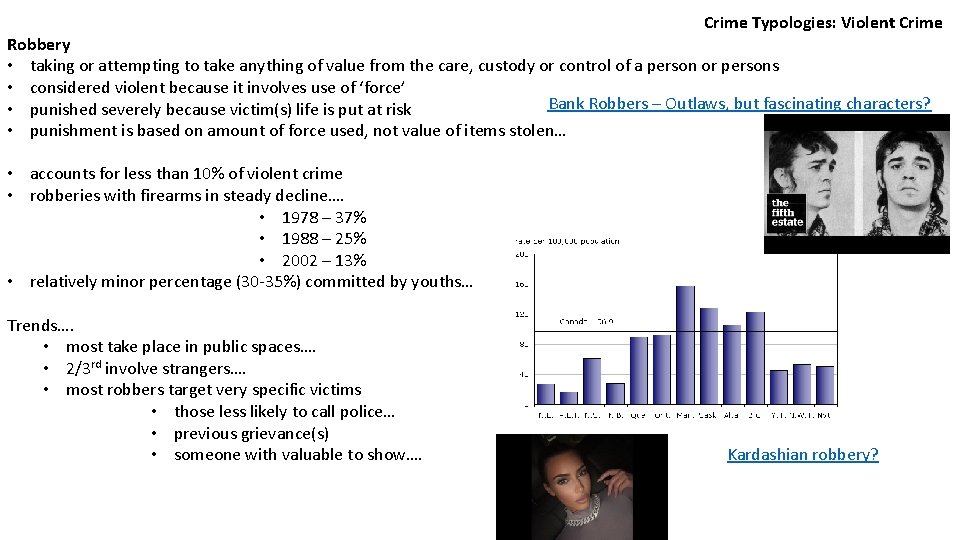
Crime Typologies: Violent Crime Robbery • taking or attempting to take anything of value from the care, custody or control of a person or persons • considered violent because it involves use of ‘force’ Bank Robbers – Outlaws, but fascinating characters? • punished severely because victim(s) life is put at risk • punishment is based on amount of force used, not value of items stolen… • accounts for less than 10% of violent crime • robberies with firearms in steady decline…. • 1978 – 37% • 1988 – 25% • 2002 – 13% • relatively minor percentage (30 -35%) committed by youths… Trends…. • most take place in public spaces…. • 2/3 rd involve strangers…. • most robbers target very specific victims • those less likely to call police… • previous grievance(s) • someone with valuable to show…. Kardashian robbery?
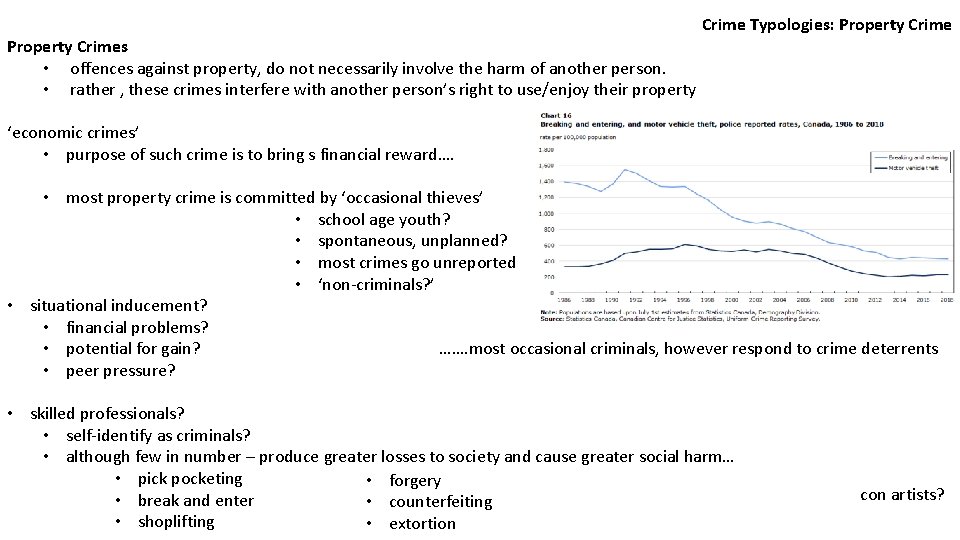
Property Crimes • offences against property, do not necessarily involve the harm of another person. • rather , these crimes interfere with another person’s right to use/enjoy their property Crime Typologies: Property Crime ‘economic crimes’ • purpose of such crime is to bring s financial reward…. • most property crime is committed by ‘occasional thieves’ • school age youth? • spontaneous, unplanned? • most crimes go unreported • ‘non-criminals? ’ • situational inducement? • financial problems? • potential for gain? ……. most occasional criminals, however respond to crime deterrents • peer pressure? • skilled professionals? • self-identify as criminals? • although few in number – produce greater losses to society and cause greater social harm… • pick pocketing • forgery • break and enter • counterfeiting • shoplifting • extortion con artists?
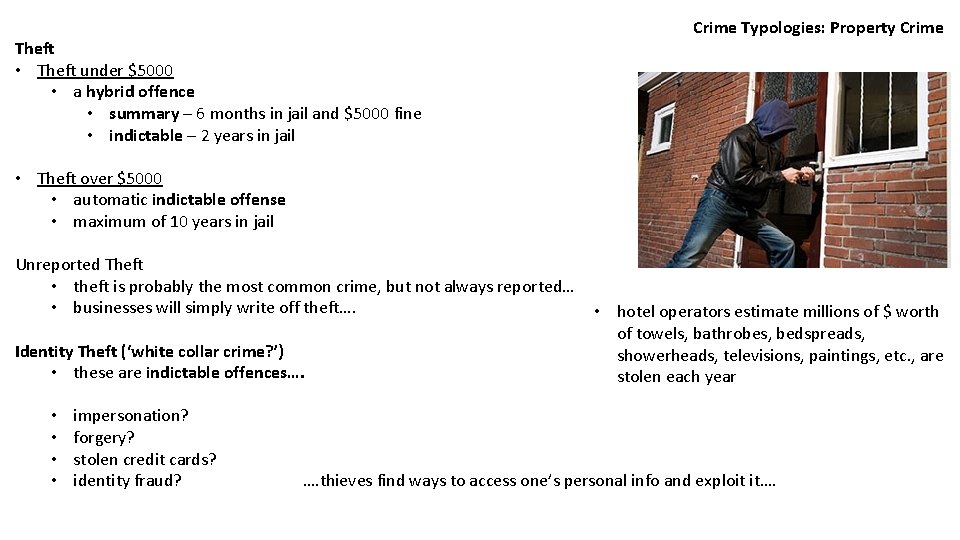
Theft • Theft under $5000 • a hybrid offence • summary – 6 months in jail and $5000 fine • indictable – 2 years in jail Crime Typologies: Property Crime • Theft over $5000 • automatic indictable offense • maximum of 10 years in jail Unreported Theft • theft is probably the most common crime, but not always reported… • businesses will simply write off theft…. Identity Theft (‘white collar crime? ’) • these are indictable offences…. • • impersonation? forgery? stolen credit cards? identity fraud? • hotel operators estimate millions of $ worth of towels, bathrobes, bedspreads, showerheads, televisions, paintings, etc. , are stolen each year …. thieves find ways to access one’s personal info and exploit it….
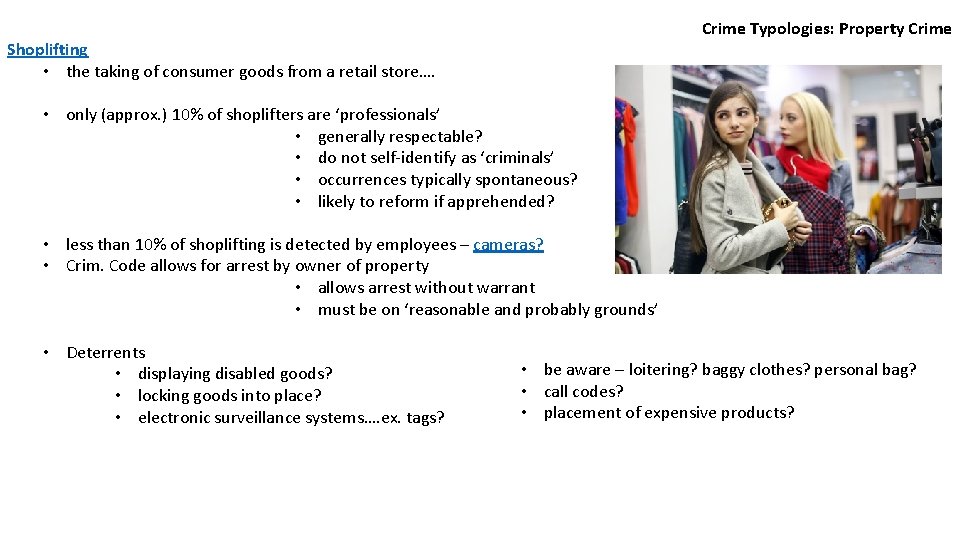
Crime Typologies: Property Crime Shoplifting • the taking of consumer goods from a retail store…. • only (approx. ) 10% of shoplifters are ‘professionals’ • generally respectable? • do not self-identify as ‘criminals’ • occurrences typically spontaneous? • likely to reform if apprehended? • less than 10% of shoplifting is detected by employees – cameras? • Crim. Code allows for arrest by owner of property • allows arrest without warrant • must be on ‘reasonable and probably grounds’ • Deterrents • displaying disabled goods? • locking goods into place? • electronic surveillance systems…. ex. tags? • be aware – loitering? baggy clothes? personal bag? • call codes? • placement of expensive products?
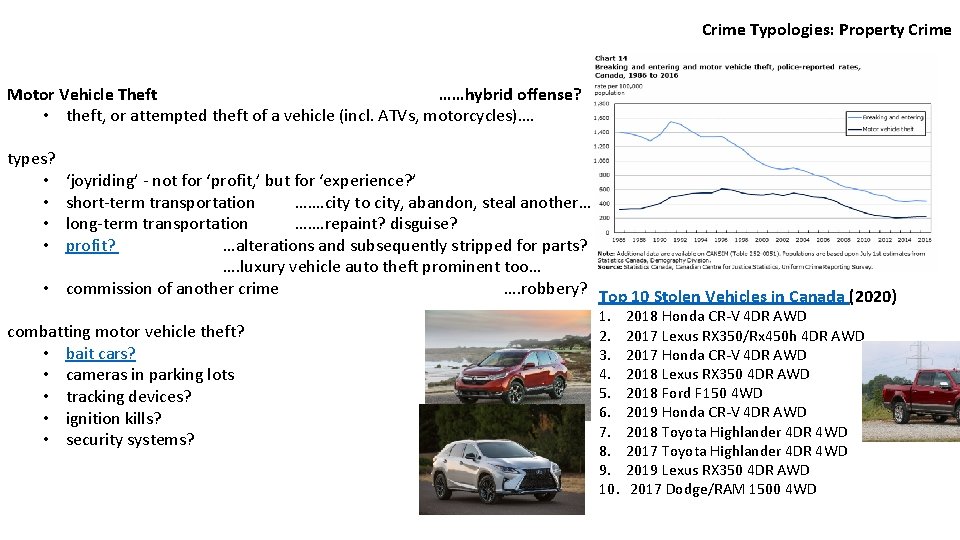
Crime Typologies: Property Crime Motor Vehicle Theft ……hybrid offense? • theft, or attempted theft of a vehicle (incl. ATVs, motorcycles)…. types? • • ‘joyriding’ - not for ‘profit, ’ but for ‘experience? ’ short-term transportation ……. city to city, abandon, steal another… long-term transportation ……. repaint? disguise? profit? …alterations and subsequently stripped for parts? …. luxury vehicle auto theft prominent too… • commission of another crime …. robbery? Top 10 Stolen Vehicles in Canada (2020) combatting motor vehicle theft? • bait cars? • cameras in parking lots • tracking devices? • ignition kills? • security systems? 1. 2. 3. 4. 5. 6. 7. 8. 9. 10. 2018 Honda CR-V 4 DR AWD 2017 Lexus RX 350/Rx 450 h 4 DR AWD 2017 Honda CR-V 4 DR AWD 2018 Lexus RX 350 4 DR AWD 2018 Ford F 150 4 WD 2019 Honda CR-V 4 DR AWD 2018 Toyota Highlander 4 DR 4 WD 2017 Toyota Highlander 4 DR 4 WD 2019 Lexus RX 350 4 DR AWD 2017 Dodge/RAM 1500 4 WD
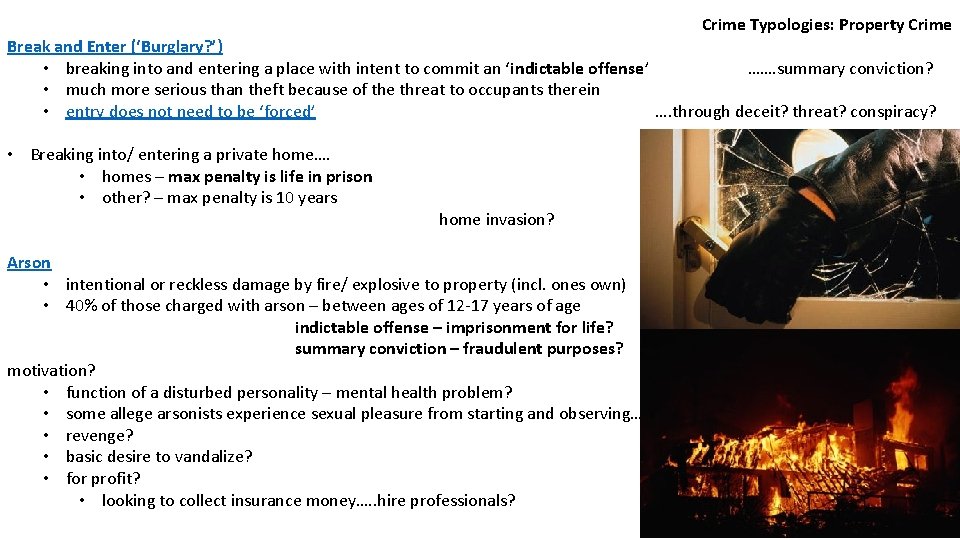
Crime Typologies: Property Crime Break and Enter (‘Burglary? ’) • breaking into and entering a place with intent to commit an ‘indictable offense’ ……. summary conviction? • much more serious than theft because of the threat to occupants therein • entry does not need to be ‘forced’ …. through deceit? threat? conspiracy? • Breaking into/ entering a private home…. • homes – max penalty is life in prison • other? – max penalty is 10 years home invasion? Arson • intentional or reckless damage by fire/ explosive to property (incl. ones own) • 40% of those charged with arson – between ages of 12 -17 years of age indictable offense – imprisonment for life? summary conviction – fraudulent purposes? motivation? • function of a disturbed personality – mental health problem? • some allege arsonists experience sexual pleasure from starting and observing… • revenge? • basic desire to vandalize? • for profit? • looking to collect insurance money…. . hire professionals?
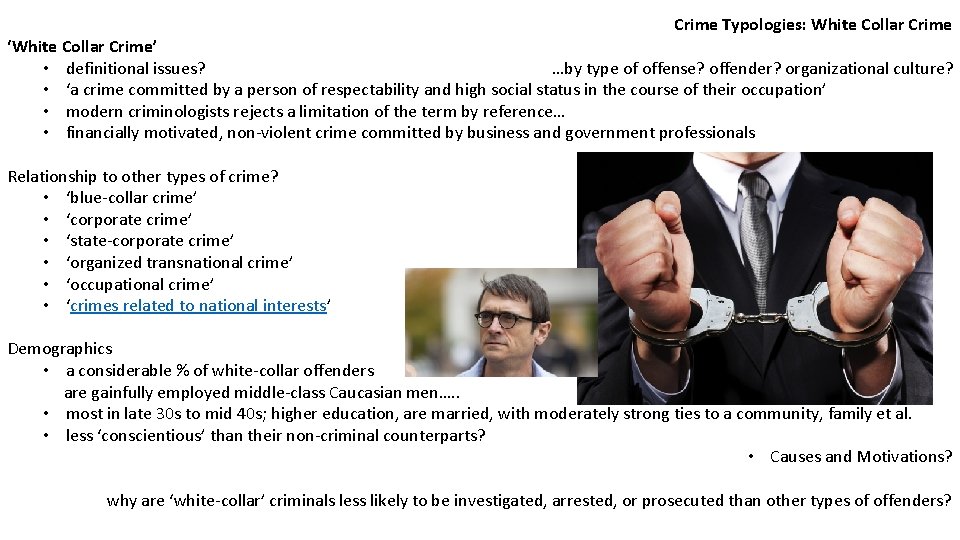
Crime Typologies: White Collar Crime ‘White Collar Crime’ • definitional issues? …by type of offense? offender? organizational culture? • ‘a crime committed by a person of respectability and high social status in the course of their occupation’ • modern criminologists rejects a limitation of the term by reference… • financially motivated, non-violent crime committed by business and government professionals Relationship to other types of crime? • ‘blue-collar crime’ • ‘corporate crime’ • ‘state-corporate crime’ • ‘organized transnational crime’ • ‘occupational crime’ • ‘crimes related to national interests’ Demographics • a considerable % of white-collar offenders are gainfully employed middle-class Caucasian men…. . • most in late 30 s to mid 40 s; higher education, are married, with moderately strong ties to a community, family et al. • less ‘conscientious’ than their non-criminal counterparts? • Causes and Motivations? why are ‘white-collar’ criminals less likely to be investigated, arrested, or prosecuted than other types of offenders?
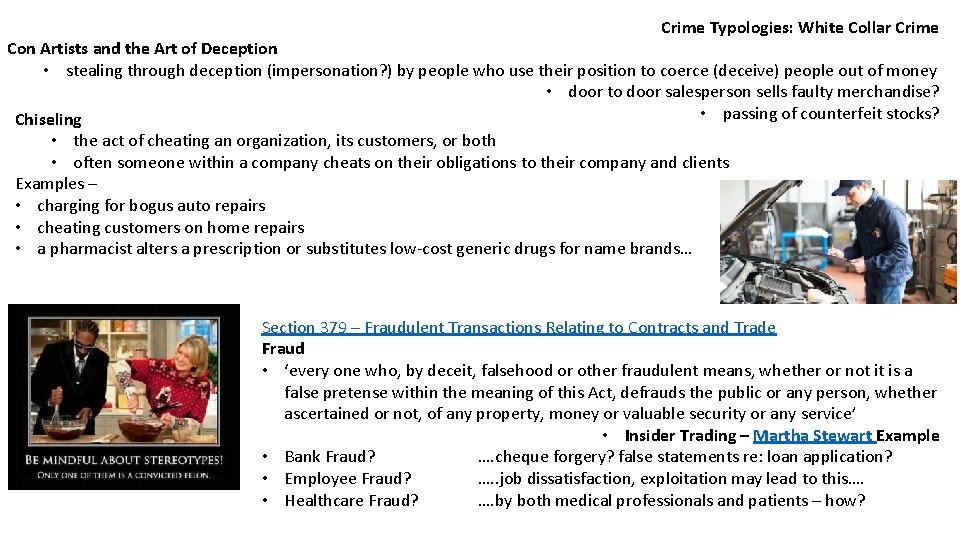
Crime Typologies: White Collar Crime Con Artists and the Art of Deception • stealing through deception (impersonation? ) by people who use their position to coerce (deceive) people out of money • door to door salesperson sells faulty merchandise? • passing of counterfeit stocks? Chiseling • the act of cheating an organization, its customers, or both • often someone within a company cheats on their obligations to their company and clients Examples – • charging for bogus auto repairs • cheating customers on home repairs • a pharmacist alters a prescription or substitutes low-cost generic drugs for name brands… Section 379 – Fraudulent Transactions Relating to Contracts and Trade Fraud • ‘every one who, by deceit, falsehood or other fraudulent means, whether or not it is a false pretense within the meaning of this Act, defrauds the public or any person, whether ascertained or not, of any property, money or valuable security or any service’ • Insider Trading – Martha Stewart Example • Bank Fraud? …. cheque forgery? false statements re: loan application? • Employee Fraud? …. . job dissatisfaction, exploitation may lead to this…. • Healthcare Fraud? …. by both medical professionals and patients – how?
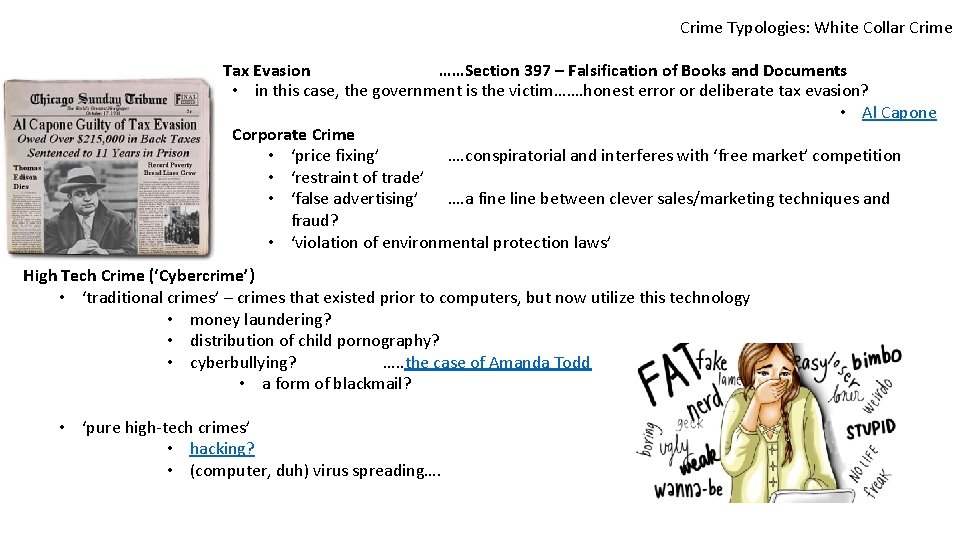
Crime Typologies: White Collar Crime Tax Evasion ……Section 397 – Falsification of Books and Documents • in this case, the government is the victim……. honest error or deliberate tax evasion? • Al Capone Corporate Crime • ‘price fixing’ …. conspiratorial and interferes with ‘free market’ competition • ‘restraint of trade’ • ‘false advertising’ …. a fine line between clever sales/marketing techniques and fraud? • ‘violation of environmental protection laws’ High Tech Crime (‘Cybercrime’) • ‘traditional crimes’ – crimes that existed prior to computers, but now utilize this technology • money laundering? • distribution of child pornography? • cyberbullying? …. . the case of Amanda Todd • a form of blackmail? • ‘pure high-tech crimes’ • hacking? • (computer, duh) virus spreading….
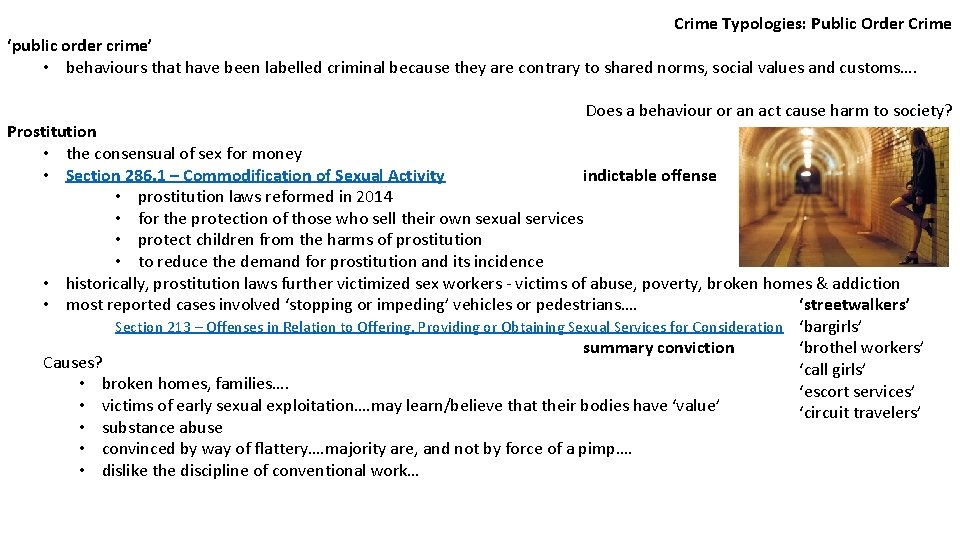
Crime Typologies: Public Order Crime ‘public order crime’ • behaviours that have been labelled criminal because they are contrary to shared norms, social values and customs…. Does a behaviour or an act cause harm to society? Prostitution • the consensual of sex for money • Section 286. 1 – Commodification of Sexual Activity indictable offense • prostitution laws reformed in 2014 • for the protection of those who sell their own sexual services • protect children from the harms of prostitution • to reduce the demand for prostitution and its incidence • historically, prostitution laws further victimized sex workers - victims of abuse, poverty, broken homes & addiction • most reported cases involved ‘stopping or impeding’ vehicles or pedestrians…. ‘streetwalkers’ Section 213 – Offenses in Relation to Offering, Providing or Obtaining Sexual Services for Consideration ‘bargirls’ summary conviction ‘brothel workers’ Causes? ‘call girls’ • broken homes, families…. ‘escort services’ • victims of early sexual exploitation…. may learn/believe that their bodies have ‘value’ ‘circuit travelers’ • substance abuse • convinced by way of flattery…. majority are, and not by force of a pimp…. • dislike the discipline of conventional work…
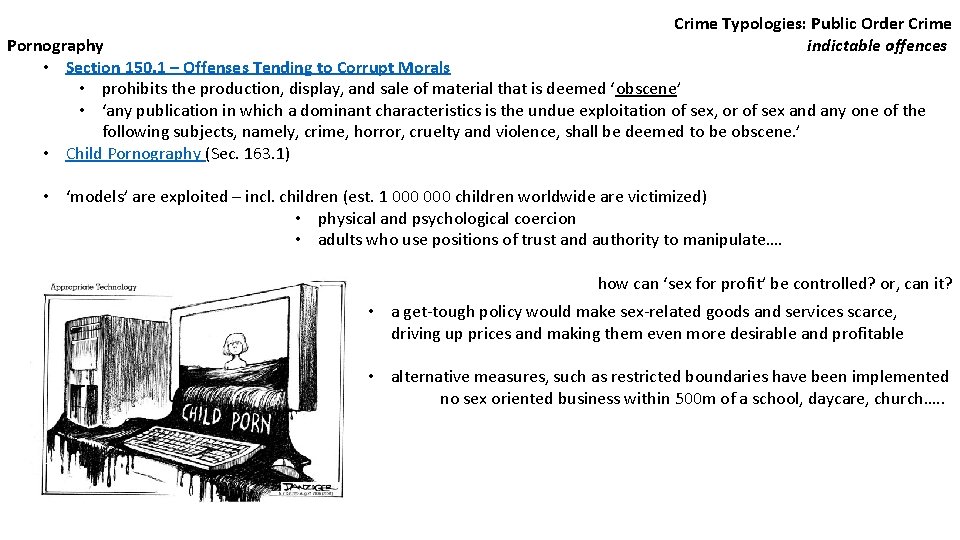
Crime Typologies: Public Order Crime indictable offences Pornography • Section 150. 1 – Offenses Tending to Corrupt Morals • prohibits the production, display, and sale of material that is deemed ‘obscene’ • ‘any publication in which a dominant characteristics is the undue exploitation of sex, or of sex and any one of the following subjects, namely, crime, horror, cruelty and violence, shall be deemed to be obscene. ’ • Child Pornography (Sec. 163. 1) • ‘models’ are exploited – incl. children (est. 1 000 children worldwide are victimized) • physical and psychological coercion • adults who use positions of trust and authority to manipulate…. how can ‘sex for profit’ be controlled? or, can it? • a get-tough policy would make sex-related goods and services scarce, driving up prices and making them even more desirable and profitable • alternative measures, such as restricted boundaries have been implemented no sex oriented business within 500 m of a school, daycare, church…. .
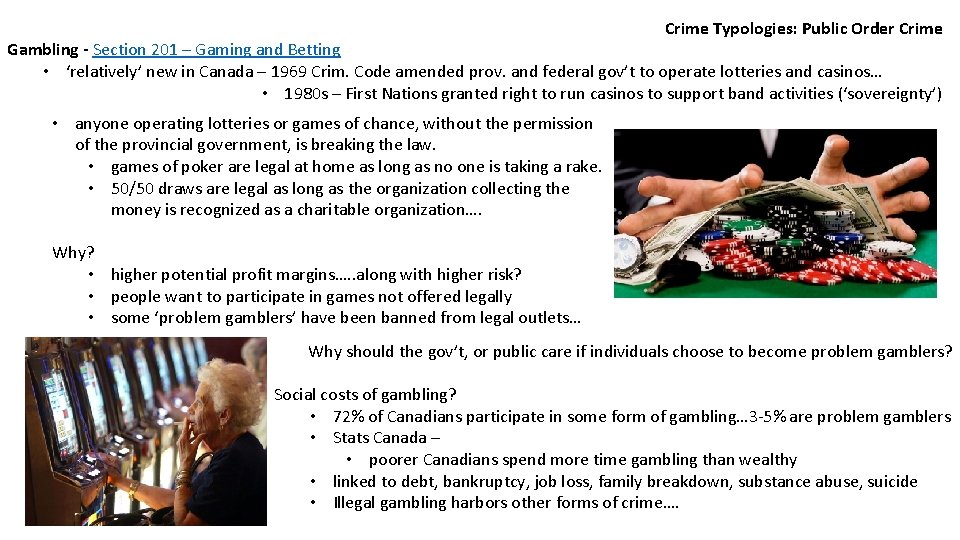
Crime Typologies: Public Order Crime Gambling - Section 201 – Gaming and Betting • ‘relatively’ new in Canada – 1969 Crim. Code amended prov. and federal gov’t to operate lotteries and casinos… • 1980 s – First Nations granted right to run casinos to support band activities (‘sovereignty’) • anyone operating lotteries or games of chance, without the permission of the provincial government, is breaking the law. • games of poker are legal at home as long as no one is taking a rake. • 50/50 draws are legal as long as the organization collecting the money is recognized as a charitable organization…. Why? • higher potential profit margins…. . along with higher risk? • people want to participate in games not offered legally • some ‘problem gamblers’ have been banned from legal outlets… Why should the gov’t, or public care if individuals choose to become problem gamblers? Social costs of gambling? • 72% of Canadians participate in some form of gambling… 3 -5% are problem gamblers • Stats Canada – • poorer Canadians spend more time gambling than wealthy • linked to debt, bankruptcy, job loss, family breakdown, substance abuse, suicide • Illegal gambling harbors other forms of crime….