
Crime Scene Investigation Arriving at a Crime Scene
- Slides: 22
Crime Scene Investigation
Arriving at a Crime Scene Ø A crime scene is the site where the offense took place Ø When officers first arrive at the crime scene, they have three takes to perform: 1. Assist the injured 2. Call reinforcements to eliminate hazards 3. Search crime scene for perpetrators
Beginning a Police Investigation Ø Once the crime scene is considered safe can an investigation begin Ø The Crown’s success in prosecuting offenders often depends on physical evidence Ø Two boundaries must be accurately established by police: 1. The Centre 1. The Perimeter
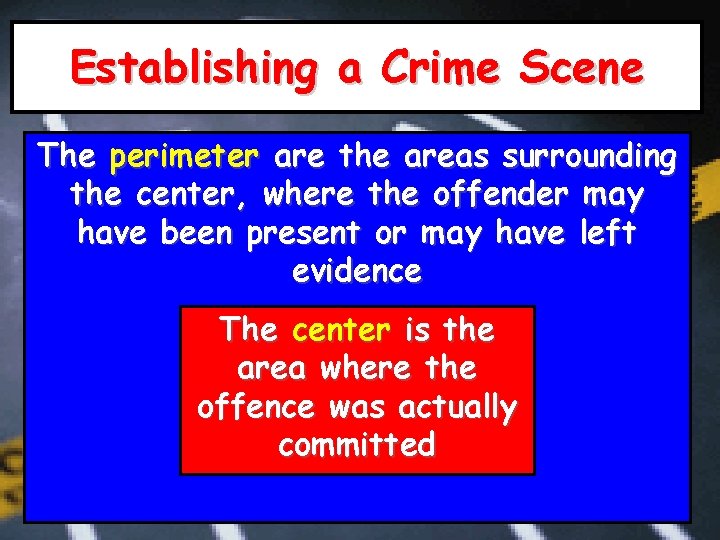
Establishing a Crime Scene The perimeter are the areas surrounding the center, where the offender may have been present or may have left evidence The center is the area where the offence was actually committed
Establishing Crime Scenes Crime scenes are preserved for three reasons: 1. Allow for a thorough search of the scene 1. Seize and collect physical evidence 1. Ensure seized physical evidence is admissible in court
Establishing Crime Scenes • If evidence at a crime scene is not properly managed, it can become contaminated • This is the loss, alteration, or destruction of physical evidence
Physical Evidence • Physical evidence is any object, impression, or body element used to prove or disprove facts • Physical evidence contains greater weight in court than evidence gained through witness statements
Physical Evidence What will evidence collected at a scene do for the investigation? þ May prove that a crime has been committed þ Establish any key elements of a crime þ Link a suspect with a scene or a victim þ Establish the identity of a victim or suspect þ Corroborate verbal witness testimony þ Exonerate the innocent
Physical Evidence What will evidence collected at a scene do for the investigation? þ May prove that a crime has been committed þ Establish any key elements of a crime þ Link a suspect with a scene or a victim þ Establish the identity of a victim or suspect þ Corroborate verbal witness testimony þ Exonerate the innocent
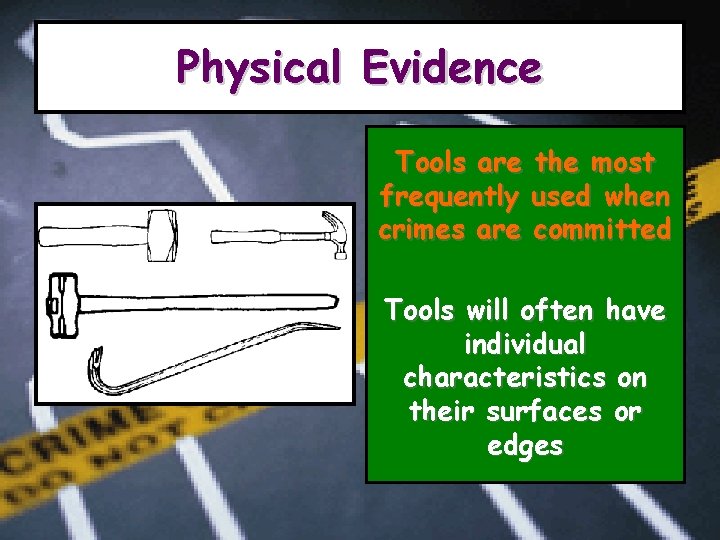
Physical Evidence Tools are the most frequently used when crimes are committed Tools will often have individual characteristics on their surfaces or edges
Physical Evidence Impressions are patterns or marks found on various surfaces 1. Police will first photograph, scan, or make a mould of the impression 1. Investigators will then try to match the impression with the object that made it
Physical Evidence Impressions will have two characteristics: 1. Class Characteristics are the general attributes of an object 2. Individual Characteristics refer to specific and unique features of an object
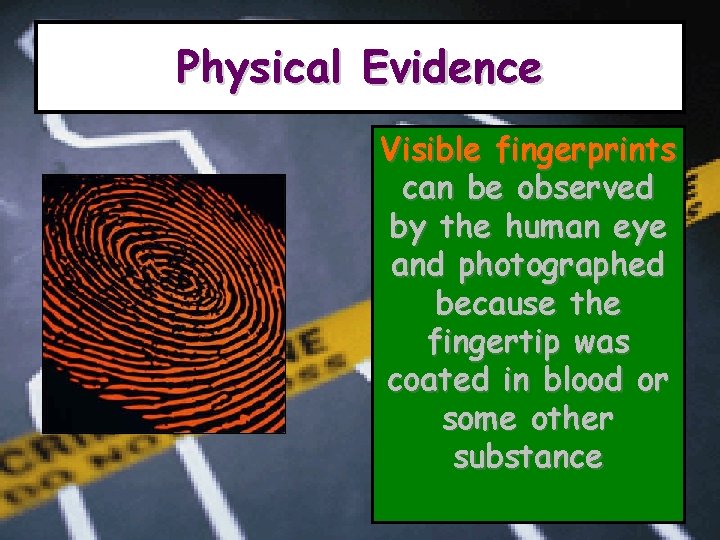
Physical Evidence Visible fingerprints can be observed by the human eye and photographed because the fingertip was coated in blood or some other substance
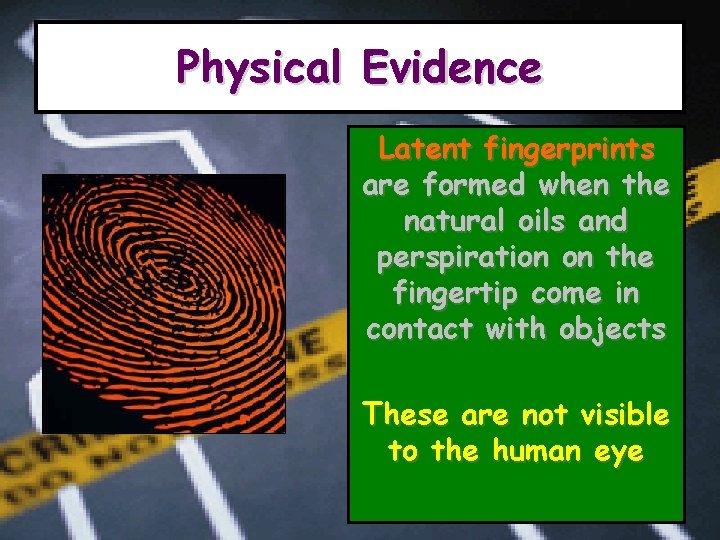
Physical Evidence Latent fingerprints are formed when the natural oils and perspiration on the fingertip come in contact with objects These are not visible to the human eye
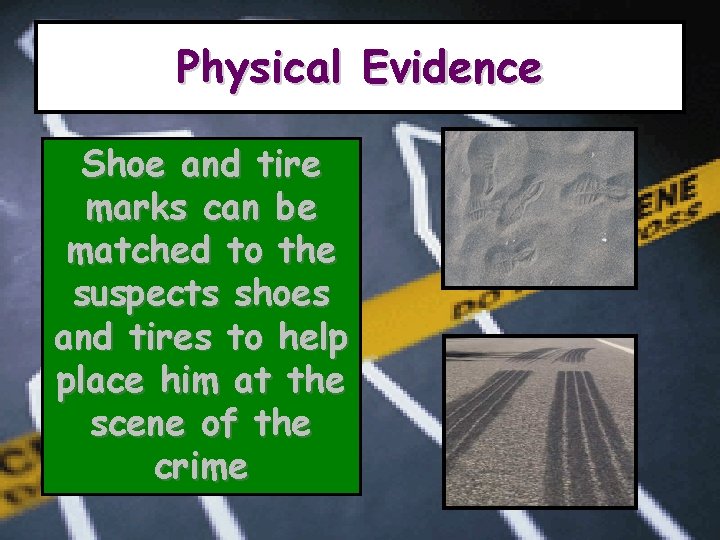
Physical Evidence Shoe and tire marks can be matched to the suspects shoes and tires to help place him at the scene of the crime
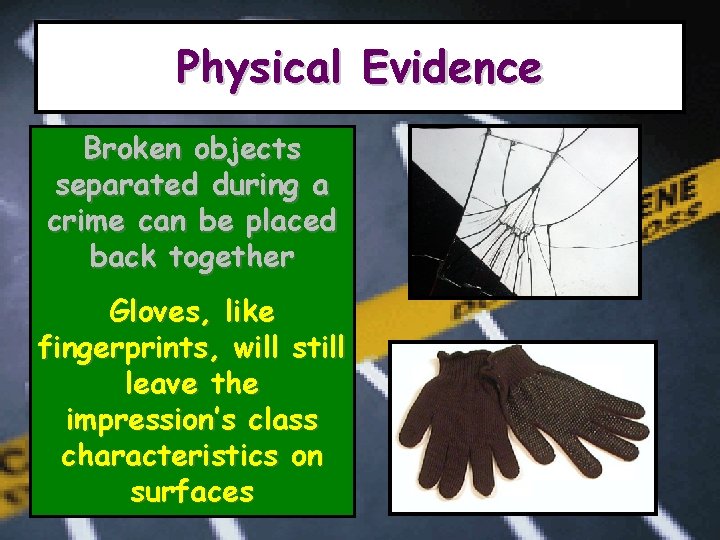
Physical Evidence Broken objects separated during a crime can be placed back together Gloves, like fingerprints, will still leave the impression’s class characteristics on surfaces
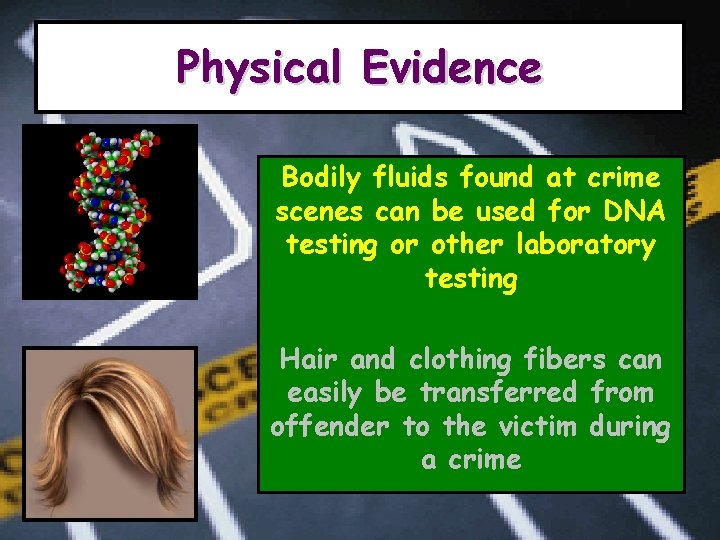
Physical Evidence Bodily fluids found at crime scenes can be used for DNA testing or other laboratory testing Hair and clothing fibers can easily be transferred from offender to the victim during a crime
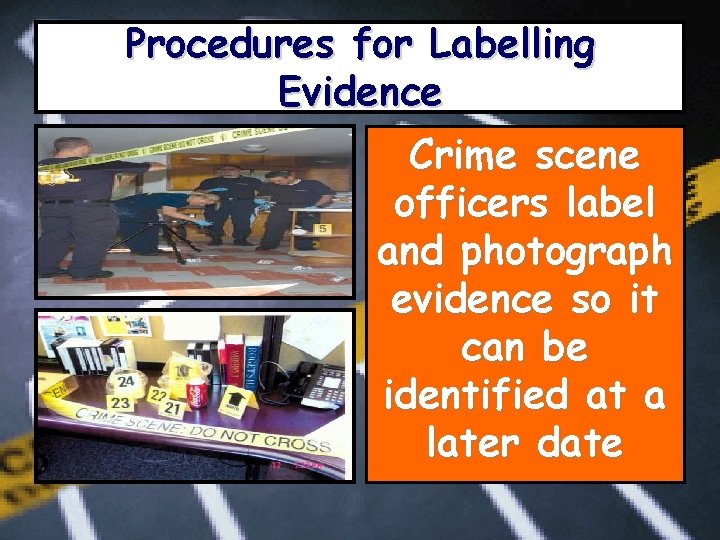
Procedures for Labelling Evidence Crime scene officers label and photograph evidence so it can be identified at a later date
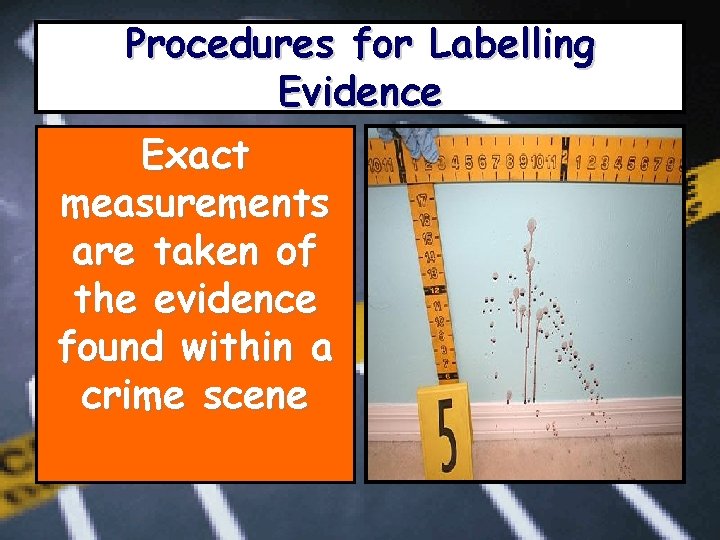
Procedures for Labelling Evidence Exact measurements are taken of the evidence found within a crime scene
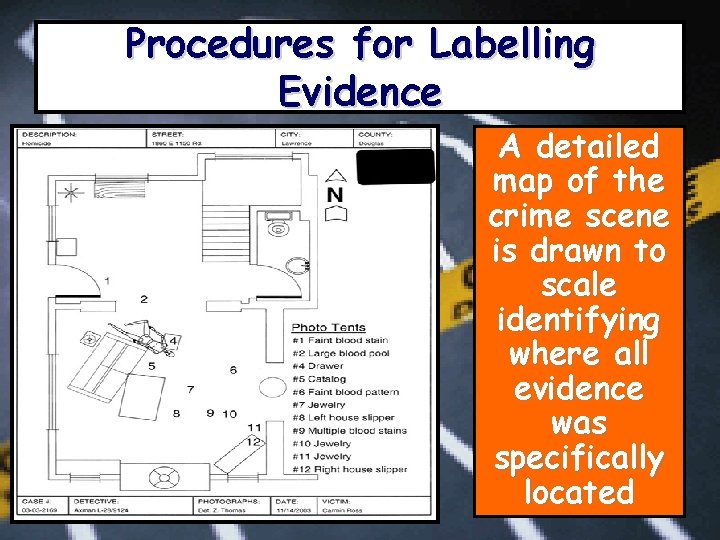
Procedures for Labelling Evidence A detailed map of the crime scene is drawn to scale identifying where all evidence was specifically located
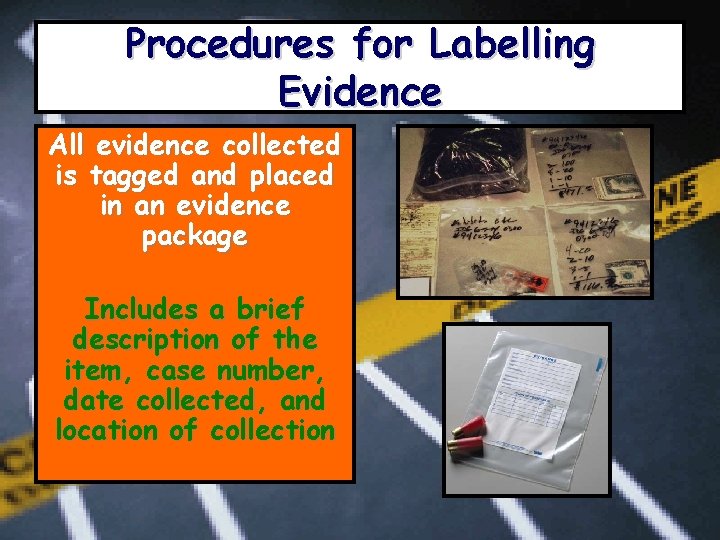
Procedures for Labelling Evidence All evidence collected is tagged and placed in an evidence package Includes a brief description of the item, case number, date collected, and location of collection
Chain of Custody A chain of custody is the witnessed, written record of the people who maintained unbroken control over an item The date and time, the circumstances in which the evidence was handled, and what changes, if any, were made to the evidence