
Cricothyrotomy Indications and Use for the NH Paramedic

- Slides: 20
Cricothyrotomy Indications and Use for the NH Paramedic New Hampshire Division of Fire Standards & Training and Emergency Medical Services
Clinical Indications o Inability to adequately oxygenate and ventilate using less invasive methods.
Contraindications Ability to oxygenate and ventilate using less invasive measures. p Age less than 12 years old p
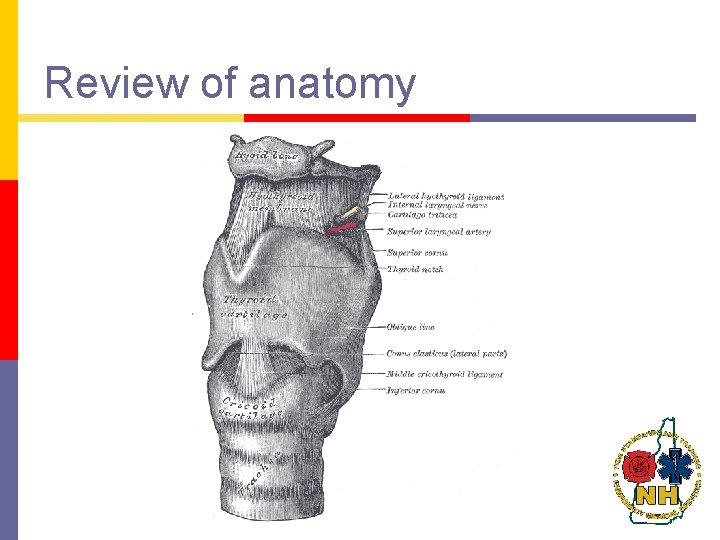
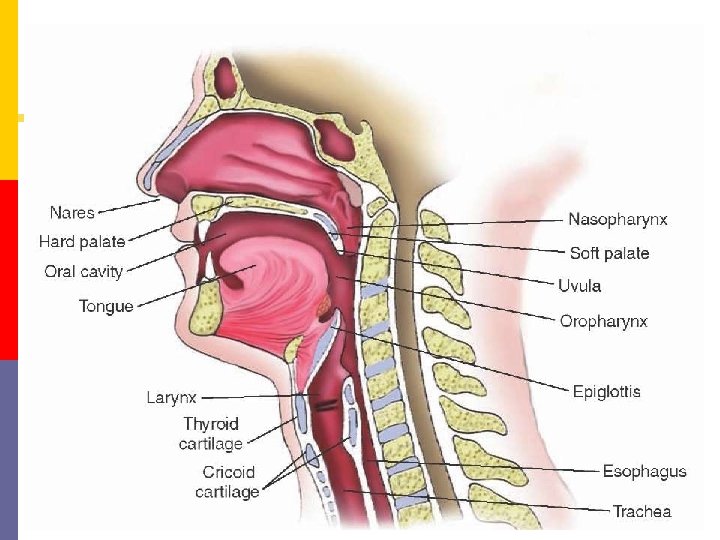
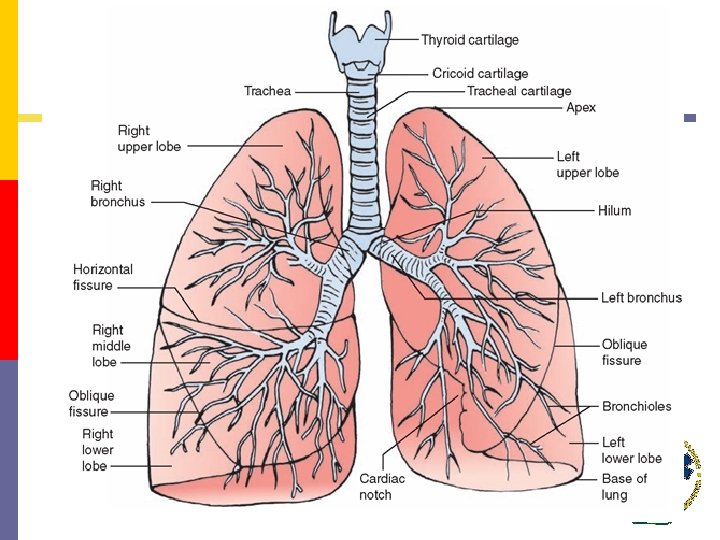
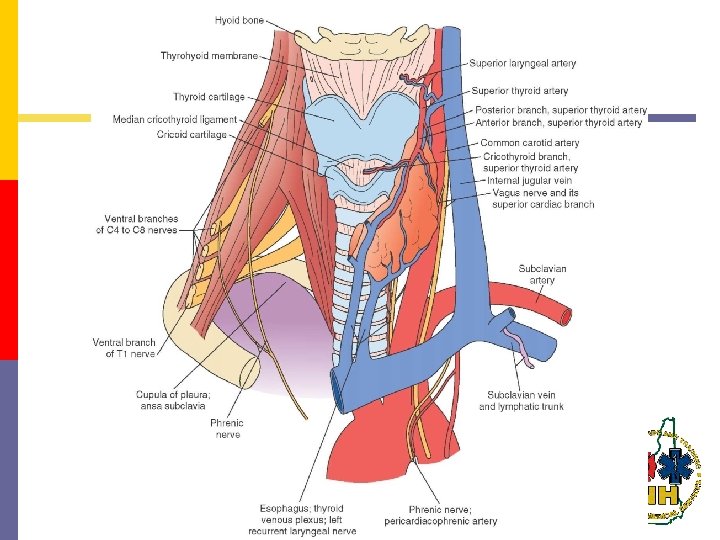
Review of anatomy
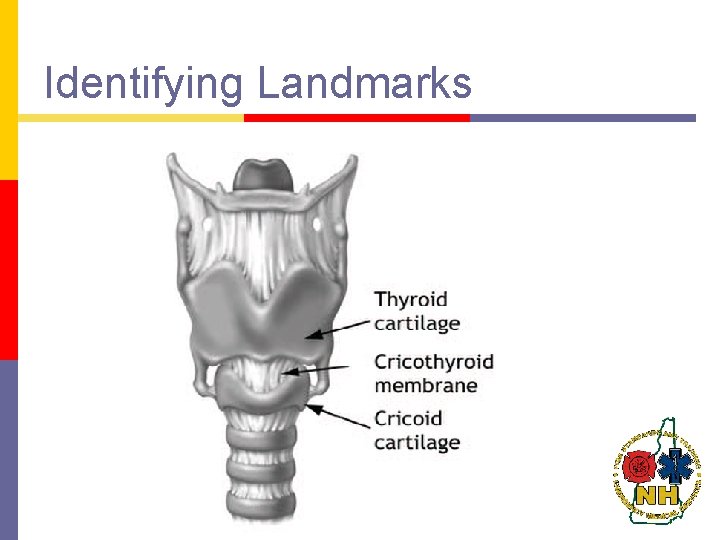
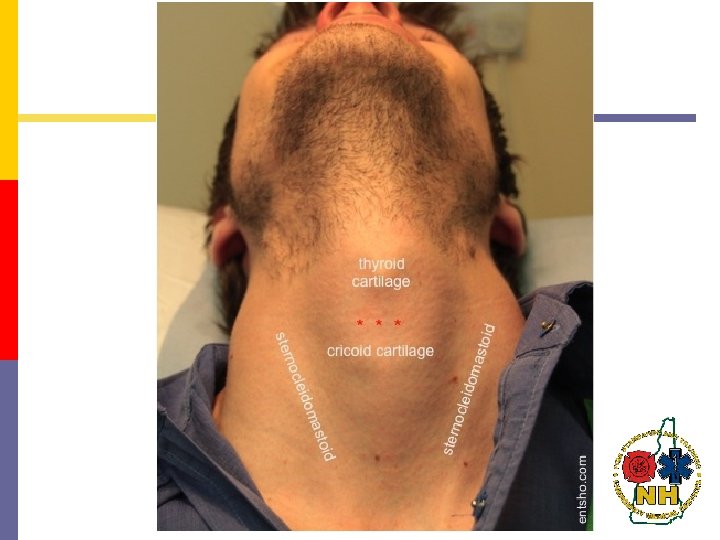
Identifying Landmarks
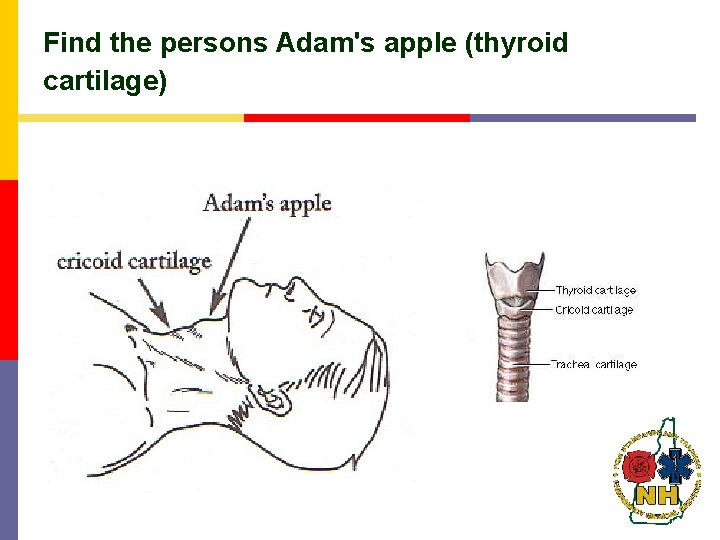
Find the persons Adam's apple (thyroid cartilage)
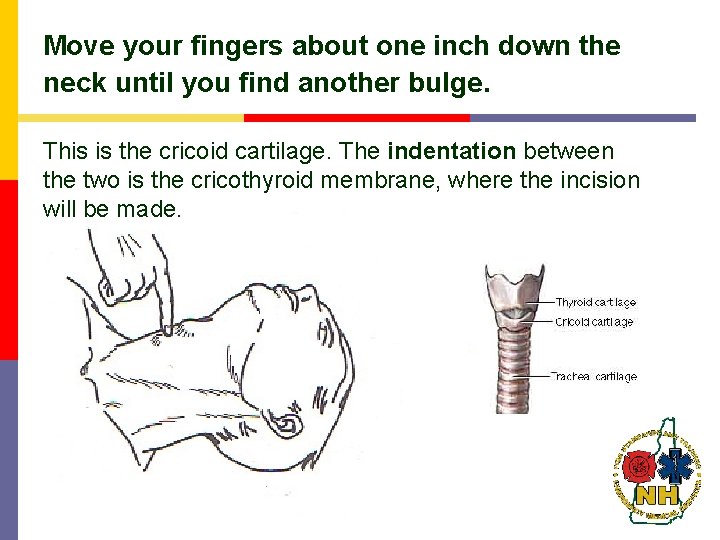
Move your fingers about one inch down the neck until you find another bulge. This is the cricoid cartilage. The indentation between the two is the cricothyroid membrane, where the incision will be made.
Equipment p p p p Non latex gloves Approved sharps containers Suction apparatus Oxygen Supply BVM Chlorhexidine #10 blade scalpel Bougie 6. 0 mm endotracheal tube p 10 m. L syringe p End tidal carbon dioxide monitor p Securing device p Bandaging materials p
Procedure Have all supplies (including suction) available and ready p Proper body substance isolation p Places patient supine and hyperextend neck if no cervical trauma suspected p Positions at patient's side and directs assistant to attempt ventilations with 100% oxygen p Prepare equipment p
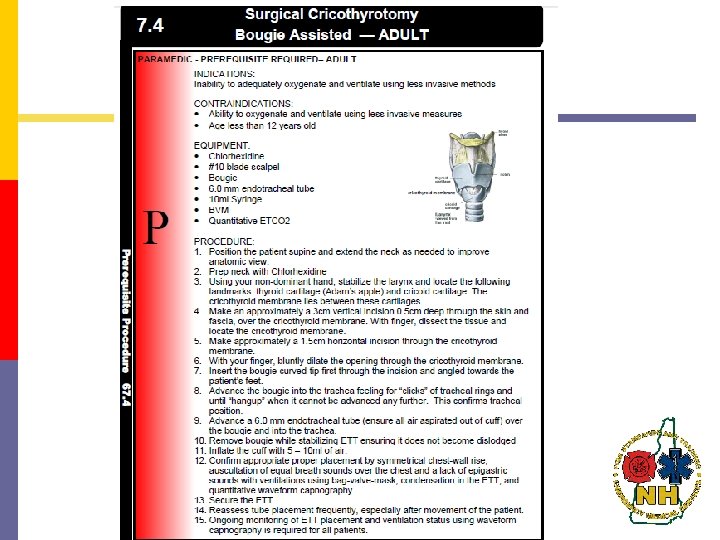
Procedure 1. 2. 3. 4. Position the patient supine and extend the neck as needed to improve anatomic view. Prep neck with Chlorhexidine Using your non-dominant hand, stabilize the larynx and locate the following landmarks: thyroid cartilage (Adam’s apple) and cricoid cartilage. The cricothyroid membrane lies between these cartilages. Make an approximately a 3 cm vertical incision 0. 5 cm deep through the skin and fascia, over the cricothyroid membrane. With finger, dissect the tissue and locate the cricothyroid membrane.
Procedure 5. 6. 7. 8. Make approximately a 1. 5 cm horizontal incision through the cricothyroid membrane. With your finger, bluntly dilate the opening through the cricothyroid membrane. Insert the bougie curved-tip first through the incision and angled towards the patient’s feet. Advance the bougie into the trachea feeling for “clicks” of tracheal rings and until “hangup” when it cannot be advanced any further. This confirms tracheal position.
Procedure 9. 10. 11. Advance a 6. 0 mm endotracheal tube (ensure all air aspirated out of cuff) over the bougie and into the trachea. Remove bougie while stabilizing ETT ensuring it does not become dislodged Inflate the cuff with 5 – 10 ml of air.
Procedure 12. 13. 14. 15. Confirm appropriate proper placement by symmetrical chest-wall rise, auscultation of equal breath sounds over the chest and a lack of epigastric sounds with ventilations using bagvalve-mask, condensation in the ETT, and quantitative waveform capnography. Secure the ETT. Reassess tube placement frequently, especially after movement of the patient. Ongoing monitoring of ETT placement and ventilation status using waveform
Complications p Incorrect tube placement/ false passage p Thyroid gland damage p Severe bleeding p Subcutaneous emphysema p Laryngeal nerve damage
Questions?