
Cricket cercal system population coding and linear algebra
Cricket cercal system: population coding and linear algebra I Ila Fiete Quantitative Methods in Neuroscience NEU 366 M – Spring 2014 University of Texas at Austin
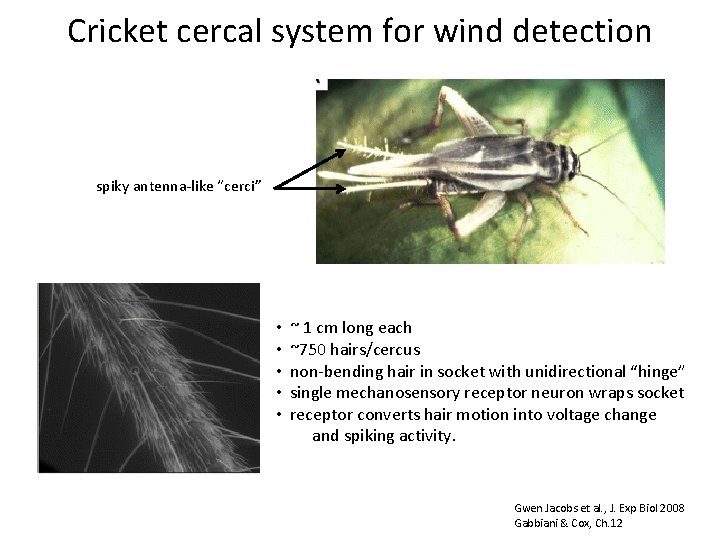
Cricket cercal system for wind detection spiky antenna-like “cerci” • • • ~ 1 cm long each ~750 hairs/cercus non-bending hair in socket with unidirectional “hinge” single mechanosensory receptor neuron wraps socket receptor converts hair motion into voltage change and spiking activity. Gwen Jacobs et al. , J. Exp Biol 2008 Gabbiani & Cox, Ch. 12

Cricket cercal system for wind detection Cricket nervous system: • Chain of ganglion nodes (cell bodies) connected nerve bundles (axon/dendrite cables). • Last node: where cercal receptor/interneuron circuit resides. Dark brown, light brown, cyan: receptor neurons. Purple: interneuron. Massive dimensionality reduction: 1500 receptor neurons 20 projecting interneurons. Gwen Jacobs et al. , J. Exp Biol 2008 Gabbiani & Cox, Ch. 12
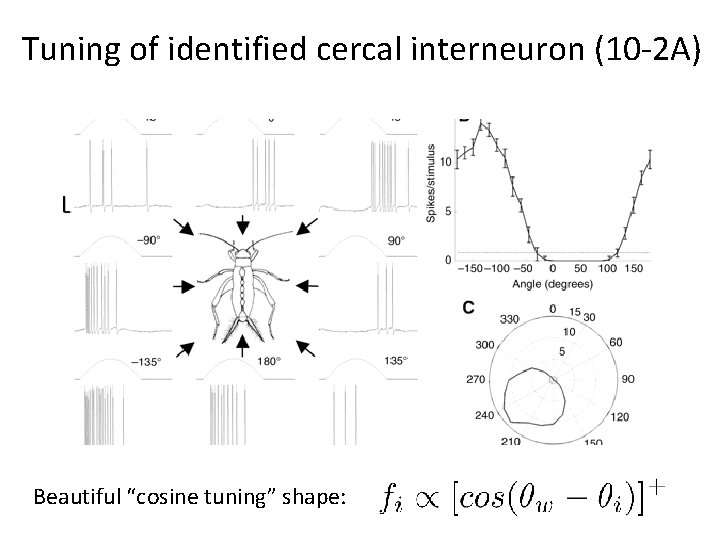
Tuning of identified cercal interneuron (10 -2 A) Beautiful “cosine tuning” shape:
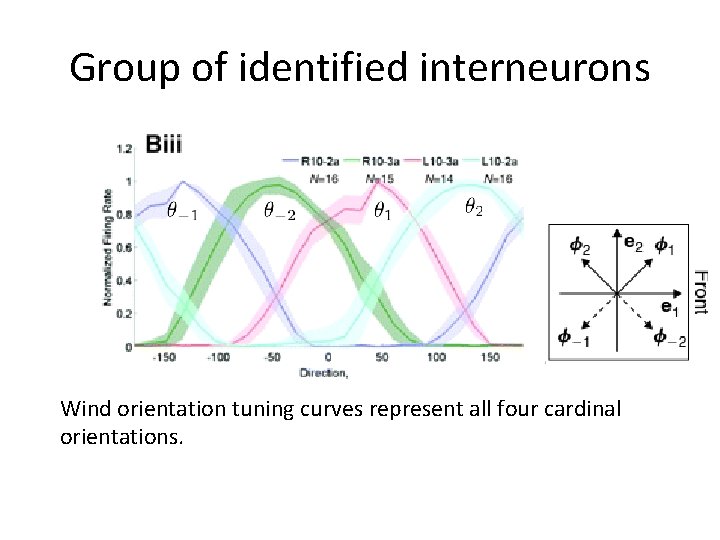
Group of identified interneurons Wind orientation tuning curves represent all four cardinal orientations.
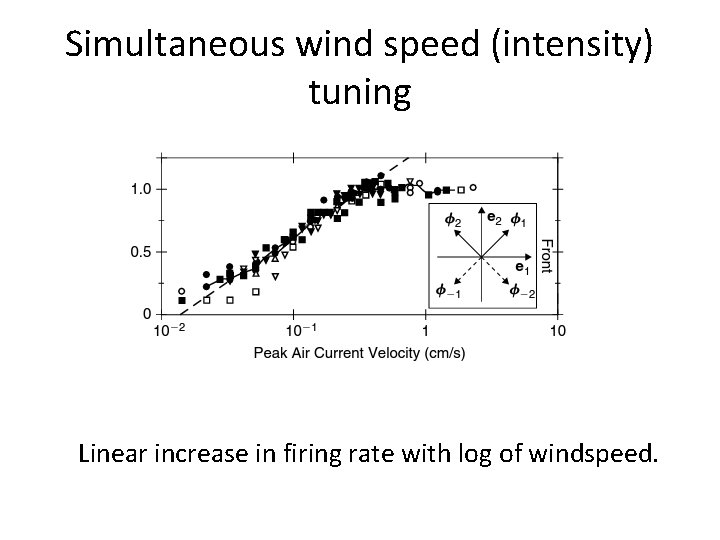
Simultaneous wind speed (intensity) tuning Linear increase in firing rate with log of windspeed.
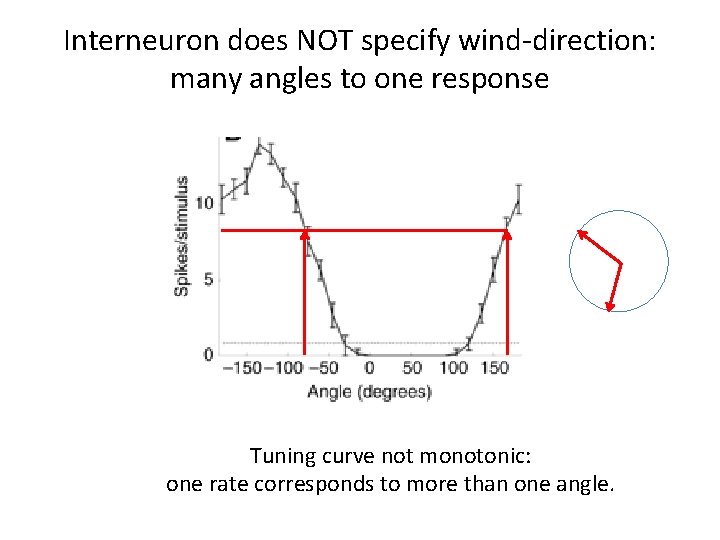
Interneuron does NOT specify wind-direction: many angles to one response Tuning curve not monotonic: one rate corresponds to more than one angle.
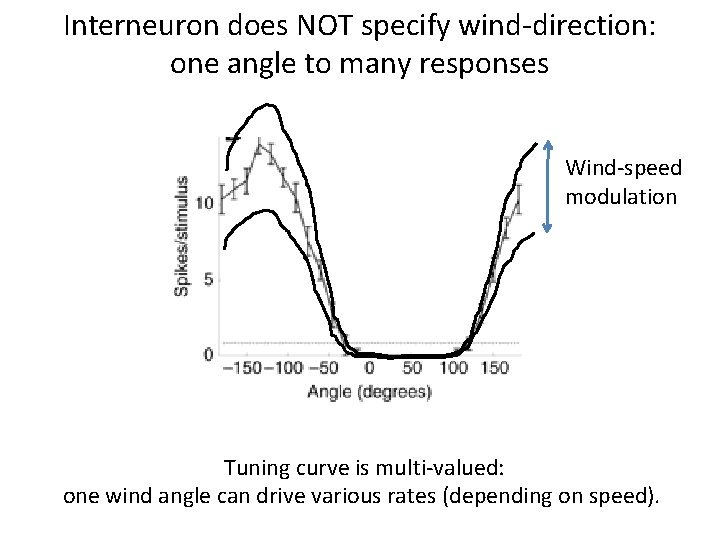
Interneuron does NOT specify wind-direction: one angle to many responses Wind-speed modulation Tuning curve is multi-valued: one wind angle can drive various rates (depending on speed).
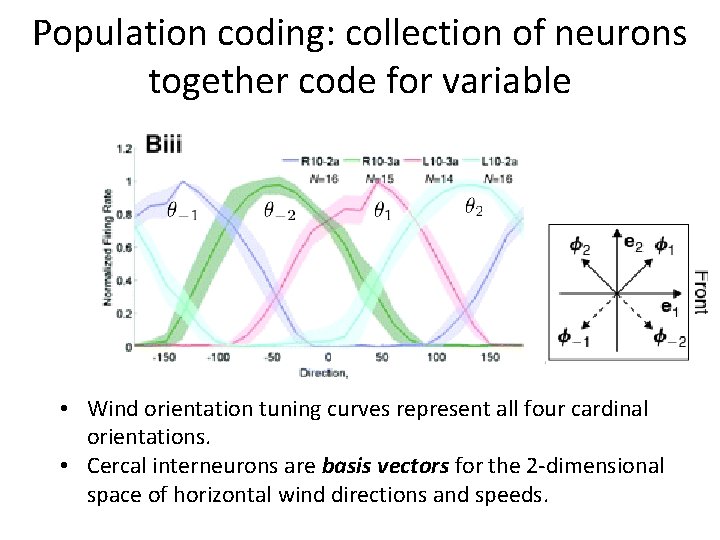
Population coding: collection of neurons together code for variable • Wind orientation tuning curves represent all four cardinal orientations. • Cercal interneurons are basis vectors for the 2 -dimensional space of horizontal wind directions and speeds.
How to understand decode the population code?
- Slides: 10