
Creep and shrinkage of concrete Parameters Affecting Drying
- Slides: 12
Creep and shrinkage of concrete
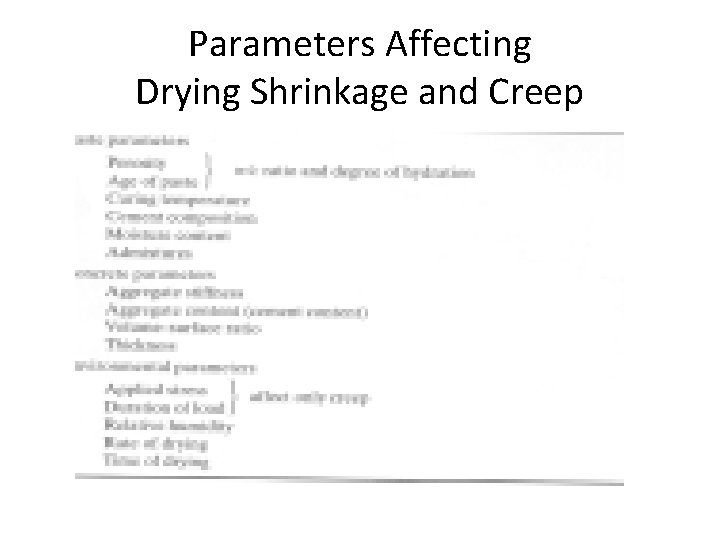
Parameters Affecting Drying Shrinkage and Creep
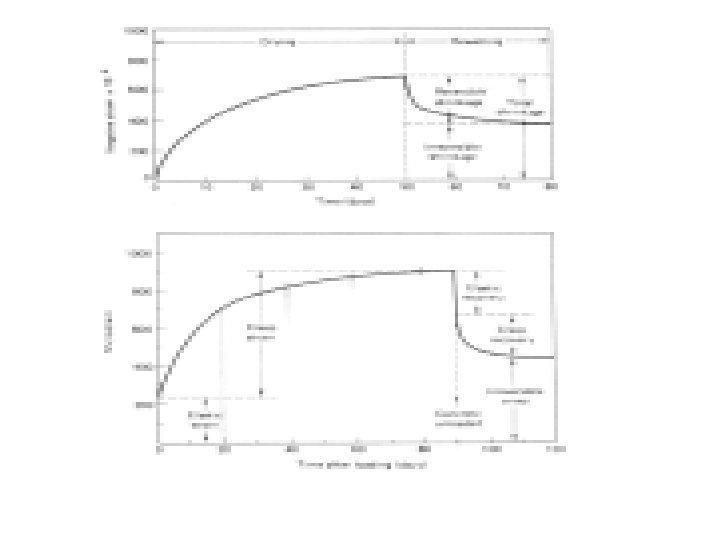
Shrinkage • Shrinkage of concrete is caused by the settlement of solids and the loss of free water from the plastic concrete (plastic shrinkage), • by the chemical combination of cement with water (autogenous shrinkage) and • by the drying concrete (drying shrinkage). • CRACKING: Where movement of the concrete is restrained, shrinkage will produce tensile stress within the concrete, which may cause cracking.
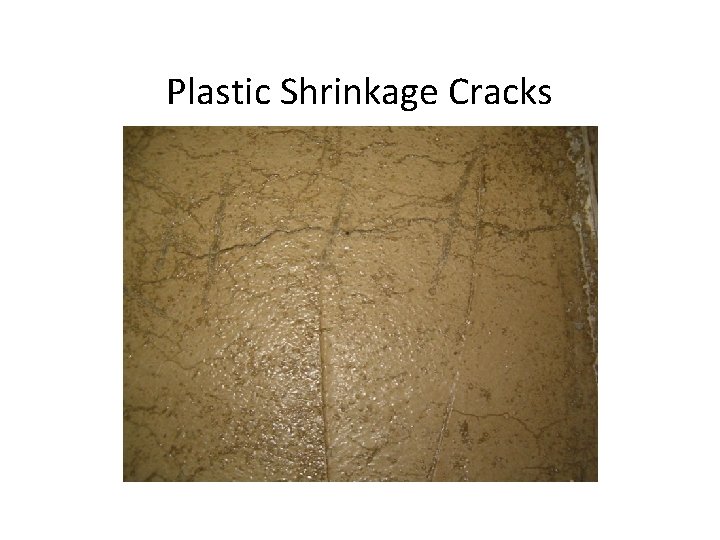
Plastic Shrinkage • Shrinkage, which takes place before concrete has set, is known as plastic shrinkage. • Occurs as a result of the loss of free water and the settlement of solids in the mix. • Plastic shrinkage is most common in slab construction and is characterized by the appearance of surface cracks which can extend quite deeply into the concrete.
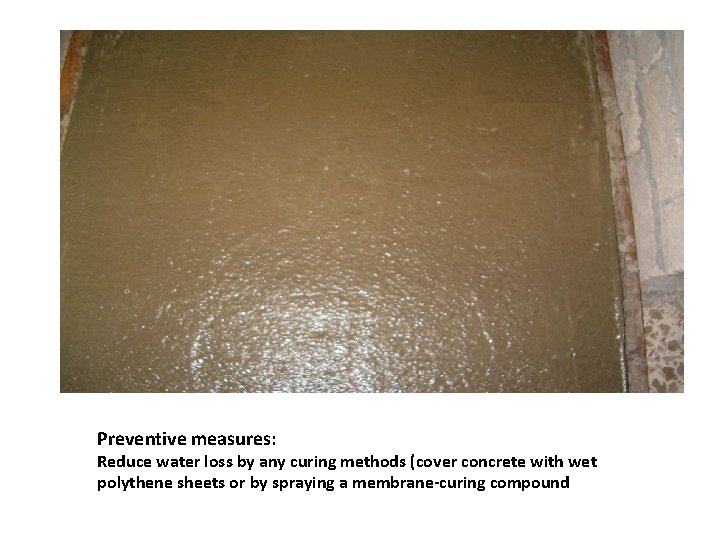
Preventive measures: Reduce water loss by any curing methods (cover concrete with wet polythene sheets or by spraying a membrane-curing compound
Plastic Shrinkage Cracks
Autogenous Shrinkage • As hydration continues in an environment where the water content is constant, such as inside a large mass of concrete, this decrease in volume of the cement paste results in shrinkage of the concrete. • • This is known as autogenous shrinkage, it is self-produced by the hydration of cement. • –Factors influencing the rate and magnitude of autogenous shrinkage: • Chemical composition of cement, • Initial water content, • Temperature and time. •
Drying Shrinkage • When a hardened concrete, cured in water, is allowed to dry it first loses water from its voids and capillary pores and only starts to shrink during further drying when water is drawn, out of its cement gel. This is known as drying shrinkage. • • After an initial high rate of drying shrinkage concrete continues to shrink for a long period of time, but at a continuously decreasing rate. • • For practical purposes, it may be assumed that for small sections 50 per cent of the total shrinkage occurs in the first year.
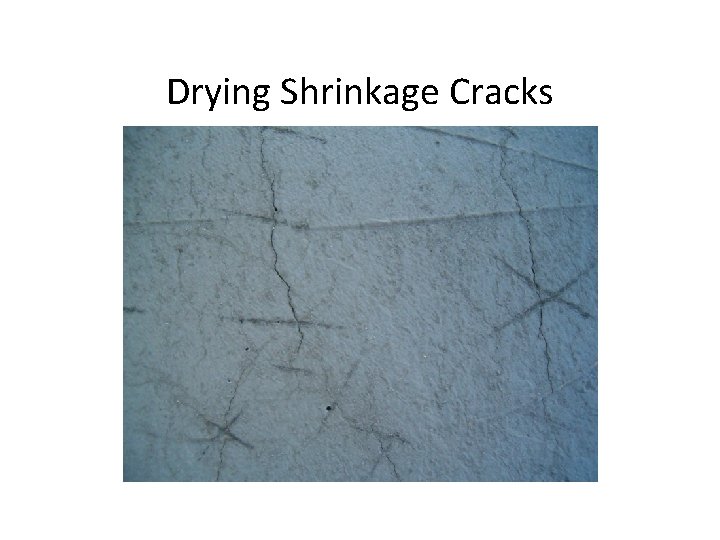
Drying Shrinkage Cracks
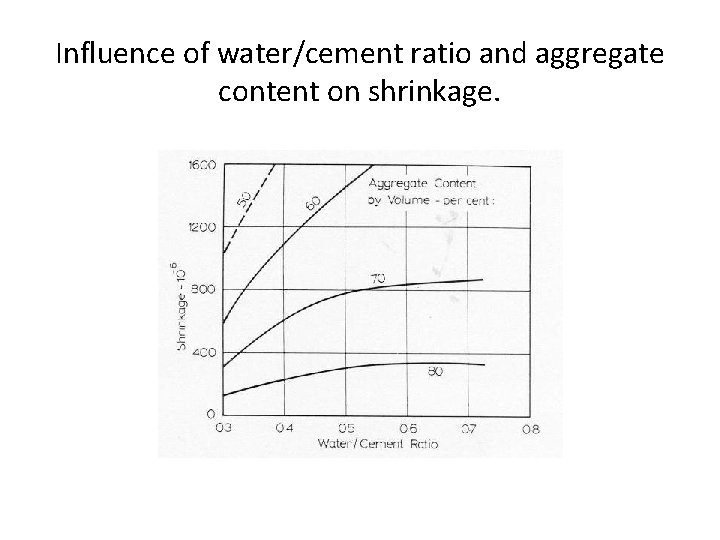
Factors Affecting Drying Shrinkage • Type, content and proportion of the constituent materials of concrete (cement, water, aggregates, etc), • Size and shape of the concrete structure, • Amount and distribution of reinforcement, • Relative humidity of the environment. • Drying shrinkage is directly proportional to the water-cement ratio and inversely proportional to the aggregate-cement ratio (Figure 1). Because of the interaction of the effects of aggregate-cement and water-cement ratios, it is possible to have a rich mix with a low water-cement ratio giving higher shrinkage than a leaner mix with a higher water-cement ratio. • Total 31 9
Influence of water/cement ratio and aggregate content on shrinkage.