
Credentialing and Privileging in New Procedures and Technologies

- Slides: 12
Credentialing and Privileging in New Procedures and Technologies Presented by: Thomas Forbes, M. D. , FRCSC, FACS, DFSVS™
Credentialing and Privileging
Critical Elements for Initial Privileges • Completion of an ACGME-accredited vascular surgery program • Passing of the American Board of Surgery (ABS) vascular certification exam within seven years of completion of training • Training includes the open surgical and endovascular experience inherent in these approved programs, along with passing the RPVI examination and gaining knowledge of medical management of these patients
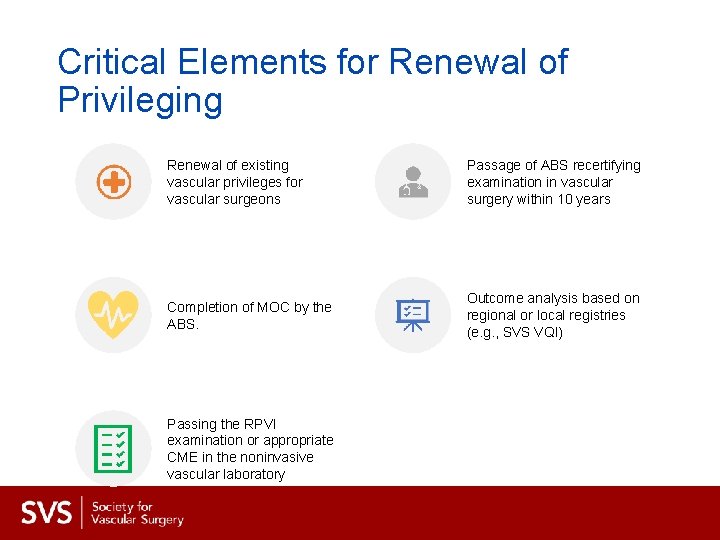
Critical Elements for Renewal of Privileging Renewal of existing vascular privileges for vascular surgeons Passage of ABS recertifying examination in vascular surgery within 10 years Completion of MOC by the ABS. Outcome analysis based on regional or local registries (e. g. , SVS VQI) Passing the RPVI examination or appropriate CME in the noninvasive vascular laboratory
New Procedures
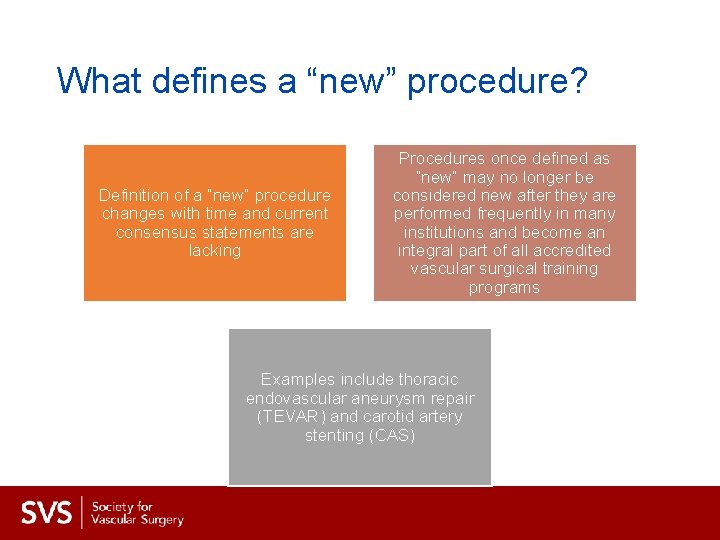
What defines a “new” procedure? Definition of a “new” procedure changes with time and current consensus statements are lacking Procedures once defined as “new” may no longer be considered new after they are performed frequently in many institutions and become an integral part of all accredited vascular surgical training programs Examples include thoracic endovascular aneurysm repair (TEVAR) and carotid artery stenting (CAS)
Proposed process for credentialing and privileging in a new procedure
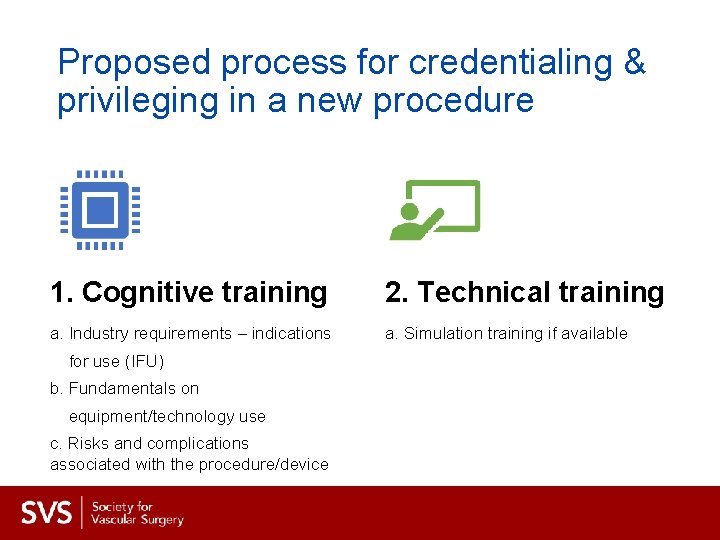
Proposed process for credentialing & privileging in a new procedure 1. Cognitive training 2. Technical training a. Industry requirements – indications a. Simulation training if available for use (IFU) b. Fundamentals on equipment/technology use c. Risks and complications associated with the procedure/device
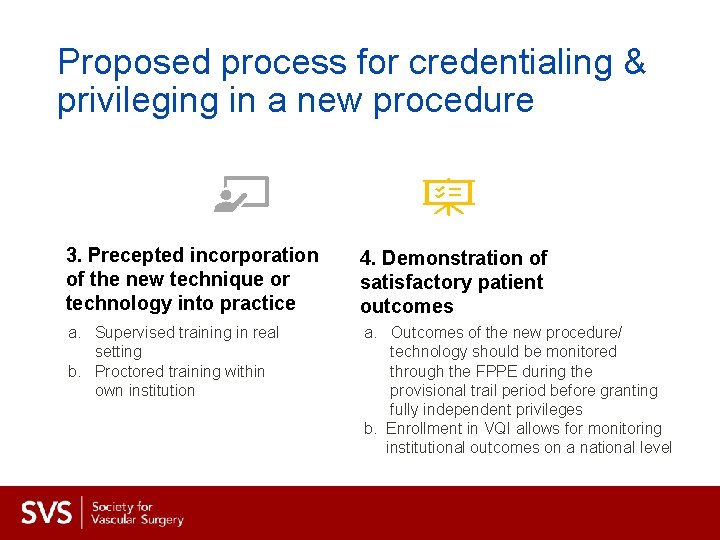
Proposed process for credentialing & privileging in a new procedure 3. Precepted incorporation of the new technique or technology into practice 4. Demonstration of satisfactory patient outcomes a. Supervised training in real setting b. Proctored training within own institution a. Outcomes of the new procedure/ technology should be monitored through the FPPE during the provisional trail period before granting fully independent privileges b. Enrollment in VQI allows for monitoring institutional outcomes on a national level
Adoption of the new procedure and technology into routine practice
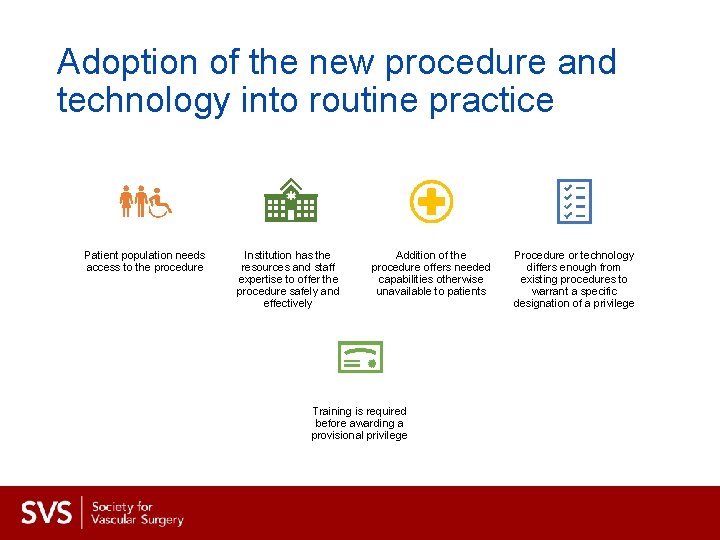
Adoption of the new procedure and technology into routine practice Patient population needs access to the procedure Institution has the resources and staff expertise to offer the procedure safely and effectively Addition of the procedure offers needed capabilities otherwise unavailable to patients Training is required before awarding a provisional privilege Procedure or technology differs enough from existing procedures to warrant a specific designation of a privilege
Credentialing & Privileging in New Procedures & Technologies Presented by Thomas Forbes, M. D. , FRCSC FACS, DFSVS™,