
CRECPECRO Demystifying the microbiology and opportunities for whole

CRE/CPE/CRO: Demystifying the microbiology and opportunities for whole genome sequencing Jon Otter, Ph. D FRCPath Imperial College Healthcare NHS Trust * jon. otter@imperial. nhs. uk @jonotter Blog: www. Reflections. IPC. com You can download these slides from www. jonotter. net
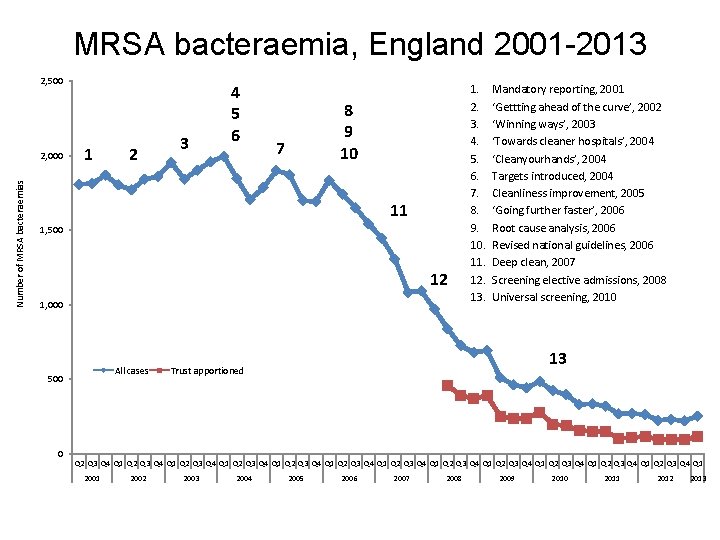
MRSA bacteraemia, England 2001 -2013 2, 500 Number of MRSA bacteraemias 2, 000 1 2 3 4 5 6 8 9 10 7 11 1, 500 12 1, 000 All cases 500 0 1. 2. 3. 4. 5. 6. 7. 8. 9. 10. 11. 12. 13. Mandatory reporting, 2001 ‘Gettting ahead of the curve’, 2002 ‘Winning ways’, 2003 ‘Towards cleaner hospitals’, 2004 ‘Cleanyourhands’, 2004 Targets introduced, 2004 Cleanliness improvement, 2005 ‘Going further faster’, 2006 Root cause analysis, 2006 Revised national guidelines, 2006 Deep clean, 2007 Screening elective admissions, 2008 Universal screening, 2010 13 Trust apportioned Q 2 Q 3 Q 4 Q 1 Q 2 Q 3 Q 4 Q 1 Q 2 Q 3 Q 4 Q 1 2001 2002 2003 2004 2005 2006 2007 2008 2009 2010 2011 2012 2013
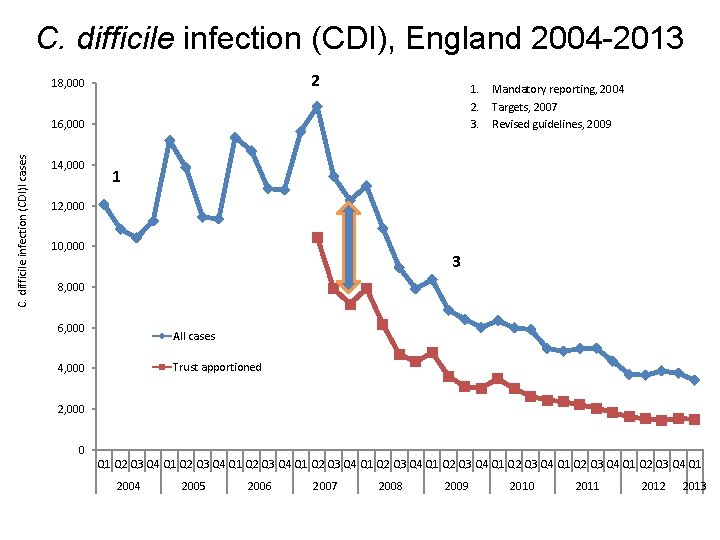
C. difficile CDI cases, 2004 -2013 infection (CDI), England 2004 -2013 2 18, 000 1. Mandatory reporting, 2004 2. Targets, 2007 3. Revised guidelines, 2009 C. difficile infection (CDI)I cases 16, 000 14, 000 1 12, 000 10, 000 3 8, 000 6, 000 All cases Trust apportioned 4, 000 2, 000 0 Q 1 Q 2 Q 3 Q 4 Q 1 Q 2 Q 3 Q 4 Q 1 Q 2 Q 3 Q 4 Q 1 2004 2005 2006 2007 2008 2009 2010 2011 2012 2013
THE END OF ANTIBIOTICS IS NIGH
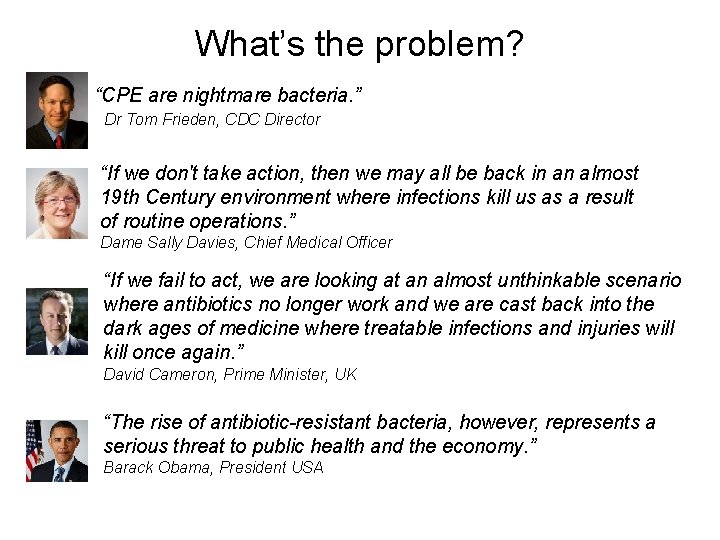
What’s the problem? “CPE are nightmare bacteria. ” Dr Tom Frieden, CDC Director “If we don't take action, then we may all be back in an almost 19 th Century environment where infections kill us as a result of routine operations. ” Dame Sally Davies, Chief Medical Officer “If we fail to act, we are looking at an almost unthinkable scenario where antibiotics no longer work and we are cast back into the dark ages of medicine where treatable infections and injuries will kill once again. ” David Cameron, Prime Minister, UK “The rise of antibiotic-resistant bacteria, however, represents a serious threat to public health and the economy. ” Barack Obama, President USA
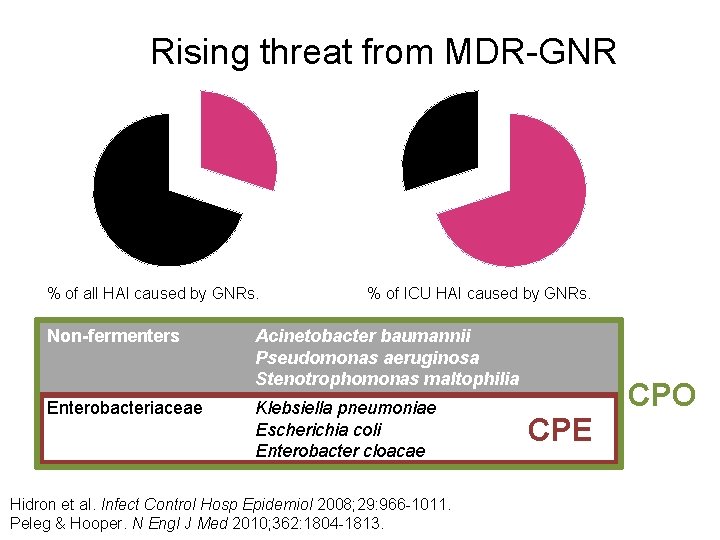
Rising threat from MDR-GNR % of all HAI caused by GNRs. % of ICU HAI caused by GNRs. Non-fermenters Acinetobacter baumannii Pseudomonas aeruginosa Stenotrophomonas maltophilia Enterobacteriaceae Klebsiella pneumoniae Escherichia coli Enterobacter cloacae Hidron et al. Infect Control Hosp Epidemiol 2008; 29: 966 -1011. Peleg & Hooper. N Engl J Med 2010; 362: 1804 -1813. CPE CPO
Poll: would you be comfortable explaining the difference between ‘carbapenem-resistant Enterobacteriaceae (CRE)’ and ‘carbapenemase producing Enterobacteriaceae (CPE)’ to a colleague? A) Yes B) No
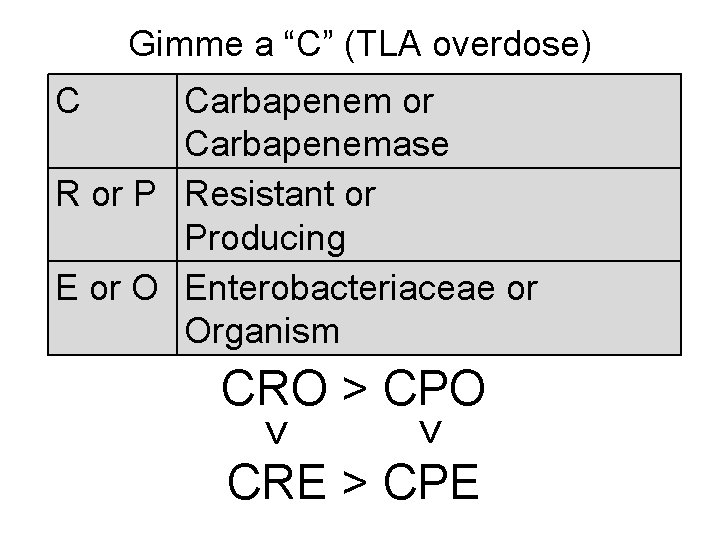
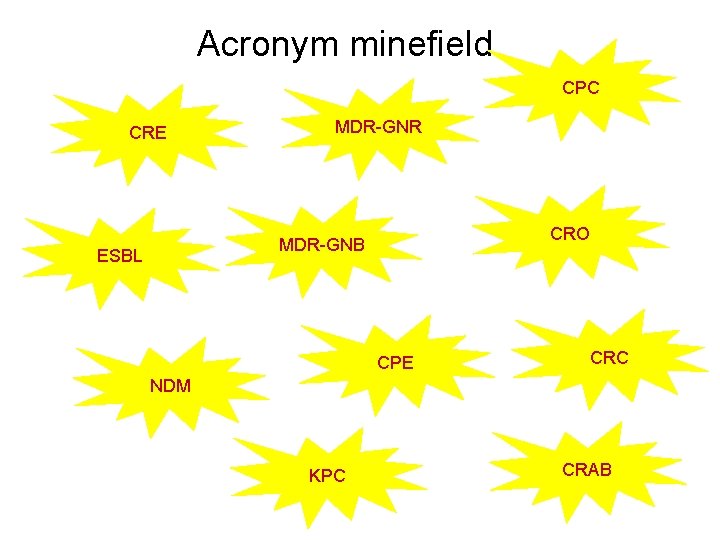
Gimme a “C” (TLA overdose) C Carbapenem or Carbapenemase R or P Resistant or Producing E or O Enterobacteriaceae or Organism CRO > CPO > > CRE > CPE

CRE or CPE (or possibly CP-CRE)? ! Carbapenem-resistant Enterobacteriaceae (CRE) – Enterobacteriaceae that are resistant to carbapenems by any mechanism. Carbapenemase-producing Enterobacteriaceae (CPE) – Enterobacteriaceae that are resistant to carbapenems by means of an acquired carbapenemase. CRE CPE

When CRE is not CPE Carbapenemase Wild-type N ESBL / Amp. C + porin loss or true carbapenemase ? 0. 5 16 Courtesy of Dr Katie Hopkins, PHE. Carbapenem MIC
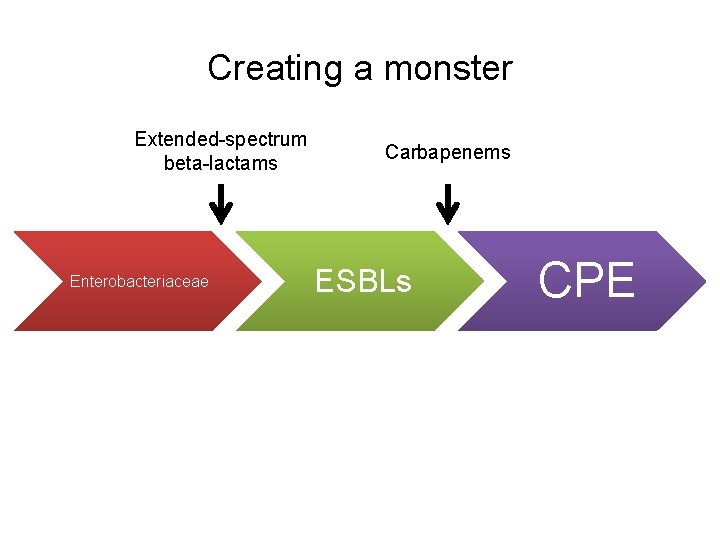
Creating a monster Extended-spectrum beta-lactams Enterobacteriaceae Carbapenems ESBLs CPE
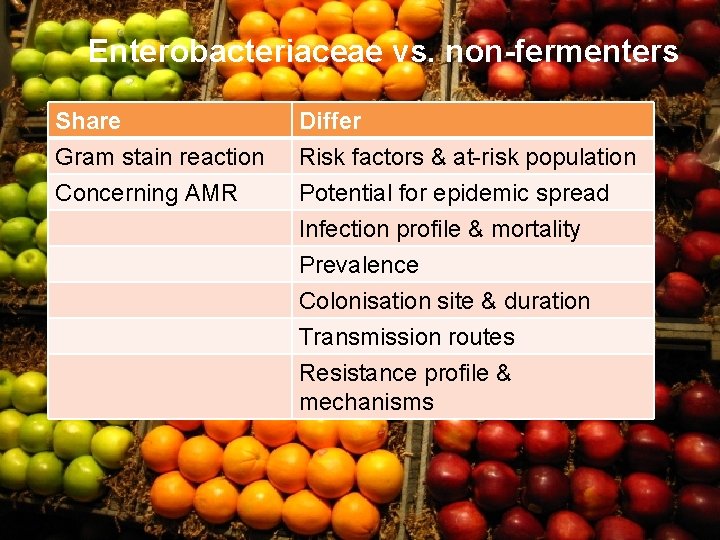
Enterobacteriaceae vs. non-fermenters Share Gram stain reaction Concerning AMR Differ Risk factors & at-risk population Potential for epidemic spread Infection profile & mortality Prevalence Colonisation site & duration Transmission routes Resistance profile & mechanisms
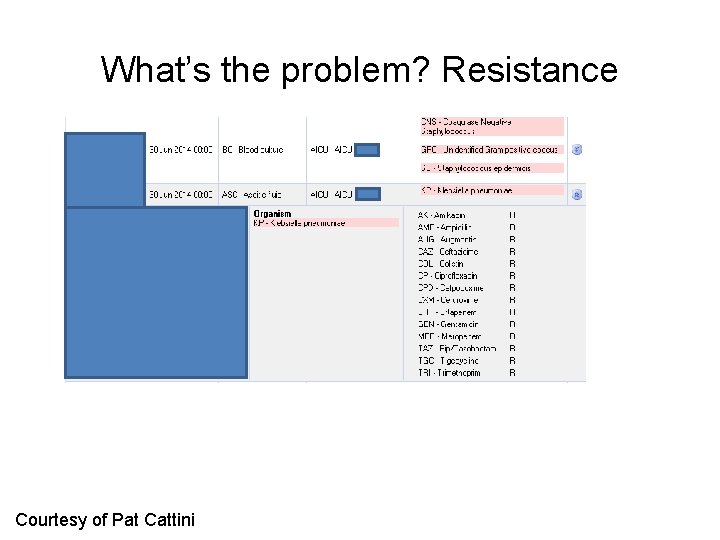
What’s the problem? Resistance Courtesy of Pat Cattini
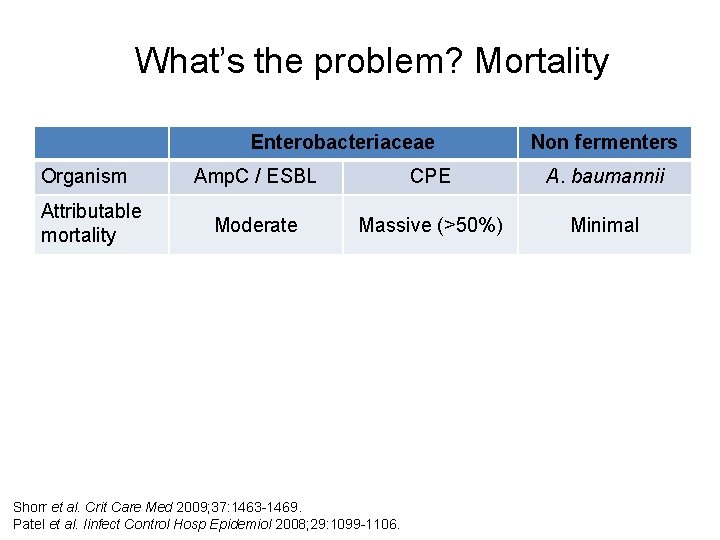
What’s the problem? Mortality Enterobacteriaceae Organism Attributable mortality Non fermenters Amp. C / ESBL CPE A. baumannii Moderate Massive (>50%) Minimal Shorr et al. Crit Care Med 2009; 37: 1463 -1469. Patel et al. Iinfect Control Hosp Epidemiol 2008; 29: 1099 -1106.
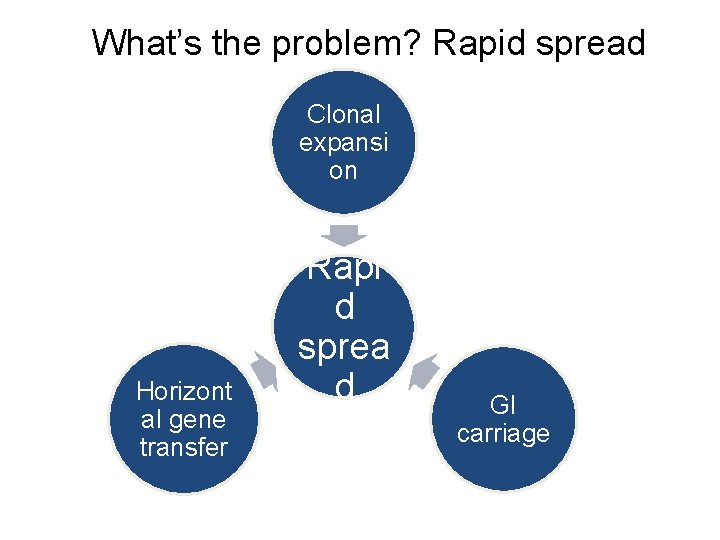
What’s the problem? Rapid spread Clonal expansi on Horizont al gene transfer Rapi d sprea d GI carriage

Acronym minefield CPC CRE MDR-GNR CRO MDR-GNB ESBL CPE CRC NDM KPC CRAB
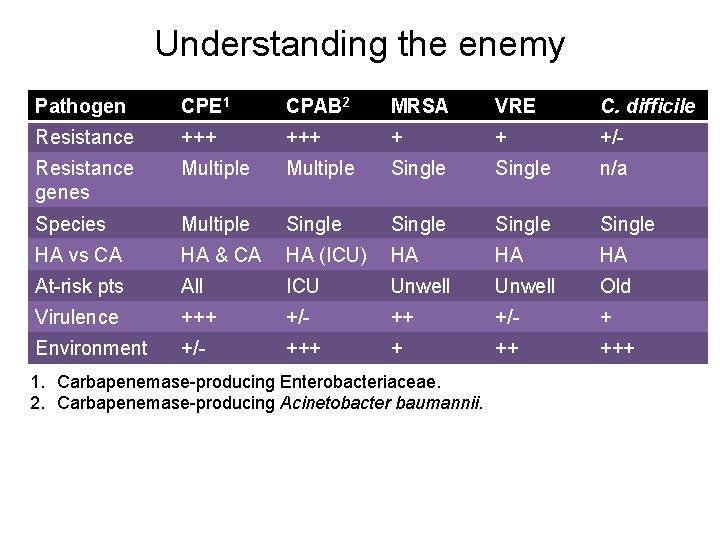
Understanding the enemy Pathogen CPE 1 CPAB 2 MRSA VRE C. difficile Resistance +++ + + +/- Resistance genes Multiple Single n/a Species Multiple Single HA vs CA HA & CA HA (ICU) HA HA HA At-risk pts All ICU Unwell Old Virulence +++ +/- + Environment +/- +++ +++ 1. Carbapenemase-producing Enterobacteriaceae. 2. Carbapenemase-producing Acinetobacter baumannii.
Poll: How much CPE have you seen in your hospital? A) None B) One or two cases C) One or two outbreaks D) Regularly (not related to known outbreaks)
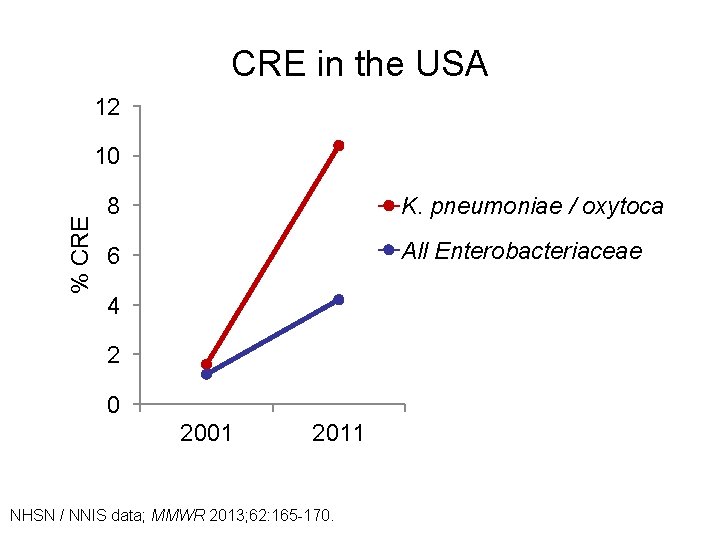
CRE in the USA 12 % CRE 10 8 K. pneumoniae / oxytoca 6 All Enterobacteriaceae 4 2 0 2001 2011 NHSN / NNIS data; MMWR 2013; 62: 165 -170.
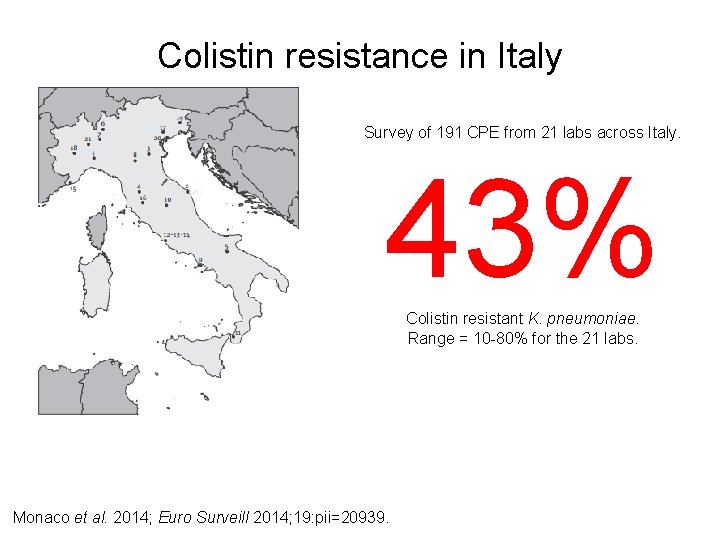
Colistin resistance in Italy Survey of 191 CPE from 21 labs across Italy. 43% Colistin resistant K. pneumoniae. Range = 10 -80% for the 21 labs. Monaco et al. 2014; Euro Surveill 2014; 19: pii=20939.
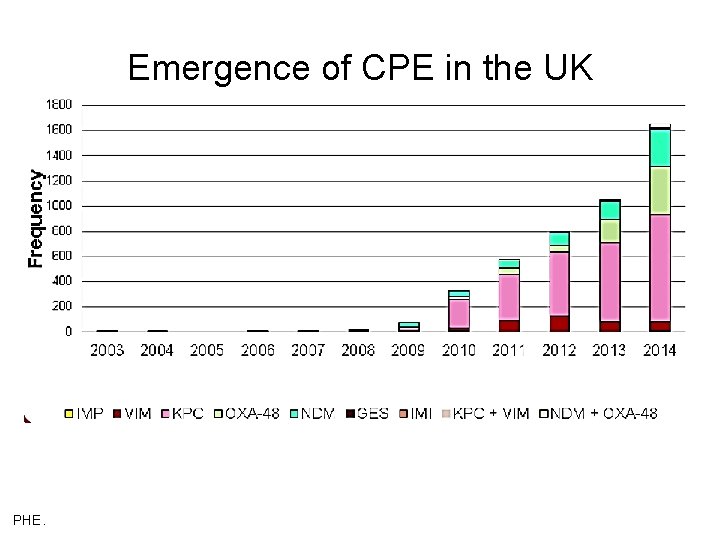
Emergence of CPE in the UK PHE.
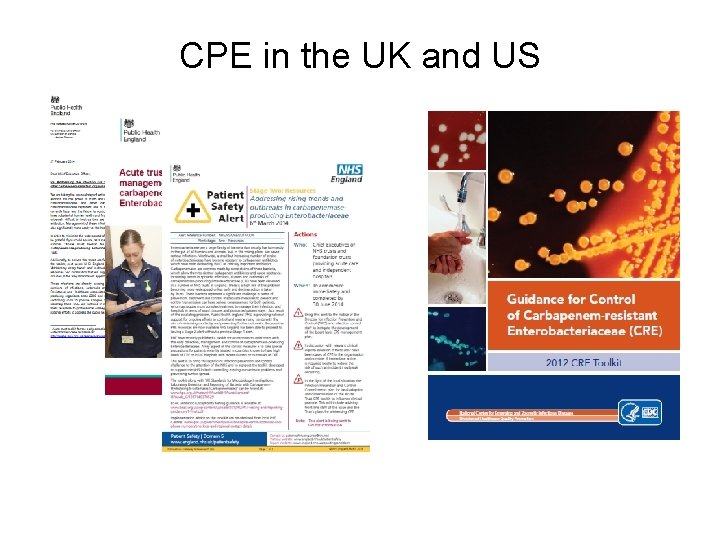
CPE in the UK and US
Evidence-free zone
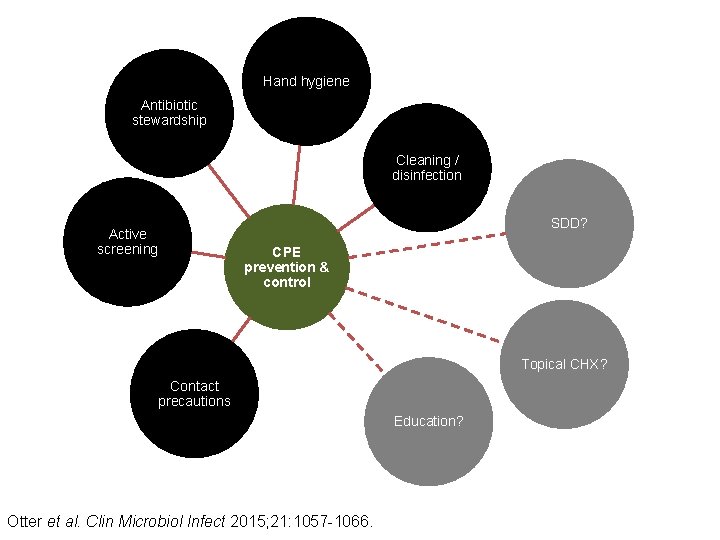
Hand hygiene Antibiotic stewardship Cleaning / disinfection SDD? Active screening CPE prevention & control Topical CHX? Contact precautions Education? Otter et al. Clin Microbiol Infect 2015; 21: 1057 -1066.

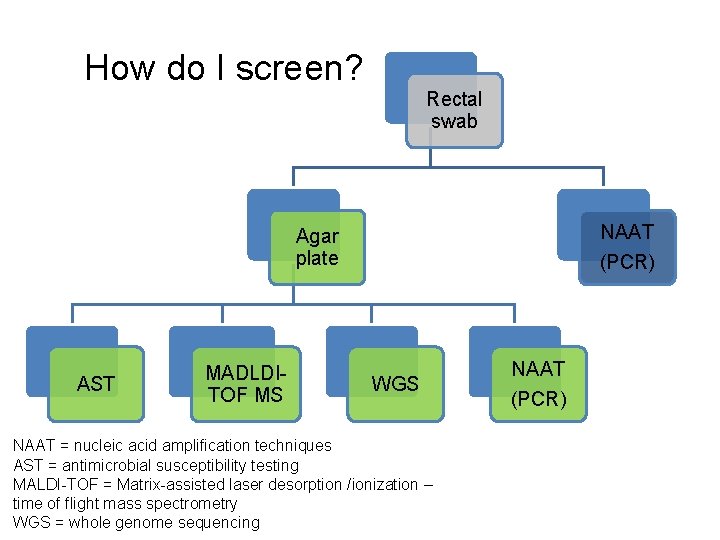
How do I screen? Rectal swab NAAT (PCR) Agar plate AST MADLDITOF MS WGS NAAT = nucleic acid amplification techniques AST = antimicrobial susceptibility testing MALDI-TOF = Matrix-assisted laser desorption /ionization – time of flight mass spectrometry WGS = whole genome sequencing NAAT (PCR)
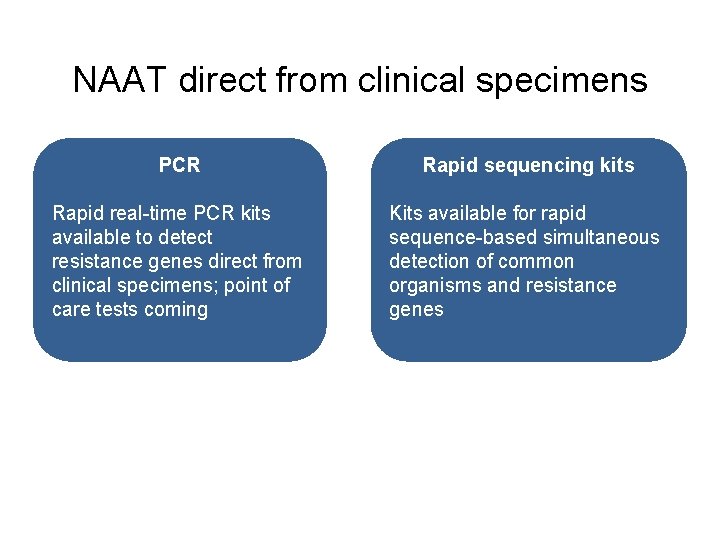
NAAT direct from clinical specimens PCR Rapid sequencing kits Rapid real-time PCR kits available to detect resistance genes direct from clinical specimens; point of care tests coming Kits available for rapid sequence-based simultaneous detection of common organisms and resistance genes
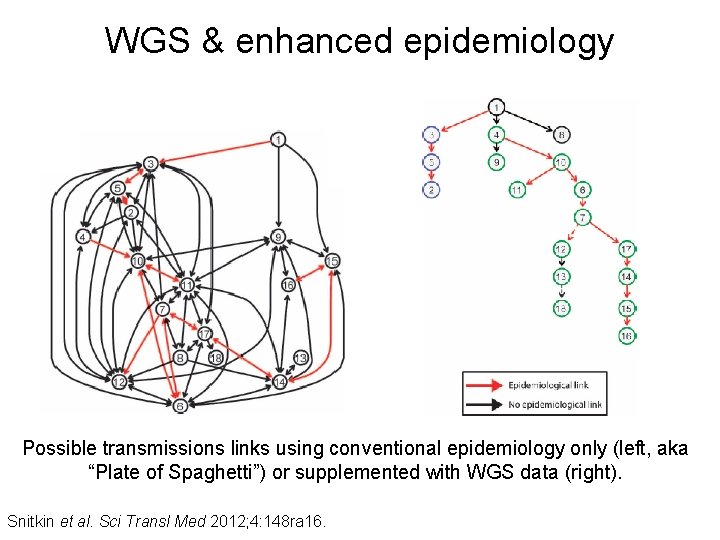
WGS & enhanced epidemiology Possible transmissions links using conventional epidemiology only (left, aka “Plate of Spaghetti”) or supplemented with WGS data (right). Snitkin et al. Sci Transl Med 2012; 4: 148 ra 16.
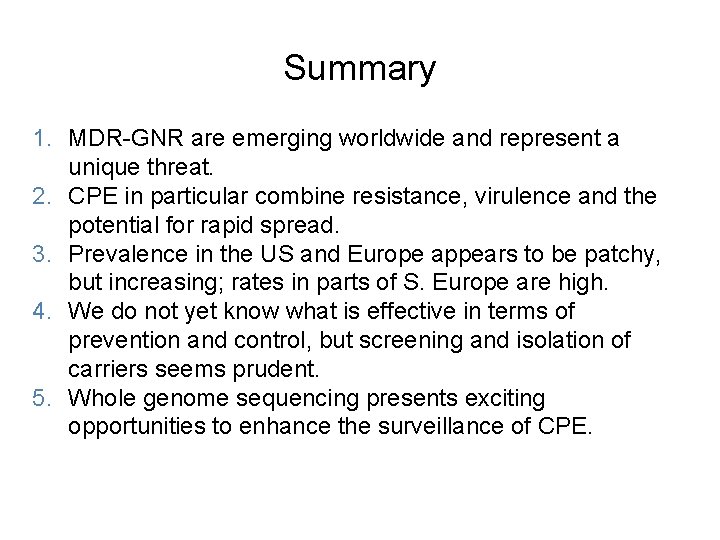
Summary 1. MDR-GNR are emerging worldwide and represent a unique threat. 2. CPE in particular combine resistance, virulence and the potential for rapid spread. 3. Prevalence in the US and Europe appears to be patchy, but increasing; rates in parts of S. Europe are high. 4. We do not yet know what is effective in terms of prevention and control, but screening and isolation of carriers seems prudent. 5. Whole genome sequencing presents exciting opportunities to enhance the surveillance of CPE.

CRE/CPE/CRO: Demystifying the microbiology and opportunities for whole genome sequencing Jon Otter, Ph. D FRCPath Imperial College Healthcare NHS Trust * jon. otter@imperial. nhs. uk @jonotter Blog: www. Reflections. IPC. com You can download these slides from www. jonotter. net
- Slides: 31