
Creativity Learning Influences Chemical Influences on Learning Stimulants
- Slides: 12
Creativity & Learning Influences
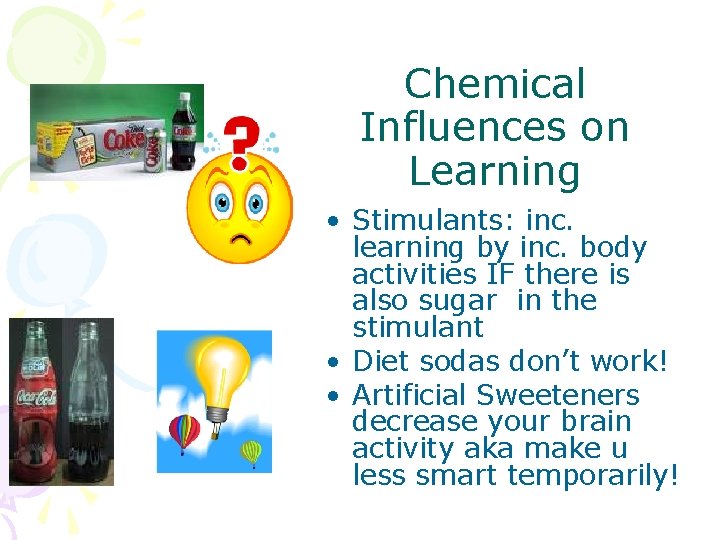
Chemical Influences on Learning • Stimulants: inc. learning by inc. body activities IF there is also sugar in the stimulant • Diet sodas don’t work! • Artificial Sweeteners decrease your brain activity aka make u less smart temporarily!
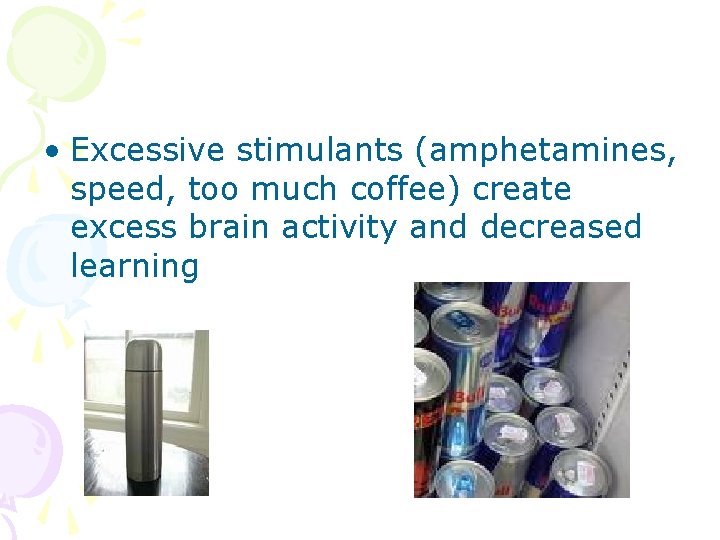
• Excessive stimulants (amphetamines, speed, too much coffee) create excess brain activity and decreased learning
• Anxiety and excitement work as stimulants (some=good, too much= bad) • Depressants: Dec. learning, thoughts
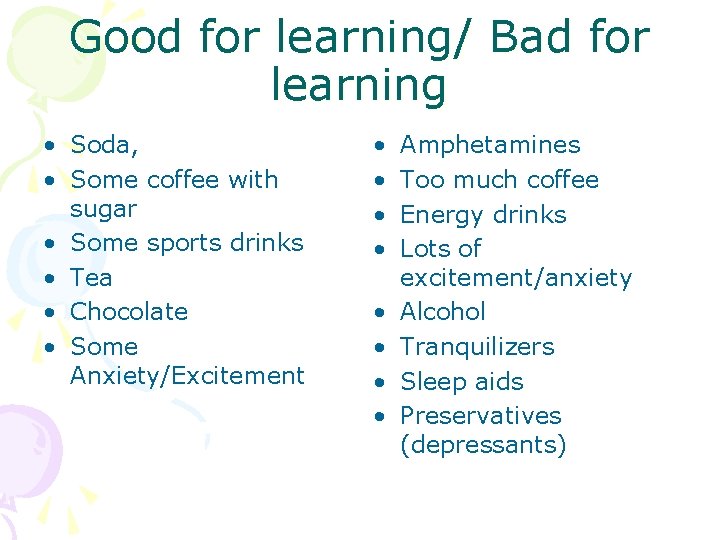
Good for learning/ Bad for learning • Soda, • Some coffee with sugar • Some sports drinks • Tea • Chocolate • Some Anxiety/Excitement • • Amphetamines Too much coffee Energy drinks Lots of excitement/anxiety Alcohol Tranquilizers Sleep aids Preservatives (depressants)
• State Dependent Learning – You will remember what you’ve learn best if you are trying to remember it in the same physical state that you experienced while learning • Ex. Tired learning=remember best tired • Caffeinated learning=remember best caffeinated • Excited learning=remember best excited
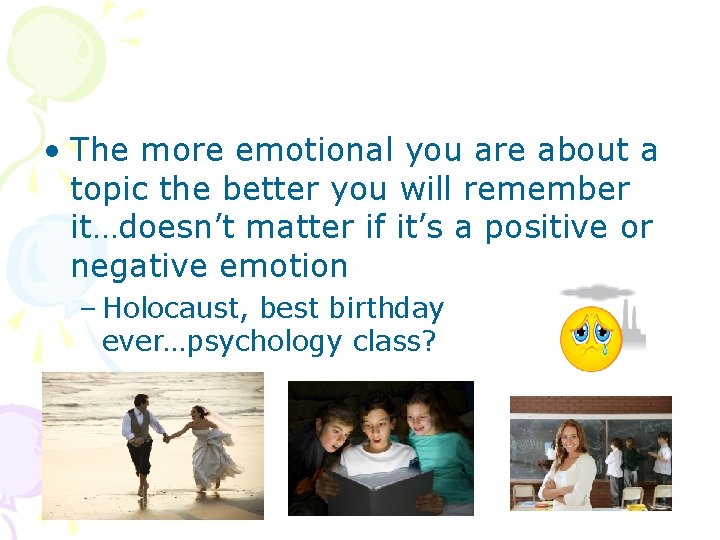
• The more emotional you are about a topic the better you will remember it…doesn’t matter if it’s a positive or negative emotion – Holocaust, best birthday ever…psychology class?
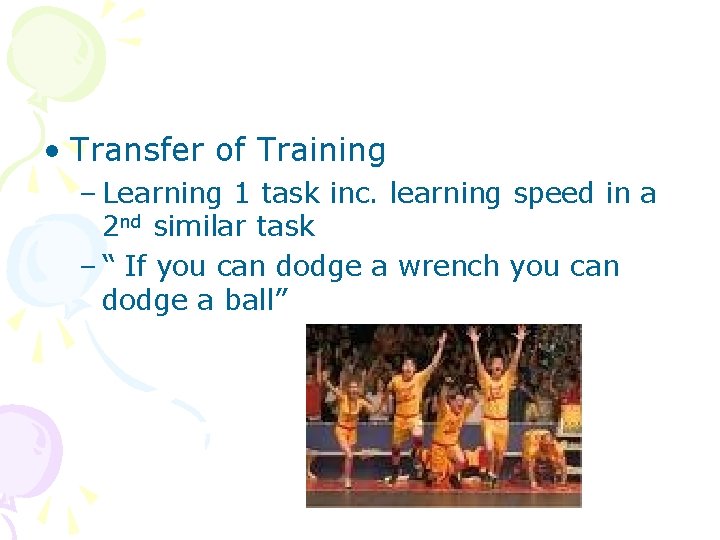
• Transfer of Training – Learning 1 task inc. learning speed in a 2 nd similar task – “ If you can dodge a wrench you can dodge a ball”
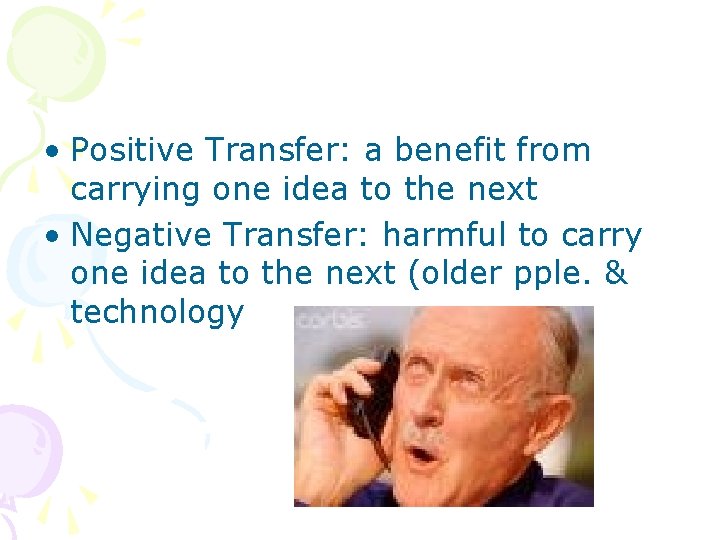
• Positive Transfer: a benefit from carrying one idea to the next • Negative Transfer: harmful to carry one idea to the next (older pple. & technology
• Learning 1 subject will not inc. IQ • Classes do NOT make you smarter. just more knowledgeable
General Brain Health Foods • • • Specific Suggestions Soy Walnut Coffee (moderation) Flax Seeds Beans Tofu Cold-Water Fish Berries Dark Chocolate • Omega 3 fatty acids myelinate neurons! • Myelin=improved cognitive skills
Physical Health for Efficient Neurological Function • Core – Supine (bridges) – Prone (dolphin) – Lateral (on each side) • Balance: – Balance beam activities – propreoception (standing on the weak leg) • Brachiation: – Arm strength • Rhythm: – Interactive Metronome – Dance – Percussion • Vestibular: – Spinning in the direction of the weakness & minimizing dizziness