
CREATIVE PROCESS vs CREATIVE PRODUCT CHALLENGES WITH MEASURING

- Slides: 35
CREATIVE PROCESS vs. CREATIVE PRODUCT: CHALLENGES WITH MEASURING CREATIVITY Peter Liljedahl Benjamin Rott
PME 40 20 papers about creativity: • • 1 plenary activities 10 research reports 6 oral communications 3 poster presentations
PME 40 7 papers about measuring creativity: • 1 plenary activities • 3 research reports • 3 oral communications
CREATIVE PROCESS CREATIVE PRODUCT
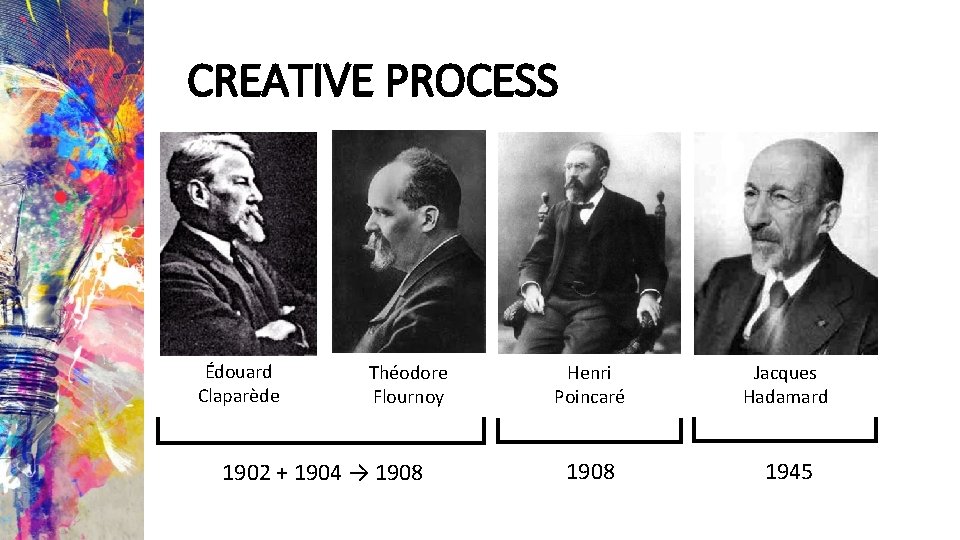
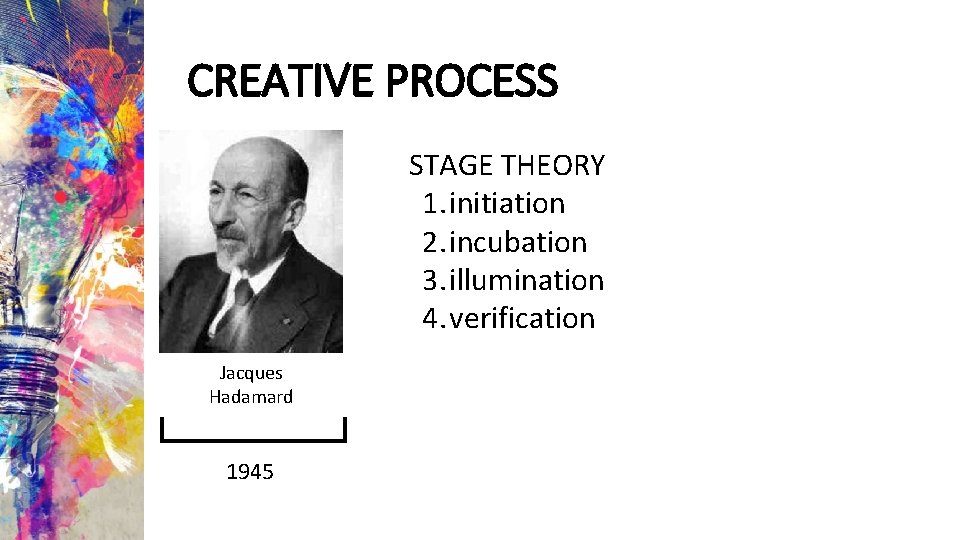
CREATIVE PROCESS Édouard Claparède Théodore Flournoy 1902 + 1904 → 1908 Henri Poincaré Jacques Hadamard 1908 1945
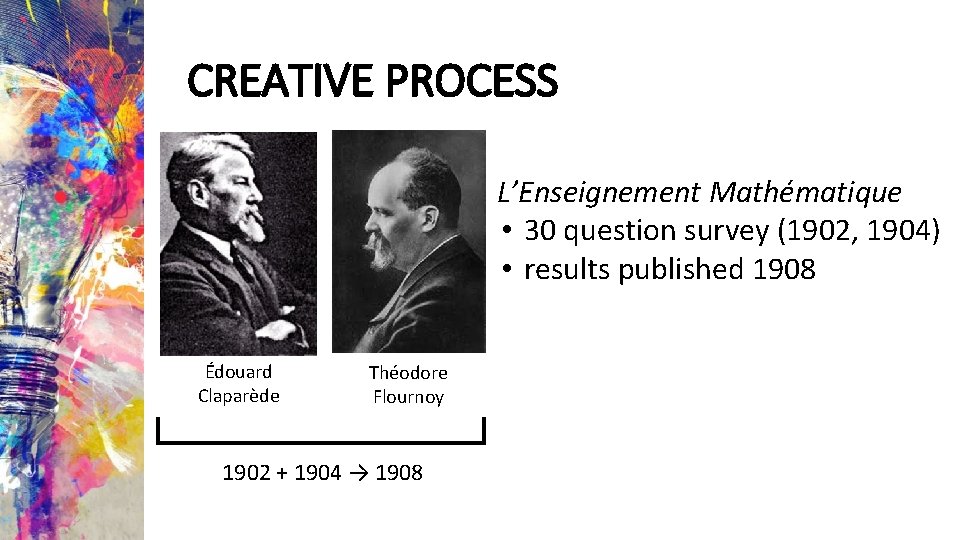
CREATIVE PROCESS L’Enseignement Mathématique • 30 question survey (1902, 1904) • results published 1908 Édouard Claparède Théodore Flournoy 1902 + 1904 → 1908
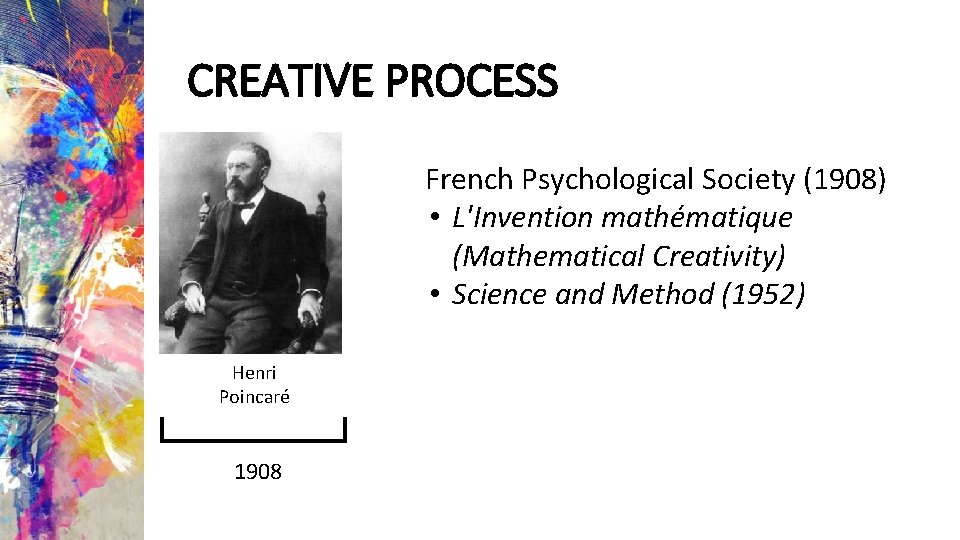
CREATIVE PROCESS French Psychological Society (1908) • L'Invention mathématique (Mathematical Creativity) • Science and Method (1952) Henri Poincaré 1908
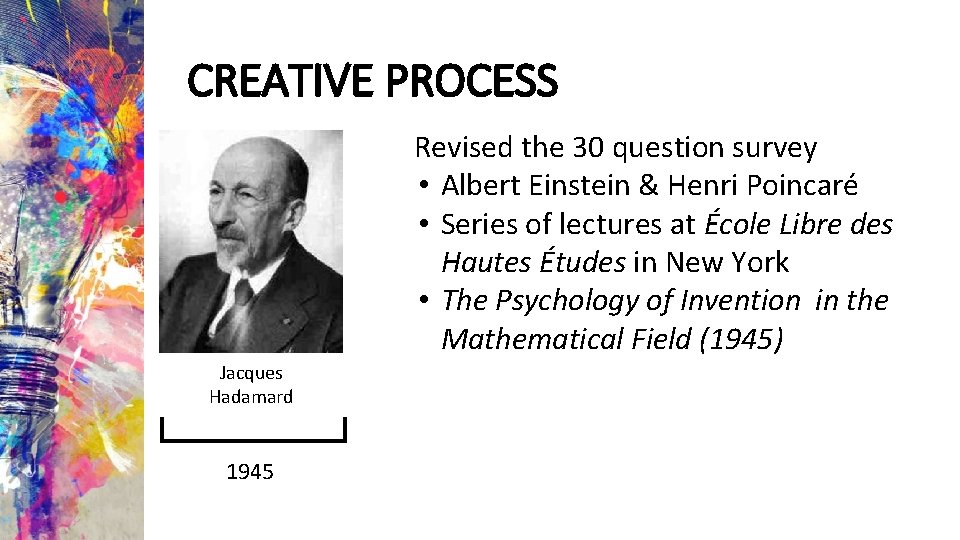
CREATIVE PROCESS Revised the 30 question survey • Albert Einstein & Henri Poincaré • Series of lectures at École Libre des Hautes Études in New York • The Psychology of Invention in the Mathematical Field (1945) Jacques Hadamard 1945
CREATIVE PROCESS STAGE THEORY 1. initiation 2. incubation 3. illumination 4. verification Jacques Hadamard 1945
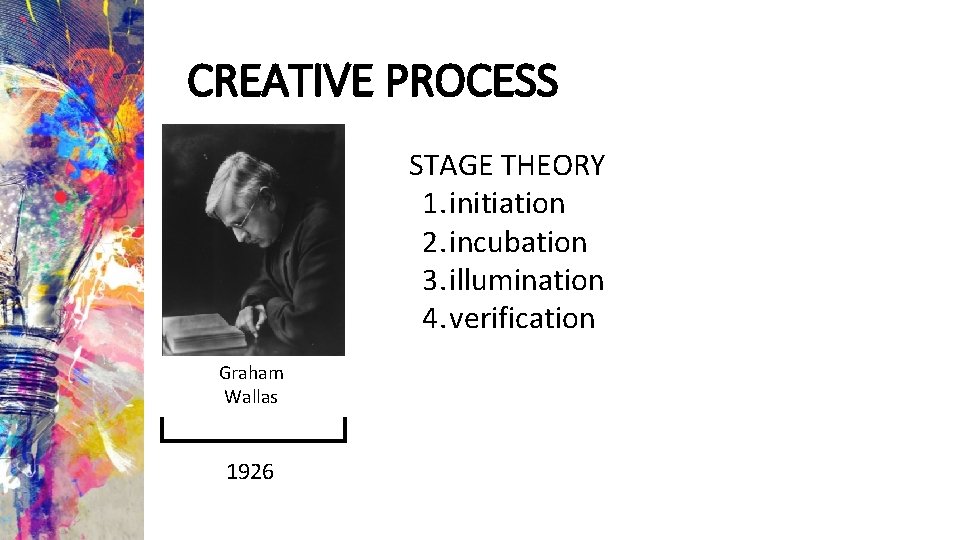
CREATIVE PROCESS STAGE THEORY 1. initiation 2. incubation 3. illumination 4. verification Graham Wallas 1926
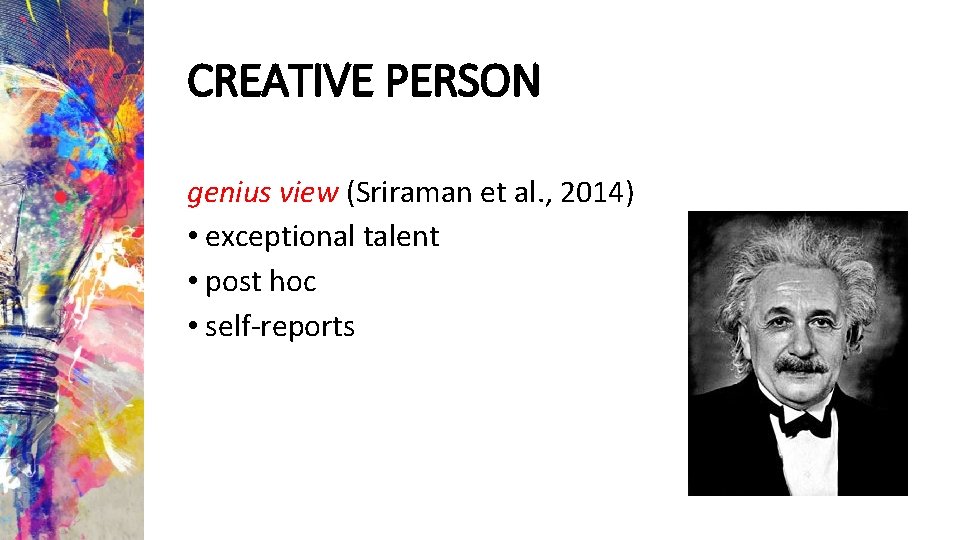
CREATIVE PERSON genius view (Sriraman et al. , 2014) • exceptional talent • post hoc • self-reports
CREATIVE PERSON For a professional artist, some new, ground-breaking technique, product, or process that changes his or her field in some significant way would be creative, but for a mathematics student in lower secondary school, an unusual solution to a problem could be creative. (Sriraman et al. , 2014, p. 110) MEASURE CREATIVITY
CREATIVE PRODUCT Fluency Flexibility Originality number of solution number of different solutions uniqueness of a solution with respect to the his/her reference group Elaboration the ability to expand on an idea Guilford (1967), Torrance (1974, 1966)
CREATIVE PRODUCT Fluency Flexibility Originality number of solution number of different solutions uniqueness of a solution with respect to the his/her reference group Elaboration the ability to expand on an idea PME 40
CREATIVE PRODUCT Fluency Flexibility Originality number of solution number of different solutions uniqueness of a solution with respect to the his/her reference group Elaboration the ability to expand on an idea PME 40
CREATIVE PRODUCT Can creative products “capture the essence of creativity? ” (Leikin & Pitta-Pantazi, 2013, p. 160)
CREATIVE PRODUCT Can creative products stand as proxies for the creative process?
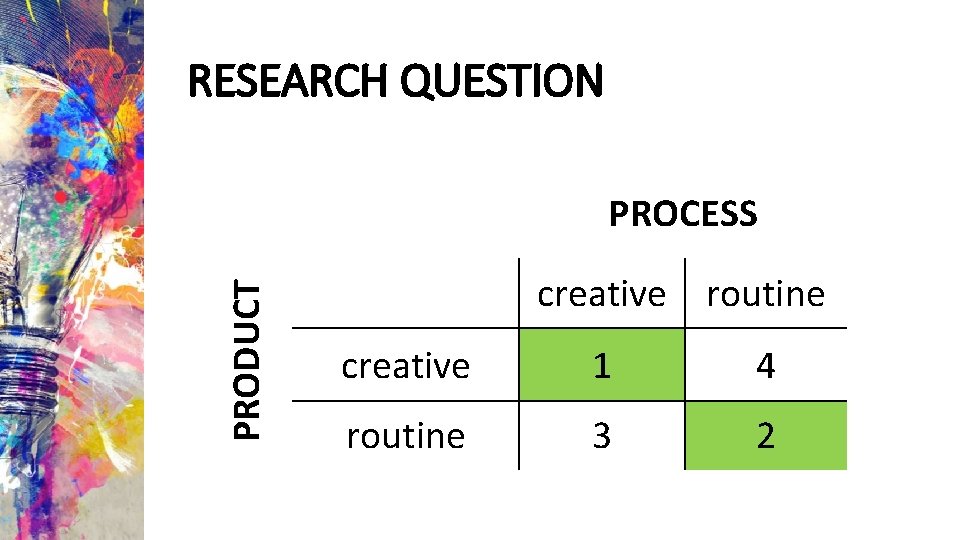
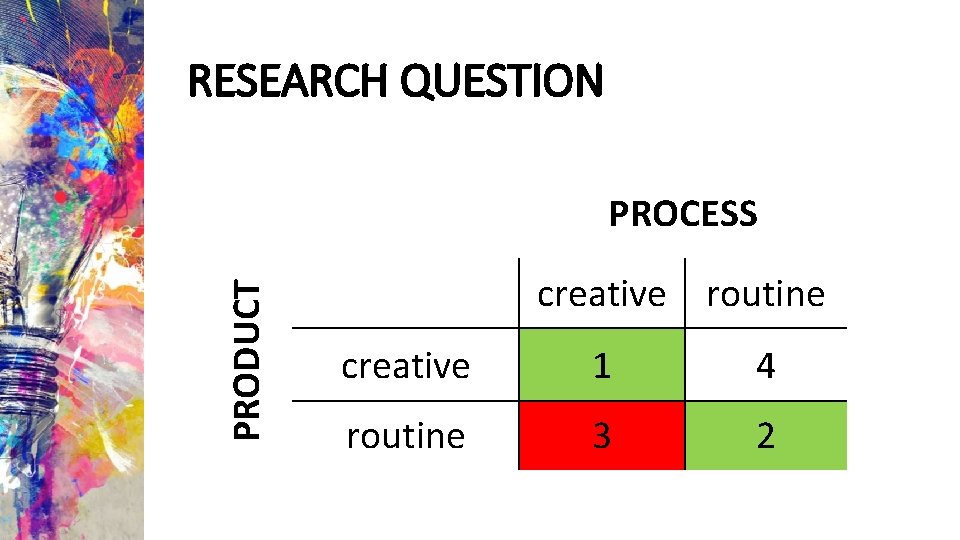
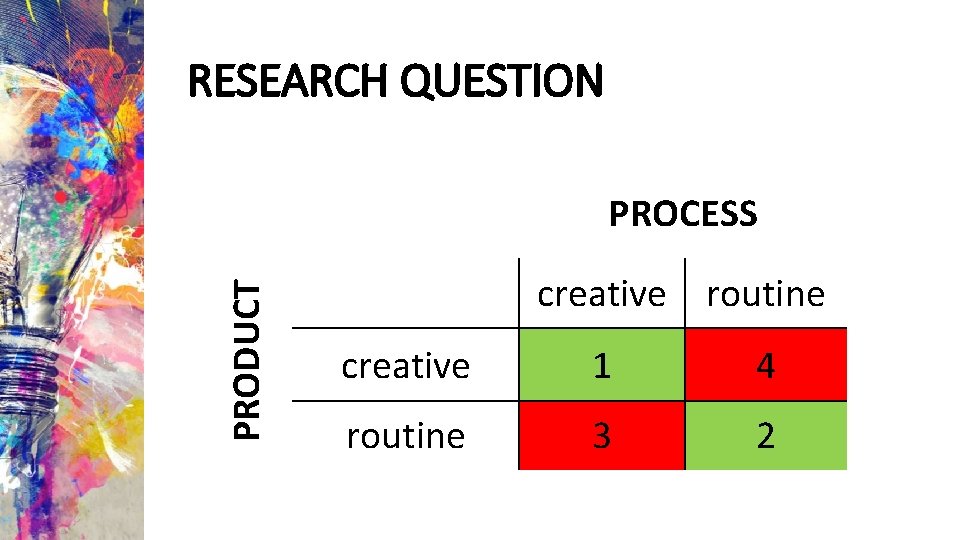
RESEARCH QUESTION Can originality stand as a proxy for the creative process?
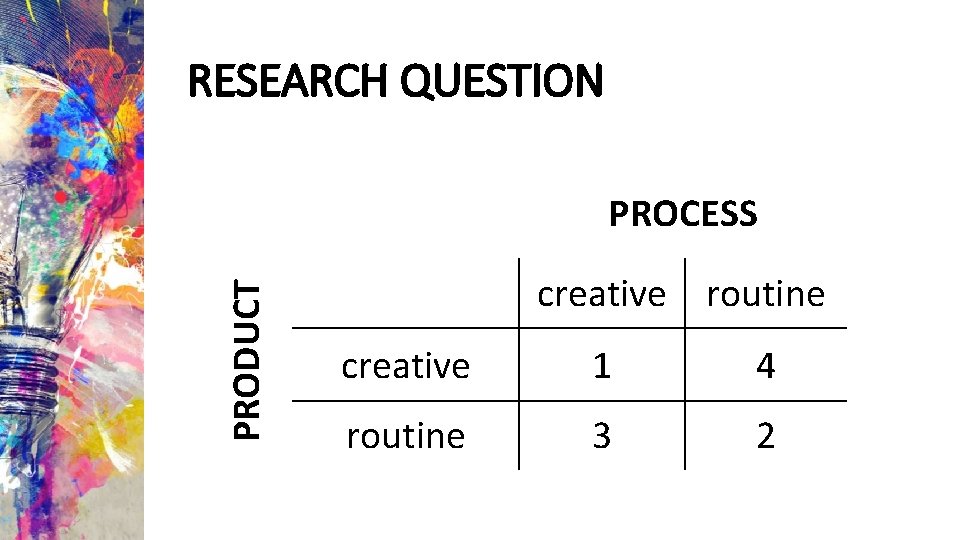
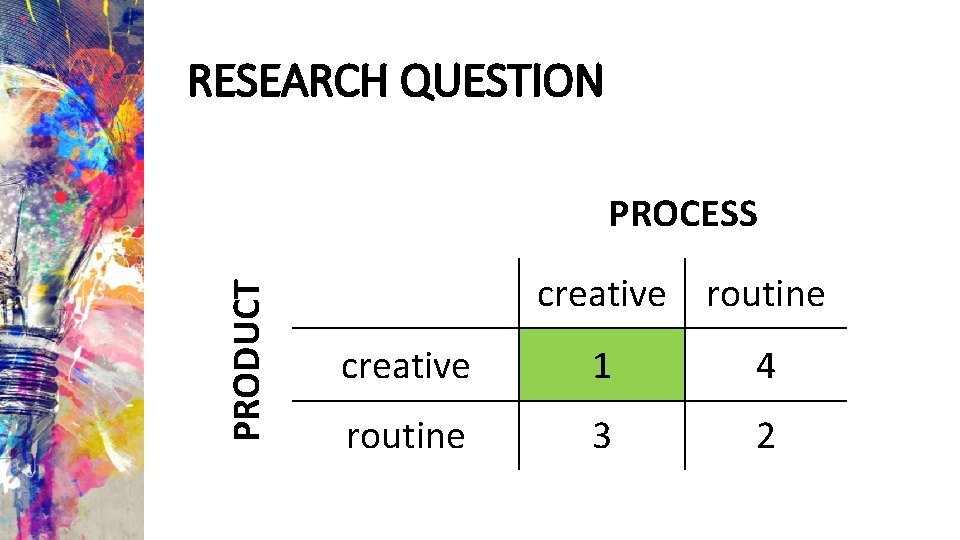
RESEARCH QUESTION PRODUCT PROCESS creative routine creative 1 4 routine 3 2
RESEARCH QUESTION PRODUCT PROCESS creative routine creative 1 4 routine 3 2
RESEARCH QUESTION PRODUCT PROCESS creative routine creative 1 4 routine 3 2
RESEARCH QUESTION PRODUCT PROCESS creative routine creative 1 4 routine 3 2
RESEARCH QUESTION PRODUCT PROCESS creative routine creative 1 4 routine 3 2
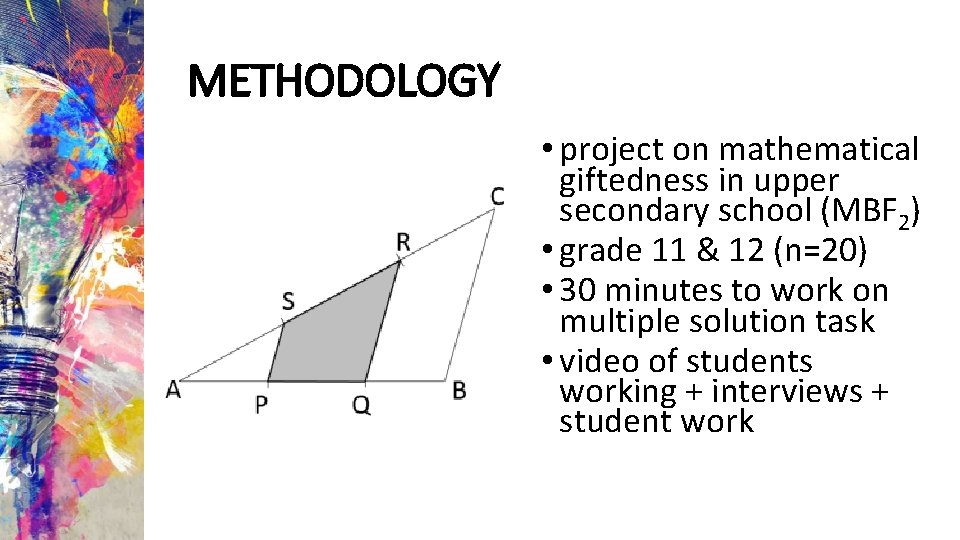
METHODOLOGY • project on mathematical giftedness in upper secondary school (MBF 2) • grade 11 & 12 (n=20) • 30 minutes to work on multiple solution task • video of students working + interviews + student work
METHODOLOGY PROCESS PRODUCT self-reported utterances of a creative experience attention to affective responses originality compared to all solutions to the same task produced by all participants
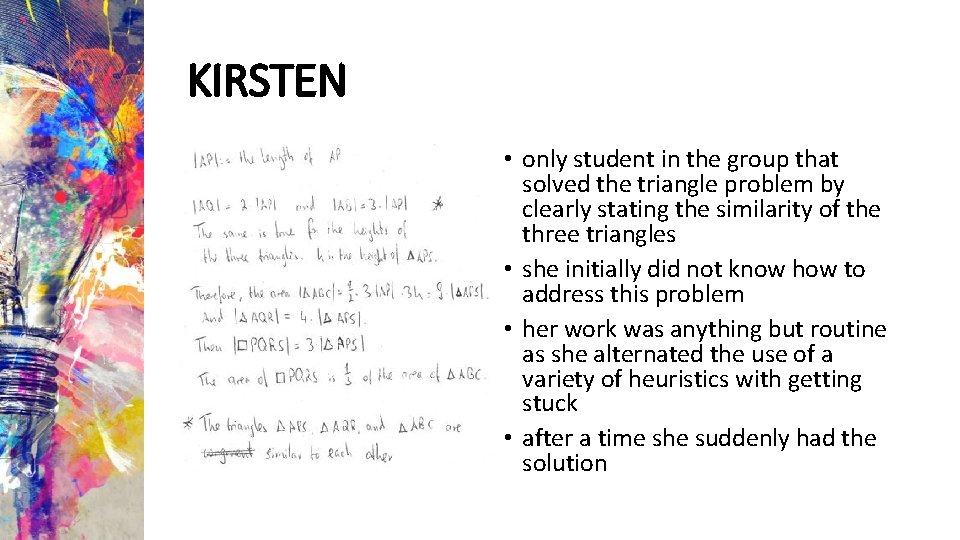
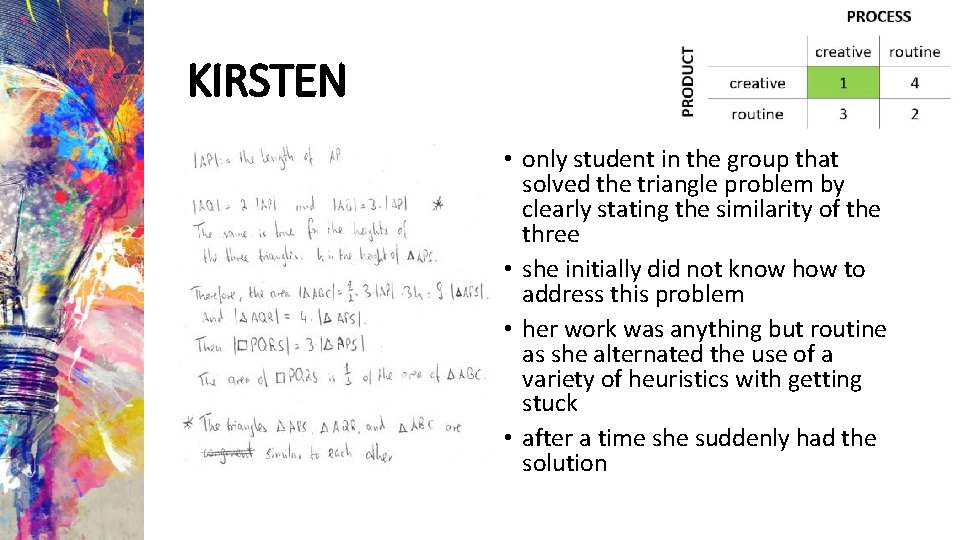
KIRSTEN • only student in the group that solved the triangle problem by clearly stating the similarity of the three triangles • she initially did not know how to address this problem • her work was anything but routine as she alternated the use of a variety of heuristics with getting stuck • after a time she suddenly had the solution
KIRSTEN • only student in the group that solved the triangle problem by clearly stating the similarity of the three • she initially did not know how to address this problem • her work was anything but routine as she alternated the use of a variety of heuristics with getting stuck • after a time she suddenly had the solution
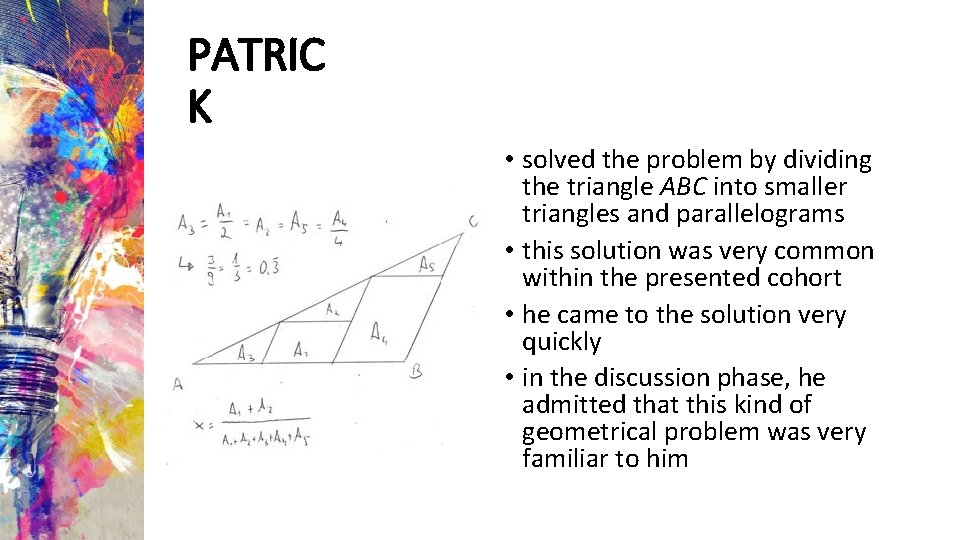
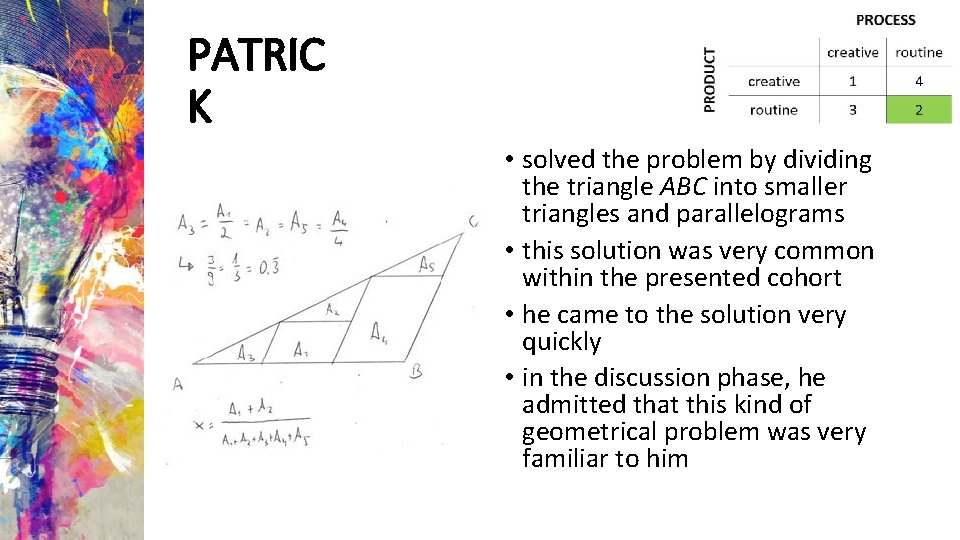
PATRIC K • solved the problem by dividing the triangle ABC into smaller triangles and parallelograms • this solution was very common within the presented cohort • he came to the solution very quickly • in the discussion phase, he admitted that this kind of geometrical problem was very familiar to him
PATRIC K • solved the problem by dividing the triangle ABC into smaller triangles and parallelograms • this solution was very common within the presented cohort • he came to the solution very quickly • in the discussion phase, he admitted that this kind of geometrical problem was very familiar to him
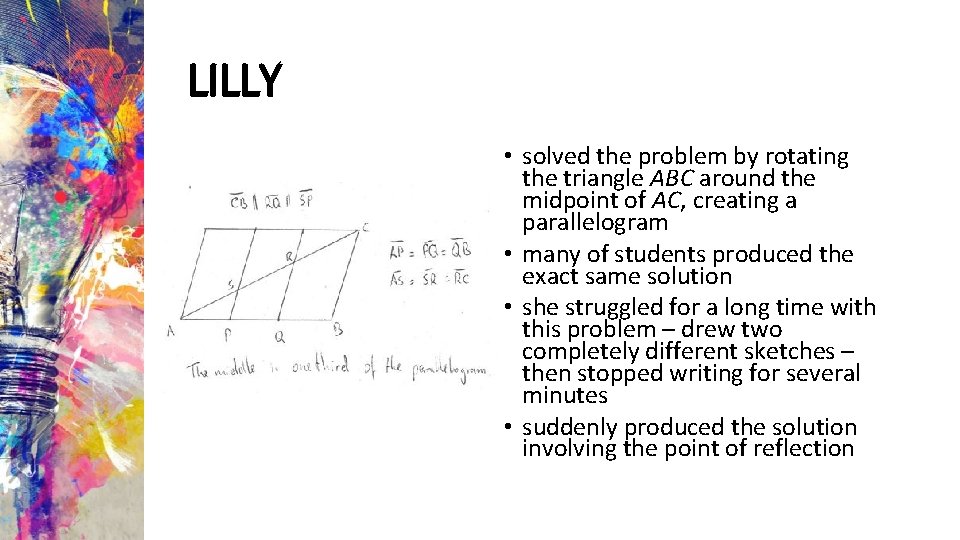
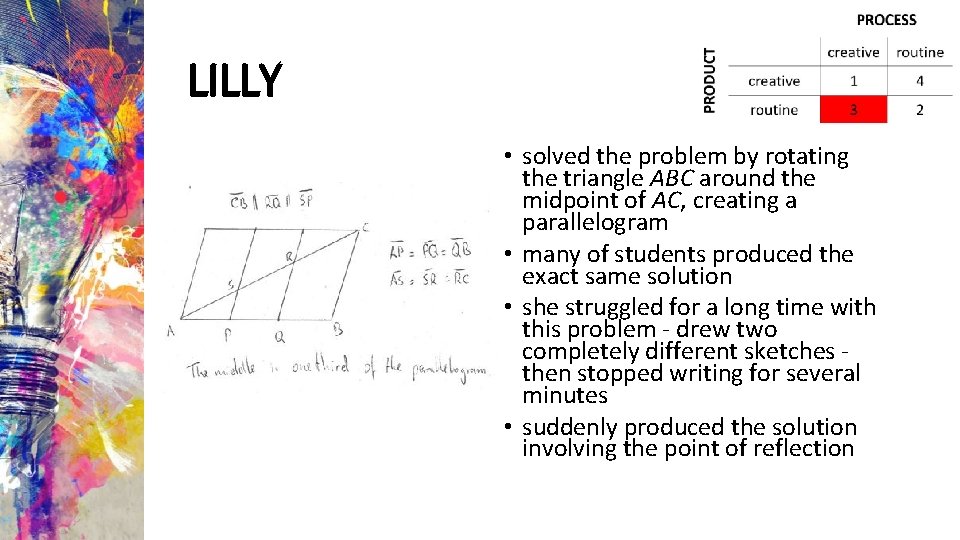
LILLY • solved the problem by rotating the triangle ABC around the midpoint of AC, creating a parallelogram • many of students produced the exact same solution • she struggled for a long time with this problem – drew two completely different sketches – then stopped writing for several minutes • suddenly produced the solution involving the point of reflection
LILLY • solved the problem by rotating the triangle ABC around the midpoint of AC, creating a parallelogram • many of students produced the exact same solution • she struggled for a long time with this problem - drew two completely different sketches then stopped writing for several minutes • suddenly produced the solution involving the point of reflection
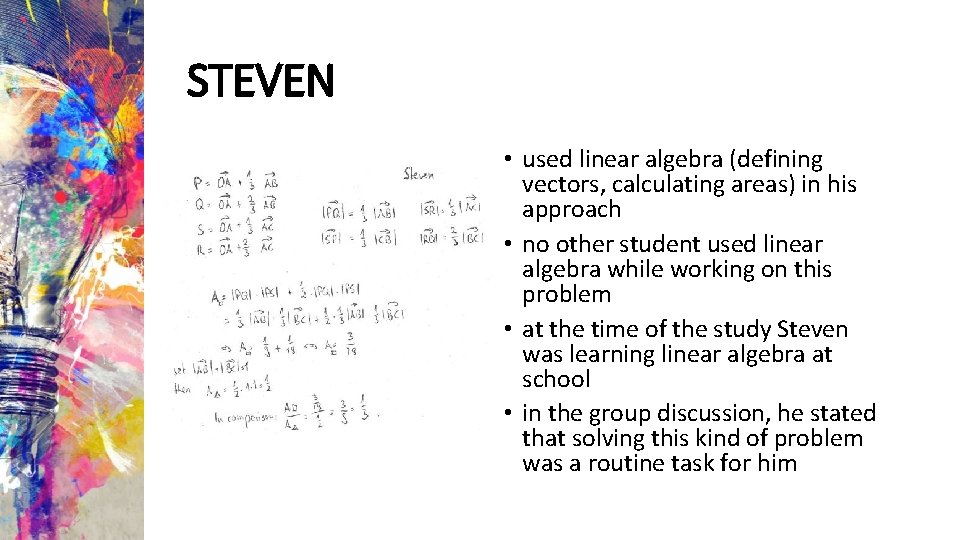
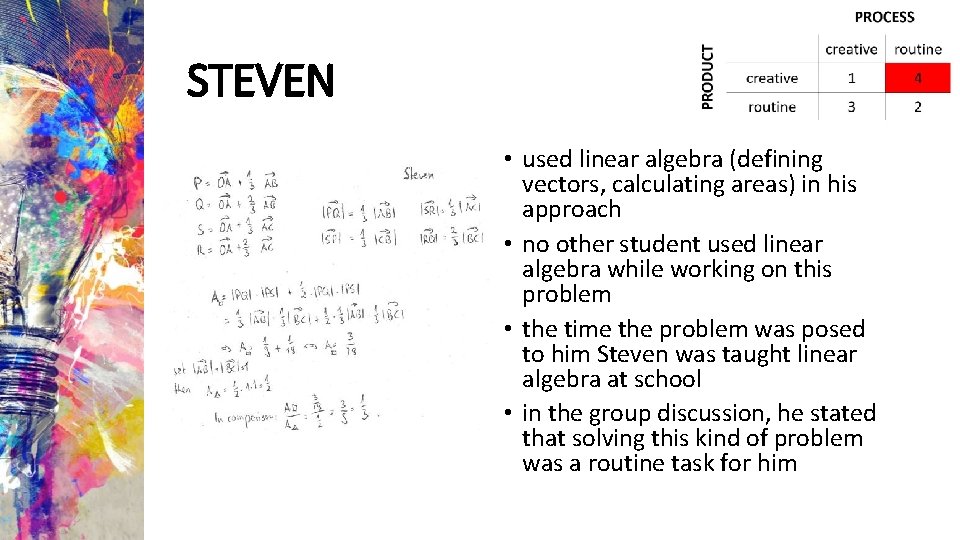
STEVEN • used linear algebra (defining vectors, calculating areas) in his approach • no other student used linear algebra while working on this problem • at the time of the study Steven was learning linear algebra at school • in the group discussion, he stated that solving this kind of problem was a routine task for him
STEVEN • used linear algebra (defining vectors, calculating areas) in his approach • no other student used linear algebra while working on this problem • the time the problem was posed to him Steven was taught linear algebra at school • in the group discussion, he stated that solving this kind of problem was a routine task for him
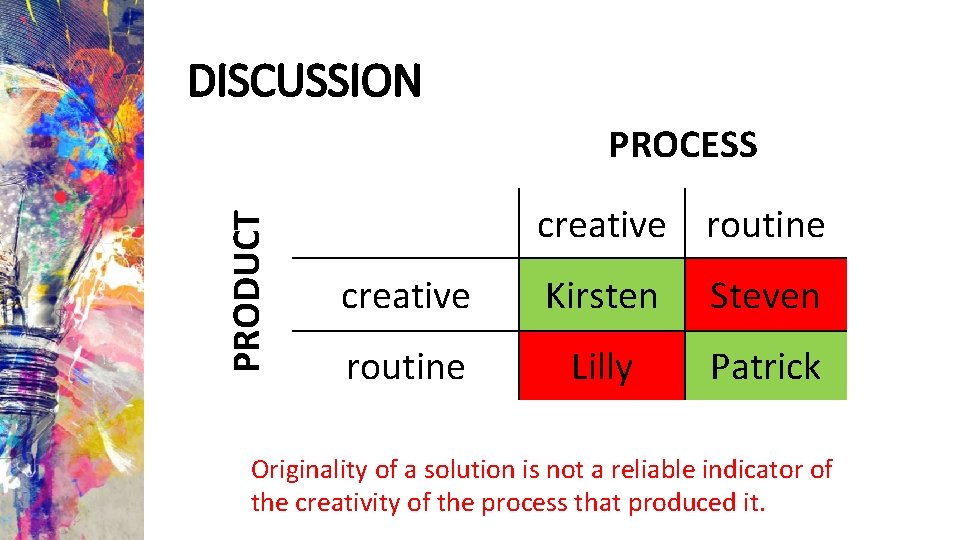
DISCUSSION PRODUCT PROCESS creative routine creative Kirsten Steven routine Lilly Patrick Originality of a solution is not a reliable indicator of the creativity of the process that produced it.
THANK YOU Peter Liljedahl liljedahl@sfu. ca @pgliljedahl www. peterliljedahl. com/presentations Benjamin Rott Benjamin. rott@uni-koeln. de