
Creative Music Project An analysis of fifth grade



- Slides: 33
Creative Music Project: An analysis of fifth grade student compositions Scott D. Lipscomb, 1 Maud Hickey, 1 David Sebald, 2 & Donald Hodges 2 1 Northwestern University 2 The University of Texas at San Antonio April 6, 2002 ESCOM 2002, Liège 1
Research Supported by: Northwestern University The University of Texas at San Antonio May Elementary School Texaco Corporation April 6, 2002 ESCOM 2002, Liège 2
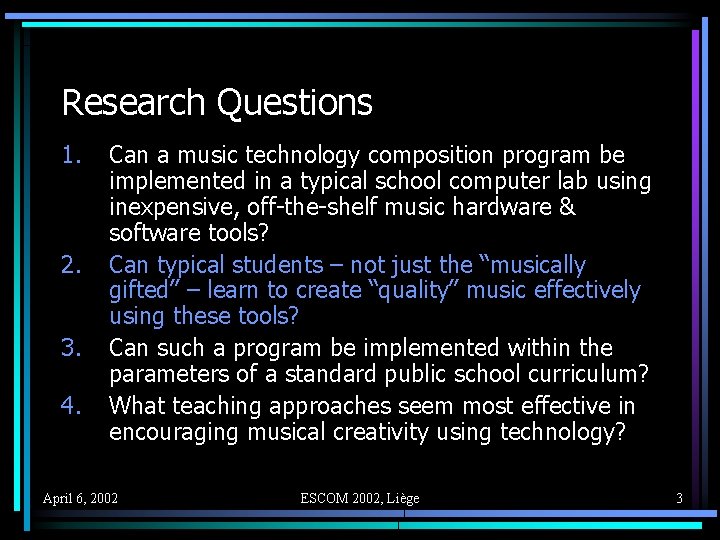
Research Questions 1. 2. 3. 4. Can a music technology composition program be implemented in a typical school computer lab using inexpensive, off-the-shelf music hardware & software tools? Can typical students – not just the “musically gifted” – learn to create “quality” music effectively using these tools? Can such a program be implemented within the parameters of a standard public school curriculum? What teaching approaches seem most effective in encouraging musical creativity using technology? April 6, 2002 ESCOM 2002, Liège 3
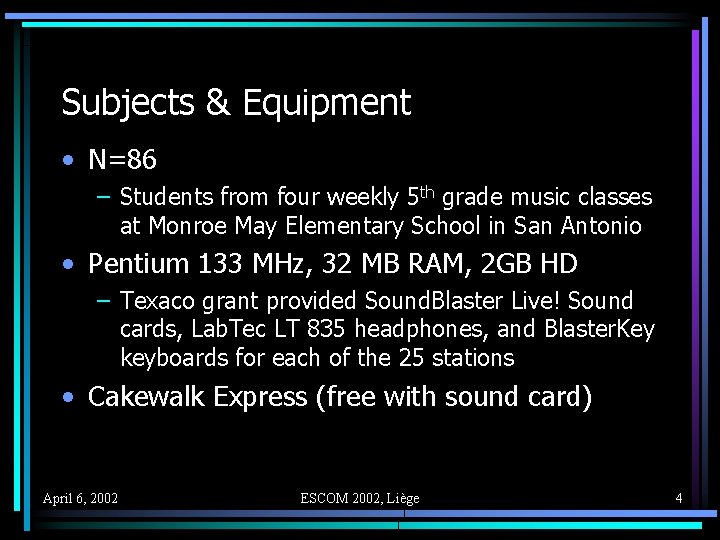
Subjects & Equipment • N=86 – Students from four weekly 5 th grade music classes at Monroe May Elementary School in San Antonio • Pentium 133 MHz, 32 MB RAM, 2 GB HD – Texaco grant provided Sound. Blaster Live! Sound cards, Lab. Tec LT 835 headphones, and Blaster. Key keyboards for each of the 25 stations • Cakewalk Express (free with sound card) April 6, 2002 ESCOM 2002, Liège 4
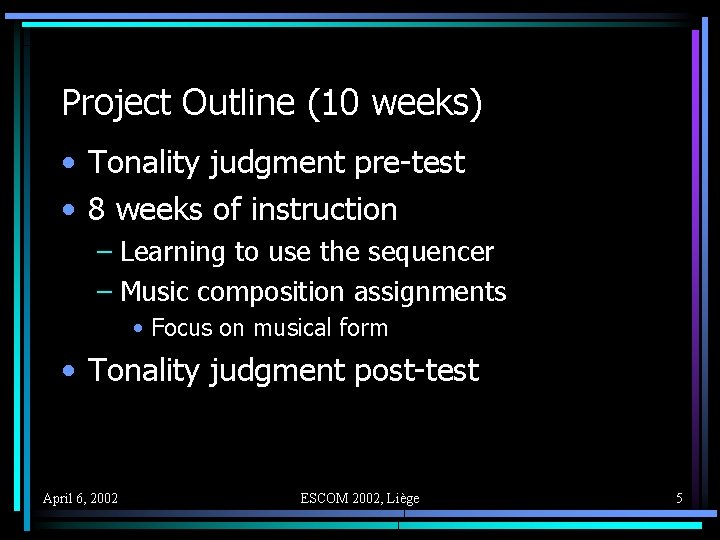
Project Outline (10 weeks) • Tonality judgment pre-test • 8 weeks of instruction – Learning to use the sequencer – Music composition assignments • Focus on musical form • Tonality judgment post-test April 6, 2002 ESCOM 2002, Liège 5
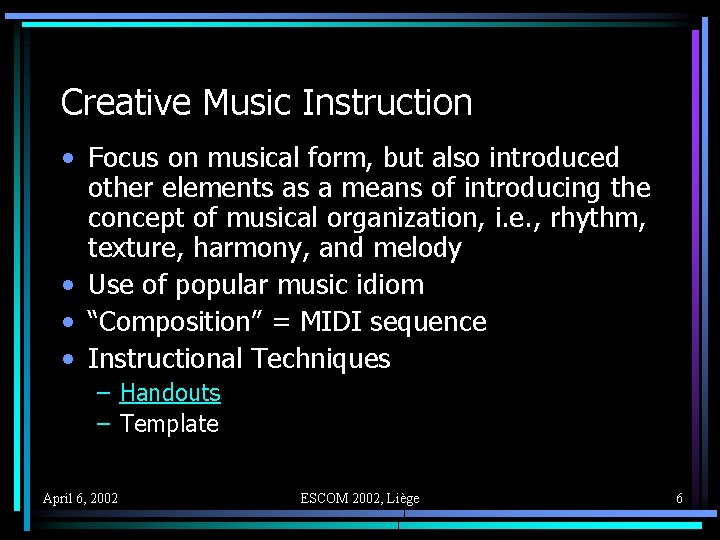
Creative Music Instruction • Focus on musical form, but also introduced other elements as a means of introducing the concept of musical organization, i. e. , rhythm, texture, harmony, and melody • Use of popular music idiom • “Composition” = MIDI sequence • Instructional Techniques – Handouts – Template April 6, 2002 ESCOM 2002, Liège 6
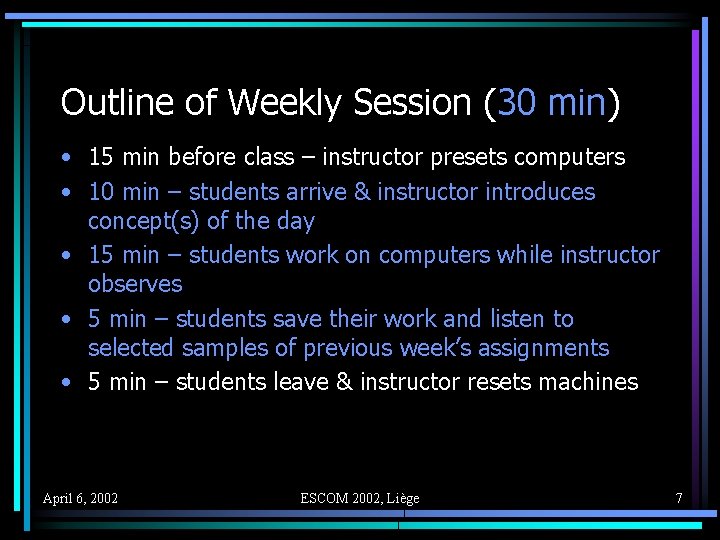
Outline of Weekly Session (30 min) • 15 min before class – instructor presets computers • 10 min – students arrive & instructor introduces concept(s) of the day • 15 min – students work on computers while instructor observes • 5 min – students save their work and listen to selected samples of previous week’s assignments • 5 min – students leave & instructor resets machines April 6, 2002 ESCOM 2002, Liège 7
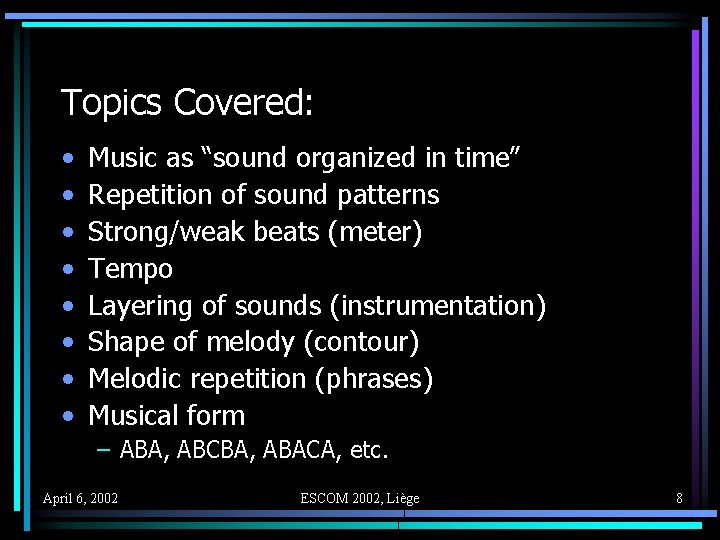
Topics Covered: • • Music as “sound organized in time” Repetition of sound patterns Strong/weak beats (meter) Tempo Layering of sounds (instrumentation) Shape of melody (contour) Melodic repetition (phrases) Musical form – ABA, ABCBA, ABACA, etc. April 6, 2002 ESCOM 2002, Liège 8
Student “Compositions” Examples to follow shortly http: //music. utsa. edu/cmp/ April 6, 2002 ESCOM 2002, Liège 9
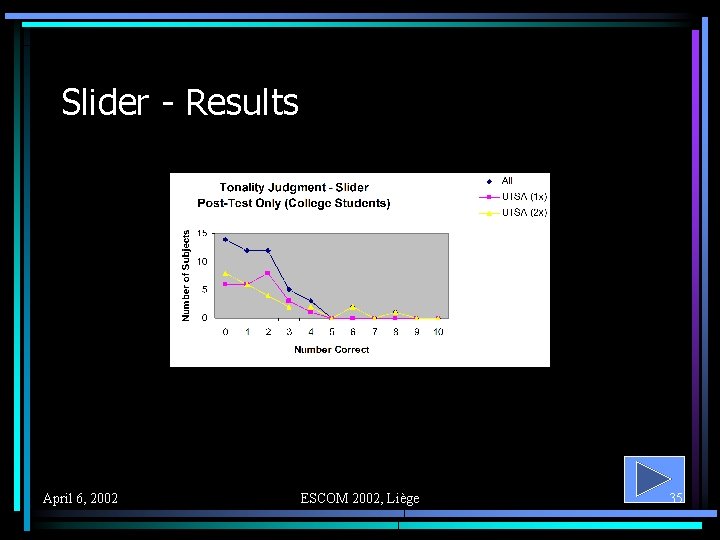
Results of Tonality Study (SMPC 2001) • Forced Choice • Slider Task Results April 6, 2002 ESCOM 2002, Liège 10
Our Research Questions • Can typical students learn to create music effectively with these tools described previously? • Can Lomax’ (1976) “cantometrics” provide a useful tool for analyzing these student compositions? April 6, 2002 ESCOM 2002, Liège 11
Cantometrics Alan Lomax April 6, 2002 ESCOM 2002, Liège 12
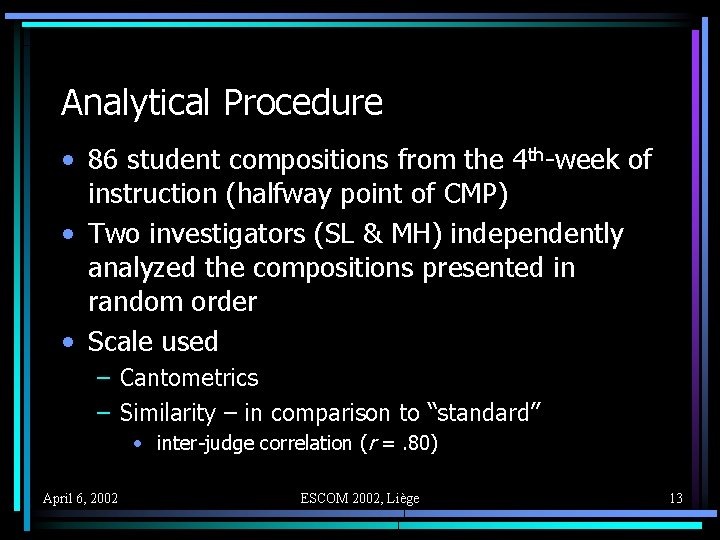
Analytical Procedure • 86 student compositions from the 4 th-week of instruction (halfway point of CMP) • Two investigators (SL & MH) independently analyzed the compositions presented in random order • Scale used – Cantometrics – Similarity – in comparison to “standard” • inter-judge correlation (r =. 80) April 6, 2002 ESCOM 2002, Liège 13
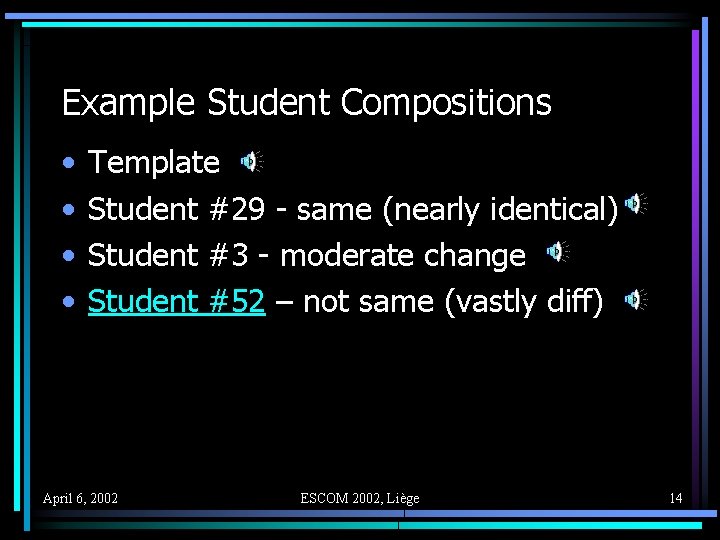
Example Student Compositions • • Template Student #29 - same (nearly identical) Student #3 - moderate change Student #52 – not same (vastly diff) April 6, 2002 ESCOM 2002, Liège 14
Experimental Results April 6, 2002 ESCOM 2002, Liège 15
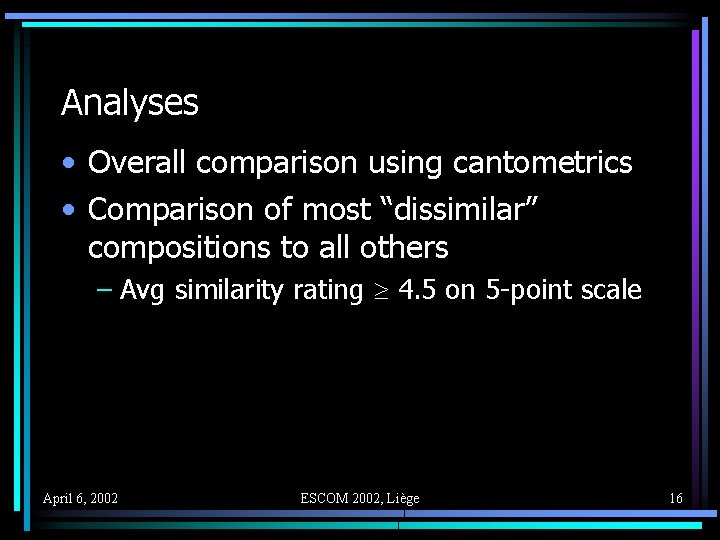
Analyses • Overall comparison using cantometrics • Comparison of most “dissimilar” compositions to all others – Avg similarity rating 4. 5 on 5 -point scale April 6, 2002 ESCOM 2002, Liège 16
Musical Organization of Instruments (“texture”) D: higher % of mono & poly April 6, 2002 ESCOM 2002, Liège 17
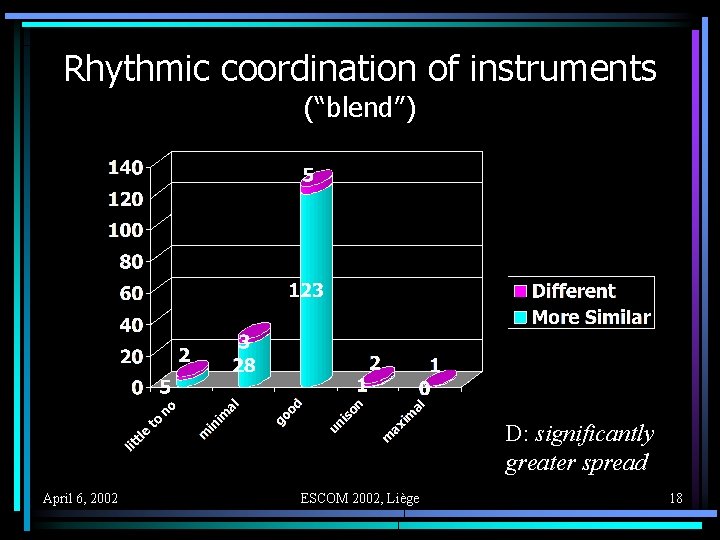
Rhythmic coordination of instruments (“blend”) D: significantly greater spread April 6, 2002 ESCOM 2002, Liège 18
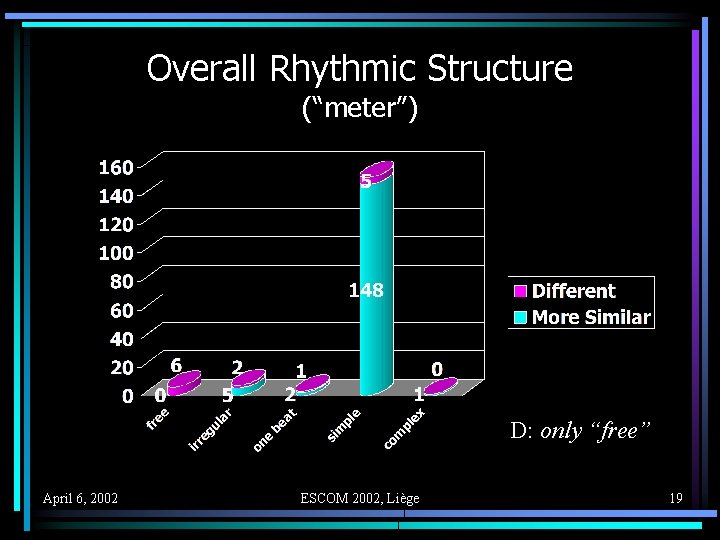
Overall Rhythmic Structure (“meter”) D: only “free” April 6, 2002 ESCOM 2002, Liège 19
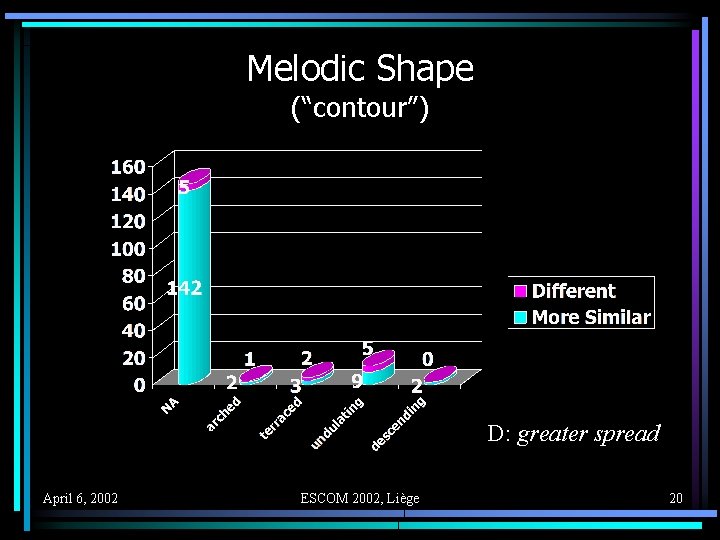
Melodic Shape (“contour”) D: greater spread April 6, 2002 ESCOM 2002, Liège 20
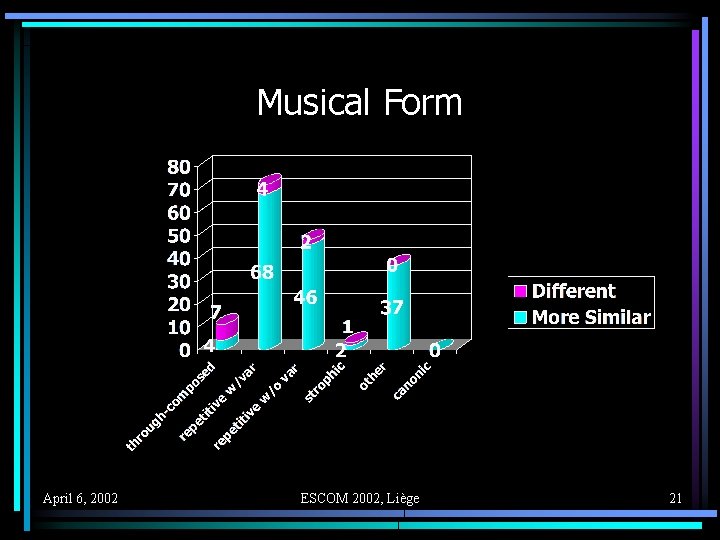
Musical Form April 6, 2002 ESCOM 2002, Liège 21
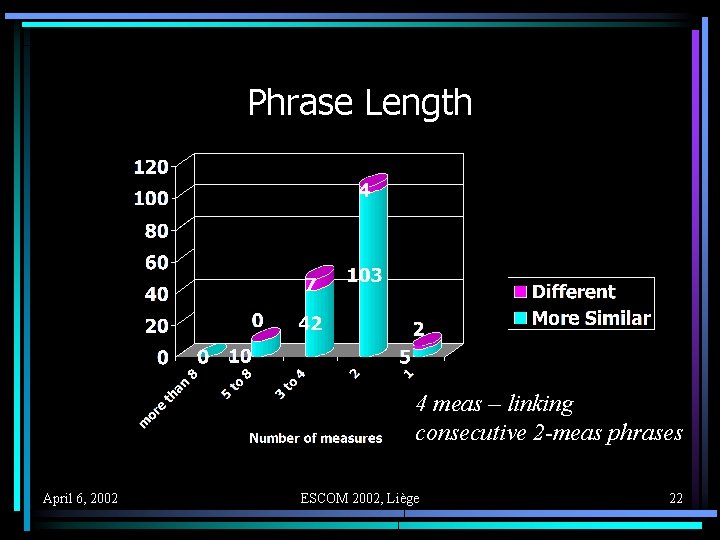
Phrase Length 4 meas – linking consecutive 2 -meas phrases April 6, 2002 ESCOM 2002, Liège 22
Number of Phrases April 6, 2002 ESCOM 2002, Liège 23
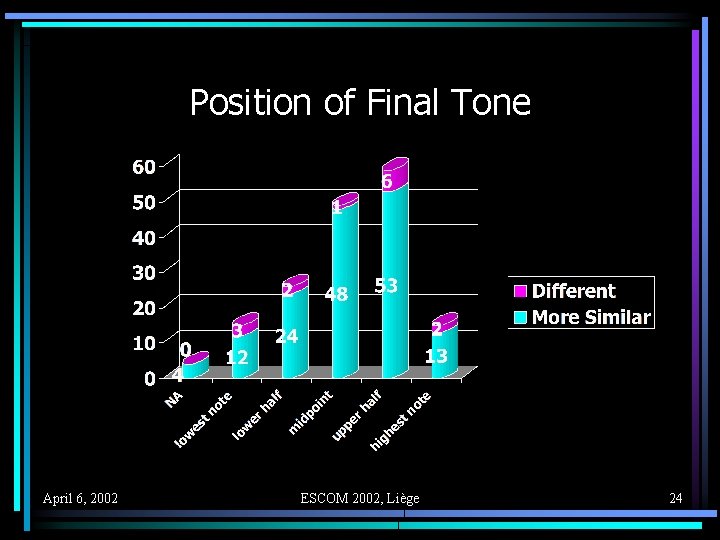
Position of Final Tone April 6, 2002 ESCOM 2002, Liège 24
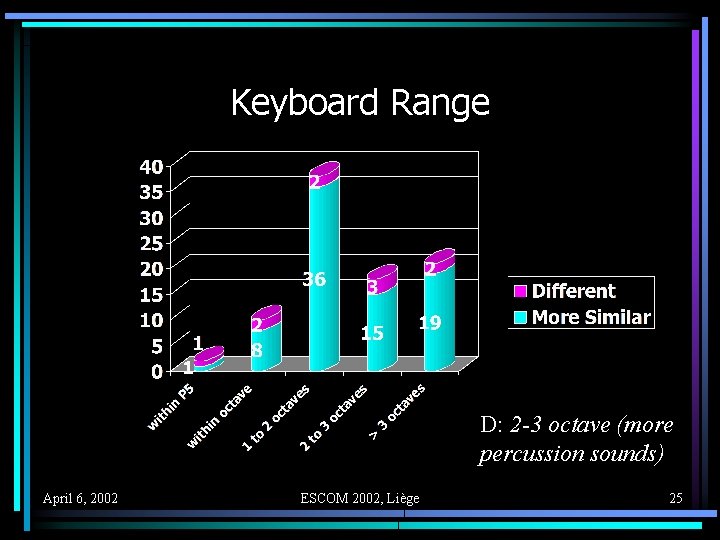
Keyboard Range D: 2 -3 octave (more percussion sounds) April 6, 2002 ESCOM 2002, Liège 25
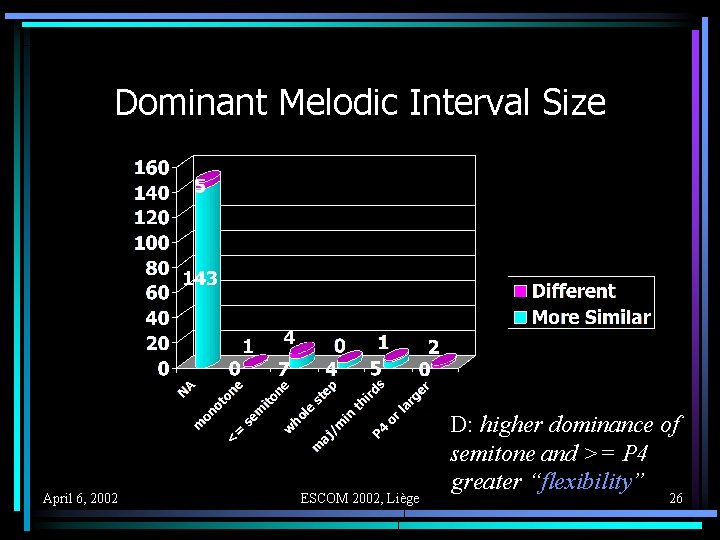
Dominant Melodic Interval Size April 6, 2002 ESCOM 2002, Liège D: higher dominance of semitone and >= P 4 greater “flexibility” 26
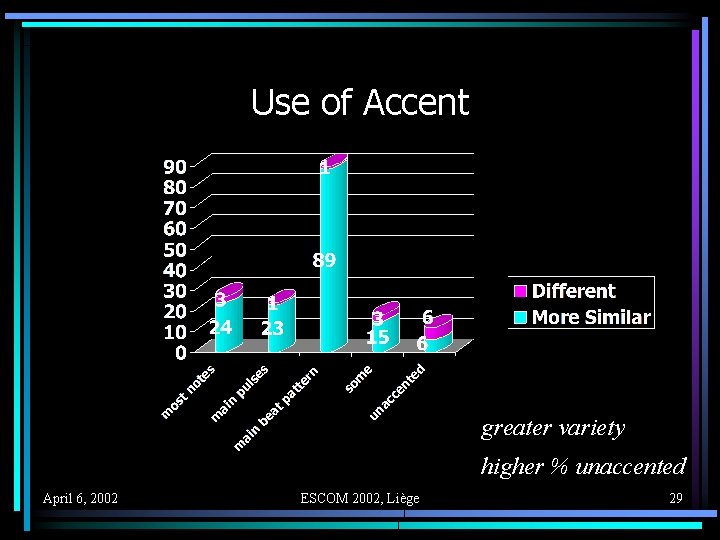
Use of Accent greater variety higher % unaccented April 6, 2002 ESCOM 2002, Liège 29
Where Do We Go From Here? Future Research April 6, 2002 ESCOM 2002, Liège 30
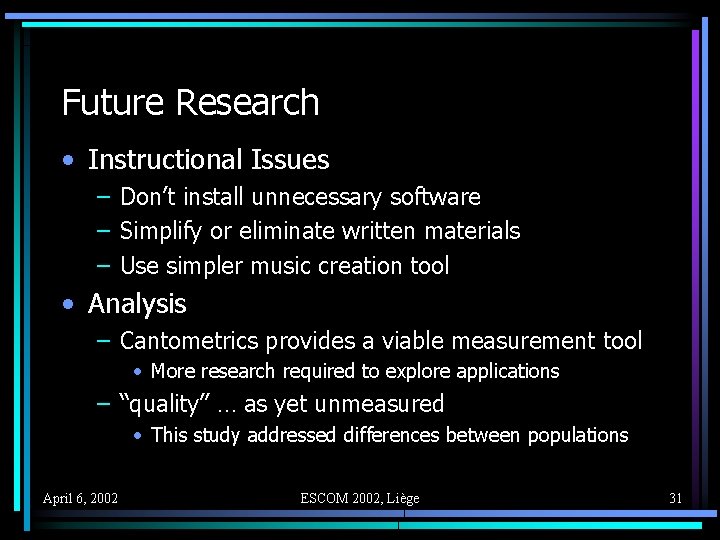
Future Research • Instructional Issues – Don’t install unnecessary software – Simplify or eliminate written materials – Use simpler music creation tool • Analysis – Cantometrics provides a viable measurement tool • More research required to explore applications – “quality” … as yet unmeasured • This study addressed differences between populations April 6, 2002 ESCOM 2002, Liège 31
Author Contact Information Scott D. Lipscomb – lipscomb@northwestern. edu Maud Hickey – mhickey@northwestern. edu David Sebald - dsebald@aim-ed. com Donald Hodges – dhodges@utsa. edu CMP web site: http: //music. utsa. edu/cmp/ April 6, 2002 ESCOM 2002, Liège 32
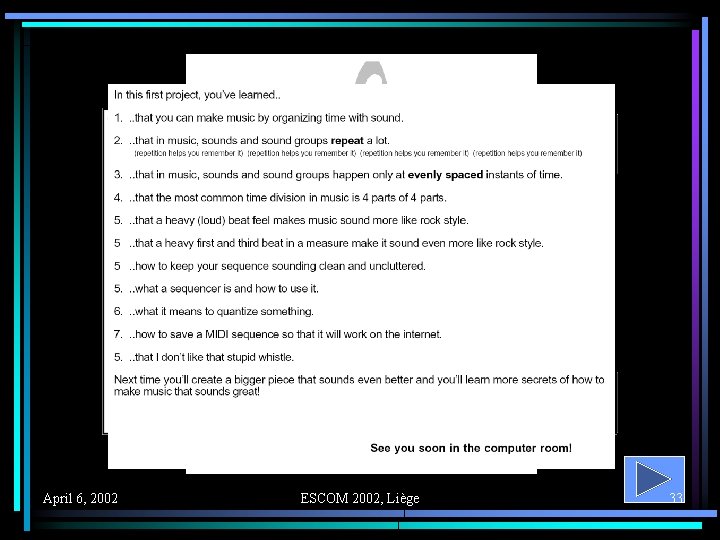
April 6, 2002 ESCOM 2002, Liège 33
Forced Choice - Results April 6, 2002 ESCOM 2002, Liège 34
Slider - Results April 6, 2002 ESCOM 2002, Liège 35