
Creative Engagement An Affective Process of Embodied Metaphor
Creative Engagement: An Affective Process of Embodied Metaphor Ross Anderson Inflexion and University of Oregon www. artcorelearning. org
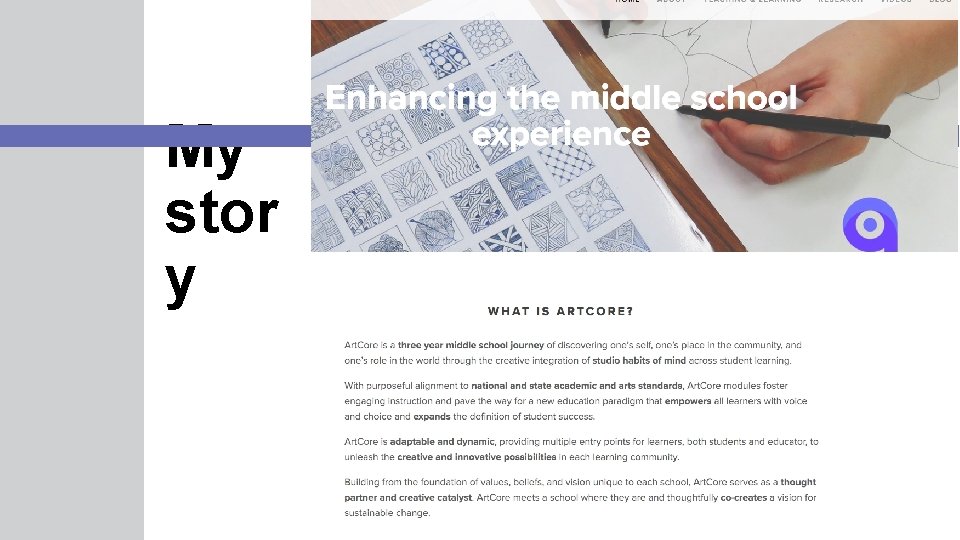
My stor y

Our journey today 1. 2. 3. 4. 5. 6. Embodied philosophy Metaphor and meaning The emotional brain A Model of creative engagement Experience for yourself Reflect
What is in a word? • Meaning • Metaphor • Emotions • Affect • Body • Mind • Felt qualities • Creativity • Engagement
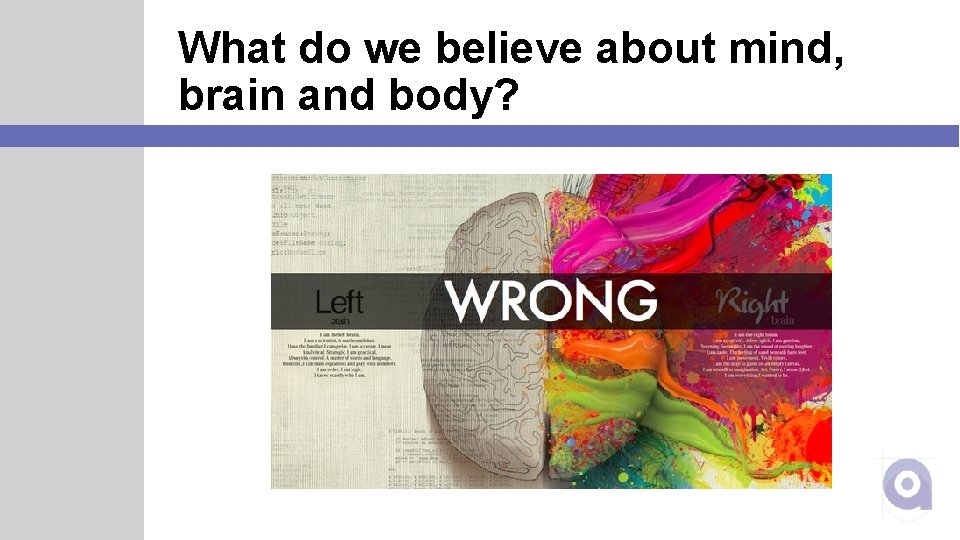
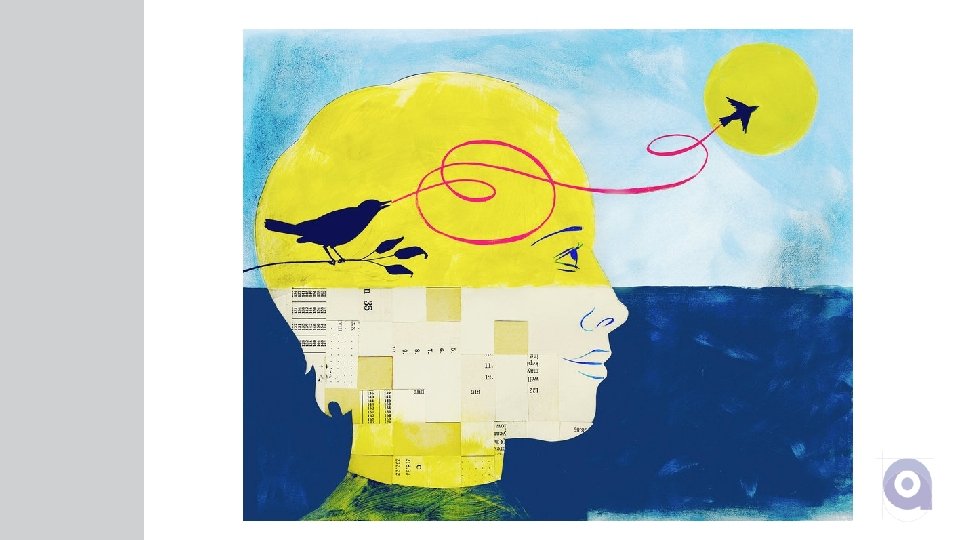
What do we believe about mind, brain and body?
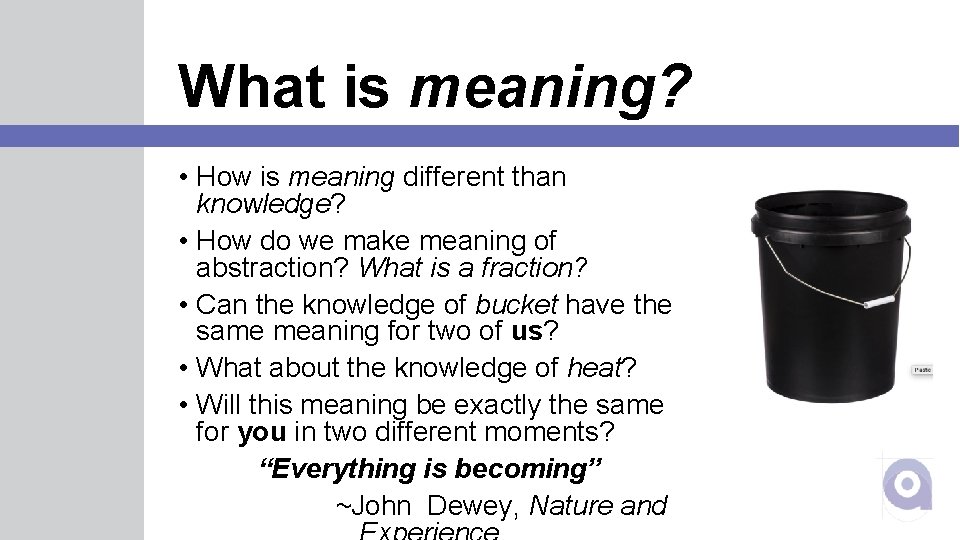
What is meaning? • How is meaning different than knowledge? • How do we make meaning of abstraction? What is a fraction? • Can the knowledge of bucket have the same meaning for two of us? • What about the knowledge of heat? • Will this meaning be exactly the same for you in two different moments? “Everything is becoming” ~John Dewey, Nature and
Metaphor and felt qualities Why are metaphors important to us? • Time – We express ideas, like time, with embodied metaphors • When we say we are “half way through” the year, we imply that the year has a spatial extent and we are moving relative to it • Disgust – When we refer to someone’s behavior as disgusting, we call on the powerful metaphor of physical disgust Your Challenge – Pair up and come up with a
Metaphors and the bodymind • The living body as a sensorial medium • Aesthetic and creatively self-fashioning • Language demarcates – provides boundaries to meaning • Felt quality discriminates – shapes meaning • Tableaux vivants or living picture
The making of mind The mind is. . . Pulses of thought ~ William James, Principles of Psychology Dramatic enactment ~ John Dewey, Nature and Experience Your Challenge: Write your own poetic oneliner and/or create a gesture to describe the mind
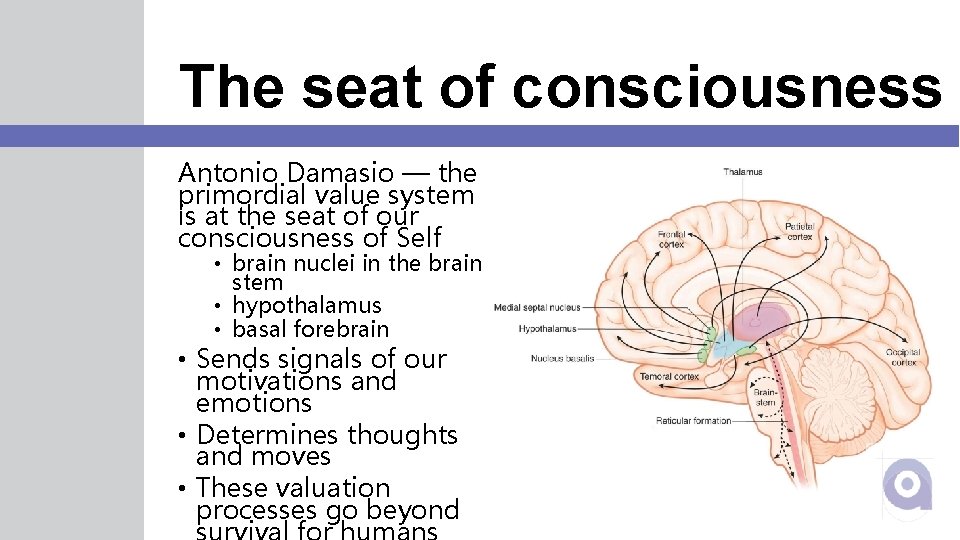
The seat of consciousness Antonio Damasio — the primordial value system is at the seat of our consciousness of Self • brain nuclei in the brain stem • hypothalamus • basal forebrain • Sends signals of our motivations and emotions • Determines thoughts and moves • These valuation processes go beyond
A web of meaning Meaning as a fishnet with a focal point and a fringe of unconscious faint feelings and memories. ~ William James Key neuroscience concepts • Degeneracy – the brain will never employ the identical set of neural maps or circuitry to a given conscious representation • Reentrant circuitry – reciprocal connections and communications across different systems in the brain form perceptual maps
Skilled intuitions • Emotional hunches accrue with experience • Basis for procedural knowledge – don’t touch the hot stove • The ventromedial prefrontal cortex links emotion to strategies • Integrates functional knowledge, emotional response, and cognition • Emotions play role in problem-solving and decision-making
The rudder for learning • Emotions steer to recruit and manage relevant emotions in learning • Key in meaning-making process • Learning awareness of environment and bodily response to it • An audience of peers—the felt quality of the experience is heightened • A spectrum of emotion – anticipation, nervousness, excitement, and relief • Social dimension of mind (not individual minds but individuals with mind)
Born cartographers • Images are main currency in mind ~Antonio Demasio, Self Comes to Mind • Brain forms images related to the bodily value system • Images as mental patterns in all sensory modalities • Emotional arousal may increase value placed on images • Images of recalled meaning contain somatic (emotional) markers
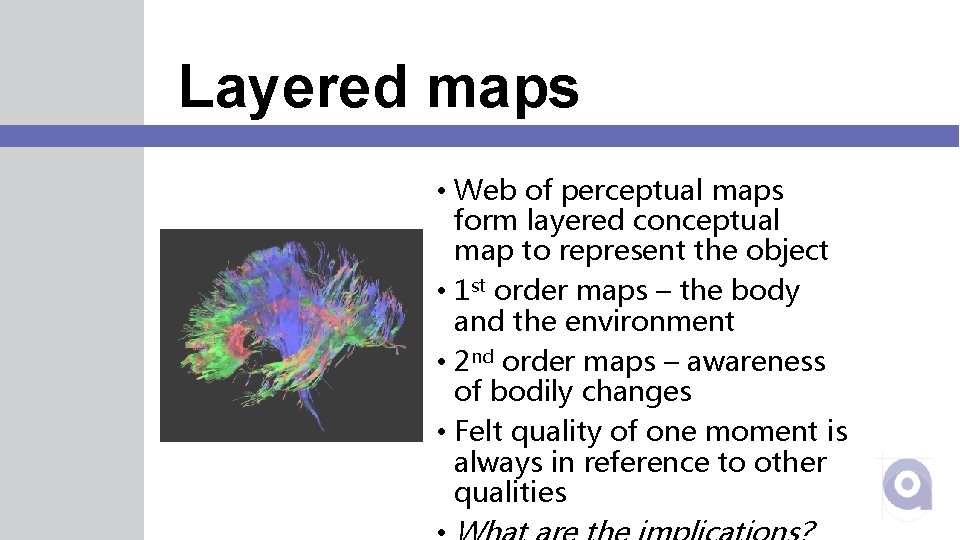
Layered maps • Web of perceptual maps form layered conceptual map to represent the object • 1 st order maps – the body and the environment • 2 nd order maps – awareness of bodily changes • Felt quality of one moment is always in reference to other qualities
Emotional quality matters Emotions that arise from this value system likely help to determine the strength and number of neural firings in our brains. ~ Gerald Edelman, Wider Than the Sky Emotional responses arise from. . . • Real-time external social or physical circumstances • Intellectual reflection of internal beliefs or inferential imaginings
Driving hypothesis Middle school students create a metaphorical milieu for evaporation . . . • the hot sun • a grape shriveling into a raisin • the upward motion of vapors rising • What else? And the result is. . . a multisensory experience that shapes meaning, sustained deeply through somatic markers
Creativity + Engagement • Creative learning ~Dr. Ron Beghetto • Intra-psychological process • Inter-psychological process • Seeds of creativity • Personally meaningful interpretations • Emerge from individual embodied interaction with the world • A natural aspect of neural processing and perceptual and conceptual mapping • Engagement – fundamental need for autonomy, belonging, competency Creative Engagement – the value system of feelings and needs in active pursuit of novel
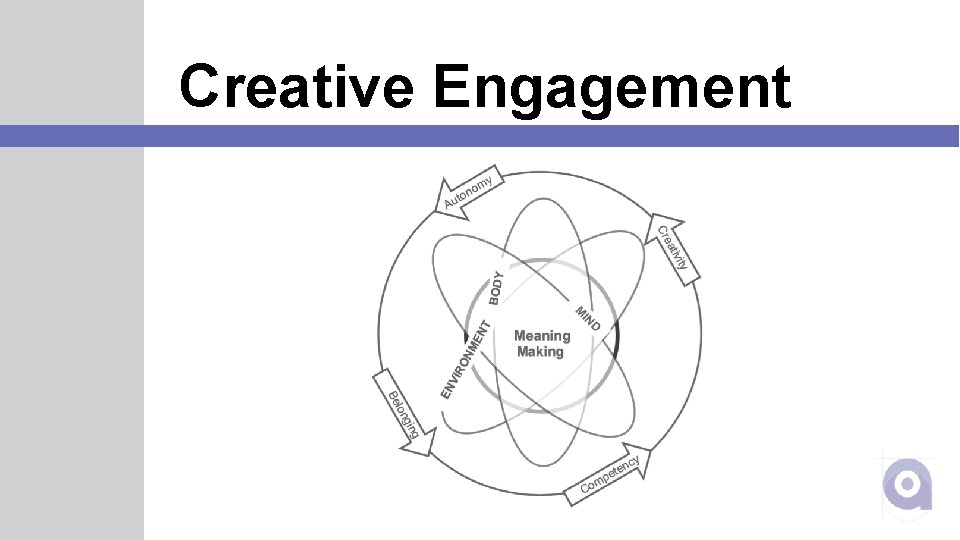
Creative Engagement
Classroom implications What are the implications of creative engagement for the classroom? How do you feel as a learner right now? Consider the arts – how could you integrate the arts for creative engagement around the material we have just been discussing?
Classroom implications • Provide time for students to interpret content • Develop student capacity for metaphor using poetry, movement, etc. • Integrate drama-based practices as a common classroom learning tool • Create opportunities for students to perform or be an audience • Normalize the spectrum of emotions experienced in learning
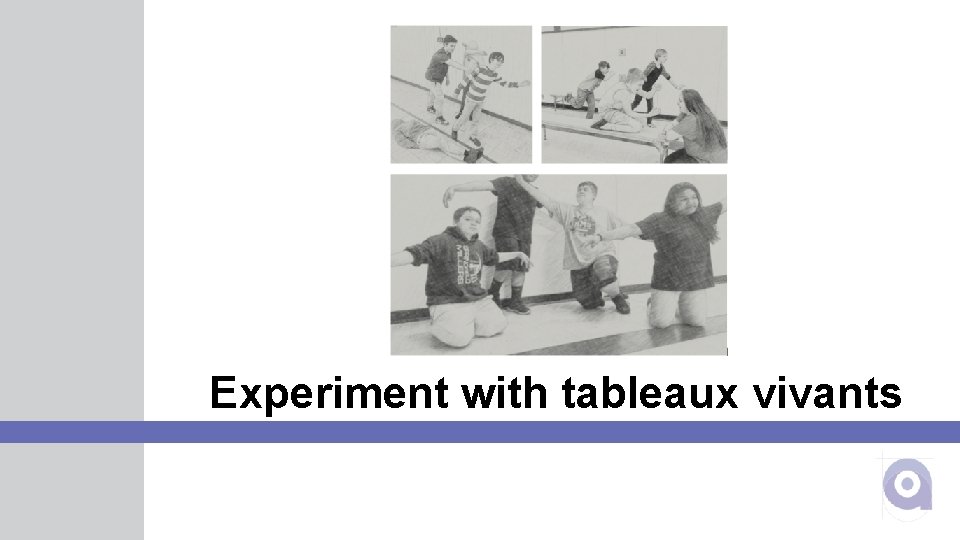
Experiment with tableaux vivants
Textures of tableaux • Composition • Frozen Shapes • Focal Points • Implied Motion • Multiple Levels • Depth • Facial Expressions • Proximity • Audience Orientation
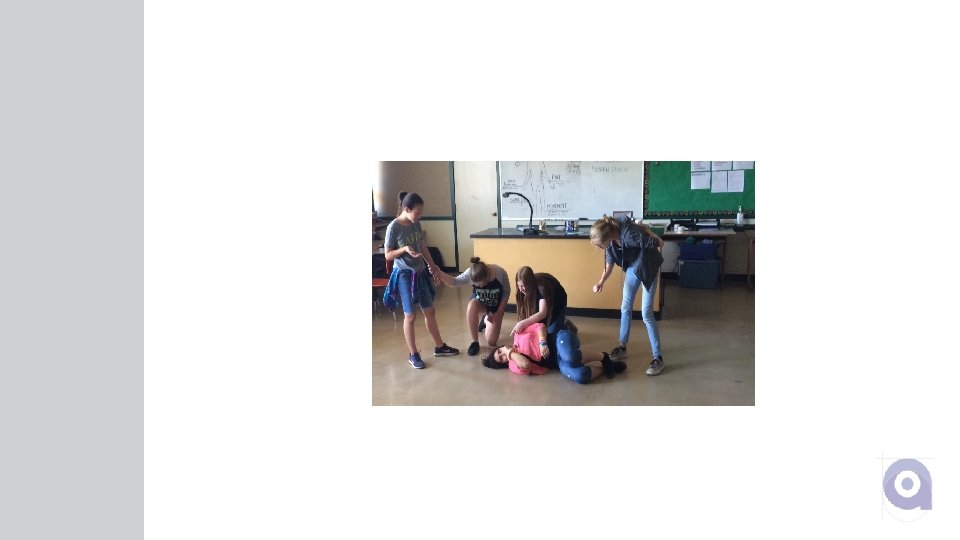

Play with the form Construct a tableaux scene or sequence in teams of four 1. Choose one a concept that we discussed this afternoon 2. Identify propositional components of the concept – what do you know about it? 3. Consider embodied metaphor that could create new meaning of the concept 4. Construct a tableaux scene (or series) attending to the textures of tableaux
Image credits • Slide 5: https: //s-media-cacheak 0. pinimg. com/originals/a 1/38/10/a 138106 f 65990222 b 4 d 2 f 2 a 2 cdf 63 f 75. jpg • Slide 6: http: //www. kmart. com. au/product/plastic-bucket--black, -20 -litre/722369 • Slide 8: : Anderson, R. C. (in press). Creative engagement: Embodied metaphor, the affective brain, and meaningful learning. Mind, Brain, Education. • Slide 10: http: //media. npr. org/assets/img/2015/01/28/teenage-brain_custom-c 9 a 9 • Slide 11: https: //doctorlib. info/physiology/review/17. html • Slide 17: https: //www. wired. com/images_blogs/wiredscience/2013/10/qq_paulallen_f. jpg • e 5062 df 2 b 50530 ee 89 c 3084 eae 77 bd 6736 fb-s 900 -c 85. jpg • Slide 21: Anderson, R. C. (in press). Creative engagement: Embodied metaphor, the affective brain, and meaningful learning. Mind, Brain, Education. • Slide 25 & 26: Nate Beard
Thank you! www. artcorelearning. org www. creativeengagementlab. com @Up. Eduvate
- Slides: 29