
Creating Your Personal Philosophy of Academic Advising Heidi

- Slides: 12
Creating Your Personal Philosophy of Academic Advising Heidi van Beek University of California, Davis Assistant Director, University Honors Program
Creating Your Personal Philosophy of Academic Advising: Introduction • My interest in this topic… • NACADA & related advising literature (especially: Marc Lowenstein’s article: Toward a Theory of Advising - The Mentor, August 2014) • Learning Outcomes: • Reminder to Reflect • Re/define your personal-professional relationship to NACADA Core Values • Write a working draft of your personal philosophy or revise your personal philosophy – it develops and changes over time • Presentation – three parts: background, processing & action
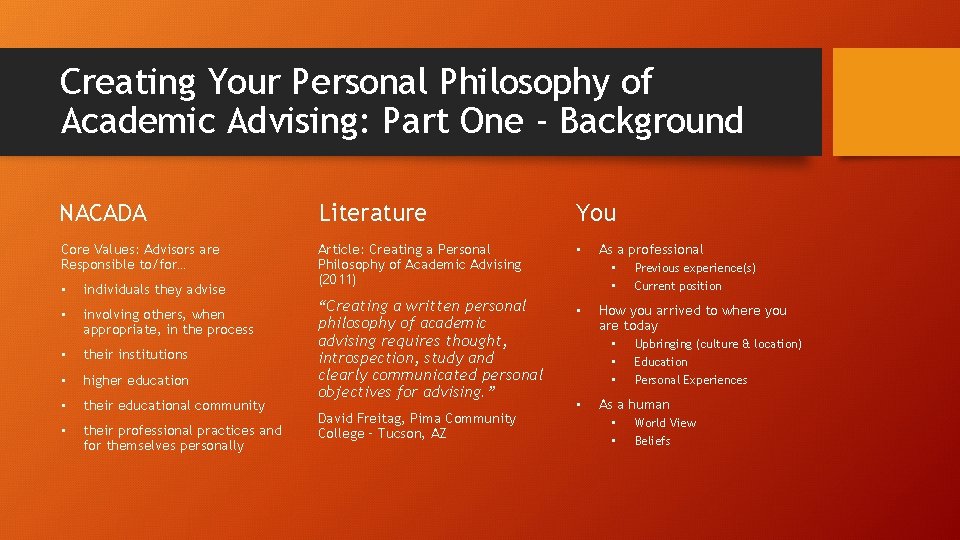
Creating Your Personal Philosophy of Academic Advising: Part One - Background NACADA Literature You Core Values: Advisors are Responsible to/for… Article: Creating a Personal Philosophy of Academic Advising (2011) • “Creating a written personal philosophy of academic advising requires thought, introspection, study and clearly communicated personal objectives for advising. ” • • individuals they advise • involving others, when appropriate, in the process • their institutions • higher education • their educational community • their professional practices and for themselves personally David Freitag, Pima Community College – Tucson, AZ As a professional • • How you arrived to where you are today • • Previous experience(s) Current position Upbringing (culture & location) Education Personal Experiences As a human • • World View Beliefs
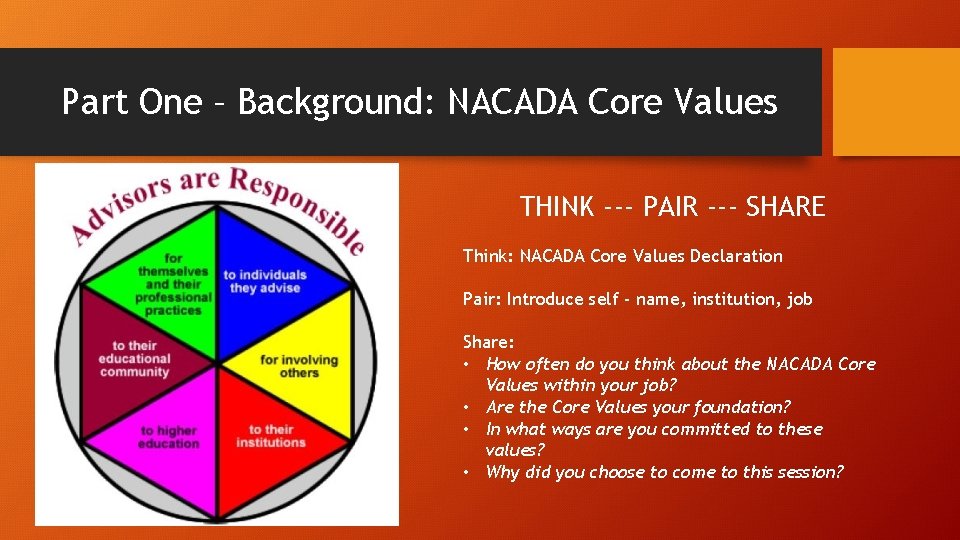
Part One – Background: NACADA Core Values THINK --- PAIR --- SHARE Think: NACADA Core Values Declaration Pair: Introduce self - name, institution, job Share: • How often do you think about the NACADA Core Values within your job? • Are the Core Values your foundation? • In what ways are you committed to these values? • Why did you choose to come to this session?
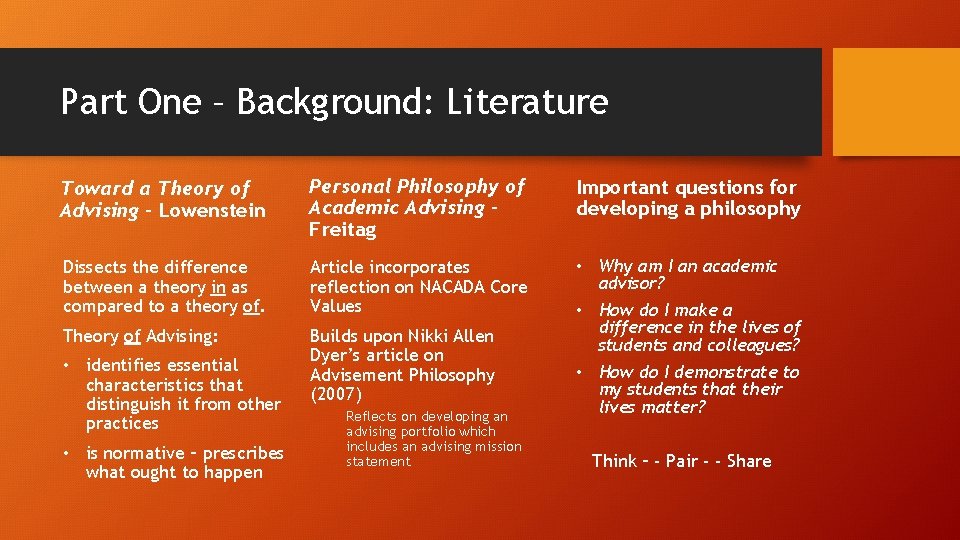
Part One – Background: Literature Toward a Theory of Advising - Lowenstein Personal Philosophy of Academic Advising – Freitag Important questions for developing a philosophy Dissects the difference between a theory in as compared to a theory of. Article incorporates reflection on NACADA Core Values Theory of Advising: Builds upon Nikki Allen Dyer’s article on Advisement Philosophy (2007) • Why am I an academic advisor? • How do I make a difference in the lives of students and colleagues? • How do I demonstrate to my students that their lives matter? • identifies essential characteristics that distinguish it from other practices • is normative – prescribes what ought to happen Reflects on developing an advising portfolio which includes an advising mission statement Think – - Pair - - Share
l a n o i fess ro p a As d e v i r r a e u r o a y u w o o y H re e h to w y a d to As ah um Part One – Background: You! an
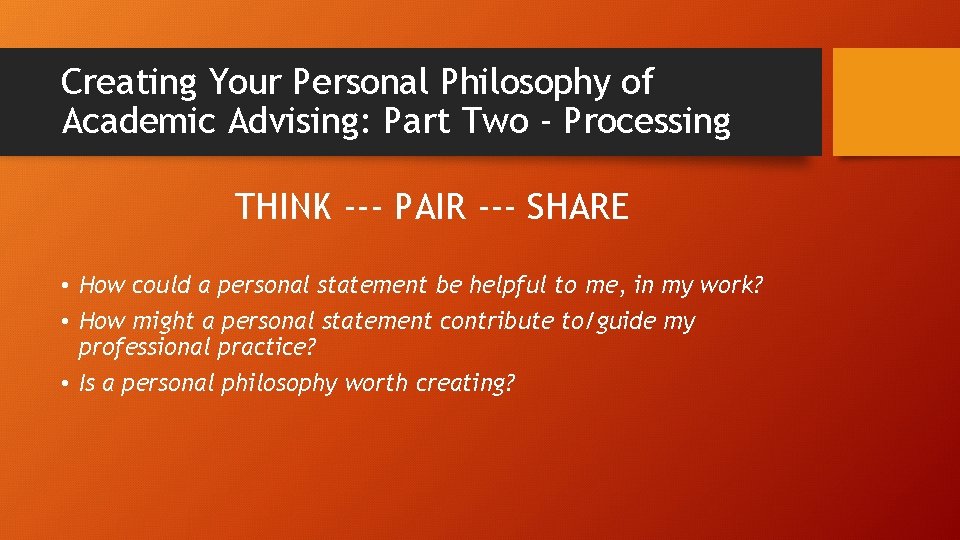
Creating Your Personal Philosophy of Academic Advising: Part Two - Processing THINK --- PAIR --- SHARE • How could a personal statement be helpful to me, in my work? • How might a personal statement contribute to/guide my professional practice? • Is a personal philosophy worth creating?
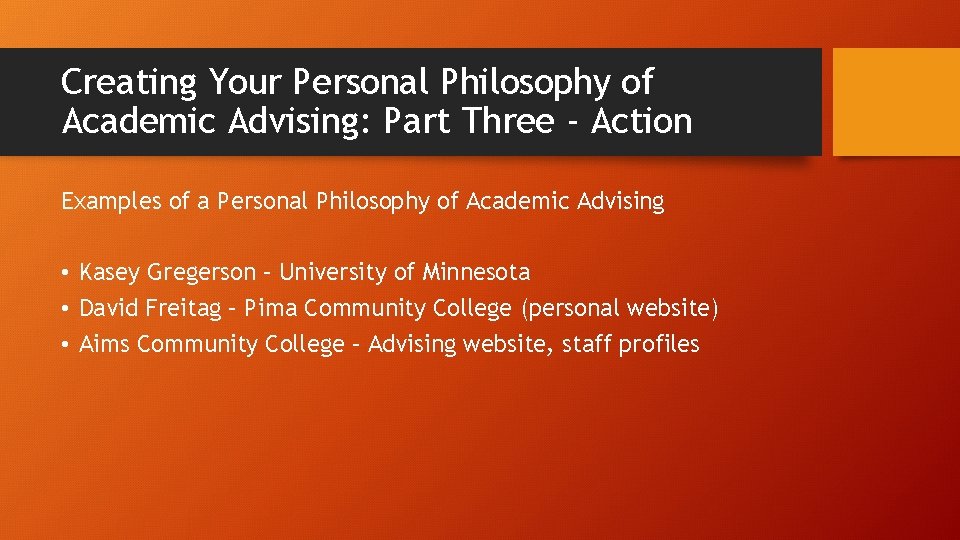
Creating Your Personal Philosophy of Academic Advising: Part Three - Action Examples of a Personal Philosophy of Academic Advising • Kasey Gregerson – University of Minnesota • David Freitag – Pima Community College (personal website) • Aims Community College – Advising website, staff profiles
Creating Your Personal Philosophy of Academic Advising: Part Three - Action Pen to paper, or hands on the keyboard, it is time to write! “My philosophy gives me a sense of clarity and focus in my day-to-day interactions with students and in my long-term career goals. ” – Nikki Allen Dyer
Creating Your Personal Philosophy of Academic Advising: Part Three - Action Continue to develop your statement over the next 30 days Option for continued engagement: Give copy to Heidi with email address on it, or take picture and email to: hvanbeek@ucdavis. edu (I am an accountability partner – not an expert!)
Creating Your Personal Philosophy of Academic Advising: Conclusion • Thank you for participating; taking time for reflection is important. • Reconnect with the profession (NACADA Core Values) • Continue to engage with this process – colleagues, NACADA focus groups or email me: hvanbeek@ucdavis. edu (I am an accountability partner – not an expert!)
References & Thank you! • Dyer, A. N. (2007). Advisement philosophy. NACADA Monograph Series Number 16. Retrieved from NACADA Clearinghouse of Academic Advising Resources Web site: http: //www. nacada. ksu. edu/portals/0/Clearinghouse/Advising. Issues/documents/Personal-Philosophy. VFF. pdf • Freitag, D. (2011). Creating a Personal Philosophy of Academic Advising. Retrieved from NACADA Clearinghouse of Academic Advising Resources Web site: http: //www. nacada. ksu. edu/Resources/Clearinghouse/View-Articles/Personal-philosophy-of-academicadvising. aspx • Lowenstein, Mark. (2014, August 12). Toward a Theory of Advising. The Mentor: An Academic Advising Journal. Retrieved from https: //dus. psu. edu/mentor • Lutz, D. J. , Boon, A. T. , & Xiafei X. (2016, June 17). Resolving Ethical Dilemmas in Academic Advising through Core Values and Aspirational Principles. The Mentor: An Academic Advising Journal. Retrieved from https: //dus. psu. edu/mentor • NACADA. (2005). NACADA statement of core values of academic advising. Retrieved from the NACADA Clearinghouse of Academic Advising Resources Web site: http: //www. nacada. ksu. edu/Resources/Clearinghouse/View-Articles/Core-values-of-academicadvising. aspx • NACADA. Personal advising philosophy examples. Retrieved from the NACADA Clearinghouse of Academic Advising Resources Web site: http: //www. nacada. ksu. edu/Resources/Clearinghouse/View. Articles/Personal-advising-philosophy-examples. aspx