
CREATING WALKABLE COMMUNITIES THROUGH SMART GROWTH INCENTIVES 1
CREATING WALKABLE COMMUNITIES THROUGH SMART GROWTH INCENTIVES 1
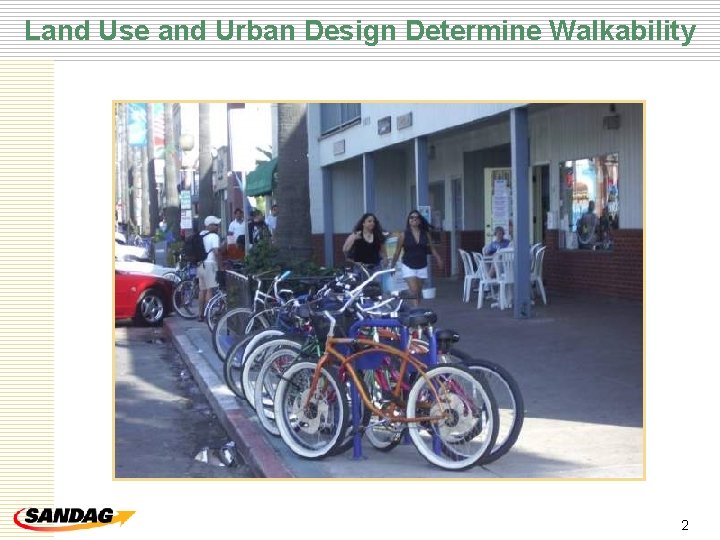
Land Use and Urban Design Determine Walkability 2

Smart Growth Initiatives § Regional Transportation Plan § Regional Comprehensive Plan § Smart Growth Incentive Program 3
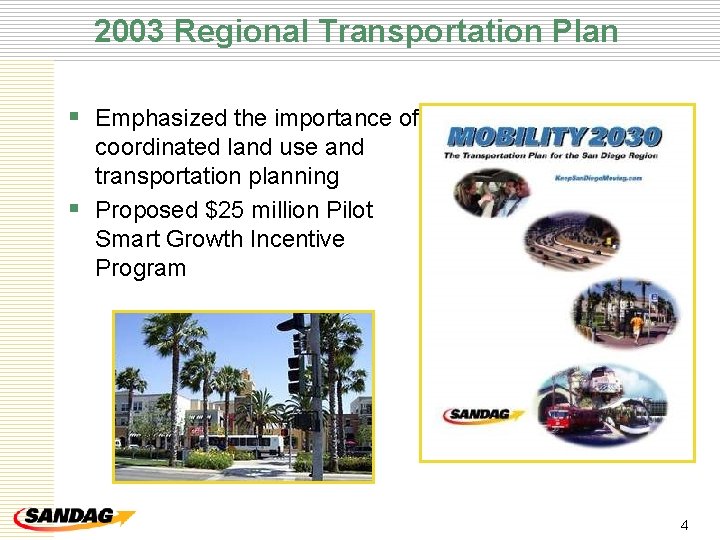
2003 Regional Transportation Plan § Emphasized the importance of coordinated land use and transportation planning § Proposed $25 million Pilot Smart Growth Incentive Program 4
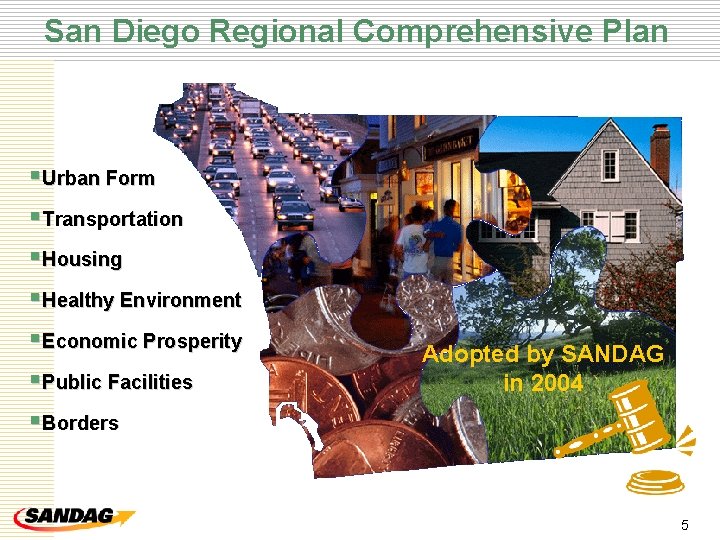
San Diego Regional Comprehensive Plan §Urban Form §Transportation §Housing §Healthy Environment §Economic Prosperity §Public Facilities §Borders Adopted by SANDAG in 2004 5
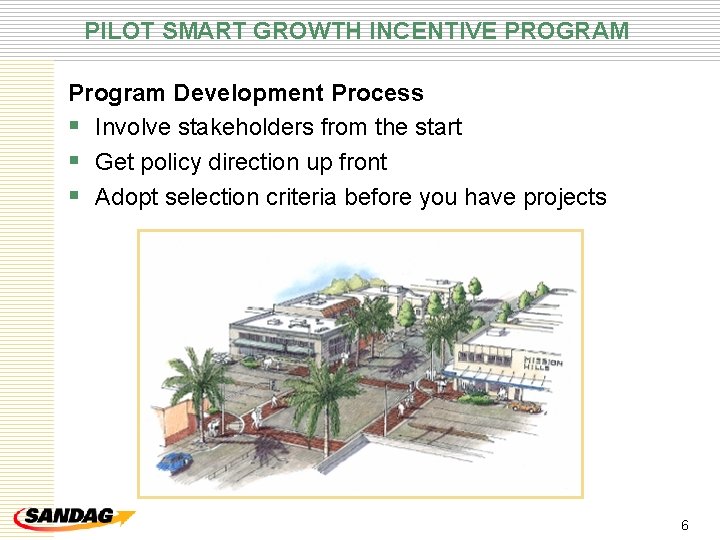
PILOT SMART GROWTH INCENTIVE PROGRAM Program Development Process § Involve stakeholders from the start § Get policy direction up front § Adopt selection criteria before you have projects 6
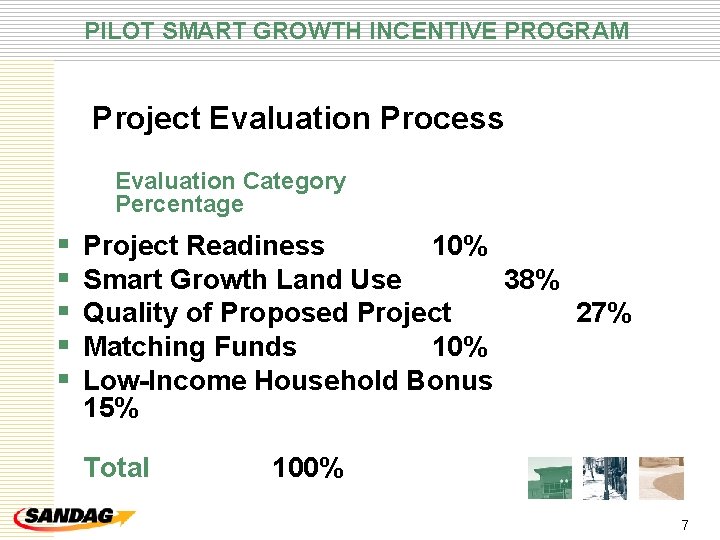
PILOT SMART GROWTH INCENTIVE PROGRAM Project Evaluation Process Evaluation Category Percentage § § § Project Readiness 10% Smart Growth Land Use 38% Quality of Proposed Project 27% Matching Funds 10% Low-Income Household Bonus 15% Total 100% 7

Projects Influence Land Development National City Streetscape Improvements 8
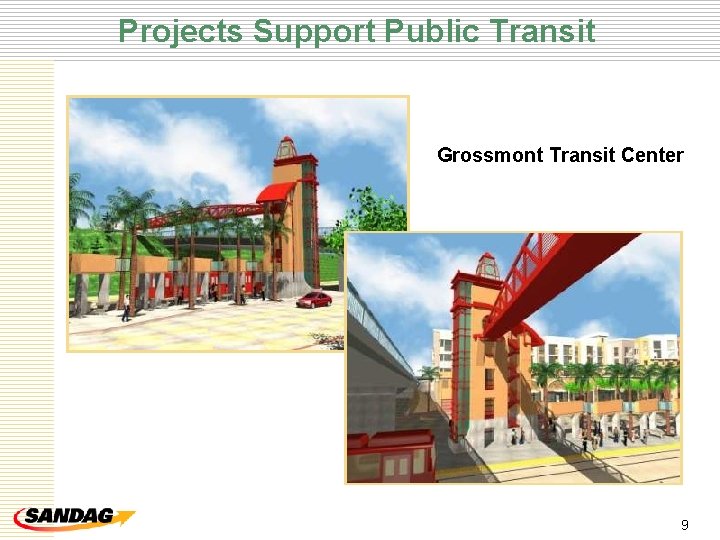
Projects Support Public Transit Grossmont Transit Center 9
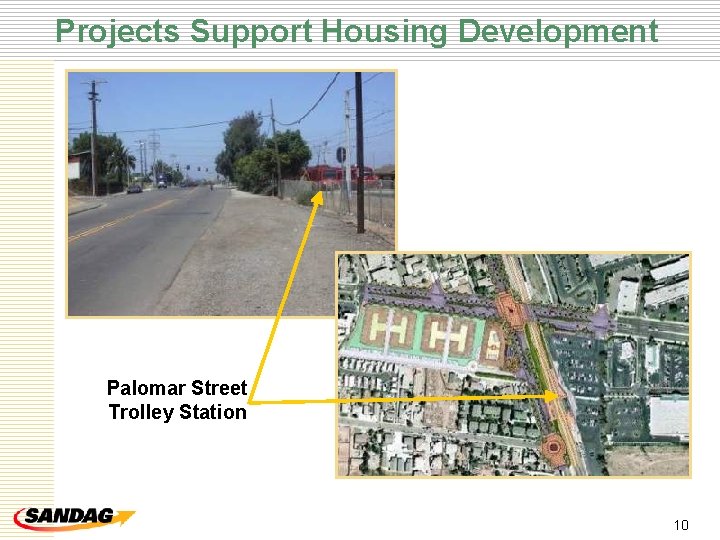
Projects Support Housing Development Palomar Street Trolley Station 10
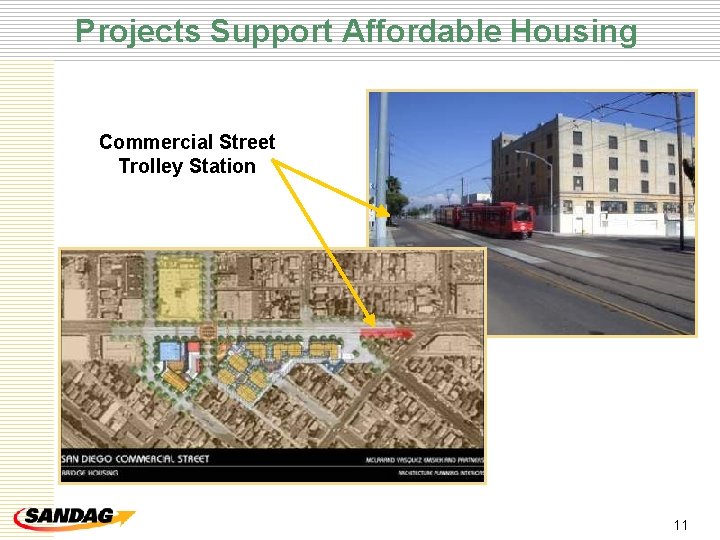
Projects Support Affordable Housing Commercial Street Trolley Station 11
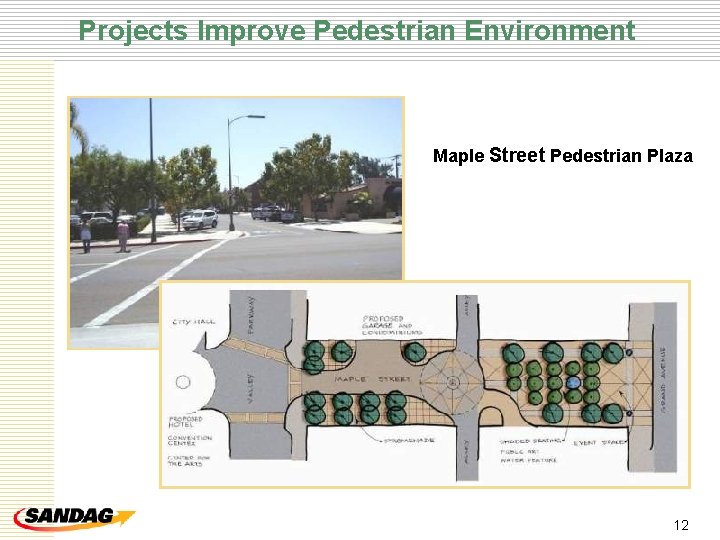
Projects Improve Pedestrian Environment Maple Street Pedestrian Plaza 12
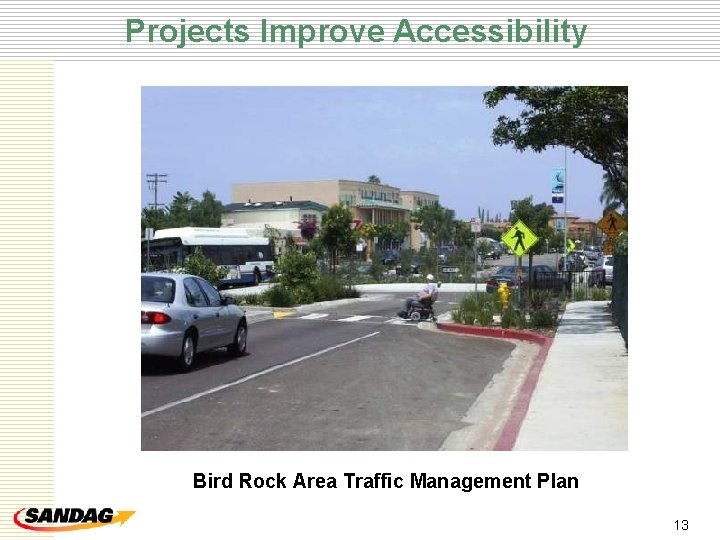
Projects Improve Accessibility Bird Rock Area Traffic Management Plan 13
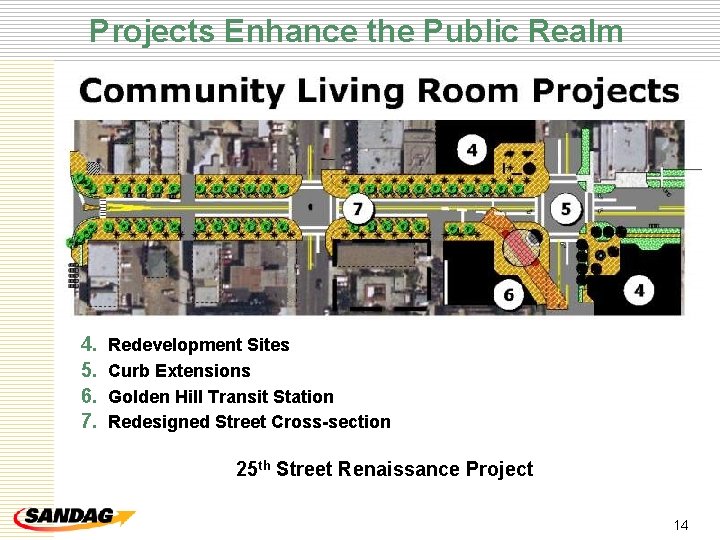
Projects Enhance the Public Realm 4. 5. 6. 7. Redevelopment Sites Curb Extensions Golden Hill Transit Station Redesigned Street Cross-section 25 th Street Renaissance Project 14
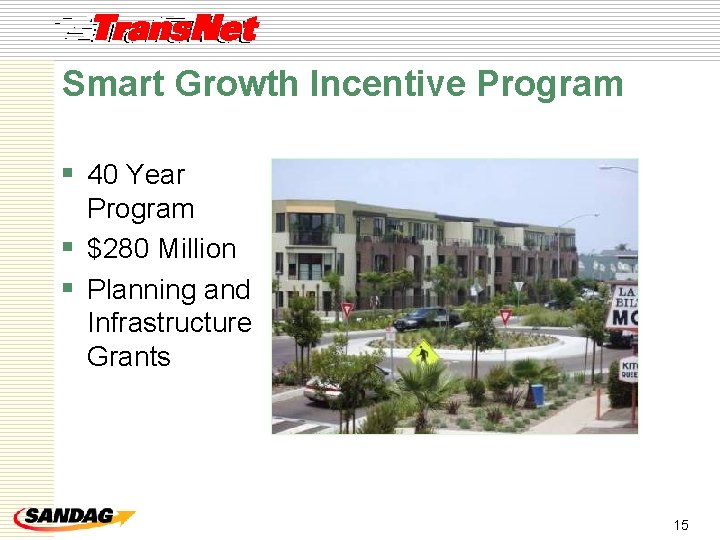
Smart Growth Incentive Program § 40 Year Program § $280 Million § Planning and Infrastructure Grants 15
CREATING WALKABLE COMMUNITIES THROUGH SMART GROWTH INCENTIVES 16
- Slides: 16