
Creating the New American Government Main Idea Sheet


- Slides: 63
Creating the New American Government
Main Idea Sheet • Ideas about government • Articles of Confederation
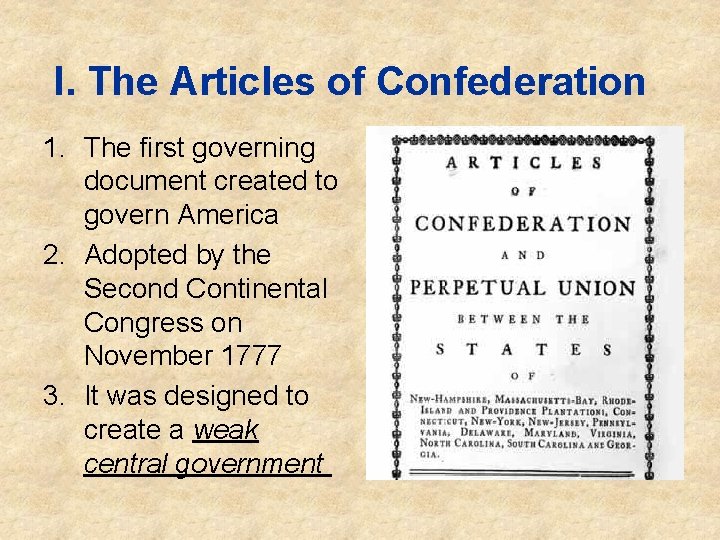
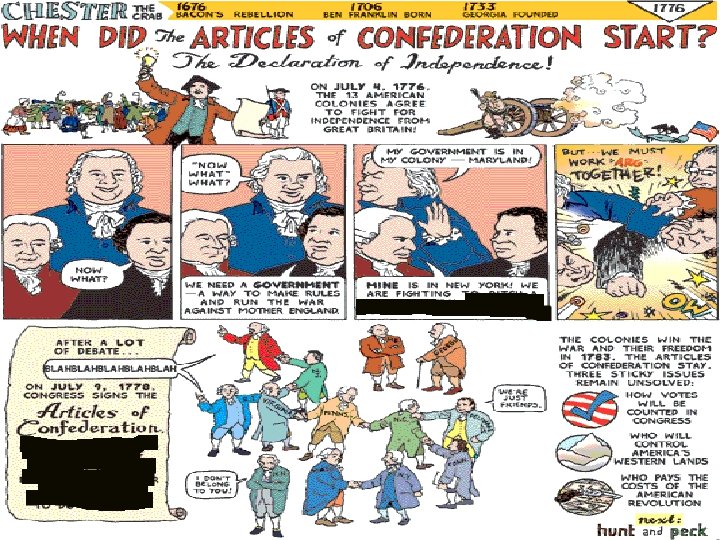
I. The Articles of Confederation 1. The first governing document created to govern America 2. Adopted by the Second Continental Congress on November 1777 3. It was designed to create a weak central government
A. Who had the power under the Articles of Confederation? 1. Between The States Of New Hampshire, Massachusetts-bay Rhode Island Providence Plantations, Connecticut, New York, New Jersey, Pennsylvania, Delaware, Maryland, Virginia, North Carolina, South Carolina and Georgia. 2. ARTICLE I The Stile of this Confederacy shall be "The United States of America". 3. ARTICLE II Each state retains its sovereignty, freedom, and independence, and every power, jurisdiction, and right, which is not by this Confederation expressly delegated to the United States, in Congress assembled. Sovereignty=governmental power Delegated=given
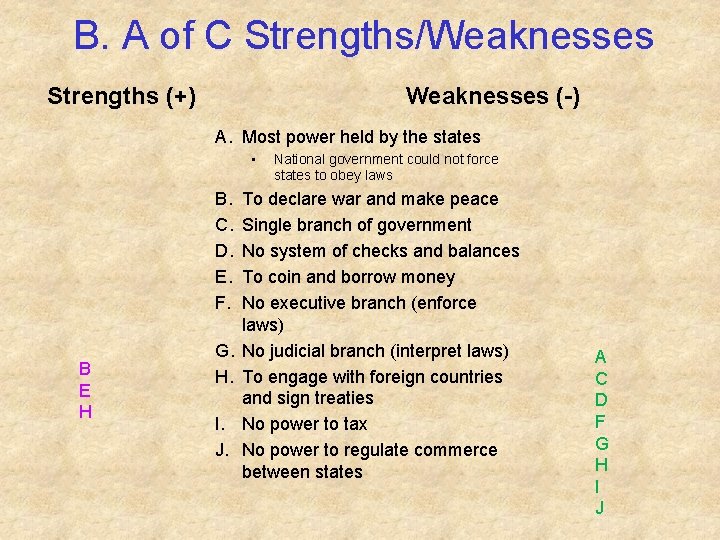
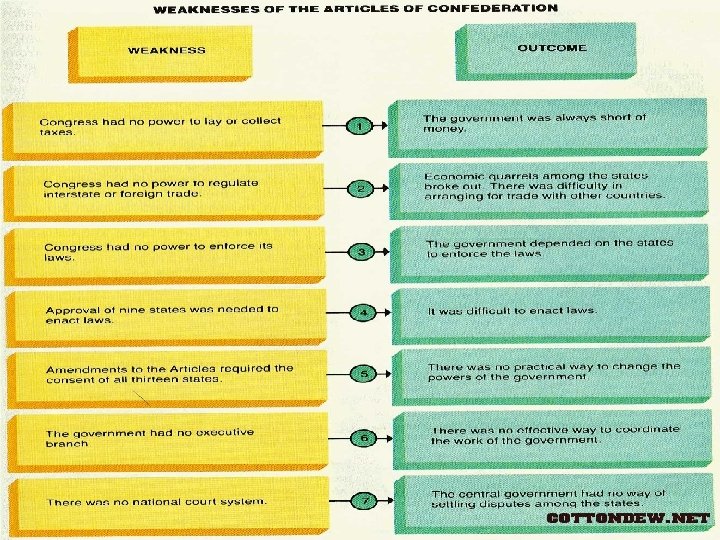
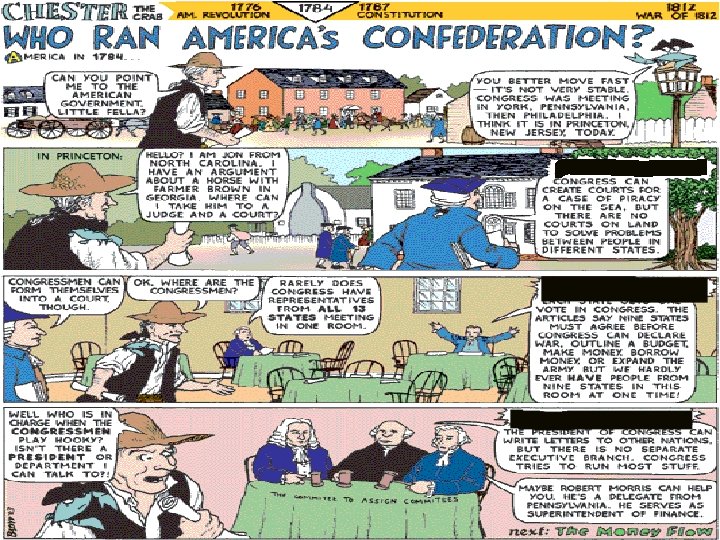
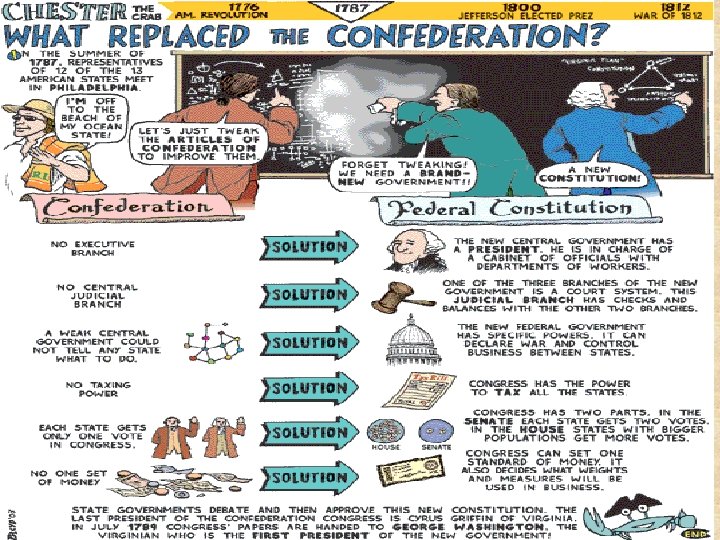
B. A of C Strengths/Weaknesses Strengths (+) Weaknesses (-) A. Most power held by the states • B. C. D. E. F. B E H G. H. I. J. National government could not force states to obey laws To declare war and make peace Single branch of government No system of checks and balances To coin and borrow money No executive branch (enforce laws) No judicial branch (interpret laws) To engage with foreign countries and sign treaties No power to tax No power to regulate commerce between states A C D F G H I J
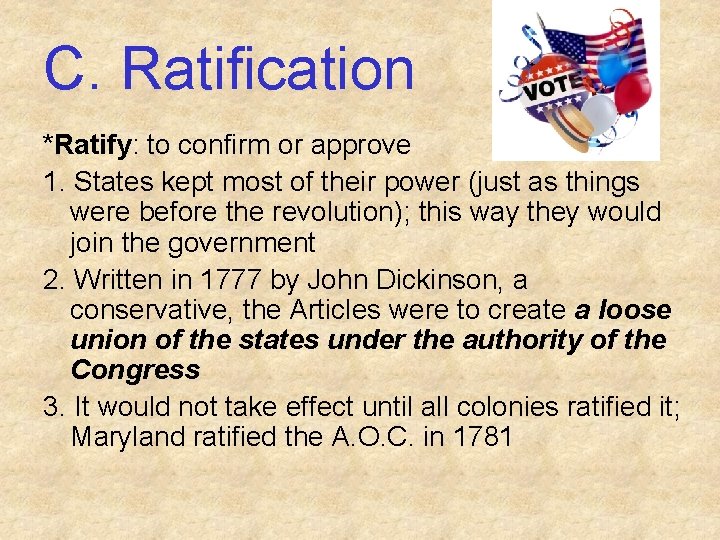
C. Ratification *Ratify: to confirm or approve 1. States kept most of their power (just as things were before the revolution); this way they would join the government 2. Written in 1777 by John Dickinson, a conservative, the Articles were to create a loose union of the states under the authority of the Congress 3. It would not take effect until all colonies ratified it; Maryland ratified the A. O. C. in 1781
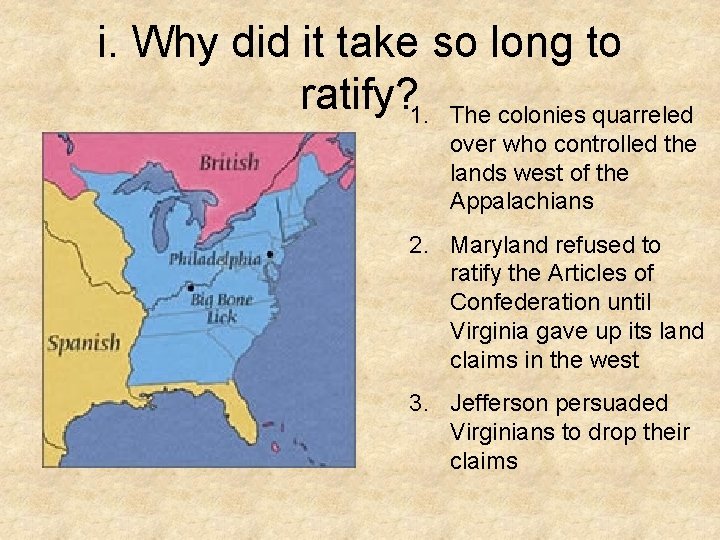
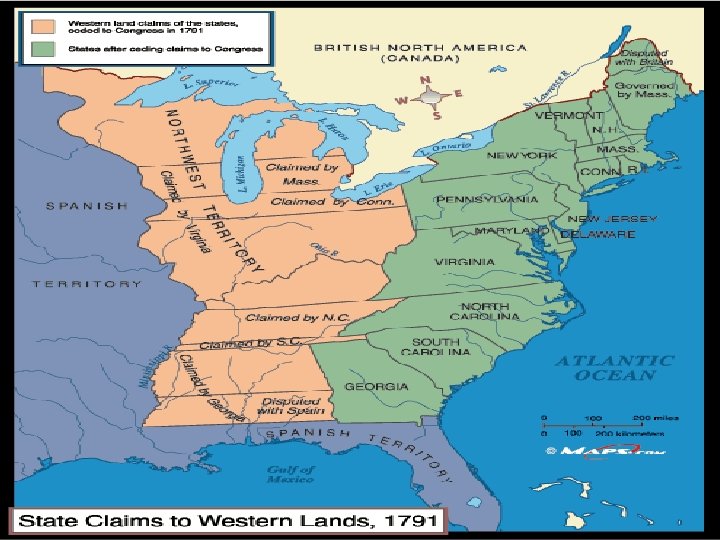
i. Why did it take so long to ratify? 1. The colonies quarreled over who controlled the lands west of the Appalachians 2. Maryland refused to ratify the Articles of Confederation until Virginia gave up its land claims in the west 3. Jefferson persuaded Virginians to drop their claims
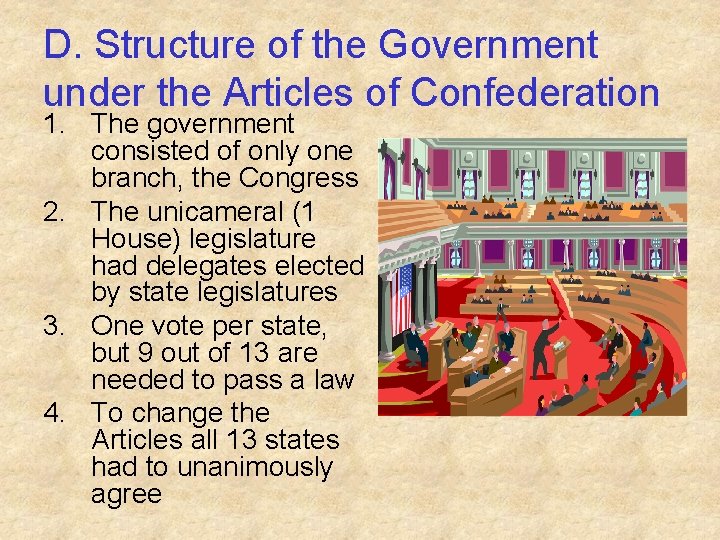
D. Structure of the Government under the Articles of Confederation 1. The government consisted of only one branch, the Congress 2. The unicameral (1 House) legislature had delegates elected by state legislatures 3. One vote per state, but 9 out of 13 are needed to pass a law 4. To change the Articles all 13 states had to unanimously agree
E. Powers of the Government under the Articles of Confederation 1. 2. 3. 4. 5. Congress could declare war Raise armies to fight in the war Make treaties Borrow money Send diplomats to foreign countries
F. Accomplishments 1. Winning the War---the government worked well enough to: • Raise an army • Get foreign support and alliances • Negotiate a favorable peace treaty
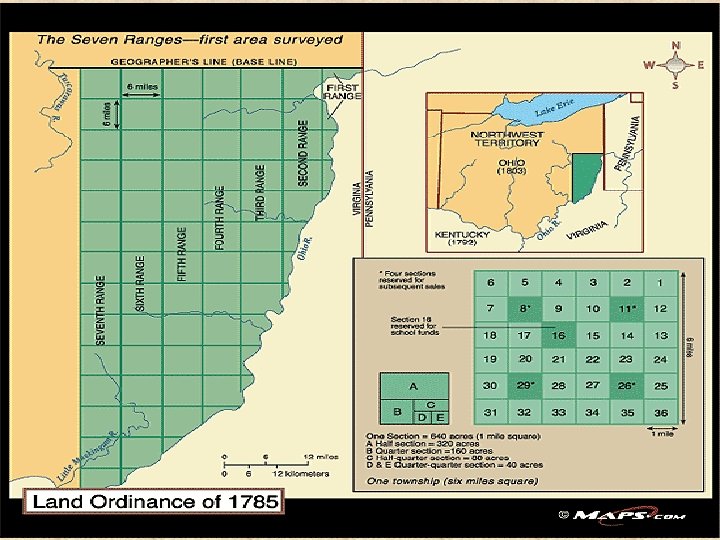
F. Accomplishments (Cont. ) 2. Land Ordinance of 1785 --- the only way to raise money was to sell land: • This law established the surveying of land how it was to be divided into townships • Each town would be 6 miles by 6 miles and divided into 36 sections, 1 section was set aside for public education
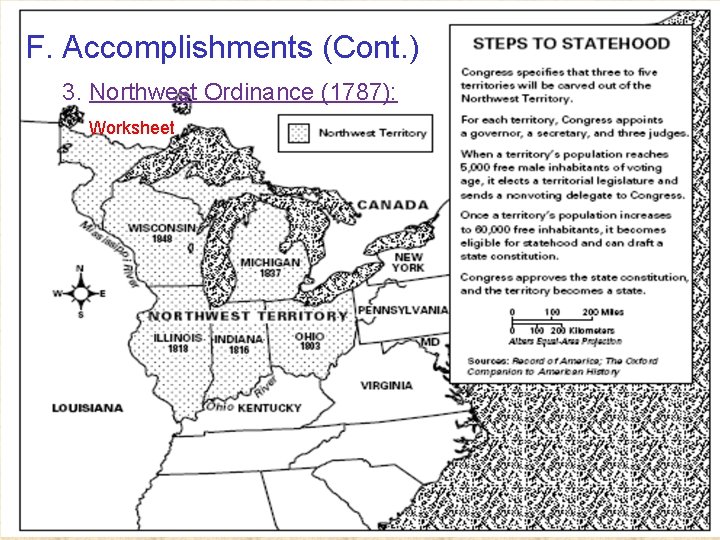
F. Accomplishments (Cont. ) 3. Northwest Ordinance (1787): Worksheet
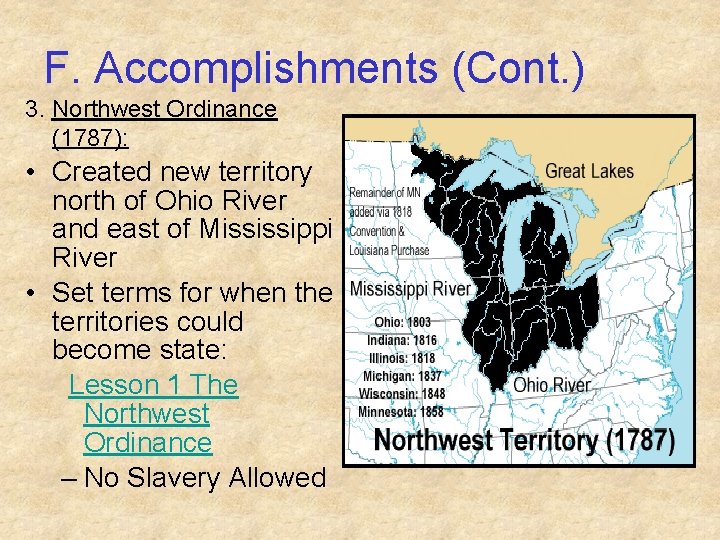
F. Accomplishments (Cont. ) 3. Northwest Ordinance (1787): • Created new territory north of Ohio River and east of Mississippi River • Set terms for when the territories could become state: Lesson 1 The Northwest Ordinance – No Slavery Allowed
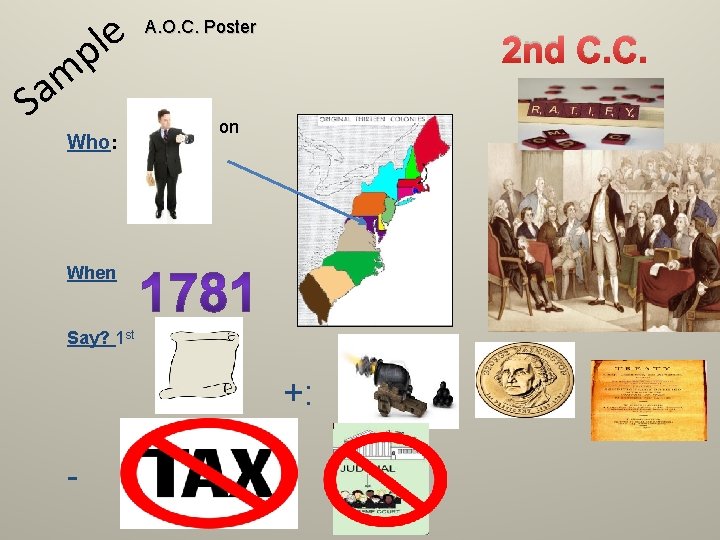
Poster: A)Basics – who, where, when B) What did the Articles of Confederation say? C) Strengths? Weaknesses? D) express in pictures
e l p S m a Who: A. O. C. Poster 2 nd C. C. on When Say? 1 st +: -
II. America at the Time When the Articles of Confederation Weren’t Working A. Financial Problems $: 1) America was in debt having taken loans from foreign nations 2) Trading again with Britain= a) American goods sold to British colonies in the Caribbean had to be carried on British ships b) British goods with inexpensive prices causes American artisans to lose their jobs
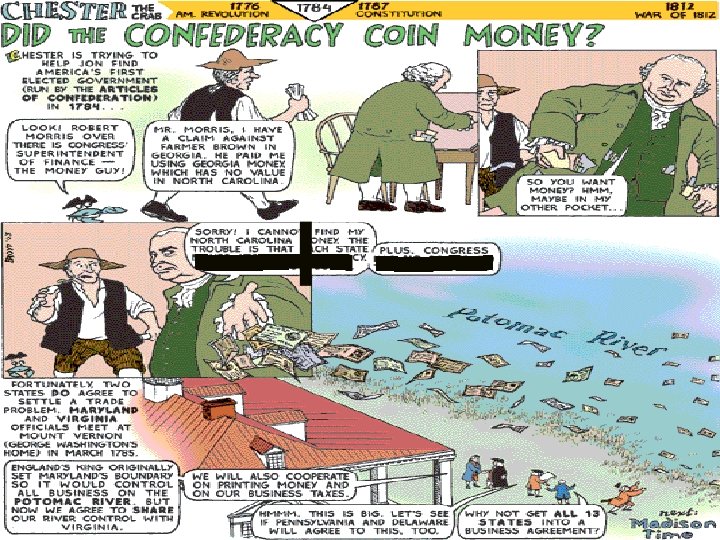
A. Financial Problems $ (Cont. ): 3) No Standard Currency---every state had their own money making it difficult to trade, the money was not backed up by gold or silver: a) Inflation occurs b) Paper money became worthless 4) States taxing each other--states were acting like independent countries establishing taxes on each others goods
B. Foreign Problems 1) Foreign presence: a) Spain: disputed the border between Georgia and Spanish Florida b) Britain: they maintained forts south of the Great Lakes 2) Foreign Debt: France, America’s ally, was owed money; Spain closed the Mississippi River and New Orleans to all American goods
C. Domestic Problems 1. States were acting like their own independent countries: They taxed each other, quarreled over land water, made their own currency 2. America’s Economy was horrible: inflation, unemployment, debt 3. Shays’ Rebellion---Rebellion in Massachusetts in 1786 led by former Continental Army Captain Daniel Shays
Imagine you are a farmer returning from the Revolutionary War---what is your farm like, what do you need to make money, how will you get money for the things you need?
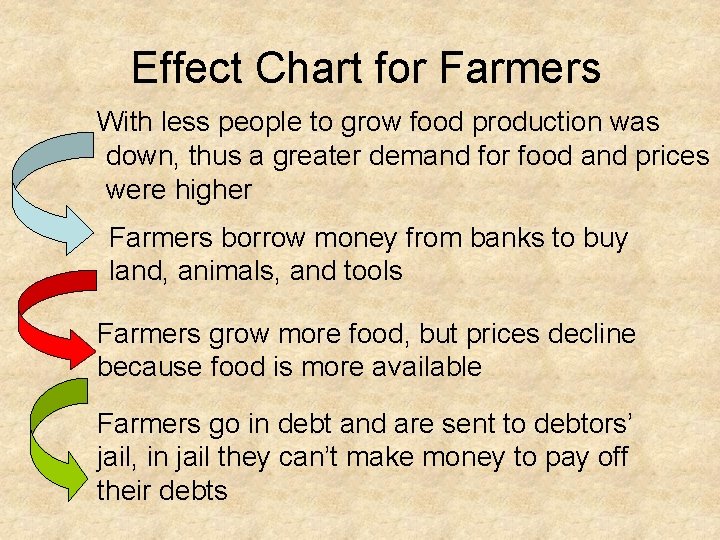
Effect Chart for Farmers With less people to grow food production was down, thus a greater demand for food and prices were higher Farmers borrow money from banks to buy land, animals, and tools Farmers grow more food, but prices decline because food is more available Farmers go in debt and are sent to debtors’ jail, in jail they can’t make money to pay off their debts
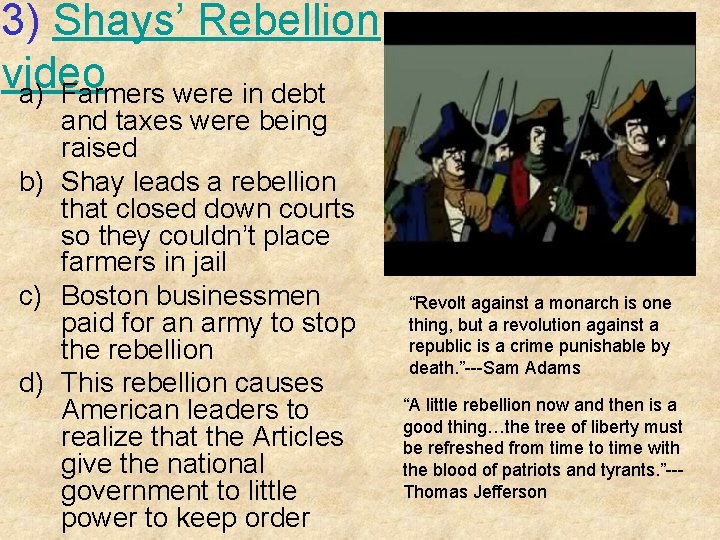
3) Shays’ Rebellion video a) Farmers were in debt and taxes were being raised b) Shay leads a rebellion that closed down courts so they couldn’t place farmers in jail c) Boston businessmen paid for an army to stop the rebellion d) This rebellion causes American leaders to realize that the Articles give the national government to little power to keep order “Revolt against a monarch is one thing, but a revolution against a republic is a crime punishable by death. ”---Sam Adams “A little rebellion now and then is a good thing…the tree of liberty must be refreshed from time to time with the blood of patriots and tyrants. ”--Thomas Jefferson
What Constitutional Convention? Why was it needed?
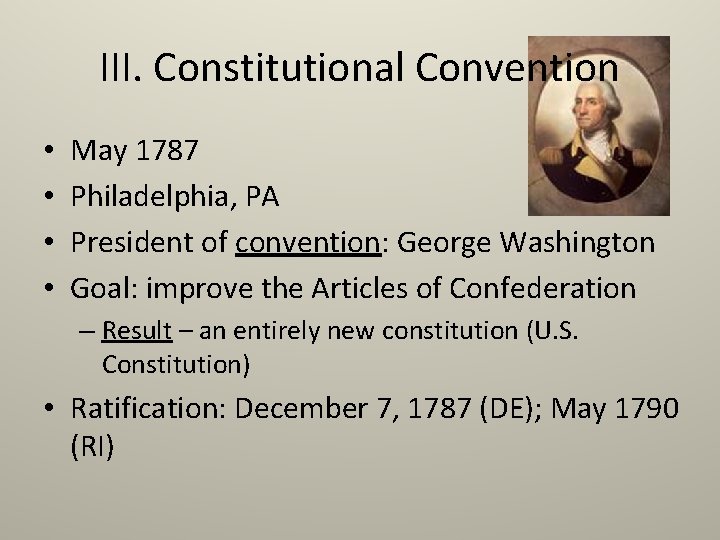
III. Constitutional Convention • • May 1787 Philadelphia, PA President of convention: George Washington Goal: improve the Articles of Confederation – Result – an entirely new constitution (U. S. Constitution) • Ratification: December 7, 1787 (DE); May 1790 (RI)
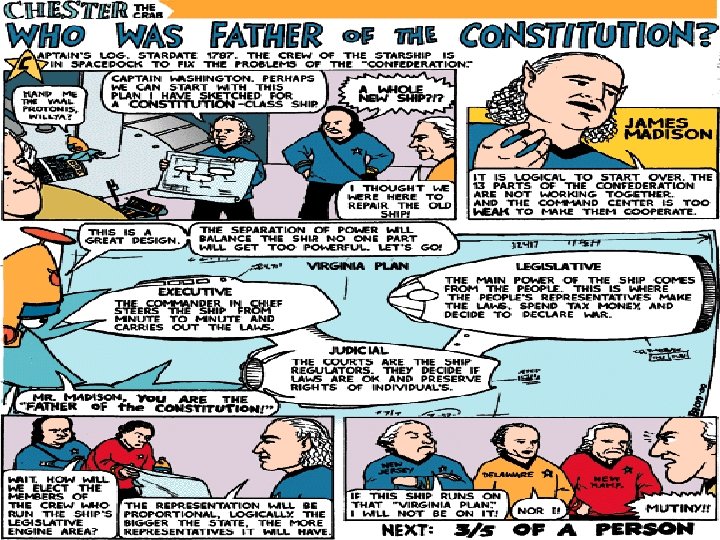
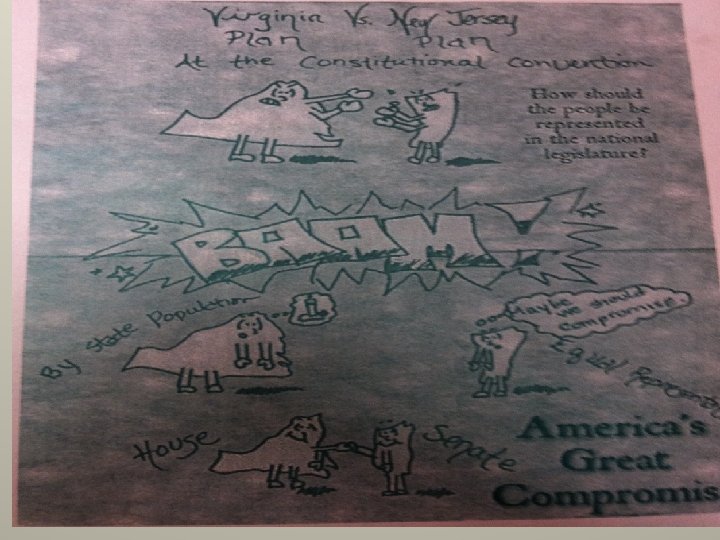
A. Virginia Plan (missteps along the way…) • VA – big or little state? • Edmund Randolph • Proposed an all-powerful central government Bi-cameral legislature (two houses) w/ representatives based on state population • Who would appear to have more power in a system like this? • Who is likely to disapprove this plan?
B. New Jersey Plan (missteps along the way…) • William Patterson • Unicameral legislature – one-house w/ an equal number of representatives from each state Federal government could tax citizens in all states Federal government could regulate interstate commerce • What size state do you think proposed this plan? Why?
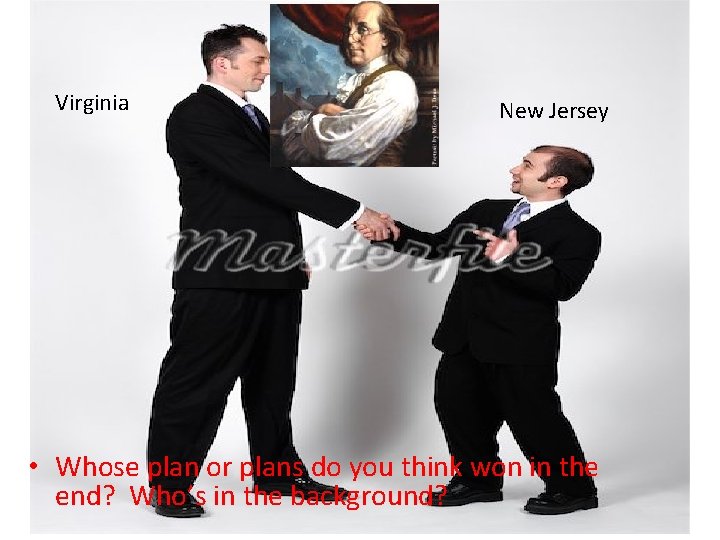
Virginia New Jersey • Whose plan or plans do you think won in the end? Who’s in the background?
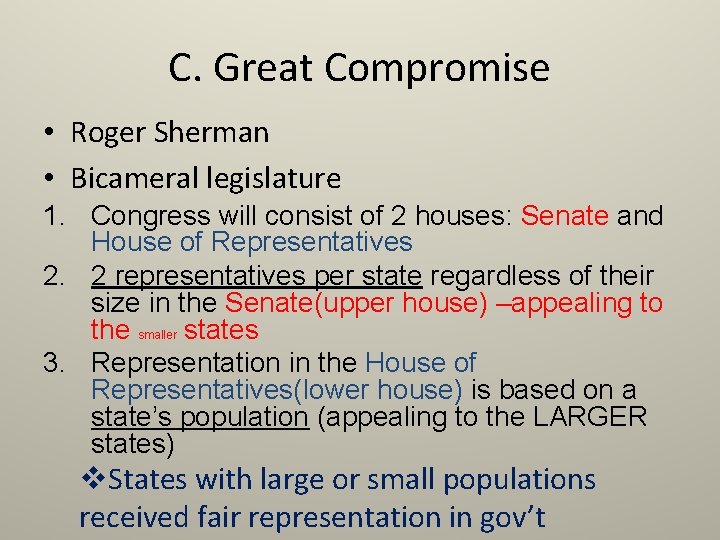
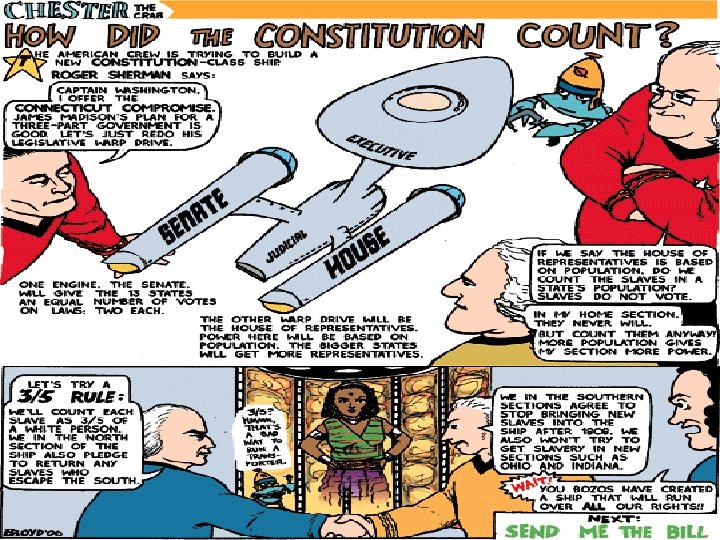
C. Great Compromise • Roger Sherman • Bicameral legislature 1. Congress will consist of 2 houses: Senate and House of Representatives 2. 2 representatives per state regardless of their size in the Senate(upper house) –appealing to the smaller states 3. Representation in the House of Representatives(lower house) is based on a state’s population (appealing to the LARGER states) v. States with large or small populations received fair representation in gov’t
D. The Slave Issue • • • How would slaves be counted in a state’s population? 3/5 Compromise: a slave was to count as 3/5’s a person or 5 slaves = 3 people Slave Trade---was allowed for another 20 years (1808) then it was to be outlawed; this could be taxed The nation’s new capitol was to be built in the South so the South would agree to the Constitution
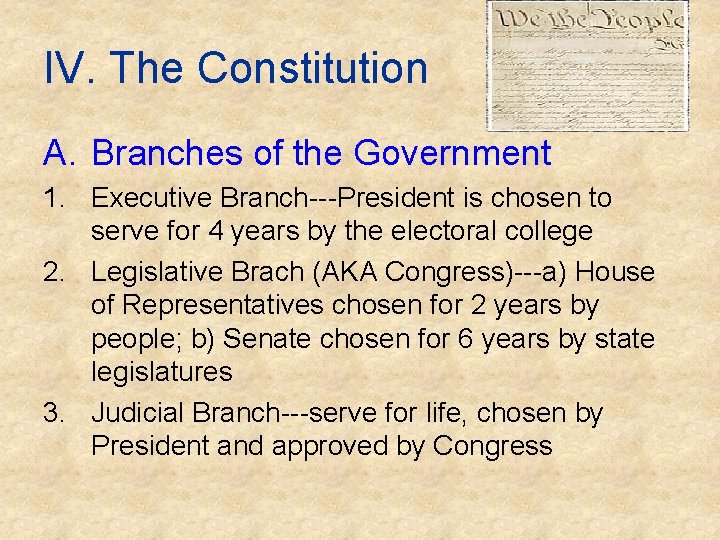
IV. The Constitution A. Branches of the Government 1. Executive Branch---President is chosen to serve for 4 years by the electoral college 2. Legislative Brach (AKA Congress)---a) House of Representatives chosen for 2 years by people; b) Senate chosen for 6 years by state legislatures 3. Judicial Branch---serve for life, chosen by President and approved by Congress
U. S. Government Constitutional Principle? Congress Constitutional Principle? No Age Required Includes VP and Cabinet
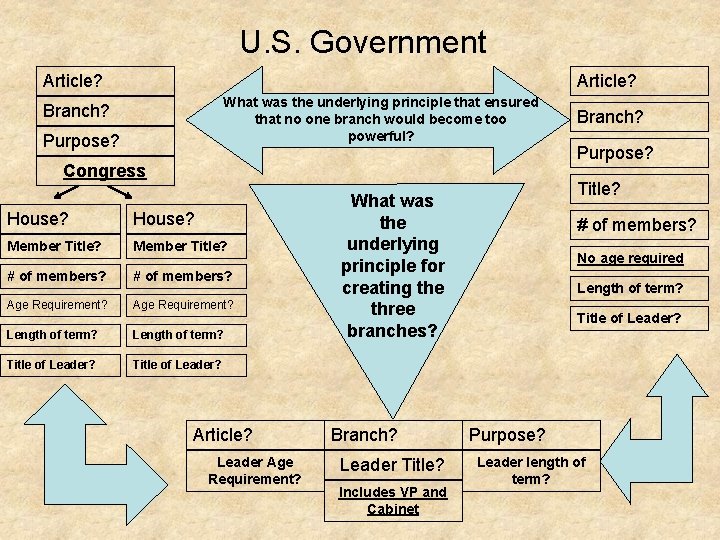
U. S. Government Article? What was the underlying principle that ensured that no one branch would become too powerful? Branch? Purpose? Congress House? Member Title? # of members? Age Requirement? Length of term? Title of Leader? Article? Leader Age Requirement? Leader Title? Includes VP and Cabinet Purpose? Title? What was the underlying principle for creating the three branches? Branch? # of members? No age required Length of term? Title of Leader? Purpose? Leader length of term?
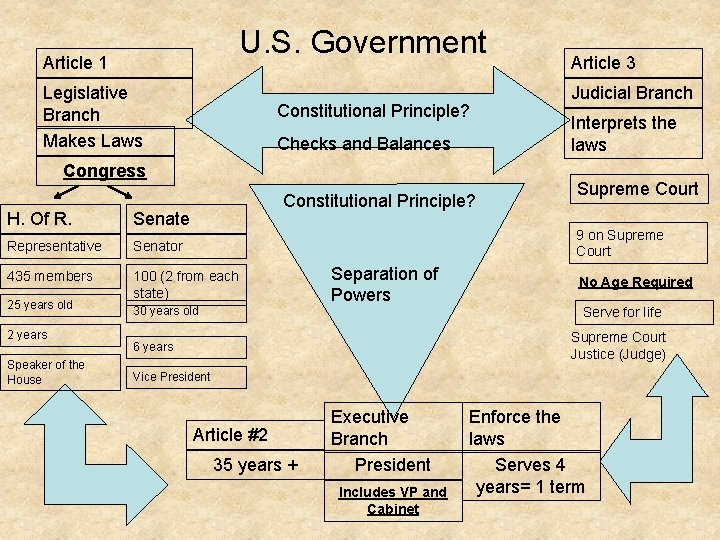
U. S. Government Article 1 Legislative Branch Makes Laws Constitutional Principle? Checks and Balances Congress Constitutional Principle? H. Of R. Senate Representative Senator 435 members 100 (2 from each state) 25 years old 2 years Speaker of the House Article 3 Judicial Branch Interprets the laws Supreme Court 9 on Supreme Court 30 years old Separation of Powers No Age Required Serve for life Supreme Court Justice (Judge) 6 years Vice President Article #2 35 years + Executive Branch President Includes VP and Cabinet Enforce the laws Serves 4 years= 1 term
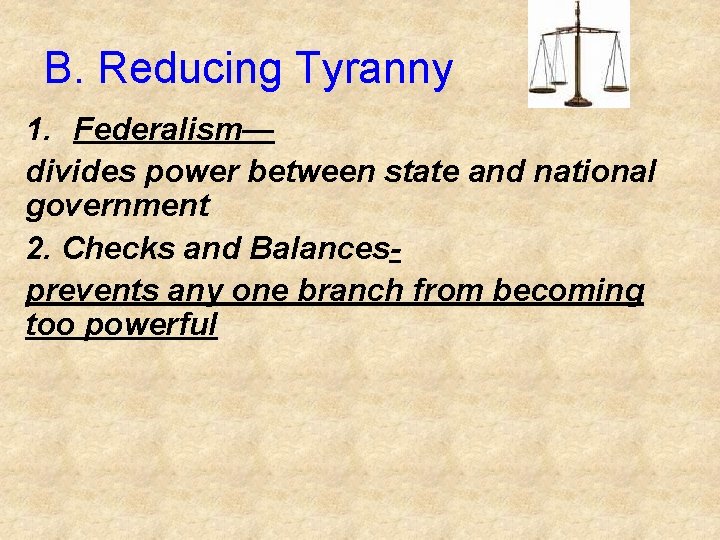
B. Reducing Tyranny 1. Federalism— divides power between state and national government 2. Checks and Balancesprevents any one branch from becoming too powerful
C. Ratification of the Constitution 1. States would hold conventions to ratify or reject the Constitution; 9 out of 13 needed for it to go into effect 2. The country is split: a) Anti-federalists were against the ratification b)Federalists wanted the Constitution ratified
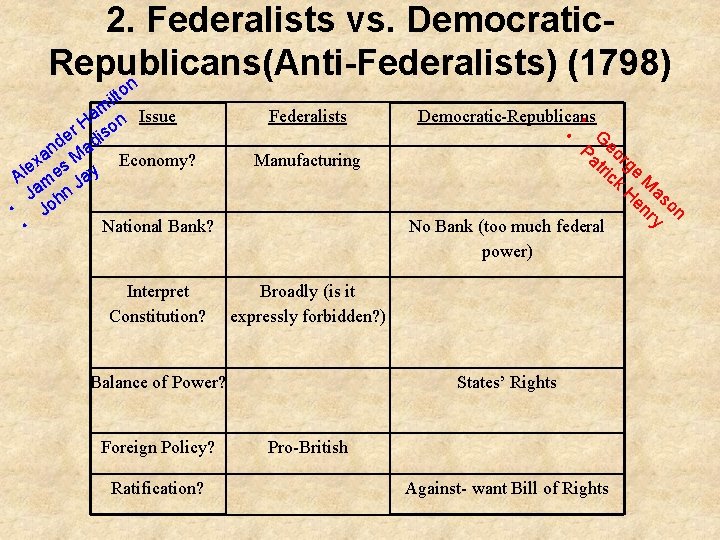
2. Federalists vs. Democratic. Republicans(Anti-Federalists) (1798) n ilto m Issue a H son r de adi n a M x s y Economy? e l e A m Ja • Ja hn • Jo • National Bank? Interpret Constitution? Federalists Manufacturing Broadly (is it expressly forbidden? ) Balance of Power? Foreign Policy? Ratification? Democratic-Republicans • • G Pa eor tri ge ck M H a en so ry n No Bank (too much federal power) States’ Rights Pro-British Against- want Bill of Rights
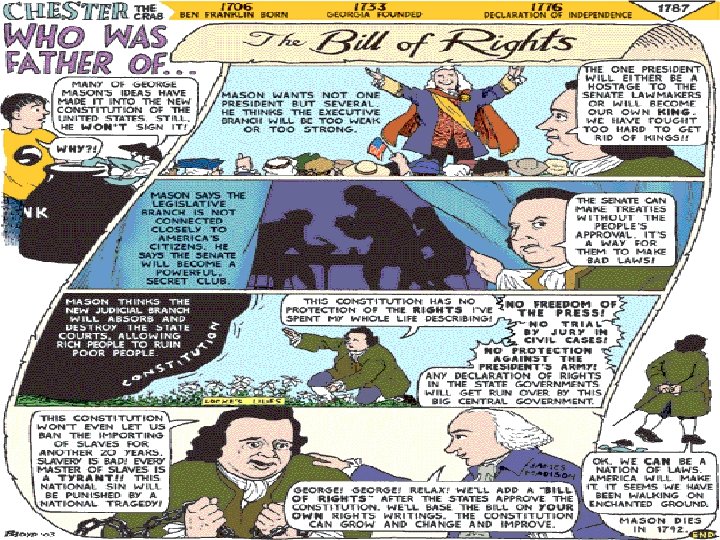
C. Ratification of the Constitution (Cont. ) 3. Federalist Papers: Alexander Hamilton, James Madison, and John Jay wrote newspaper articles (anonymously) to explain why constitution was needed 4. Anti-federalists oppose ratification because they fear it takes to much power from the states and there is No Bill of Rights
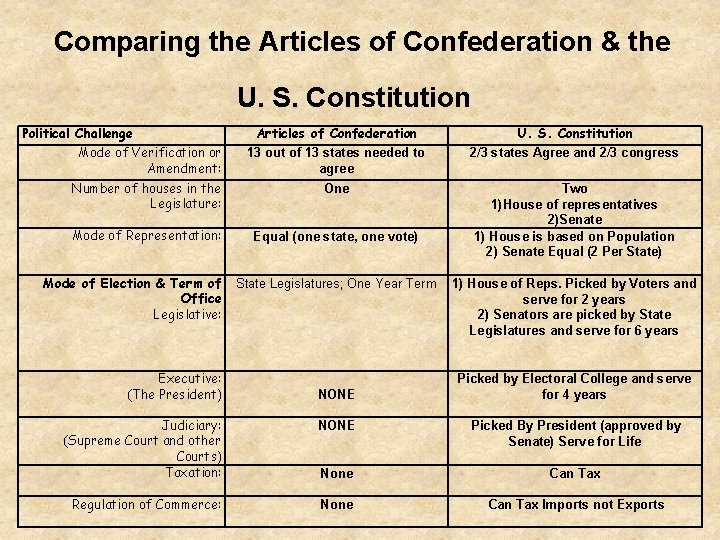
Comparing the Articles of Confederation & the U. S. Constitution Political Challenge Mode of Verification or Amendment: Articles of Confederation 13 out of 13 states needed to agree U. S. Constitution 2/3 states Agree and 2/3 congress Number of houses in the Legislature: One Mode of Representation: Equal (one state, one vote) Two 1)House of representatives 2)Senate 1) House is based on Population 2) Senate Equal (2 Per State) Mode of Election & Term of Office Legislative: Executive: (The President) Judiciary: (Supreme Court and other Courts) Taxation: Regulation of Commerce: State Legislatures; One Year Term 1) House of Reps. Picked by Voters and serve for 2 years 2) Senators are picked by State Legislatures and serve for 6 years NONE None Picked by Electoral College and serve for 4 years Picked By President (approved by Senate) Serve for Life Can Tax Imports not Exports
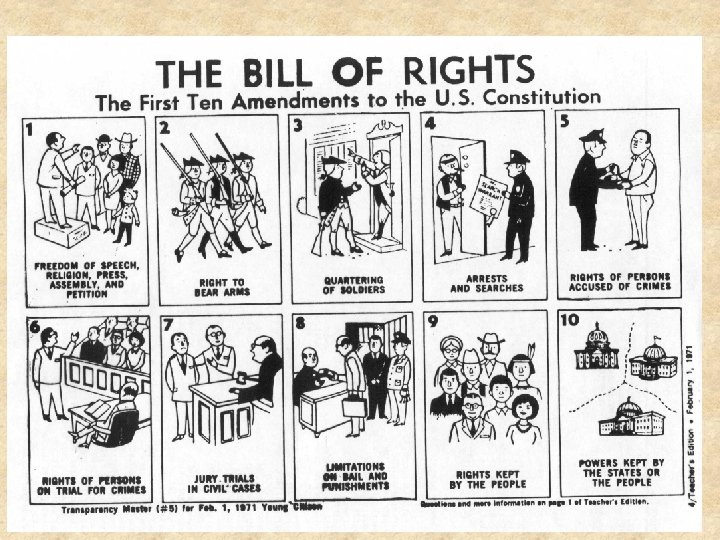
Bill of Rights
Amendments • Changes to the Constitution • Article V (of the U. S. Constitution) – Provided a way to change the document when necessary to reflect the will of the people – Amendments must be approved by 3/4 majority of both houses or ratified by 3/4 of state conventions
Bill of Rights • Delegates took ideas from past grievances (abuses by the King) • Created to protect citizens’ individual rights
Bill of Rights • Amendment I • Congress shall make no law respecting an establishment of religion, or prohibiting the free exercise thereof; or abridging the freedom of speech, or of the press; or the right of the people peaceably to assemble, and to petition the Government for a redress of grievances. Freedom of speech; right to protest/petition; disagree with the government; freedom to exercise religion
Bill of Rights • Amendment II • A well regulated Militia being necessary to the security of a free State, the right of the people to keep and bear Arms shall not be infringed. Right to bear arms (weapons) in a household
Bill of Rights • Amendment III • No Soldier shall, in time of peace be quartered in any house, without the consent of the Owner, nor in time of war, but in a manner to be prescribed by law. Citizens can not be forced to house soldiers
Bill of Rights • Amendment IV • The right of the people to be secure in their persons, houses, papers, and effects, against unreasonable searches and seizures, shall not be violated, and no Warrants shall issue, but upon probable cause, supported by Oath or affirmation, and particularly describing the place to be searched, and the persons or things to be seized. You nor your property can be searched or seized without a warrant issued by a court
Bill of Rights • Amendment V • No person shall be held to answer for a capital, or otherwise infamous crime, unless on a presentment or indictment of a Grand Jury, except in cases arising in the land or naval forces, or in the Militia, when in actual service in time of War or public danger; nor shall any person be subject for the same offence to be twice put in jeopardy of life or limb; nor shall be compelled in any criminal case to be a witness against himself, nor be deprived of life, liberty, or property, without due process of law; nor shall private property be taken for public use, without just compensation. Protects the rights of the accused Plead the fifth – do not have to be a witness against yourself Double jeopardy - can not be tried for the same crime twice
Bill of Rights • Amendment VI • In all criminal prosecutions, the accused shall enjoy the right to a speedy and public trial, by an impartial jury of the State and district wherein the crime shall have been committed, which district shall have been previously ascertained by law, and to be informed of the nature and cause of the accusation; to be confronted with the witnesses against him; to have compulsory process for obtaining witnesses in his favor, and to have the Assistance of Counsel for his defense. The accused has the right to a fair and speedy trial by a jury of his peers (impartial)
Bill of Rights • Amendment VII • In suits at common law, where the value in controversy shall exceed twenty dollars, the right of trial by jury shall be preserved, and no fact tried by a jury, shall be otherwise reexamined in any Court of the United States, than according to the rules of the common law. Common law – rules established by judges in past cases (precedent) If a lawsuit is being sought after for more than $20, there is the right to a jury trial
Bill of Rights • Amendment VIII • Excessive bail shall not be required, nor excessive fines imposed, nor cruel and unusual punishments inflicted. Bail – money the accused leaves with the court as a pledge to appear for trial. Excessive – too high Forbids courts to set bail unreasonably high
Bill of Rights • Amendment IX • The enumeration in the Constitution, of certain rights, shall not be construed to deny or disparage others retained by the people. People have rights not listed in the Constitution. This Bill of Rights does not limit the rights of people to just those listed.
Bill of Rights • Amendment X • The powers not delegated to the United States by the Constitution, nor prohibited by it to the States, are reserved to the States respectively, or to the people. Limits the power of the federal government Powers not specifically given to the federal government belong to the states (powers given to the state governments are not listed in the Constitution)