
Creating Texts 20 Text transformation and a free
- Slides: 11
Creating Texts (20%) Text transformation and a ‘free’ written, oral or multimodal text
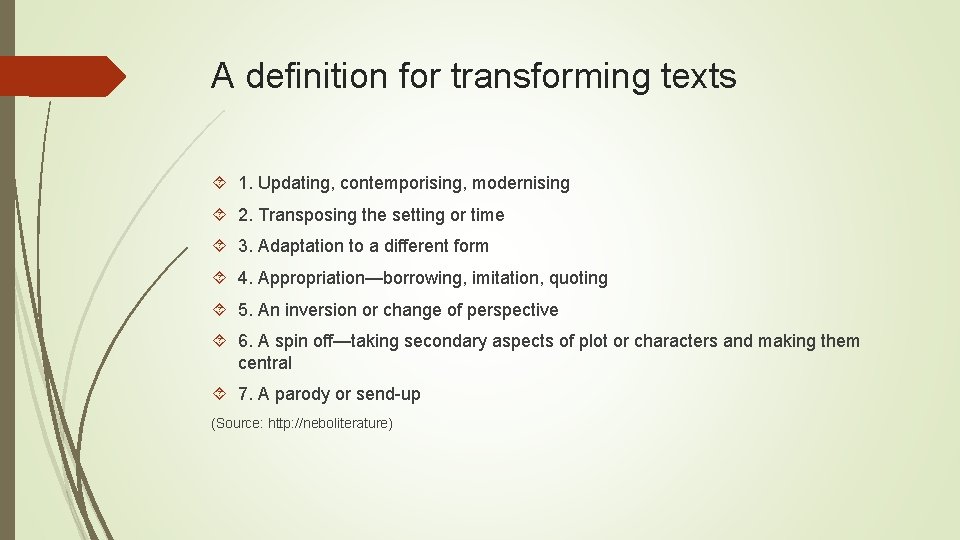
A definition for transforming texts 1. Updating, contemporising, modernising 2. Transposing the setting or time 3. Adaptation to a different form 4. Appropriation—borrowing, imitation, quoting 5. An inversion or change of perspective 6. A spin off—taking secondary aspects of plot or characters and making them central 7. A parody or send-up (Source: http: //neboliterature)
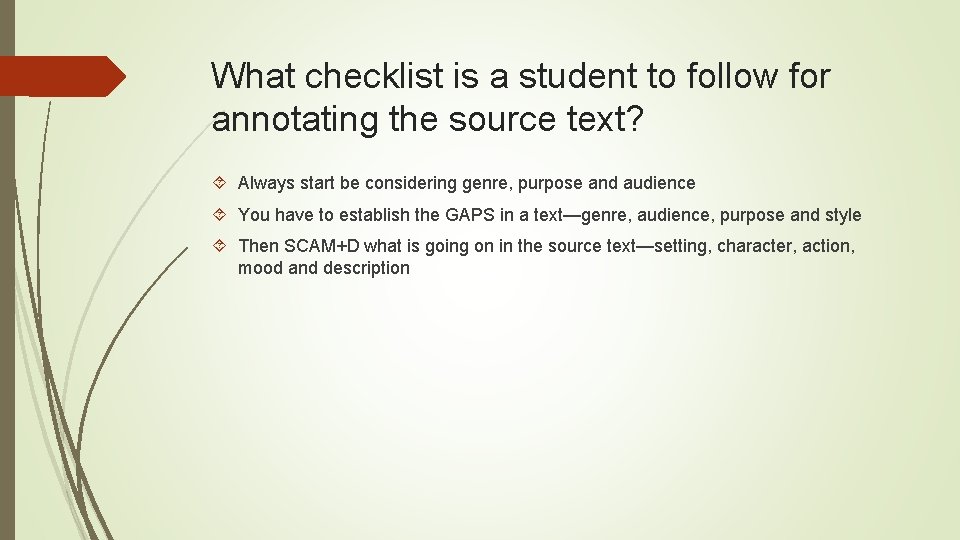
What checklist is a student to follow for annotating the source text? Always start be considering genre, purpose and audience You have to establish the GAPS in a text—genre, audience, purpose and style Then SCAM+D what is going on in the source text—setting, character, action, mood and description
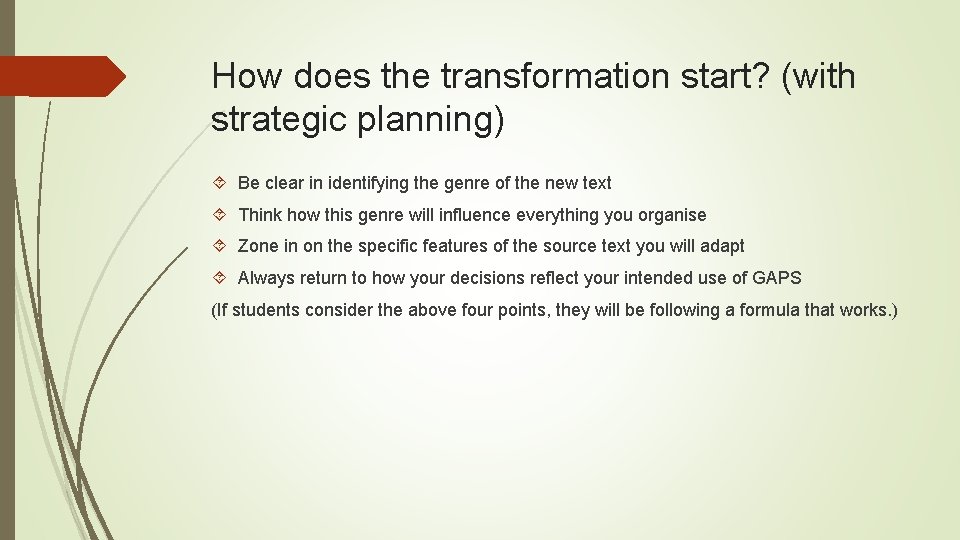
How does the transformation start? (with strategic planning) Be clear in identifying the genre of the new text Think how this genre will influence everything you organise Zone in on the specific features of the source text you will adapt Always return to how your decisions reflect your intended use of GAPS (If students consider the above four points, they will be following a formula that works. )
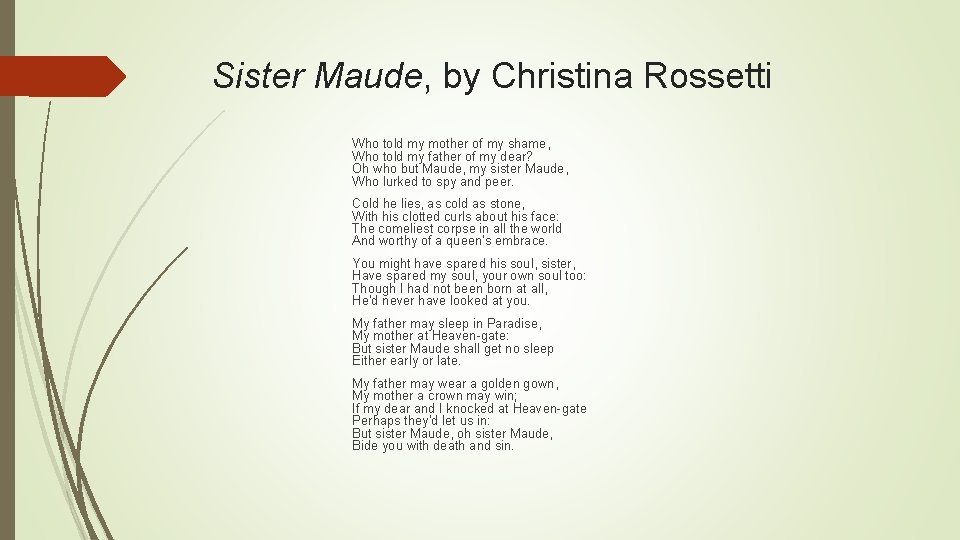
Sister Maude, by Christina Rossetti Who told my mother of my shame, Who told my father of my dear? Oh who but Maude, my sister Maude, Who lurked to spy and peer. Cold he lies, as cold as stone, With his clotted curls about his face: The comeliest corpse in all the world And worthy of a queen's embrace. You might have spared his soul, sister, Have spared my soul, your own soul too: Though I had not been born at all, He'd never have looked at you. My father may sleep in Paradise, My mother at Heaven-gate: But sister Maude shall get no sleep Either early or late. My father may wear a golden gown, My mother a crown may win; If my dear and I knocked at Heaven-gate Perhaps they'd let us in: But sister Maude, oh sister Maude, Bide you with death and sin.
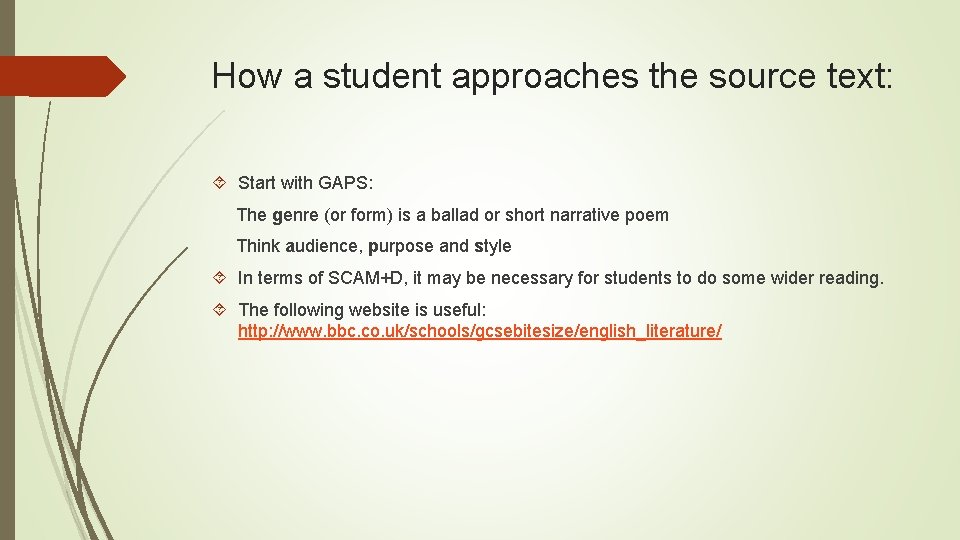
How a student approaches the source text: Start with GAPS: The genre (or form) is a ballad or short narrative poem Think audience, purpose and style In terms of SCAM+D, it may be necessary for students to do some wider reading. The following website is useful: http: //www. bbc. co. uk/schools/gcsebitesize/english_literature/
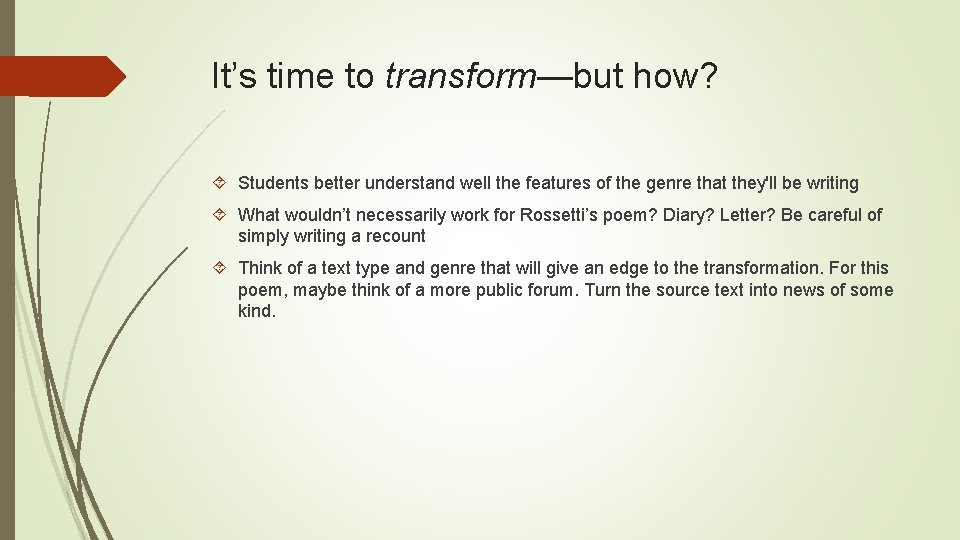
It’s time to transform—but how? Students better understand well the features of the genre that they'll be writing What wouldn’t necessarily work for Rossetti’s poem? Diary? Letter? Be careful of simply writing a recount Think of a text type and genre that will give an edge to the transformation. For this poem, maybe think of a more public forum. Turn the source text into news of some kind.
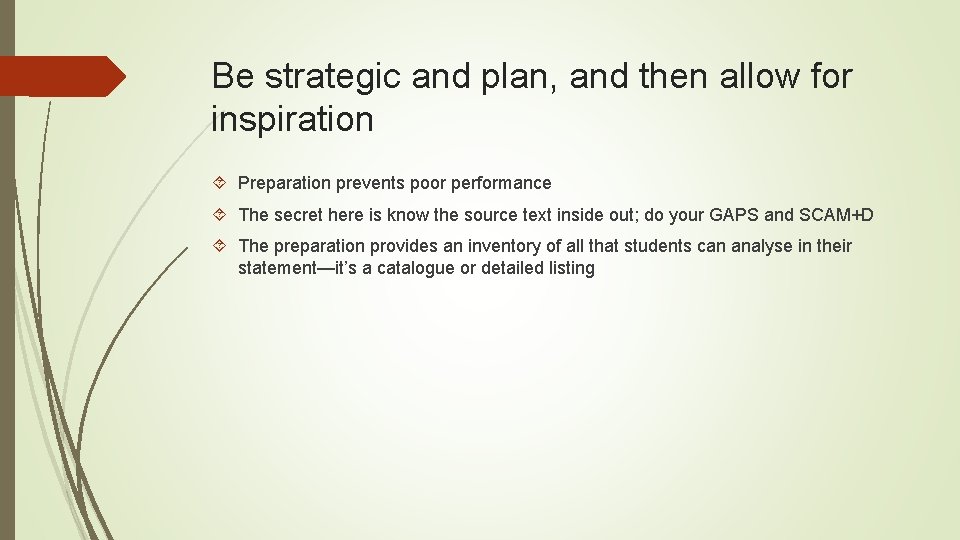
Be strategic and plan, and then allow for inspiration Preparation prevents poor performance The secret here is know the source text inside out; do your GAPS and SCAM+D The preparation provides an inventory of all that students can analyse in their statement—it’s a catalogue or detailed listing
What practical strategies work for you in analysing a source text? Two-minute care and share
Get students SACEd up to write Print off SACE Board exemplars Annotate and discuss—develop possible approaches from the examples See how much students know by getting them lead the discussion. Are they using an approach like GAPS and SCAM+D?
Don’t forget the second task! Think about variety (wide range of forms, conventions, stylistic features) See if the students can create something that they find energising of interesting in a creative way Think of the form and register you’ll use for the purpose and audience. This may be a good assessment to make sure students still produce an oral text.