
Creating Terminology Server for FHIR using OMOP CDM
- Slides: 13
Creating Terminology Server for FHIR using OMOP CDM OMOP on FHIR Project By CHAI @ Georgia Tech 1
What is Terminology Server? a piece of software providing a range of terminology-related software services through an applications programming interface to its client applications. - Wikipedia (https: //en. wikipedia. org/wiki/Terminology_server) 2
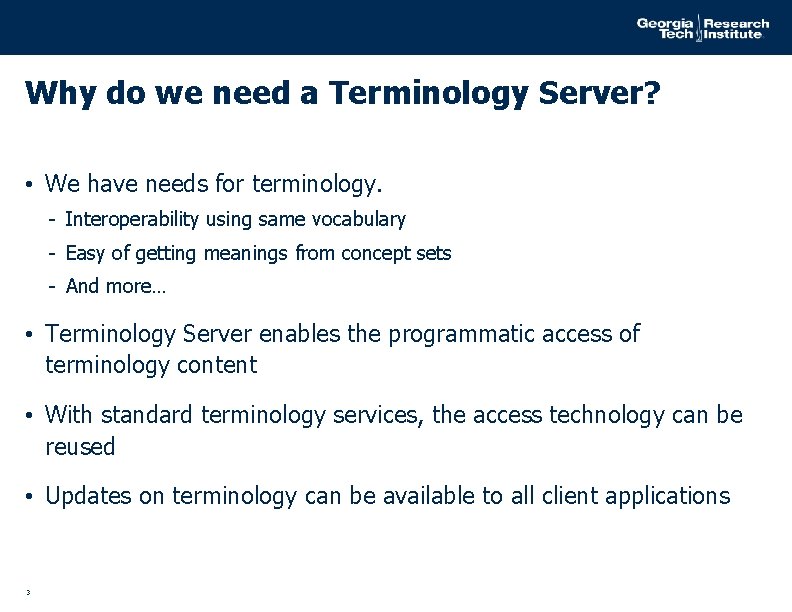
Why do we need a Terminology Server? • We have needs for terminology. - Interoperability using same vocabulary - Easy of getting meanings from concept sets - And more… • Terminology Server enables the programmatic access of terminology content • With standard terminology services, the access technology can be reused • Updates on terminology can be available to all client applications 3
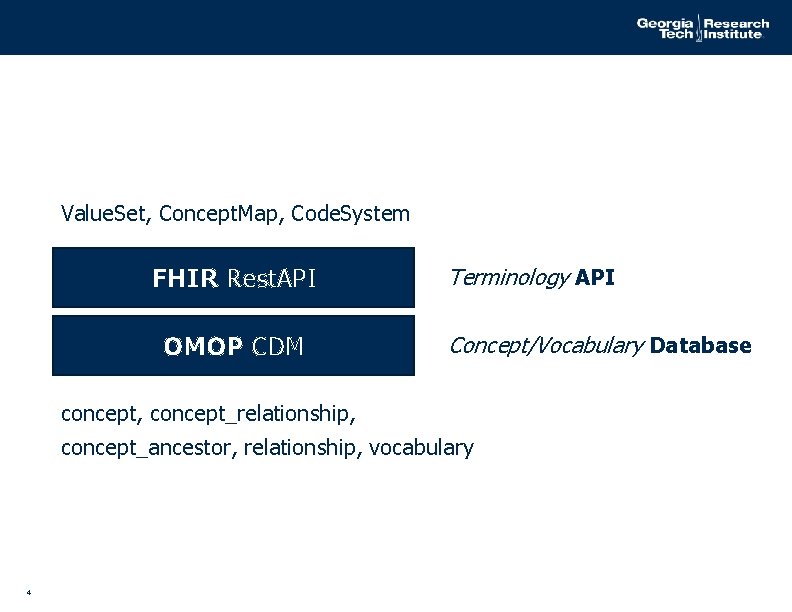
Value. Set, Concept. Map, Code. System FHIR Rest. API OMOP CDM Terminology API Concept/Vocabulary Database concept, concept_relationship, concept_ancestor, relationship, vocabulary 4
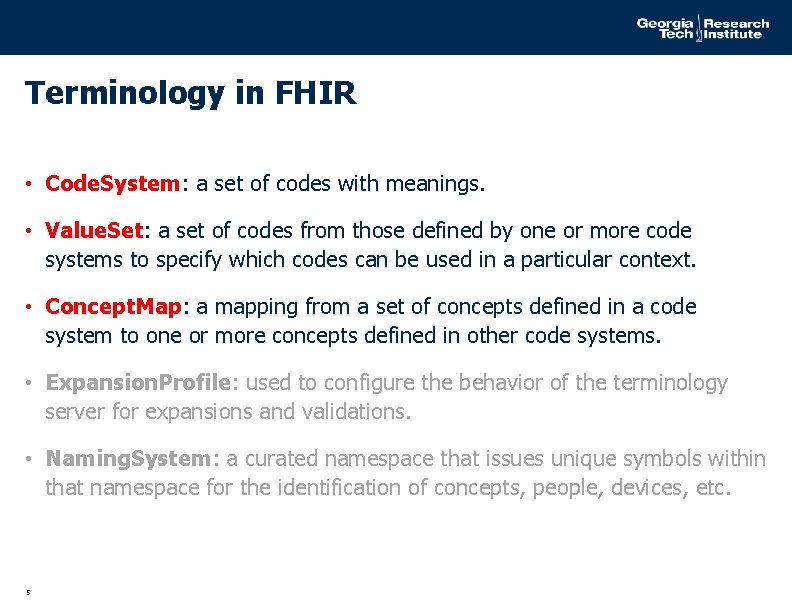
Terminology in FHIR • Code. System: a set of codes with meanings. • Value. Set: a set of codes from those defined by one or more code systems to specify which codes can be used in a particular context. • Concept. Map: a mapping from a set of concepts defined in a code system to one or more concepts defined in other code systems. • Expansion. Profile: used to configure the behavior of the terminology server for expansions and validations. • Naming. System: a curated namespace that issues unique symbols within that namespace for the identification of concepts, people, devices, etc. 5
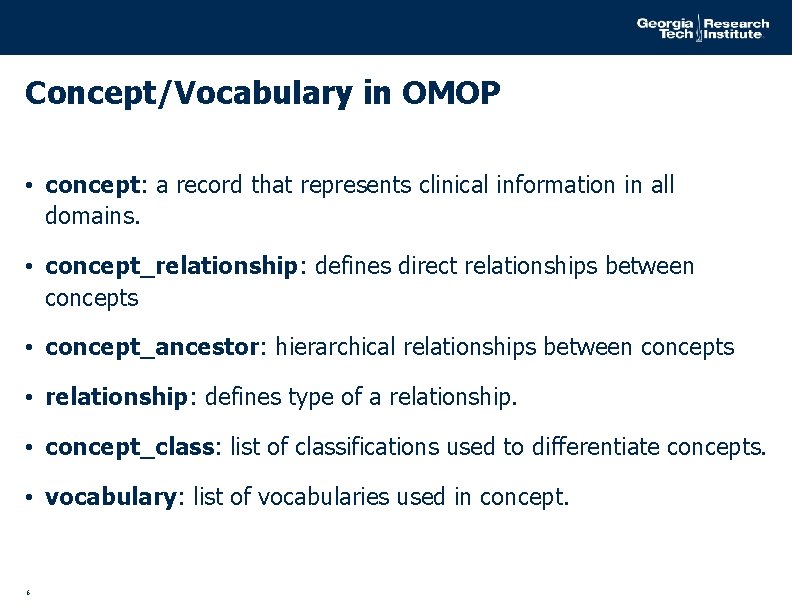
Concept/Vocabulary in OMOP • concept: a record that represents clinical information in all domains. • concept_relationship: defines direct relationships between concepts • concept_ancestor: hierarchical relationships between concepts • relationship: defines type of a relationship. • concept_class: list of classifications used to differentiate concepts. • vocabulary: list of vocabularies used in concept. 6
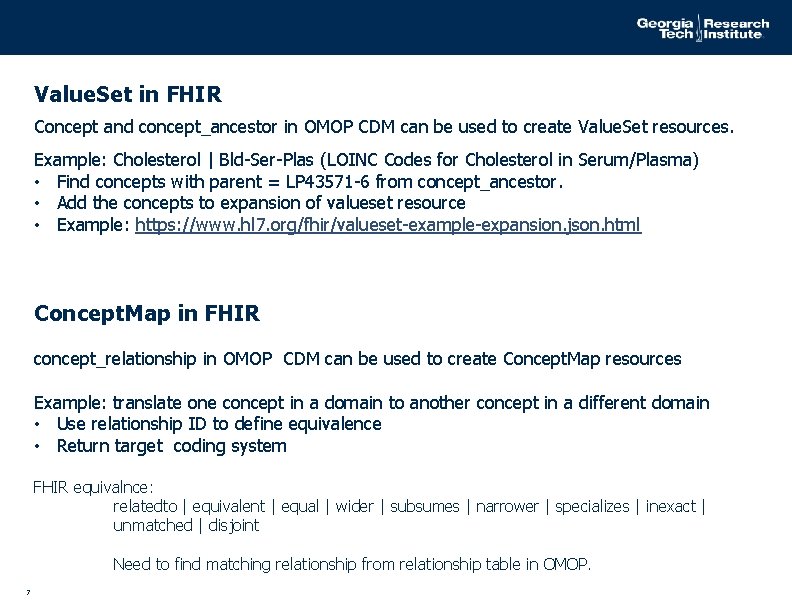
Value. Set in FHIR Concept and concept_ancestor in OMOP CDM can be used to create Value. Set resources. Example: Cholesterol | Bld-Ser-Plas (LOINC Codes for Cholesterol in Serum/Plasma) • Find concepts with parent = LP 43571 -6 from concept_ancestor. • Add the concepts to expansion of valueset resource • Example: https: //www. hl 7. org/fhir/valueset-example-expansion. json. html Concept. Map in FHIR concept_relationship in OMOP CDM can be used to create Concept. Map resources Example: translate one concept in a domain to another concept in a different domain • Use relationship ID to define equivalence • Return target coding system FHIR equivalnce: relatedto | equivalent | equal | wider | subsumes | narrower | specializes | inexact | unmatched | disjoint Need to find matching relationship from relationship table in OMOP. 7
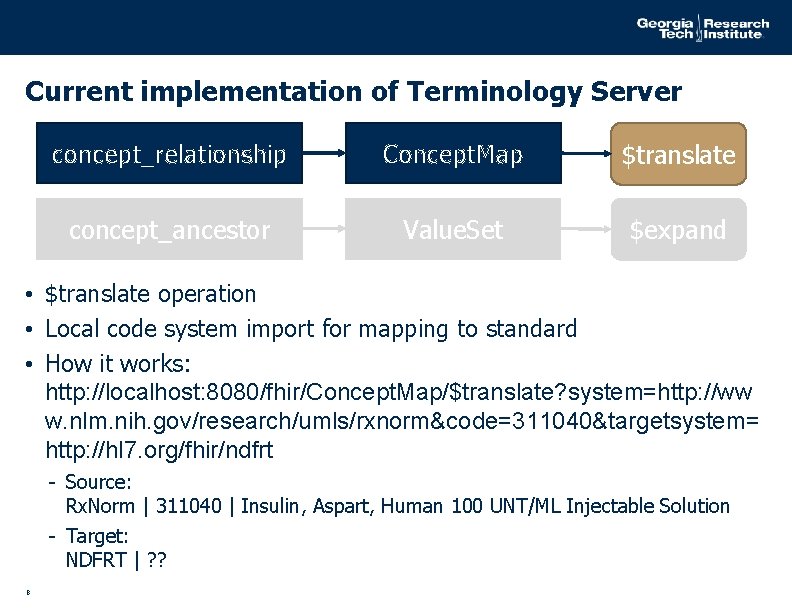
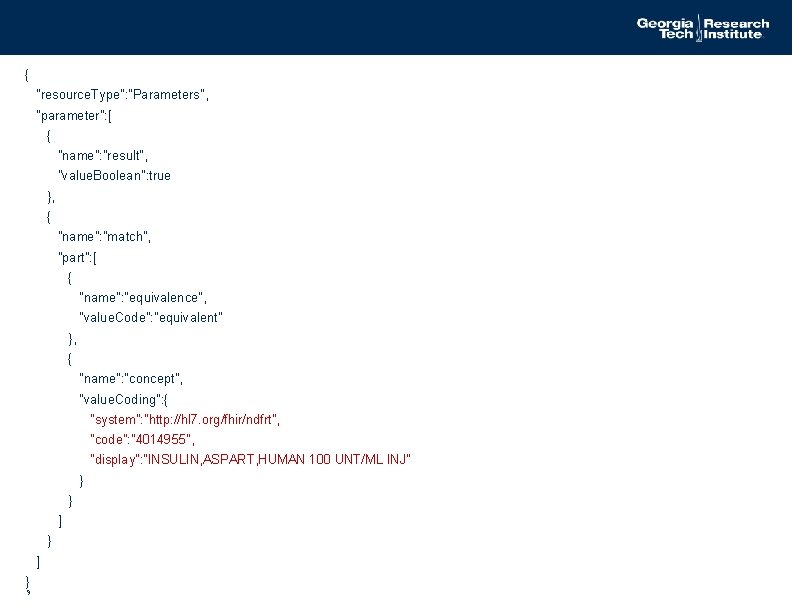
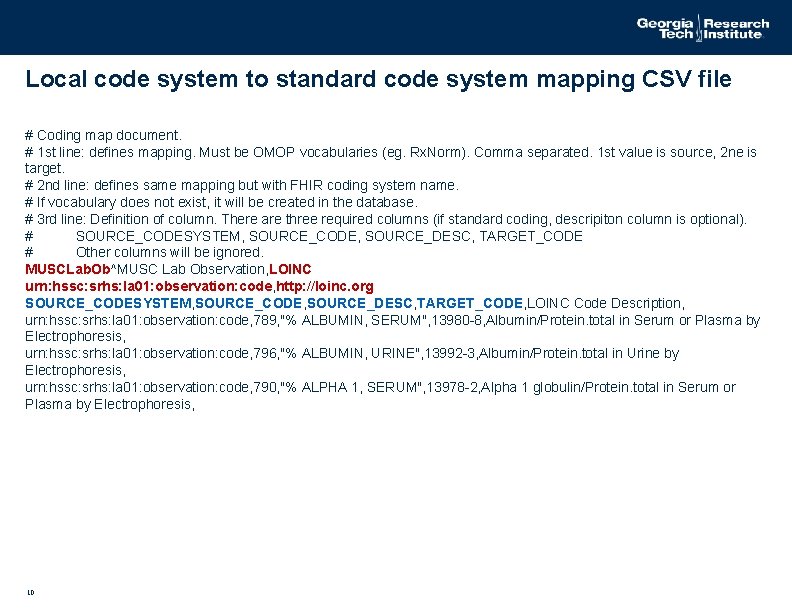
Current implementation of Terminology Server concept_relationship Concept. Map $translate concept_ancestor Value. Set $expand • $translate operation • Local code system import for mapping to standard • How it works: http: //localhost: 8080/fhir/Concept. Map/$translate? system=http: //ww w. nlm. nih. gov/research/umls/rxnorm&code=311040&targetsystem= http: //hl 7. org/fhir/ndfrt - Source: Rx. Norm | 311040 | Insulin, Aspart, Human 100 UNT/ML Injectable Solution - Target: NDFRT | ? ? 8
{ "resource. Type": "Parameters", "parameter": [ { "name": "result", "value. Boolean": true }, { "name": "match", "part": [ { "name": "equivalence", "value. Code": "equivalent" }, { "name": "concept", "value. Coding": { "system": "http: //hl 7. org/fhir/ndfrt", "code": "4014955", "display": "INSULIN, ASPART, HUMAN 100 UNT/ML INJ" } ] } ] } 9
Local code system to standard code system mapping CSV file # Coding map document. # 1 st line: defines mapping. Must be OMOP vocabularies (eg. Rx. Norm). Comma separated. 1 st value is source, 2 ne is target. # 2 nd line: defines same mapping but with FHIR coding system name. # If vocabulary does not exist, it will be created in the database. # 3 rd line: Definition of column. There are three required columns (if standard coding, descripiton column is optional). # SOURCE_CODESYSTEM, SOURCE_CODE, SOURCE_DESC, TARGET_CODE # Other columns will be ignored. MUSCLab. Ob^MUSC Lab Observation, LOINC urn: hssc: srhs: la 01: observation: code, http: //loinc. org SOURCE_CODESYSTEM, SOURCE_CODE, SOURCE_DESC, TARGET_CODE, LOINC Code Description, urn: hssc: srhs: la 01: observation: code, 789, "% ALBUMIN, SERUM", 13980 -8, Albumin/Protein. total in Serum or Plasma by Electrophoresis, urn: hssc: srhs: la 01: observation: code, 796, "% ALBUMIN, URINE", 13992 -3, Albumin/Protein. total in Urine by Electrophoresis, urn: hssc: srhs: la 01: observation: code, 790, "% ALPHA 1, SERUM", 13978 -2, Alpha 1 globulin/Protein. total in Serum or Plasma by Electrophoresis, 10
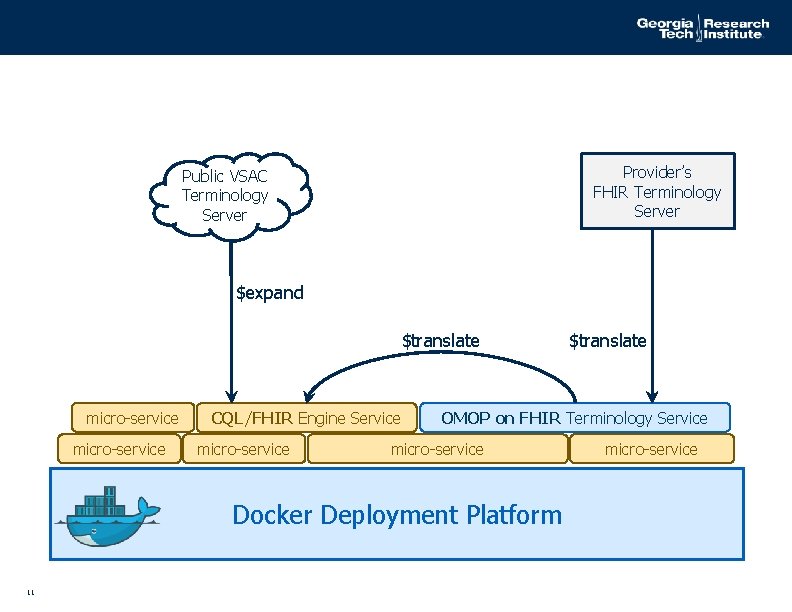
Provider’s FHIR Terminology Server Public VSAC Terminology Server $expand $translate micro-service CQL/FHIR Engine Service micro-service OMOP on FHIR Terminology Service micro-service Docker Deployment Platform 11 $translate micro-service
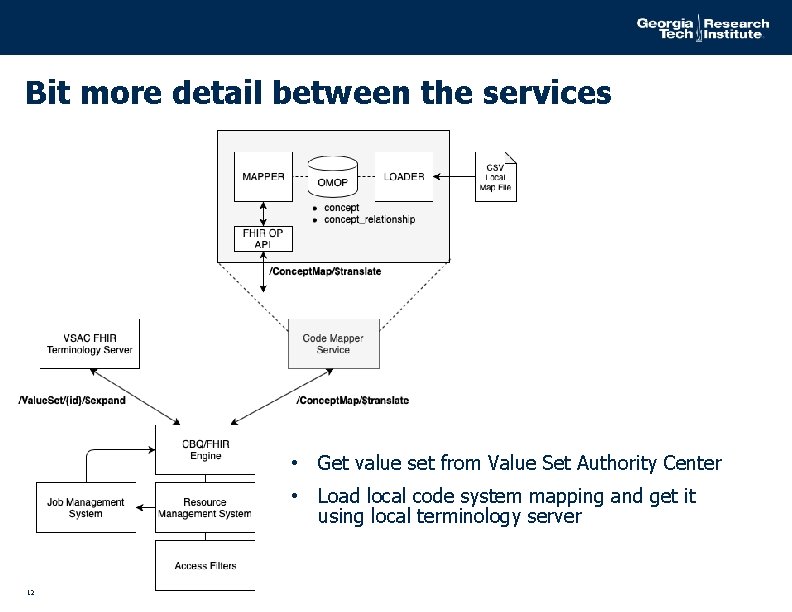
Bit more detail between the services • Get value set from Value Set Authority Center • Load local code system mapping and get it using local terminology server 12
Questions ? ? http: //omoponfhir. org/ for more about OMOP on FHIR 13