
Creating Powerful Presentations Avoiding the Pitfalls of Bad
Creating Powerful Presentations Avoiding the Pitfalls of Bad Presentations
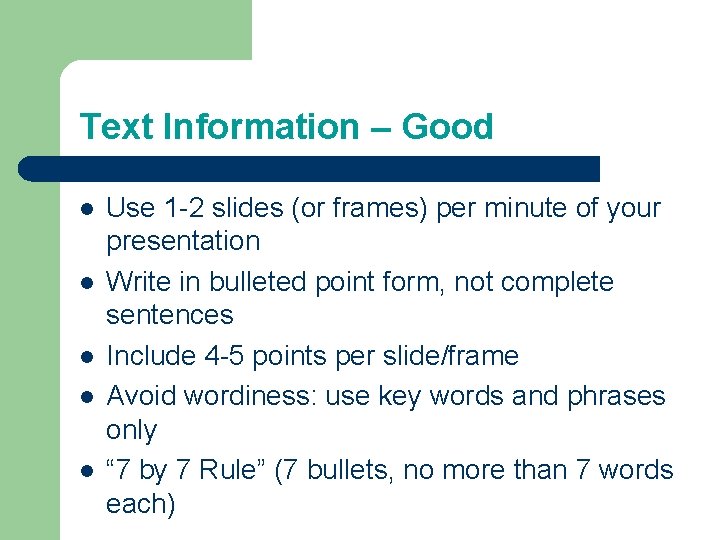
Text Information – Good l l l Use 1 -2 slides (or frames) per minute of your presentation Write in bulleted point form, not complete sentences Include 4 -5 points per slide/frame Avoid wordiness: use key words and phrases only “ 7 by 7 Rule” (7 bullets, no more than 7 words each)
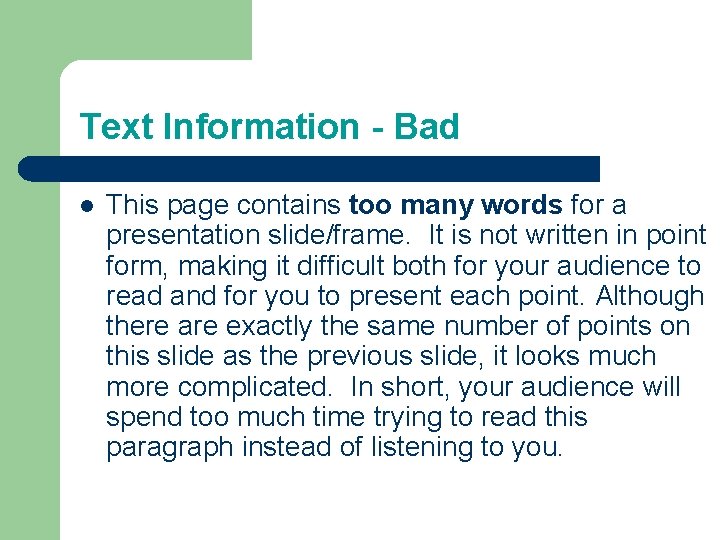
Text Information - Bad l This page contains too many words for a presentation slide/frame. It is not written in point form, making it difficult both for your audience to read and for you to present each point. Although there are exactly the same number of points on this slide as the previous slide, it looks much more complicated. In short, your audience will spend too much time trying to read this paragraph instead of listening to you.
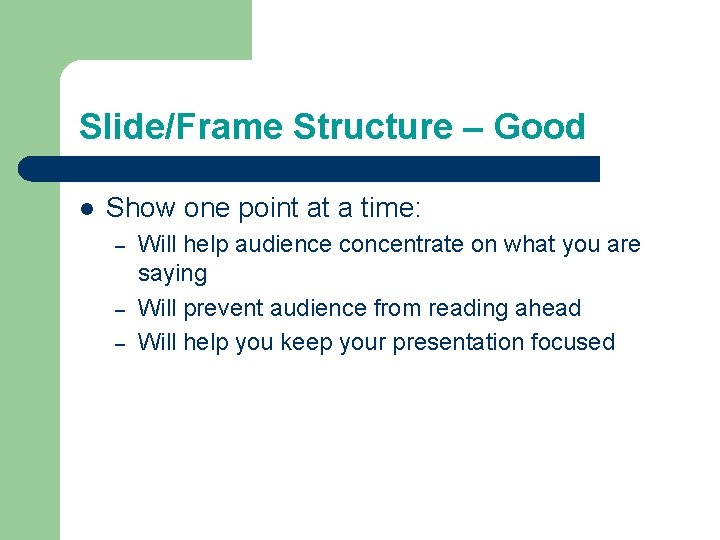
Slide/Frame Structure – Good l Show one point at a time: – – – Will help audience concentrate on what you are saying Will prevent audience from reading ahead Will help you keep your presentation focused
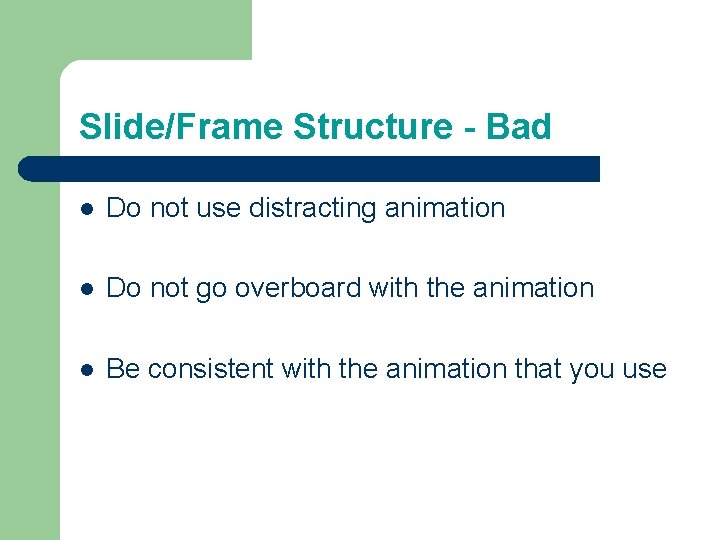
Slide/Frame Structure - Bad l Do not use distracting animation l Do not go overboard with the animation l Be consistent with the animation that you use
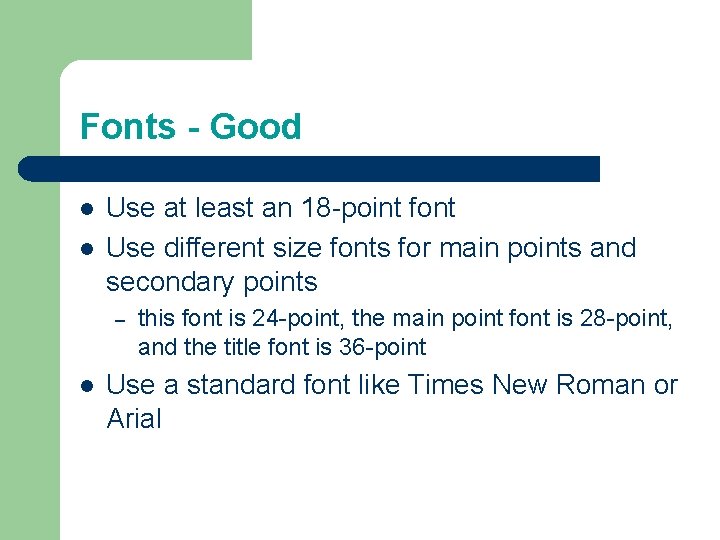
Fonts - Good l l Use at least an 18 -point font Use different size fonts for main points and secondary points – l this font is 24 -point, the main point font is 28 -point, and the title font is 36 -point Use a standard font like Times New Roman or Arial
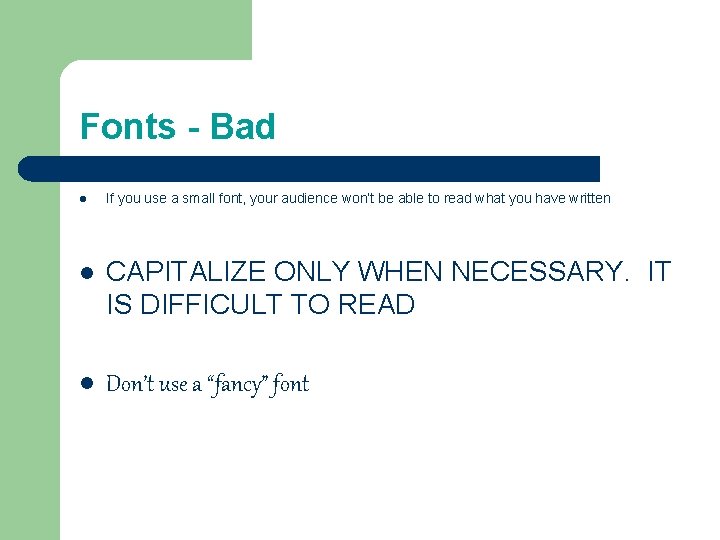
Fonts - Bad l If you use a small font, your audience won’t be able to read what you have written l CAPITALIZE ONLY WHEN NECESSARY. IT IS DIFFICULT TO READ l Don’t use a “fancy” font
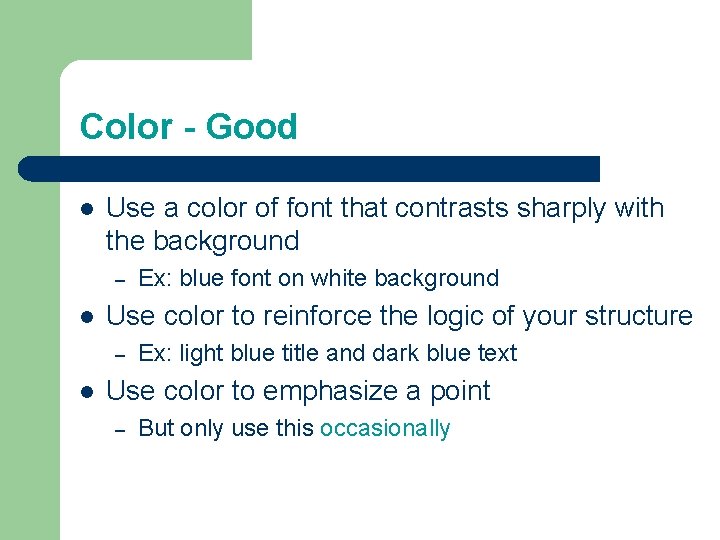
Color - Good l Use a color of font that contrasts sharply with the background – l Use color to reinforce the logic of your structure – l Ex: blue font on white background Ex: light blue title and dark blue text Use color to emphasize a point – But only use this occasionally
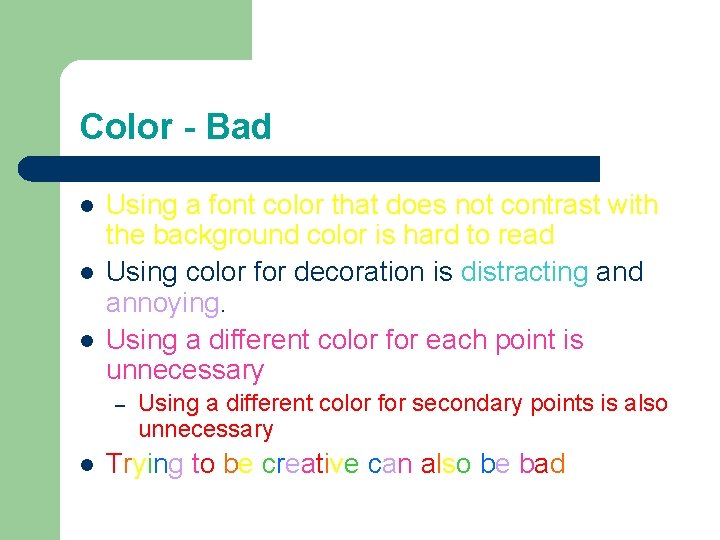
Color - Bad l l l Using a font color that does not contrast with the background color is hard to read Using color for decoration is distracting and annoying. Using a different color for each point is unnecessary – l Using a different color for secondary points is also unnecessary Trying to be creative can also be bad
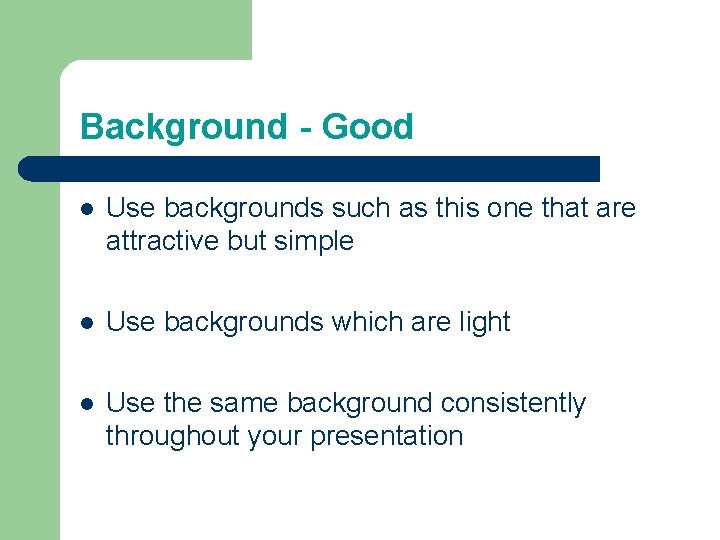
Background - Good l Use backgrounds such as this one that are attractive but simple l Use backgrounds which are light l Use the same background consistently throughout your presentation
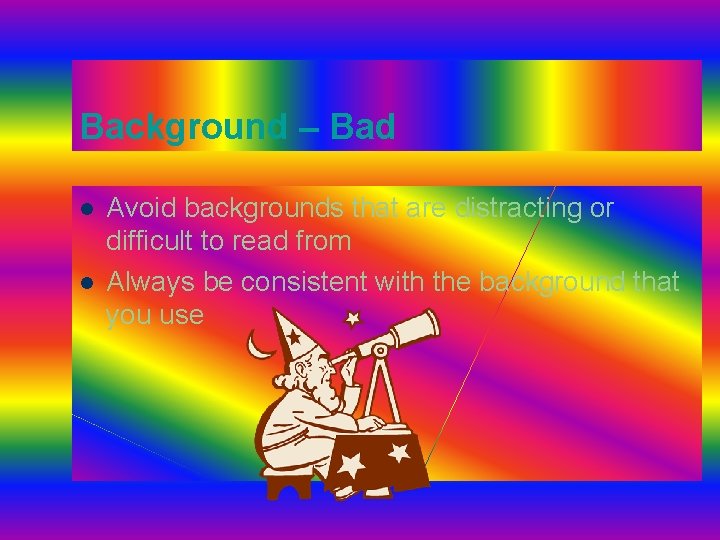
Background – Bad l l Avoid backgrounds that are distracting or difficult to read from Always be consistent with the background that you use
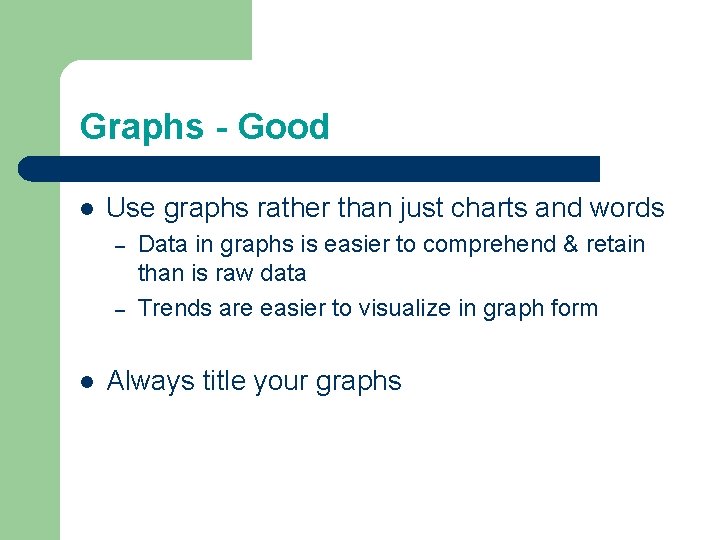
Graphs - Good l Use graphs rather than just charts and words – – l Data in graphs is easier to comprehend & retain than is raw data Trends are easier to visualize in graph form Always title your graphs
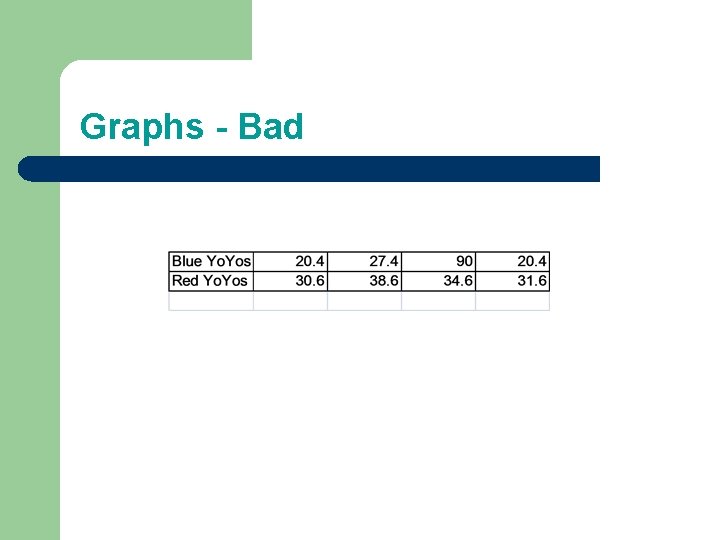
Graphs - Bad
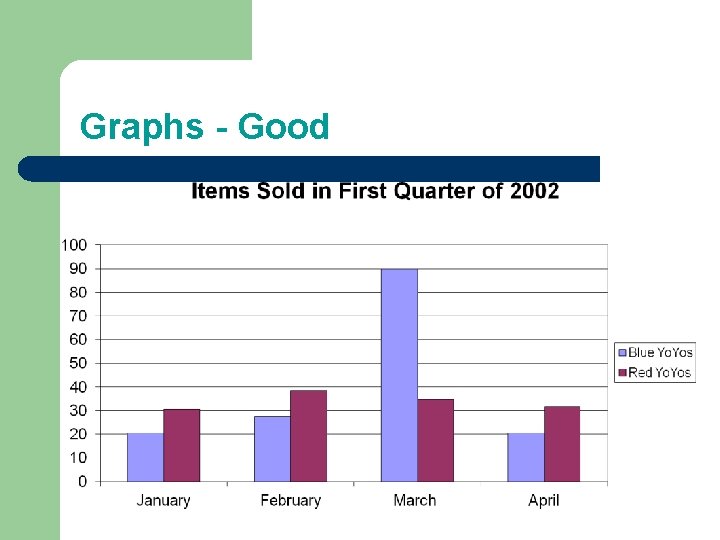
Graphs - Good
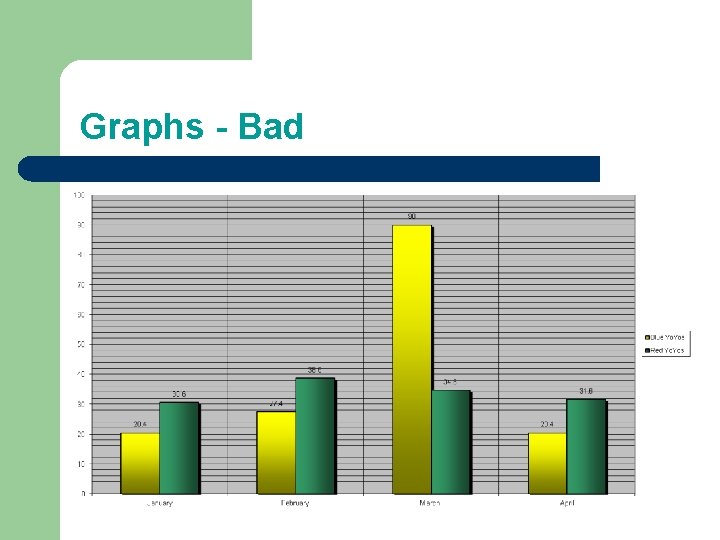
Graphs - Bad
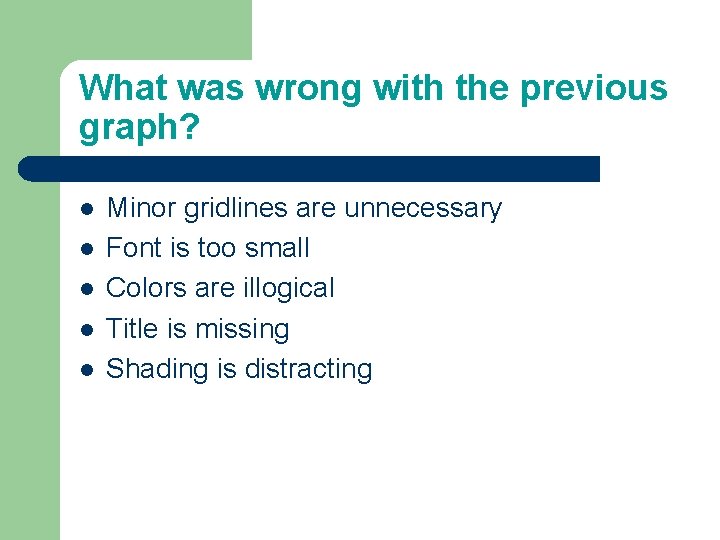
What was wrong with the previous graph? l l l Minor gridlines are unnecessary Font is too small Colors are illogical Title is missing Shading is distracting
Spelling and Grammar l Proof your slides for: – – – speling mistakes the use of of repeated words grammatical errors you might have make Did you catch all of the mistakes?
Conclusion l Use an effective and strong closing – l Your audience is likely to remember your last words Use a conclusion slide to: – – Summarize the main points of your presentation Suggest future avenues of research
Questions? l If appropriate, end your presentation with a simple question slide to: – – – Invite your audience to ask questions Provide a visual aid during question period Avoid ending a presentation abruptly
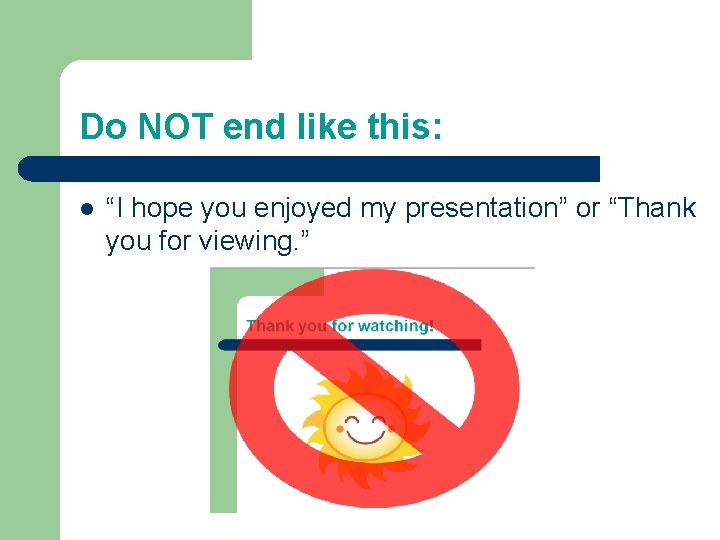
Do NOT end like this: l “I hope you enjoyed my presentation” or “Thank you for viewing. ”
- Slides: 20