
Creating Pathways for Student Success through a Student

- Slides: 22
Creating Pathways for Student Success through a Student Affairs Curriculum Dr. Theresa Gallo, Associate Dean of Students, Lynn University Dr. Anita Vorreyer, Assistant Dean of Students, Lynn University Jaclyn Kuwik, Associate Director of Student Involvement, Lynn University
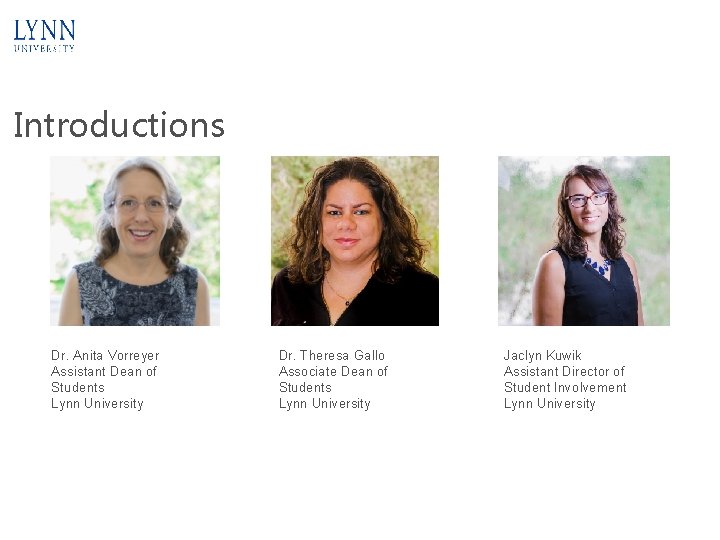
Introductions Dr. Anita Vorreyer Assistant Dean of Students Lynn University Dr. Theresa Gallo Associate Dean of Students Lynn University Jaclyn Kuwik Assistant Director of Student Involvement Lynn University
Learning Outcomes • Participants will be able to identify specific concepts from student development theories (especially from the Social Change Model of Leadership and Baxter Magolda’s theory of self-authorship) used in their programs and services. • Participants will be able to apply concepts from student development (especially from the Social Change Model of Leadership and Baxter Magolda’s theory of selfauthorship) to their programs and services. • Participants will be able to examine how the concepts of the Lynn SA curriculum could be applied at their campus. • Participants will leave with the overarching matrix of the Learning Objectives in the SA Curriculum developed by and used by Lynn University.
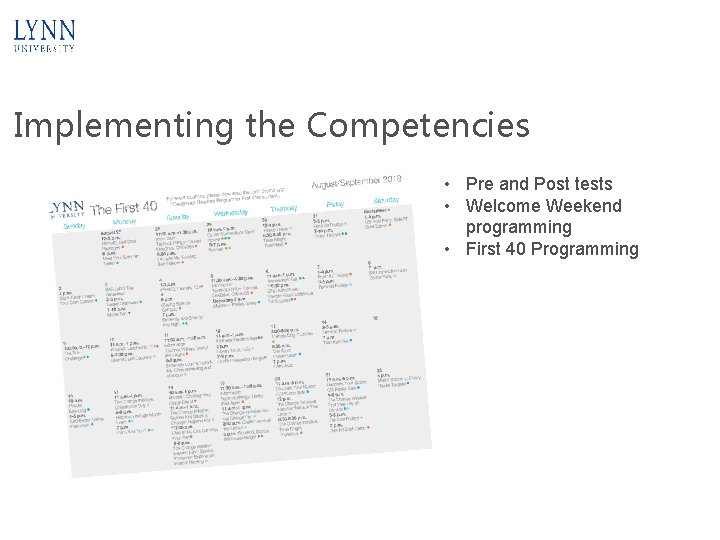
Implementing the Competencies • Pre and Post tests • Welcome Weekend programming • First 40 Programming
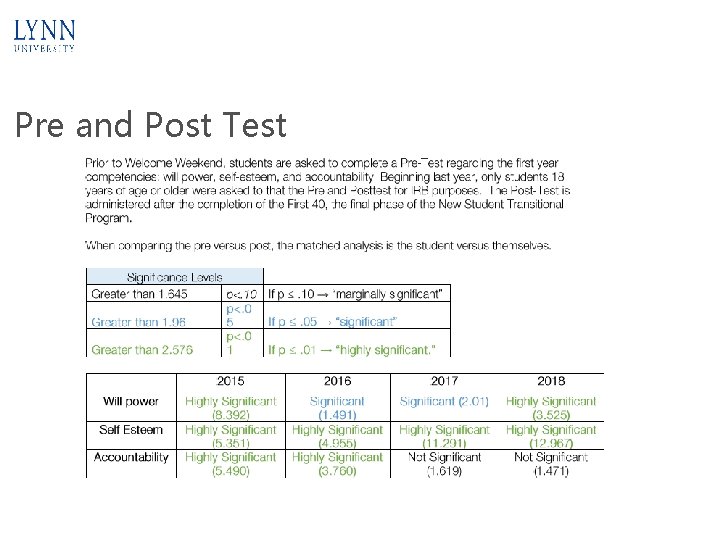
Pre and Post Test
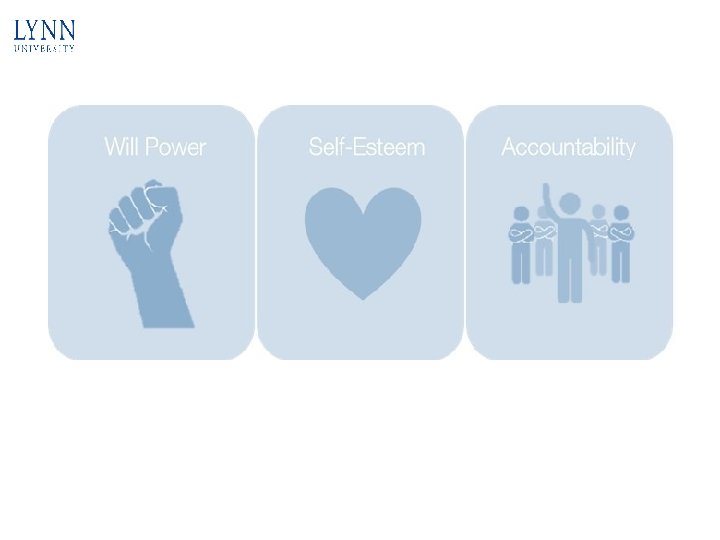
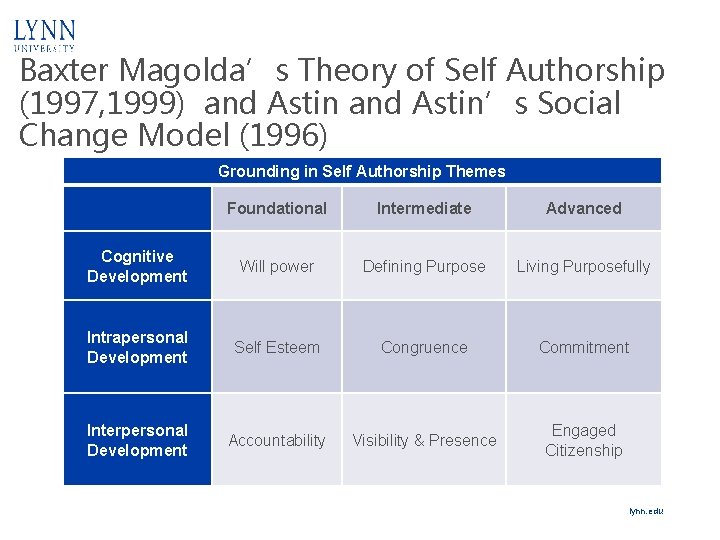
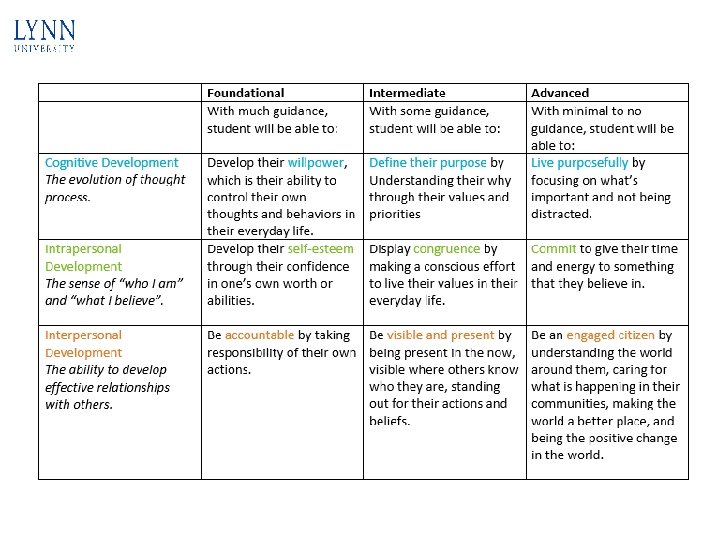
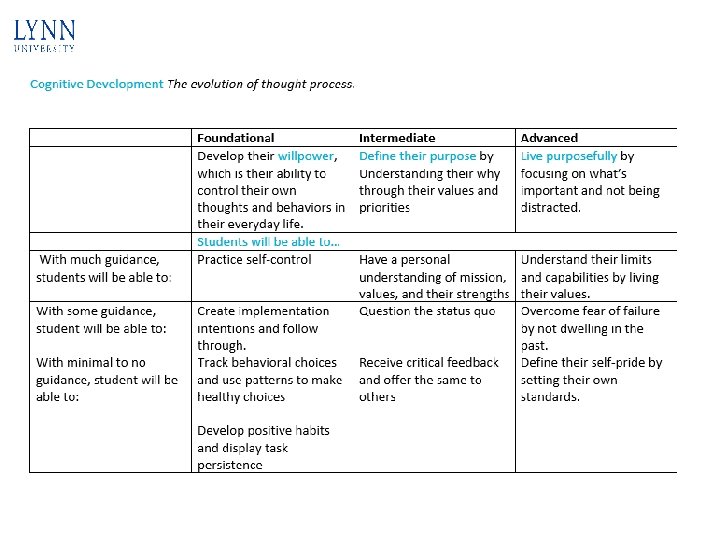
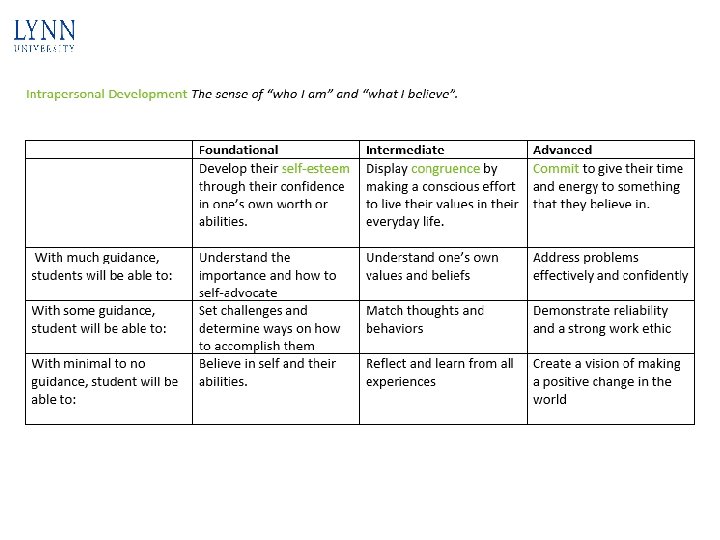
Baxter Magolda’s Theory of Self Authorship (1997, 1999) and Astin’s Social Change Model (1996) Grounding in Self Authorship Themes Foundational Intermediate Advanced Cognitive Development Will power Defining Purpose Living Purposefully Intrapersonal Development Self Esteem Congruence Commitment Interpersonal Development Accountability Visibility & Presence Engaged Citizenship lynn. edu
Self-Authorship • “The capacity to internally define a coherent belief system and identity that coordinates engagement in mutual relations with a larger world” (Baxter Magolda & King, 2004, p. xxii). • The ability to know yourself, know what you know, reflect upon it, and base judgments on it.
Baxter Magolda found that her participants, while in their 20’s, were concerned with resolving three questions: • Intellectual: How do I know? • Intrapersonal: Who am I? • Interpersonal: How do I want to construct relationships with others?
Baxter Magolda identified three elements of Self-Authorship: • • • Trusting the internal voice Building an internal foundation Securing internal commitments
Individuals move through four phases of Self. Authorship: 1. 2. 3. 4. Following formulas Crossroads Becoming the author of one’s life Internal foundations 1/6/2022 lynn. edu 11
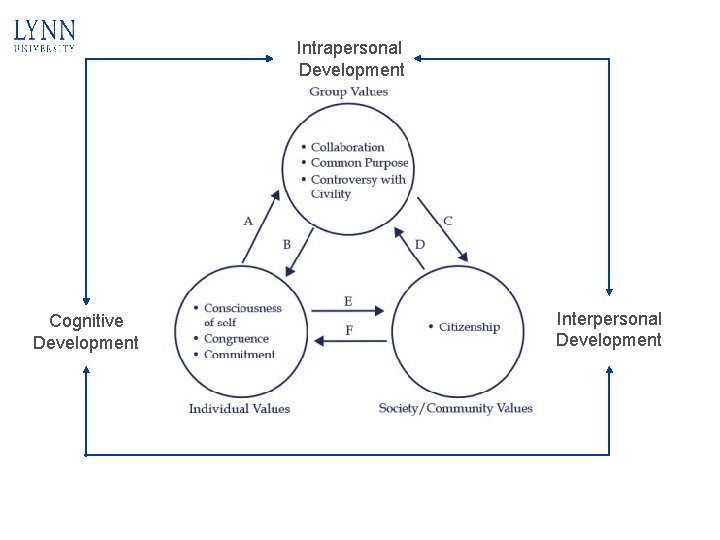
Social Change Model (Astin and Astin) • Individual Values • Developing consciousness of the self, • Developing congruency throughout all of their actions, and then • Committing to those values. • Group values • Collaborate with others to find a common purpose. • Gain self-esteem (developing confidence) • Build their purpose within the campus and local community. • Society/Community Values (Active Citizenship) • Students must first understand demonstrate accountability to be active citizens. 1/6/2022 lynn. edu 12
Intrapersonal Development Cognitive Development Interpersonal Development
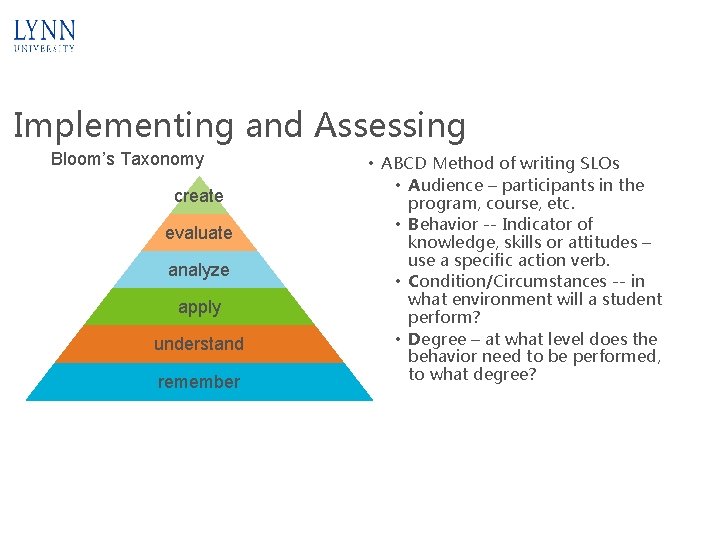
Implementing and Assessing Bloom’s Taxonomy create evaluate analyze apply understand remember • ABCD Method of writing SLOs • Audience – participants in the program, course, etc. • Behavior -- Indicator of knowledge, skills or attitudes – use a specific action verb. • Condition/Circumstances -- in what environment will a student perform? • Degree – at what level does the behavior need to be performed, to what degree?
Examples of SLOs • Health Center Goal: Nursing staff will have intentional conversations with students during their clinic visit concerning the health issue they sought treatment for at the Health Center. Those intentional conversations will include information on the diagnosis, treatment/medication plan, and healthy behaviors related to the specific health concern. These conversations contribute to students further developing skills related to self-advocacy (self-esteem), effective communication and accepting constructive feedback (accountability). • Objectives: • The Health Center will create talking points for the most common health concerns which students present at the Health Center (e. g. upper respiratory, GI, gyn/men’s health, cuts/wounds/rashes). • The Health Center will create a brief survey for each common health concern which students present at the Health Center (one for each of the talking point protocols). • The Health Center will engage in intentional conversation with a student who present health concerns at the center. The conversation will be specific to the presenting illness. • The Health Center will give students who are seen in the center a brief survey specific to the illness presented (and matched to the specific intentional conversation) as a part of their exit process.
Examples of SLOs • Student Learning Outcomes: • Student Learning Outcome: At least 75% of the students treated in the Health Center who complete the exit survey will report that the intentional conversation with the nurse has increased the likelihood they will make better decisions related to health/healthy behaviors. • Student Learning Outcome: At least 75% of the students treated in the Health Center who complete the exit survey, will report that as a result of engaging in the intentional conversation, they understand the diagnosis. • Student Learning Outcome: At least 75% of the students treated in the health Center who complete the exit survey will report that they understand the treatment plan.
Housing and Residence Life example • Department Goal #1: Provide ongoing training for residence life student staff regarding the student affairs curriculum throughout the academic year 18 -19. • Objectives: • Community Advisors and Resident Assistants can identify the three overarching Student Affairs competencies. • All Community Advisor and Resident Assistants training sessions will have student learning outcomes designed around the student affairs curriculum. • Student Learning Outcomes: • After residence life student staff training in August, the Community Advisors and Resident Assistants will be able to list the three foundational core competencies. • Student employees will be able to articulate and define three foundational competencies areas for the Student Affairs curriculum.
Questions? Contact info: Jaclyn Kuwik Assistant Director of Student Involvement Lynn University jkuwik@lynn. edu Dr. Theresa Gallo Associate Dean of Students Lynn University Dr. Anita Vorreyer Assistant Dean of Students Lynn University @Dr. Theresa. Gallo tgallo@lynn. edu avorreyer@lynn. edu