
Creating internetdelivered health behaviour change interventions using the
Creating internet-delivered health behaviour change interventions using the Life. Guide Lucy Yardley, Adrian Osmond & Leanne Morrison www. lifeguideonline. org
Overview of workshop (1. 00 -3. 30) • Introduction to internet-delivered health-care interventions (LY) • Introduction to Life. Guide interventions (LY) • Using Life. Guide: technical aspects (AO) • Using Life. Guide: a new user’s perspective (LM) • Using Life. Guide: live demo (AO) • The future for Life. Guide and internet interventions (LY) 2
Introduction to internet-delivered health-care interventions
Q: What are behavioural interventions? A: Packages of advice and support for behaviour change • follow a fitness programme • cut down alcohol consumption • cope with illness • follow a treatment regime
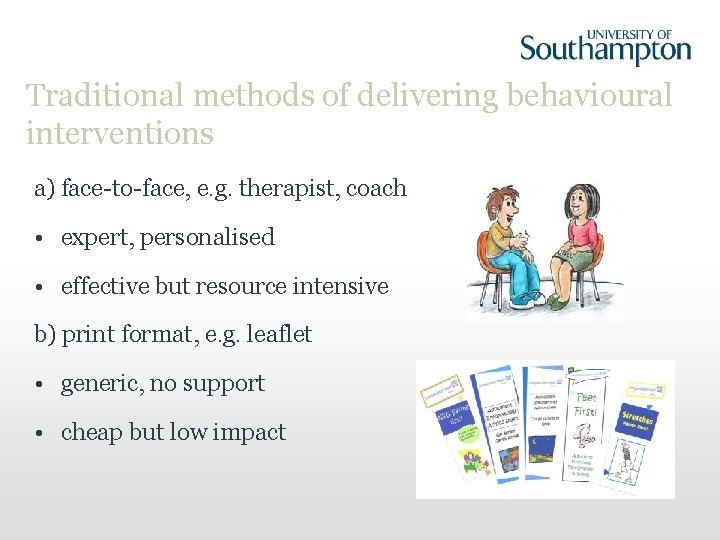
Traditional methods of delivering behavioural interventions a) face-to-face, e. g. therapist, coach • expert, personalised • effective but resource intensive b) print format, e. g. leaflet • generic, no support • cheap but low impact
Core components of effective behavioural interventions 1. Delivering advice, ‘tailored’; • use ‘diagnostic’ questions to select relevant advice from extensive expert resources 2. Providing longitudinal support, e. g. • plans, reminders • progress monitoring • progress-relevant feedback • social support (therapist, peers)
What opportunities does the Internet offer for behaviour change interventions? • For policy-makers – cost-effective delivery (for metaanalysis of effectiveness see Webb, Joseph, Yardley & Michie, Journal of Medical Internet Research, 2010, 12, 4) • For lay people – convenient 24/7 access to personalised advice for all problems from worldwide resources • For professionals – detailed longitudinal monitoring, automation of routine services • For scientists – potential to collect detailed longitudinal data on large samples 7
Introduction to Life. Guide New software that allows YOU to create internet-delivered health-care interventions
Acknowledgements Funded by the ESRC as a node of the national programme for Digital Social Research Health psychologists: Computer scientists: Lucy Yardley Dave de Roure Susan Michie Gary Wills Judith Joseph Mark Weal Sarah Williams Adrian Osmond Leanne Morrison David Fowler Pei Zhang 9
Introducing Life. Guide • Life. Guide is the first open source tool permitting rapid, flexible creation and modification of interventions • Enables researchers with no programming skills to develop and modify online interventions • Open source and free to use • Embedded in our VRE (Life. Guide Community) – for sharing with other researchers 10
Advantages of the Life. Guide • easy to quickly modify interventions (e. g. during development, after feedback, when circumstances change), speeds up modification/evaluation cycle • reduces time and costs caused by duplication of programming for each intervention • open source, free – opens up use by new researchers, developing countries, allows collaborative development • facilitates sharing interventions/components, allowing modification for different contexts (e. g. translation into different languages, adding context-specific advice) 11
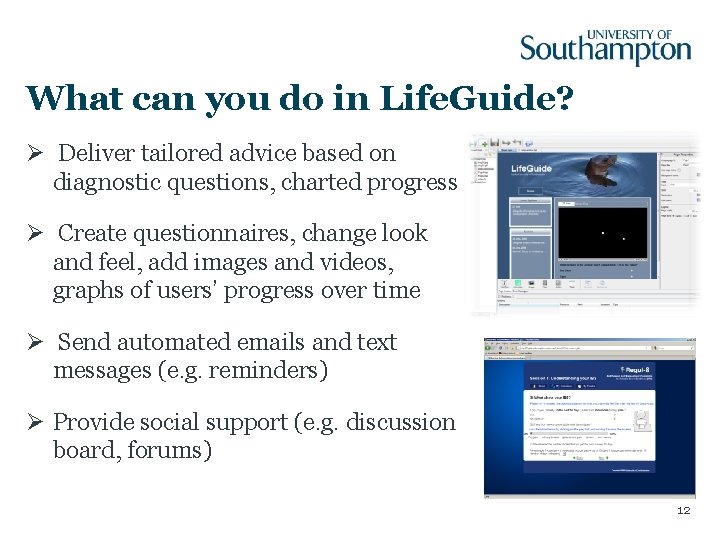
What can you do in Life. Guide? Ø Deliver tailored advice based on diagnostic questions, charted progress Ø Create questionnaires, change look and feel, add images and videos, graphs of users’ progress over time Ø Send automated emails and text messages (e. g. reminders) Ø Provide social support (e. g. discussion board, forums) 12
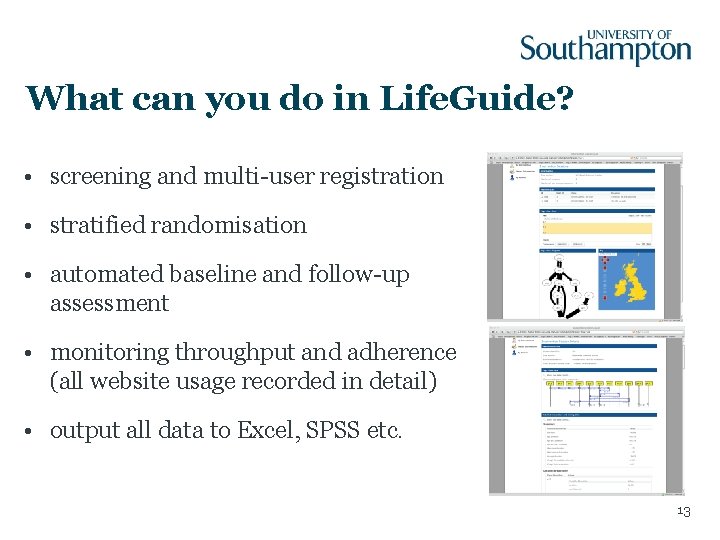
What can you do in Life. Guide? • screening and multi-user registration • stratified randomisation • automated baseline and follow-up assessment • monitoring throughput and adherence (all website usage recorded in detail) • output all data to Excel, SPSS etc. 13
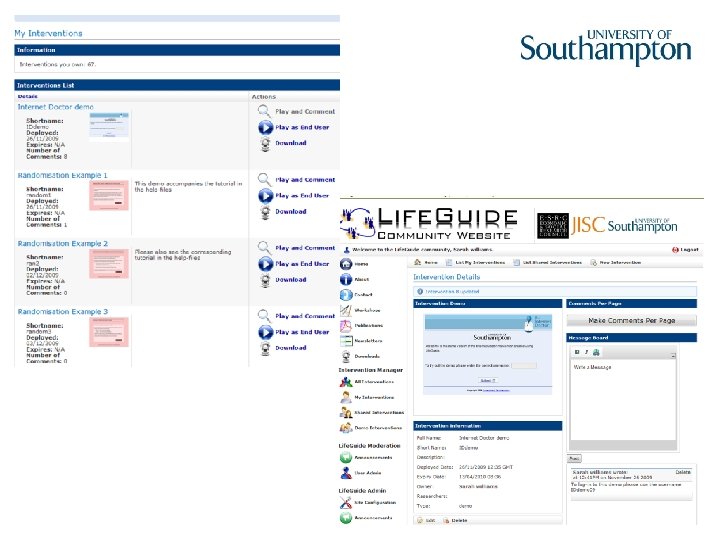
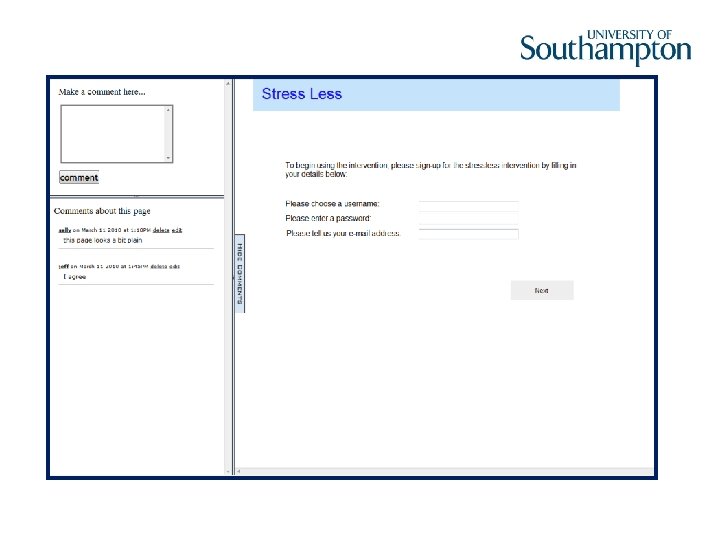
The Life. Guide Community • Download software and help materials • Support from other users - networks of researchers, forum, demos of how to use different logic functions • Collaboration and supervision – share and discuss interventions with own research team, work together on interventions (e. g. translating into other languages) • Dissemination – share and discuss interventions with wider e-health community (demo interventions) • Testing with end-users

To receive Life. Guide Community newsletters email V. Hayter@soton. ac. uk For more information about how you can use Life. Guide go to www. lifeguideonline. org
- Slides: 17