
Creating Identical Body Cells All cells come from
Creating Identical Body Cells
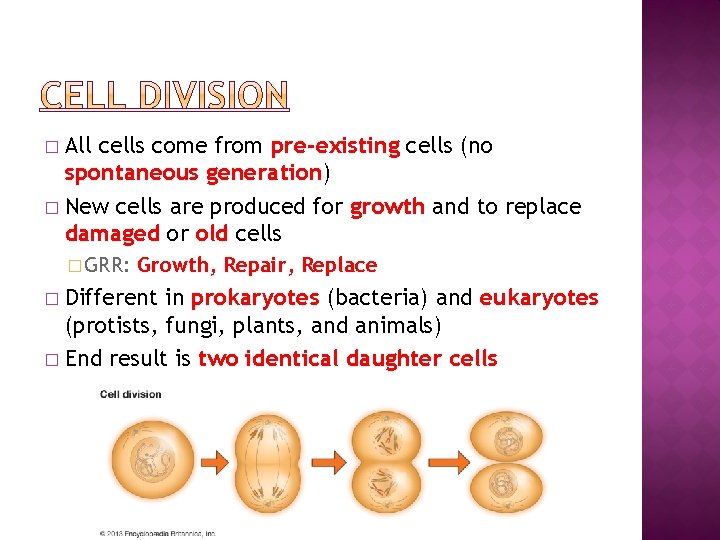
� All cells come from pre-existing cells (no spontaneous generation) � New cells are produced for growth and to replace damaged or old cells � GRR: Growth, Repair, Replace � Different in prokaryotes (bacteria) and eukaryotes (protists, fungi, plants, and animals) � End result is two identical daughter cells
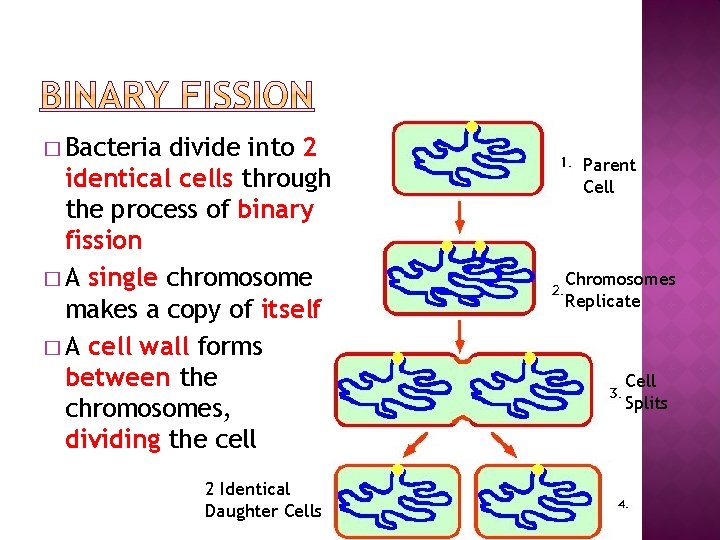
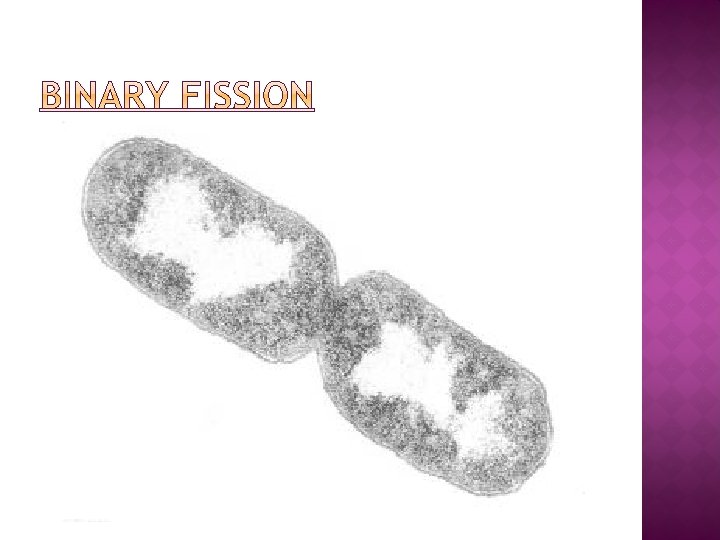
� Bacteria divide into 2 identical cells through the process of binary fission � A single chromosome makes a copy of itself � A cell wall forms between the chromosomes, dividing the cell 2 Identical Daughter Cells Parent Cell Chromosomes Replicate Cell Splits
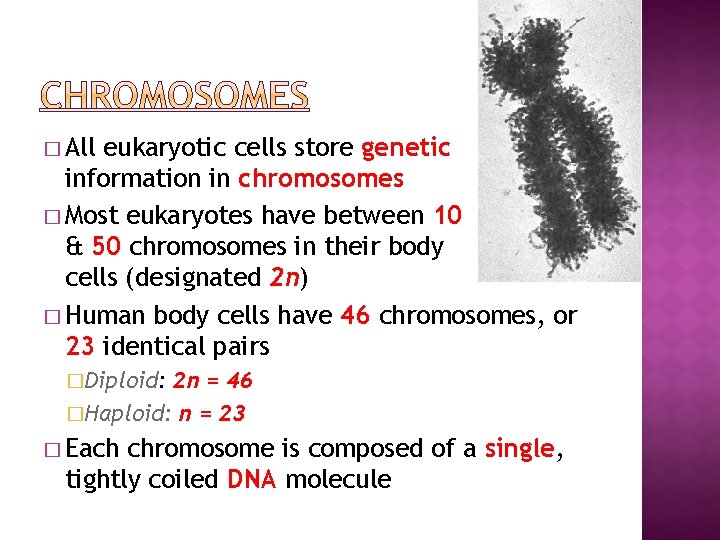
� All eukaryotic cells store genetic information in chromosomes � Most eukaryotes have between 10 & 50 chromosomes in their body cells (designated 2 n) � Human body cells have 46 chromosomes, or 23 identical pairs �Diploid: 2 n = 46 �Haploid: n = 23 � Each chromosome is composed of a single, tightly coiled DNA molecule
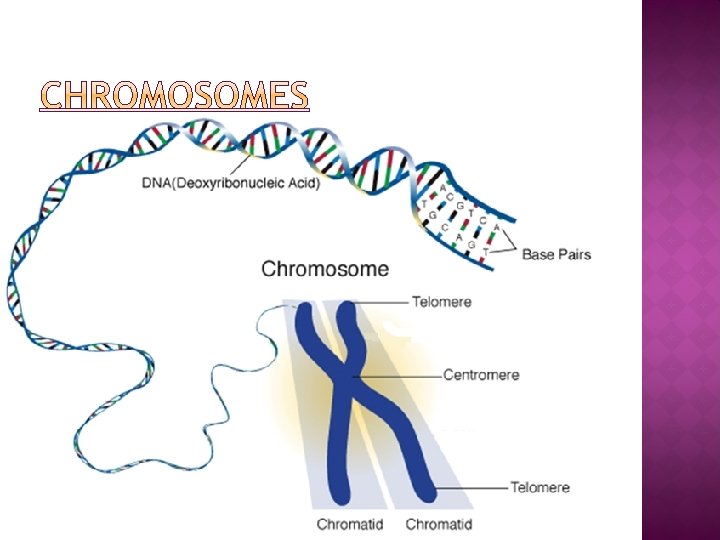
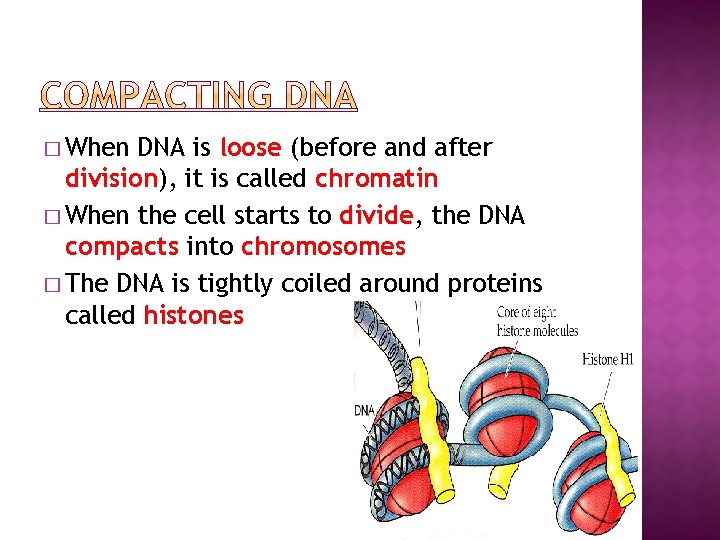
� When DNA is loose (before and after division), it is called chromatin � When the cell starts to divide, the DNA compacts into chromosomes � The DNA is tightly coiled around proteins called histones
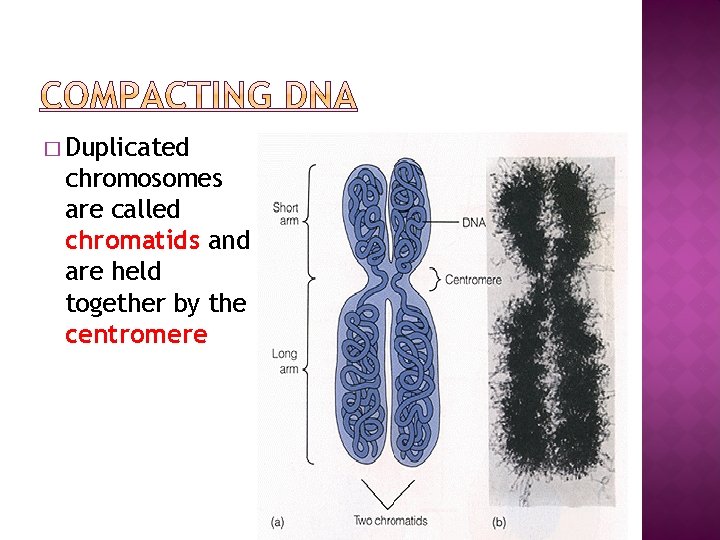
� Duplicated chromosomes are called chromatids and are held together by the centromere
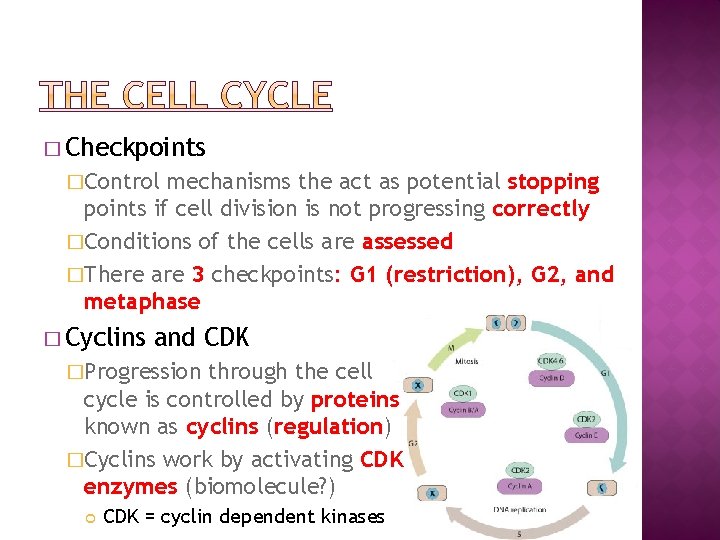
� Checkpoints �Control mechanisms the act as potential stopping points if cell division is not progressing correctly �Conditions of the cells are assessed �There are 3 checkpoints: G 1 (restriction), G 2, and metaphase � Cyclins and CDK �Progression through the cell cycle is controlled by proteins known as cyclins (regulation) �Cyclins work by activating CDK enzymes (biomolecule? ) CDK = cyclin dependent kinases
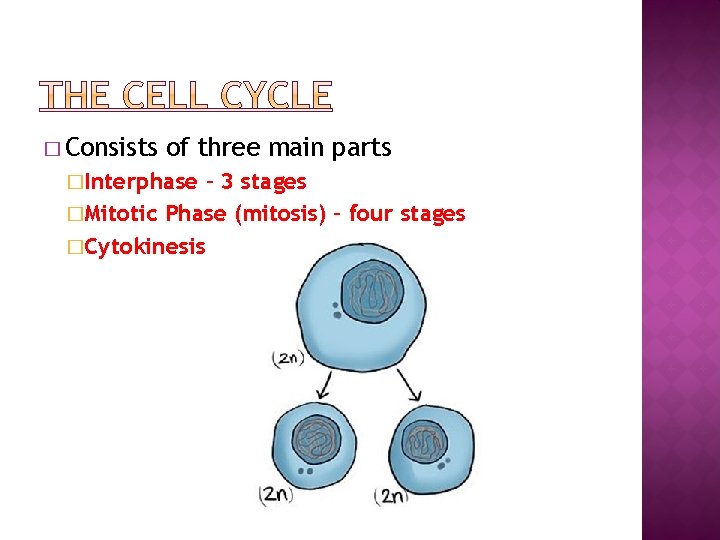
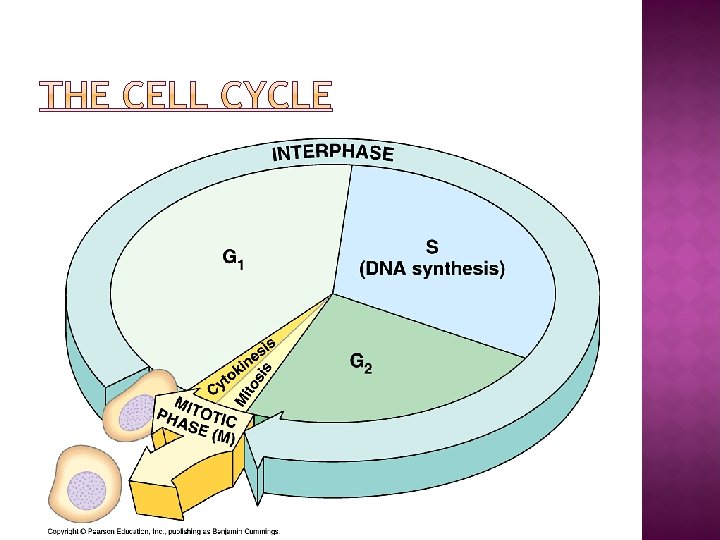
� Consists of three main parts �Interphase – 3 stages �Mitotic Phase (mitosis) – four stages �Cytokinesis
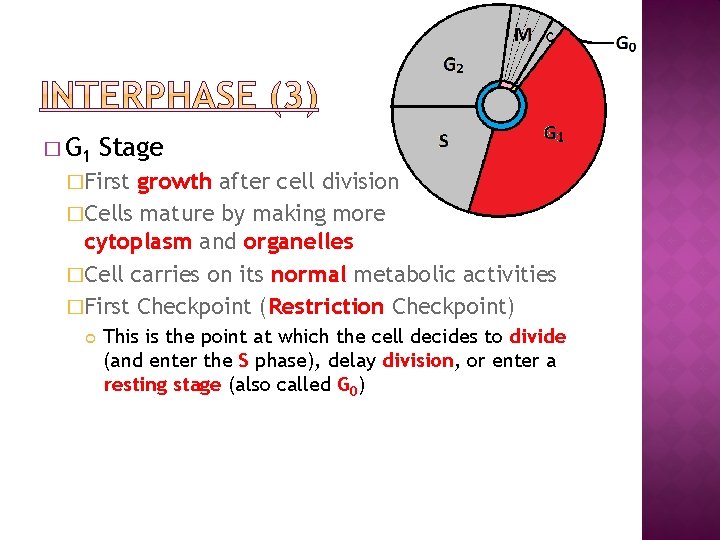
� G 1 Stage �First growth after cell division �Cells mature by making more cytoplasm and organelles �Cell carries on its normal metabolic activities �First Checkpoint (Restriction Checkpoint) This is the point at which the cell decides to divide (and enter the S phase), delay division, or enter a resting stage (also called G 0)
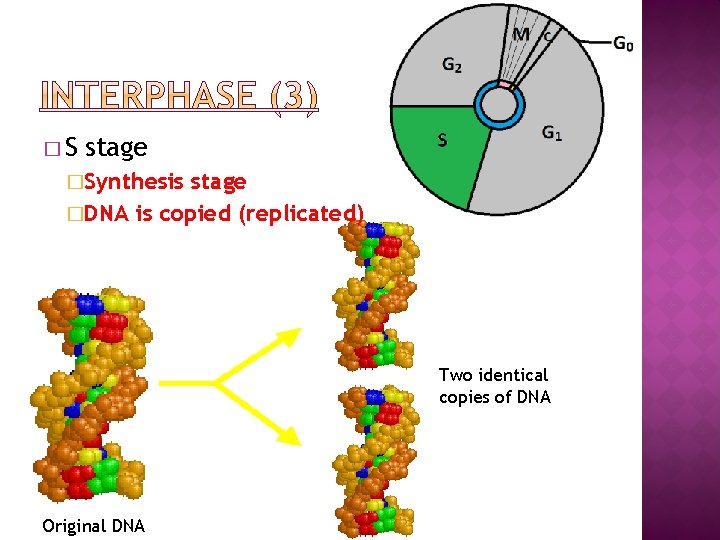
�S stage �Synthesis stage �DNA is copied (replicated) Two identical copies of DNA Original DNA
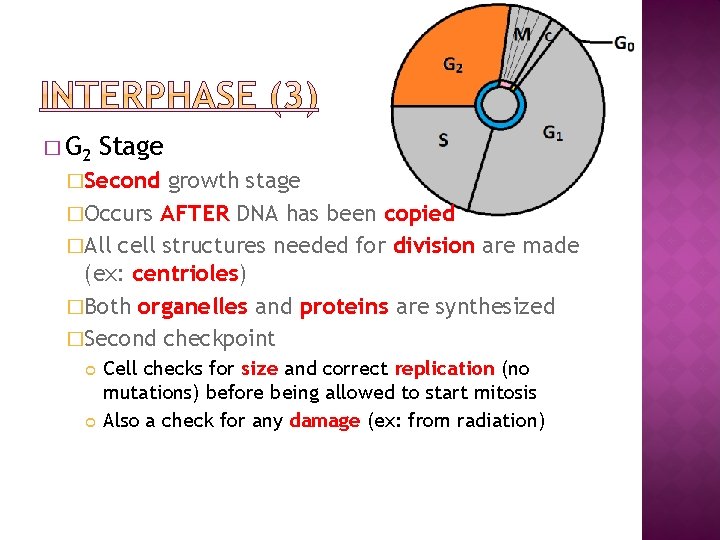
� G 2 Stage �Second growth stage �Occurs AFTER DNA has been copied �All cell structures needed for division are made (ex: centrioles) �Both organelles and proteins are synthesized �Second checkpoint Cell checks for size and correct replication (no mutations) before being allowed to start mitosis Also a check for any damage (ex: from radiation)
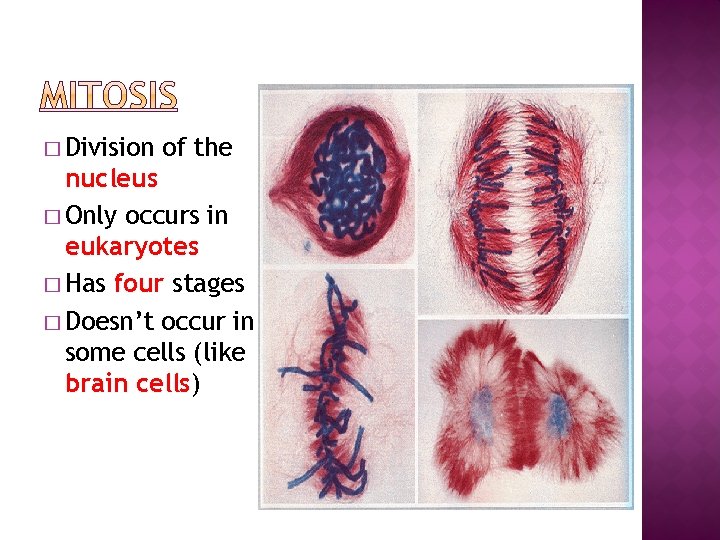
� Division of the nucleus � Only occurs in eukaryotes � Has four stages � Doesn’t occur in some cells (like brain cells)
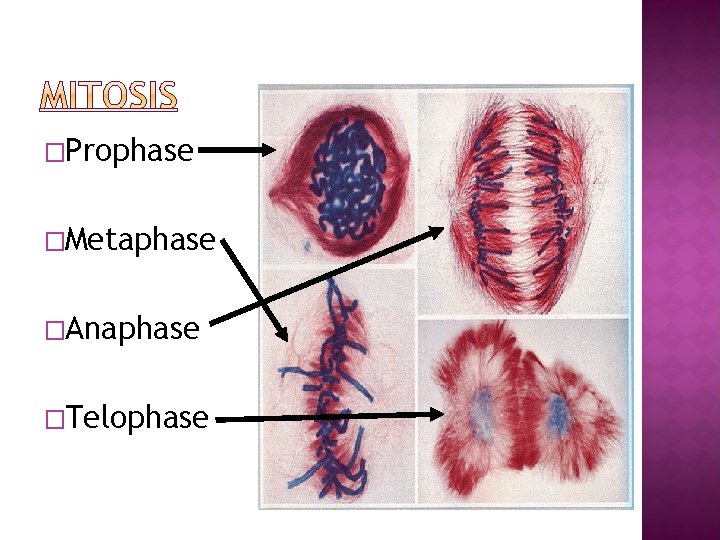
�Prophase �Metaphase �Anaphase �Telophase
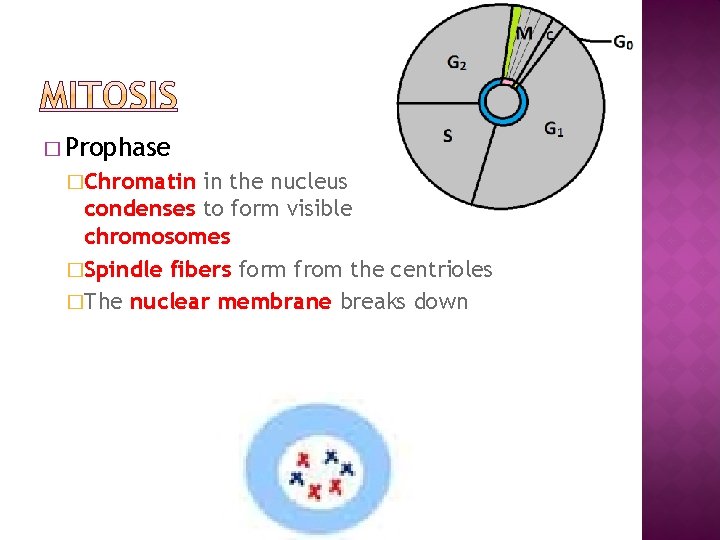
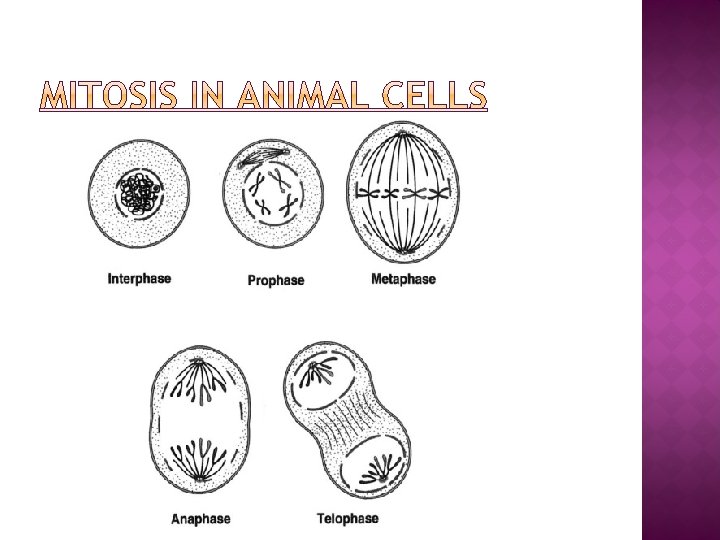
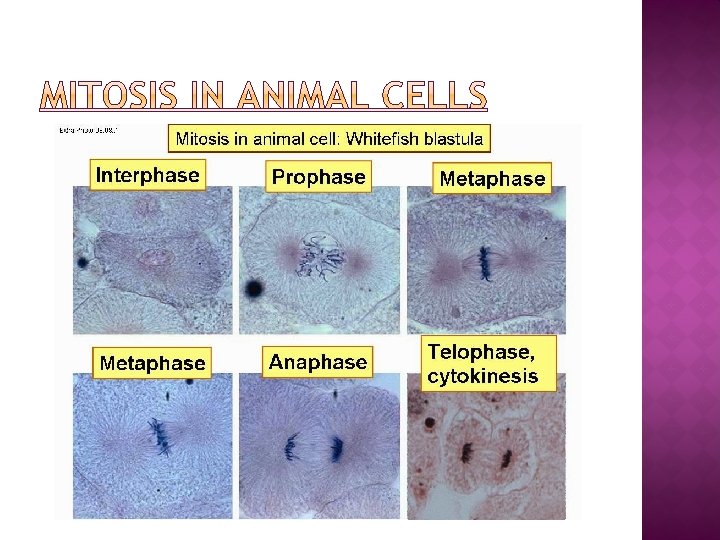
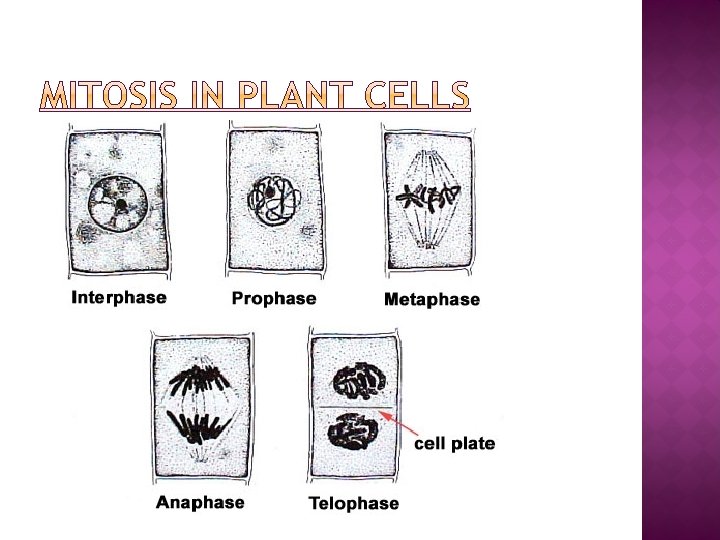
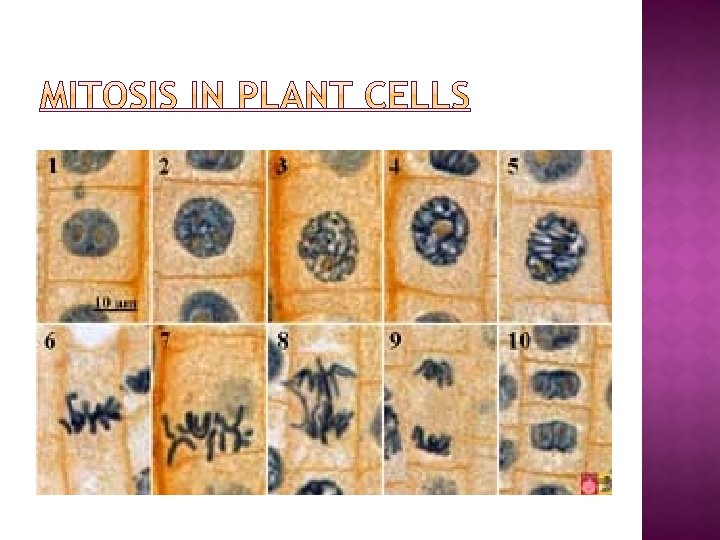
� Prophase �Chromatin in the nucleus condenses to form visible chromosomes �Spindle fibers form from the centrioles �The nuclear membrane breaks down
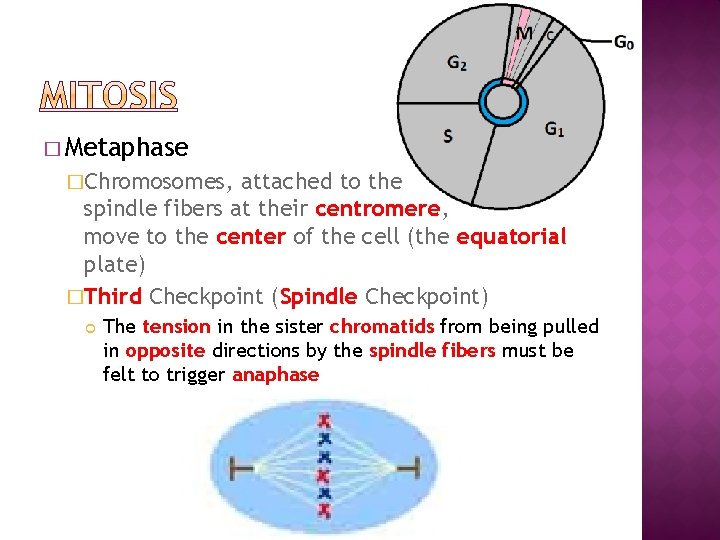
� Metaphase �Chromosomes, attached to the spindle fibers at their centromere, move to the center of the cell (the equatorial plate) �Third Checkpoint (Spindle Checkpoint) The tension in the sister chromatids from being pulled in opposite directions by the spindle fibers must be felt to trigger anaphase
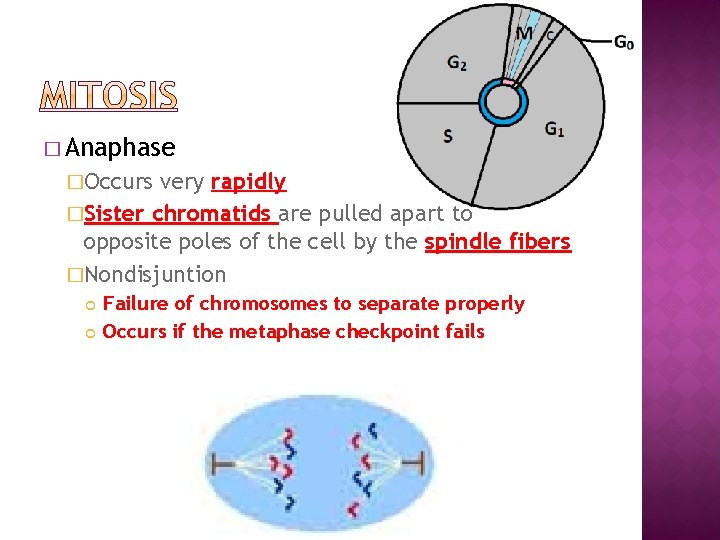
� Anaphase �Occurs very rapidly �Sister chromatids are pulled apart to opposite poles of the cell by the spindle fibers �Nondisjuntion Failure of chromosomes to separate properly Occurs if the metaphase checkpoint fails
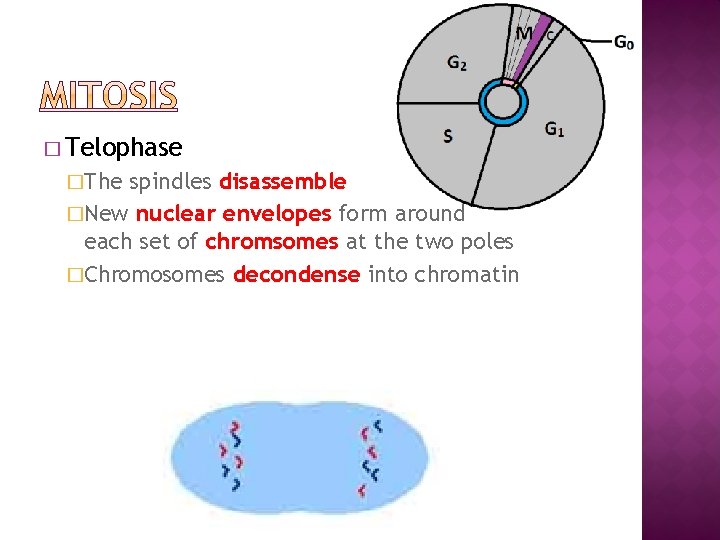
� Telophase �The spindles disassemble �New nuclear envelopes form around each set of chromsomes at the two poles �Chromosomes decondense into chromatin
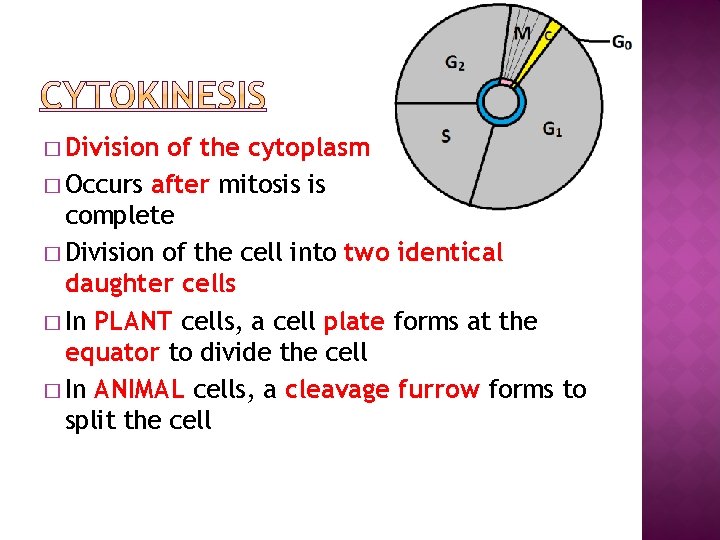
� Division of the cytoplasm � Occurs after mitosis is complete � Division of the cell into two identical daughter cells � In PLANT cells, a cell plate forms at the equator to divide the cell � In ANIMAL cells, a cleavage furrow forms to split the cell
� Have the same number of chromosomes as each other and as the parent cell they were formed from (2 n = 46) � They are identical to each other, but smaller than the parent cell � They must grow in size to mature cells before dividing again (Interphase – G 1)
� If mitosis is not controlled, unlimited cell division occurs, causing cancer � This occurs when cells do not go into a resting phase, but stay in the cell cycle, dividing over and over again � The result is an overwhelming number of immature cells, which crowd out normal cells and cause a tumor
� Oncogenes are special proteins that increase the chance a normal cell develops into a cancerous cell � Usually when cells detect mutations, they undergo programmed cell death (apoptosis) � Cancer can be treated with �Surgery: removal of a tumor �Radiation: targets specific areas to shred tumor cell DNA �Chemotherapy: travels throughout the body, targeting fast-dividing cells (this can cause hair loss, skin rashes, nausea, etc. )
- Slides: 30