
Creating great SEND provision through school to school



- Slides: 22
Creating great SEND provision through school to school collaboration David Bartram
Objectives The workshop will provide participants with: • A national overview of the current SEND context and population in English schools • An opportunity to self-evaluate their current SEND provision against a national framework. • Provide practical examples of how schools have worked together to develop effective peer review in the area of SEND.
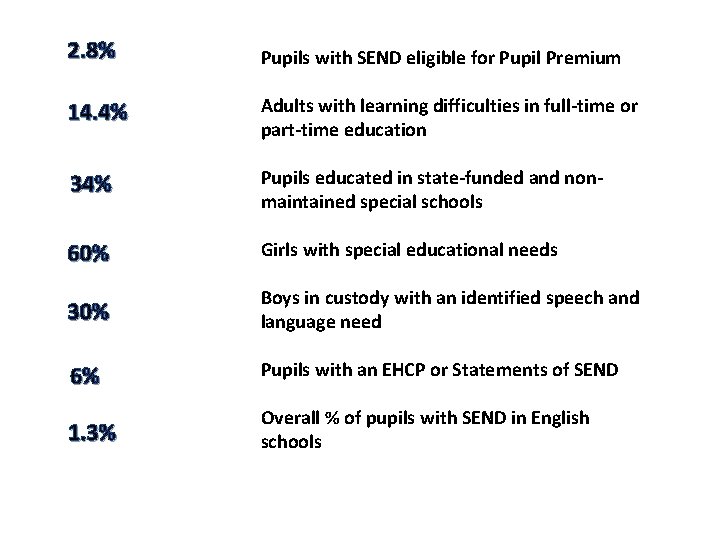
2. 8% Pupils with SEND eligible for Pupil Premium 14. 4% Adults with learning difficulties in full-time or part-time education 34% Pupils educated in state-funded and nonmaintained special schools 60% Girls with special educational needs 30% Boys in custody with an identified speech and language need 6% Pupils with an EHCP or Statements of SEND 1. 3% Overall % of pupils with SEND in English schools
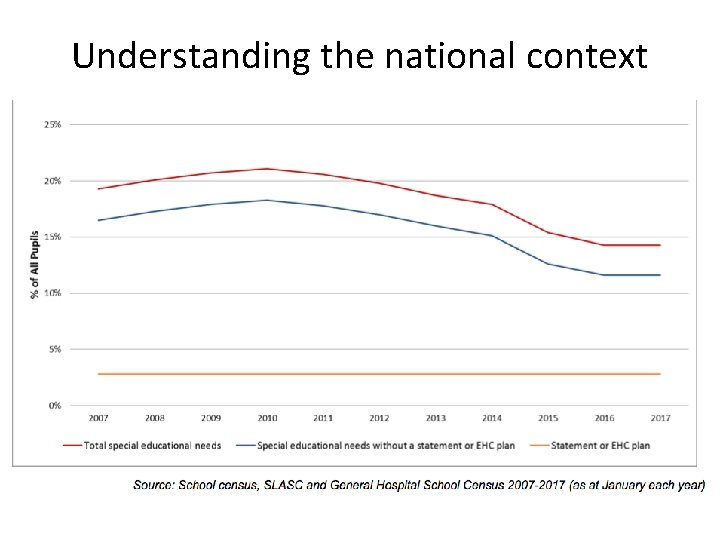
Understanding the national context
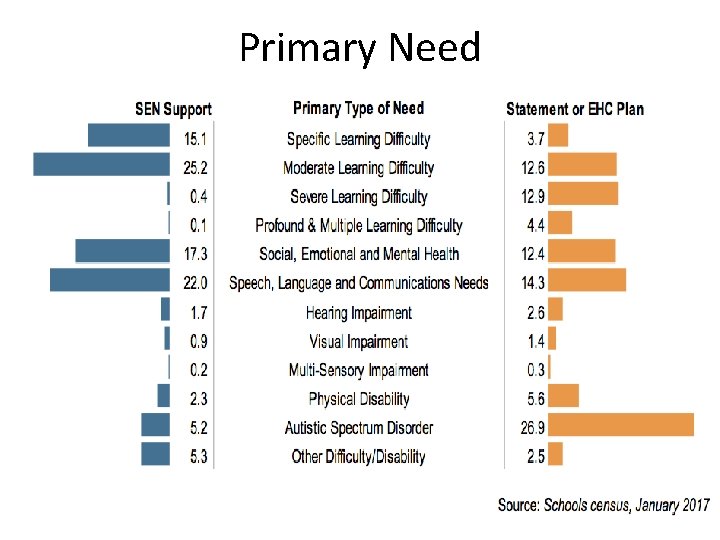
Primary Need
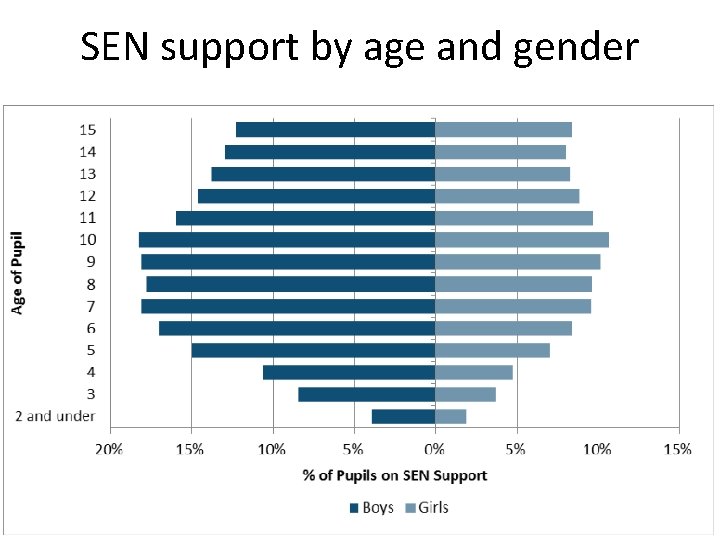
SEN support by age and gender
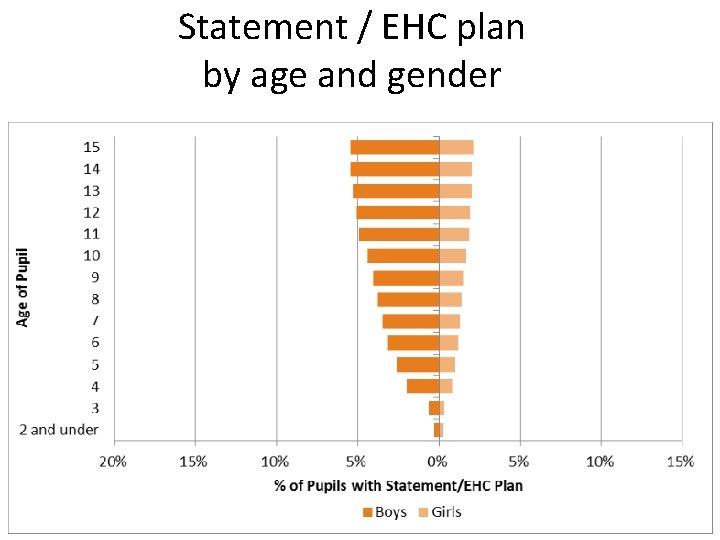
Statement / EHC plan by age and gender
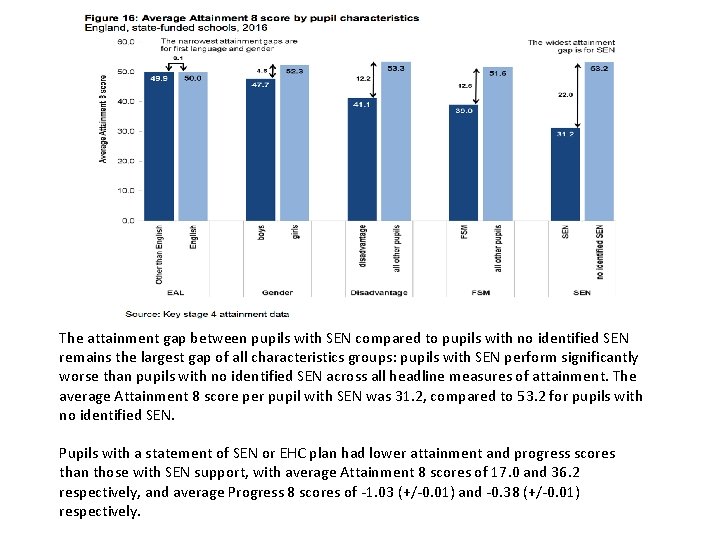
The attainment gap between pupils with SEN compared to pupils with no identified SEN remains the largest gap of all characteristics groups: pupils with SEN perform significantly worse than pupils with no identified SEN across all headline measures of attainment. The average Attainment 8 score per pupil with SEN was 31. 2, compared to 53. 2 for pupils with no identified SEN. Pupils with a statement of SEN or EHC plan had lower attainment and progress scores than those with SEN support, with average Attainment 8 scores of 17. 0 and 36. 2 respectively, and average Progress 8 scores of -1. 03 (+/-0. 01) and -0. 38 (+/-0. 01) respectively.
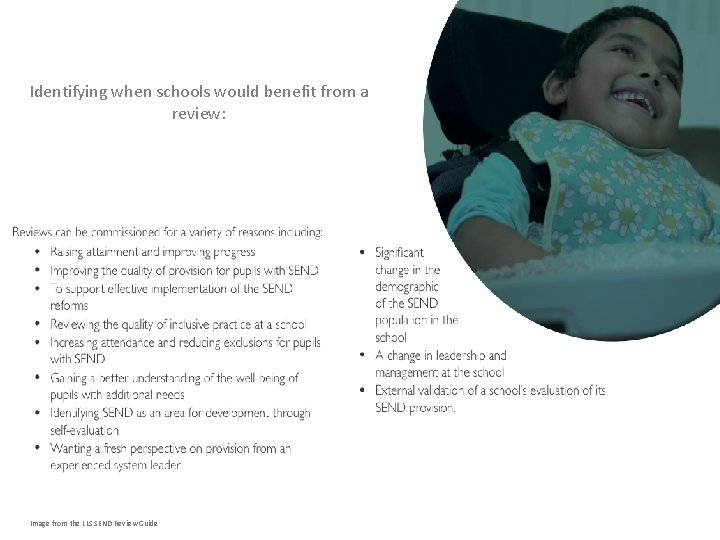
Identifying when schools would benefit from a review: Image from the LLS SEND Review Guide
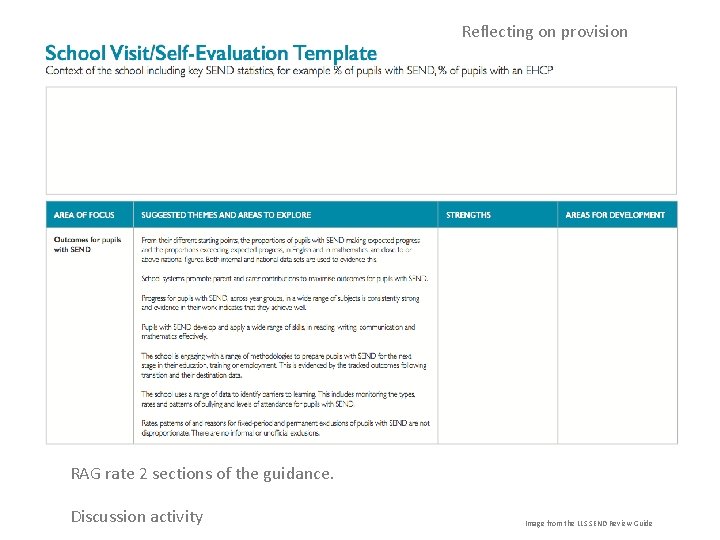
Reflecting on provision RAG rate 2 sections of the guidance. Discussion activity Image from the LLS SEND Review Guide
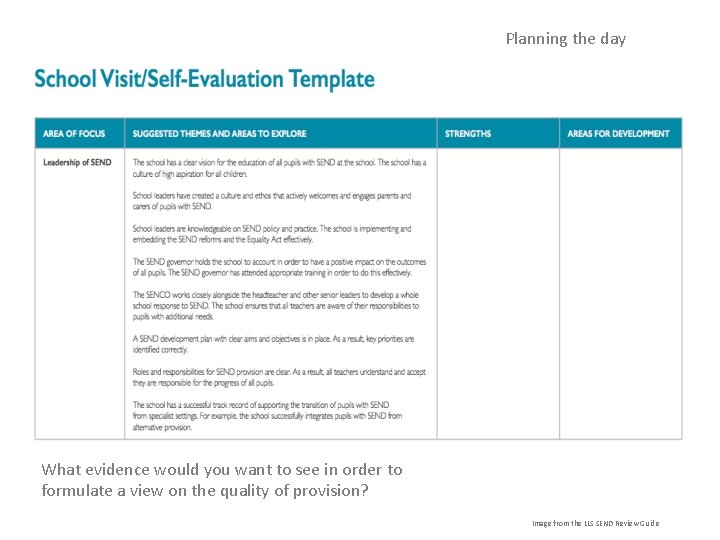
Planning the day What evidence would you want to see in order to formulate a view on the quality of provision? Image from the LLS SEND Review Guide
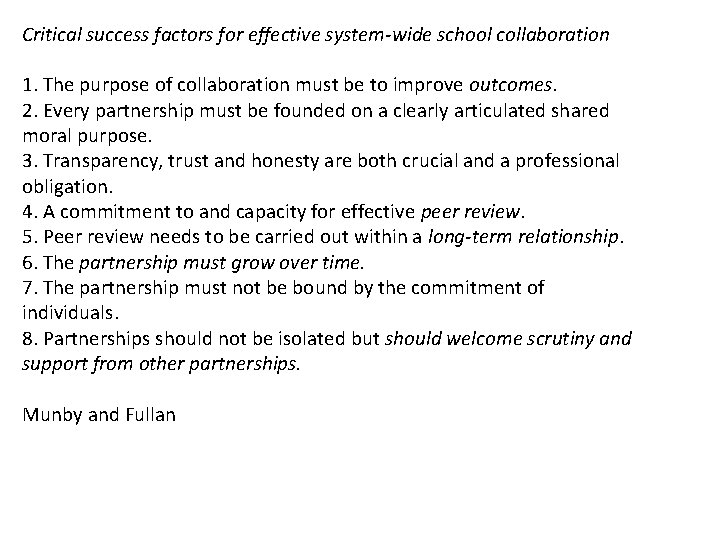
Critical success factors for effective system-wide school collaboration 1. The purpose of collaboration must be to improve outcomes. 2. Every partnership must be founded on a clearly articulated shared moral purpose. 3. Transparency, trust and honesty are both crucial and a professional obligation. 4. A commitment to and capacity for effective peer review. 5. Peer review needs to be carried out within a long-term relationship. 6. The partnership must grow over time. 7. The partnership must not be bound by the commitment of individuals. 8. Partnerships should not be isolated but should welcome scrutiny and support from other partnerships. Munby and Fullan
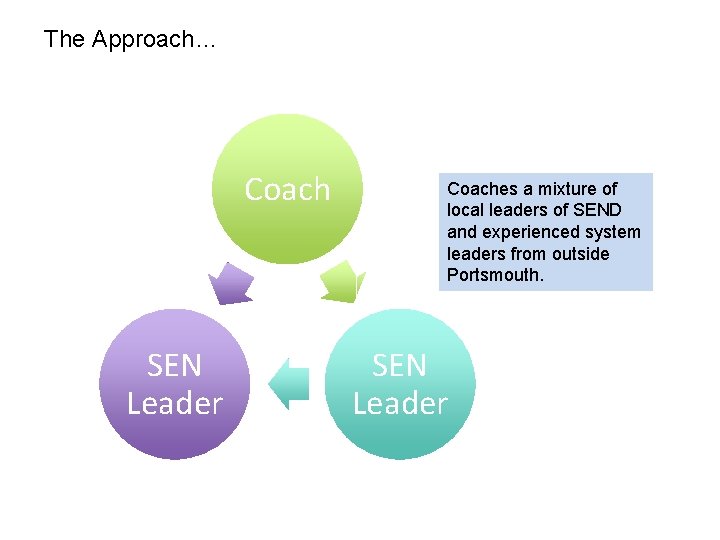
The Approach… Coach SEN Leader Coaches a mixture of local leaders of SEND and experienced system leaders from outside Portsmouth. SEN Leader
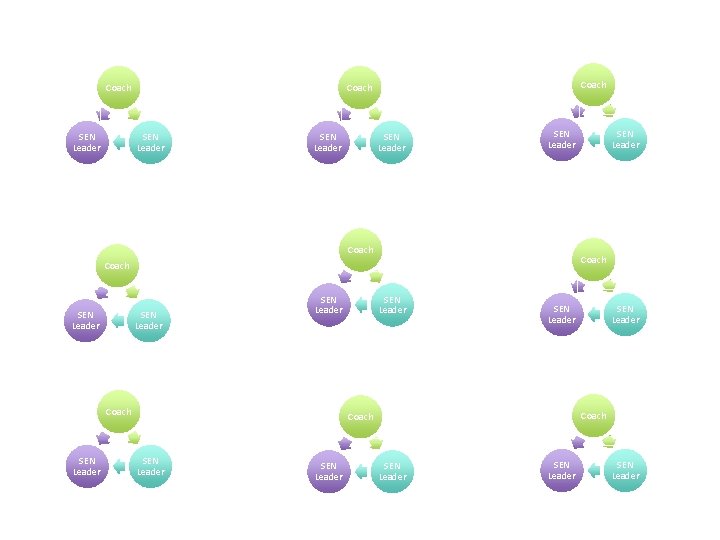
Coach SEN Leader SEN Leader Coach SEN Leader SEN Leader Coach SEN Leader SEN Leader
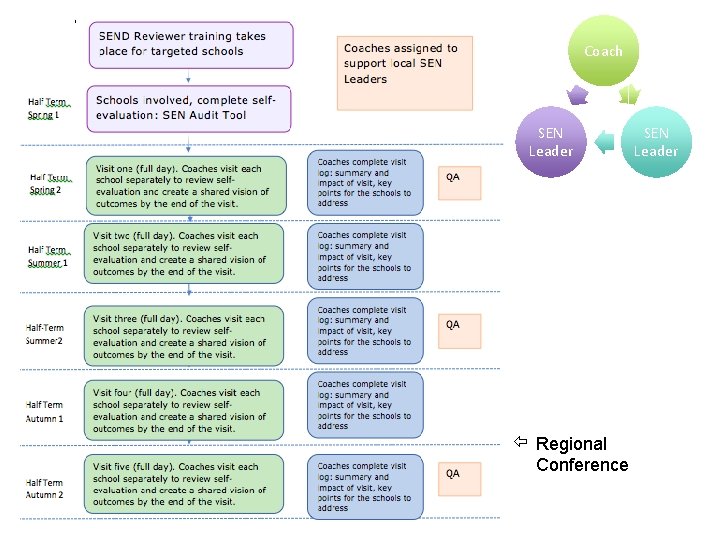
Coach SEN Leader Regional Conference SEN Leader
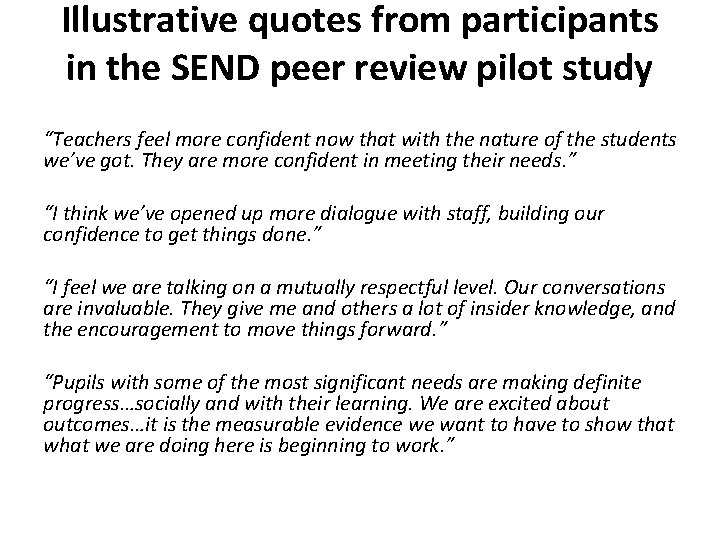
Illustrative quotes from participants in the SEND peer review pilot study “Teachers feel more confident now that with the nature of the students we’ve got. They are more confident in meeting their needs. ” “I think we’ve opened up more dialogue with staff, building our confidence to get things done. ” “I feel we are talking on a mutually respectful level. Our conversations are invaluable. They give me and others a lot of insider knowledge, and the encouragement to move things forward. ” “Pupils with some of the most significant needs are making definite progress…socially and with their learning. We are excited about outcomes…it is the measurable evidence we want to have to show that we are doing here is beginning to work. ”
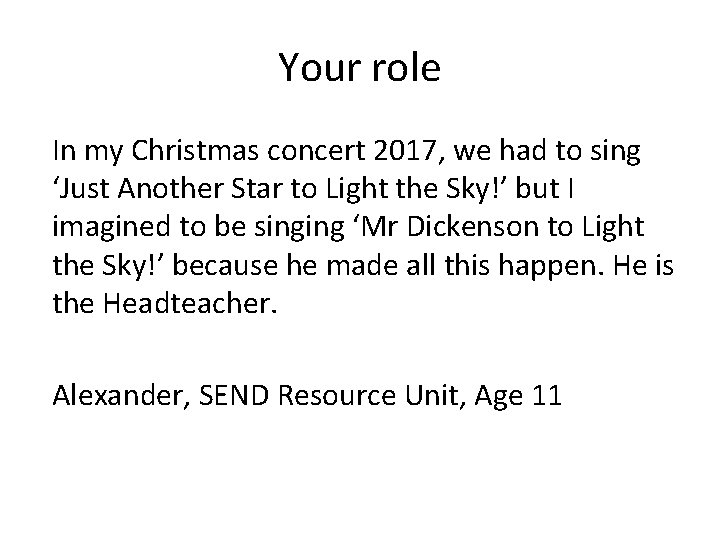
Your role In my Christmas concert 2017, we had to sing ‘Just Another Star to Light the Sky!’ but I imagined to be singing ‘Mr Dickenson to Light the Sky!’ because he made all this happen. He is the Headteacher. Alexander, SEND Resource Unit, Age 11
Creating great SEND provision through school to school collaboration David Bartram