
Creating Connections Through Transition Assessment for Students with


- Slides: 64
Creating Connections Through Transition Assessment for Students with Significant Cognitive Disabilities Joshua Pulos, Tracy Sinclair, Belkis Choiseul-Praslin, and Andrea Suk University of Oklahoma 1
Session Overview 1. Guiding Principles Prompting the Transition Movement 2. Current Realities 3. Transition Planning 4. Review of Transition Assessments Across IDEA Domains 2
Guiding Principles 3
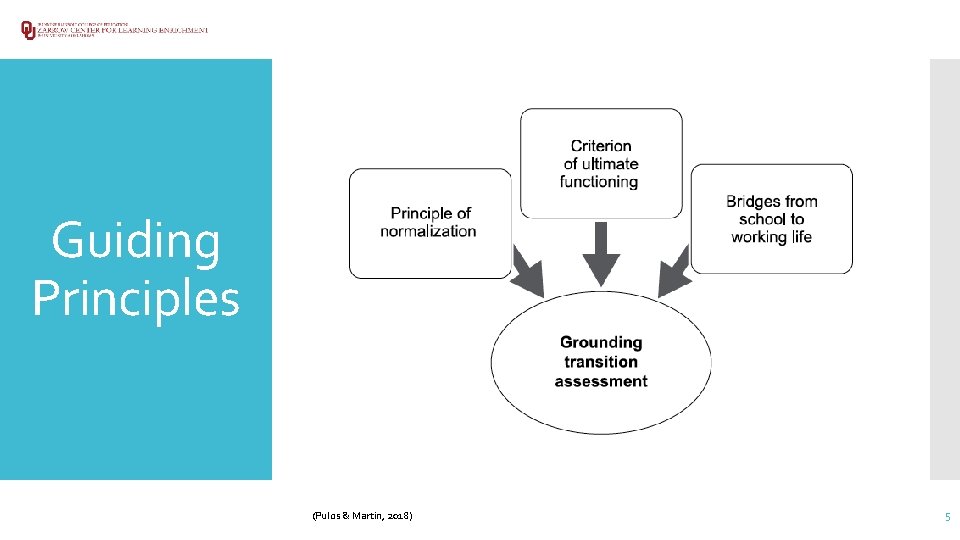
Guiding Principles To understand transition assessment, we must first examine, through a historical lens, the guiding principles that led the grassroot efforts prompting the transition movement for students with disabilities, specifically students with significant cognitive disabilities (SWSCD). (Pulos & Martin, 2018) 4
Guiding Principles (Pulos & Martin, 2018) 5
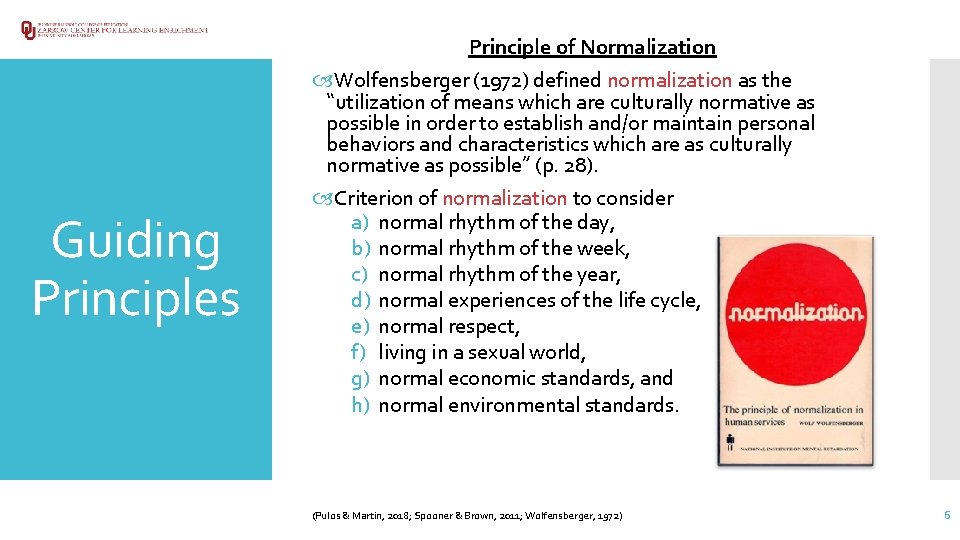
Principle of Normalization Guiding Principles Wolfensberger (1972) defined normalization as the “utilization of means which are culturally normative as possible in order to establish and/or maintain personal behaviors and characteristics which are as culturally normative as possible” (p. 28). Criterion of normalization to consider a) normal rhythm of the day, b) normal rhythm of the week, c) normal rhythm of the year, d) normal experiences of the life cycle, e) normal respect, f) living in a sexual world, g) normal economic standards, and h) normal environmental standards. (Pulos & Martin, 2018; Spooner & Brown, 2011; Wolfensberger, 1972) 6
Principle of Normalization Guiding Principles The principle of normalization provides a foundation upon which to develop an education system that includes and supports individuals meaningfully. “By declaring the need of integration and charging communities to change, the principle of normalization became the rallying cry advancing the philosophy of improved treatment of individuals with disabilities” (Pulos & Martin, 2018, p. 21). (Pancsofar & Blackwell, 1986; Pulos & Martin, 2018; Spooner & Brown, 2011; Wolfensberger, 1972) 7
Criterion of Ultimate Functioning The criterion of ultimate functioning set the stage for promoting “the training of meaningful skills that would increase the likelihood of inclusive placements, and give people skills to function in complex community settings” (Spooner & Brown, 2011, p. 507). Guiding Principles The criterion of ultimate functioning a) challenges educators to teach students skills that generalize to natural environments, which b) requires educators to examine the current and future environments of their students with disabilities, determining the most critical skills necessary to survive in a variety of environments, and teaching those skills. (Brown, Nietupski, & Hamre-Nietupski, 1976; Pulos & Martin, 2018; Spooner & Brown, 2011) 8
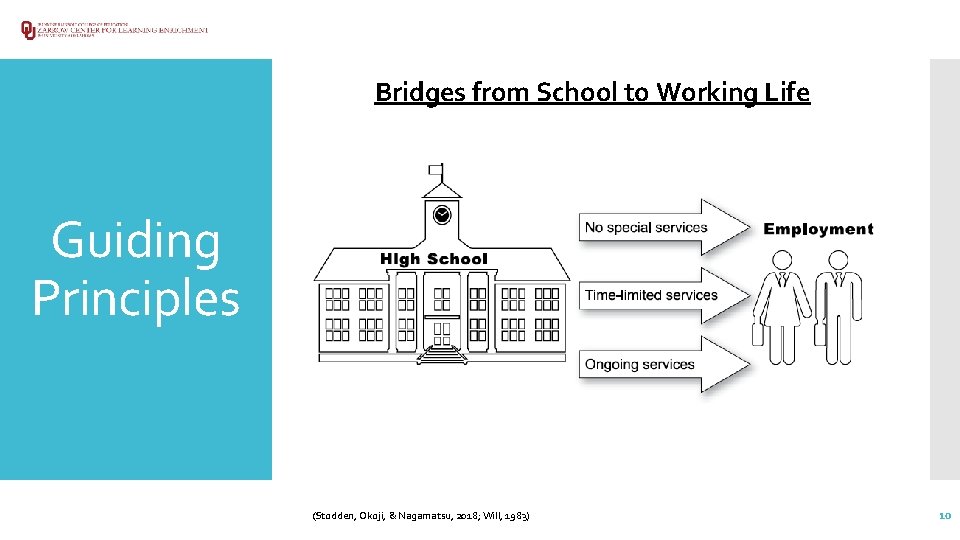
Bridges from School to Working Life “Successful transition ultimately requires employment opportunities” (Will, 1983, p. 8). Guiding Principles Will’s (1983) bridges from school to working life considers the transition from high school to an employment setting as an outcome-oriented process: a) the transition is a metaphoric bridge that connects the security and structure of high school to adult life, where opportunities and risks take place. Experiences and services leading to employment may vary; however, personalized support is vital to ensure a positive transition experience. (Pulos & Martin, 2018; Repetto et al. , 2011; Will, 1983) 9
Bridges from School to Working Life Guiding Principles (Stodden, Okoji, & Nagamatsu, 2018; Will, 1983) 10
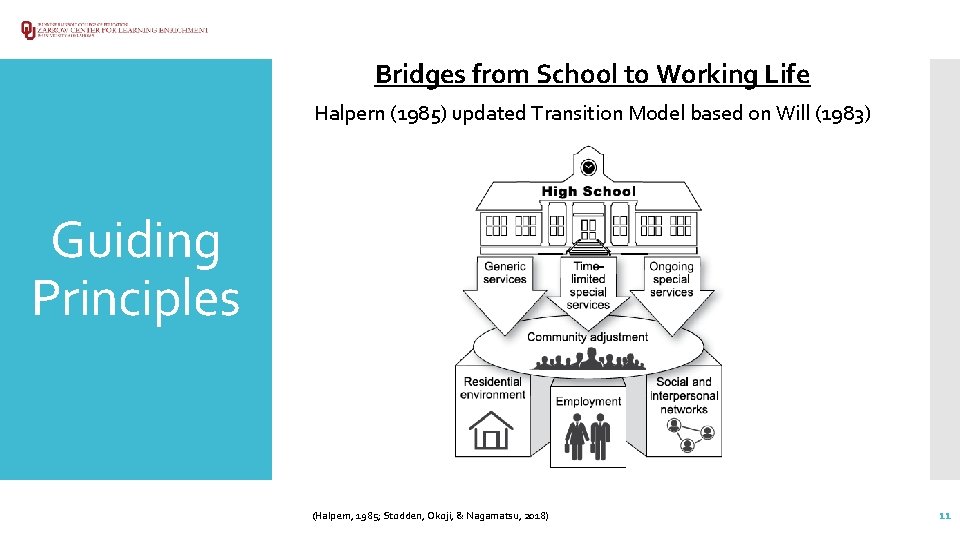
Bridges from School to Working Life Halpern (1985) updated Transition Model based on Will (1983) Guiding Principles (Halpern, 1985; Stodden, Okoji, & Nagamatsu, 2018) 11
Current Realities 12
Limited research exists focusing on secondary transition education and the postsecondary success of SWSCD. Current Realities Grigal, Hart, and Migliore (2011) conducted a systematic review of the National Longitudinal Transition Study-2 (NLTS-2) secondary analyses comparing SWSCD to other students with disabilities. a) Their findings suggested SWSCD were less likely to have postsecondary education or competitive employment goals on their Individualized Education Program (IEP). Further, once graduated, SWSCD were not expected to attend college, less than 10% achieve competitive employment, and SWSCD typically attain stereotypical jobs at subminimum wage (e. g. , sheltered employment). (Getzel & de. Fur, 1997; Grigal, Hart, & Migliore, 2011; Inge & Moon, 2006; U. S. Department of Education, 2004) 13
Current Realities A need exists for these students to engage in the planning of their postsecondary future, have increased opportunities to access education and employment environments prior to graduation, and access to a variety of agencies/services to promote continuing and lasting support in the community. (Getzel & de. Fur, 1997; Grigal, Hart, & Migliore, 2011) 14
Current Realities However, SWSCD may not know what opportunities exist in their communities; further, their teachers may not know the interests of their students to afford them the intentional targeted instruction required to cultivate such positive postsecondary outcomes. To garner this information, transition assessment serves as the foundation and driving force “to identify measurable postsecondary goals and to determine necessary transition services to pursue such goals during the secondary school years” (Neubert & Leconte, 2013, p. 72). (Neubert & Leconte, 2013) 15
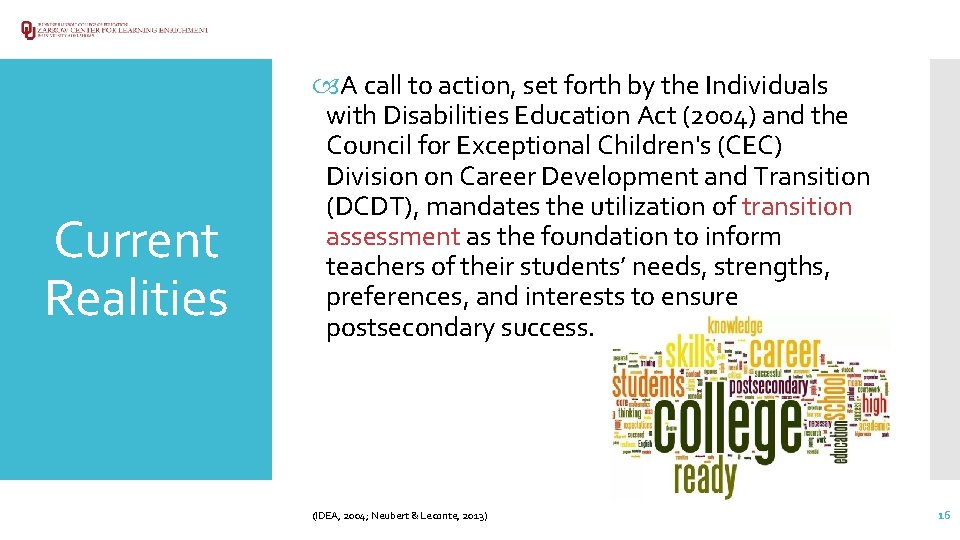
Current Realities A call to action, set forth by the Individuals with Disabilities Education Act (2004) and the Council for Exceptional Children's (CEC) Division on Career Development and Transition (DCDT), mandates the utilization of transition assessment as the foundation to inform teachers of their students’ needs, strengths, preferences, and interests to ensure postsecondary success. (IDEA, 2004; Neubert & Leconte, 2013) 16
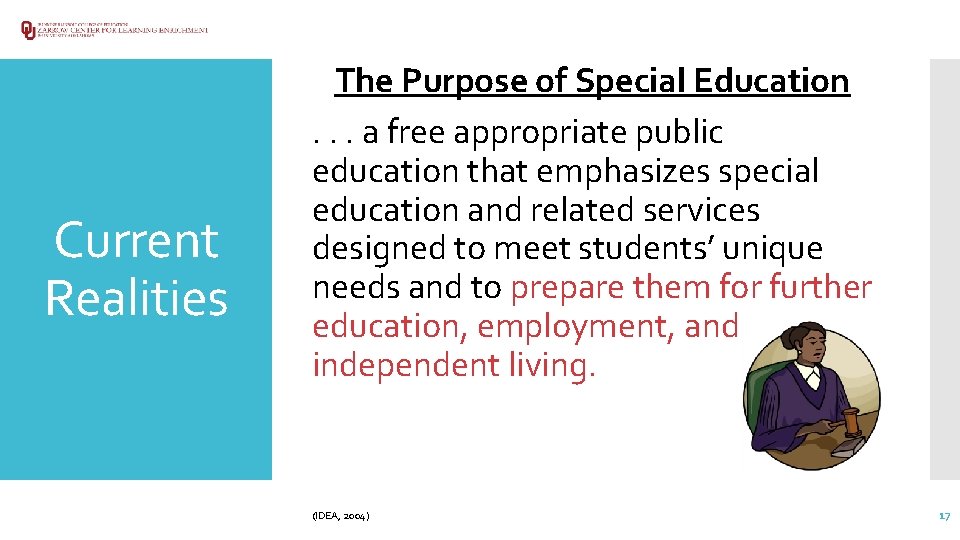
Current Realities The Purpose of Special Education. . . a free appropriate public education that emphasizes special education and related services designed to meet students’ unique needs and to prepare them for further education, employment, and independent living. (IDEA, 2004) 17
Transition Planning 18
MIDDLE SCHOOL: GRADES 6 -8 Focus Career exploration and transition planning relative to course of study and independent living Transition Planning Needs Understand relationship of school to work Understand needs, strengths, preferences, and interests Understand work, education, independent living, and community options Determine a general course of secondary education Identify needed accommodations and supports for secondary education Specify transition services needed to participate in desired course of study by no later than age 16 19
HIGH SCHOOL: GRADES 9 -10 Focus Career exploration and transition Transition Planning Needs Develop meaningful and realistic postsecondary goals Develop education, work, residential, and community participation skills and support relevant to postsecondary goals Learn to manage disability technology (i. e. , assistive technology) and how to request accommodations and supports 20
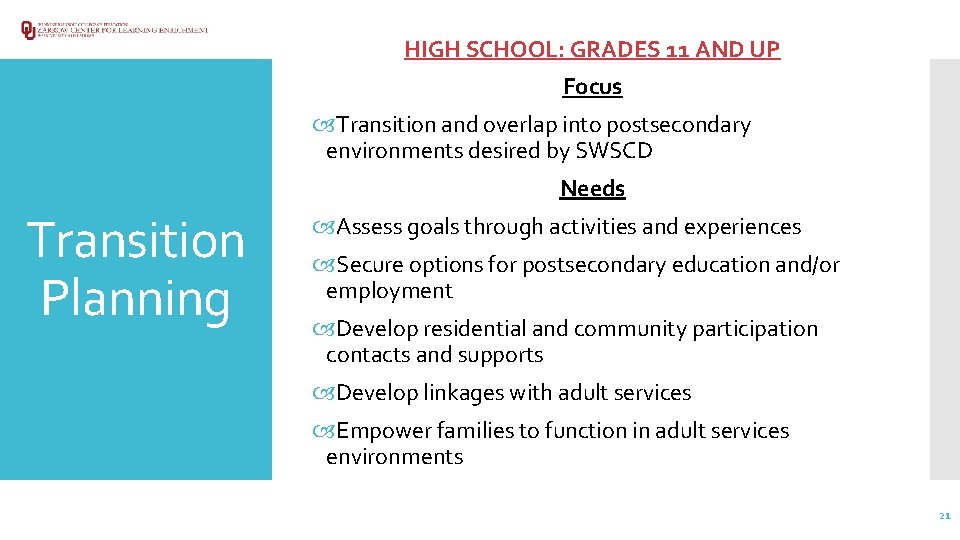
HIGH SCHOOL: GRADES 11 AND UP Focus Transition and overlap into postsecondary environments desired by SWSCD Needs Transition Planning Assess goals through activities and experiences Secure options for postsecondary education and/or employment Develop residential and community participation contacts and supports Develop linkages with adult services Empower families to function in adult services environments 21
Review of Transition Assessments 22
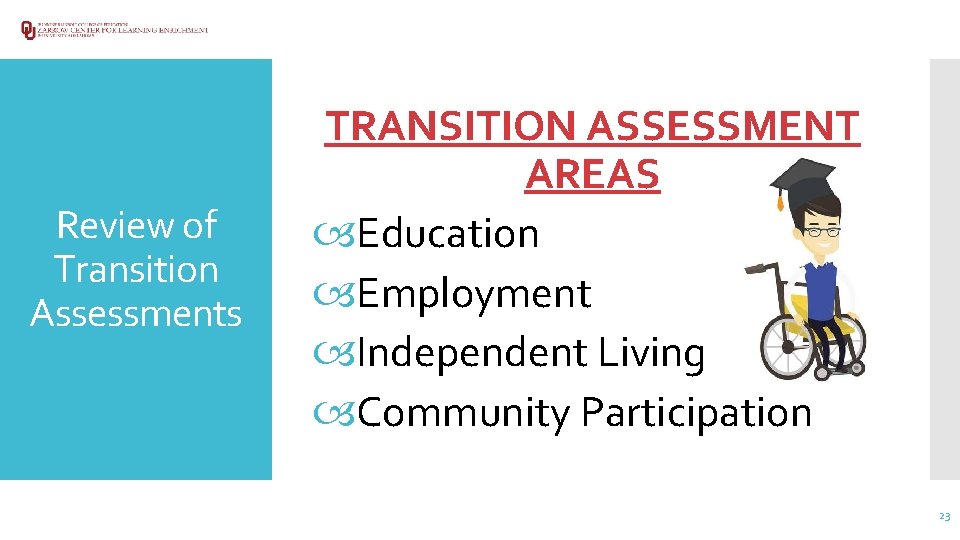
Review of Transition Assessments TRANSITION ASSESSMENT AREAS Education Employment Independent Living Community Participation 23
Education 24
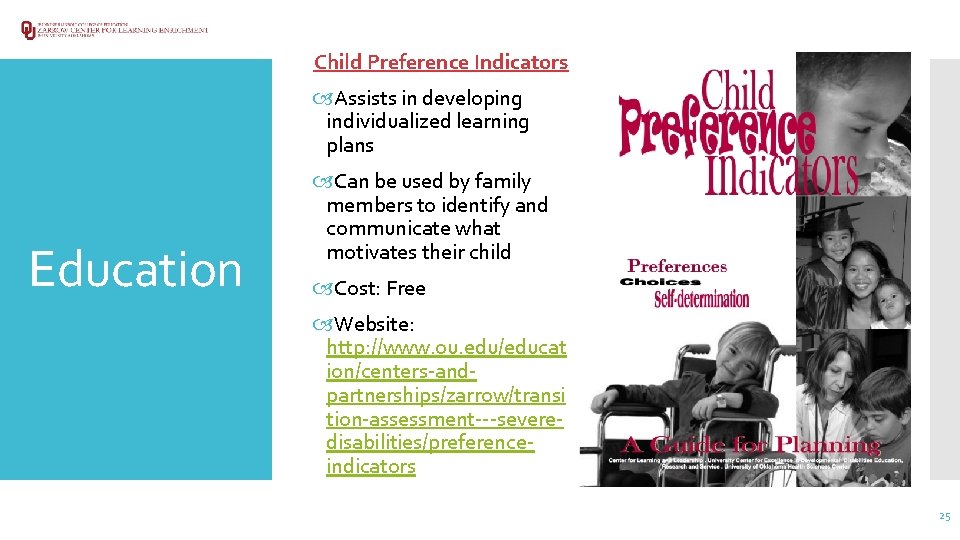
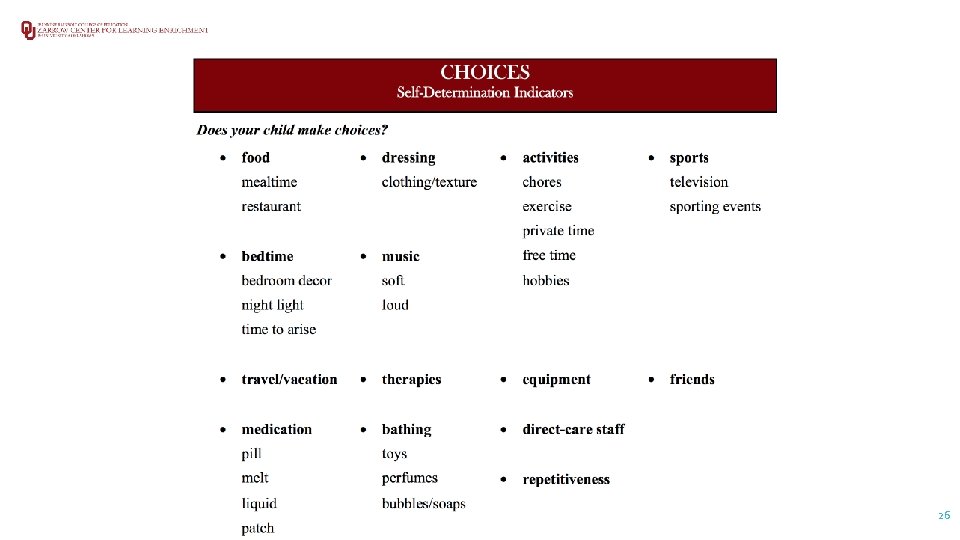
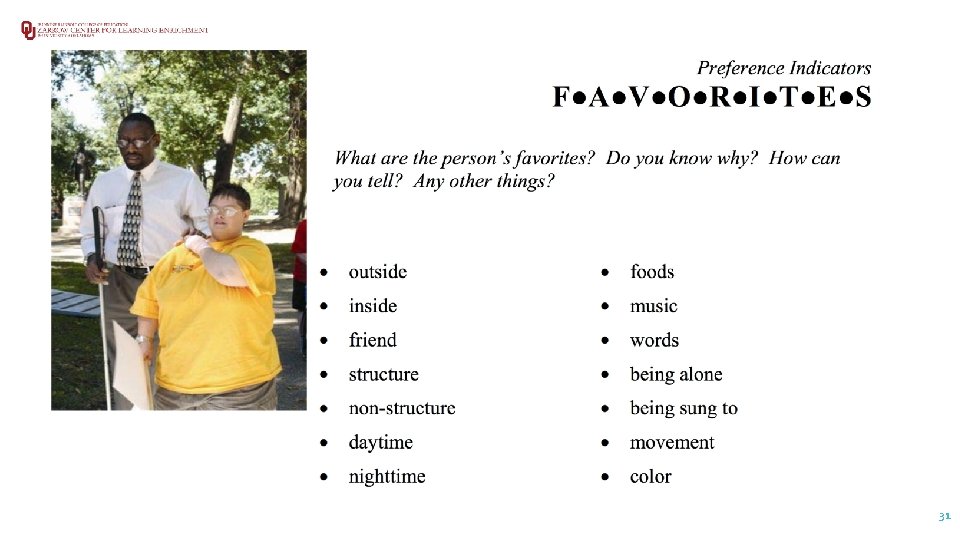
Child Preference Indicators Assists in developing individualized learning plans Education Can be used by family members to identify and communicate what motivates their child Cost: Free Website: http: //www. ou. edu/educat ion/centers-andpartnerships/zarrow/transi tion-assessment---severedisabilities/preferenceindicators 25
26
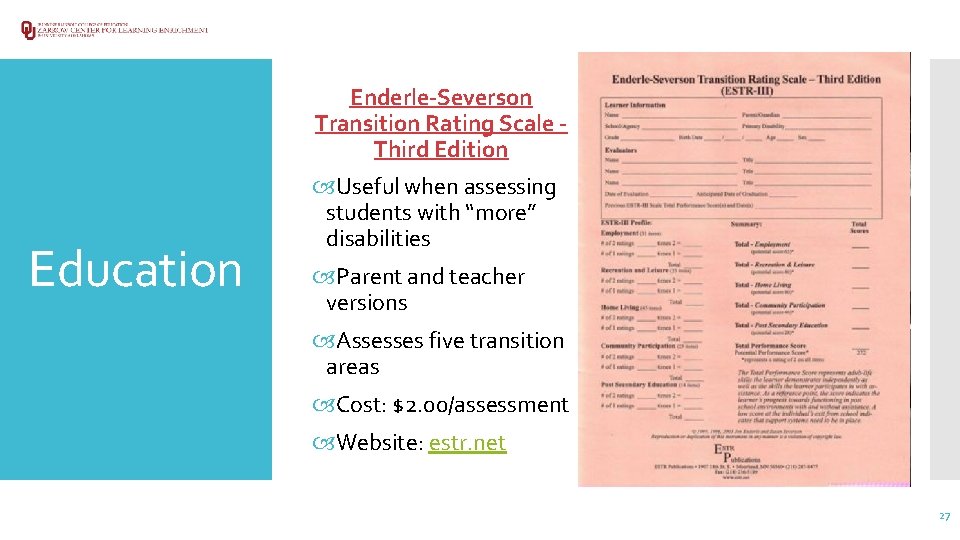
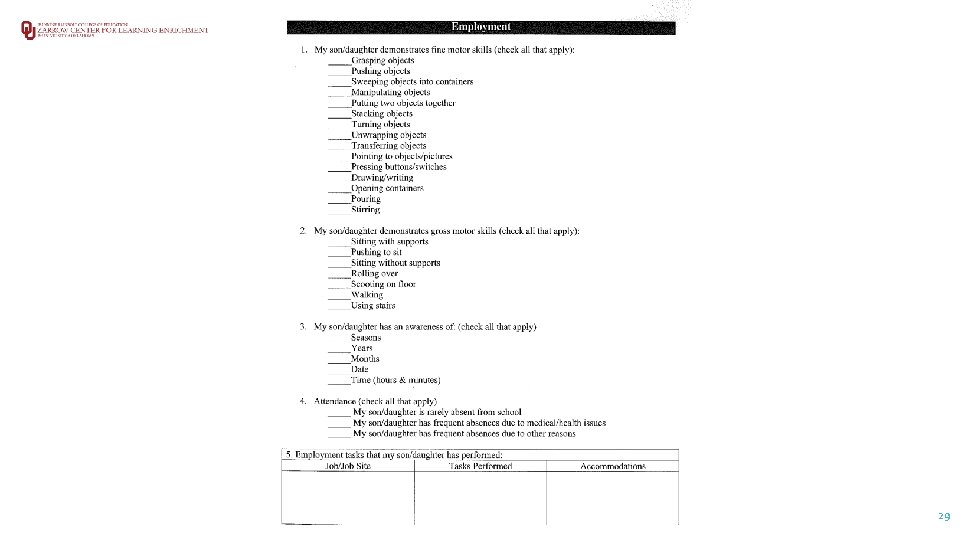
Enderle-Severson Transition Rating Scale Third Edition Education Useful when assessing students with “more” disabilities Parent and teacher versions Assesses five transition areas Cost: $2. 00/assessment Website: estr. net 27
Enderle-Severson Transition Rating Scale S Education Useful when assessing students with severe/multiple impairments Parent and teacher versions Assesses five transition areas Cost: $2. 00/assessment Website: estr. net 28
29
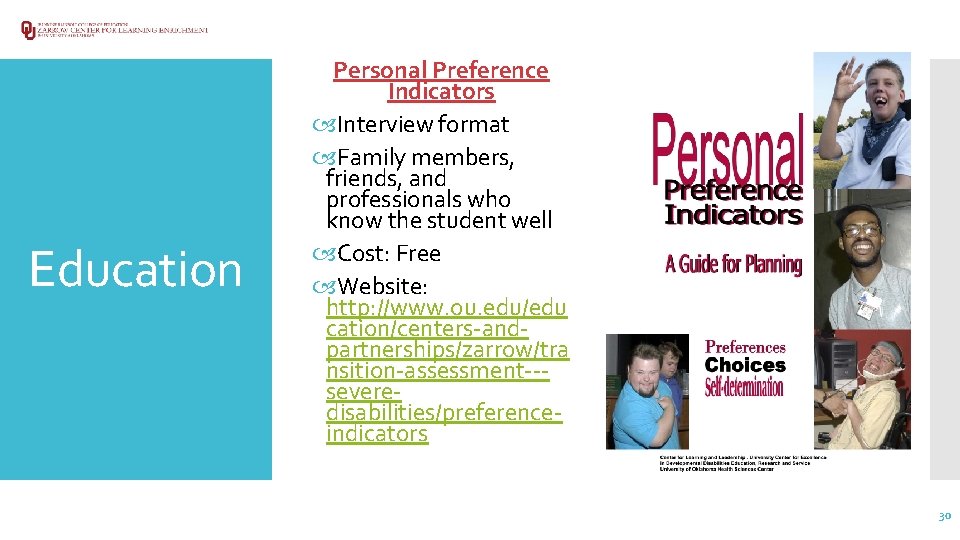
Education Personal Preference Indicators Interview format Family members, friends, and professionals who know the student well Cost: Free Website: http: //www. ou. edu/edu cation/centers-andpartnerships/zarrow/tra nsition-assessment--severedisabilities/preferenceindicators 30
31
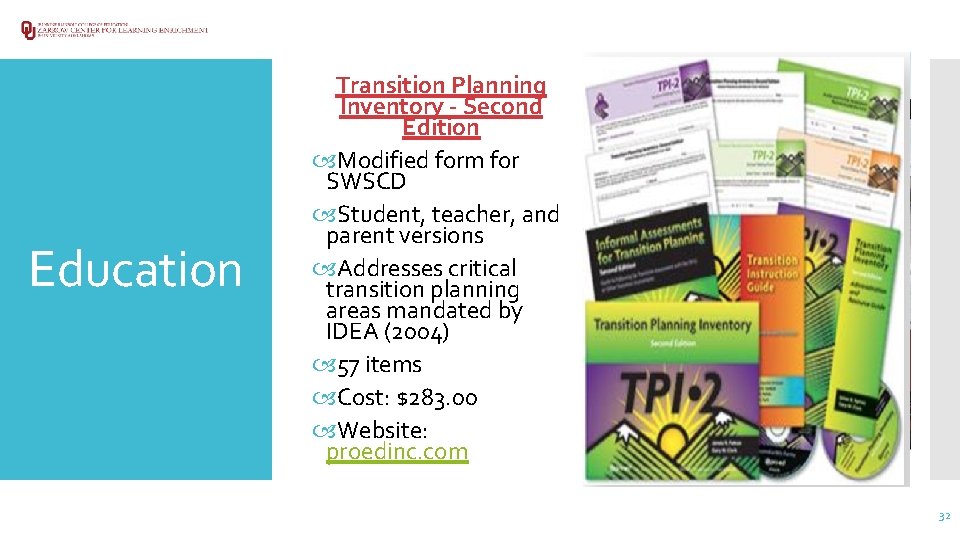
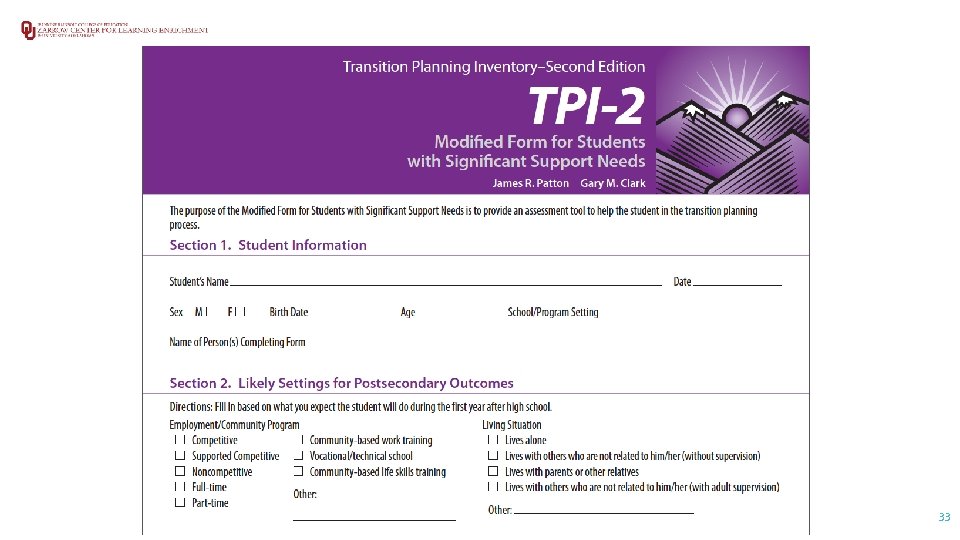
Education Transition Planning Inventory - Second Edition Modified form for SWSCD Student, teacher, and parent versions Addresses critical transition planning areas mandated by IDEA (2004) 57 items Cost: $283. 00 Website: proedinc. com 32
33
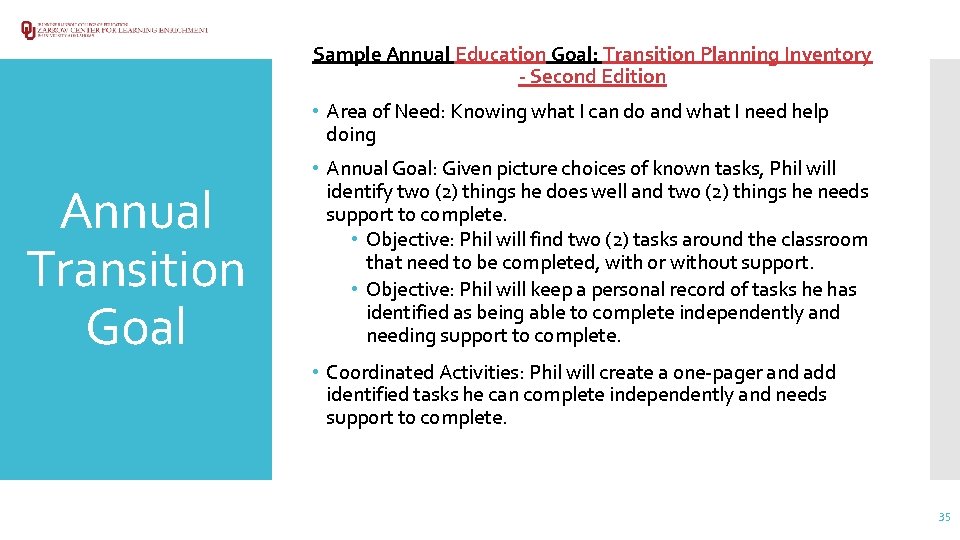
Condition Involves the application of skills or knowledge and describes the materials and environment necessary for the goal to be completed Annual Transition Goal Behavior Identifies the performance that is being monitored Criterion How much, how often, or to what standards the behavior must occur 34
Sample Annual Education Goal: Transition Planning Inventory - Second Edition • Area of Need: Knowing what I can do and what I need help doing Annual Transition Goal • Annual Goal: Given picture choices of known tasks, Phil will identify two (2) things he does well and two (2) things he needs support to complete. • Objective: Phil will find two (2) tasks around the classroom that need to be completed, with or without support. • Objective: Phil will keep a personal record of tasks he has identified as being able to complete independently and needing support to complete. • Coordinated Activities: Phil will create a one-pager and add identified tasks he can complete independently and needs support to complete. 35
Employment 36
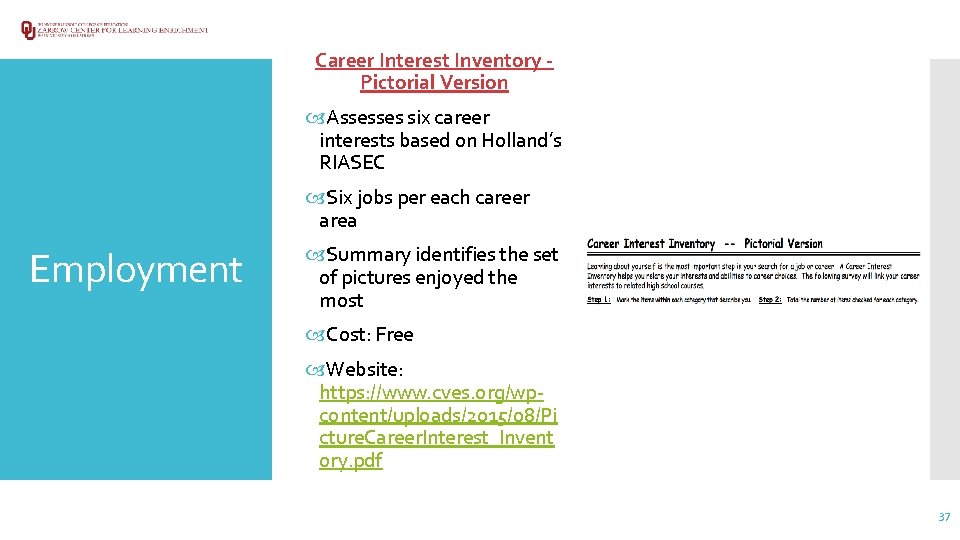
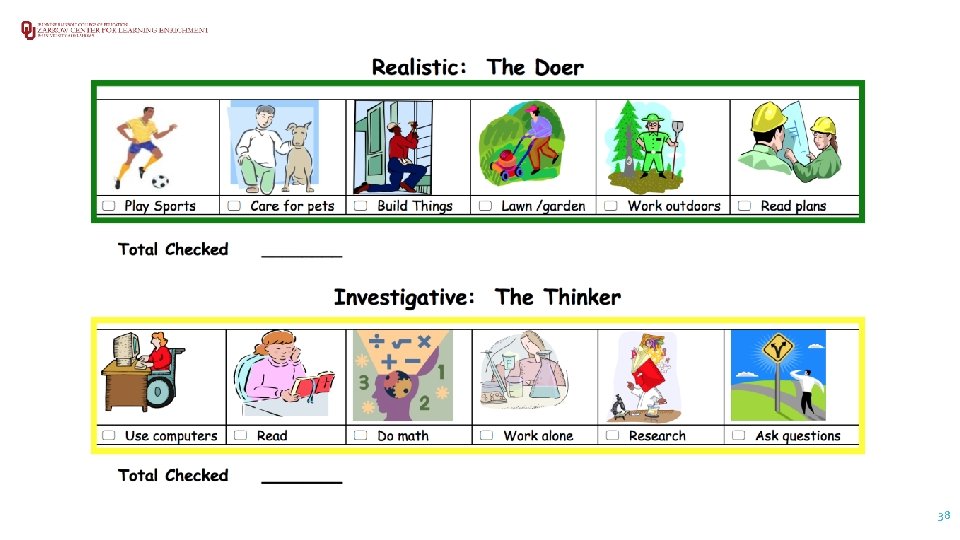
Career Interest Inventory Pictorial Version Assesses six career interests based on Holland’s RIASEC Six jobs per each career area Employment Summary identifies the set of pictures enjoyed the most Cost: Free Website: https: //www. cves. org/wpcontent/uploads/2015/08/Pi cture. Career. Interest_Invent ory. pdf 37
38
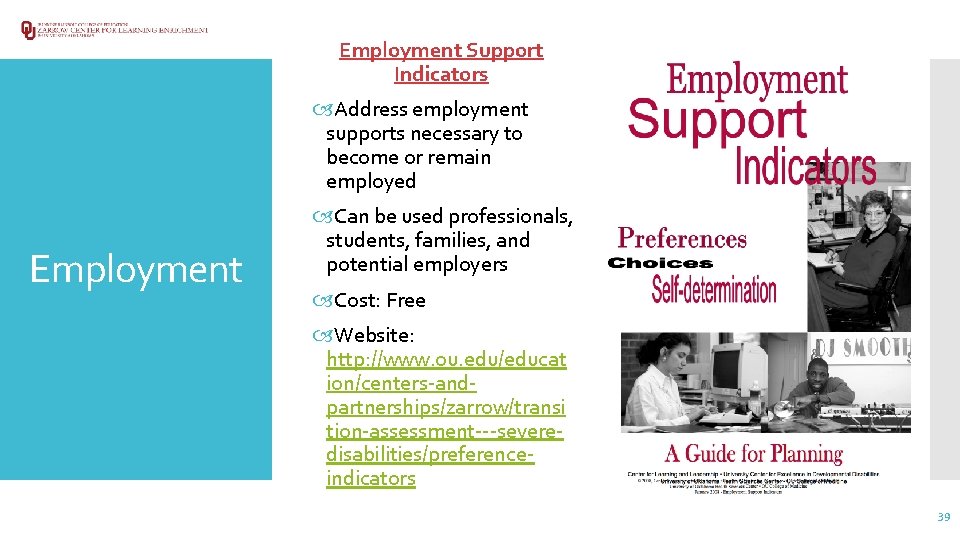
Employment Support Indicators Address employment supports necessary to become or remain employed Employment Can be used professionals, students, families, and potential employers Cost: Free Website: http: //www. ou. edu/educat ion/centers-andpartnerships/zarrow/transi tion-assessment---severedisabilities/preferenceindicators 39
40
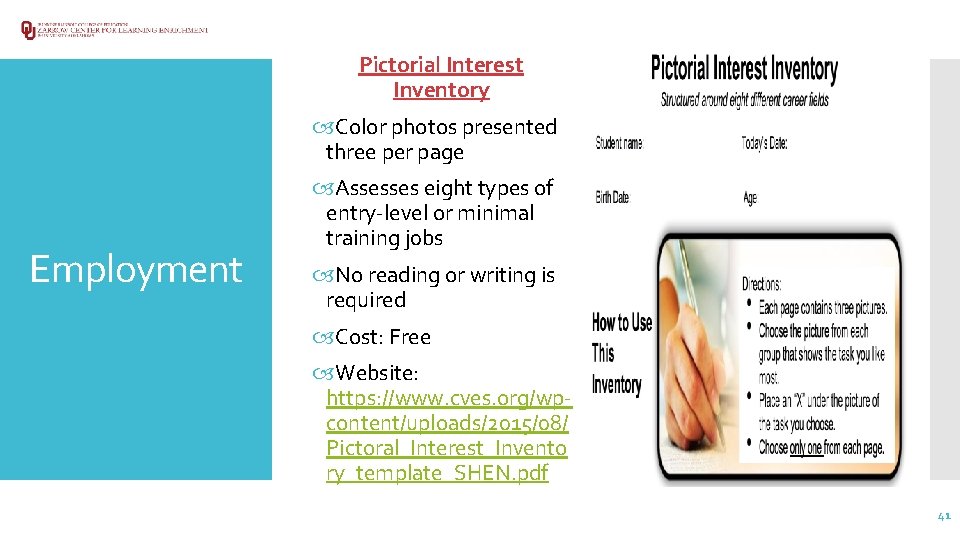
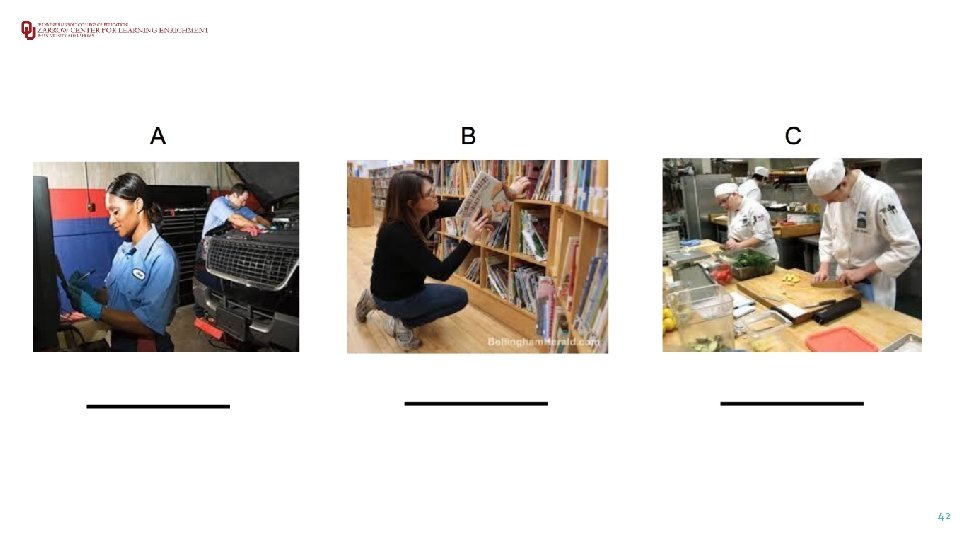
Pictorial Interest Inventory Color photos presented three per page Employment Assesses eight types of entry-level or minimal training j 0 bs No reading or writing is required Cost: Free Website: https: //www. cves. org/wpcontent/uploads/2015/08/ Pictoral_Interest_Invento ry_template_SHEN. pdf 41
42
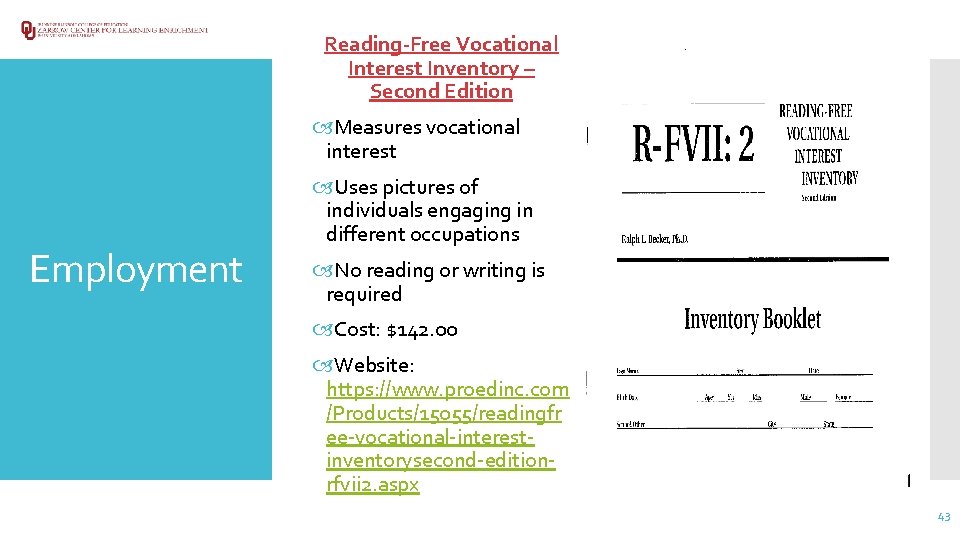
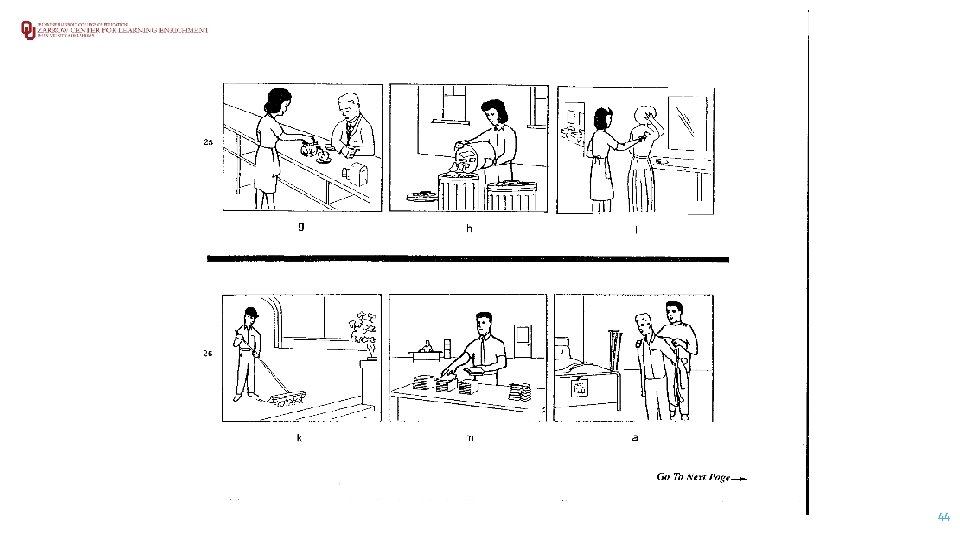
Reading-Free Vocational Interest Inventory – Second Edition Measures vocational interest Employment Uses pictures of individuals engaging in different occupations No reading or writing is required Cost: $142. 00 Website: https: //www. proedinc. com /Products/15055/readingfr ee-vocational-interestinventorysecond-editionrfvii 2. aspx 43
44
Annual Transition Goal Sample Annual Employment Goal: • Area of Need: Knowing job characteristics I like • Annual Goal: Given the My Employment Plan worksheet, Phil will identify three (3) desired job characteristics and three (3) undesirable job characteristics. • Objective: Phil will identify three (3) desirable job characteristics • Objective: Phil will identify three (3) undesirable job characteristics • Coordinated Activities: Phil will complete job task trials for each identified job characteristic he desires indicated on the My Employment Plan worksheet. 45
Independent Living 46
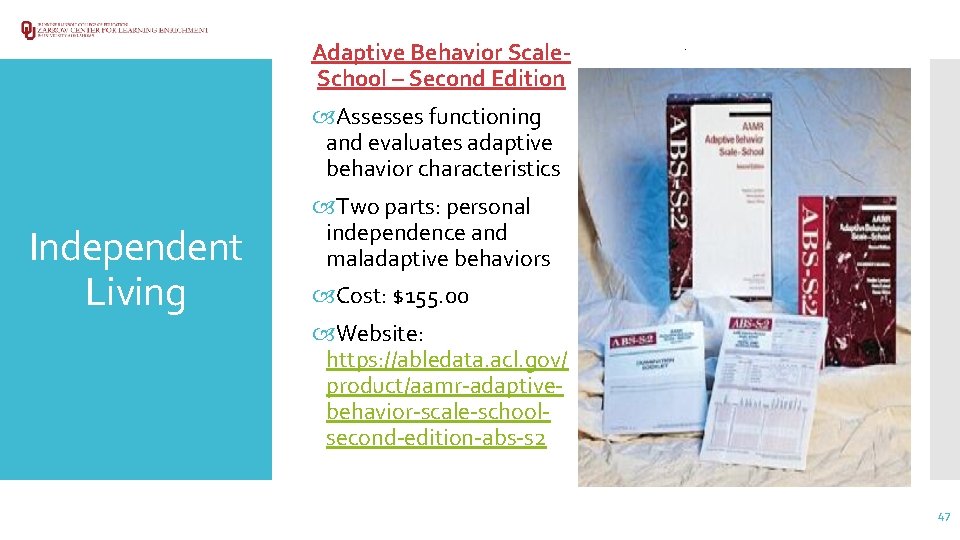
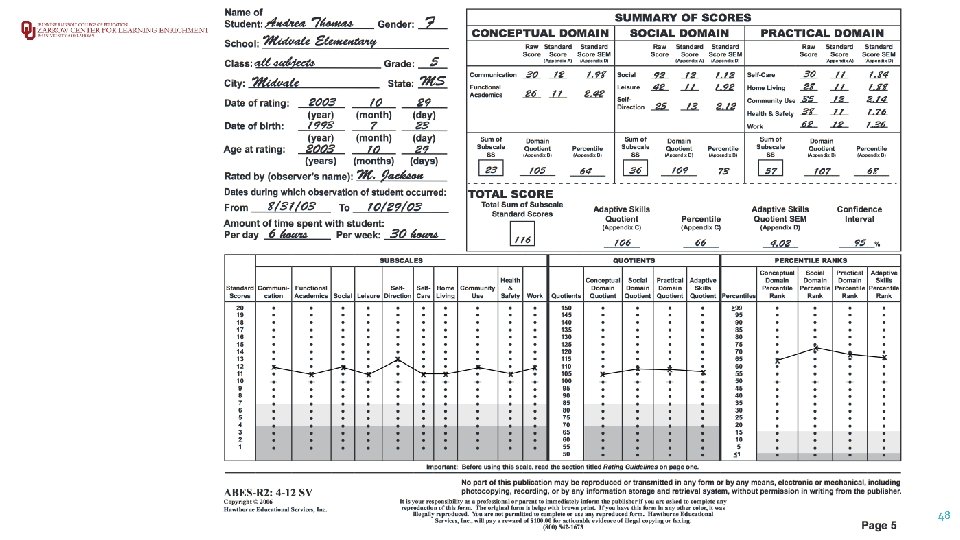
Adaptive Behavior Scale. School – Second Edition Assesses functioning and evaluates adaptive behavior characteristics Independent Living Two parts: personal independence and maladaptive behaviors Cost: $155. 00 Website: https: //abledata. acl. gov/ product/aamr-adaptivebehavior-scale-schoolsecond-edition-abs-s 2 47
48
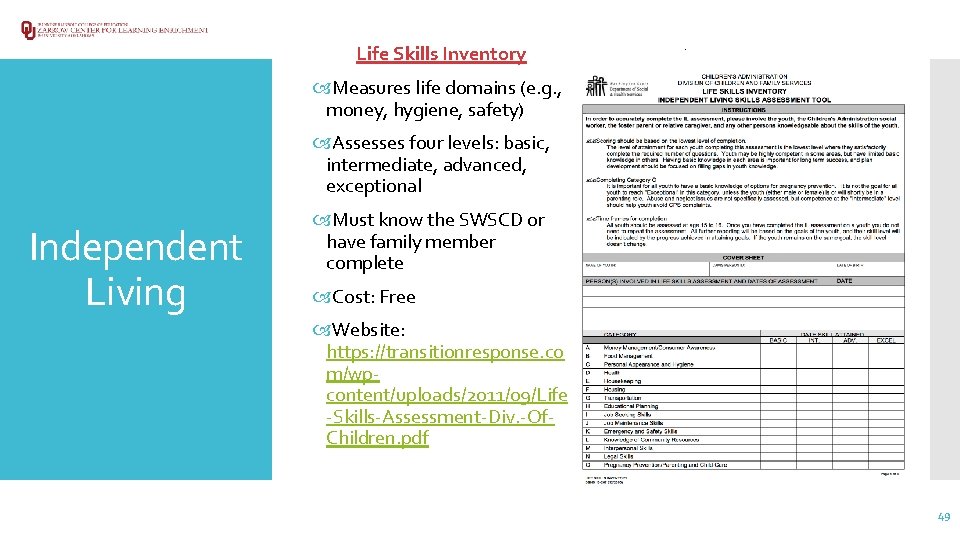
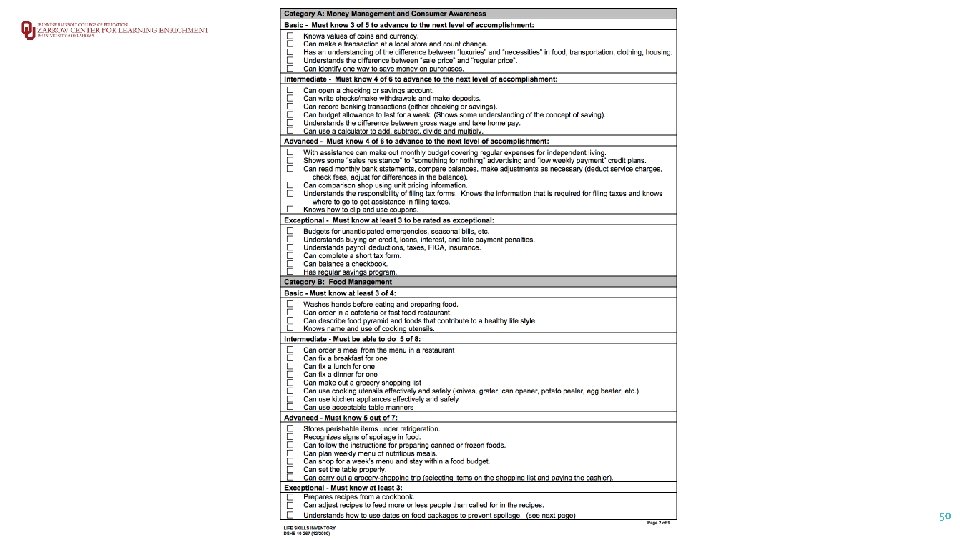
Life Skills Inventory Measures life domains (e. g. , money, hygiene, safety) Assesses four levels: basic, intermediate, advanced, exceptional Independent Living Must know the SWSCD or have family member complete Cost: Free Website: https: //transitionresponse. co m/wpcontent/uploads/2011/09/Life -Skills-Assessment-Div. -Of. Children. pdf 49
50
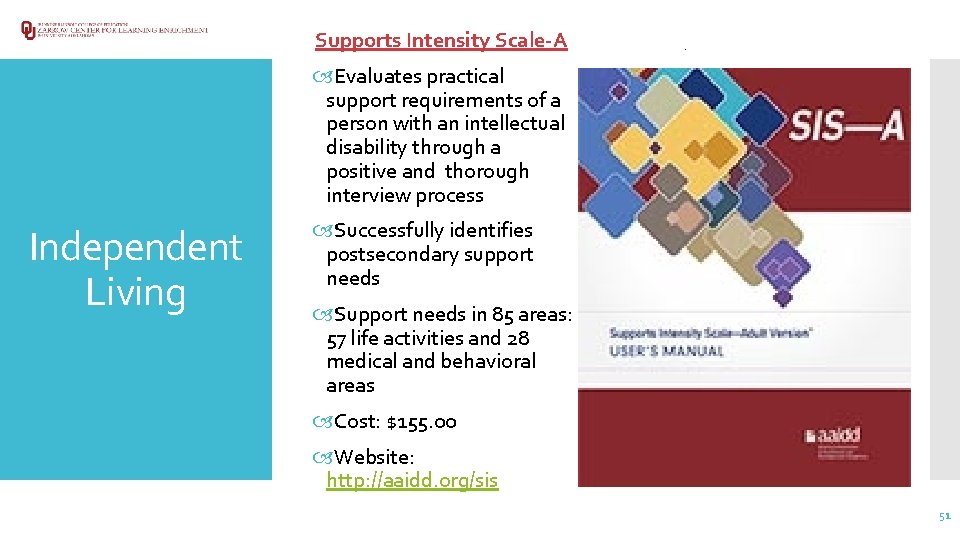
Supports Intensity Scale-A Evaluates practical support requirements of a person with an intellectual disability through a positive and thorough interview process Independent Living Successfully identifies postsecondary support needs Support needs in 85 areas: 57 life activities and 28 medical and behavioral areas Cost: $155. 00 Website: http: //aaidd. org/sis 51
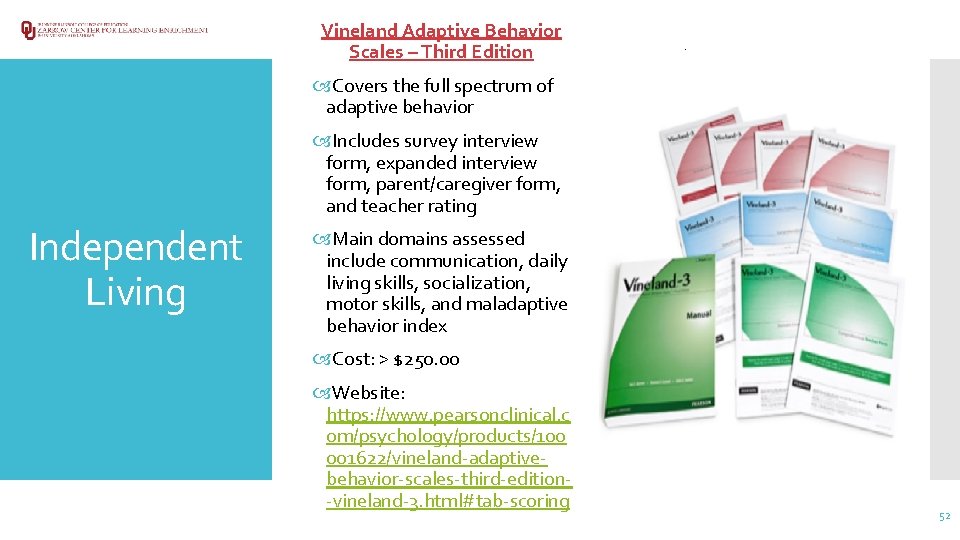
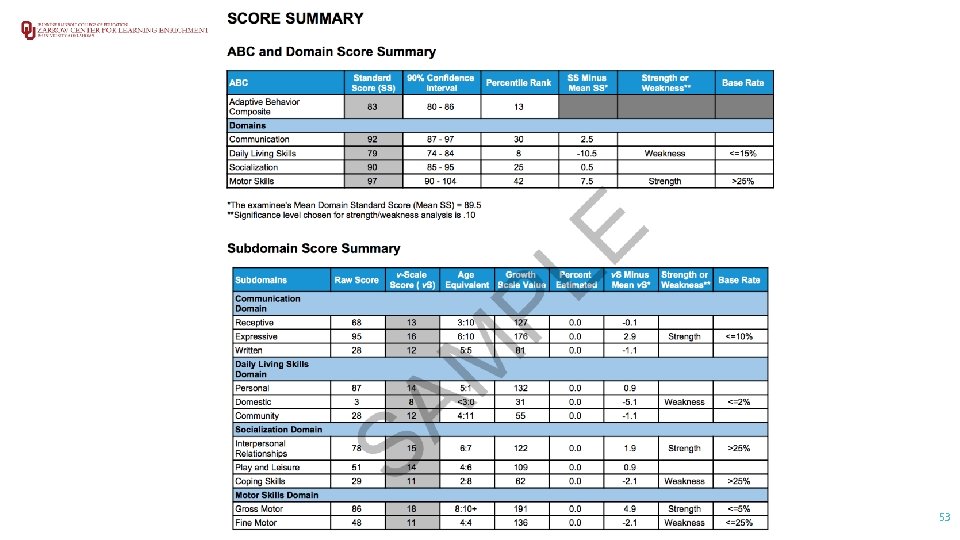
Vineland Adaptive Behavior Scales – Third Edition Covers the full spectrum of adaptive behavior Includes survey interview form, expanded interview form, parent/caregiver form, and teacher rating Independent Living Main domains assessed include communication, daily living skills, socialization, motor skills, and maladaptive behavior index Cost: > $250. o 0 Website: https: //www. pearsonclinical. c om/psychology/products/100 001622/vineland-adaptivebehavior-scales-third-edition-vineland-3. html#tab-scoring 52
53
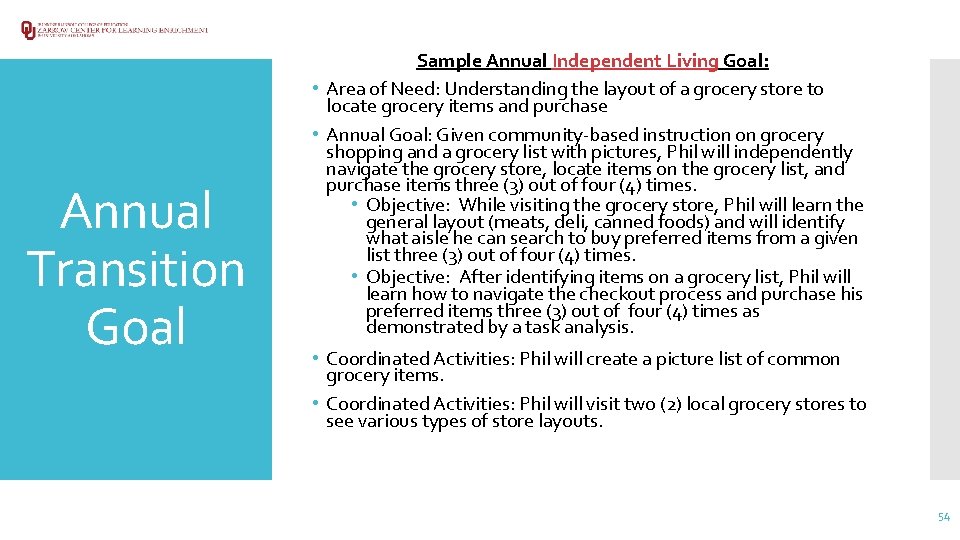
Annual Transition Goal Sample Annual Independent Living Goal: • Area of Need: Understanding the layout of a grocery store to locate grocery items and purchase • Annual Goal: Given community-based instruction on grocery shopping and a grocery list with pictures, Phil will independently navigate the grocery store, locate items on the grocery list, and purchase items three (3) out of four (4) times. • Objective: While visiting the grocery store, Phil will learn the general layout (meats, deli, canned foods) and will identify what aisle he can search to buy preferred items from a given list three (3) out of four (4) times. • Objective: After identifying items on a grocery list, Phil will learn how to navigate the checkout process and purchase his preferred items three (3) out of four (4) times as demonstrated by a task analysis. • Coordinated Activities: Phil will create a picture list of common grocery items. • Coordinated Activities: Phil will visit two (2) local grocery stores to see various types of store layouts. 54
Community Participation 55
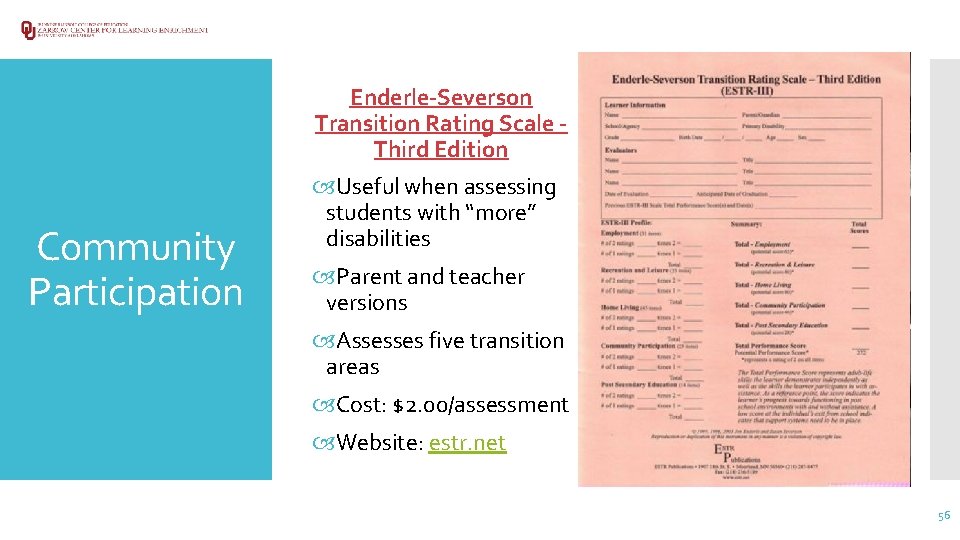
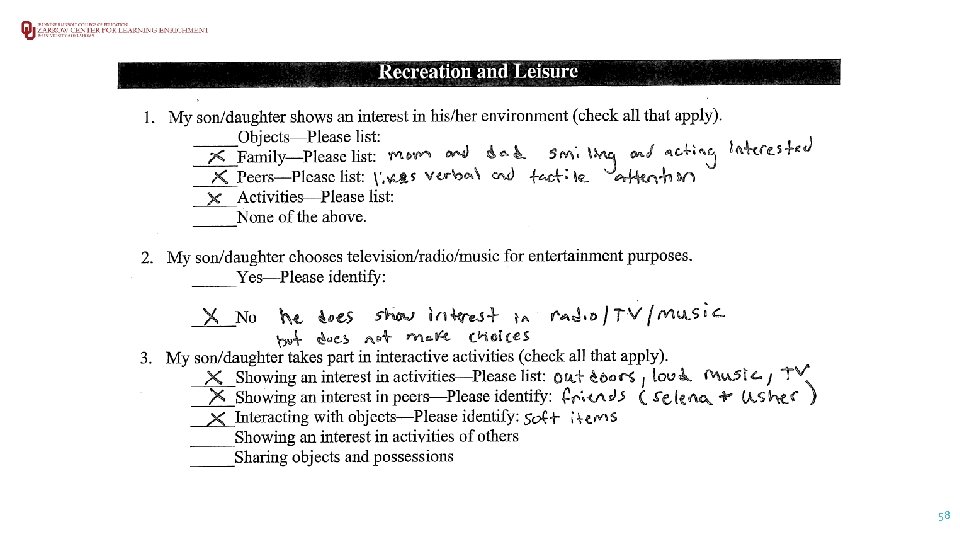
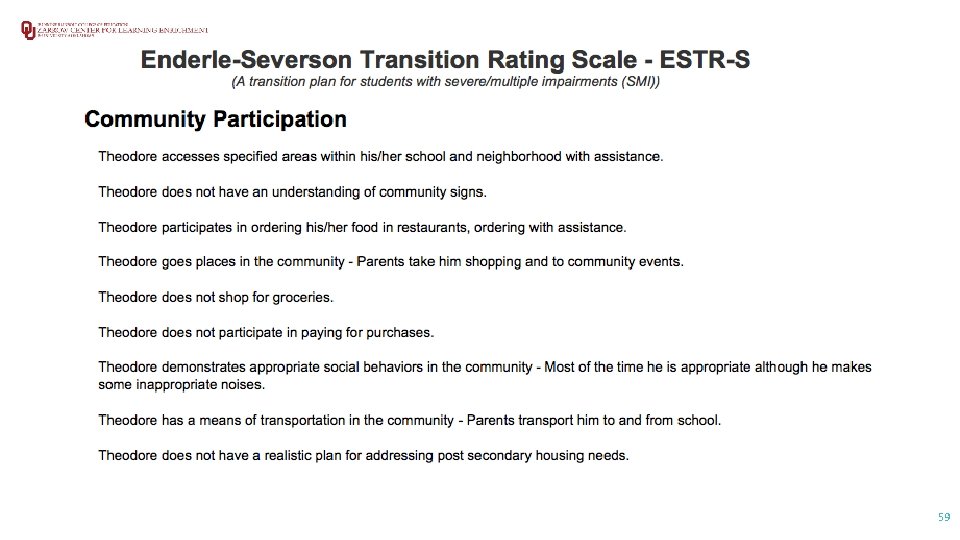
Enderle-Severson Transition Rating Scale Third Edition Community Participation Useful when assessing students with “more” disabilities Parent and teacher versions Assesses five transition areas Cost: $2. 00/assessment Website: estr. net 56
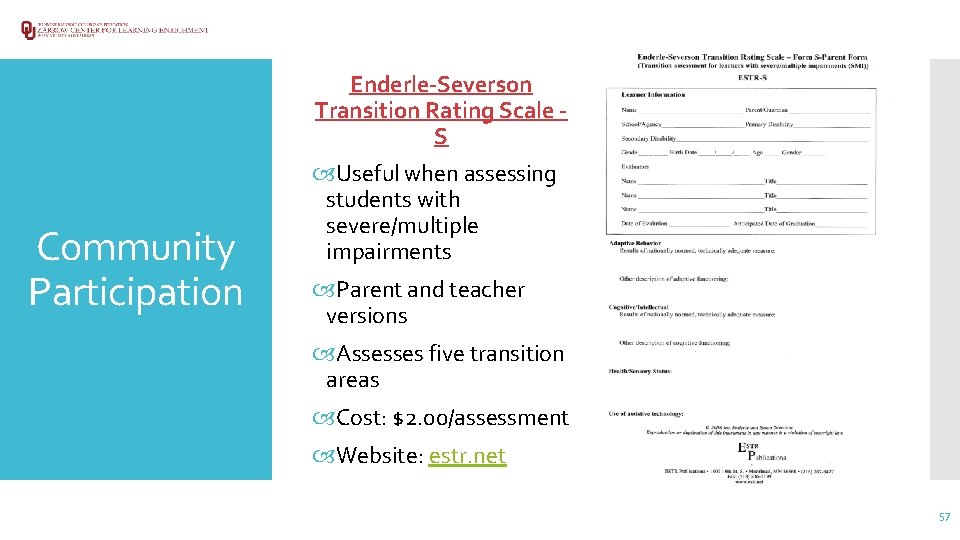
Enderle-Severson Transition Rating Scale S Community Participation Useful when assessing students with severe/multiple impairments Parent and teacher versions Assesses five transition areas Cost: $2. 00/assessment Website: estr. net 57
58
59
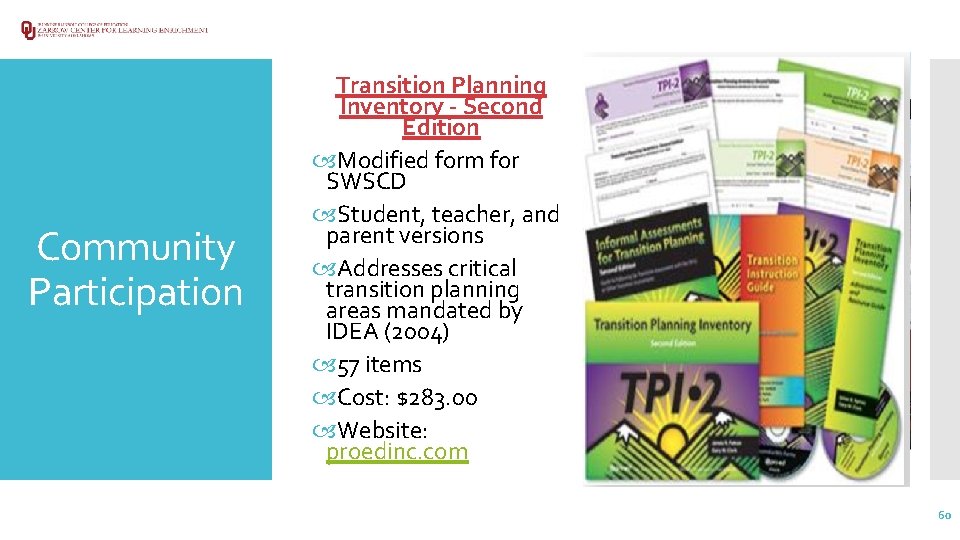
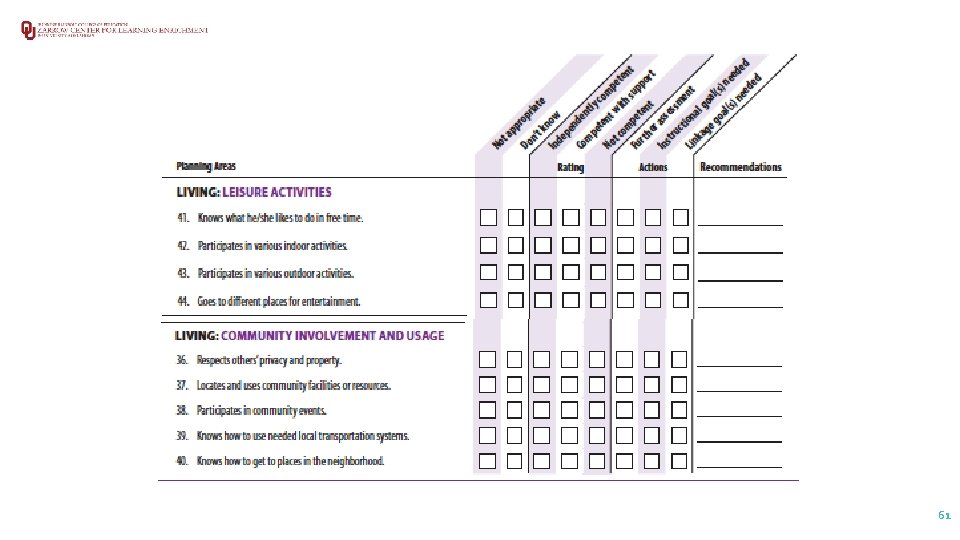
Community Participation Transition Planning Inventory - Second Edition Modified form for SWSCD Student, teacher, and parent versions Addresses critical transition planning areas mandated by IDEA (2004) 57 items Cost: $283. 00 Website: proedinc. com 60
61
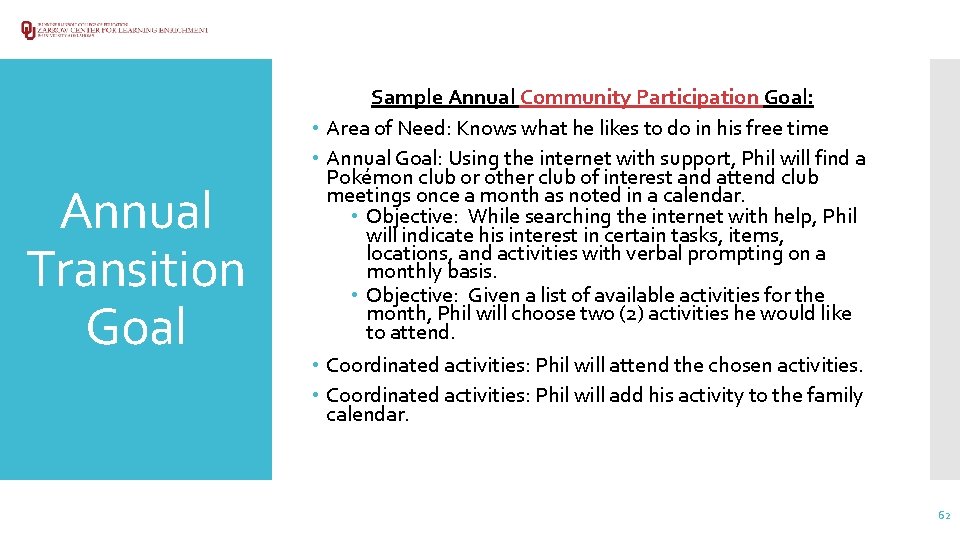
Annual Transition Goal Sample Annual Community Participation Goal: • Area of Need: Knows what he likes to do in his free time • Annual Goal: Using the internet with support, Phil will find a Pokémon club or other club of interest and attend club meetings once a month as noted in a calendar. • Objective: While searching the internet with help, Phil will indicate his interest in certain tasks, items, locations, and activities with verbal prompting on a monthly basis. • Objective: Given a list of available activities for the month, Phil will choose two (2) activities he would like to attend. • Coordinated activities: Phil will attend the chosen activities. • Coordinated activities: Phil will add his activity to the family calendar. 62
63
Thank you! 64