
Creating a Trauma Informed Learning environment within a

- Slides: 68
Creating a Trauma Informed Learning environment within a Multi-tiered System of Supports Presented By Kym Asam, LICSW, QMHP November 18, 2015
Webinar Logistics • Orient to Webinar Screen • 2 Ways to Interact: – Raise your hand using the icon on your screen – Type a question into the text box • Intermittently we will provide opportunities to interact. • This webinar will be recorded. • Please note, your microphone will be muted unless otherwise indicated.
Objectives • Differentiate between PTSD and developmental trauma • Understand the impact of trauma on multiple domains of functioning • Understand the students’ states of arousal and how it impacts their functioning in school • Key skills in working with children who have experienced developmental trauma • Increase understanding of how trauma informed schools intersect with MTSS
“Raise your hand” Have you already received some training on developmental or complex trauma?
Grounding Principles Trauma-Sensitive Schools benefit all children – those whose trauma history is known, those whose trauma will never be clearly identified and those who may be impacted by their traumatized classmates. Schools are the Central Community for most children. Source: Helping Traumatized Children Learn
Definitions What is trauma? Trauma is not just the event itself, but rather a response to a stressful experience in which a person’s ability to cope is dramatically undermined.
“Trauma is not a story of what happened to you a long time ago, it is what is in your body. ” -Bessel van der Kolk
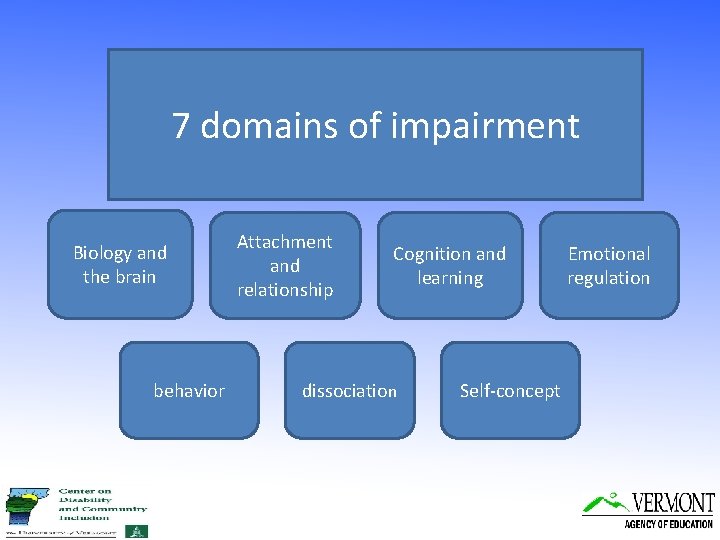
What is Developmental Trauma? • A psychological and neurobiological injury that results from protracted exposure to stressful events • Derails typical development across all domains (attachment, affect, biology, behavior, cognitive, dissociation, self-concept) • Experiences often occur in the caregiving system. • Impact is immediate and long term • Effects will require all tiers of intervention
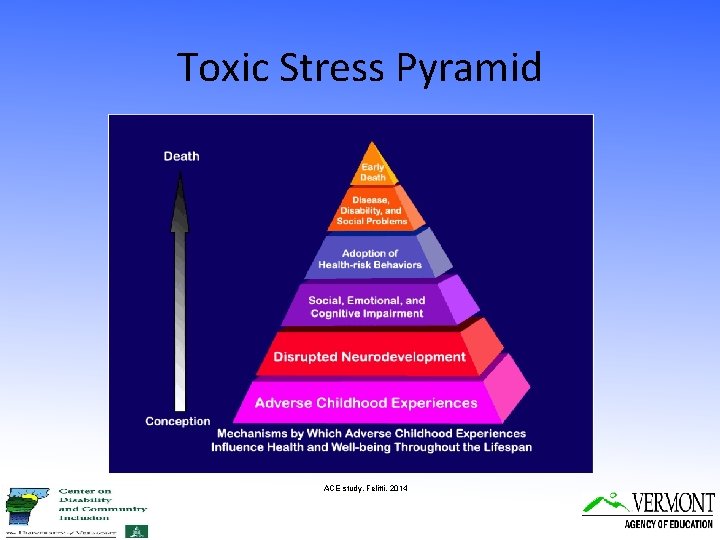
Toxic Stress Pyramid ACE study, Felitti, 2014
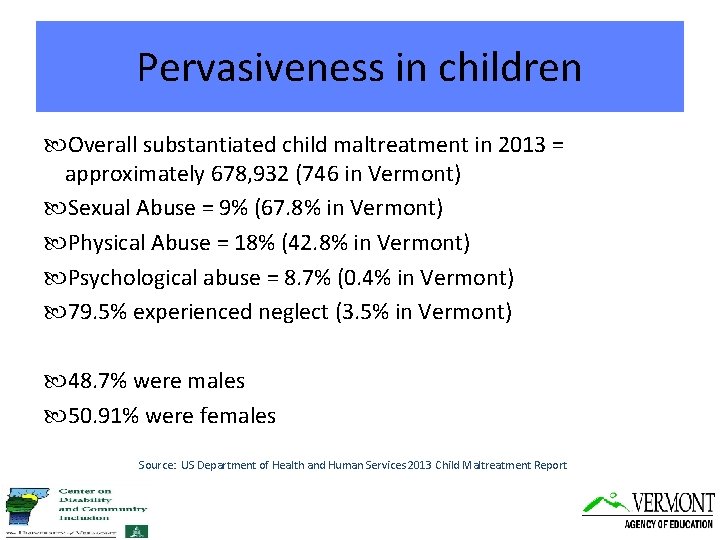
Pervasiveness in children Overall substantiated child maltreatment in 2013 = approximately 678, 932 (746 in Vermont) Sexual Abuse = 9% (67. 8% in Vermont) Physical Abuse = 18% (42. 8% in Vermont) Psychological abuse = 8. 7% (0. 4% in Vermont) 79. 5% experienced neglect (3. 5% in Vermont) 48. 7% were males 50. 91% were females Source: US Department of Health and Human Services 2013 Child Maltreatment Report
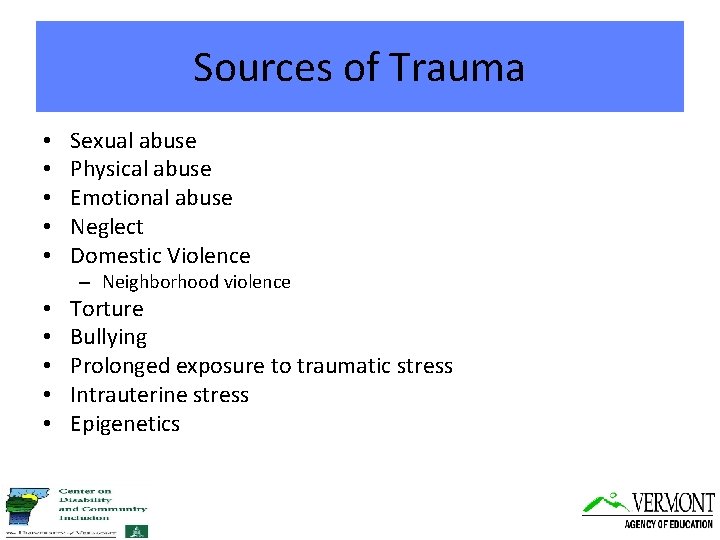
Sources of Trauma • • • Sexual abuse Physical abuse Emotional abuse Neglect Domestic Violence – Neighborhood violence • • • Torture Bullying Prolonged exposure to traumatic stress Intrauterine stress Epigenetics
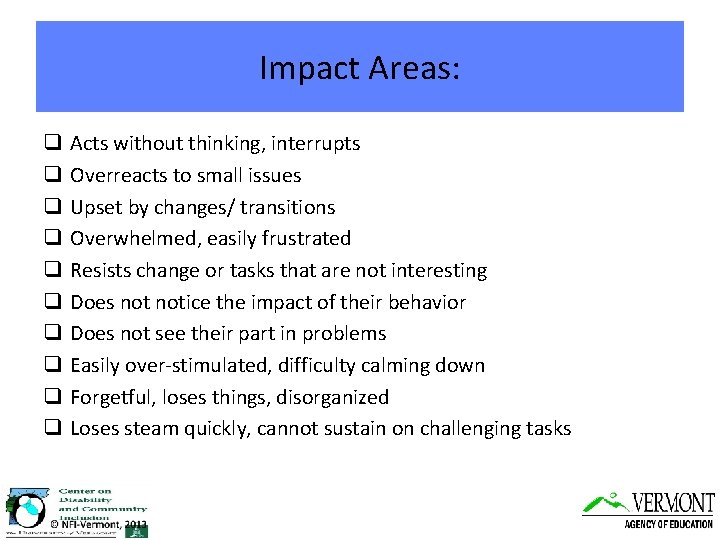
Impact Areas: q q q q q Acts without thinking, interrupts Overreacts to small issues Upset by changes/ transitions Overwhelmed, easily frustrated Resists change or tasks that are not interesting Does notice the impact of their behavior Does not see their part in problems Easily over-stimulated, difficulty calming down Forgetful, loses things, disorganized Loses steam quickly, cannot sustain on challenging tasks
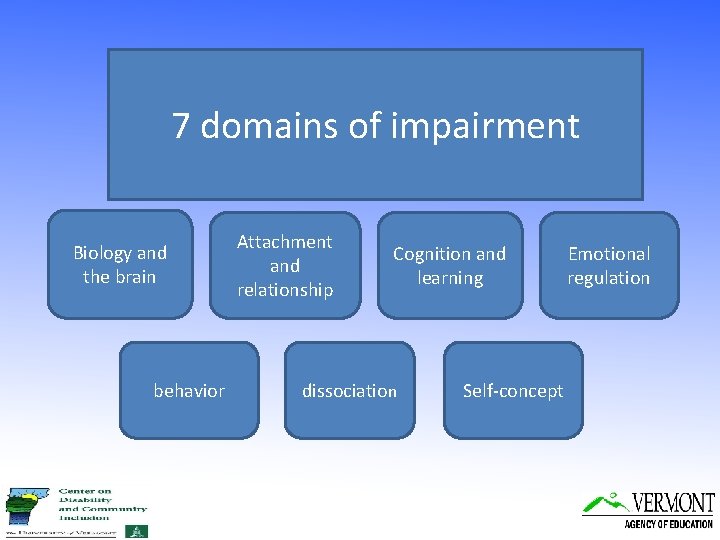
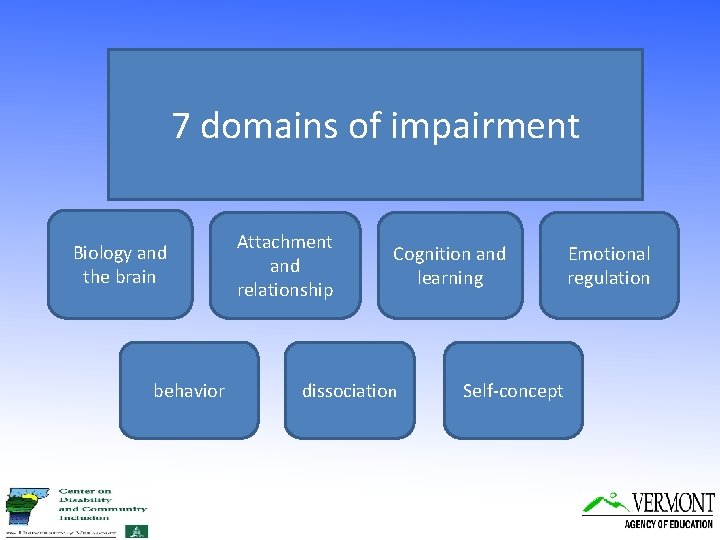
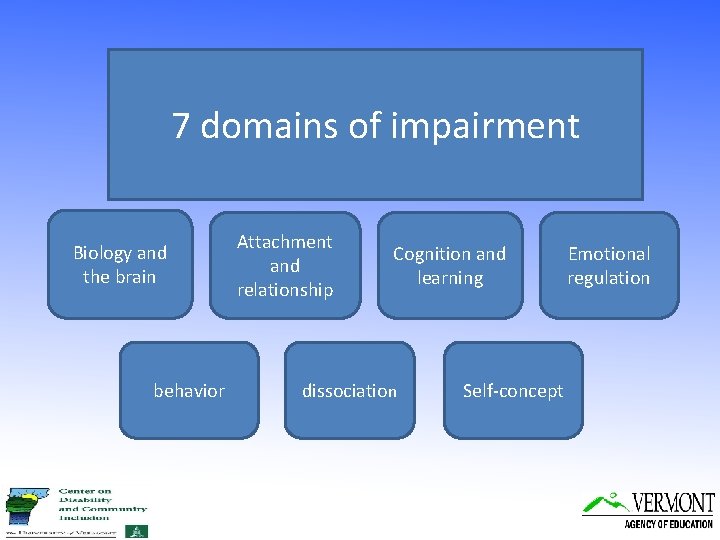
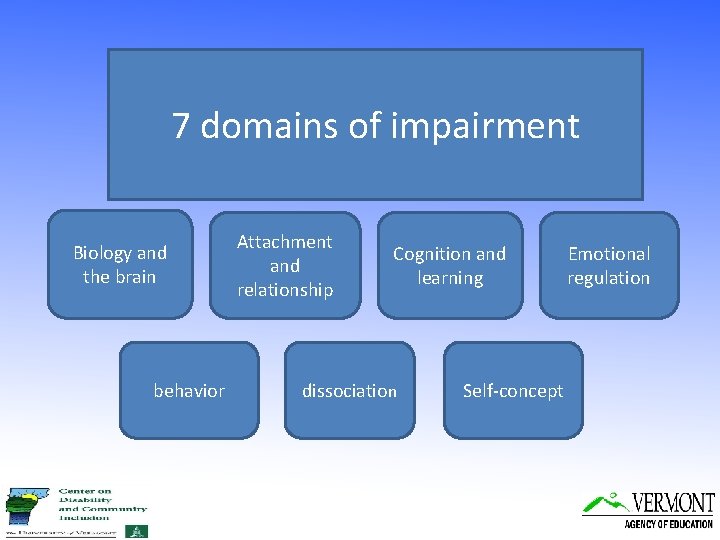
7 domains of impairment Biology and the brain behavior Attachment and relationship Cognition and learning dissociation Self-concept Emotional regulation
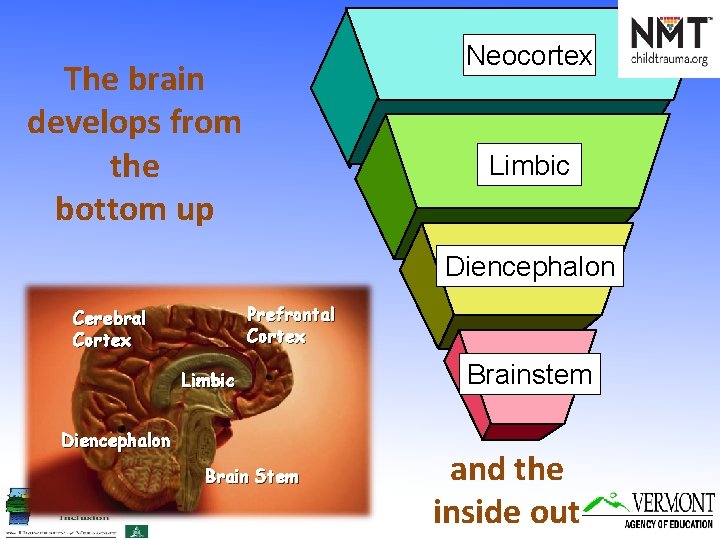
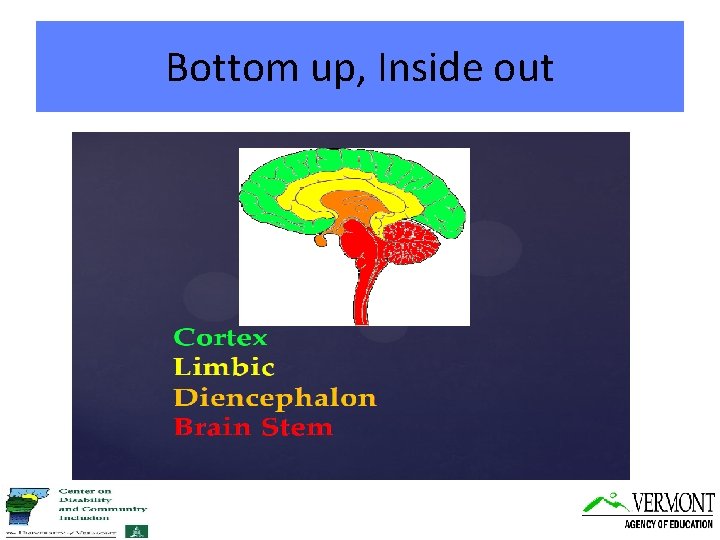
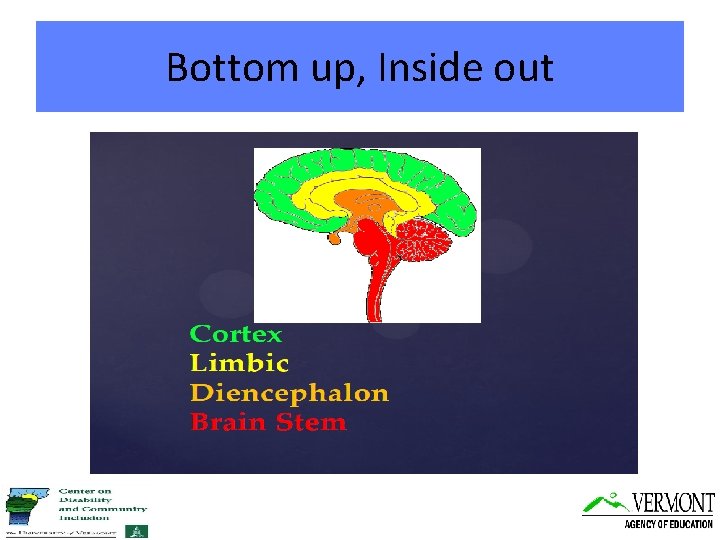
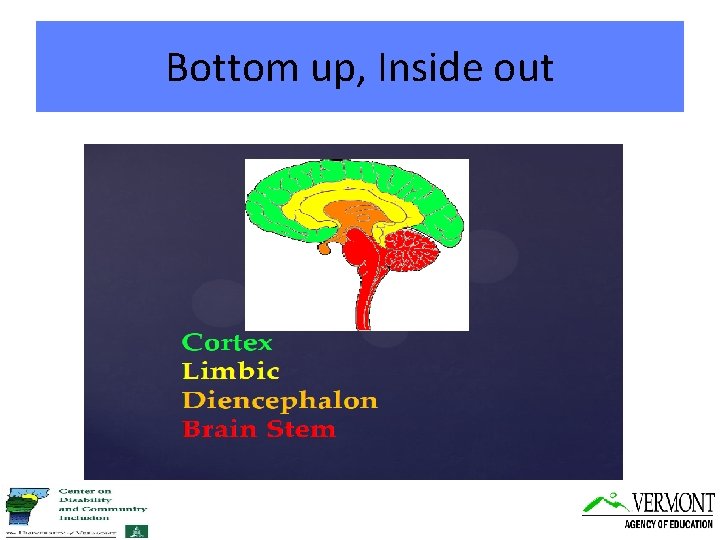
Neocortex The brain develops from the bottom up Cortex Limbic Diencephalon Brainstem Prefrontal Cortex Cerebral Cortex Limbic Diencephalon Brain Stem Brainstem and the inside out
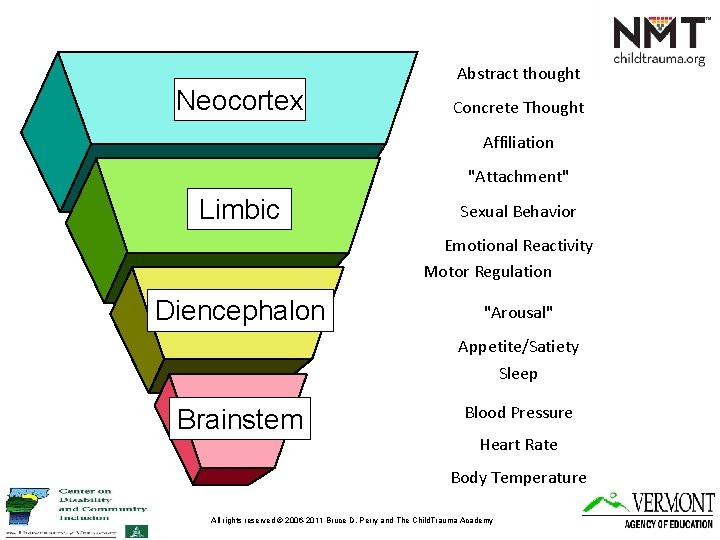
Abstract thought Neocortex Concrete Thought Affiliation "Attachment" Limbic Sexual Behavior Emotional Reactivity Motor Regulation Diencephalon "Arousal" Appetite/Satiety Sleep Brainstem Blood Pressure Heart Rate Body Temperature All rights reserved © 2006 -2011 Bruce D. Perry and The Child. Trauma Academy
The still face experiment http: //www. youtube. com/watch? v=apz. XGEb. Zht 0
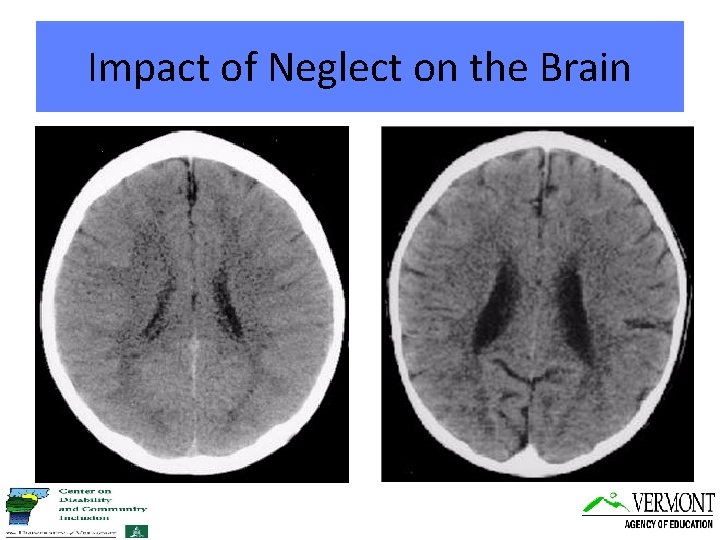
Impact of Neglect on the Brain
Bottom up, Inside out
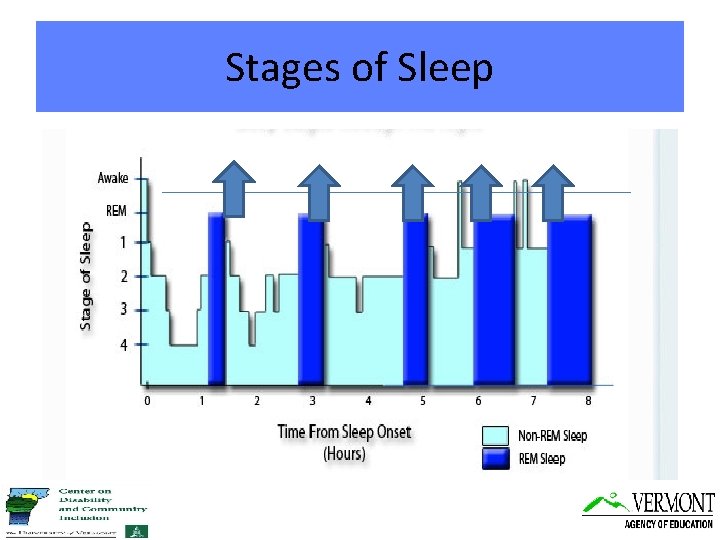
Stages of Sleep
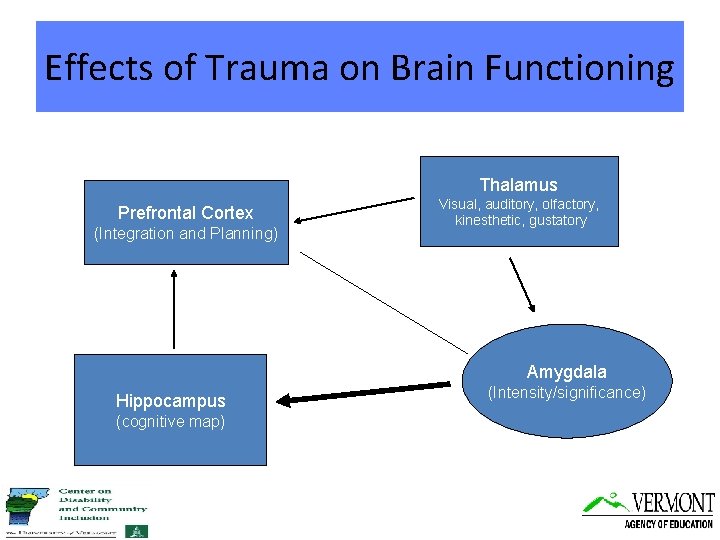
Effects of Trauma on Brain Functioning Thalamus Prefrontal Cortex (Integration and Planning) Visual, auditory, olfactory, kinesthetic, gustatory Amygdala Hippocampus (cognitive map) (Intensity/significance)
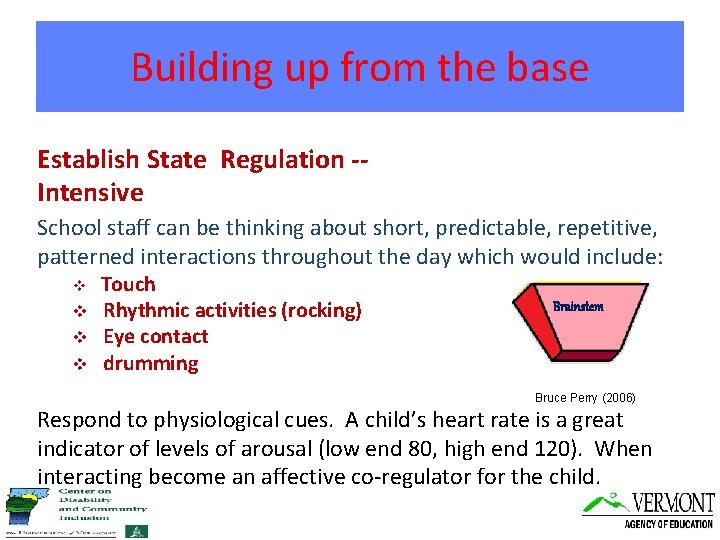
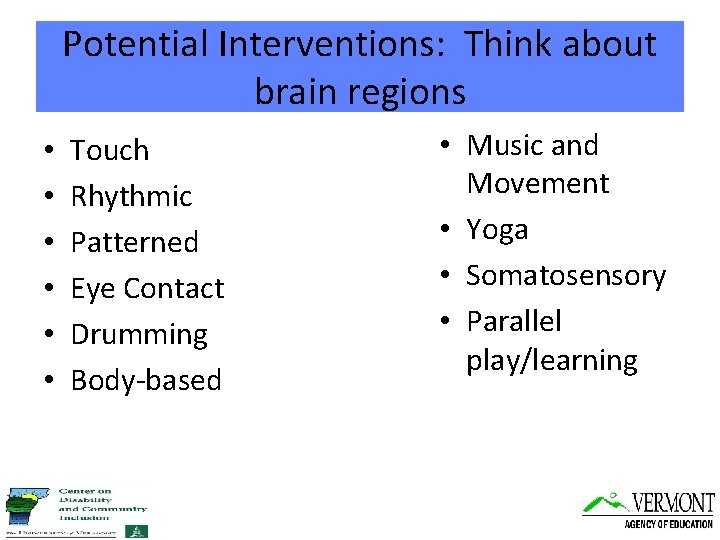
Building up from the base Establish State Regulation -Intensive School staff can be thinking about short, predictable, repetitive, patterned interactions throughout the day which would include: v v Touch Rhythmic activities (rocking) Eye contact drumming Brainstem Bruce Perry (2006) Respond to physiological cues. A child’s heart rate is a great indicator of levels of arousal (low end 80, high end 120). When interacting become an affective co-regulator for the child.
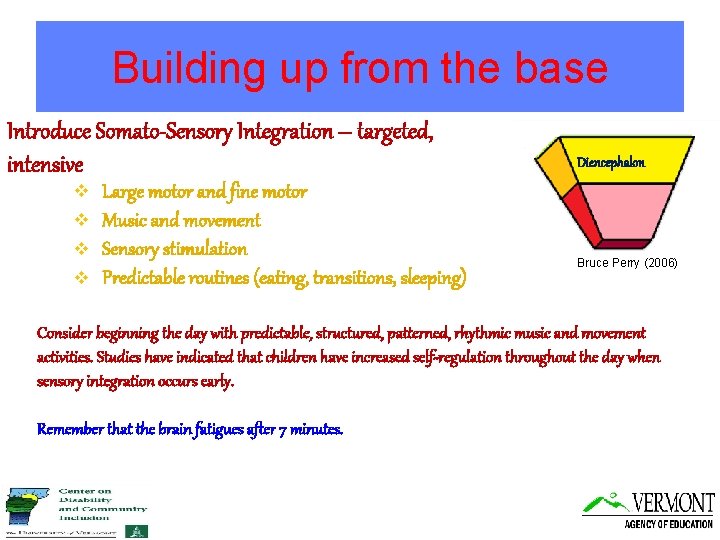
Building up from the base Introduce Somato-Sensory Integration – targeted, intensive v v Large motor and fine motor Music and movement Sensory stimulation Predictable routines (eating, transitions, sleeping) Diencephalon Bruce Perry (2006) Consider beginning the day with predictable, structured, patterned, rhythmic music and movement activities. Studies have indicated that children have increased self-regulation throughout the day when sensory integration occurs early. Remember that the brain fatigues after 7 minutes.
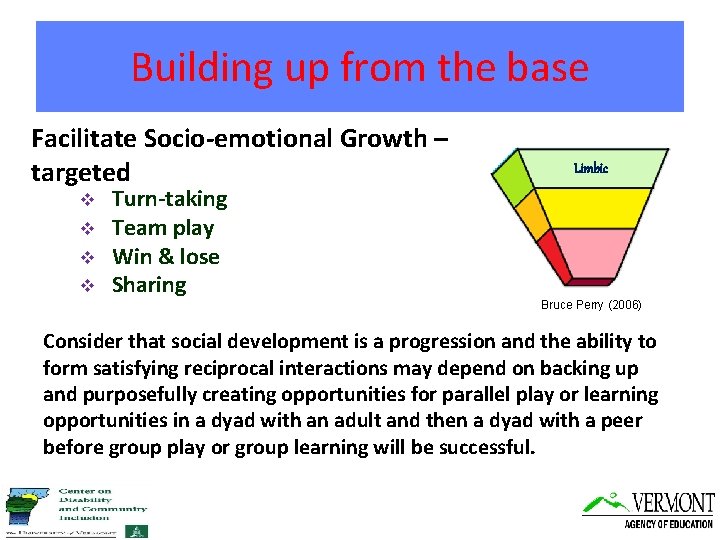
Building up from the base Facilitate Socio-emotional Growth – targeted v v Turn-taking Team play Win & lose Sharing Limbic Bruce Perry (2006) Consider that social development is a progression and the ability to form satisfying reciprocal interactions may depend on backing up and purposefully creating opportunities for parallel play or learning opportunities in a dyad with an adult and then a dyad with a peer before group play or group learning will be successful.
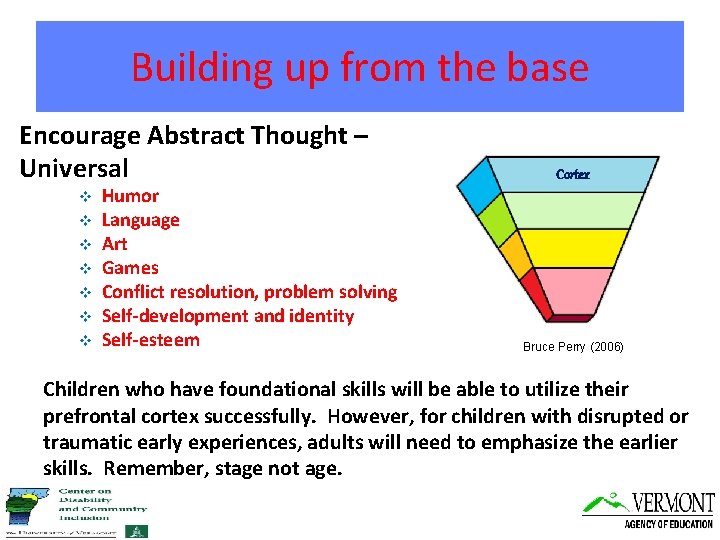
Building up from the base Encourage Abstract Thought – Universal v v v v Humor Language Art Games Conflict resolution, problem solving Self-development and identity Self-esteem Cortex Bruce Perry (2006) Children who have foundational skills will be able to utilize their prefrontal cortex successfully. However, for children with disrupted or traumatic early experiences, adults will need to emphasize the earlier skills. Remember, stage not age.
Potential Interventions: Think about brain regions • • • Touch Rhythmic Patterned Eye Contact Drumming Body-based • Music and Movement • Yoga • Somatosensory • Parallel play/learning
“Raise your hand” Do you use movement when working with students?
7 domains of impairment Biology and the brain behavior Attachment and relationship Cognition and learning dissociation Self-concept Emotional regulation
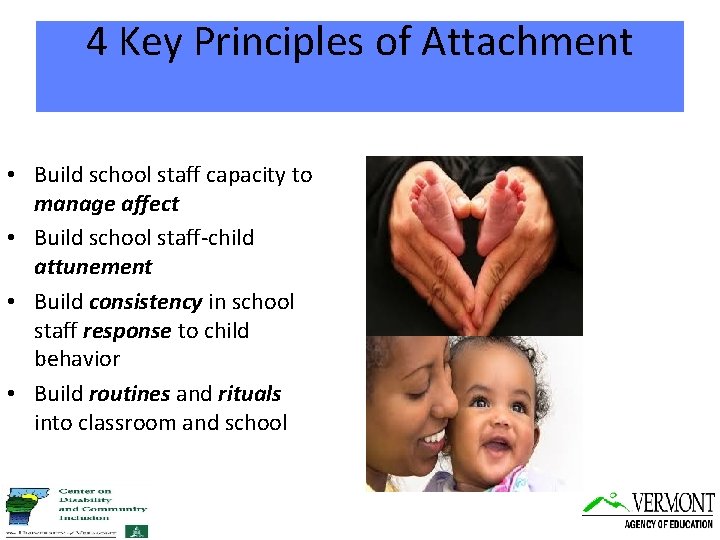
4 Key Principles of Attachment • Build school staff capacity to manage affect • Build school staff-child attunement • Build consistency in school staff response to child behavior • Build routines and rituals into classroom and school
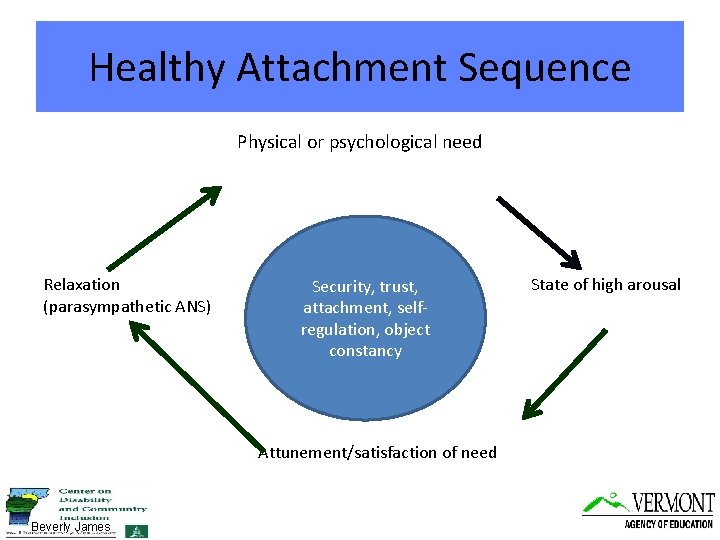
Healthy Attachment Sequence Physical or psychological need Relaxation (parasympathetic ANS) Security, trust, attachment, selfregulation, object constancy Attunement/satisfaction of need Beverly James State of high arousal
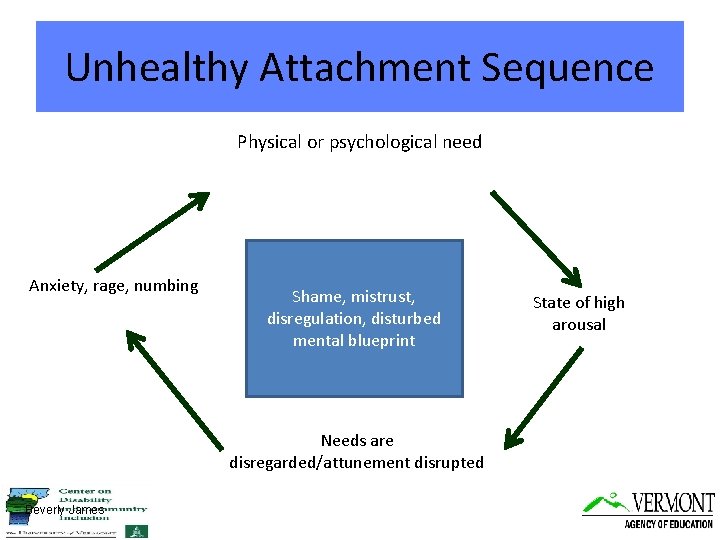
Unhealthy Attachment Sequence Physical or psychological need Anxiety, rage, numbing Shame, mistrust, disregulation, disturbed mental blueprint Needs are disregarded/attunement disrupted Beverly James State of high arousal
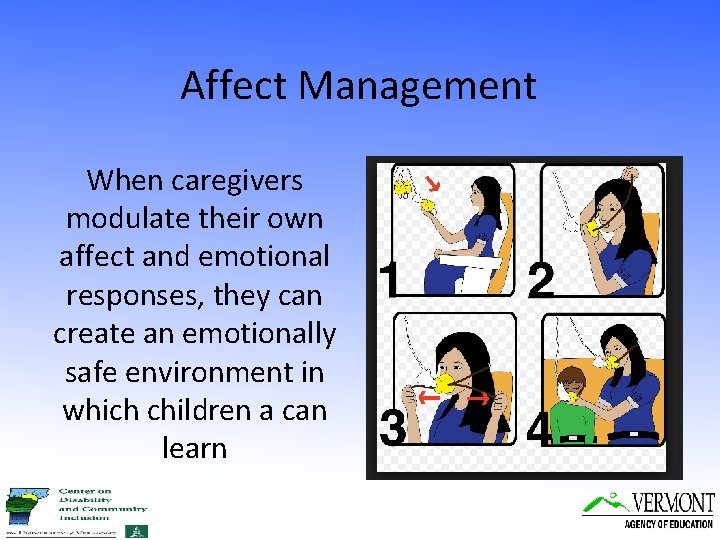
Affect Management When caregivers modulate their own affect and emotional responses, they can create an emotionally safe environment in which children a can learn
Attunement – Reading and responding to the cues of another – Synchronous and interactive – Helps prevent mismatch between need and provision – Reading the non-verbal, social-emotional “language” of another
Attunement https: //www. youtube. com/watch? v=Bpu 0 TIXz. I 1 w
CONSISTENCY – EVERY DAY – EVERY GRADE – EVERY BODY
Routines and Rituals Routines increases predictability and the child’s ability to anticipate next steps. Establishing classroom and school-wide routines helps reduce trouble spots (transitions, substitute teachers, unstructured activities/days).
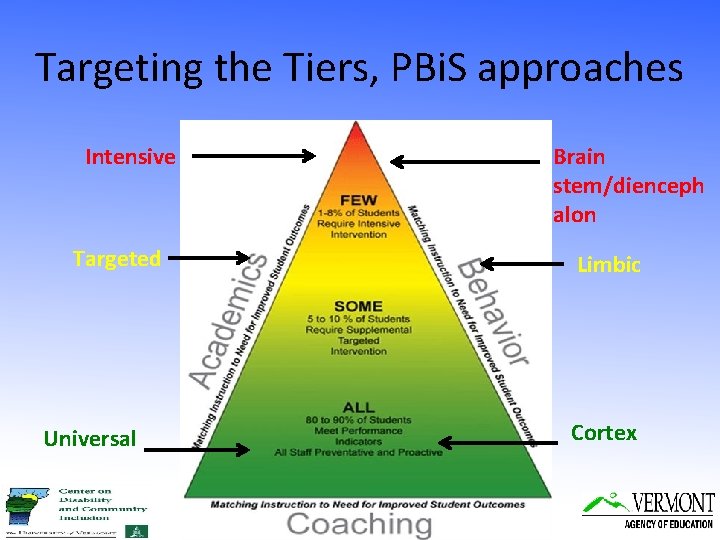
Targeting the Tiers, PBi. S approaches Intensive Targeted Universal Brain stem/dienceph alon Limbic Cortex
7 domains of impairment Biology and the brain behavior Attachment and relationship Cognition and learning dissociation Self-concept Emotional regulation
Bottom up, Inside out
“No matter how exciting and meaningful and supported the learning experience is designed to be, a child cannot reap the cognitive benefits of it unless she feels calm enough to be curious. ” (Mc. Mahon, 2011)
Developmental Agenda
“Raise your hand” Do you have a morning, coffee routine?
Sequential Thinking A child’s successful completion of many academic tasks depends on the ability to bring a linear order to the chaos of daily experience. Traumatic experience can limit this ability to organize material sequentially, leading to difficulty in reading, writing and communicating verbally. From Helping the Traumatized Child Learn
Competency 3 Key Principles • Build student executive functioning skills • Target self-development and identity • Target additional key developmental tasks The child develops an ability to evaluate situations, inhibit impulsive responses and actively make choices.
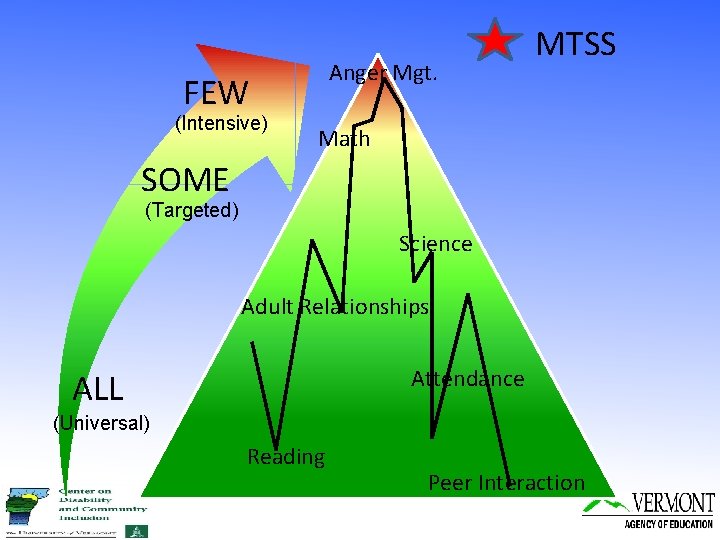
Anger Mgt. FEW (Intensive) MTSS Math SOME (Targeted) Science Adult Relationships Attendance ALL (Universal) Reading Peer Interaction
Competing Demands Survival vs. learning It is nearly impossible to dedicate your full attention and energy to survival and learning at the same time.
Potential interventions General strategies • • • Facilitating sequential thinking • To do lists • Visual schedules • Repeat directions (tone of voice) • Give notes Multi-modal learning Regulate to educate Build on competencies Multiple motor breaks Brain breaks Differentiated instruction/Differentiated Discipline
7 domains of impairment Biology and the brain behavior Attachment and relationship Cognition and learning dissociation Self-concept Emotional regulation
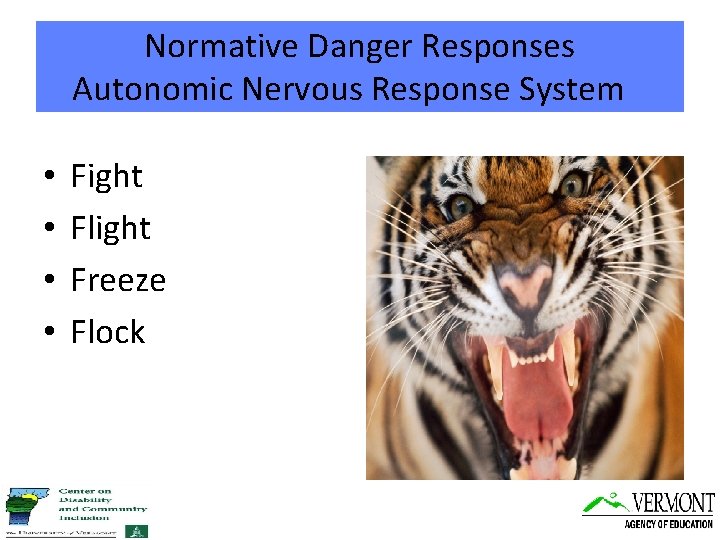
Normative Danger Responses Autonomic Nervous Response System • • Fight Flight Freeze Flock
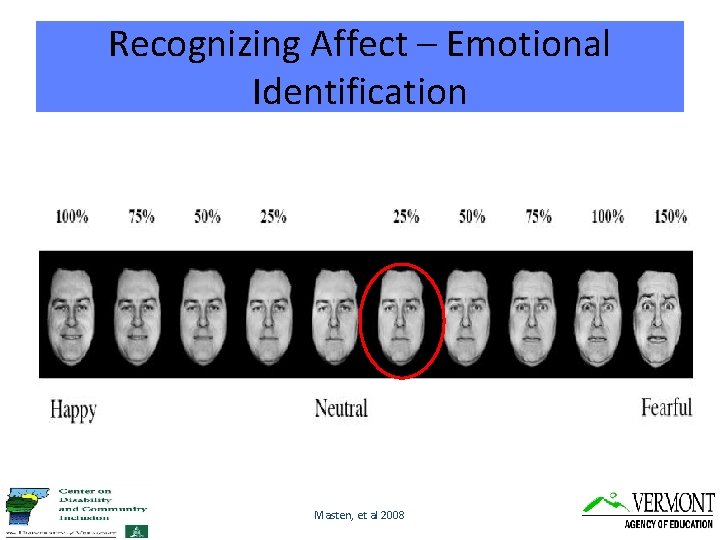
Recognizing Affect – Emotional Identification Masten, et al 2008
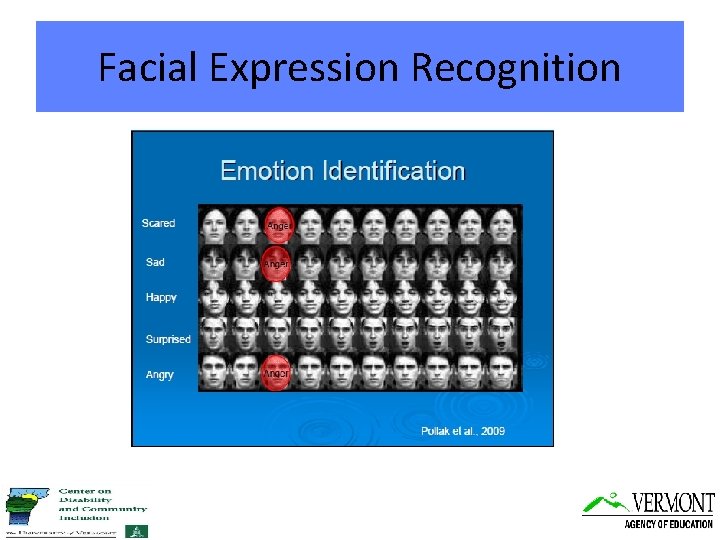
Facial Expression Recognition
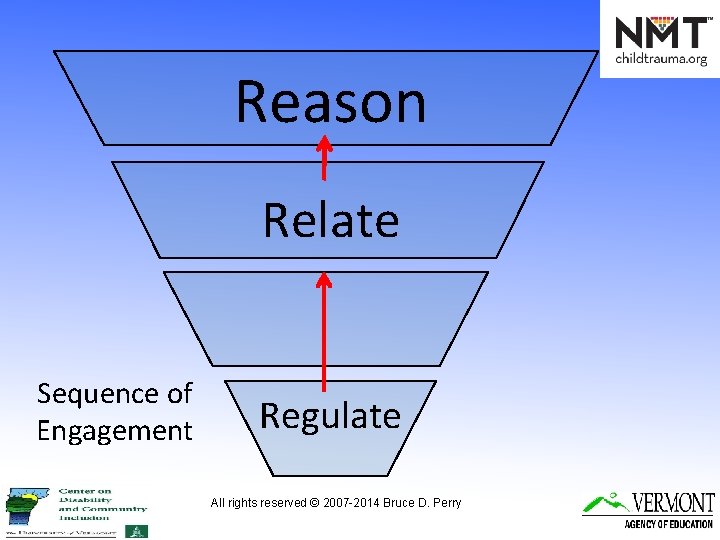
Reason Relate Sequence of Engagement Regulate All rights reserved © 2007 -2014 Bruce D. Perry
Impact Areas It is often not the task or request that leads the child to misbehave… it is the feeling and negative thoughts that is evokes…
Potential Strategies Movement Mindfulness Non-verbal communication Reflectively listen Validation Shhhhh Attunement Match affect without replication
7 domains of impairment Biology and the brain behavior Attachment and relationship Cognition and learning dissociation Self-concept Emotional regulation
Bottom up, Inside out
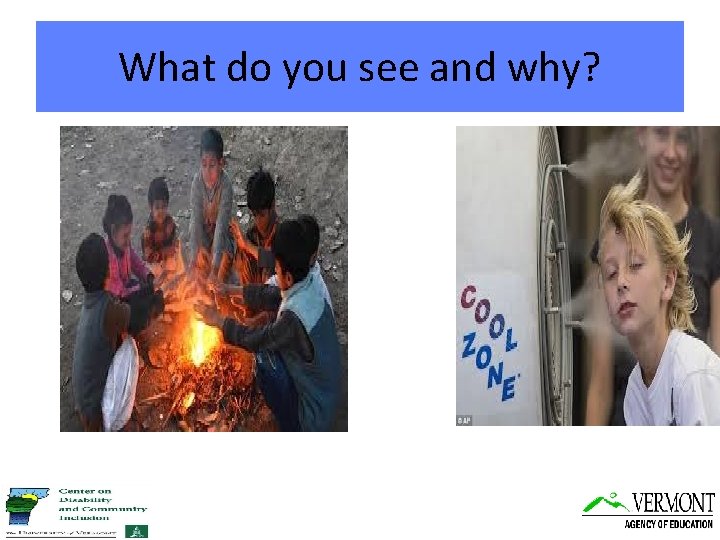
What do you see and why?
Key Triggers • Lack of power or control • Unexpected change • Feeling threatened or attacked • Feeling vulnerable or frightened • Feeling shame And… • Relationships – even positive ones • Intense feelings of any kind
Attention vs. Relationship https: //www. youtube. com/watch? v=F 6 Dhnbg. R AOo
But…what about consequences? Relational and relevant Restorative and reparative
Potential interventions/considerations • • Behavior is about survival Function AND feeling behind behavior Skill deficit Validation/attachment/comfort seeking vs. attention seeking or manipulative Focus on connection, not consequence Connect, rupture, repair Ritualize transitions (with movement) Evaluative process (even praise) can create defensiveness – Remember where they are likely in their brain
Intervention strategies, continued. • • • Movement Routines and rituals Structure Supervision Small world Stage not age Push the pause button Somatosensory interventions Targeting the part of the brain that was impacted by developmental insults
More Intervention strategies • Incorporate body-based, multi-sense teaching • Co-regulation activities • Maintain a bond with child during discipline – Focus on connection, not consequence – Connect, rupture, repair • • Validation + empathy= Accountability Focus on choice and the function AND feeling of behavior Teach perspective taking and social skills Ritualize transitions (with movement) © NFI Vermont 2012
Repeat, Repeat! • • Patterned Consistent More intensity Curiosity Experience + Repetition = Learning/Memory “the country with many roads” analogy (Helgeson, 1997
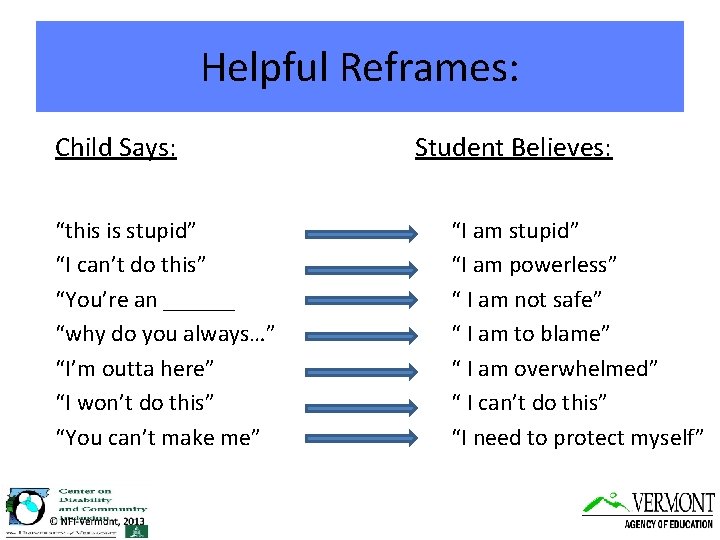
Helpful Reframes: Child Says: “this is stupid” “I can’t do this” “You’re an ______ “why do you always…” “I’m outta here” “I won’t do this” “You can’t make me” Student Believes: “I am stupid” “I am powerless” “ I am not safe” “ I am to blame” “ I am overwhelmed” “ I can’t do this” “I need to protect myself”
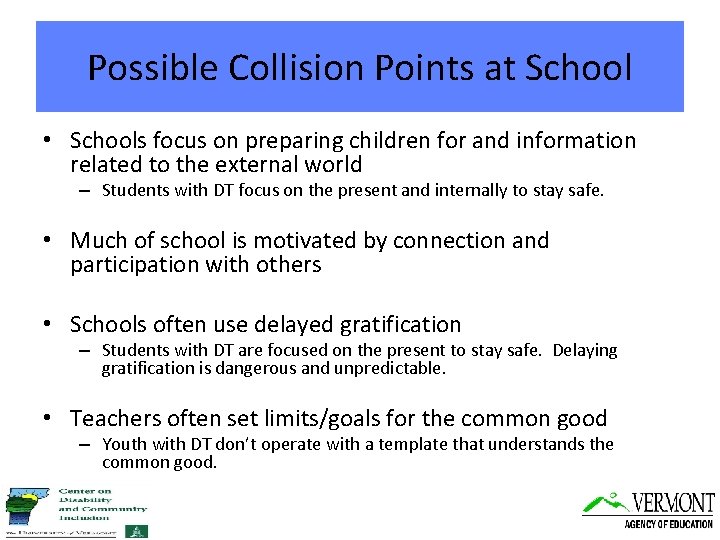
Possible Collision Points at School • Schools focus on preparing children for and information related to the external world – Students with DT focus on the present and internally to stay safe. • Much of school is motivated by connection and participation with others • Schools often use delayed gratification – Students with DT are focused on the present to stay safe. Delaying gratification is dangerous and unpredictable. • Teachers often set limits/goals for the common good – Youth with DT don’t operate with a template that understands the common good.
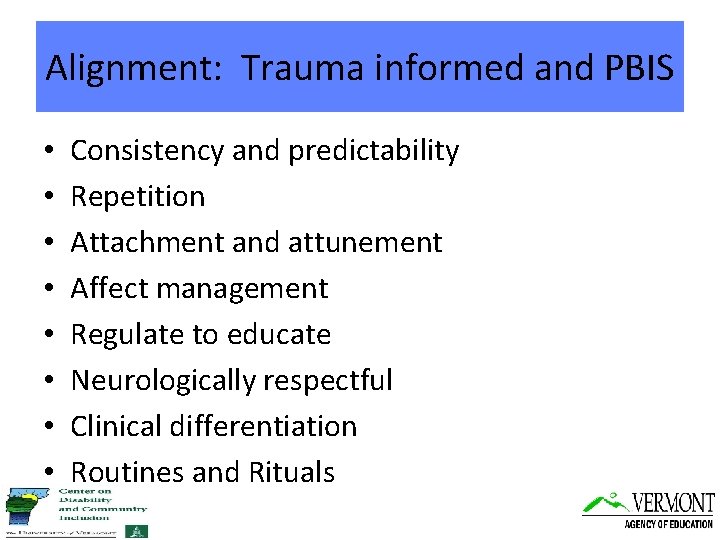
Alignment: Trauma informed and PBIS • • Consistency and predictability Repetition Attachment and attunement Affect management Regulate to educate Neurologically respectful Clinical differentiation Routines and Rituals
Questions? ? ?