
Creating a Space that Promotes Teamwork and Meaningful


- Slides: 35
Creating a Space that Promotes Teamwork and Meaningful Impacts
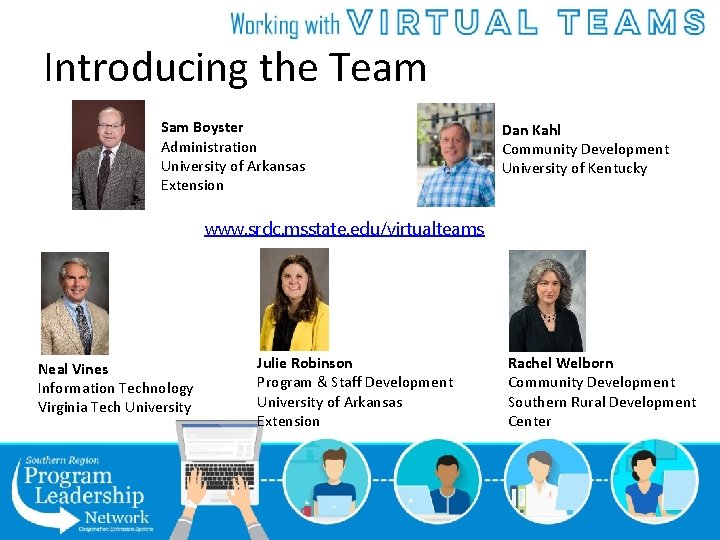
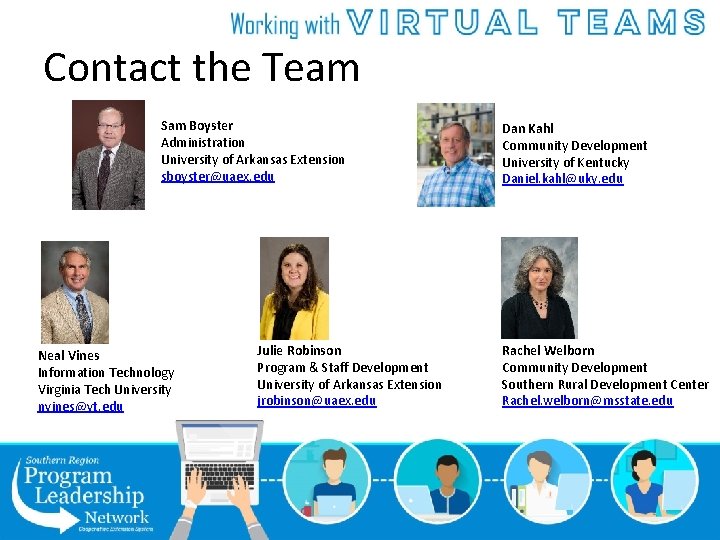
Introducing the Team Sam Boyster Administration University of Arkansas Extension Dan Kahl Community Development University of Kentucky www. srdc. msstate. edu/virtualteams Neal Vines Information Technology Virginia Tech University Julie Robinson Program & Staff Development University of Arkansas Extension Rachel Welborn Community Development Southern Rural Development Center
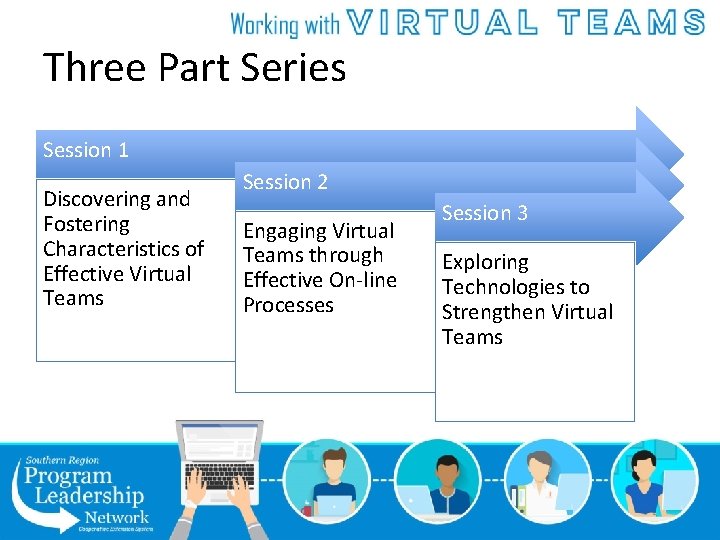
Three Part Series Session 1 Discovering and Fostering Characteristics of Effective Virtual Teams Session 2 Engaging Virtual Teams through Effective On-line Processes Session 3 Exploring Technologies to Strengthen Virtual Teams
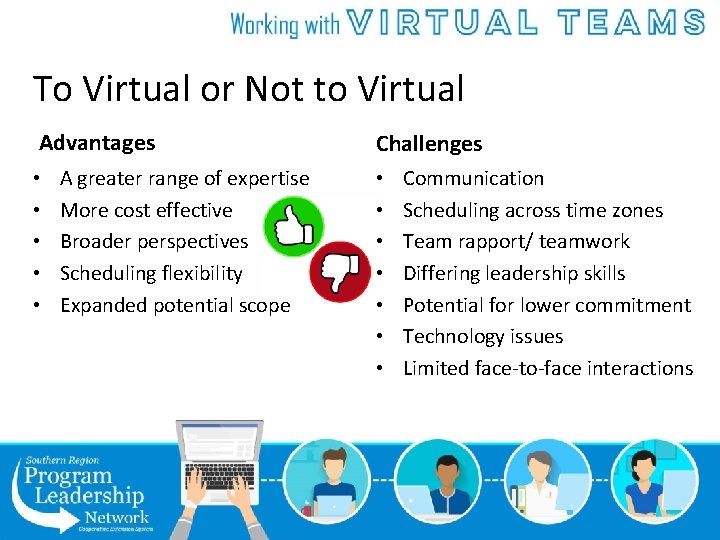
To Virtual or Not to Virtual Advantages • • • A greater range of expertise More cost effective Broader perspectives Scheduling flexibility Expanded potential scope Challenges • • Communication Scheduling across time zones Team rapport/ teamwork Differing leadership skills Potential for lower commitment Technology issues Limited face-to-face interactions
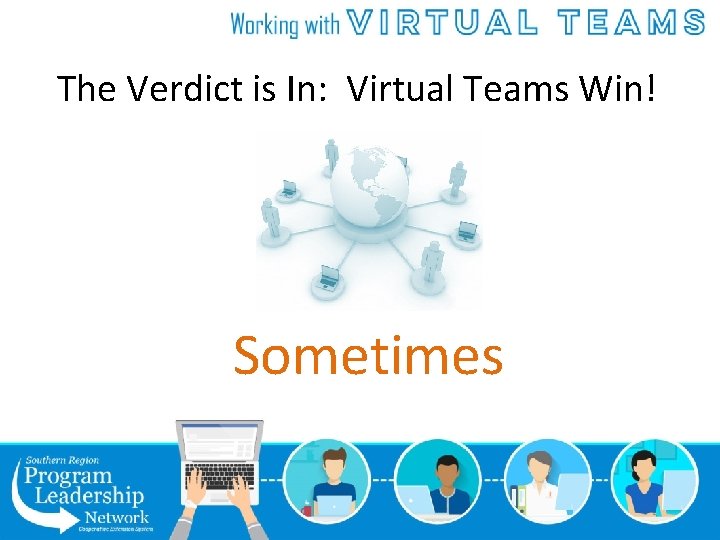
The Verdict is In: Virtual Teams Win! Sometimes
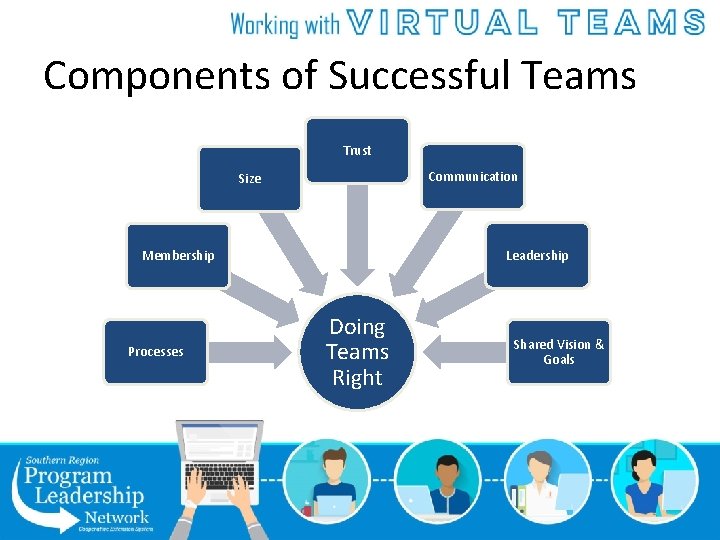
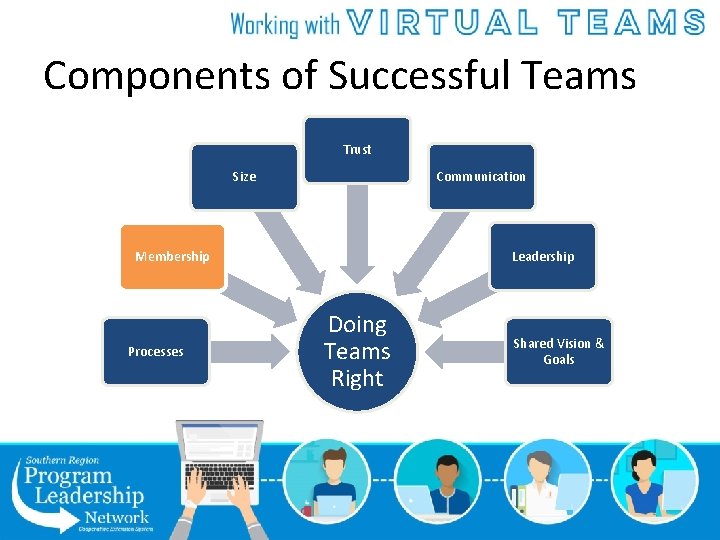
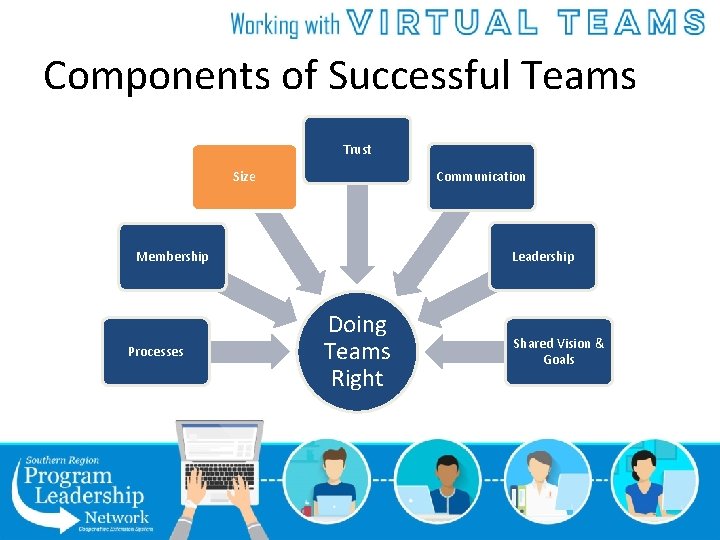
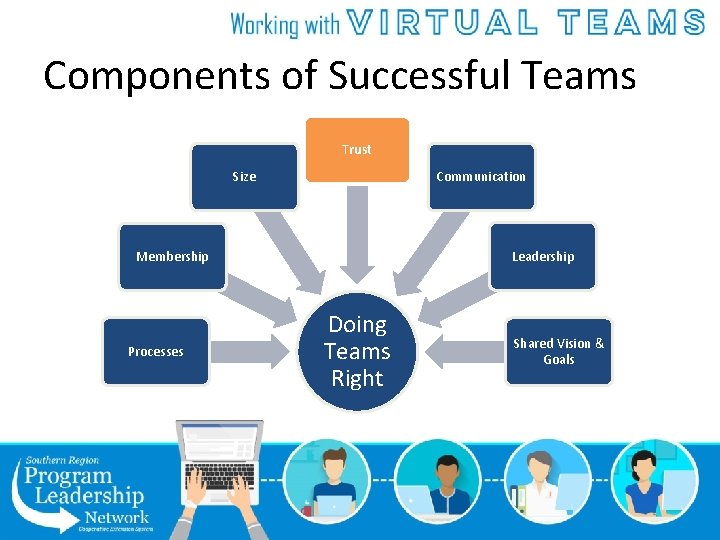
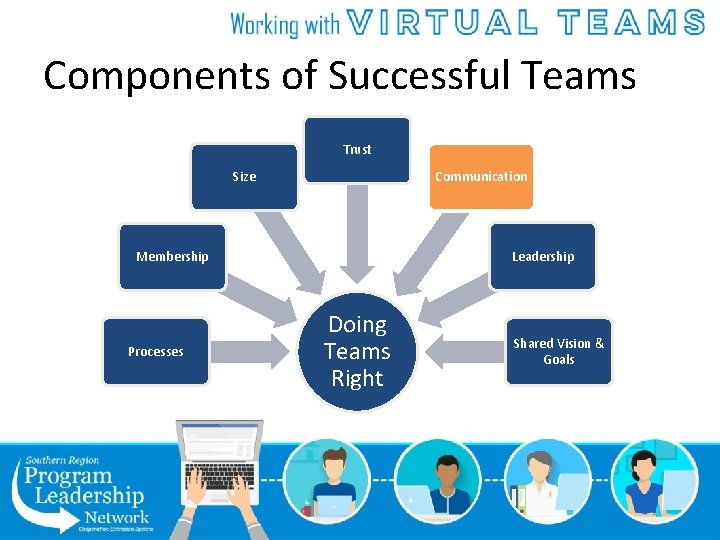
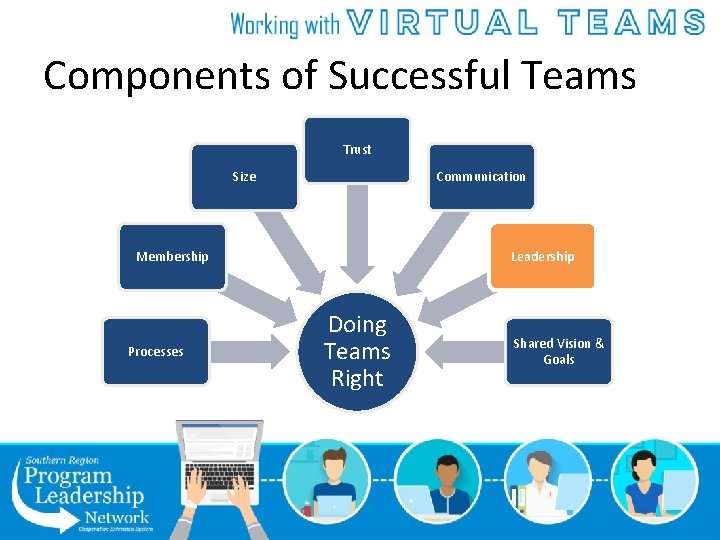
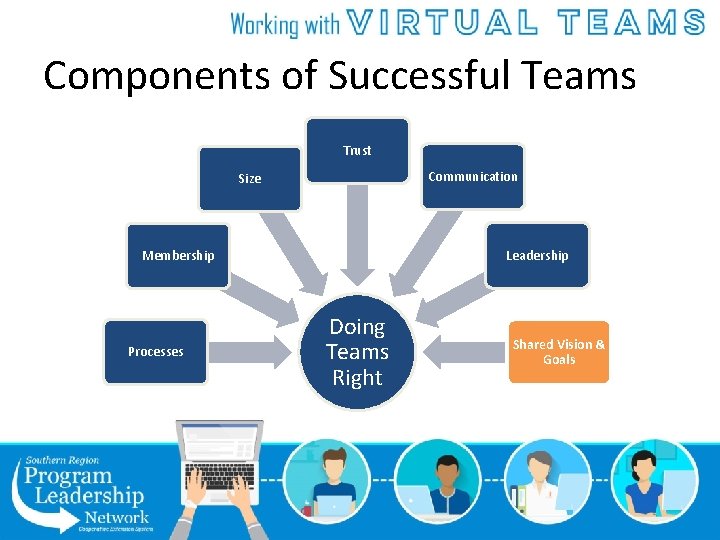
Components of Successful Teams Trust Communication Size Leadership Membership Processes Doing Teams Right Shared Vision & Goals
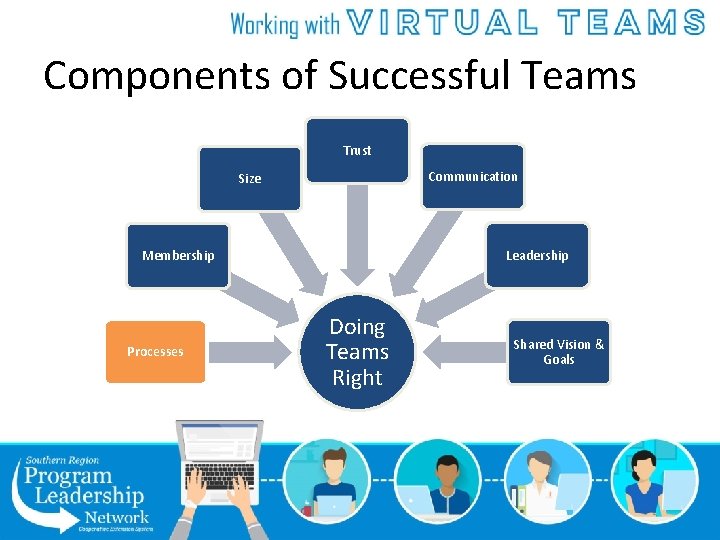
Components of Successful Teams Trust Communication Size Leadership Membership Processes Doing Teams Right Shared Vision & Goals
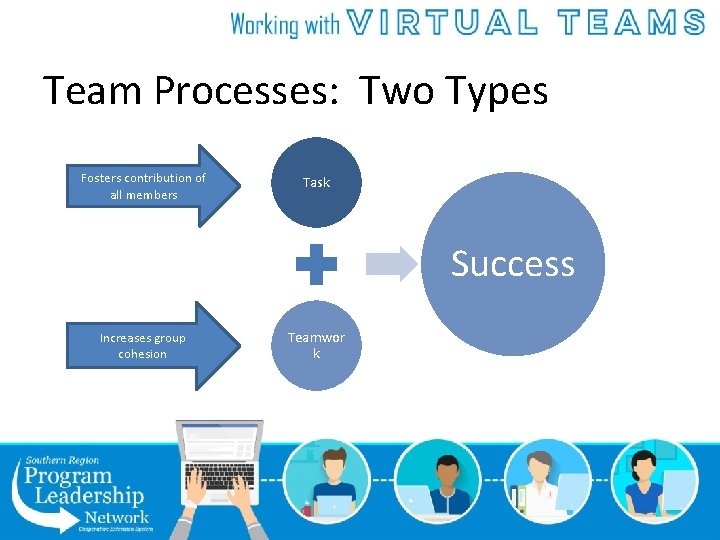
Team Processes: Two Types Fosters contribution of all members Task Success Increases group cohesion Teamwor k
Task Processes • Work coordination • Balance of contributions • Member support • Task-related communication
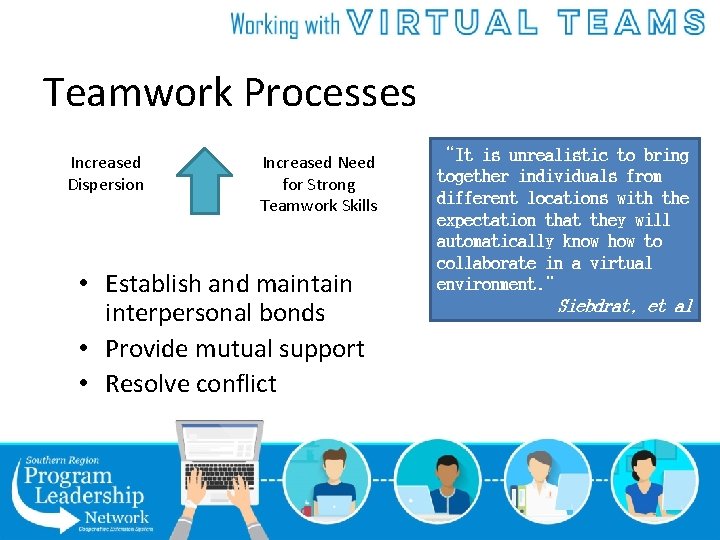
Teamwork Processes Increased Dispersion Increased Need for Strong Teamwork Skills • Establish and maintain interpersonal bonds • Provide mutual support • Resolve conflict “It is unrealistic to bring together individuals from different locations with the expectation that they will automatically know how to collaborate in a virtual environment. ” Siebdrat, et al
Components of Successful Teams Trust Communication Size Leadership Membership Processes Doing Teams Right Shared Vision & Goals
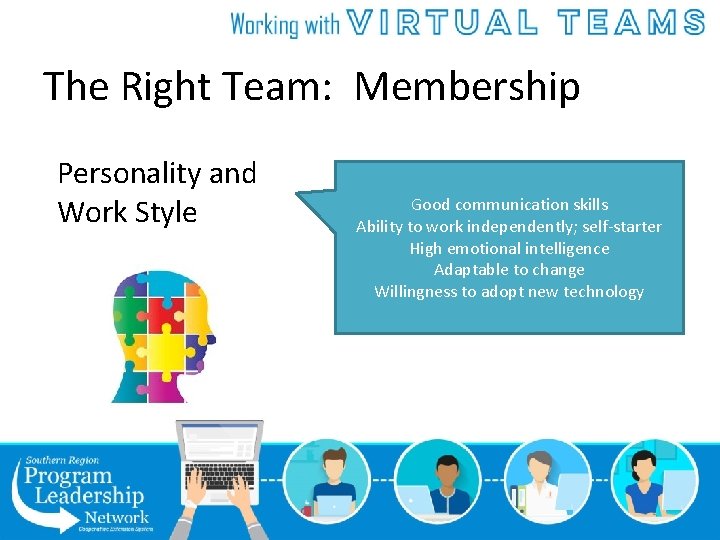
The Right Team: Membership Personality and Work Style Good communication skills Ability to work independently; self-starter High emotional intelligence Adaptable to change Willingness to adopt new technology
Components of Successful Teams Trust Communication Size Leadership Membership Processes Doing Teams Right Shared Vision & Goals
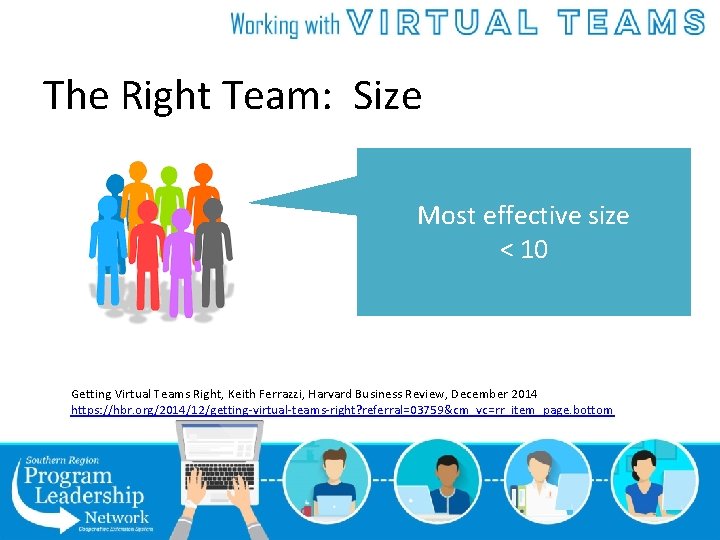
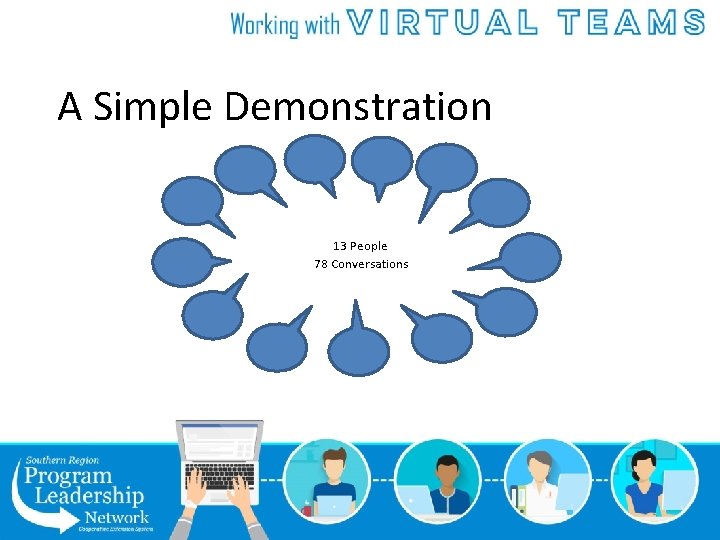
The Right Team: Size Most effective size < 10 Getting Virtual Teams Right, Keith Ferrazzi, Harvard Business Review, December 2014 https: //hbr. org/2014/12/getting-virtual-teams-right? referral=03759&cm_vc=rr_item_page. bottom
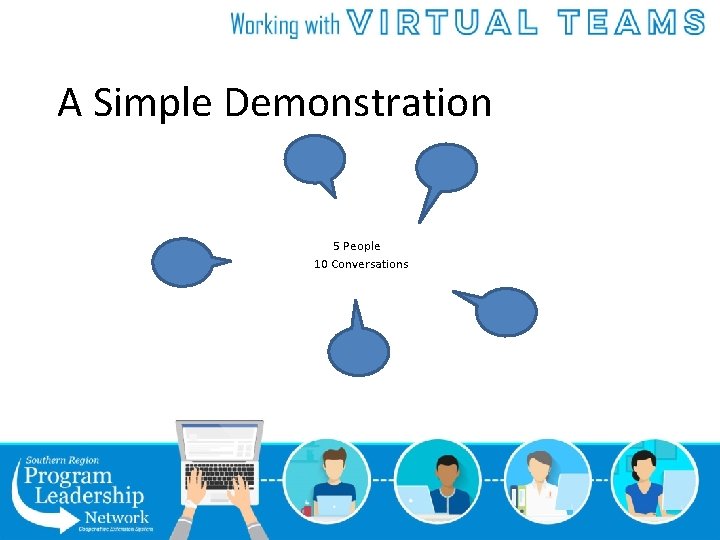
A Simple Demonstration 5 People 10 Conversations
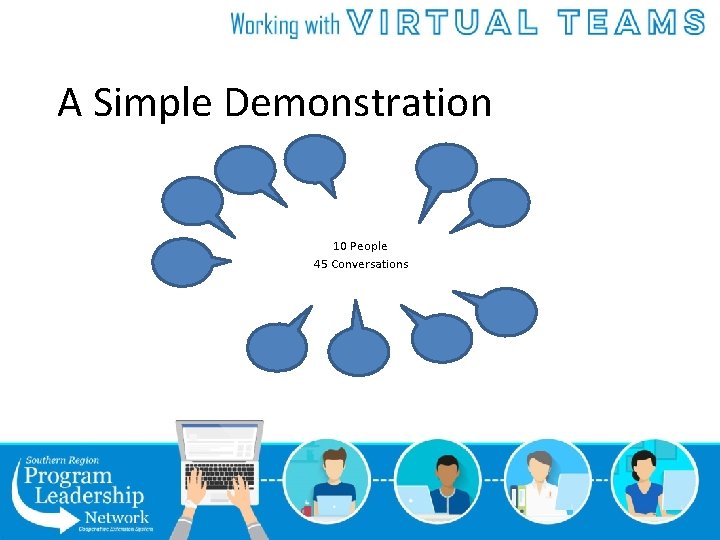
A Simple Demonstration 10 People 45 Conversations
A Simple Demonstration 13 People 78 Conversations
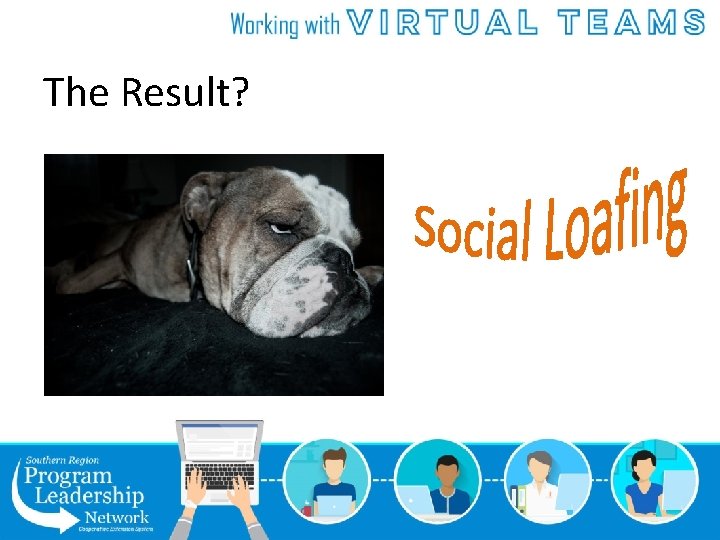
The Result?
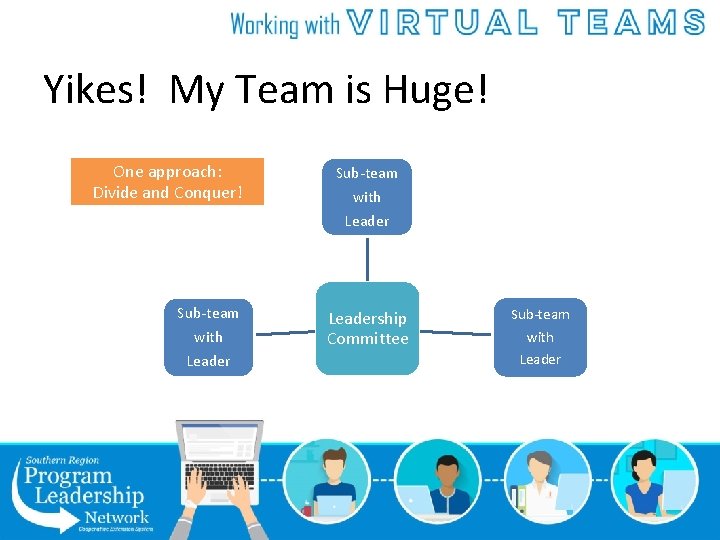
Yikes! My Team is Huge! One approach: Divide and Conquer! Sub-team with Leadership Committee Sub-team with Leader
Components of Successful Teams Trust Communication Size Leadership Membership Processes Doing Teams Right Shared Vision & Goals
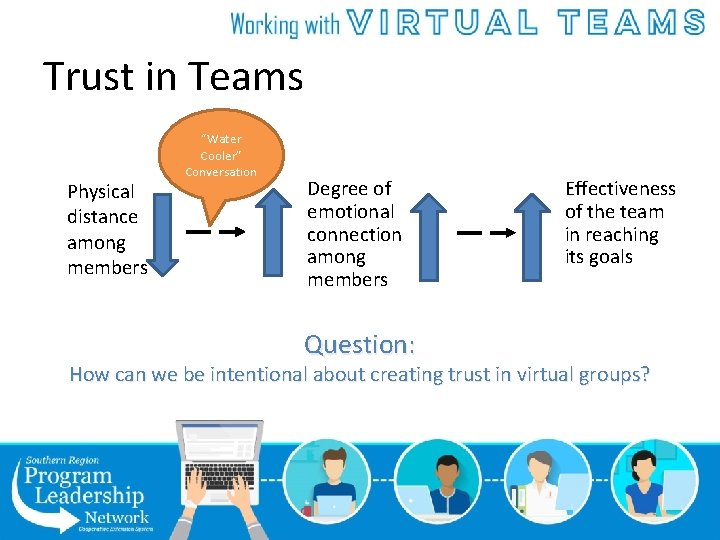
Trust in Teams Physical distance among members “Water Cooler” Conversation Degree of emotional connection among members Question: Effectiveness of the team in reaching its goals How can we be intentional about creating trust in virtual groups?
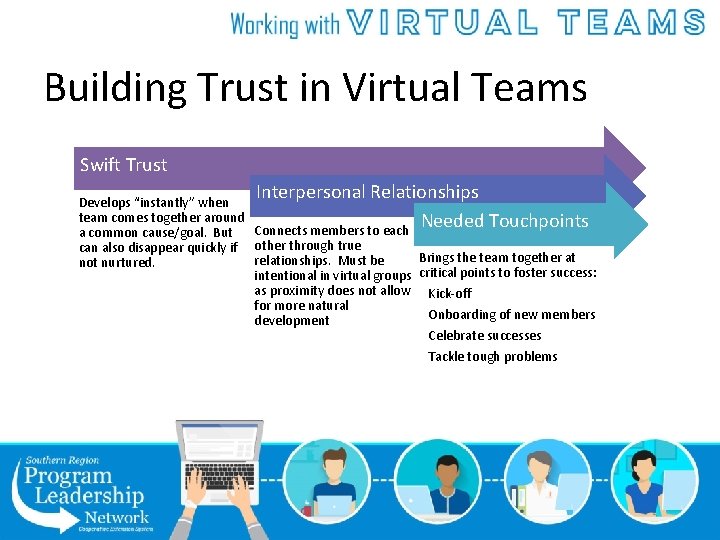
Building Trust in Virtual Teams Swift Trust Interpersonal Relationships Develops “instantly” when team comes together around Needed Touchpoints Connects members to each a common cause/goal. But can also disappear quickly if other through true Brings the team together at relationships. Must be not nurtured. intentional in virtual groups critical points to foster success: as proximity does not allow Kick-off for more natural Onboarding of new members development Celebrate successes Tackle tough problems
Components of Successful Teams Trust Communication Size Leadership Membership Processes Doing Teams Right Shared Vision & Goals
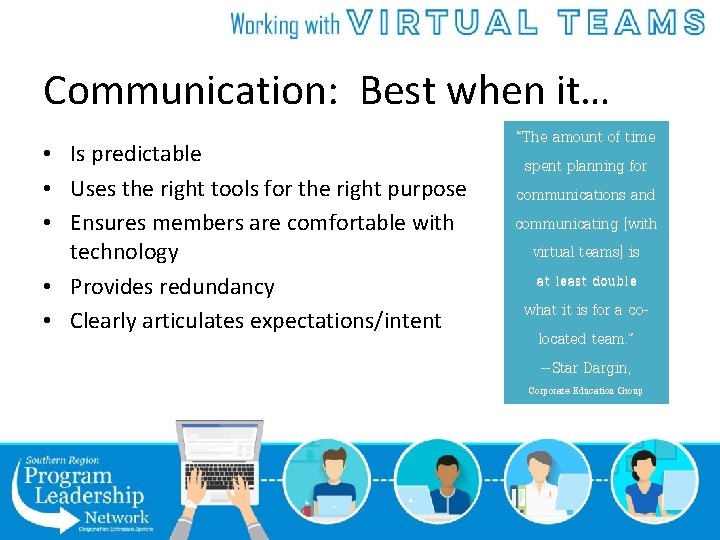
Communication: Best when it… • Is predictable • Uses the right tools for the right purpose • Ensures members are comfortable with technology • Provides redundancy • Clearly articulates expectations/intent “The amount of time spent planning for communications and communicating [with virtual teams] is at least double what it is for a colocated team. ” --Star Dargin, Corporate Education Group
Communication: Right Processes Set expectations up front; reinforce at each meeting Ask frequent questions; limit monologues Verify/validate understanding Pay attention to who has talked and on what topics; call on quiet participants • Send long explanations in writing ahead of time • Foster communication before, during and after meetings • •
Communication: Right Technology • Use the right tool for the right purpose • Ensure team members are all comfortable with technology being used • Use video conferencing to: – Promote social trust – Foster clear communication, especially on complex issues • Employ project management tools to promote shared understanding of: – – Deadlines Assigned tasks Progress Responsibility
Components of Successful Teams Trust Communication Size Leadership Membership Processes Doing Teams Right Shared Vision & Goals
Leadership: Setting the Stage for Success Great virtual team leaders: • Serve as coordinators vs “command control” managers • Share power by leaning on specific team member expertise as appropriate • Foster a sense of balance of perceived power • Slow down to speed up • Provide and request regular status reports “You can’t get away with lazy leadership [in virtual teams]. You must proactively reach out to people regularly to create a sense of teamwork and community. ” --Laura Hambley
Components of Successful Teams Trust Communication Size Leadership Membership Processes Doing Teams Right Shared Vision & Goals
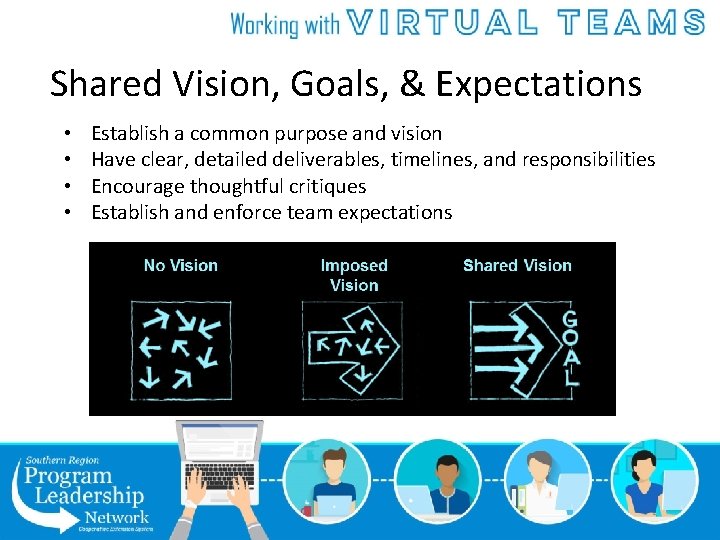
Shared Vision, Goals, & Expectations • • Establish a common purpose and vision Have clear, detailed deliverables, timelines, and responsibilities Encourage thoughtful critiques Establish and enforce team expectations
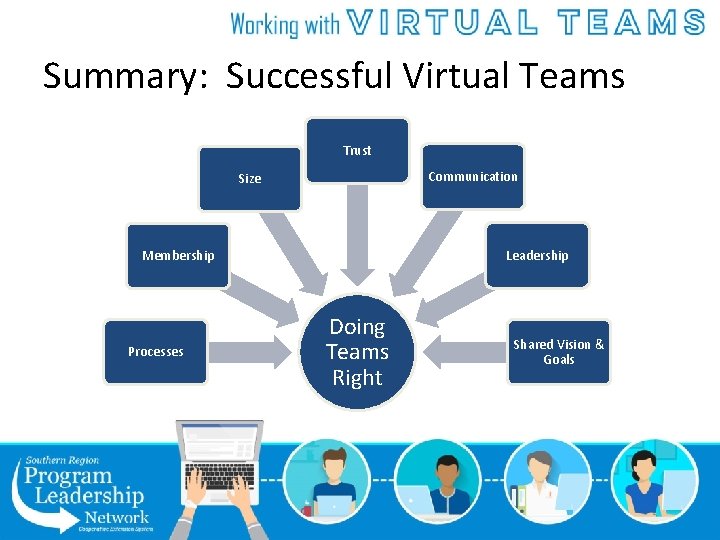
Summary: Successful Virtual Teams Trust Communication Size Leadership Membership Processes Doing Teams Right Shared Vision & Goals
Questions & Discussion
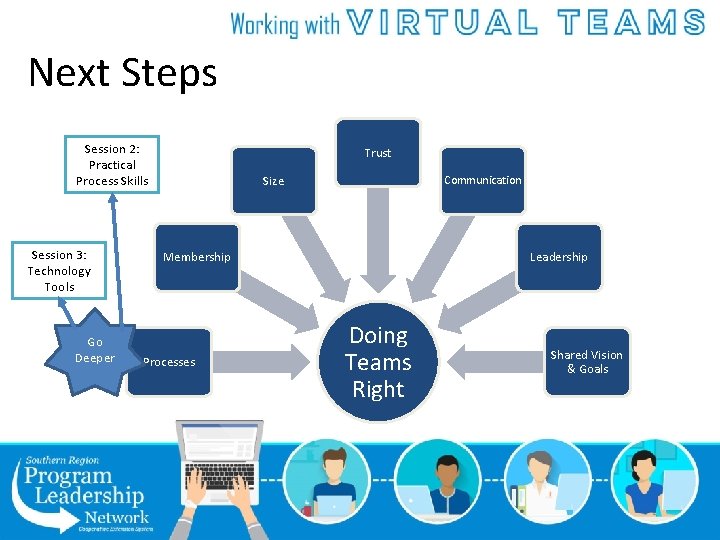
Next Steps Session 2: Practical Process Skills Session 3: Technology Tools Go Deeper Trust Size Communication Membership Processes Leadership Doing Teams Right Shared Vision & Goals
Contact the Team Sam Boyster Administration University of Arkansas Extension sboyster@uaex. edu Neal Vines Information Technology Virginia Tech University nvines@vt. edu Julie Robinson Program & Staff Development University of Arkansas Extension jrobinson@uaex. edu Dan Kahl Community Development University of Kentucky Daniel. kahl@uky. edu Rachel Welborn Community Development Southern Rural Development Center Rachel. welborn@msstate. edu