
Creating a Smart Labs Program I 2 SL
Creating a Smart Labs Program I 2 SL CO Education Day 8 -28 -18 Otto Van Geet, PE, NREL Tom Smith, ECT – 3 Flow
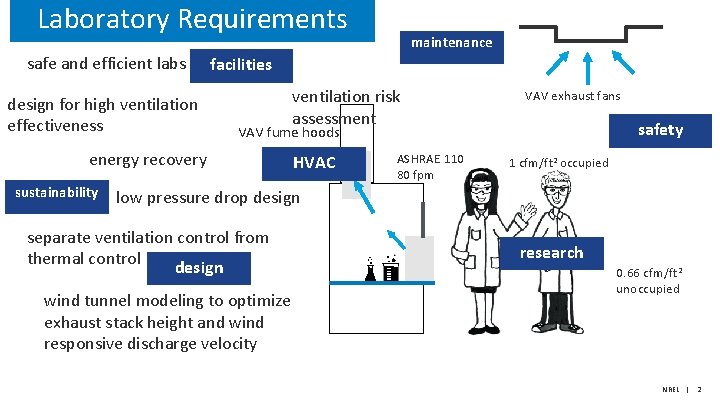
Laboratory Requirements safe and efficient labs design for high ventilation effectiveness facilities ventilation risk assessment VAV exhaust fans safety VAV fume hoods energy recovery sustainability maintenance HVAC ASHRAE 110 80 fpm 1 cfm/ft 2 occupied low pressure drop design separate ventilation control from thermal control design wind tunnel modeling to optimize exhaust stack height and wind responsive discharge velocity research 0. 66 cfm/ft 2 unoccupied NREL | 2
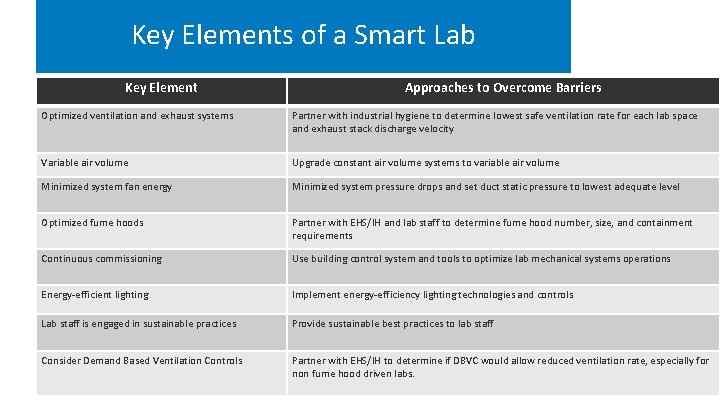
Key Elements of a Smart Lab Key Element Approaches to Overcome Barriers Optimized ventilation and exhaust systems Partner with industrial hygiene to determine lowest safe ventilation rate for each lab space and exhaust stack discharge velocity Variable air volume Upgrade constant air volume systems to variable air volume Minimized system fan energy Minimized system pressure drops and set duct static pressure to lowest adequate level Optimized fume hoods Partner with EHS/IH and lab staff to determine fume hood number, size, and containment requirements Continuous commissioning Use building control system and tools to optimize lab mechanical systems operations Energy-efficient lighting Implement energy-efficiency lighting technologies and controls Lab staff is engaged in sustainable practices Provide sustainable best practices to lab staff Consider Demand Based Ventilation Controls Partner with EHS/IH to determine if DBVC would allow reduced ventilation rate, especially for non fume hood driven labs.
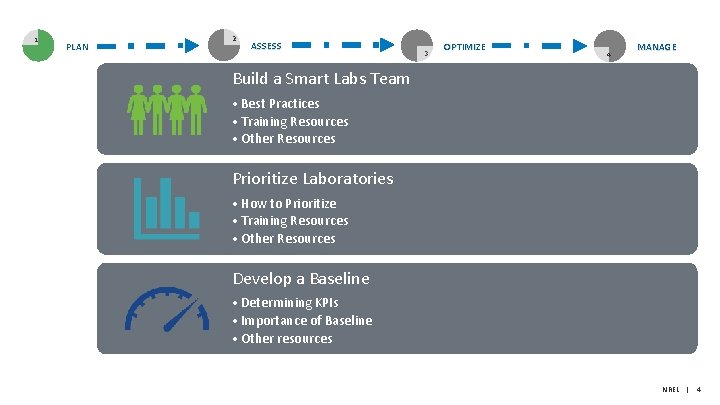
1 PLAN 2 ASSESS 3 OPTIMIZE 4 MANAGE Build a Smart Labs Team • Best Practices • Training Resources • Other Resources Prioritize Laboratories • How to Prioritize • Training Resources • Other Resources Develop a Baseline • Determining KPIs • Importance of Baseline • Other resources NREL | 4
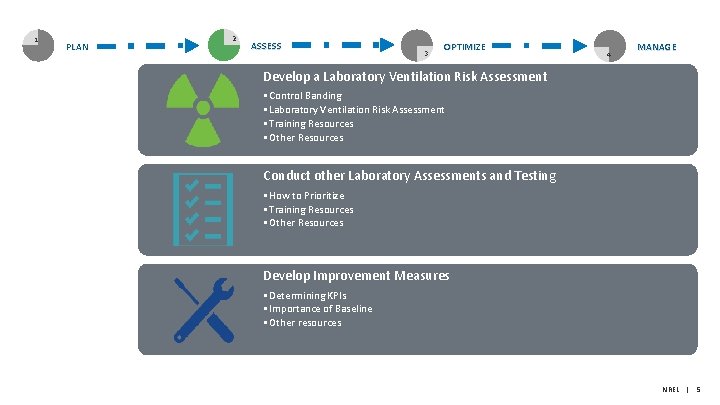
1 PLAN 2 ASSESS 3 OPTIMIZE 4 MANAGE Develop a Laboratory Ventilation Risk Assessment • Control Banding • Laboratory Ventilation Risk Assessment • Training Resources • Other Resources Conduct other Laboratory Assessments and Testing • How to Prioritize • Training Resources • Other Resources Develop Improvement Measures • Determining KPIs • Importance of Baseline • Other resources NREL | 5
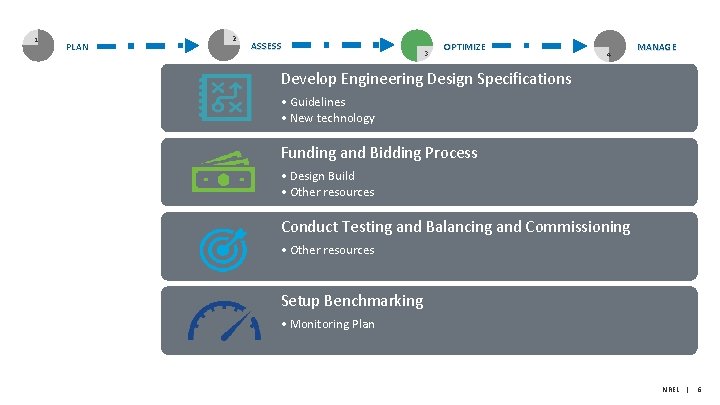
1 PLAN 2 ASSESS 3 OPTIMIZE 4 MANAGE Develop Engineering Design Specifications • Guidelines • New technology Funding and Bidding Process • Design Build • Other resources Conduct Testing and Balancing and Commissioning • Other resources Setup Benchmarking • Monitoring Plan NREL | 6
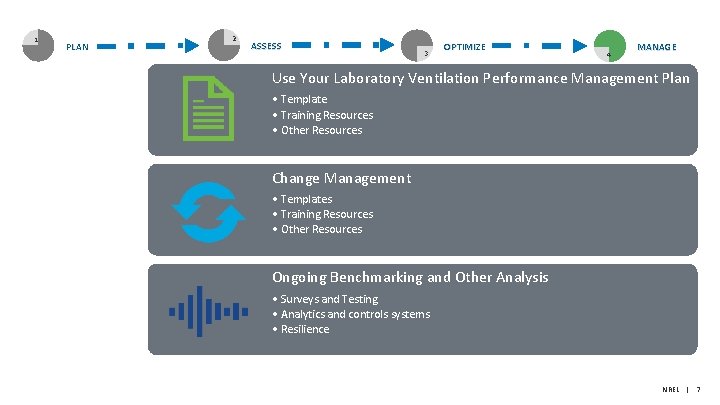
1 PLAN 2 ASSESS 3 OPTIMIZE 4 MANAGE Use Your Laboratory Ventilation Performance Management Plan • Template • Training Resources • Other Resources Change Management • Templates • Training Resources • Other Resources Ongoing Benchmarking and Other Analysis • Surveys and Testing • Analytics and controls systems • Resilience NREL | 7
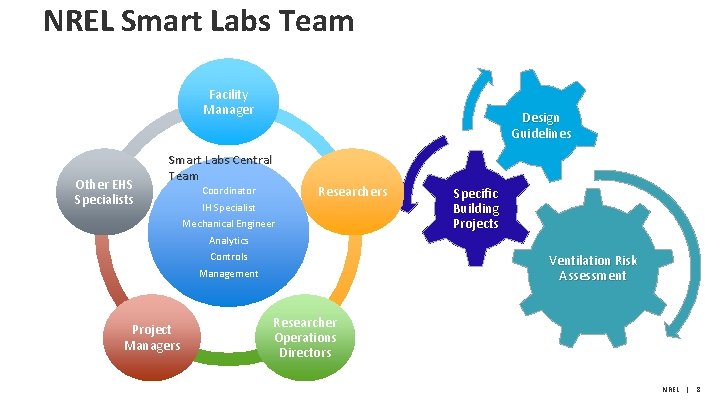
NREL Smart Labs Team Facility Manager Other EHS Specialists Smart Labs Central Team Project Managers Design Guidelines Coordinator IH Specialist Mechanical Engineer Analytics Controls Management Researchers Specific Building Projects Ventilation Risk Assessment Researcher Operations Directors NREL | 8
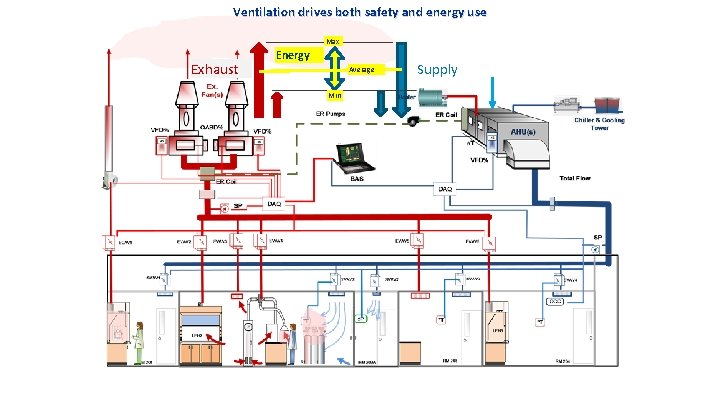
Ventilation drives both safety and energy use Max Exhaust Energy Average Min Supply
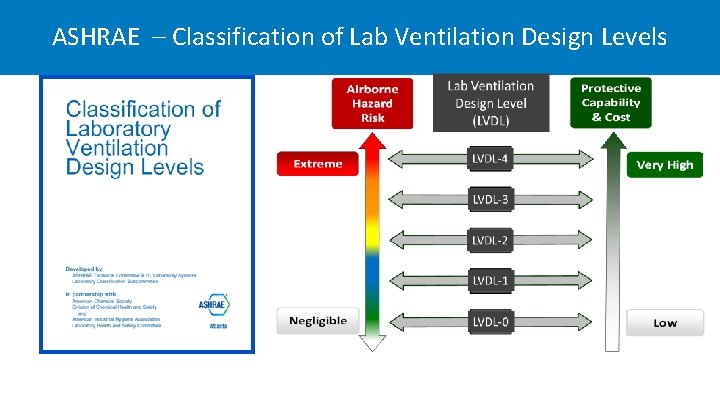
ASHRAE – Classification of Lab Ventilation Design Levels
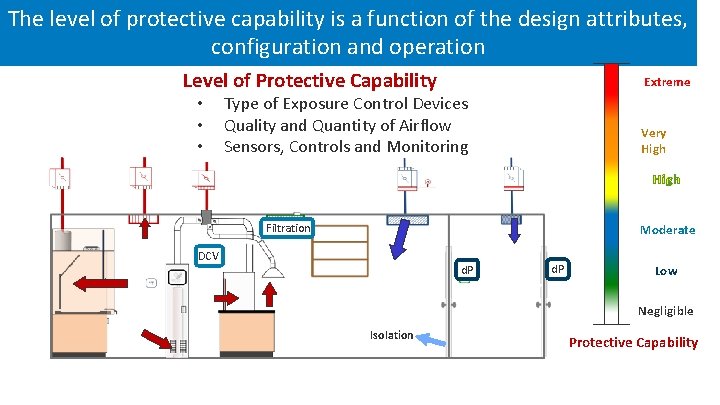
The level of protective capability is a function of the design attributes, configuration and operation Level of Protective Capability • • • Extreme Type of Exposure Control Devices Quality and Quantity of Airflow Sensors, Controls and Monitoring Very High Filtration Moderate DCV d. P Low Negligible Isolation Protective Capability
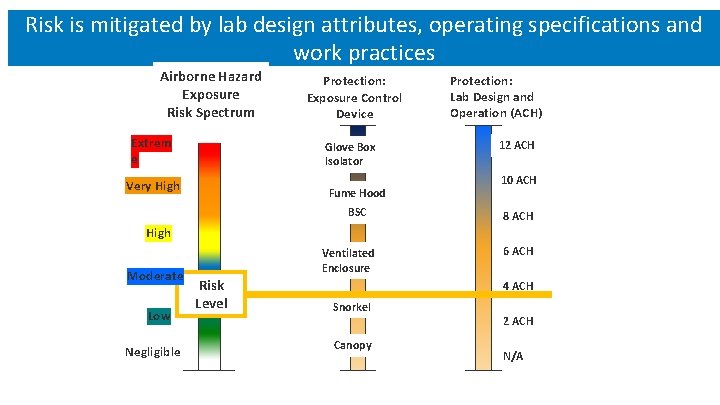
Risk is mitigated by lab design attributes, operating specifications and work practices Airborne Hazard Exposure Risk Spectrum Extrem e Protection: Exposure Control Device Glove Box Isolator Very High Fume Hood BSC Protection: Lab Design and Operation (ACH) 12 ACH 10 ACH 8 ACH High Moderate Low Negligible Ventilated Enclosure Risk Level 6 ACH 4 ACH Snorkel Canopy 2 ACH N/A
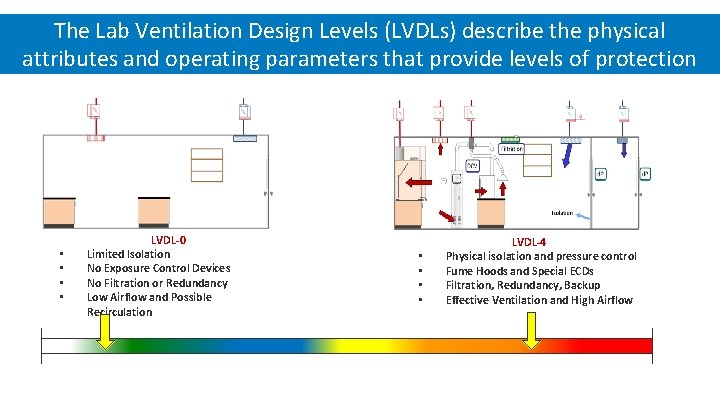
The Lab Ventilation Design Levels (LVDLs) describe the physical attributes and operating parameters that provide levels of protection • • LVDL-0 Limited Isolation No Exposure Control Devices No Filtration or Redundancy Low Airflow and Possible Recirculation • • LVDL-4 Physical isolation and pressure control Fume Hoods and Special ECDs Filtration, Redundancy, Backup Effective Ventilation and High Airflow
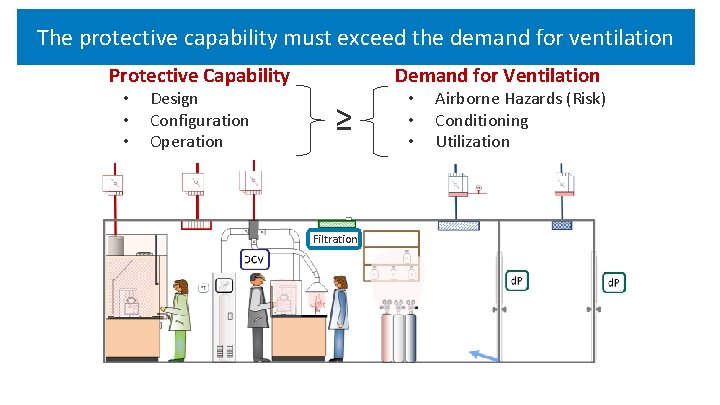
The protective capability must exceed the demand for ventilation Protective Capability • • • Design Configuration Operation Demand for Ventilation ≥ Filtration • • • Airborne Hazards (Risk) Conditioning Utilization
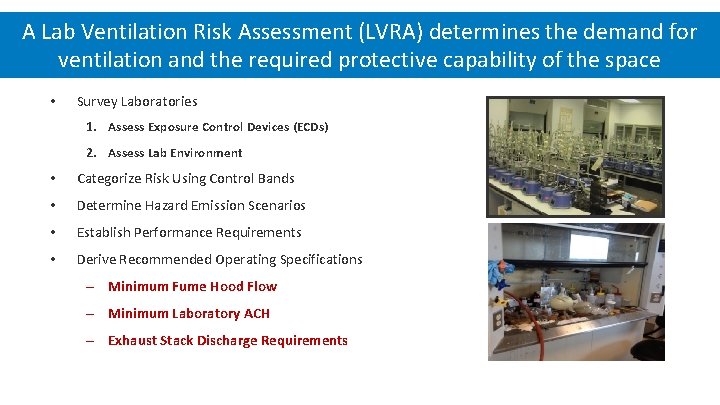
A Lab Ventilation Risk Assessment (LVRA) determines the demand for ventilation and the required protective capability of the space • Survey Laboratories 1. Assess Exposure Control Devices (ECDs) 2. Assess Lab Environment • Categorize Risk Using Control Bands • Determine Hazard Emission Scenarios • Establish Performance Requirements • Derive Recommended Operating Specifications – Minimum Fume Hood Flow – Minimum Laboratory ACH – Exhaust Stack Discharge Requirements
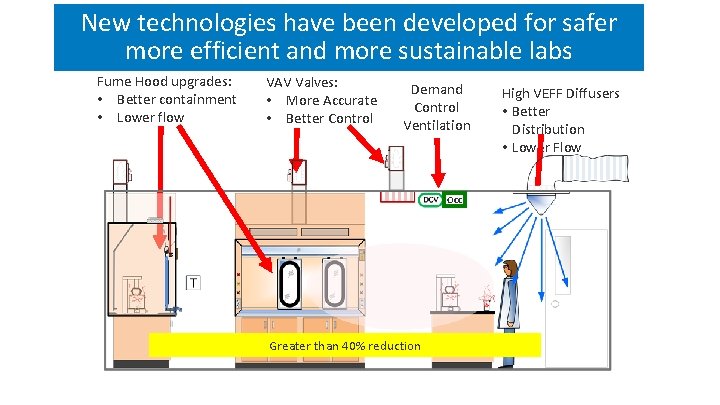
New technologies have been developed for safer more efficient and more sustainable labs Fume Hood upgrades: • Better containment • Lower flow VAV Valves: • More Accurate • Better Control Demand Control Ventilation Occ Greater than 40% reduction High VEFF Diffusers • Better Distribution • Lower Flow
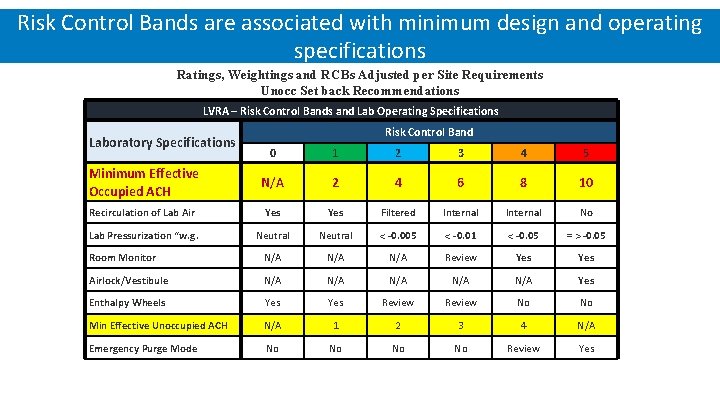
Risk Control Bands are associated with minimum design and operating specifications Ratings, Weightings and RCBs Adjusted per Site Requirements Unocc Set back Recommendations LVRA – Risk Control Bands and Lab Operating Specifications Laboratory Specifications Risk Control Band 0 1 2 3 4 5 Minimum Effective Occupied ACH N/A 2 4 6 8 10 Recirculation of Lab Air Yes Filtered Internal No Lab Pressurization “w. g. Neutral < -0. 005 < -0. 01 < -0. 05 = > -0. 05 Room Monitor N/A N/A Review Yes Airlock/Vestibule N/A N/A N/A Yes Enthalpy Wheels Yes Review No No Min Effective Unoccupied ACH N/A 1 2 3 4 N/A Emergency Purge Mode No No Review Yes
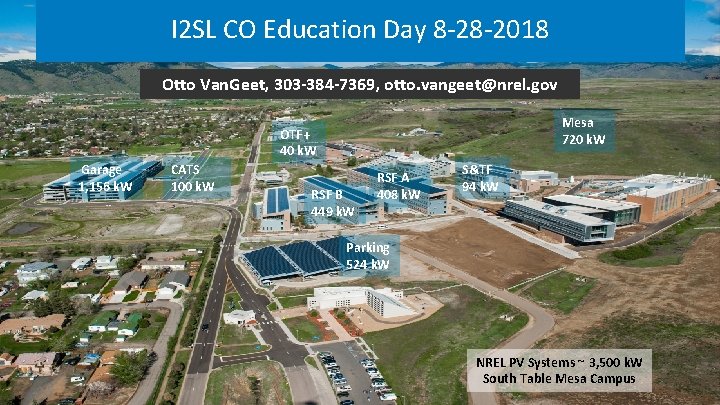
I 2 SL CO Education Day 8 -28 -2018 Otto Van. Geet, 303 -384 -7369, otto. vangeet@nrel. gov Mesa 720 k. W OTF+ 40 k. W Garage 1, 156 k. W CATS 100 k. W RSF B 449 k. W RSF A 408 k. W S&TF 94 k. W Parking 524 k. W NREL PV Systems ~ 3, 500 k. W South Table Mesa Campus NREL | 18
Thank you www. nrel. gov Publication Number This work was authored in part by the National Renewable Energy Laboratory, operated by Alliance for Sustainable Energy, LLC, for the U. S. Department of Energy (DOE) under Contract No. DE-AC 36 -08 GO 28308. Funding provided by U. S. Department of Energy Office of Energy Efficiency and Renewable Energy Federal Energy Management Program. The views expressed in the article do not necessarily represent the views of the DOE or the U. S. Government. The U. S. Government retains and the publisher, by accepting the article for publication, acknowledges that the U. S. Government retains a nonexclusive, paid-up, irrevocable, worldwide license to publish or reproduce the published form of this work, or allow others to do so, for U. S. Government purposes.
- Slides: 19