
Creating a Pathway to Quality Design For Online
- Slides: 30
Creating a Pathway to Quality Design For Online and Blended Courses 5 th Annual QM Conference Nashville, TN October 3, 2013 Tammy Macek, Susan Paul, Mary Jo Di. Giandomenico, Janis Thompson, and Aimee Dickinson Lorain County Community College
Introduction of LCCC to Quality Matters
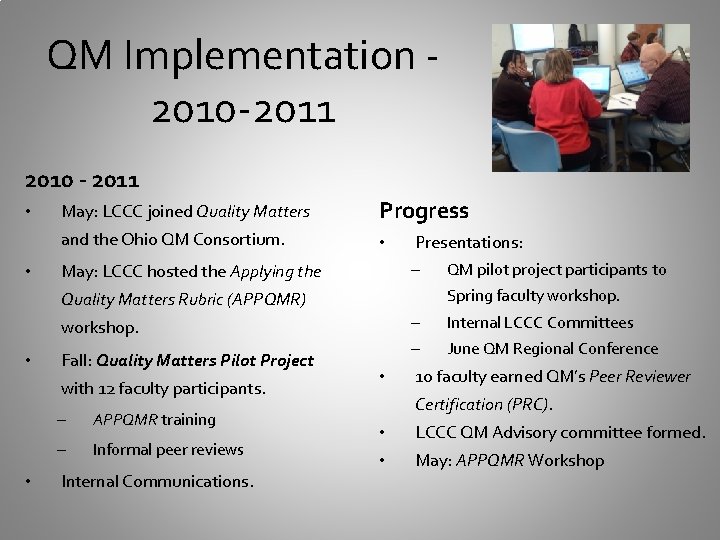
QM Implementation 2010 -2011 2010 - 2011 • • May: LCCC joined Quality Matters Progress and the Ohio QM Consortium. • May: LCCC hosted the Applying the Presentations: – QM pilot project participants to Spring faculty workshop. Quality Matters Rubric (APPQMR) workshop. • Fall: Quality Matters Pilot Project with 12 faculty participants. • – APPQMR training – Informal peer reviews Internal Communications. • – Internal LCCC Committees – June QM Regional Conference 10 faculty earned QM’s Peer Reviewer Certification (PRC). • LCCC QM Advisory committee formed. • May: APPQMR Workshop
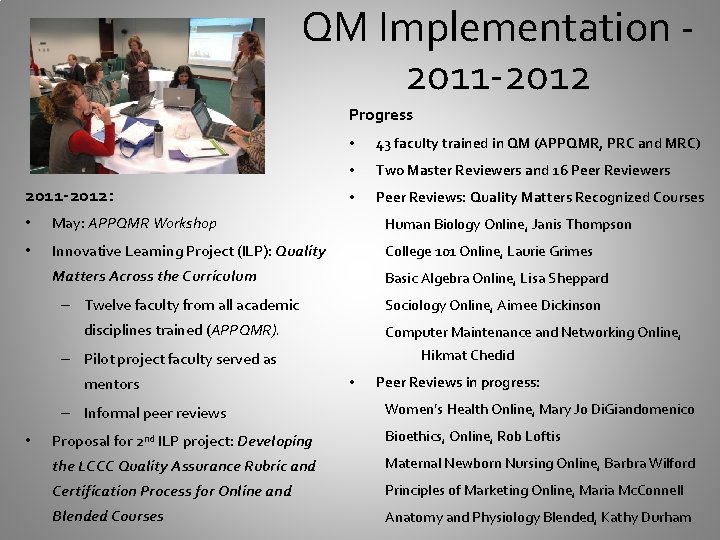
QM Implementation 2011 -2012 Progress 2011 -2012: • 43 faculty trained in QM (APPQMR, PRC and MRC) • Two Master Reviewers and 16 Peer Reviewers • Peer Reviews: Quality Matters Recognized Courses • May: APPQMR Workshop Human Biology Online, Janis Thompson • Innovative Learning Project (ILP): Quality College 101 Online, Laurie Grimes Matters Across the Curriculum Basic Algebra Online, Lisa Sheppard – Twelve faculty from all academic Sociology Online, Aimee Dickinson disciplines trained (APPQMR). Computer Maintenance and Networking Online, Hikmat Chedid – Pilot project faculty served as mentors – Informal peer reviews • • Peer Reviews in progress: Women’s Health Online, Mary Jo Di. Giandomenico Proposal for 2 nd ILP project: Developing Bioethics, Online, Rob Loftis the LCCC Quality Assurance Rubric and Maternal Newborn Nursing Online, Barbra Wilford Certification Process for Online and Principles of Marketing Online, Maria Mc. Connell Blended Courses Anatomy and Physiology Blended, Kathy Durham
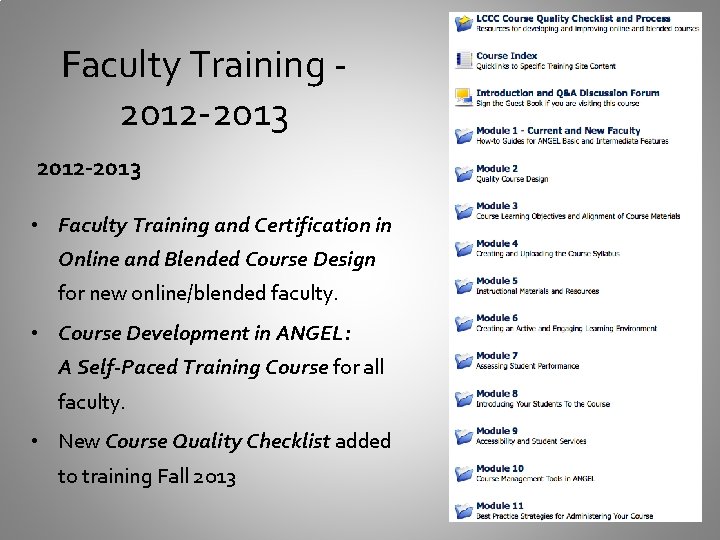
Faculty Training 2012 -2013 • Faculty Training and Certification in Online and Blended Course Design for new online/blended faculty. • Course Development in ANGEL: A Self-Paced Training Course for all faculty. • New Course Quality Checklist added to training Fall 2013
The Faculty Experience
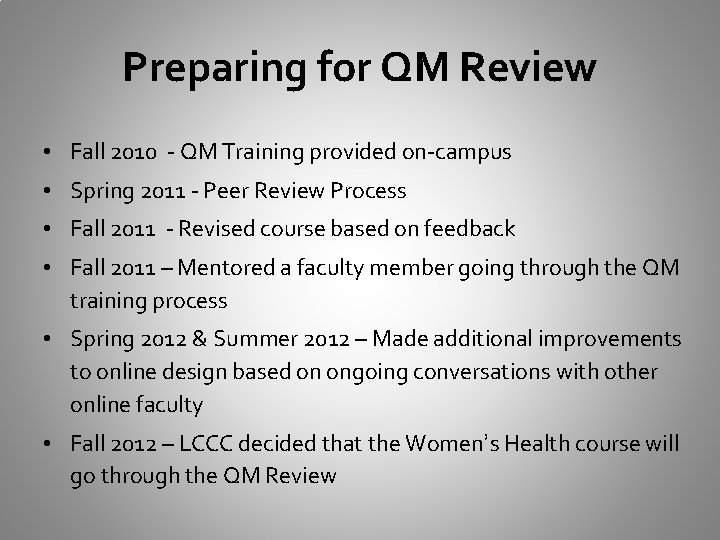
Preparing for QM Review • Fall 2010 - QM Training provided on-campus • Spring 2011 - Peer Review Process • Fall 2011 - Revised course based on feedback • Fall 2011 – Mentored a faculty member going through the QM training process • Spring 2012 & Summer 2012 – Made additional improvements to online design based on ongoing conversations with other online faculty • Fall 2012 – LCCC decided that the Women’s Health course will go through the QM Review
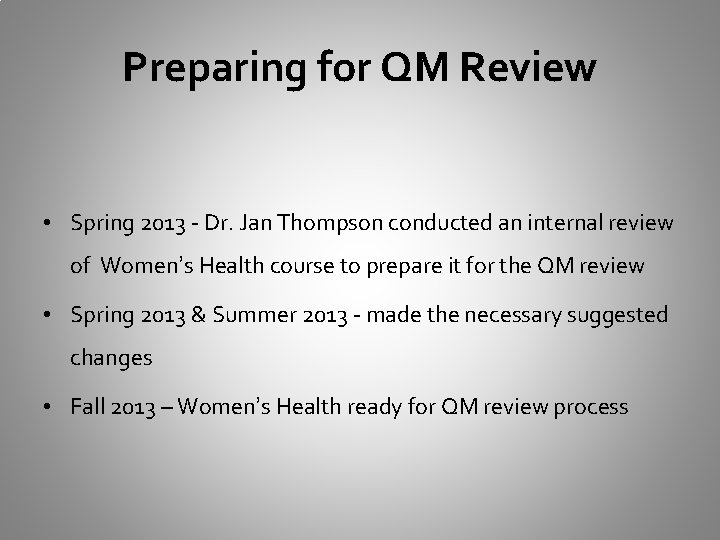
Preparing for QM Review • Spring 2013 - Dr. Jan Thompson conducted an internal review of Women’s Health course to prepare it for the QM review • Spring 2013 & Summer 2013 - made the necessary suggested changes • Fall 2013 – Women’s Health ready for QM review process
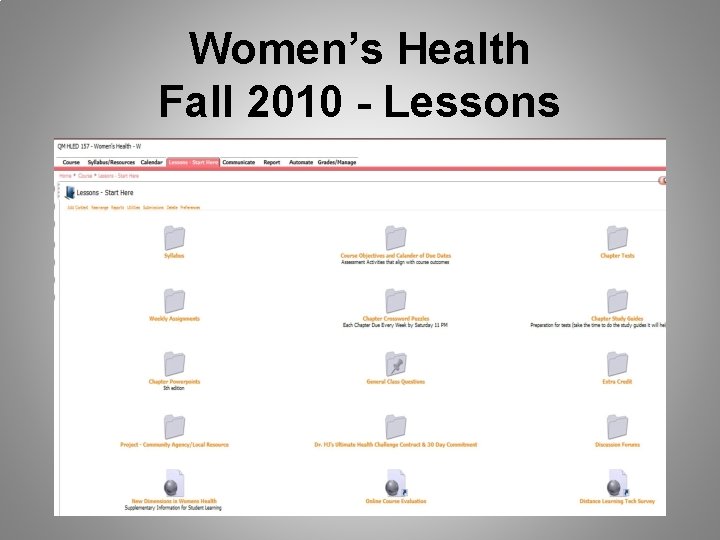
Women’s Health Fall 2010 - Lessons
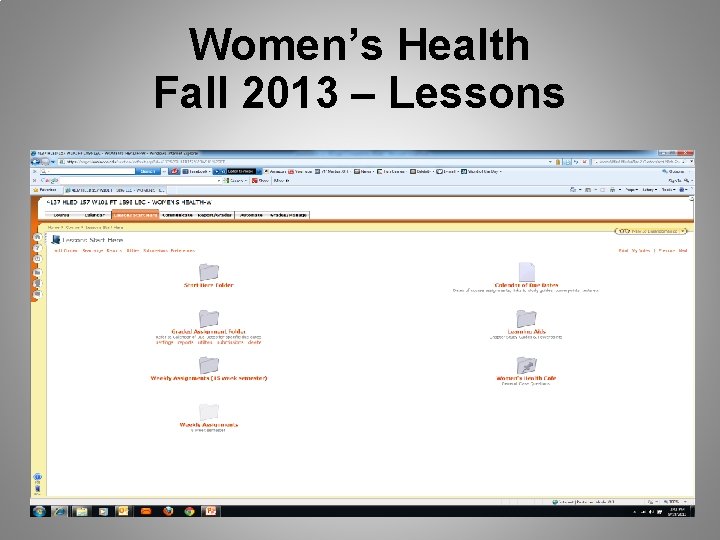
Women’s Health Fall 2013 – Lessons
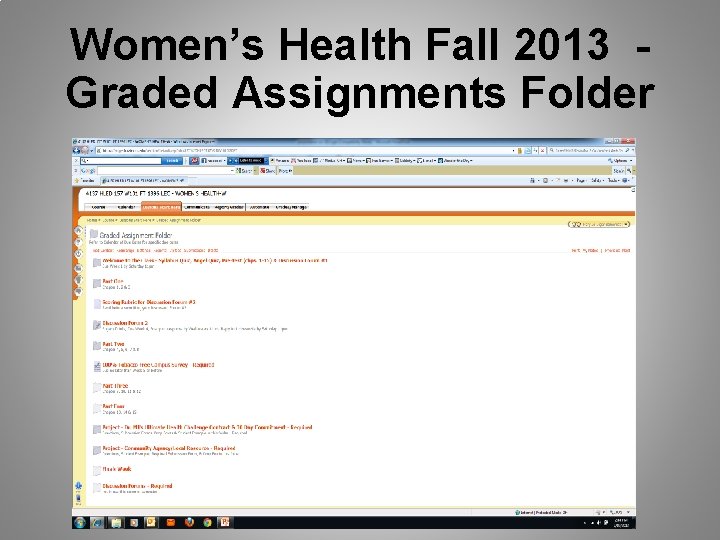
Women’s Health Fall 2013 Graded Assignments Folder
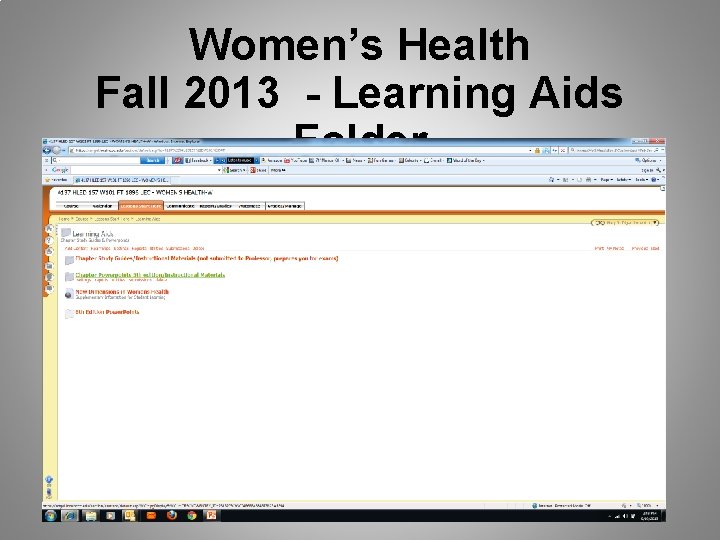
Women’s Health Fall 2013 - Learning Aids Folder
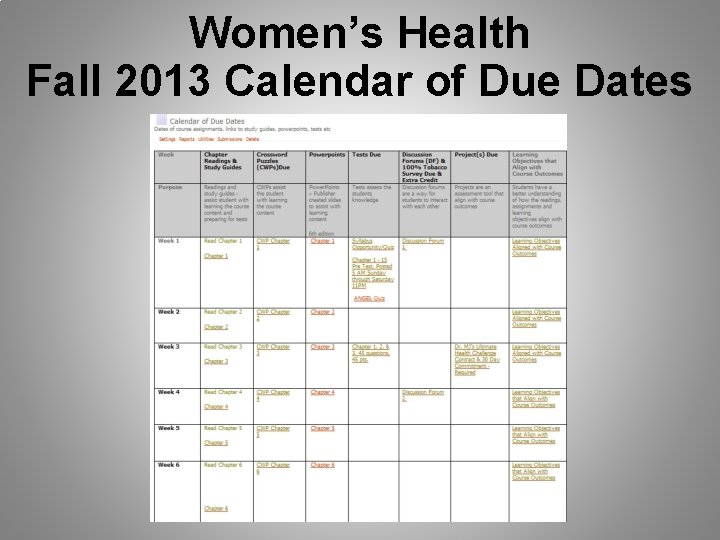
Women’s Health Fall 2013 Calendar of Due Dates
Innovative Learning Project (ILP) Grants
What is an ILP? • Three types of grant opportunities are available to LCCC faculty – Course Redesign – Course Quality Assurance – Innovative Learning Project • ILP engages in innovative learning strategies that promote student retention and student success
Criteria for an ILP Award • Supports principles of the Learning College and LCCC’s Vision 2. 0 priorities • Describes the impact on student retention and student success • Assessment procedures are clearly established • Members are interdisciplinary and collaborative • Budget is appropriate • Overall content and design demonstrate quality, merit and efficiency
Further info… • Two ILP workshops are provided annually • Workshop facilitators provide expertise • Coordinator provides one-on-one guidance • Annual ILP Celebration in April – ”Noshing and Sharing”
Developing the Quality Assurance Checklist
Design Process • Involved a review of numerous resources • Created by a cross-curricular team, including faculty and staff • Worked in small teams to create different parts of the checklist
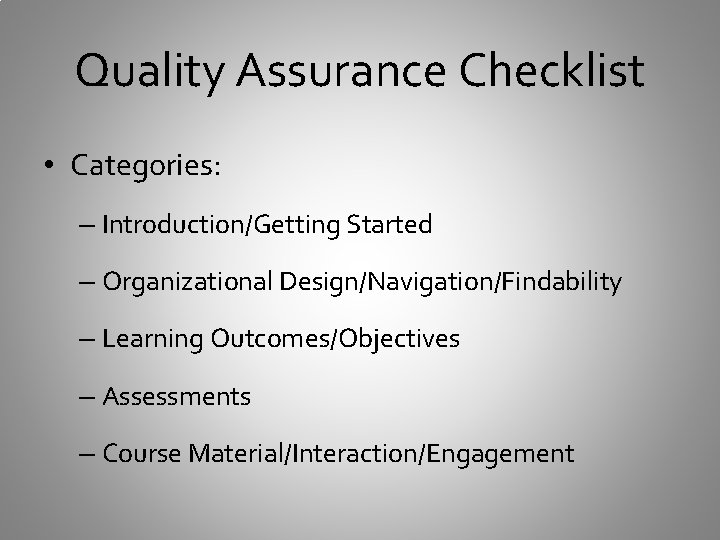
Quality Assurance Checklist • Categories: – Introduction/Getting Started – Organizational Design/Navigation/Findability – Learning Outcomes/Objectives – Assessments – Course Material/Interaction/Engagement
Quality Assurance Checklist • Within each category: – Specific criteria were developed – An importance “value” was assigned • Guidelines for checklist usage were created: – For self-review – For peer-review
Pilot, Part I • The project team used the checklist to review two courses: an online (QM recognized) course and a blended (previously unreviewed) course • Feedback from that experience led to some tweaking of the Quality Assurance Checklist and the review process
Pilot, Part II • The instructor of the blended course did revisions based upon review feedback • The project team returned to and reviewed the blended course • A pre-QM review was then done on the blended course using the QM Rubric
Finalizing the Checklist • An annotated checklist document was created: – To provide more detail – To direct faculty to the online training materials that would help courses meet the Quality Assurance expectations – To facilitate self-assessment and self-improvement of online and blended courses by faculty
QUALITY ASSURANCE COURSE DESIGN GRANT PROJECTS
What Are These Grants? § CTE grant monies are available for instructors to have their online or blended course evaluated using the LCCC Quality Assurance Certification process § By utilizing the LCCC Quality Assurance Checklist, the faculty member will identify areas in his/her online or blended course that could be improved
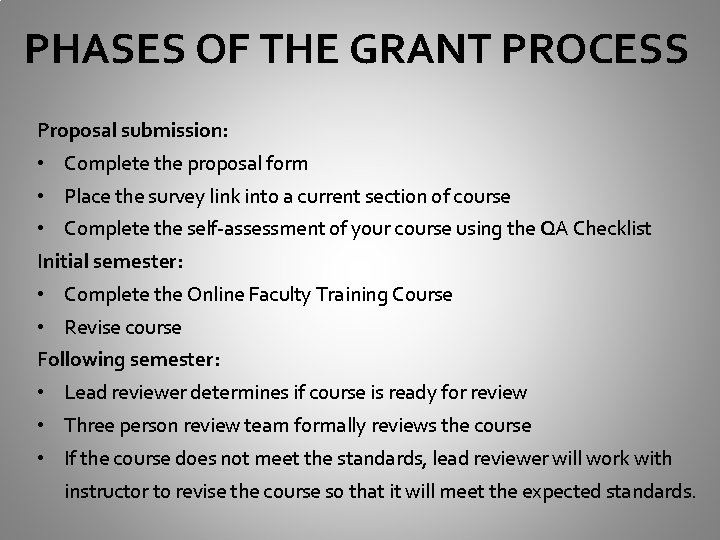
PHASES OF THE GRANT PROCESS Proposal submission: • Complete the proposal form • Place the survey link into a current section of course • Complete the self-assessment of your course using the QA Checklist Initial semester: • Complete the Online Faculty Training Course • Revise course Following semester: • Lead reviewer determines if course is ready for review • Three person review team formally reviews the course • If the course does not meet the standards, lead reviewer will work with instructor to revise the course so that it will meet the expected standards.
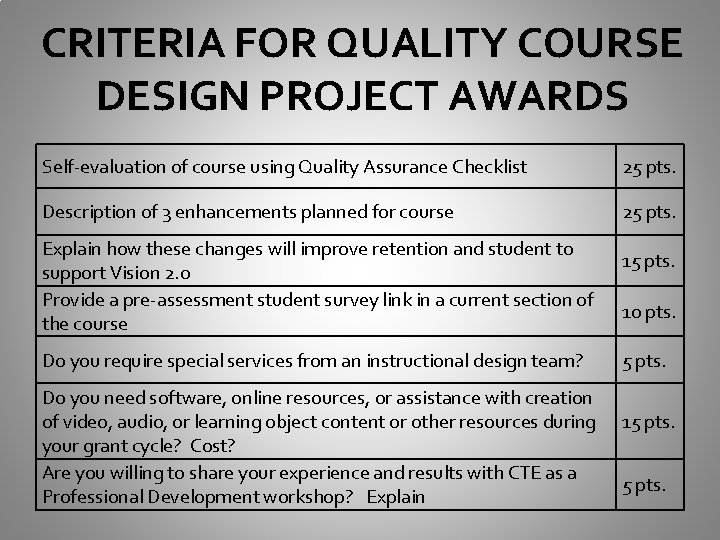
CRITERIA FOR QUALITY COURSE DESIGN PROJECT AWARDS Self-evaluation of course using Quality Assurance Checklist 25 pts. Description of 3 enhancements planned for course 25 pts. Explain how these changes will improve retention and student to support Vision 2. 0 Provide a pre-assessment student survey link in a current section of the course Do you require special services from an instructional design team? Do you need software, online resources, or assistance with creation of video, audio, or learning object content or other resources during your grant cycle? Cost? Are you willing to share your experience and results with CTE as a Professional Development workshop? Explain 15 pts. 10 pts. 5 pts. 15 pts.
Seal of Excellence Score an overall total of 65/72 (85%)points earns the seal of Excellence
Presenters Tammy Macek: Technical Applications Specialist/Distance Learning tmacek@lorainccc. edu Susan Paul: Interim Dean of Learning Resources/Distance Learning spaul@lorainccc. edu Mary Jo Di. Giandomenico: Professor, Physical Education/Recreation mdigiand@lorainccc. edu Janis Thompson: Professor, Biology jthompso@lorainccc. edu Aimee Dickinson: Associate Professor, Social Science adickins@lorainccc. edu