
CREATING A DEMENTIAFRIENDLY ENVIRONMENT Code of Conduct How
- Slides: 18
CREATING A DEMENTIA-FRIENDLY ENVIRONMENT
Code of Conduct How are we going to to work together? • Treat each other with respect • Listen to each other • No personal comments • Contribute to the lesson(s)
Learning outcomes By the end of this lesson, students will be able to… • Describe dementia, using appropriate language • Identify features of the built environment which may be difficult to navigate for a person with dementia. • Apply this information to the school environment and present how they would change an area of their school to be dementia-friendly.
What is dementia? In groups, can you describe dementia in a single sentence? Would your sentence make sense to a 7 year old? This film will give you an idea of how 7 year olds think. https: //youtu. be/609 Zo. EGcbjo
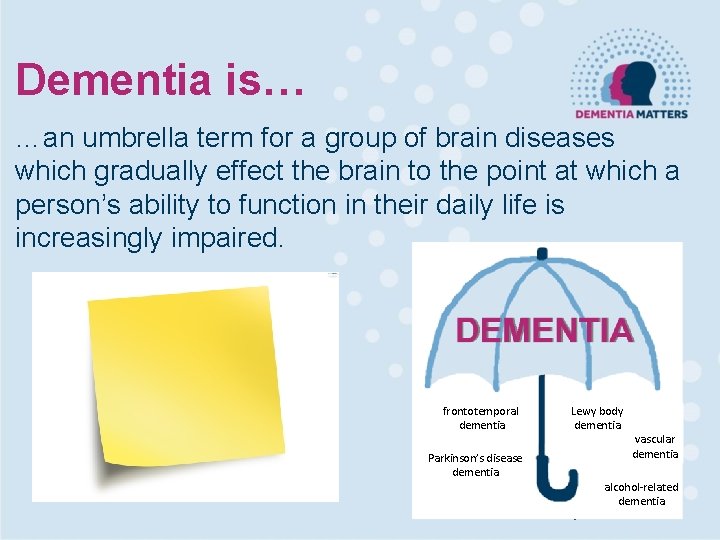
Dementia is… …an umbrella term for a group of brain diseases which gradually effect the brain to the point at which a person’s ability to function in their daily life is increasingly impaired. frontotemporal dementia Parkinson’s disease dementia Lewy body dementia vascular dementia alcohol-related dementia
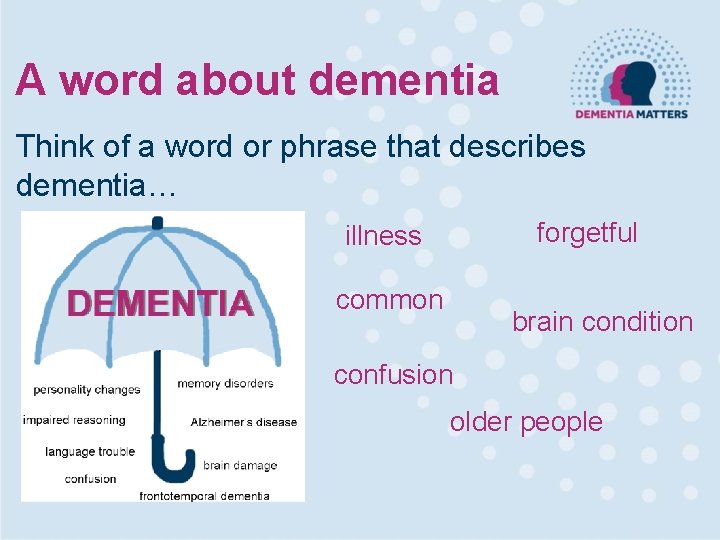
A word about dementia Think of a word or phrase that describes dementia… forgetful illness common brain condition confusion older people
Dementia 5 key messages 1. 2. 3. 4. 5. Dementia is not a natural part of ageing Dementia is caused by brain diseases Dementia is not just about losing your memory It’s possible to live well with dementia There’s more to a person than dementia For further information see: Dementia Friends Important: Dementia does not affect all old people. Only about 7% of people over the age of 65, have dementia. Although this rises to nearly 17% (1: 6) over the age of 80.
Quick Quiz Please complete the 7 questions. Please answer for each question People with dementia can ….
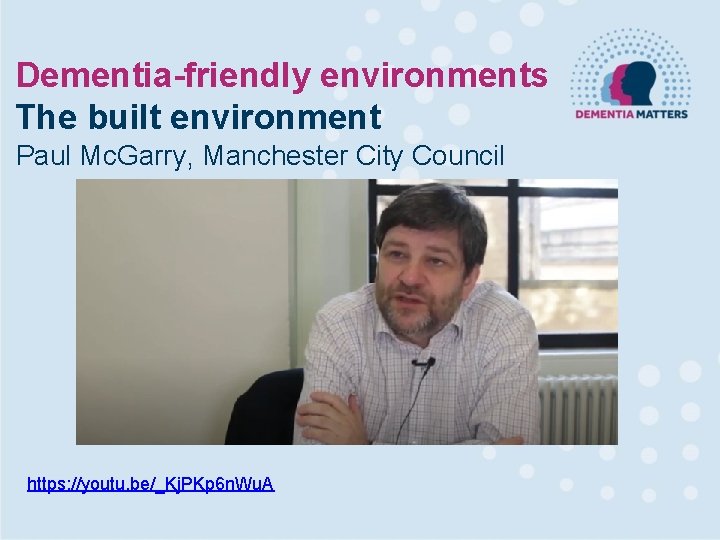
Dementia-friendly environments The built environment Paul Mc. Garry, Manchester City Council https: //youtu. be/_Kj. PKp 6 n. Wu. A
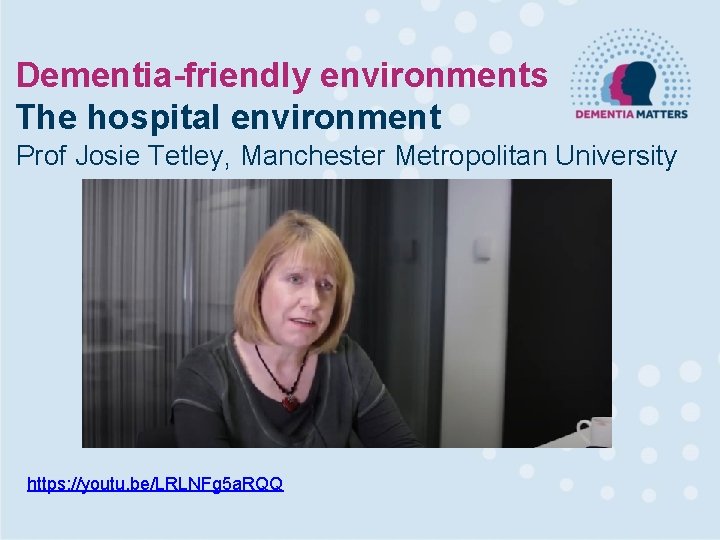
Dementia-friendly environments The hospital environment Prof Josie Tetley, Manchester Metropolitan University https: //youtu. be/LRLNFg 5 a. RQQ
Dementia-friendly environments The home environment Lesley discusses the challenges at home https: //youtu. be/SIa 7 v 3 mo. Cr. I
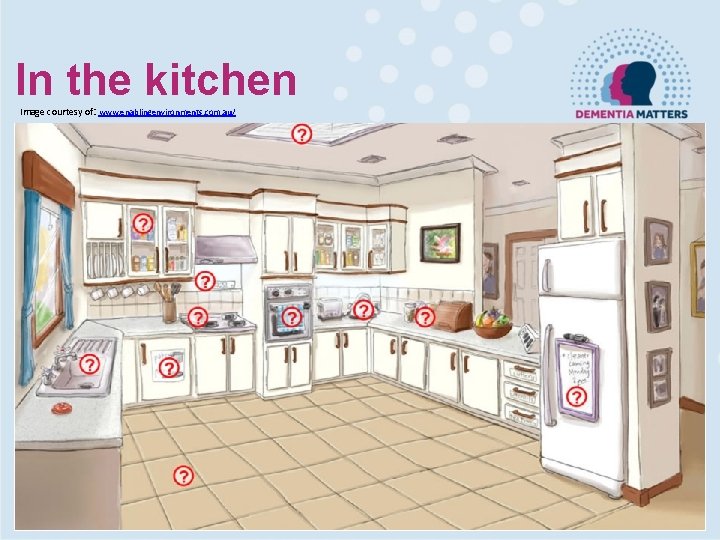
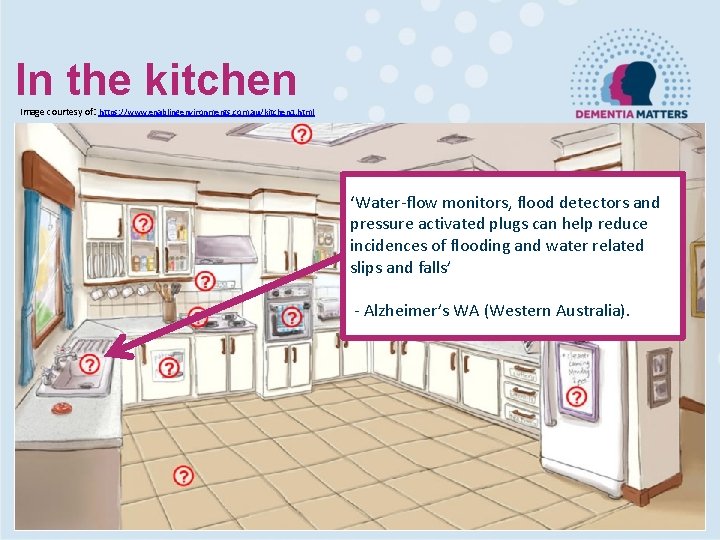
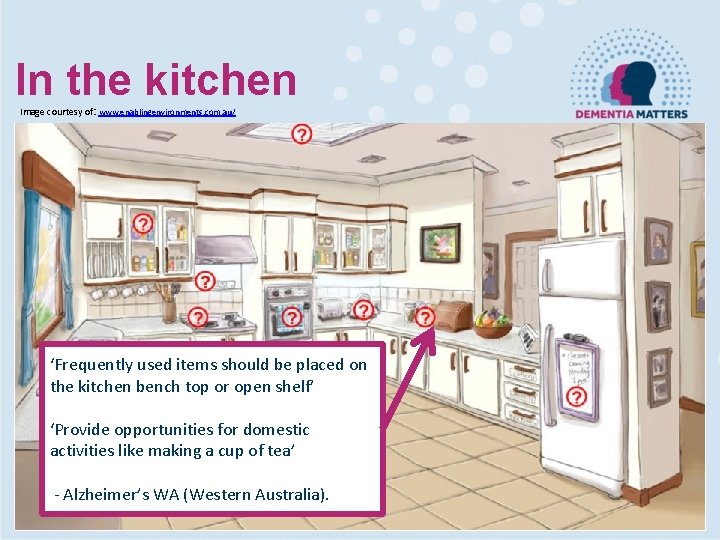
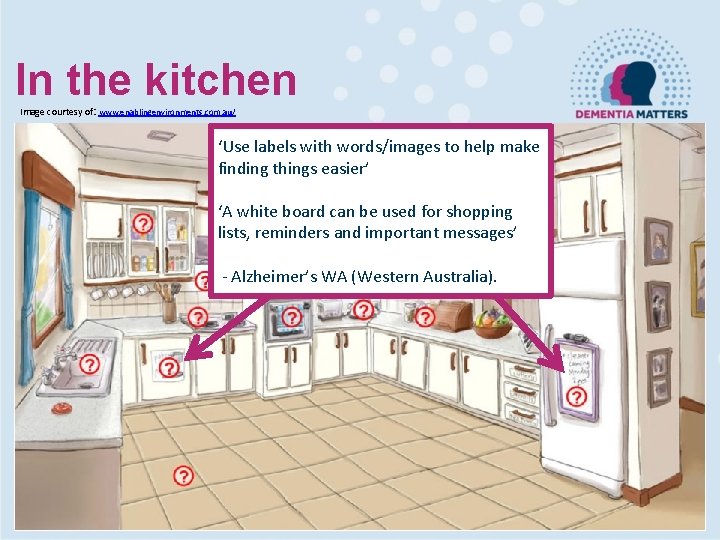
In the kitchen Image courtesy of: www. enablingenvironments. com. au/
In the kitchen Image courtesy of: https: //www. enablingenvironments. com. au/kitchen 1. html ‘Water-flow monitors, flood detectors and pressure activated plugs can help reduce incidences of flooding and water related slips and falls’ - Alzheimer’s WA (Western Australia).
In the kitchen Image courtesy of: www. enablingenvironments. com. au/ ‘Frequently used items should be placed on the kitchen bench top or open shelf’ ‘Provide opportunities for domestic activities like making a cup of tea’ - Alzheimer’s WA (Western Australia).
In the kitchen Image courtesy of: www. enablingenvironments. com. au/ ‘Use labels with words/images to help make finding things easier’ ‘A white board can be used for shopping lists, reminders and important messages’ - Alzheimer’s WA (Western Australia).
Over to you… Choose an area of your school and decide how you would make it dementia-friendly. Be prepared to present your ideas to the rest of the class.
Quick Quiz Please look at the 7 questions again. This time put an x for the correct answer And then complete the Reflection ….
DESIGNING AN INTERGENERATIONAL EVENT