
Creating a Calming Environment Organizing the Environment with

- Slides: 21
Creating a Calming Environment
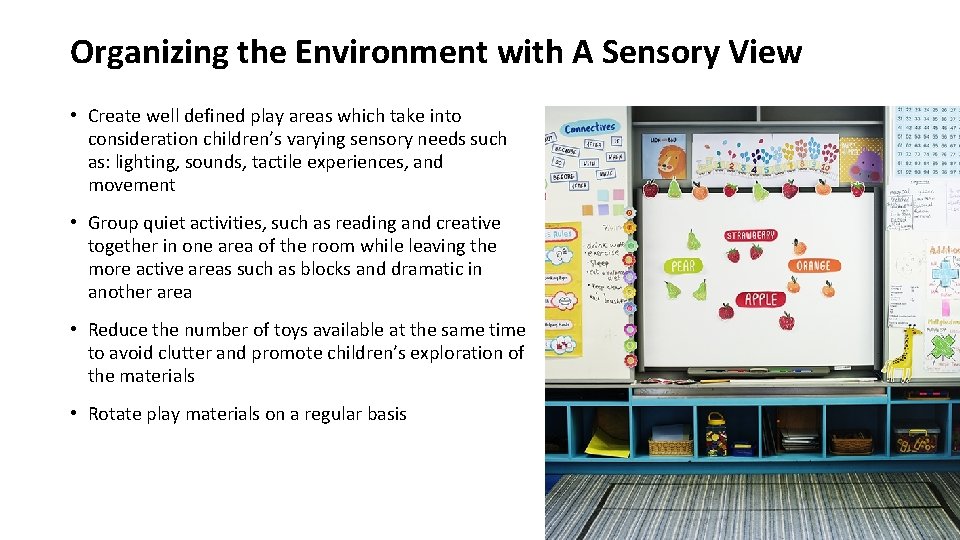
Organizing the Environment with A Sensory View • Create well defined play areas which take into consideration children’s varying sensory needs such as: lighting, sounds, tactile experiences, and movement • Group quiet activities, such as reading and creative together in one area of the room while leaving the more active areas such as blocks and dramatic in another area • Reduce the number of toys available at the same time to avoid clutter and promote children’s exploration of the materials • Rotate play materials on a regular basis
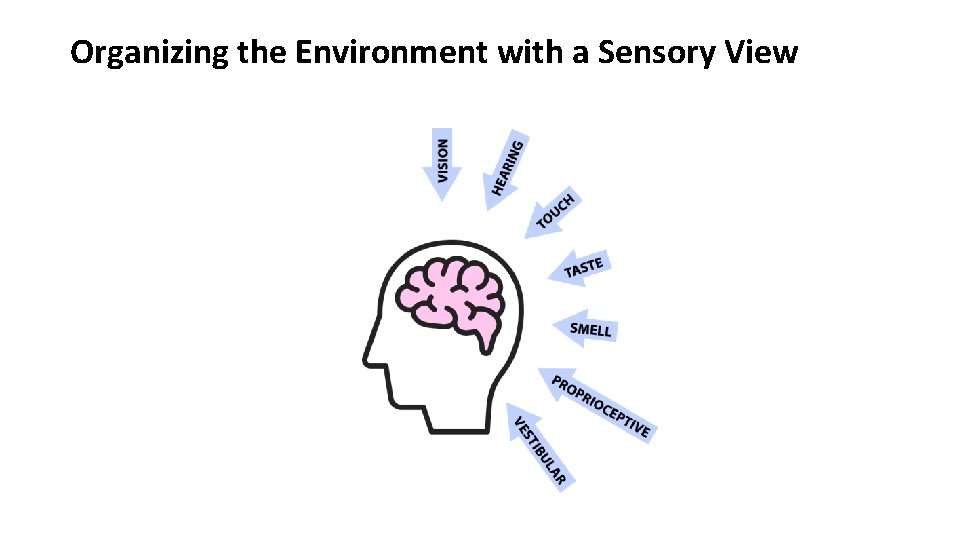
Organizing the Environment with a Sensory View
Sensory View - Vision Avoidance • Use calm or pastel colours on walls • Dim the lighting • Provide predictable, soothing materials such as lava lamps, glitter bottles, magic wand with sparkles • When outside, offer the child sunglasses and ensure they are wearing a hat with a brim Seeking • Provide visually stimulating activities /materials such as bubbles, flashlights or flashing balls and rolling toys • Colourful backgrounds that incorporate patterns
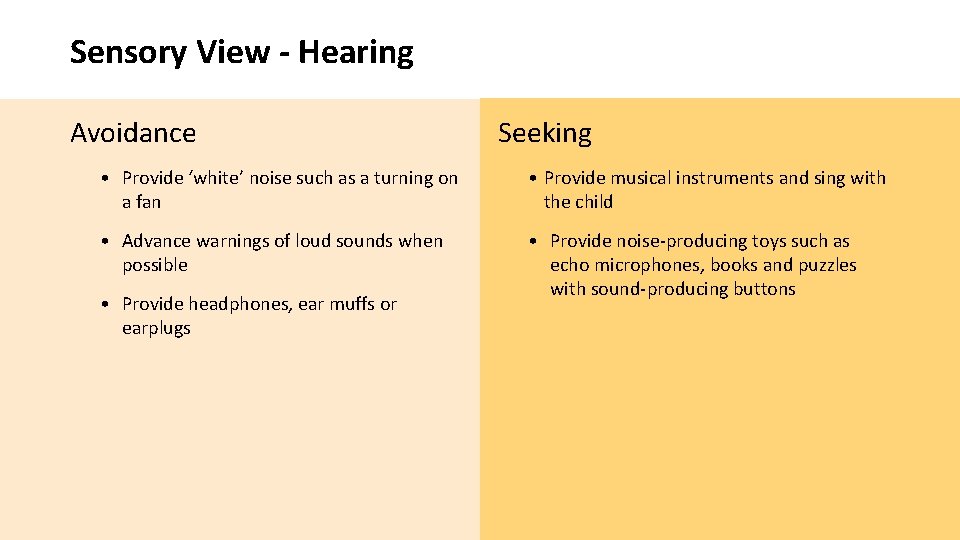
Sensory View - Hearing Avoidance Seeking • Provide ‘white’ noise such as a turning on a fan • Provide musical instruments and sing with the child • Advance warnings of loud sounds when possible • Provide noise-producing toys such as echo microphones, books and puzzles with sound-producing buttons • Provide headphones, ear muffs or earplugs
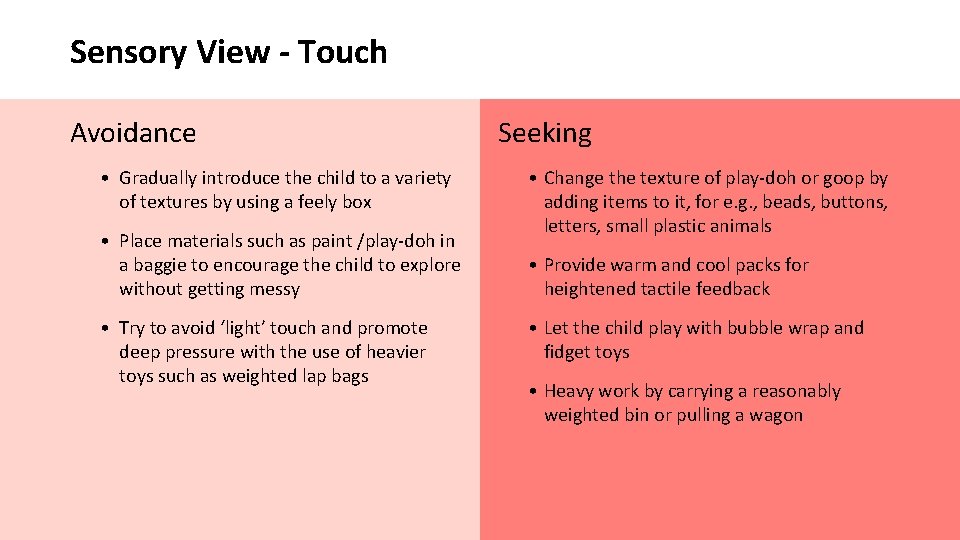
Sensory View - Touch Avoidance • Gradually introduce the child to a variety of textures by using a feely box • Place materials such as paint /play-doh in a baggie to encourage the child to explore without getting messy • Try to avoid ‘light’ touch and promote deep pressure with the use of heavier toys such as weighted lap bags Seeking • Change the texture of play-doh or goop by adding items to it, for e. g. , beads, buttons, letters, small plastic animals • Provide warm and cool packs for heightened tactile feedback • Let the child play with bubble wrap and fidget toys • Heavy work by carrying a reasonably weighted bin or pulling a wagon
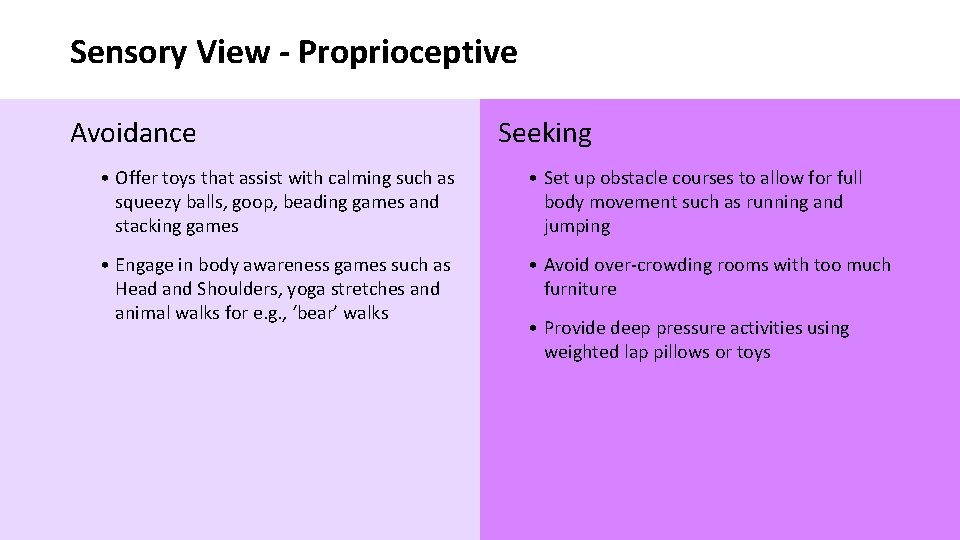
Sensory View - Proprioceptive Avoidance Seeking • Offer toys that assist with calming such as squeezy balls, goop, beading games and stacking games • Set up obstacle courses to allow for full body movement such as running and jumping • Engage in body awareness games such as Head and Shoulders, yoga stretches and animal walks for e. g. , ‘bear’ walks • Avoid over-crowding rooms with too much furniture • Provide deep pressure activities using weighted lap pillows or toys
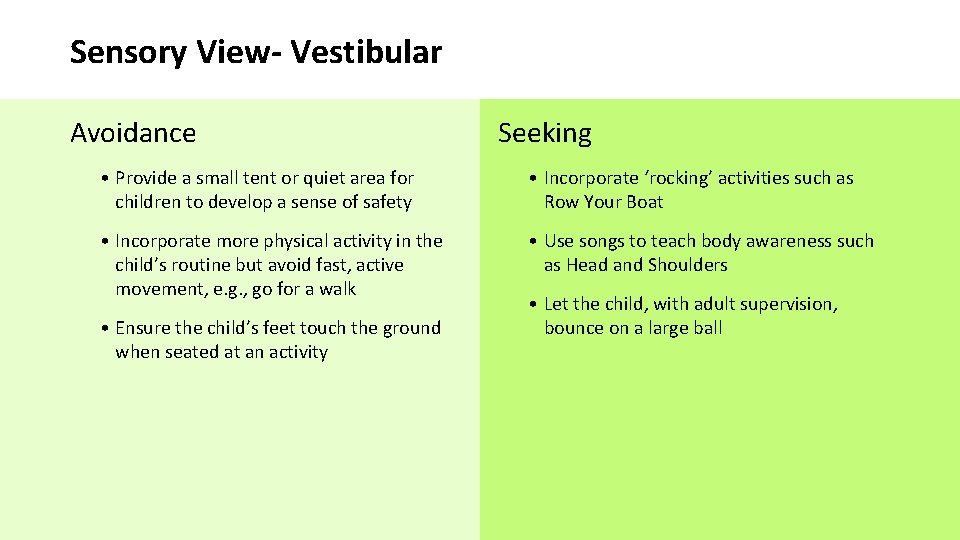
Sensory View- Vestibular Avoidance Seeking • Provide a small tent or quiet area for children to develop a sense of safety • Incorporate ‘rocking’ activities such as Row Your Boat • Incorporate more physical activity in the child’s routine but avoid fast, active movement, e. g. , go for a walk • Use songs to teach body awareness such as Head and Shoulders • Ensure the child’s feet touch the ground when seated at an activity • Let the child, with adult supervision, bounce on a large ball
Building Positive Relationships
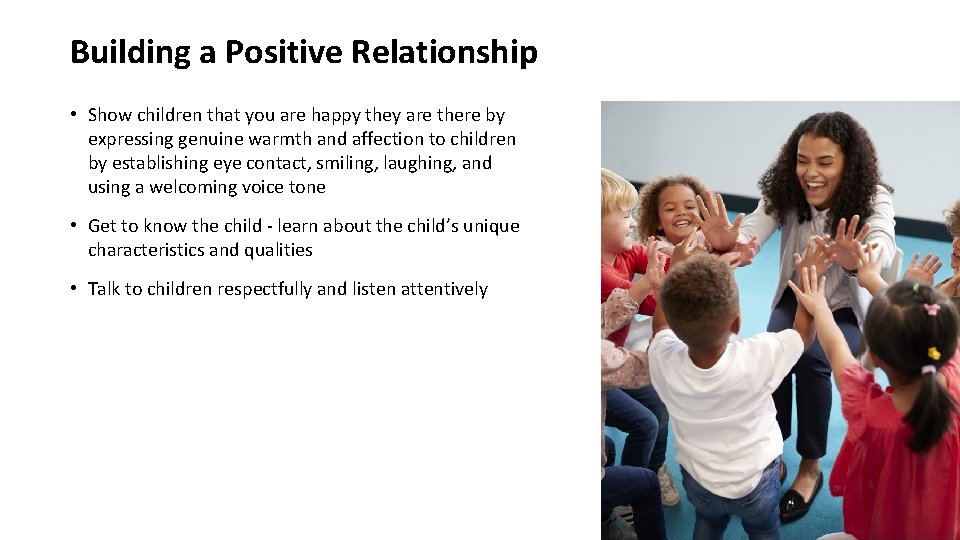
Building a Positive Relationship • Show children that you are happy they are there by expressing genuine warmth and affection to children by establishing eye contact, smiling, laughing, and using a welcoming voice tone • Get to know the child - learn about the child’s unique characteristics and qualities • Talk to children respectfully and listen attentively
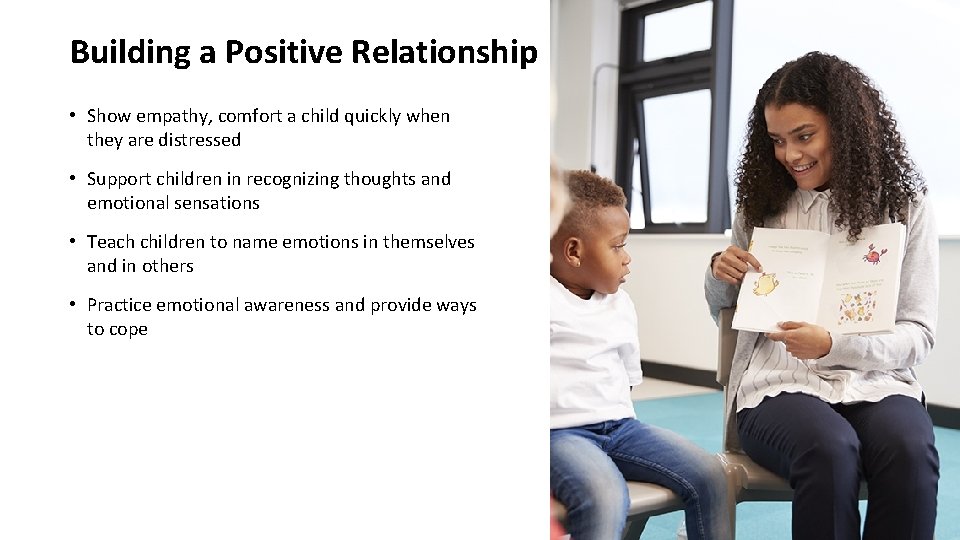
Building a Positive Relationship • Show empathy, comfort a child quickly when they are distressed • Support children in recognizing thoughts and emotional sensations • Teach children to name emotions in themselves and in others • Practice emotional awareness and provide ways to cope
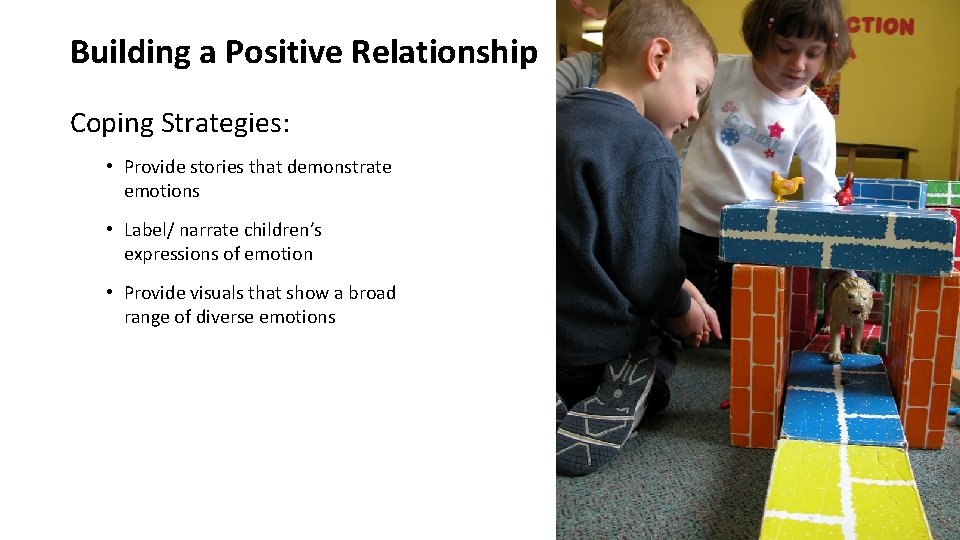
Building a Positive Relationship Coping Strategies: • Provide stories that demonstrate emotions • Label/ narrate children’s expressions of emotion • Provide visuals that show a broad range of diverse emotions
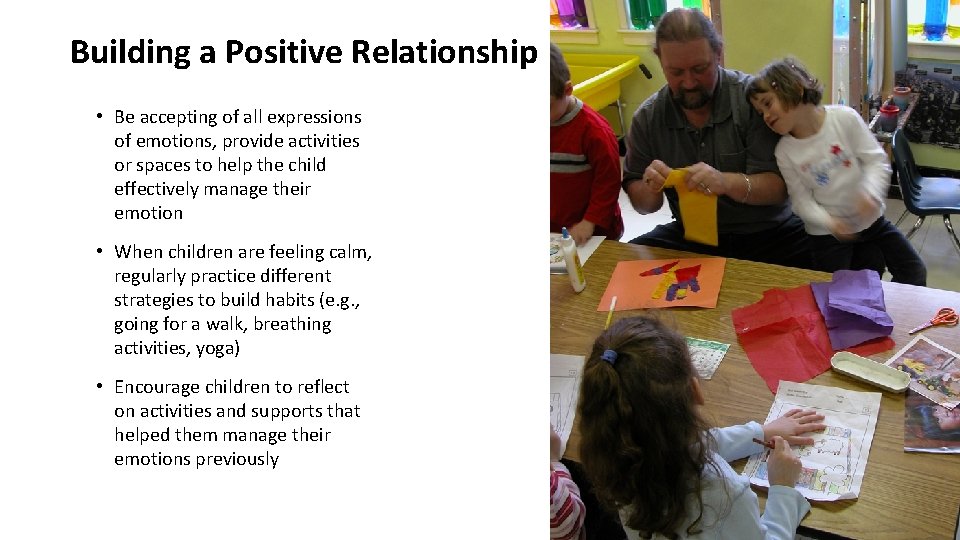
Building a Positive Relationship • Be accepting of all expressions of emotions, provide activities or spaces to help the child effectively manage their emotion • When children are feeling calm, regularly practice different strategies to build habits (e. g. , going for a walk, breathing activities, yoga) • Encourage children to reflect on activities and supports that helped them manage their emotions previously
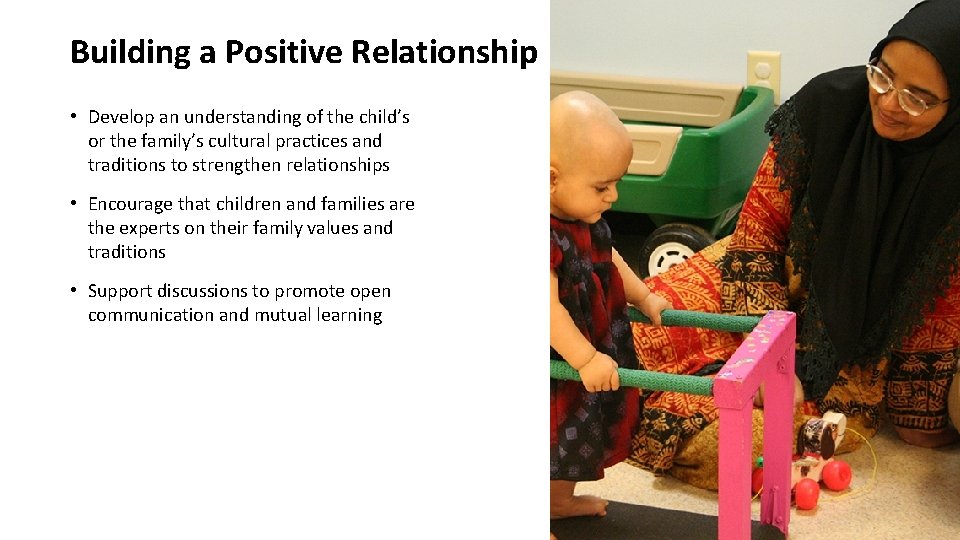
Building a Positive Relationship • Develop an understanding of the child’s or the family’s cultural practices and traditions to strengthen relationships • Encourage that children and families are the experts on their family values and traditions • Support discussions to promote open communication and mutual learning
Consistent Routines
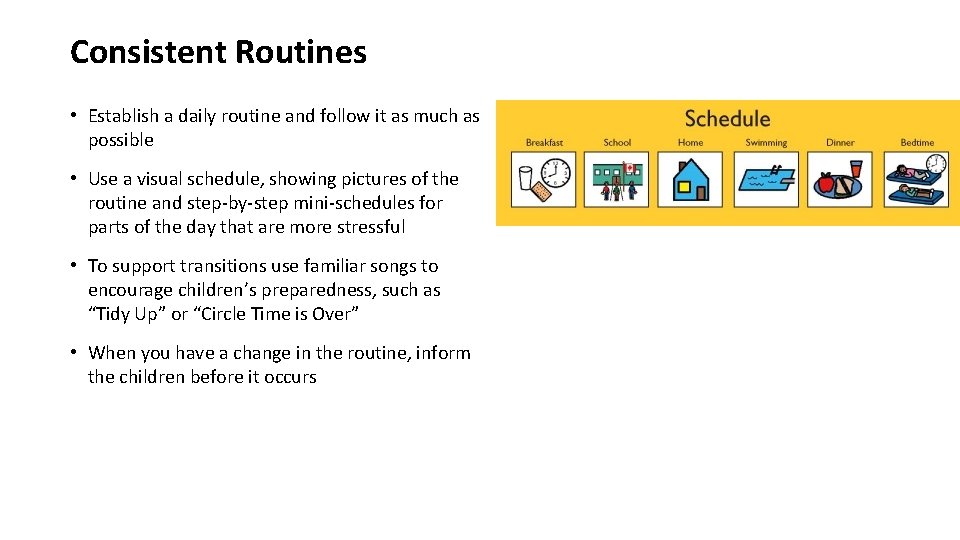
Consistent Routines • Establish a daily routine and follow it as much as possible • Use a visual schedule, showing pictures of the routine and step-by-step mini-schedules for parts of the day that are more stressful • To support transitions use familiar songs to encourage children’s preparedness, such as “Tidy Up” or “Circle Time is Over” • When you have a change in the routine, inform the children before it occurs
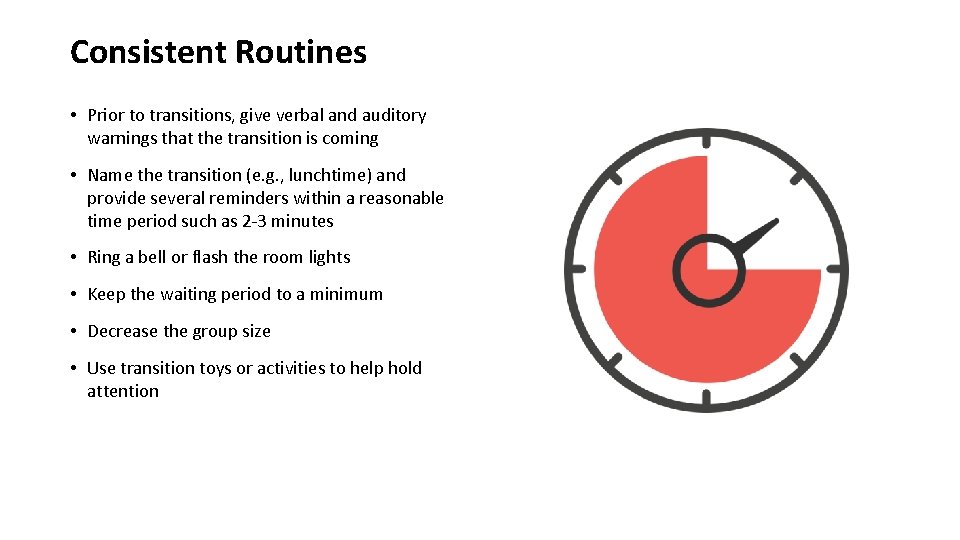
Consistent Routines • Prior to transitions, give verbal and auditory warnings that the transition is coming • Name the transition (e. g. , lunchtime) and provide several reminders within a reasonable time period such as 2 -3 minutes • Ring a bell or flash the room lights • Keep the waiting period to a minimum • Decrease the group size • Use transition toys or activities to help hold attention
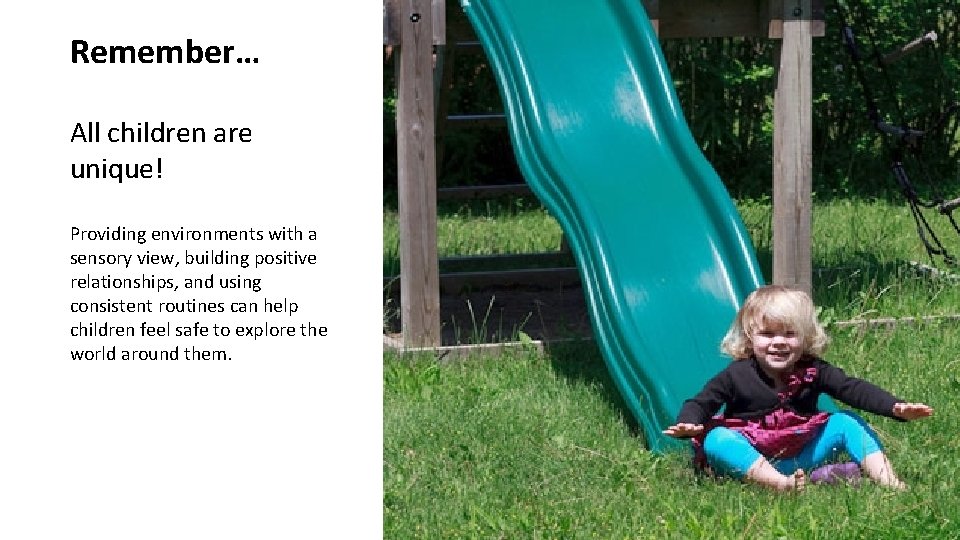
Remember… All children are unique! Providing environments with a sensory view, building positive relationships, and using consistent routines can help children feel safe to explore the world around them.
Thank you for watching!
Sources • Connect. ABILITY - Sensory and Beyond, The Seven Senses • Coping Skills for Kids. (2019). Deep Breathing Exercises for Kids! Retrieved from Deep Breathing Excersies for Kids. • Kostelyk, Sharla. (2020). 175 Sensory Activity Ideas for Kids. Retrieved from 175 Sensory Activity Ideas for Kids • Minero, E. & Fleming, N. (2020). DIY Ways to Meet a Child’s Sensory Needs at Home. Retrieved from DIY Ways to Meet a Child's Sensory Needs at Home
Check your knowledge! True or False? 1. Labeling children’s emotions will help them identify emotions in the future, but does not help them feel understood in the moment. 2. Changes to the environment that consider sensory components can address a child’s level of participation in activities and routines. 3. Narrating children’s emotions encourages them to engage in problem behaviours. 4. Only use specific warnings such as flashing lights or sounds to announce transitions.