
Create a list of slogans or jingles from










- Slides: 57
• Create a list of slogans or jingles from tv shows, commercials or advertisements • Why are you able to recall many of these jingles and place them with the product? • Why do you think companies use slogans and jingles for their products?
Forgetting • Refers to the loss of information that was previously stored in memory. Some memories are completely erased when forgotten, but in many cases a trace of the memory remains.
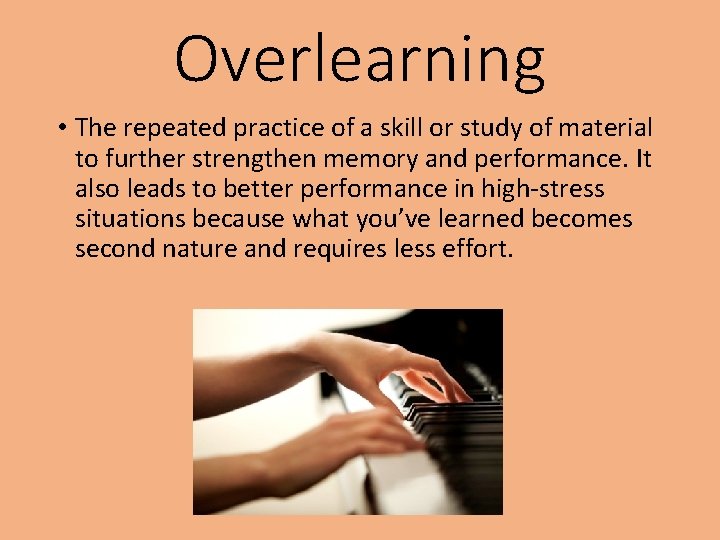
Overlearning • The repeated practice of a skill or study of material to further strengthen memory and performance. It also leads to better performance in high-stress situations because what you’ve learned becomes second nature and requires less effort.
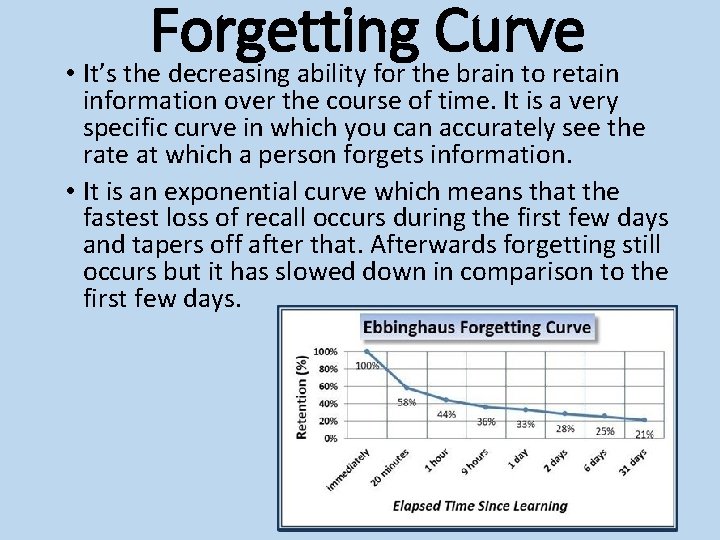
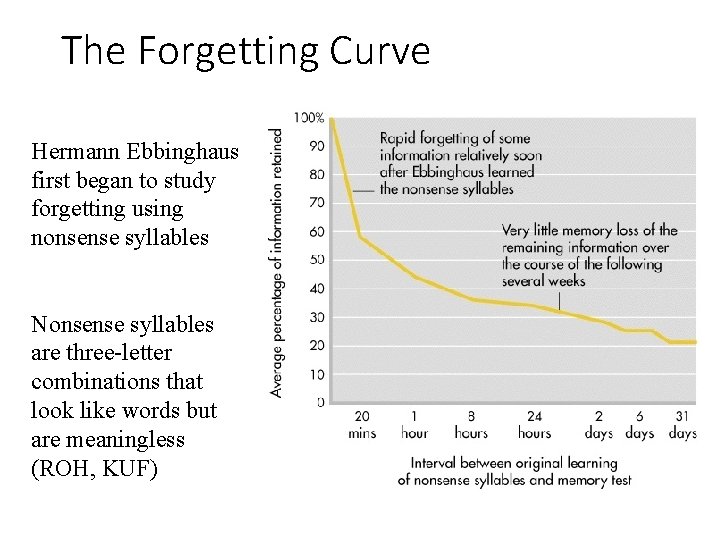
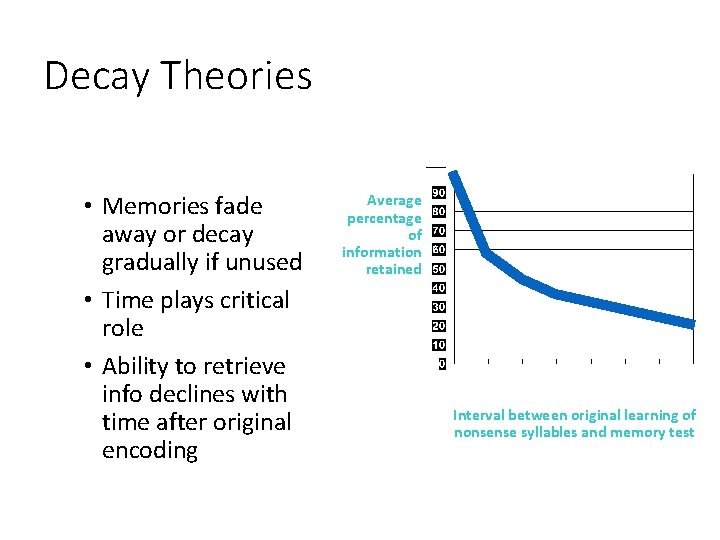
Forgetting Curve • It’s the decreasing ability for the brain to retain information over the course of time. It is a very specific curve in which you can accurately see the rate at which a person forgets information. • It is an exponential curve which means that the fastest loss of recall occurs during the first few days and tapers off after that. Afterwards forgetting still occurs but it has slowed down in comparison to the first few days.
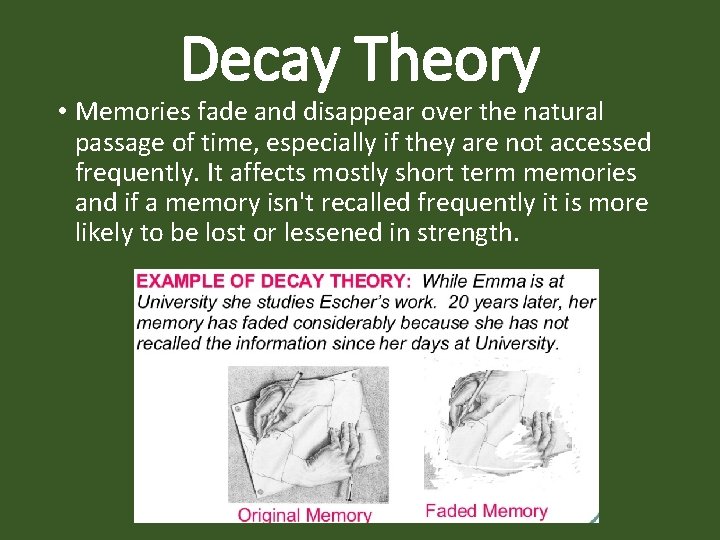
Decay Theory • Memories fade and disappear over the natural passage of time, especially if they are not accessed frequently. It affects mostly short term memories and if a memory isn't recalled frequently it is more likely to be lost or lessened in strength.
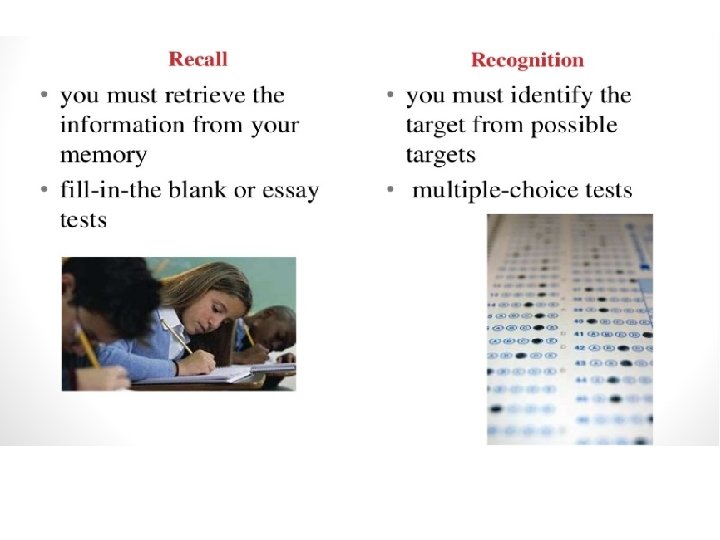
Recall • Is simply bringing a thought or idea learned previously, and thus stored in memory into conscious awareness. When you remember something you are actually "recalling" the memory.
Recognition • Is identifying something you learned previously and is therefore stored in some manner in memory. For example, taking a multiple choice test
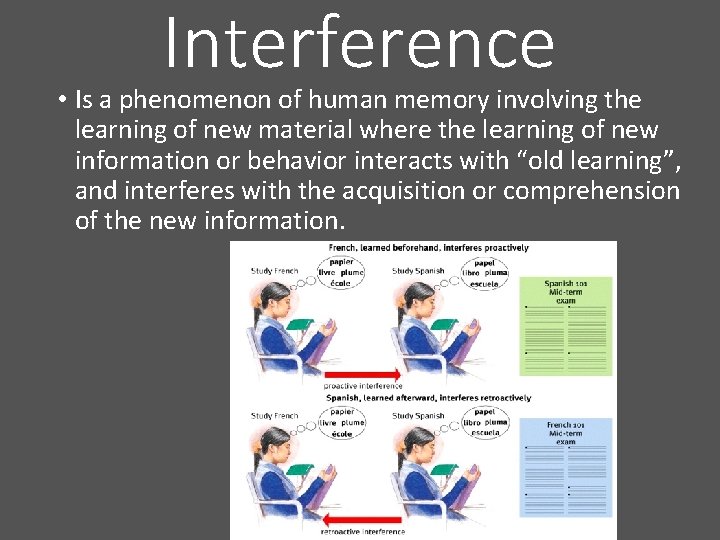
Interference • Is a phenomenon of human memory involving the learning of new material where the learning of new information or behavior interacts with “old learning”, and interferes with the acquisition or comprehension of the new information.
RECAP…. 1. Can overlearning help prevent forgetting? 2. Which questions do you think are easier to answer, recall or recognition. Why?
Memory Processes • Encoding--transforming information into a form that can be entered and retained in the memory system • Storage--retaining information in memory so that it can be used at a later time • Retrieval--recovering information stored in memory so that we are consciously aware of it
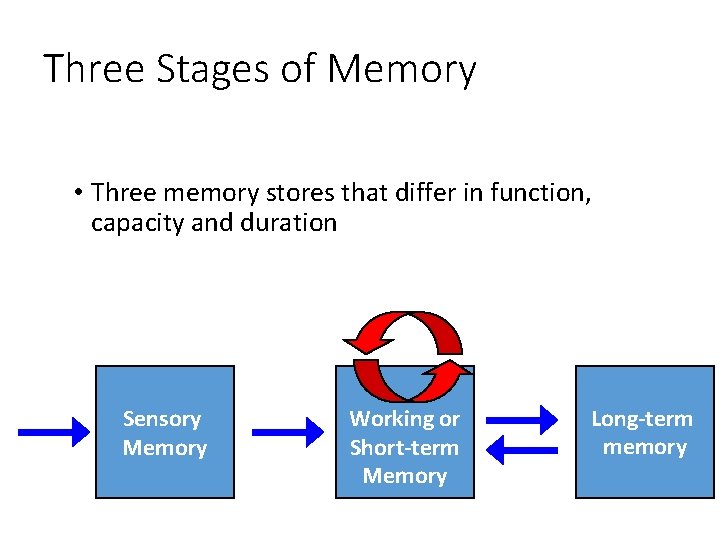
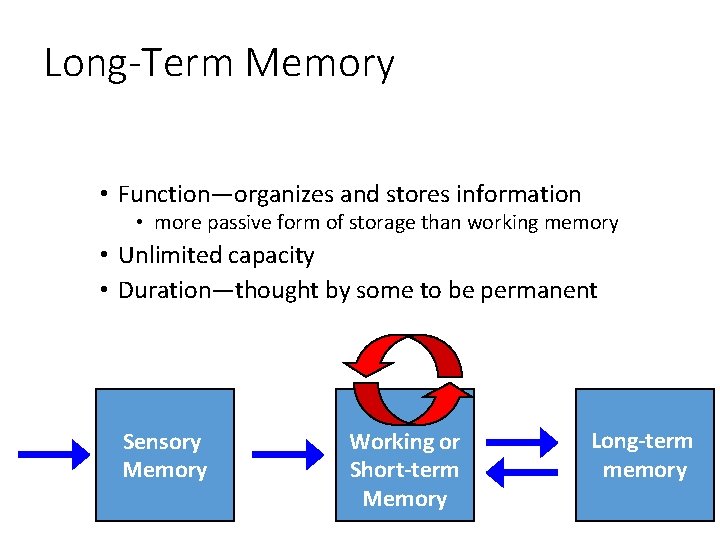
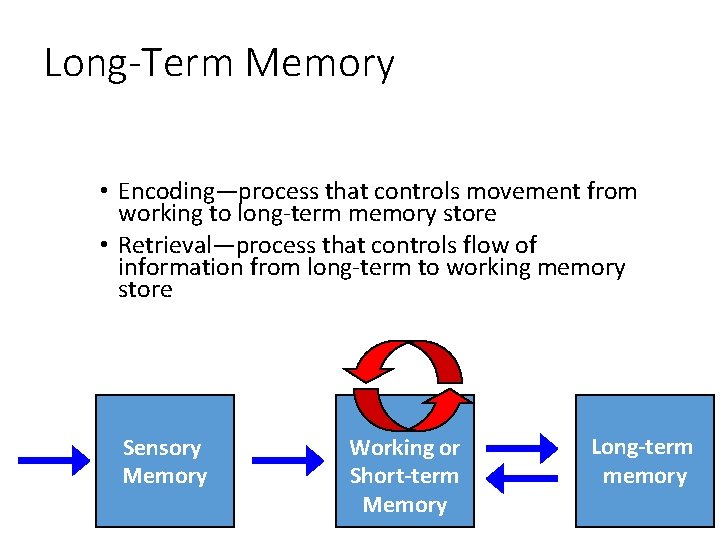
Three Stages of Memory • Three memory stores that differ in function, capacity and duration Maintenance Rehearsal Sensory Input Sensory Memory Attention Encoding Working or Short-term Memory Retrieval Long-term memory
Sensory Memory • Function —process for basic physical characteristics • Capacity—large • can hold many items at once Sensory Input Sensory Memory • Duration—very brief retention of images • . 3 sec for visual info • 2 sec for auditory info • Divided into two types: • iconic memory–visual information • echoic memory– auditory information • Attention is needed to transfer information to working memory
Sensory Memory • Visual sensory memory—brief memory of an image or icon. Also called iconic memory. • Auditory sensory memory—brief memory of a sound or echo. Also called echoic memory. • Auditory sensory memories may last a bit longer than visual sensory memories
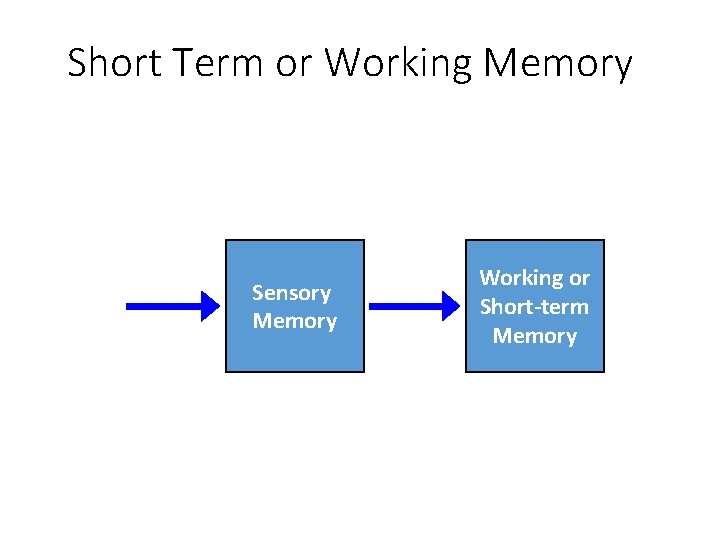
Short Term or Working Memory Sensory Input Sensory Memory Attention Working or Short-term Memory
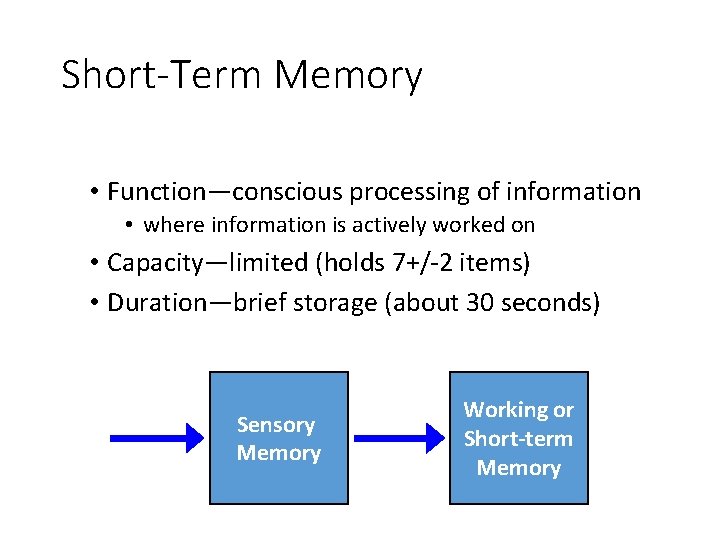
Short-Term Memory • Function—conscious processing of information • where information is actively worked on • Capacity—limited (holds 7+/-2 items) • Duration—brief storage (about 30 seconds) Sensory Input Sensory Memory Attention Working or Short-term Memory
Maintenance Rehearsal • Mental or verbal repetition of information allows information to remain in working memory longer than the usual 30 seconds Maintenance Rehearsal Sensory Input Sensory Memory Attention Working or Short-term Memory
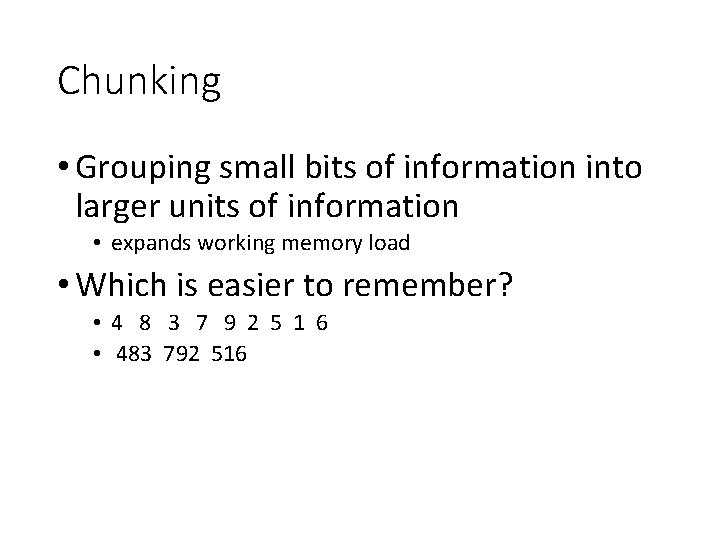
Chunking • Grouping small bits of information into larger units of information • expands working memory load • Which is easier to remember? • 4 8 3 7 9 2 5 1 6 • 483 792 516
Long-Term Memory • Once information passes from sensory to working memory, it can be encoded into long-term memory Maintenance Rehearsal Sensory Input Sensory Memory Attention Encoding Working or Short-term Memory Retrieval Long-term memory
Long-Term Memory • Function—organizes and stores information • more passive form of storage than working memory • Unlimited capacity • Duration—thought by some to be permanent Maintenance Rehearsal Sensory Input Sensory Memory Attention Encoding Working or Short-term Memory Retrieval Long-term memory
Long-Term Memory • Encoding—process that controls movement from working to long-term memory store • Retrieval—process that controls flow of information from long-term to working memory store Maintenance Rehearsal Sensory Input Sensory Memory Attention Encoding Working or Short-term Memory Retrieval Long-term memory
Automatic vs. Effortful Encoding • Automatic processing • Unconscious encoding of information • Examples: • What did you eat for lunch today? • Was the last time you studied during the day or night? • You know the meanings of these very words you are reading. Are you actively trying to process the definition of the words?
Automatic vs. Effortful Encoding • Effortful processing • Requires attention and conscious effort • Examples: • Memorizing your notes for your upcoming Introduction to Psychology exams • Repeating a phone number in your head until you can write it down
Types of Long-Term Memory • Explicit memory—memory with awareness; information can be consciously recollected; also called declarative memory • Implicit memory—memory without awareness; memory that affects behavior but cannot consciously be recalled; also called nondeclarative memory
Explicit Memory • Declarative or conscious memory • Memory consciously recalled or declared • Can use explicit memory to directly respond to a question • Two subtypes of explicit memory
Explicit Memory • Episodic information—information about events or “episodes” • Semantic information—information about facts, general knowledge, school work
Episodic Memory • Memory tied to your own personal experiences • Examples: • What month is your birthday? • Do you like to eat caramel apples? • Q: Why are these explicit memories? • A: Because you can actively declare your answers to these questions
Semantic Memory • Memory not tied to personal events • General facts and definitions about the world • Examples: • How many tires on a car? • What is a cloud? • What color is a banana? • Does NOT depend on tying the item to your past
Implicit Memory • Nondeclarative memory • Influences your thoughts or behavior, but does not enter consciousness
Procedural Memory • Memory that enables you to perform specific learned skills or habitual responses • Examples: • Riding a bike • Using the shift stick while driving • Tying your shoe laces • Q: Why are these procedural memories implicit? • A: Don’t have to consciously remember the steps involved in these actions to perform them • Try to explain to someone how to tie a shoelace
How are memories organized? Clustering--organizing items into related groups during recall from long-term memory
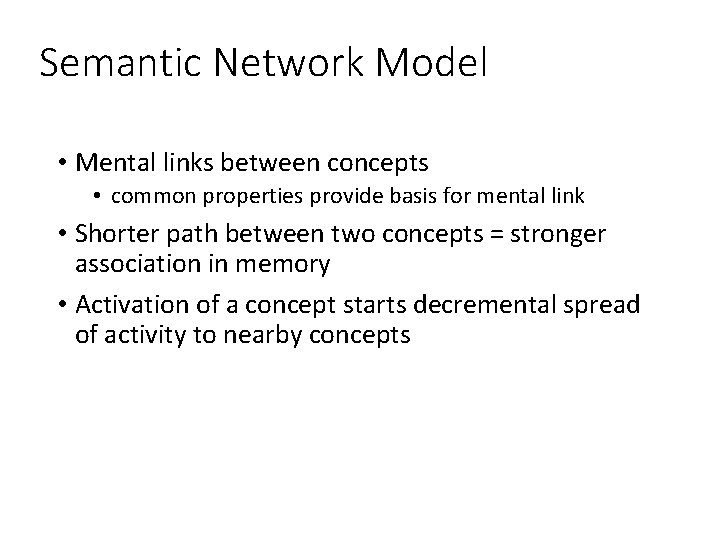
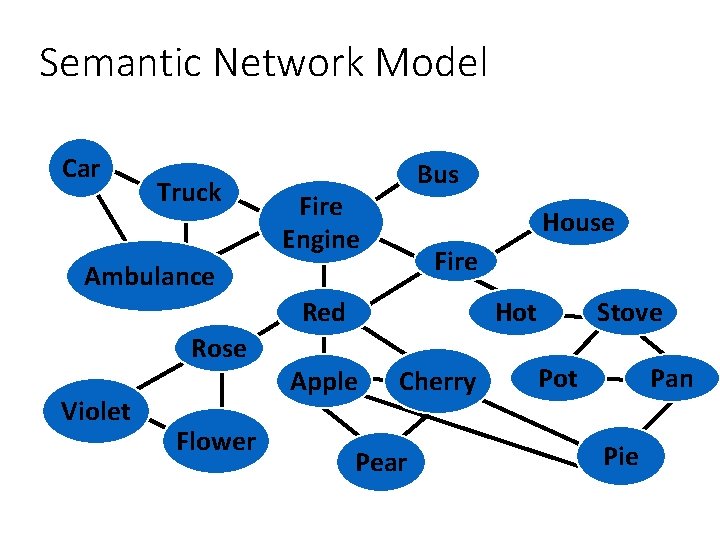
Semantic Network Model • Mental links between concepts • common properties provide basis for mental link • Shorter path between two concepts = stronger association in memory • Activation of a concept starts decremental spread of activity to nearby concepts
Semantic Network Model Car Truck Bus Fire Engine House Fire Ambulance Red Rose Violet Flower Hot Apple Cherry Pear Stove Pot Pan Pie
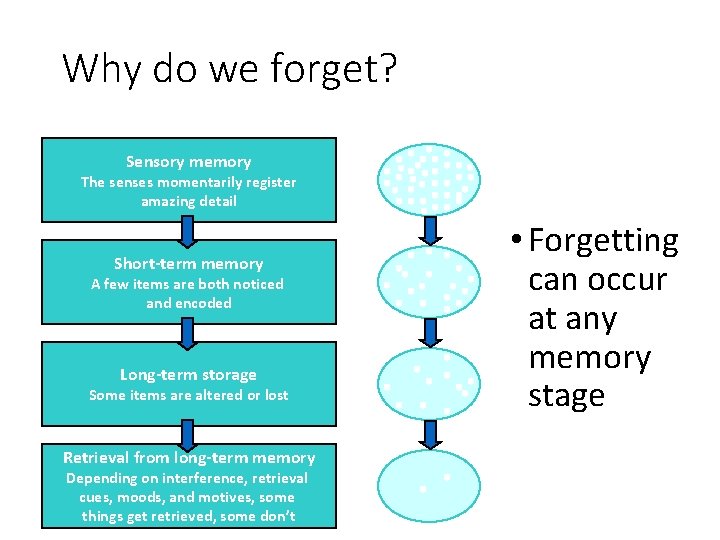
Why do we forget? Sensory memory The senses momentarily register amazing detail Short-term memory A few items are both noticed and encoded Long-term storage Some items are altered or lost Retrieval from long-term memory Depending on interference, retrieval cues, moods, and motives, some things get retrieved, some don’t • Forgetting can occur at any memory stage
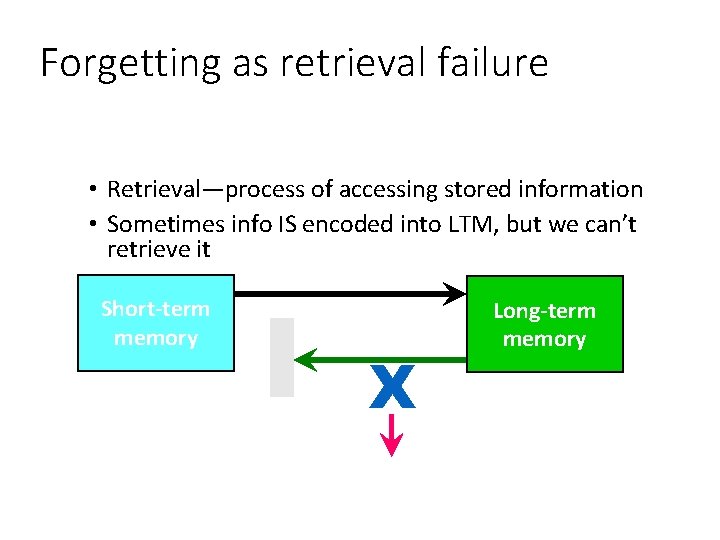
Forgetting as retrieval failure • Retrieval—process of accessing stored information • Sometimes info IS encoded into LTM, but we can’t retrieve it Encoding Short-term memory X Retrieval failure leads to forgetting Long-term memory
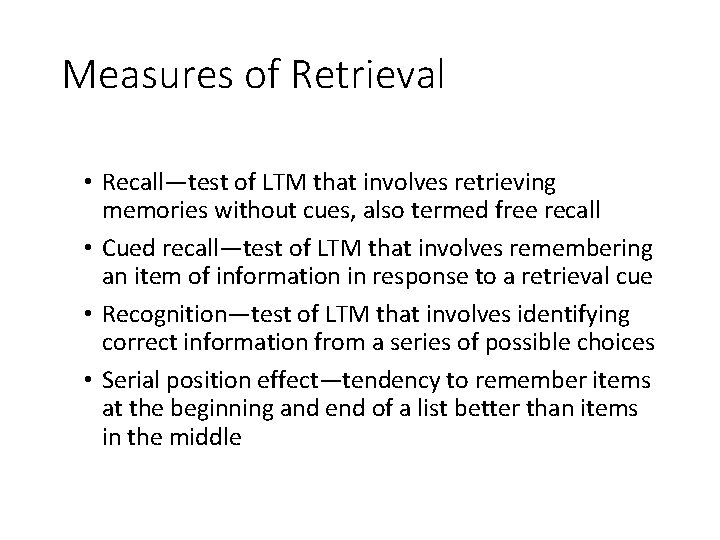
Measures of Retrieval • Recall—test of LTM that involves retrieving memories without cues, also termed free recall • Cued recall—test of LTM that involves remembering an item of information in response to a retrieval cue • Recognition—test of LTM that involves identifying correct information from a series of possible choices • Serial position effect—tendency to remember items at the beginning and end of a list better than items in the middle
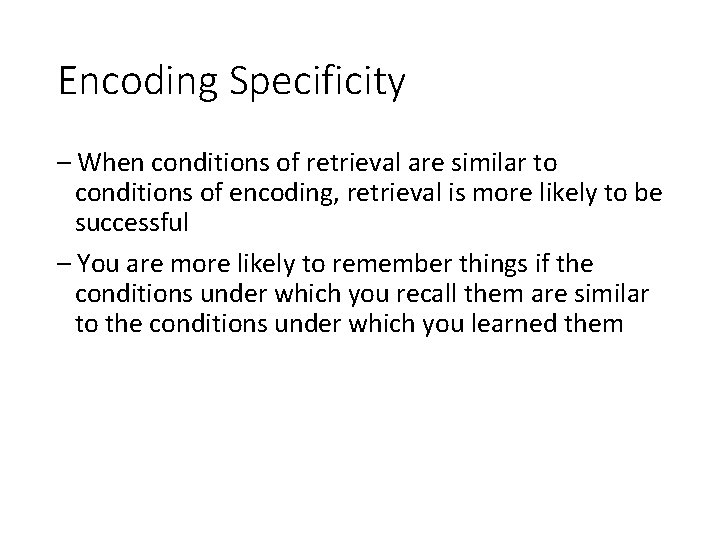
Encoding Specificity – When conditions of retrieval are similar to conditions of encoding, retrieval is more likely to be successful – You are more likely to remember things if the conditions under which you recall them are similar to the conditions under which you learned them
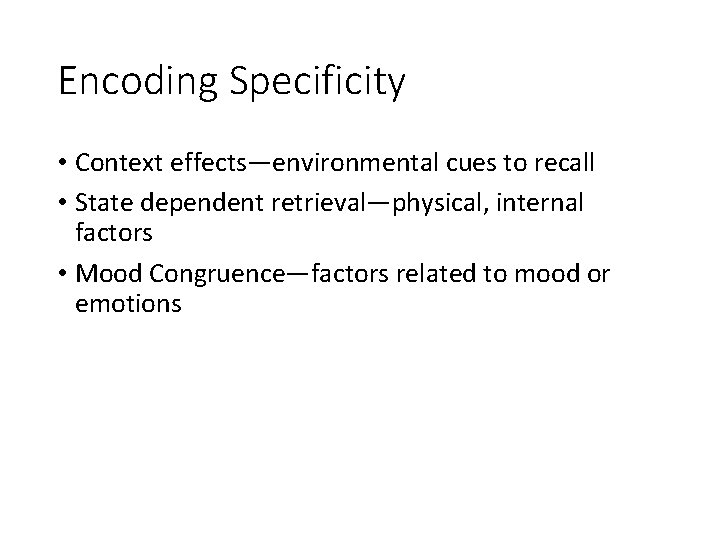
Encoding Specificity • Context effects—environmental cues to recall • State dependent retrieval—physical, internal factors • Mood Congruence—factors related to mood or emotions
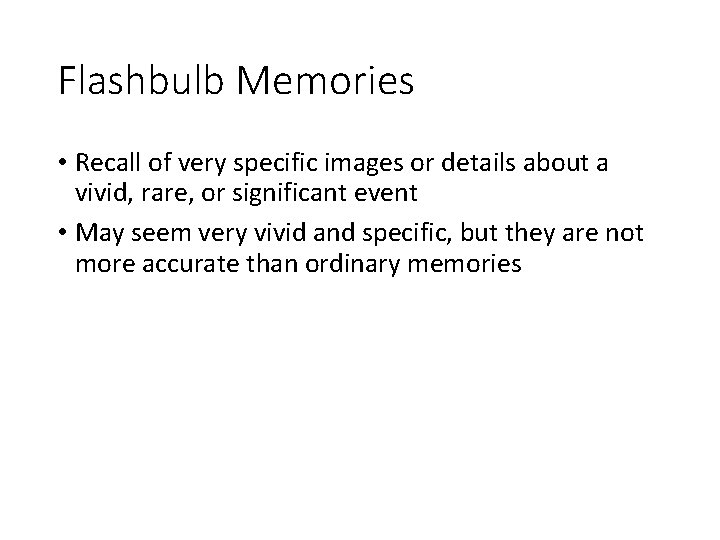
Flashbulb Memories • Recall of very specific images or details about a vivid, rare, or significant event • May seem very vivid and specific, but they are not more accurate than ordinary memories
Memory Distortion • Memory can be distorted as people try to fit new info into existing schemas • Giving misleading information after an event causes subjects to unknowingly distort their memories to incorporate the new misleading information
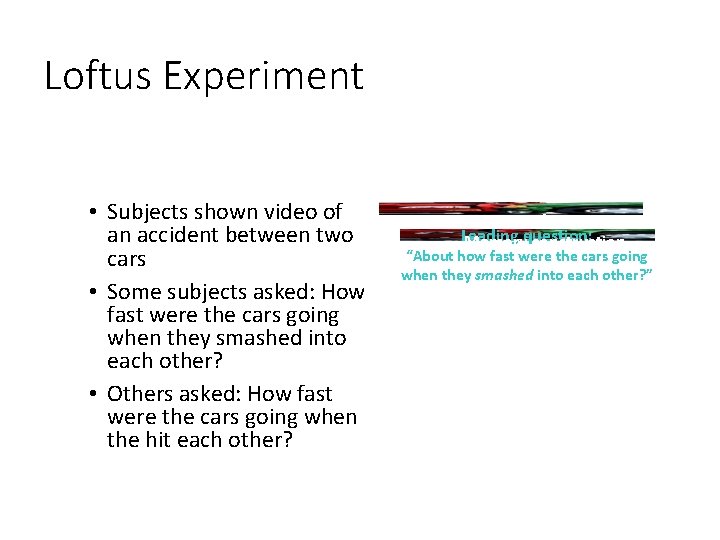
Loftus Experiment • Subjects shown video of an accident between two cars • Some subjects asked: How fast were the cars going when they smashed into each other? • Others asked: How fast were the cars going when the hit each other? Accident Leading question: Memory construction “About how fast were the cars going when they smashed into each other? ”
The Forgetting Curve Hermann Ebbinghaus first began to study forgetting using nonsense syllables Nonsense syllables are three-letter combinations that look like words but are meaningless (ROH, KUF)
Forgetting Theories • Encoding failure • Interference theories • Motivated forgetting • Decay
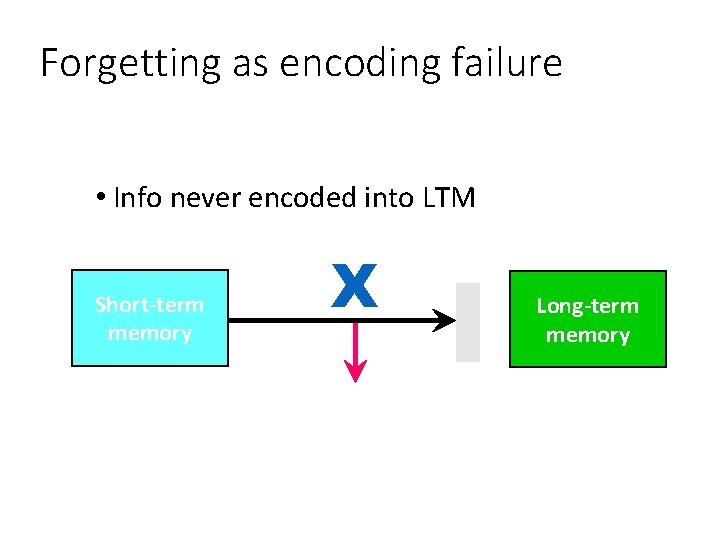
Forgetting as encoding failure • Info never encoded into LTM Short-term memory X Encoding failure leads to forgetting Long-term memory
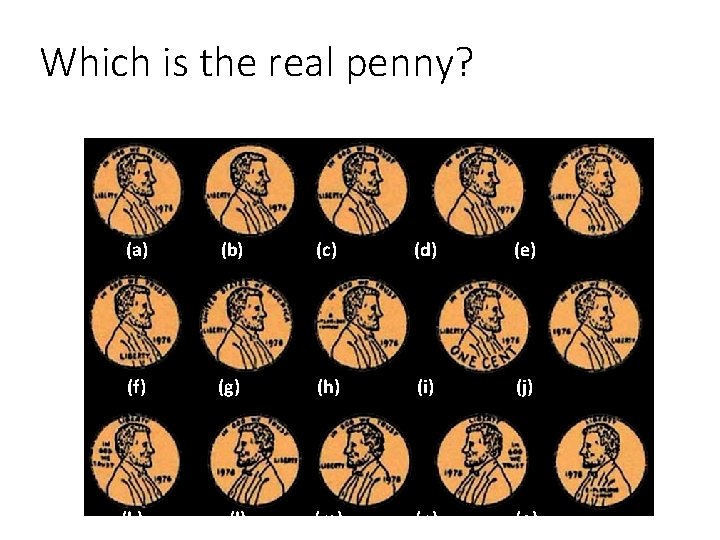
Which is the real penny? (a) (b) (c) (d) (e) (f) (g) (h) (i) (j) (k) (l) (m) (n) (o)
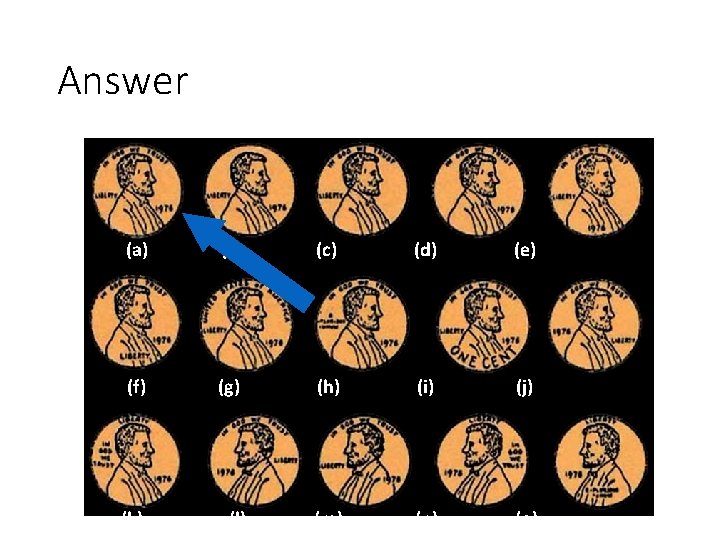
Answer (a) (b) (c) (d) (e) (f) (g) (h) (i) (j) (k) (l) (m) (n) (o)
Encoding Failures Even though you’ve seen thousands of pennies, you’ve probably never looked at one closely to encode specific features
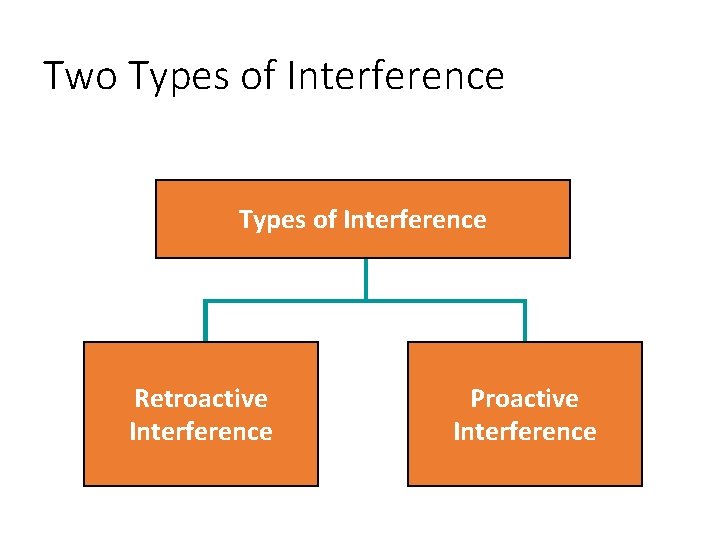
Interference Theories • “Memories interfering with memories” • Forgetting NOT caused by mere passage of time • Caused by one memory competing with or replacing another memory • Two types of interference
Two Types of Interference Retroactive Interference Proactive Interference
Retroactive Interference • When a NEW memory interferes with remembering OLD information • Example: When new phone number interferes with ability to remember old phone number
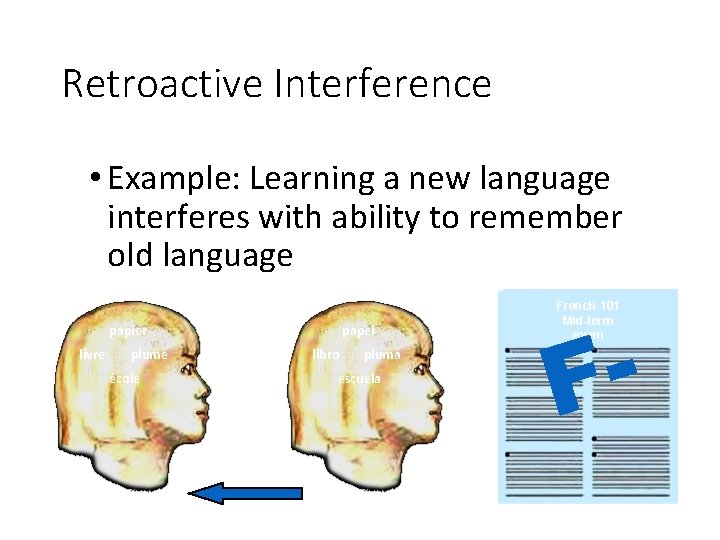
Retroactive Interference • Example: Learning a new language interferes with ability to remember old language Study French Study Spanish papier livre papel plume libro école pluma escuela retroactive interference F French 101 Mid-term exam
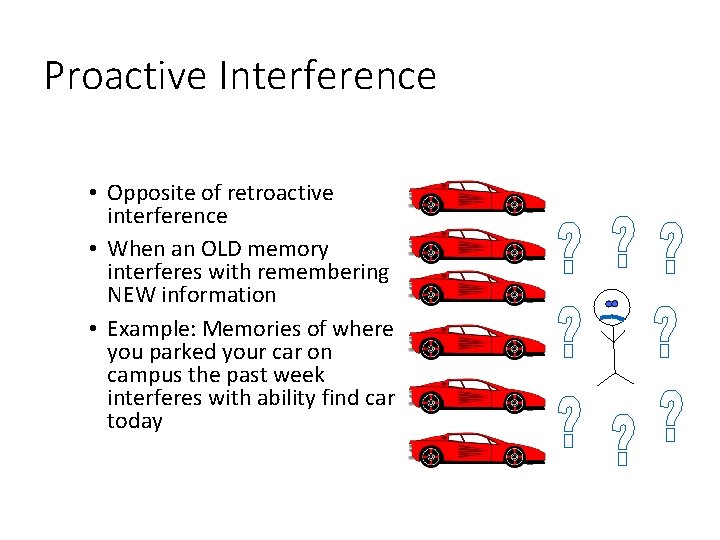
Proactive Interference • Opposite of retroactive interference • When an OLD memory interferes with remembering NEW information • Example: Memories of where you parked your car on campus the past week interferes with ability find car today
Motivated Forgetting Undesired memory is held back form awareness • Suppression—conscious forgetting • Repression—unconscious forgetting (Freudian)
Decay Theories 100% • Memories fade away or decay gradually if unused • Time plays critical role • Ability to retrieve info declines with time after original encoding Average percentage of information retained 20 1 8 24 2 6 31 mins hr hrs days Interval between original learning of nonsense syllables and memory test
Decay Theories § Biology-based theory § When new memory formed, it creates a memory trace § a change in brain structure or chemistry § If unused, normal brain metabolic processes erode memory trace § Theory not widely favored today
Biological Basis of Memory Karl Lashley searched for a localized memory trace or engram Found that maze-learning in rats was distributed throughout the brain Richard Thompson found that memory for simple classically conditioned responses was localized (in the cerebellum)
Amnesia • Amnesia—severe memory loss • Retrograde amnesia—inability to remember past episodic information; common after head injury; need for consolidation • Anterograde amnesia—inability to form new memories; related to hippocampus damage