
Cream of Tomato Soup Blood Whats the Skinny
“Cream of Tomato Soup" Blood: What's the Skinny on FCS and Other Chylomicronemic States? National Lipid Association Spring Clinical Lipid Update Phoenix, AZ February 25, 2017 Eliot A. Brinton, MD, FAHA, FNLA Immediate Past-President, American Board of Clinical Lipidology Director, Atherometabolic Research Utah Foundation for Biomedical Research President, Utah Lipid Center Salt Lake City eliot. brinton@utah. edu
Duality of Interest Dr. Brinton has received: • Research funding: Amarin, Aurora Foundation, Kowa, National Institutes of Health • Honoraria as consultant/advisor: Akcea, Alexion, Amarin, Amgen, Aralez, Arisaph, Astra. Zeneca, Kastle, Kowa, Merck, PTS Diagnostics, Regeneron, Sanofi. Aventis • Honoraria as speaker: Akcea, Alexion, Amarin, Amgen, Boehringer-Ingelheim, Janssen, Kastle, Kowa, Lilly, Merck, Novo-Nordisk, Regeneron, Sanofi-Aventis
Educational Objectives After this presentation, listeners will be able to • Explain: – The clinical presentation, epidemiology and pathophysiology of fasting chylomicronemia (severe hypertriglyceridemia, S-HTG) – The similarities and differences between multifactorial S-HTG (polygenic) vs monogenic SHTG (familial chylomicronemia syndrome, FCS) – HTG categories and testing strategies • Discuss chylomicronemia/S-HTG comorbidities: – Pancreatitis – Atherosclerotic cardiovascular disease (ASCVD) • Apply appropriate lifestyle & medical treatment for chylomicronemia
Chylomicronemia/S-HTG Description, Epidemiology and Pathophysiology
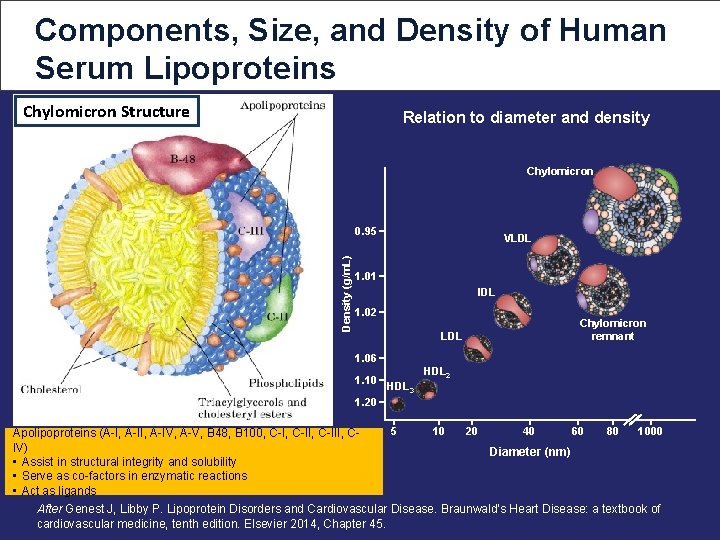
Components, Size, and Density of Human Serum Lipoproteins Chylomicron Structure of lipoproteins Structural components Relation to diameter and density Apolipoprotein B Chylomicron Apolipoprotein C Phospholipid Triglyceride Cholesterol Density (g/m. L) 0. 95 1. 01 IDL 1. 02 Chylomicron remnant LDL 1. 06 1. 10 Apolipoprotein E VLDL HDL 2 HDL 3 1. 20 Cholesteryl ester Apolipoproteins (A-I, A-IV, A-V, B 48, B 100, C-II, C-III, CIV) • Assist in structural integrity and solubility • Serve as co-factors in enzymatic reactions • Act as ligands 5 10 20 40 60 80 1000 Diameter (nm) After Genest J, Libby P. Lipoprotein Disorders and Cardiovascular Disease. Braunwald’s Heart Disease: a textbook of cardiovascular medicine, tenth edition. Elsevier 2014, Chapter 45.
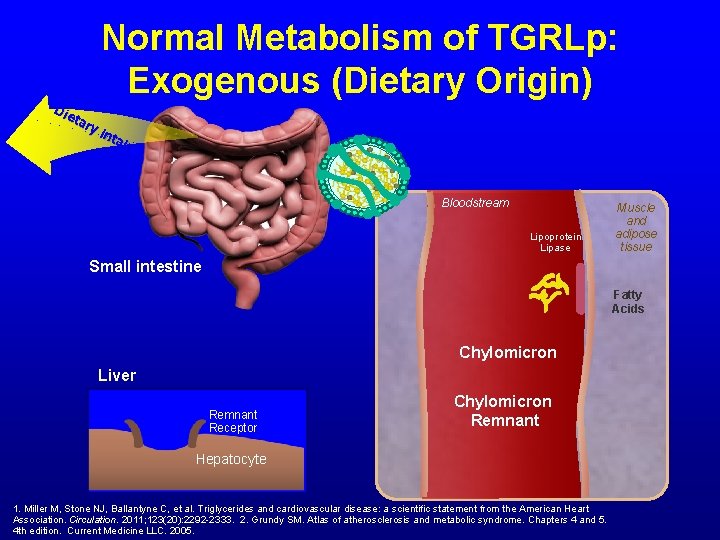
Normal Metabolism of TGRLp: Exogenous (Dietary Origin) Die tar y. I nt a ke Bloodstream Lipoprotein Lipase Muscle and adipose tissue Small intestine Fatty Acids Chylomicron Liver Remnant Receptor Chylomicron Remnant Hepatocyte 1. Miller M, Stone NJ, Ballantyne C, et al. Triglycerides and cardiovascular disease: a scientific statement from the American Heart Association. Circulation. 2011; 123(20): 2292 -2333. 2. Grundy SM. Atlas of atherosclerosis and metabolic syndrome. Chapters 4 and 5. 4 th edition. Current Medicine LLC. 2005.
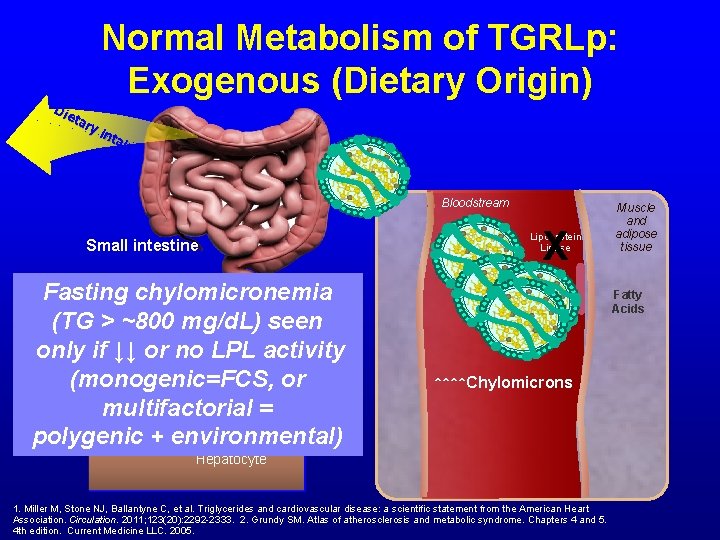
Normal Metabolism of TGRLp: Exogenous (Dietary Origin) Die tar y. I nt a ke Bloodstream Small intestine Fasting chylomicronemia (TG > ~800 mg/d. L) seen only if ↓↓ or no LPL activity Liver (monogenic=FCS, or multifactorial Remnant = Receptor polygenic + environmental) X Lipoprotein Lipase Muscle and adipose tissue Fatty Acids ↑↑↑↑Chylomicrons Hepatocyte 1. Miller M, Stone NJ, Ballantyne C, et al. Triglycerides and cardiovascular disease: a scientific statement from the American Heart Association. Circulation. 2011; 123(20): 2292 -2333. 2. Grundy SM. Atlas of atherosclerosis and metabolic syndrome. Chapters 4 and 5. 4 th edition. Current Medicine LLC. 2005.
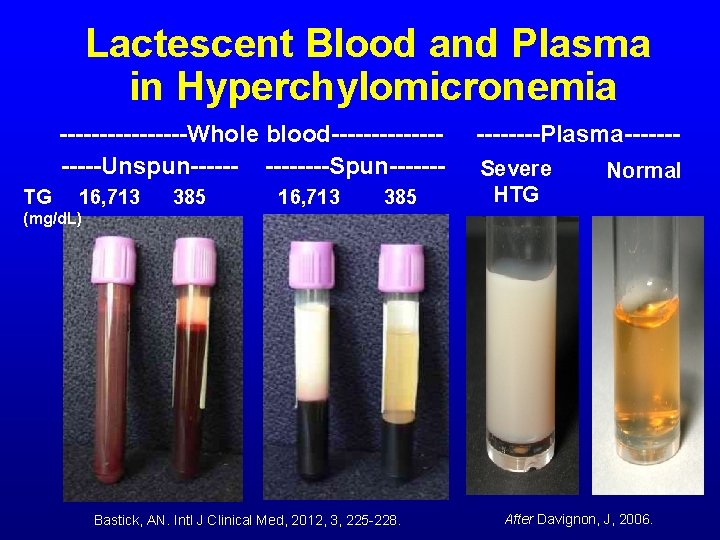
Lactescent Blood and Plasma in Hyperchylomicronemia --------Whole blood---------Unspun------Spun------TG 16, 713 385 ----Plasma------Severe HTG Normal (mg/d. L) Bastick, AN. Intl J Clinical Med, 2012, 3, 225 -228. After Davignon, J, 2006.
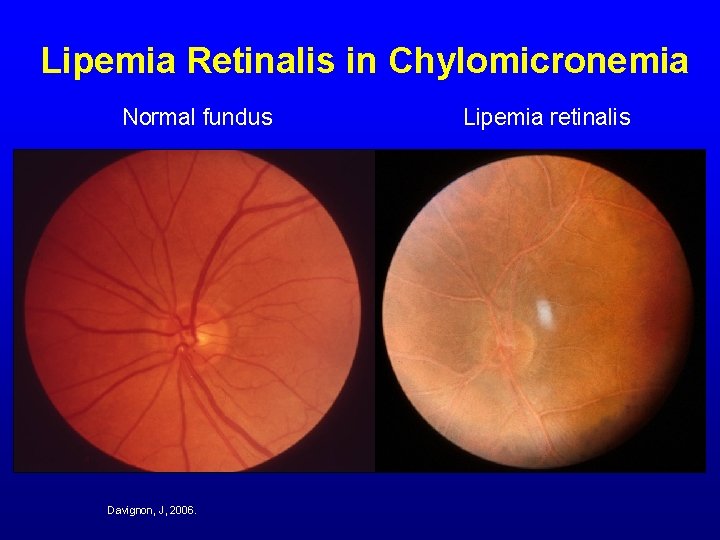
Lipemia Retinalis in Chylomicronemia Normal fundus Davignon, J, 2006. Lipemia retinalis
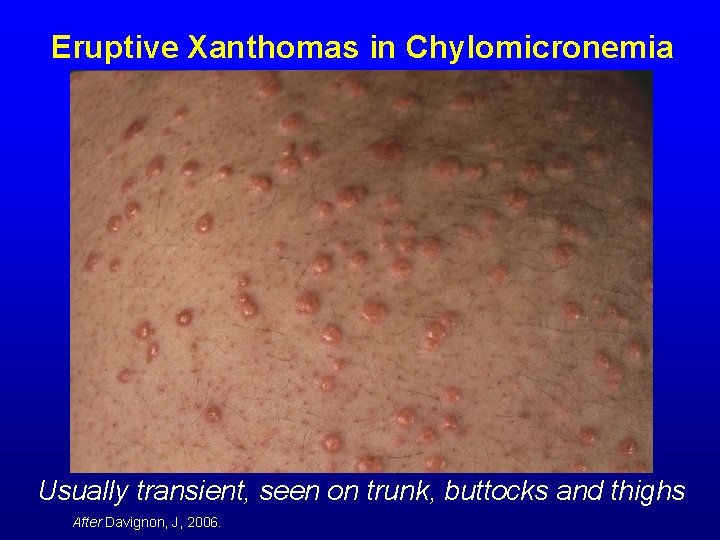
Eruptive Xanthomas in Chylomicronemia Usually transient, seen on trunk, buttocks and thighs After Davignon, J, 2006.
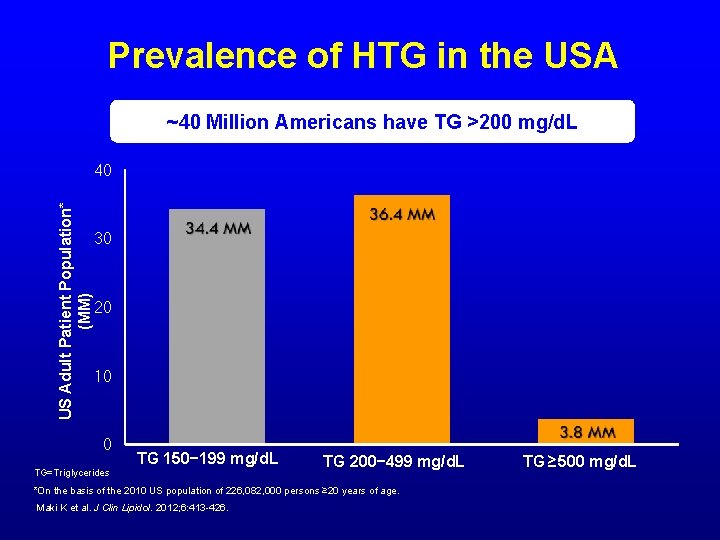
Prevalence of HTG in the USA ~40 Million Americans have TG >200 mg/d. L US Adult Patient Population* (MM) 40 30 20 10 0 TG=Triglycerides TG 150− 199 mg/d. L TG 200− 499 mg/d. L *On the basis of the 2010 US population of 226, 082, 000 persons ≥ 20 years of age. Maki K et al. J Clin Lipidol. 2012; 6: 413 -426. TG ≥ 500 mg/d. L
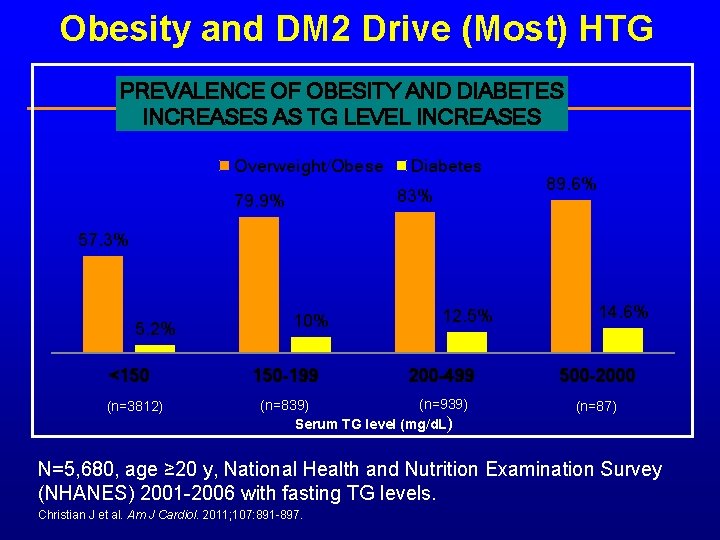
Obesity and DM 2 Drive (Most) HTG PREVALENCE OF OBESITY AND DIABETES INCREASES AS TG LEVEL INCREASES Overweight/Obese Diabetes 83% 79. 9% 89. 6% 57. 3% 5. 2% <150 (n=3812) 10% 150 -199 12. 5% 200 -499 (n=939) (n=839) Serum TG level (mg/d. L) 14. 6% 500 -2000 (n=87) N=5, 680, age ≥ 20 y, National Health and Nutrition Examination Survey (NHANES) 2001 -2006 with fasting TG levels. Christian J et al. Am J Cardiol. 2011; 107: 891 -897.
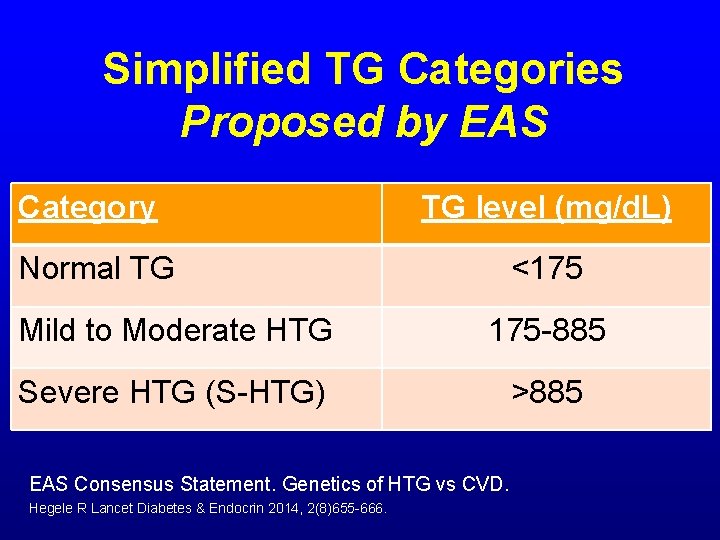
Simplified TG Categories Proposed by EAS Category TG level (mg/d. L) Normal TG <175 Mild to Moderate HTG 175 -885 Severe HTG (S-HTG) >885 EAS Consensus Statement. Genetics of HTG vs CVD. Hegele R Lancet Diabetes & Endocrin 2014, 2(8)655 -666.
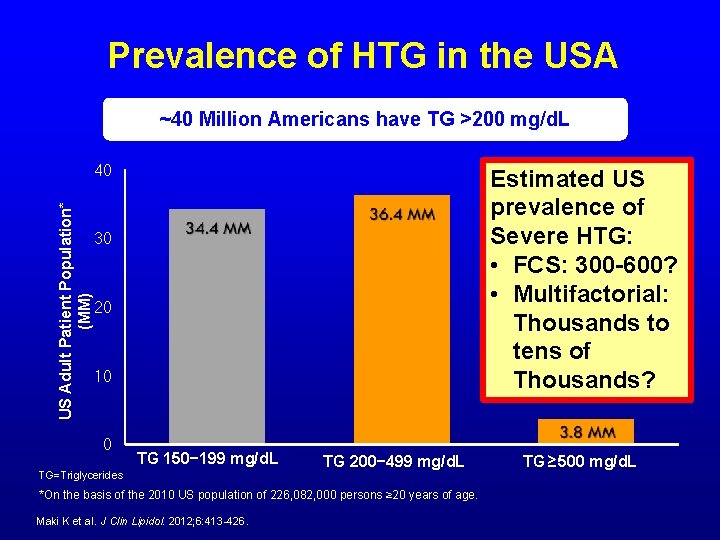
Prevalence of HTG in the USA ~40 Million Americans have TG >200 mg/d. L US Adult Patient Population* (MM) 40 Estimated US prevalence of Severe HTG: • FCS: 300 -600? • Multifactorial: Thousands to tens of Thousands? 30 20 10 0 TG 150− 199 mg/d. L TG=Triglycerides TG 200− 499 mg/d. L *On the basis of the 2010 US population of 226, 082, 000 persons ≥ 20 years of age. Maki K et al. J Clin Lipidol. 2012; 6: 413 -426. TG ≥ 500 mg/d. L
Familial Chylomicronemia Syndrome (FCS) vs Multifactorial Severe HTG (S-HTG)
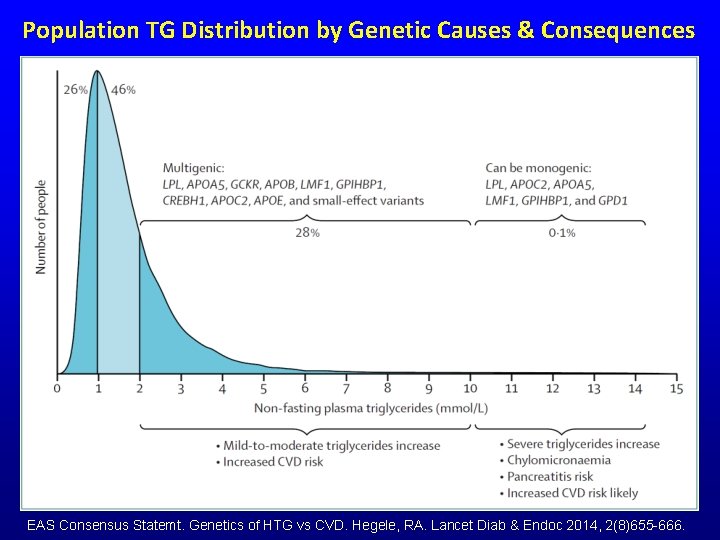
Population TG Distribution by Genetic Causes & Consequences EAS Consensus Statemt. Genetics of HTG vs CVD. Hegele, RA. Lancet Diab & Endoc 2014, 2(8)655 -666.
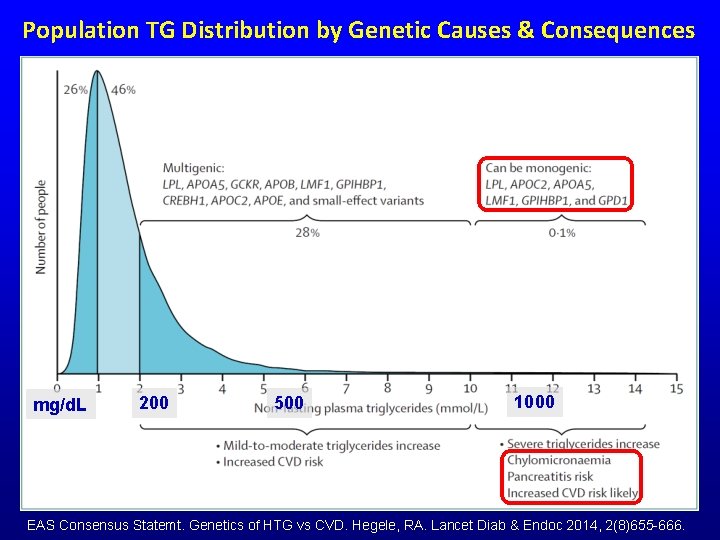
Population TG Distribution by Genetic Causes & Consequences mg/d. L 200 500 1000 EAS Consensus Statemt. Genetics of HTG vs CVD. Hegele, RA. Lancet Diab & Endoc 2014, 2(8)655 -666.
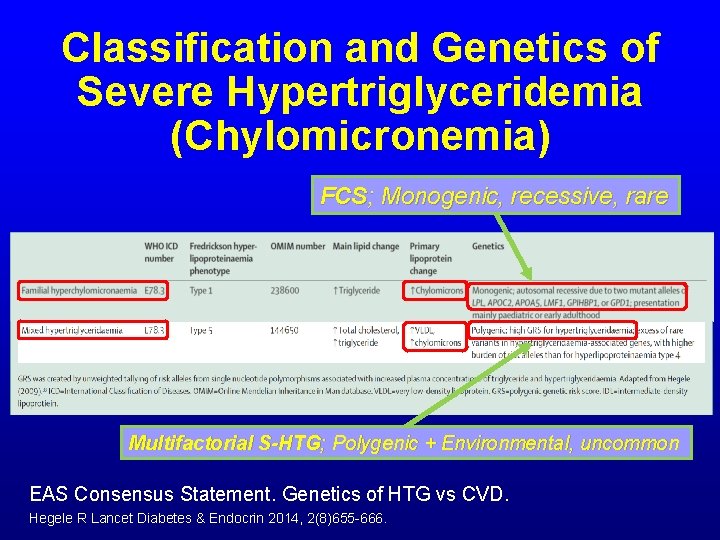
Classification and Genetics of Severe Hypertriglyceridemia (Chylomicronemia) FCS; Monogenic, recessive, rare Multifactorial S-HTG; Polygenic + Environmental, uncommon EAS Consensus Statement. Genetics of HTG vs CVD. Hegele R Lancet Diabetes & Endocrin 2014, 2(8)655 -666.
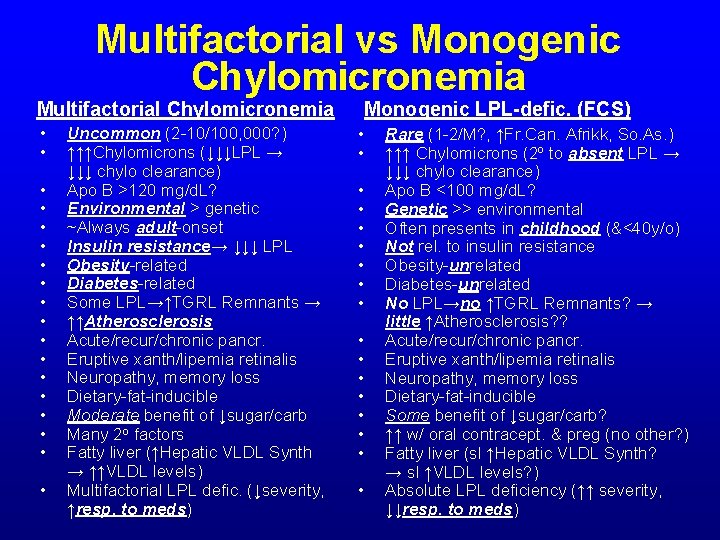
Multifactorial vs Monogenic Chylomicronemia Multifactorial Chylomicronemia • • • • • Uncommon (2 -10/100, 000? ) ↑↑↑Chylomicrons (↓↓↓LPL → ↓↓↓ chylo clearance) Apo B >120 mg/d. L? Environmental > genetic ~Always adult-onset Insulin resistance→ ↓↓↓ LPL Obesity-related Diabetes-related Some LPL→↑TGRL Remnants → ↑↑Atherosclerosis Acute/recur/chronic pancr. Eruptive xanth/lipemia retinalis Neuropathy, memory loss Dietary-fat-inducible Moderate benefit of ↓sugar/carb Many 2 o factors Fatty liver (↑Hepatic VLDL Synth → ↑↑VLDL levels) Multifactorial LPL defic. (↓severity, ↑resp. to meds) Monogenic LPL-defic. (FCS) • • • • • Rare (1 -2/M? , ↑Fr. Can. Afrikk, So. As. ) ↑↑↑ Chylomicrons (2 o to absent LPL → ↓↓↓ chylo clearance) Apo B <100 mg/d. L? Genetic >> environmental Often presents in childhood (&<40 y/o) Not rel. to insulin resistance Obesity-unrelated Diabetes-unrelated No LPL→no ↑TGRL Remnants? → little ↑Atherosclerosis? ? Acute/recur/chronic pancr. Eruptive xanth/lipemia retinalis Neuropathy, memory loss Dietary-fat-inducible Some benefit of ↓sugar/carb? ↑↑ w/ oral contracept. & preg (no other? ) Fatty liver (sl ↑Hepatic VLDL Synth? → sl ↑VLDL levels? ) Absolute LPL deficiency (↑↑ severity, ↓↓resp. to meds)
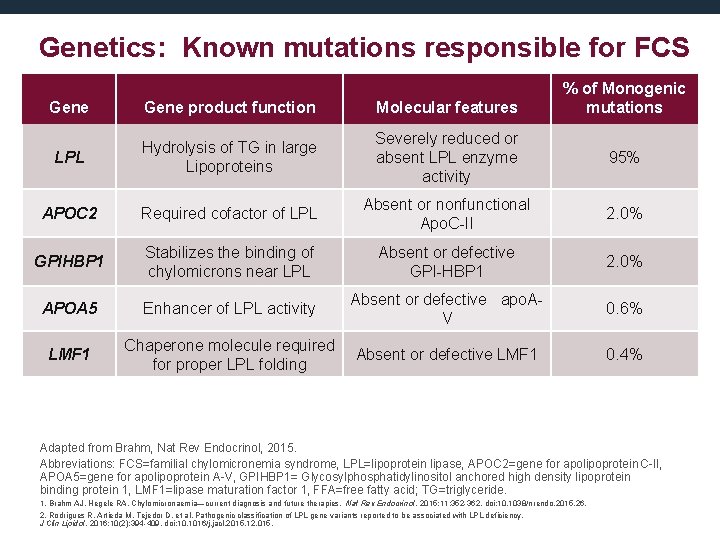
Genetics: Known mutations responsible for FCS % of Monogenic mutations Gene product function Molecular features LPL Hydrolysis of TG in large Lipoproteins Severely reduced or absent LPL enzyme activity 95% APOC 2 Required cofactor of LPL Absent or nonfunctional Apo. C-II 2. 0% GPIHBP 1 Stabilizes the binding of chylomicrons near LPL Absent or defective GPI-HBP 1 2. 0% APOA 5 Enhancer of LPL activity Absent or defective apo. AV 0. 6% LMF 1 Chaperone molecule required for proper LPL folding Absent or defective LMF 1 0. 4% Adapted from Brahm, Nat Rev Endocrinol, 2015. Abbreviations: FCS=familial chylomicronemia syndrome, LPL=lipoprotein lipase, APOC 2=gene for apolipoprotein C-II, APOA 5=gene for apolipoprotein A-V, GPIHBP 1= Glycosylphosphatidylinositol anchored high density lipoprotein binding protein 1, LMF 1=lipase maturation factor 1, FFA=free fatty acid; TG=triglyceride. 1. Brahm AJ, Hegele RA. Chylomicronaemia—current diagnosis and future therapies. Nat Rev Endocrinol. 2015; 11: 352 -362. doi: 10. 1038/nrendo. 2015. 26. 2. Rodrigues R, Artieda M, Tejedor D, et al. Pathogenic classification of LPL gene variants reported to be associated with LPL deficiency. J Clin Lipidol. 2016; 10(2): 394 -409. doi: 10. 1016/j. jacl. 2015. 12. 015.
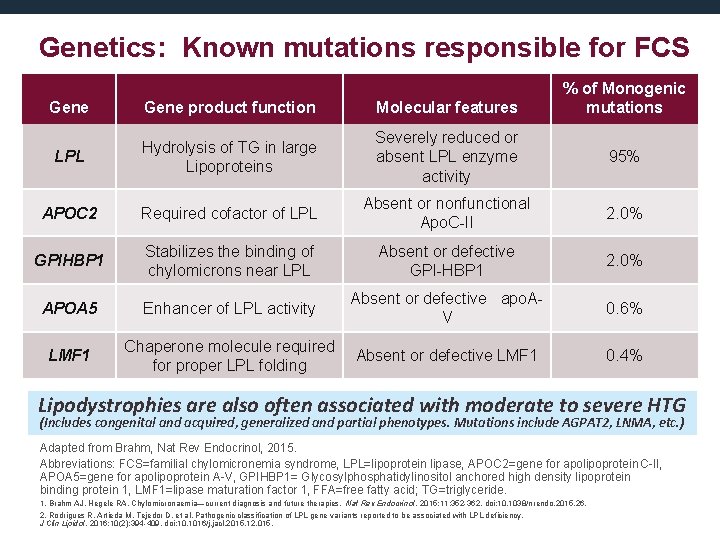
Genetics: Known mutations responsible for FCS % of Monogenic mutations Gene product function Molecular features LPL Hydrolysis of TG in large Lipoproteins Severely reduced or absent LPL enzyme activity 95% APOC 2 Required cofactor of LPL Absent or nonfunctional Apo. C-II 2. 0% GPIHBP 1 Stabilizes the binding of chylomicrons near LPL Absent or defective GPI-HBP 1 2. 0% APOA 5 Enhancer of LPL activity Absent or defective apo. AV 0. 6% LMF 1 Chaperone molecule required for proper LPL folding Absent or defective LMF 1 0. 4% Lipodystrophies are also often associated with moderate to severe HTG (Includes congenital and acquired, generalized and partial phenotypes. Mutations include AGPAT 2, LNMA, etc. ) Adapted from Brahm, Nat Rev Endocrinol, 2015. Abbreviations: FCS=familial chylomicronemia syndrome, LPL=lipoprotein lipase, APOC 2=gene for apolipoprotein C-II, APOA 5=gene for apolipoprotein A-V, GPIHBP 1= Glycosylphosphatidylinositol anchored high density lipoprotein binding protein 1, LMF 1=lipase maturation factor 1, FFA=free fatty acid; TG=triglyceride. 1. Brahm AJ, Hegele RA. Chylomicronaemia—current diagnosis and future therapies. Nat Rev Endocrinol. 2015; 11: 352 -362. doi: 10. 1038/nrendo. 2015. 26. 2. Rodrigues R, Artieda M, Tejedor D, et al. Pathogenic classification of LPL gene variants reported to be associated with LPL deficiency. J Clin Lipidol. 2016; 10(2): 394 -409. doi: 10. 1016/j. jacl. 2015. 12. 015.
Severe-HTG-Related Morbidity: Acute Pancreatitis
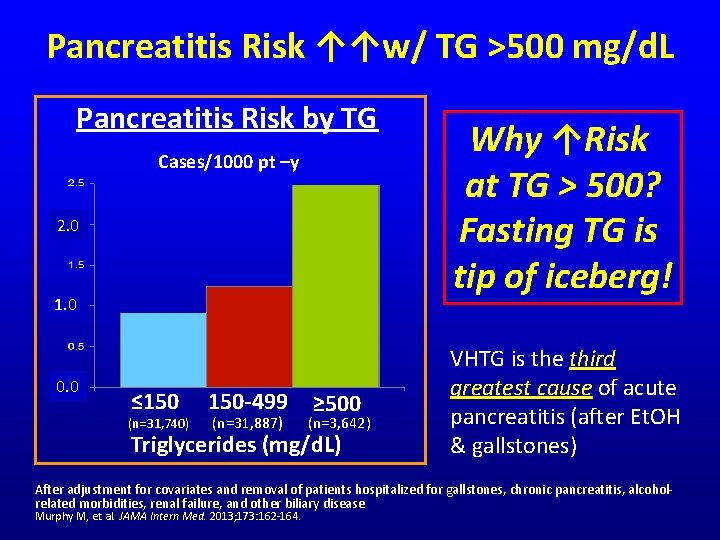
Pancreatitis Risk ↑↑w/ TG >500 mg/d. L Pancreatitis Risk by TG Cases/1000 pt –y 2. 0 1. 0 0. 0 ≤ 150 (n=31, 740) 150 -499 (n=31, 887) ≥ 500 (n=3, 642) Triglycerides (mg/d. L) Why ↑Risk at TG > 500? Fasting TG is tip of iceberg! VHTG is the third greatest cause of acute pancreatitis (after Et. OH & gallstones) After adjustment for covariates and removal of patients hospitalized for gallstones, chronic pancreatitis, alcoholrelated morbidities, renal failure, and other biliary disease Murphy M, et al. JAMA Intern Med. 2013; 173: 162 -164.
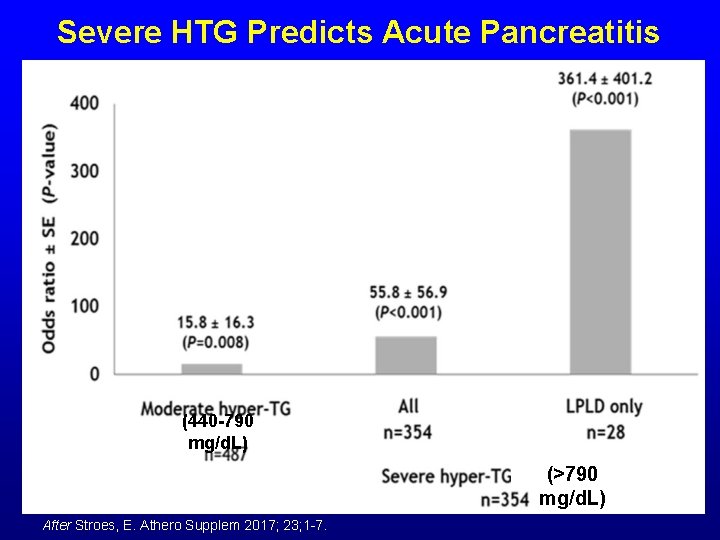
Severe HTG Predicts Acute Pancreatitis (440 -790 mg/d. L) (>790 mg/d. L) After Stroes, E. Athero Supplem 2017; 23; 1 -7.
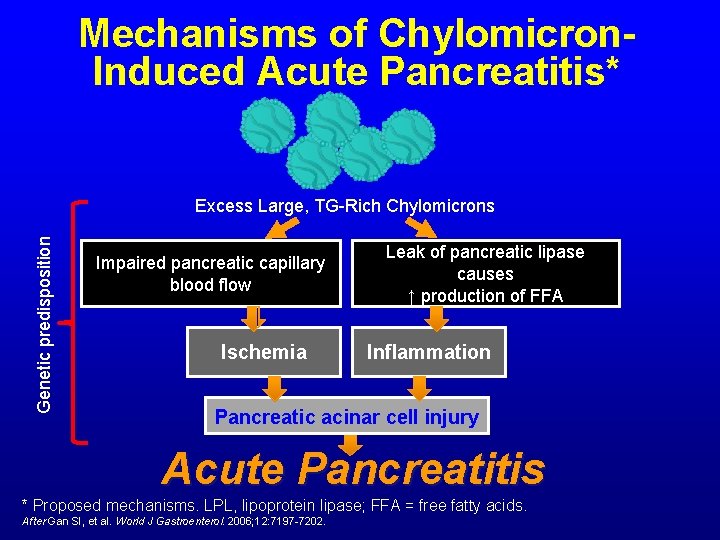
Mechanisms of Chylomicron. Induced Acute Pancreatitis* Genetic predisposition Excess Large, TG-Rich Chylomicrons Impaired pancreatic capillary blood flow Ischemia Leak of pancreatic lipase causes ↑ production of FFA Inflammation Pancreatic acinar cell injury Acute Pancreatitis * Proposed mechanisms. LPL, lipoprotein lipase; FFA = free fatty acids. After Gan SI, et al. World J Gastroenterol. 2006; 12: 7197 -7202.
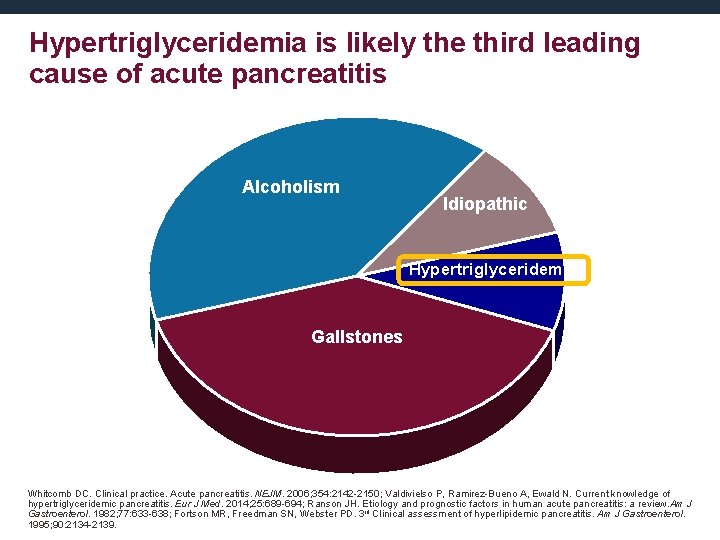
Hypertriglyceridemia is likely the third leading cause of acute pancreatitis Alcoholism Idiopathic Hypertriglyceridemia Gallstones Whitcomb DC. Clinical practice. Acute pancreatitis. NEJM. 2006; 354: 2142 -2150; Valdivielso P, Ramirez-Bueno A, Ewald N. Current knowledge of hypertriglyceridemic pancreatitis. Eur J Med. 2014; 25: 689 -694; Ranson JH. Etiology and prognostic factors in human acute pancreatitis: a review. Am J Gastroenterol. 1982; 77: 633 -638; Fortson MR, Freedman SN, Webster PD. 3 rd Clinical assessment of hyperlipidemic pancreatitis. Am J Gastroenterol. 1995; 90: 2134 -2139.
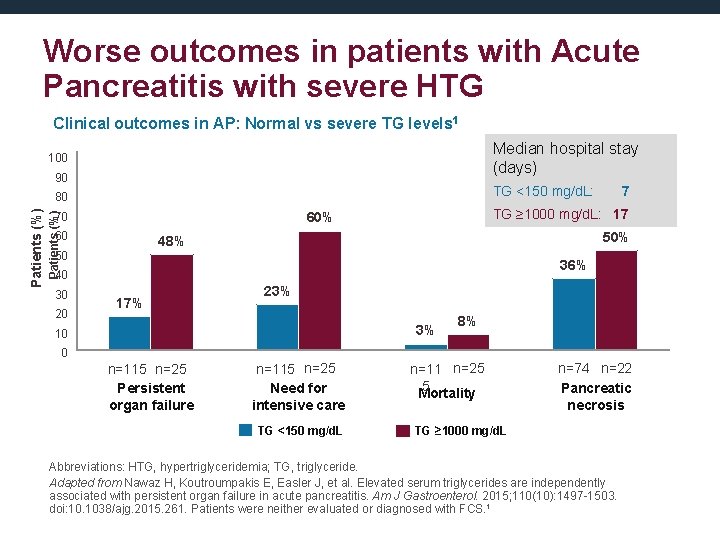
Worse outcomes in patients with Acute Pancreatitis with severe HTG Clinical outcomes in AP: Normal vs severe TG levels 1 Median hospital stay (days) 100 90 TG <150 mg/d. L: 60 50% 48% 50 36% 40 30 20 7 TG ≥ 1000 mg/d. L: 17 60% 70 Patients (%) 80 17% 23% 3% 10 8% 0 n=115 n=25 Persistent organ failure n=115 n=25 Need for intensive care TG <150 mg/d. L n=11 n=25 5 Mortality n=74 n=22 Pancreatic necrosis TG ≥ 1000 mg/d. L Abbreviations: HTG, hypertriglyceridemia; TG, triglyceride. Adapted from Nawaz H, Koutroumpakis E, Easler J, et al. Elevated serum triglycerides are independently associated with persistent organ failure in acute pancreatitis. Am J Gastroenterol. 2015; 110(10): 1497 -1503. doi: 10. 1038/ajg. 2015. 261. Patients were neither evaluated or diagnosed with FCS. 1
Severe-HTG-Related Morbidity: Atherosclerosis
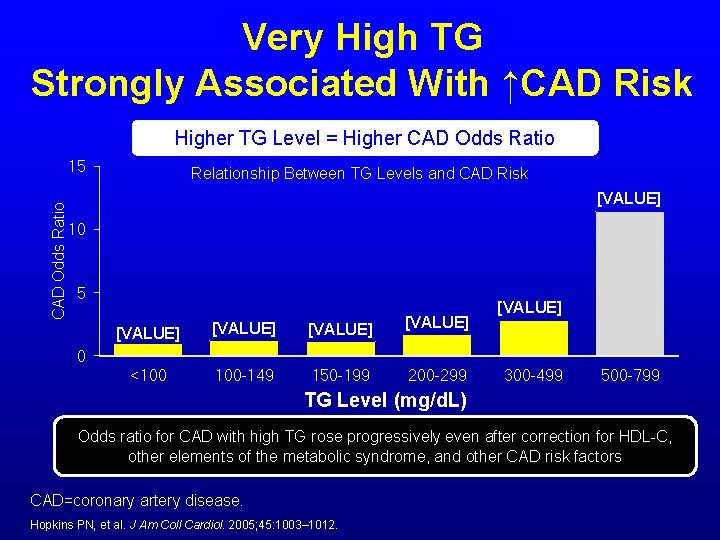
Very High TG Strongly Associated With ↑CAD Risk Higher TG Level = Higher CAD Odds Ratio 15 Relationship Between TG Levels and CAD Risk [VALUE] 10 5 [VALUE] <100 100 -149 150 -199 200 -299 [VALUE] 0 300 -499 500 -799 TG Level (mg/d. L) Odds ratio for CAD with high TG rose progressively even after correction for HDL-C, other elements of the metabolic syndrome, and other CAD risk factors CAD=coronary artery disease. Hopkins PN, et al. J Am Coll Cardiol. 2005; 45: 1003– 1012.
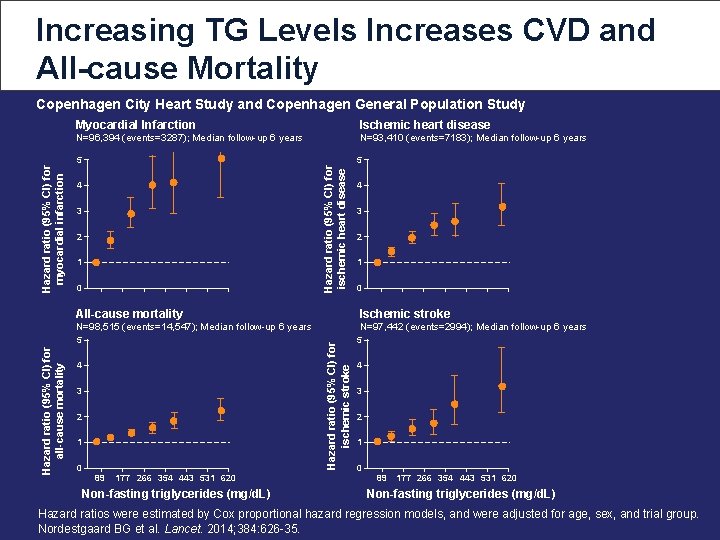
Increasing TG Levels Increases CVD and All-cause Mortality Myocardial Infarction Ischemic heart disease N=96, 394 (events=3287); Median follow-up 6 years N=93, 410 (events=7183); Median follow-up 6 years 5 5 Hazard ratio (95% CI) for ischemic heart disease Hazard ratio (95% CI) for myocardial infarction Copenhagen City Heart Study and Copenhagen General Population Study 4 3 2 1 0 Ischemic stroke N=98, 515 (events=14, 547); Median follow-up 6 years N=97, 442 (events=2994); Median follow-up 6 years 5 5 Hazard ratio (95% CI) for ischemic stroke Hazard ratio (95% CI) for all-cause mortality All-cause mortality 4 4 3 2 1 0 89 177 266 354 443 531 620 Non-fasting triglycerides (mg/d. L) Hazard ratios were estimated by Cox proportional hazard regression models, and were adjusted for age, sex, and trial group. Nordestgaard BG et al. Lancet. 2014; 384: 626 -35.
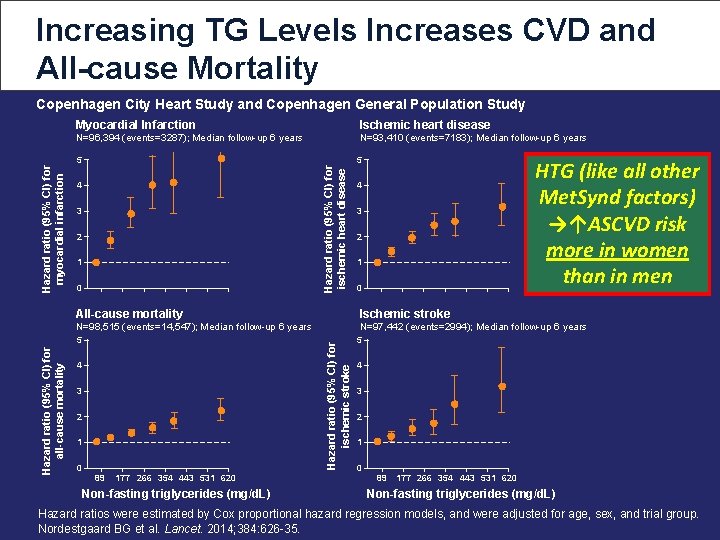
Increasing TG Levels Increases CVD and All-cause Mortality Myocardial Infarction Ischemic heart disease N=96, 394 (events=3287); Median follow-up 6 years N=93, 410 (events=7183); Median follow-up 6 years 5 5 Hazard ratio (95% CI) for ischemic heart disease Hazard ratio (95% CI) for myocardial infarction Copenhagen City Heart Study and Copenhagen General Population Study 4 3 2 1 0 Ischemic stroke N=98, 515 (events=14, 547); Median follow-up 6 years N=97, 442 (events=2994); Median follow-up 6 years 5 5 Hazard ratio (95% CI) for ischemic stroke Hazard ratio (95% CI) for all-cause mortality All-cause mortality HTG (like all other Met. Synd factors) →↑ASCVD risk more in women than in men 4 4 3 2 1 0 89 177 266 354 443 531 620 Non-fasting triglycerides (mg/d. L) Hazard ratios were estimated by Cox proportional hazard regression models, and were adjusted for age, sex, and trial group. Nordestgaard BG et al. Lancet. 2014; 384: 626 -35.
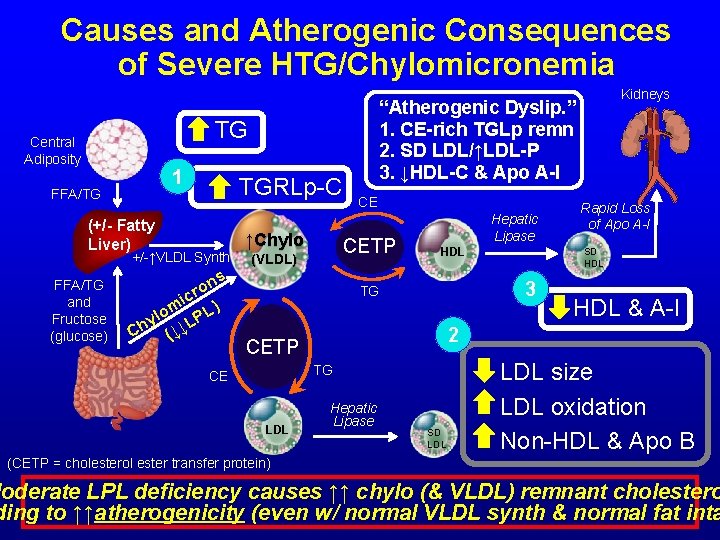
Causes and Atherogenic Consequences of Severe HTG/Chylomicronemia “Atherogenic Dyslip. ” 1. CE-rich TGLp remn 2. SD LDL/↑LDL-P 3. ↓HDL-C & Apo A-I TG Central Adiposity 1 FFA/TG TGRLp-C (+/- Fatty Liver) +/-↑VLDL Synth FFA/TG and Fructose (glucose) ns o cr i ) lom LPL y Ch (↓↓ ↑Chylo CE CETP (VLDL) Hepatic Lipase HDL & A-I 2 CETP TG LDL Rapid Loss of Apo A-I SD HDL 3 TG CE Kidneys Hepatic Lipase SD LDL size LDL oxidation Non-HDL & Apo B (CETP = cholesterol ester transfer protein) Moderate LPL deficiency causes ↑↑ chylo (& VLDL) remnant cholestero ding to ↑↑atherogenicity (even w/ normal VLDL synth & normal fat inta
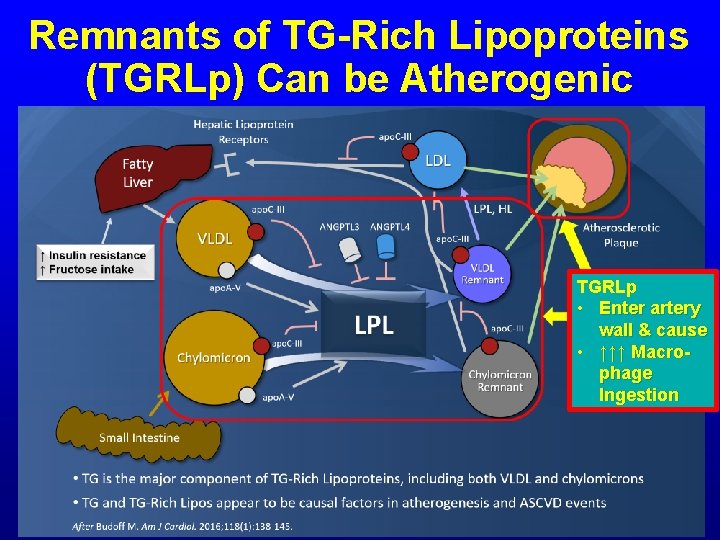
Remnants of TG-Rich Lipoproteins (TGRLp) Can be Atherogenic TGRLp • Enter artery wall & cause • ↑↑↑ Macrophage Ingestion
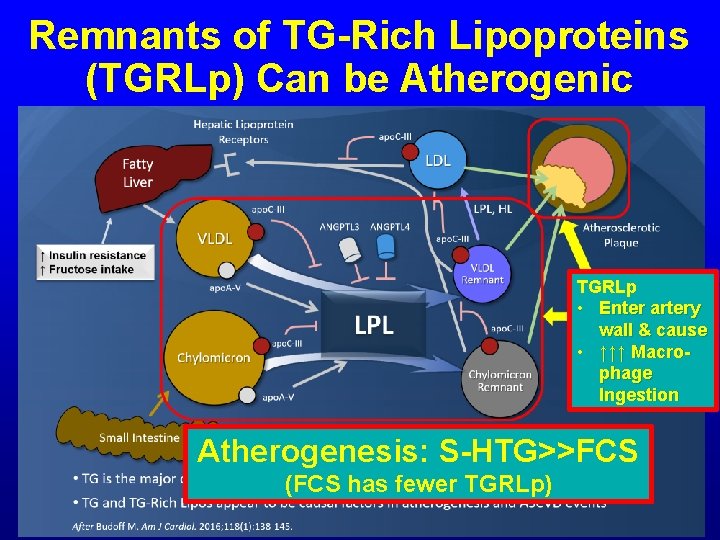
Remnants of TG-Rich Lipoproteins (TGRLp) Can be Atherogenic TGRLp • Enter artery wall & cause • ↑↑↑ Macrophage Ingestion Atherogenesis: S-HTG>>FCS (FCS has fewer TGRLp)
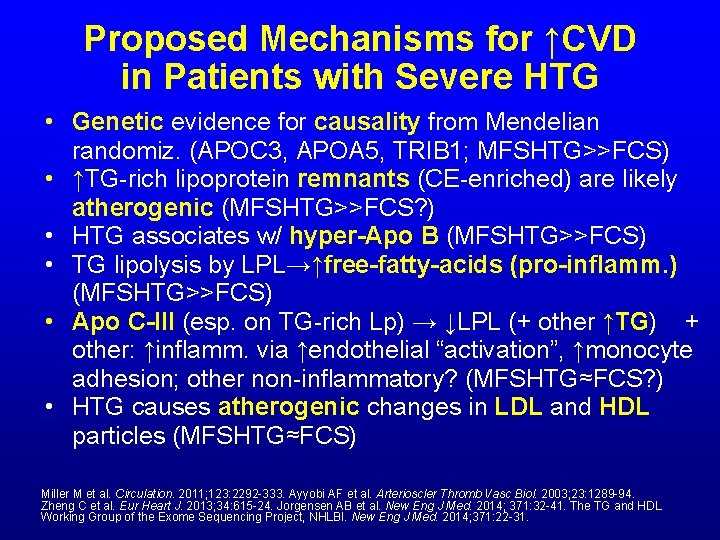
Proposed Mechanisms for ↑CVD in Patients with Severe HTG • Genetic evidence for causality from Mendelian randomiz. (APOC 3, APOA 5, TRIB 1; MFSHTG>>FCS) • ↑TG-rich lipoprotein remnants (CE-enriched) are likely atherogenic (MFSHTG>>FCS? ) • HTG associates w/ hyper-Apo B (MFSHTG>>FCS) • TG lipolysis by LPL→↑free-fatty-acids (pro-inflamm. ) (MFSHTG>>FCS) • Apo C-III (esp. on TG-rich Lp) → ↓LPL (+ other ↑TG) + other: ↑inflamm. via ↑endothelial “activation”, ↑monocyte adhesion; other non-inflammatory? (MFSHTG≈FCS? ) • HTG causes atherogenic changes in LDL and HDL particles (MFSHTG≈FCS) Miller M et al. Circulation. 2011; 123: 2292 -333. Ayyobi AF et al. Arterioscler Thromb Vasc Biol. 2003; 23: 1289 -94. Zheng C et al. Eur Heart J. 2013; 34: 615 -24. Jorgensen AB et al. New Eng J Med. 2014; 371: 32 -41. The TG and HDL Working Group of the Exome Sequencing Project, NHLBI. New Eng J Med. 2014; 371: 22 -31.
Management of Chylomicronemia (FCS and Multifactorial)
TG Measurement
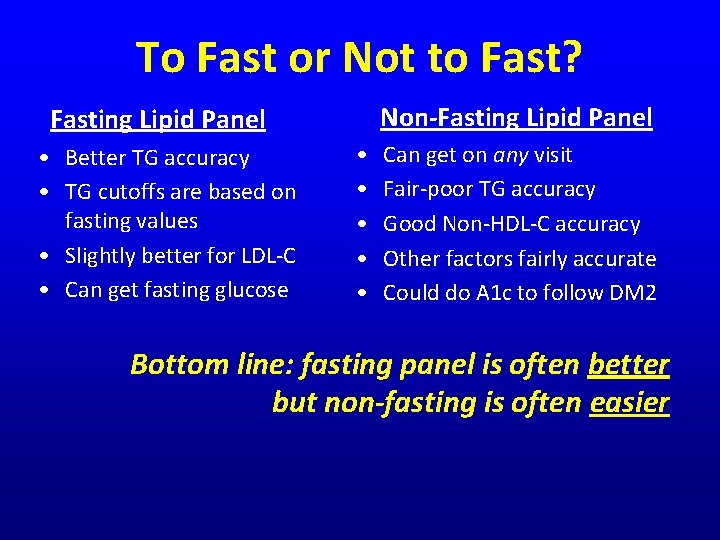
To Fast or Not to Fast? Non-Fasting Lipid Panel • Better TG accuracy • TG cutoffs are based on fasting values • Slightly better for LDL-C • Can get fasting glucose • • • Can get on any visit Fair-poor TG accuracy Good Non-HDL-C accuracy Other factors fairly accurate Could do A 1 c to follow DM 2 Bottom line: fasting panel is often better but non-fasting is often easier
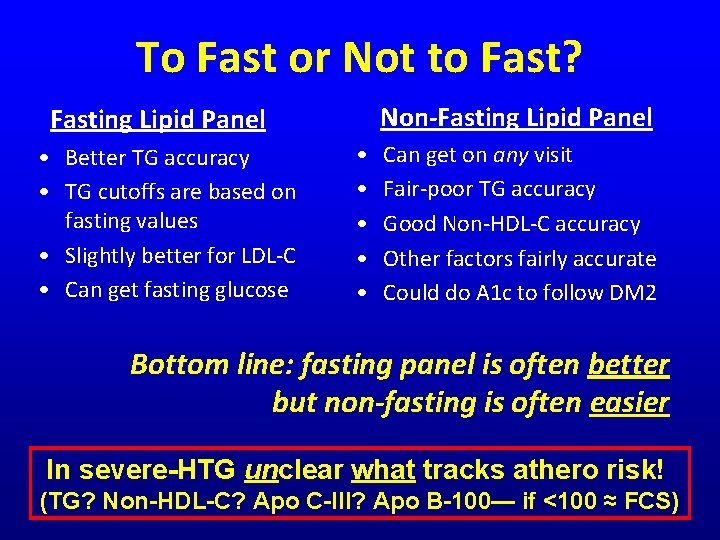
To Fast or Not to Fast? Non-Fasting Lipid Panel • Better TG accuracy • TG cutoffs are based on fasting values • Slightly better for LDL-C • Can get fasting glucose • • • Can get on any visit Fair-poor TG accuracy Good Non-HDL-C accuracy Other factors fairly accurate Could do A 1 c to follow DM 2 Bottom line: fasting panel is often better but non-fasting is often easier In severe-HTG unclear what tracks athero risk! (TG? Non-HDL-C? Apo C-III? Apo B-100— if <100 ≈ FCS)
TG-Lowering Treatment in Chylomicronemia (limited evidence, few/no goals)
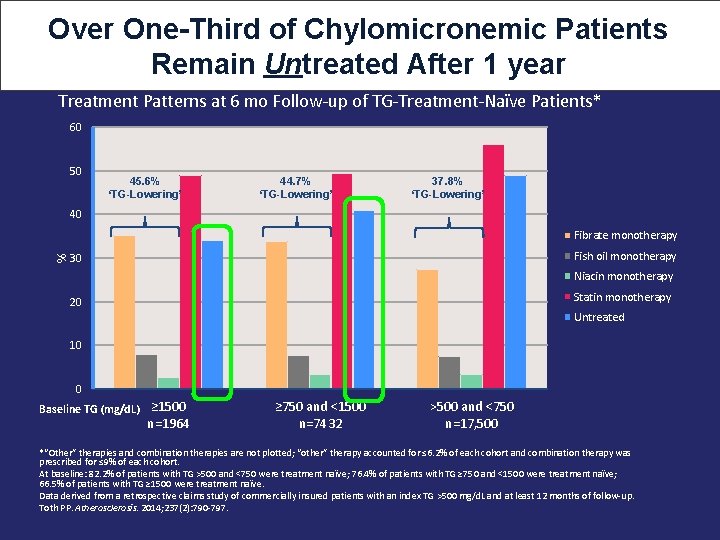
Over One-Third of Chylomicronemic Patients Remain Untreated After 1 year Treatment Patterns at 6 mo Follow-up of TG-Treatment-Naïve Patients* 60 50 45. 6% “TG-Lowering” 44. 7% “TG-Lowering” 37. 8% “TG-Lowering” 40 % Fibrate monotherapy Fish oil monotherapy 30 Niacin monotherapy Statin monotherapy 20 Untreated 10 0 Baseline TG (mg/d. L) ≥ 1500 n=1964 ≥ 750 and <1500 n=7432 >500 and <750 n=17, 500 *“Other” therapies and combination therapies are not plotted; “other” therapy accounted for ≤ 6. 2% of each cohort and combination therapy was prescribed for ≤ 9% of each cohort. At baseline: 82. 2% of patients with TG >500 and <750 were treatment naïve; 76. 4% of patients with TG ≥ 750 and <1500 were treatment naïve; 66. 5% of patients with TG ≥ 1500 were treatment naïve. Data derived from a retrospective claims study of commercially insured patients with an index TG >500 mg/d. L and at least 12 months of follow-up. Toth PP. Atherosclerosis. 2014; 237(2): 790 -797.
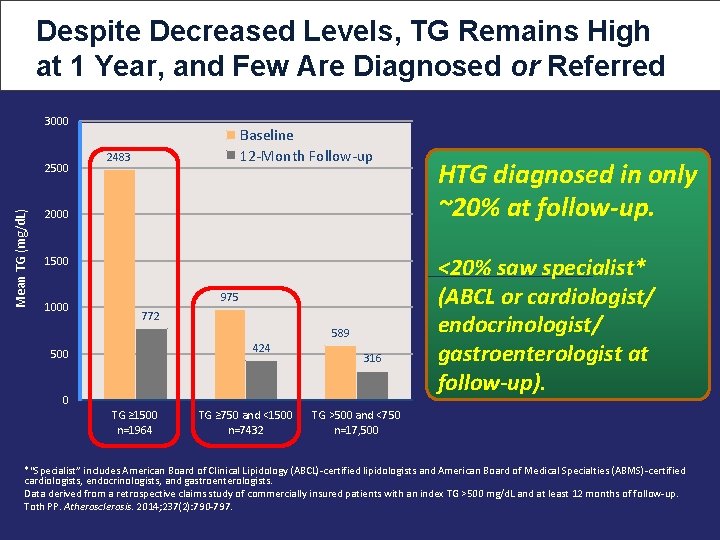
Despite Decreased Levels, TG Remains High at 1 Year, and Few Are Diagnosed or Referred 3000 Mean TG (mg/d. L) 2500 Baseline 12 -Month Follow-up 2483 2000 1500 1000 975 772 589 424 500 316 0 TG ≥ 1500 n=1964 TG ≥ 750 and <1500 n=7432 HTG diagnosed in only ~20% at follow-up. <20% saw specialist* (ABCL or cardiologist/ endocrinologist/ gastroenterologist at follow-up). TG >500 and <750 n=17, 500 *“Specialist” includes American Board of Clinical Lipidology (ABCL)-certified lipidologists and American Board of Medical Specialties (ABMS)-certified cardiologists, endocrinologists, and gastroenterologists. Data derived from a retrospective claims study of commercially insured patients with an index TG >500 mg/d. L and at least 12 months of follow-up. Toth PP. Atherosclerosis. 2014; 237(2): 790 -797.
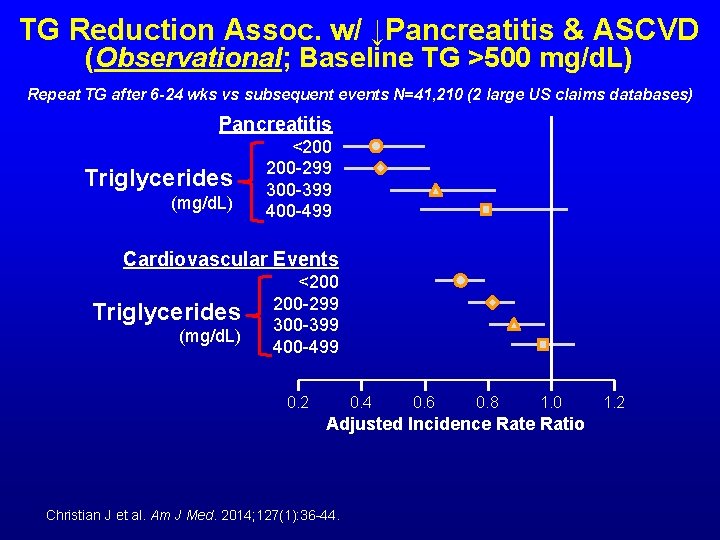
TG Reduction Assoc. w/ ↓Pancreatitis & ASCVD (Observational; Baseline TG >500 mg/d. L) Repeat TG after 6 -24 wks vs subsequent events N=41, 210 (2 large US claims databases) Pancreatitis Triglycerides (mg/d. L) <200 200 -299 300 -399 400 -499 Cardiovascular Events Triglycerides (mg/d. L) <200 200 -299 300 -399 400 -499 0. 2 0. 4 0. 6 0. 8 1. 0 Adjusted Incidence Ratio Christian J et al. Am J Med. 2014; 127(1): 36 -44. 1. 2
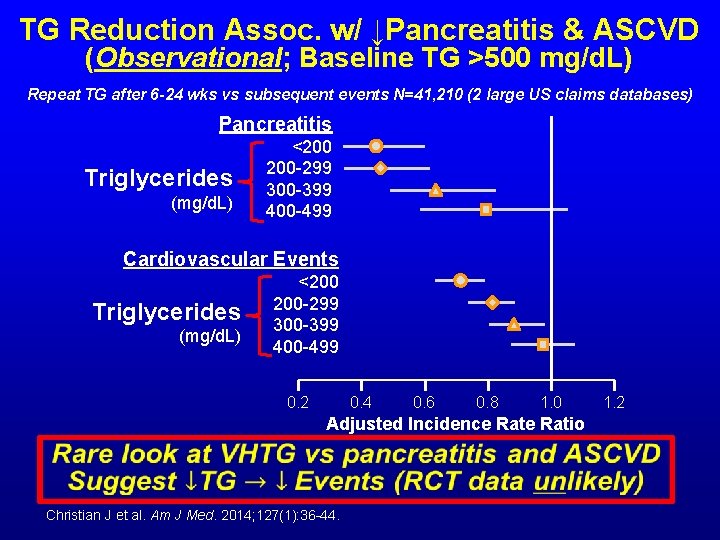
TG Reduction Assoc. w/ ↓Pancreatitis & ASCVD (Observational; Baseline TG >500 mg/d. L) Repeat TG after 6 -24 wks vs subsequent events N=41, 210 (2 large US claims databases) Pancreatitis Triglycerides (mg/d. L) <200 200 -299 300 -399 400 -499 Cardiovascular Events Triglycerides (mg/d. L) <200 200 -299 300 -399 400 -499 0. 2 0. 4 0. 6 0. 8 1. 0 Adjusted Incidence Ratio Christian J et al. Am J Med. 2014; 127(1): 36 -44. 1. 2
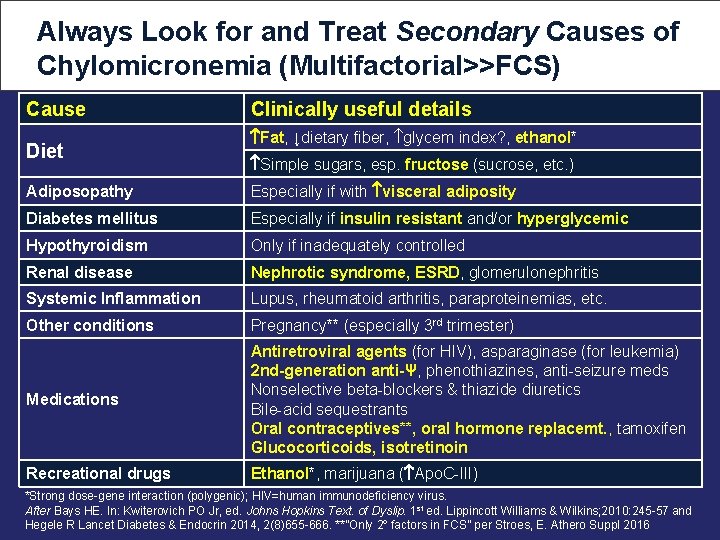
Always Look for and Treat Secondary Causes of Chylomicronemia (Multifactorial>>FCS) Cause Diet Clinically useful details Fat, ↓dietary fiber, glycem index? , ethanol* Simple sugars, esp. fructose (sucrose, etc. ) Adiposopathy Especially if with visceral adiposity Diabetes mellitus Especially if insulin resistant and/or hyperglycemic Hypothyroidism Only if inadequately controlled Renal disease Nephrotic syndrome, ESRD, glomerulonephritis Systemic Inflammation Lupus, rheumatoid arthritis, paraproteinemias, etc. Other conditions Pregnancy** (especially 3 rd trimester) Medications Antiretroviral agents (for HIV), asparaginase (for leukemia) 2 nd-generation anti-Ψ, phenothiazines, anti-seizure meds Nonselective beta-blockers & thiazide diuretics Bile-acid sequestrants Oral contraceptives**, oral hormone replacemt. , tamoxifen Glucocorticoids, isotretinoin Recreational drugs Ethanol*, marijuana ( Apo. C-III) *Strong dose-gene interaction (polygenic); HIV=human immunodeficiency virus. After Bays HE. In: Kwiterovich PO Jr, ed. Johns Hopkins Text. of Dyslip. 1 st ed. Lippincott Williams & Wilkins; 2010: 245 -57 and Hegele R Lancet Diabetes & Endocrin 2014, 2(8)655 -666. **”Only 2º factors in FCS” per Stroes, E. Athero Suppl 2016
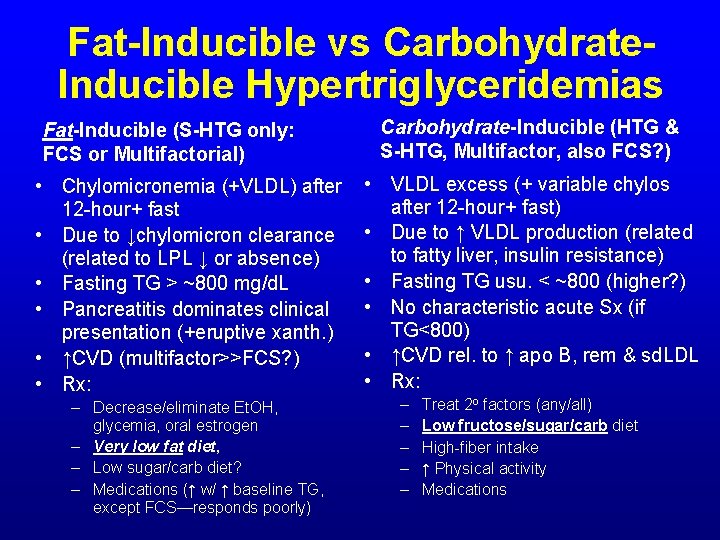
Fat-Inducible vs Carbohydrate. Inducible Hypertriglyceridemias Fat-Inducible (S-HTG only: FCS or Multifactorial) • Chylomicronemia (+VLDL) after 12 -hour+ fast • Due to ↓chylomicron clearance (related to LPL ↓ or absence) • Fasting TG > ~800 mg/d. L • Pancreatitis dominates clinical presentation (+eruptive xanth. ) • ↑CVD (multifactor>>FCS? ) • Rx: – Decrease/eliminate Et. OH, glycemia, oral estrogen – Very low fat diet, – Low sugar/carb diet? – Medications (↑ w/ ↑ baseline TG, except FCS—responds poorly) Carbohydrate-Inducible (HTG & S-HTG, Multifactor, also FCS? ) • VLDL excess (+ variable chylos after 12 -hour+ fast) • Due to ↑ VLDL production (related to fatty liver, insulin resistance) • Fasting TG usu. < ~800 (higher? ) • No characteristic acute Sx (if TG<800) • ↑CVD rel. to ↑ apo B, rem & sd. LDL • Rx: – – – Treat 2 o factors (any/all) Low fructose/sugar/carb diet High-fiber intake ↑ Physical activity Medications
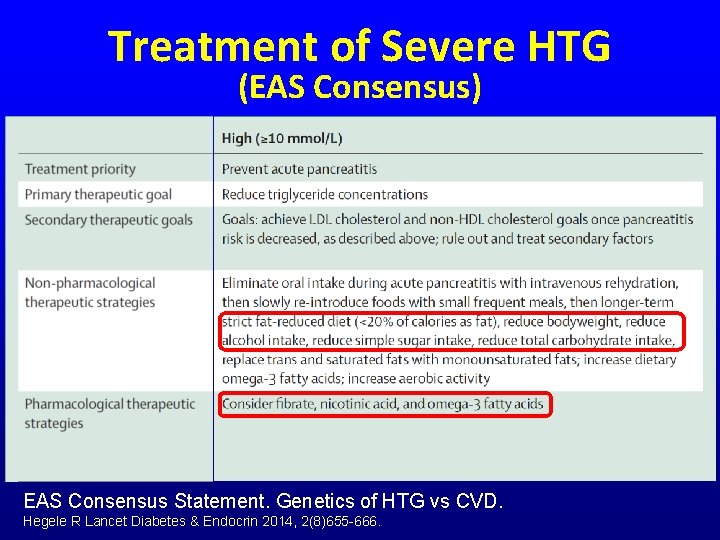
Treatment of Severe HTG (EAS Consensus) EAS Consensus Statement. Genetics of HTG vs CVD. Hegele R Lancet Diabetes & Endocrin 2014, 2(8)655 -666.
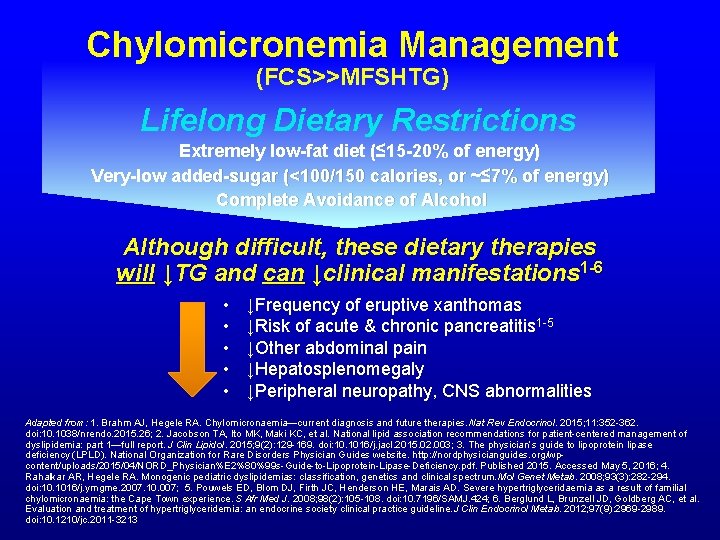
Chylomicronemia Management (FCS>>MFSHTG) Lifelong Dietary Restrictions Extremely low-fat diet (≤ 15 -20% of energy) Very-low added-sugar (<100/150 calories, or ~≤ 7% of energy) Complete Avoidance of Alcohol Although difficult, these dietary therapies will ↓TG and can ↓clinical manifestations 1 -6 • • • ↓Frequency of eruptive xanthomas ↓Risk of acute & chronic pancreatitis 1 -5 ↓Other abdominal pain ↓Hepatosplenomegaly ↓Peripheral neuropathy, CNS abnormalities Adapted from: 1. Brahm AJ, Hegele RA. Chylomicronaemia—current diagnosis and future therapies. Nat Rev Endocrinol. 2015; 11: 352 -362. doi: 10. 1038/nrendo. 2015. 26; 2. Jacobson TA, Ito MK, Maki KC, et al. National lipid association recommendations for patient-centered management of dyslipidemia: part 1—full report. J Clin Lipidol. 2015; 9(2): 129 -169. doi: 10. 1016/j. jacl. 2015. 02. 003; 3. The physician’s guide to lipoprotein lipase deficiency (LPLD). National Organization for Rare Disorders Physician Guides website. http: //nordphysicianguides. org/wpcontent/uploads/2015/04/NORD_Physician%E 2%80%99 s-Guide-to-Lipoprotein-Lipase-Deficiency. pdf. Published 2015. Accessed May 5, 2016; 4. Rahalkar AR, Hegele RA. Monogenic pediatric dyslipidemias: classification, genetics and clinical spectrum. Mol Genet Metab. 2008; 93(3): 282 -294. doi: 10. 1016/j. ymgme. 2007. 10. 007; 5. Pouwels ED, Blom DJ, Firth JC, Henderson HE, Marais AD. Severe hypertriglyceridaemia as a result of familial chylomicronaemia: the Cape Town experience. S Afr Med J. 2008; 98(2): 105 -108. doi: 10. 7196/SAMJ. 424; 6. Berglund L, Brunzell JD, Goldberg AC, et al. Evaluation and treatment of hypertriglyceridemia: an endocrine society clinical practice guideline. J Clin Endocrinol Metab. 2012; 97(9): 2969 -2989. doi: 10. 1210/jc. 2011 -3213
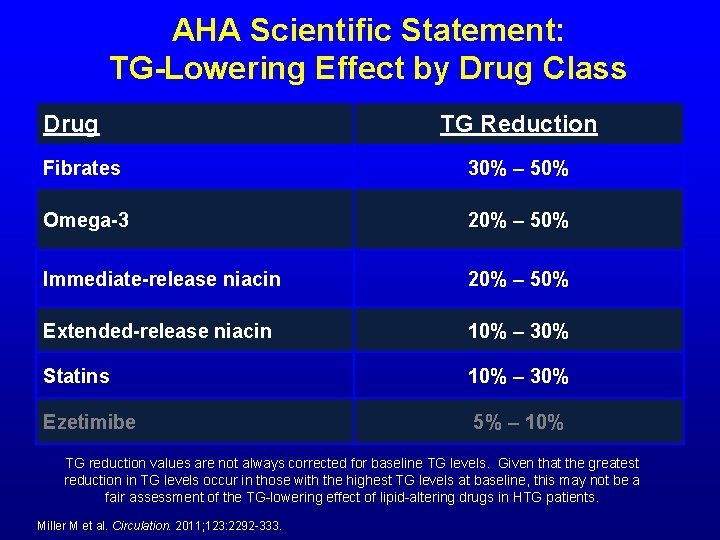
AHA Scientific Statement: TG-Lowering Effect by Drug Class Drug TG Reduction Fibrates 30% – 50% Omega-3 20% – 50% Immediate-release niacin 20% – 50% Extended-release niacin 10% – 30% Statins 10% – 30% Ezetimibe 5% – 10% TG reduction values are not always corrected for baseline TG levels. Given that the greatest reduction in TG levels occur in those with the highest TG levels at baseline, this may not be a fair assessment of the TG-lowering effect of lipid-altering drugs in HTG patients. Miller M et al. Circulation. 2011; 123: 2292 -333.
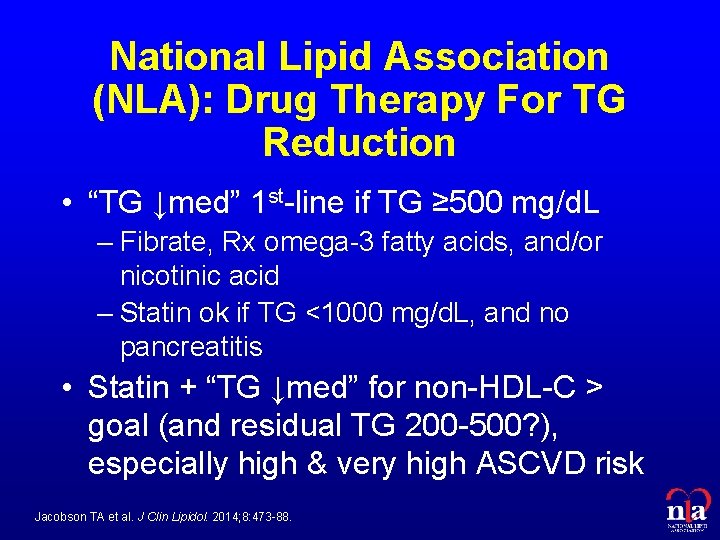
National Lipid Association (NLA): Drug Therapy For TG Reduction • “TG ↓med” 1 st-line if TG ≥ 500 mg/d. L – Fibrate, Rx omega-3 fatty acids, and/or nicotinic acid – Statin ok if TG <1000 mg/d. L, and no pancreatitis • Statin + “TG ↓med” for non-HDL-C > goal (and residual TG 200 -500? ), especially high & very high ASCVD risk Jacobson TA et al. J Clin Lipidol. 2014; 8: 473 -88.
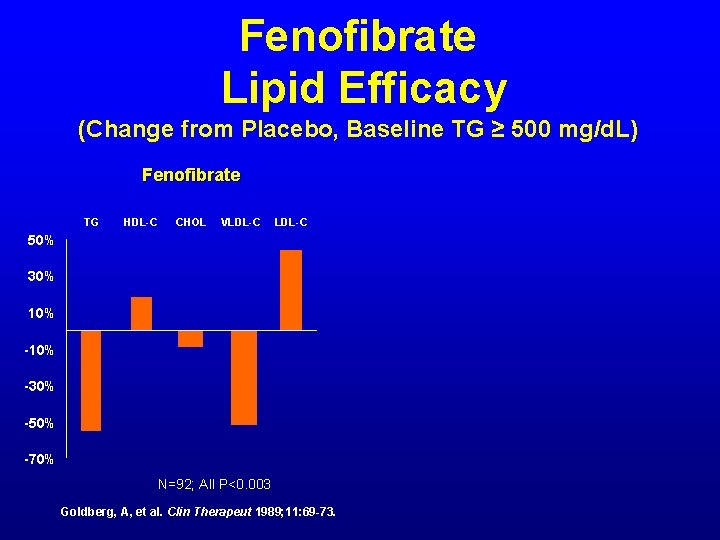
Fenofibrate Lipid Efficacy (Change from Placebo, Baseline TG ≥ 500 mg/d. L) Fenofibrate TG HDL-C CHOL VLDL-C 50% 30% 10% -30% -50% -70% N=92; All P<0. 003 Goldberg, A, et al. Clin Therapeut 1989; 11: 69 -73.
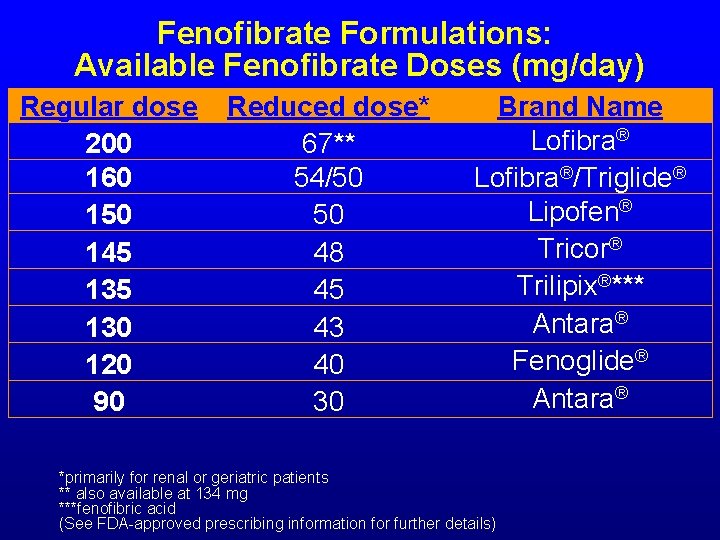
Fenofibrate Formulations: Available Fenofibrate Doses (mg/day) Regular dose 200 160 150 145 130 120 90 Reduced dose* 67** 54/50 50 48 45 43 40 30 Brand Name Lofibra®/Triglide® Lipofen® Tricor® Trilipix®*** Antara® Fenoglide® Antara® *primarily for renal or geriatric patients ** also available at 134 mg ***fenofibric acid (See FDA-approved prescribing information for further details)
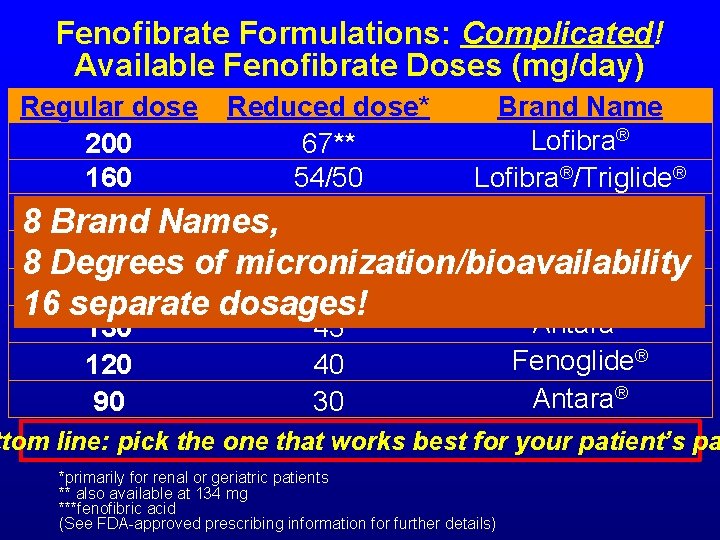
Fenofibrate Formulations: Complicated! Available Fenofibrate Doses (mg/day) Regular dose Reduced dose* Brand Name Lofibra® 200 67** 160 54/50 Lofibra®/Triglide® ® Lipofen 150 50 8 Brand Names, Tricor® 145 48 8 Degrees of micronization/bioavailability Trilipix®*** 135 45 16 separate dosages! Antara® 130 43 Fenoglide® 120 40 Antara® 90 30 ttom line: pick the one that works best for your patient’s pa *primarily for renal or geriatric patients ** also available at 134 mg ***fenofibric acid (See FDA-approved prescribing information for further details)
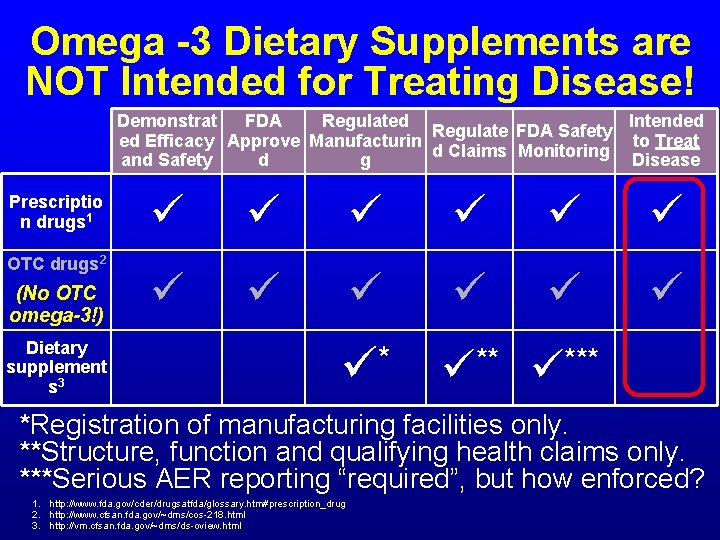
Omega -3 Dietary Supplements are NOT Intended for Treating Disease! Demonstrat FDA Regulated Intended Regulate FDA Safety ed Efficacy Approve Manufacturin to Treat d Claims Monitoring and Safety d g Disease Prescriptio n drugs 1 OTC drugs 2 (No OTC omega-3!) Dietary supplement s 3 * ** *Registration of manufacturing facilities only. **Structure, function and qualifying health claims only. ***Serious AER reporting “required”, but how enforced? 1. http: //www. fda. gov/cder/drugsatfda/glossary. htm#prescription_drug 2. http: //www. cfsan. fda. gov/~dms/cos-218. html 3. http: //vm. cfsan. fda. gov/~dms/ds-oview. html
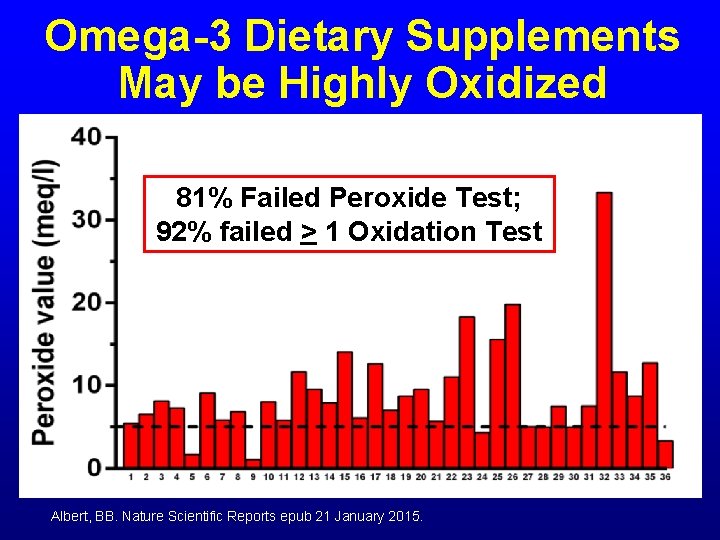
Omega-3 Dietary Supplements May be Highly Oxidized 81% Failed Peroxide Test; 92% failed > 1 Oxidation Test Albert, BB. Nature Scientific Reports epub 21 January 2015.
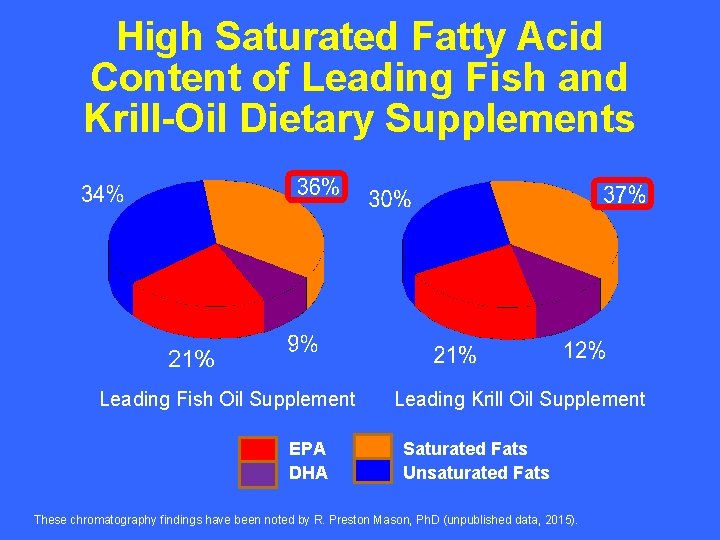
High Saturated Fatty Acid Content of Leading Fish and Krill-Oil Dietary Supplements 21% Leading Fish Oil Supplement EPA DHA Leading Krill Oil Supplement Saturated Fats Unsaturated Fats These chromatography findings have been noted by R. Preston Mason, Ph. D (unpublished data, 2015).
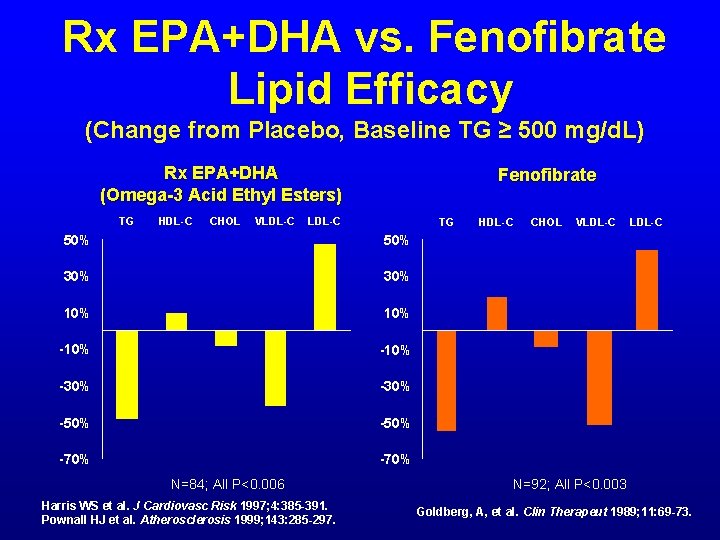
Rx EPA+DHA vs. Fenofibrate Lipid Efficacy (Change from Placebo, Baseline TG ≥ 500 mg/d. L) Rx EPA+DHA (Omega-3 Acid Ethyl Esters) TG HDL-C CHOL VLDL-C Fenofibrate LDL-C TG 50% 30% 10% -10% -30% -50% -70% N=84; All P<0. 006 Harris WS et al. J Cardiovasc Risk 1997; 4: 385 -391. Pownall HJ et al. Atherosclerosis 1999; 143: 285 -297. HDL-C CHOL VLDL-C N=92; All P<0. 003 Goldberg, A, et al. Clin Therapeut 1989; 11: 69 -73.
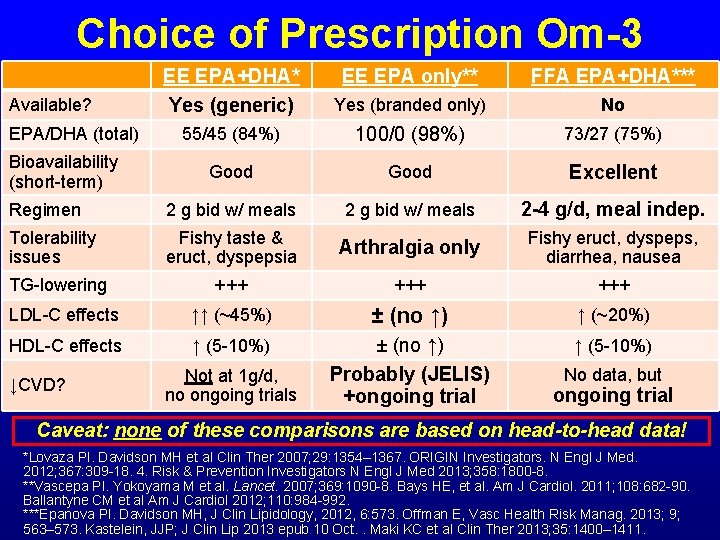
Choice of Prescription Om-3 EE EPA+DHA* Yes (generic) EE EPA only** FFA EPA+DHA*** Yes (branded only) No 55/45 (84%) 100/0 (98%) 73/27 (75%) Good Excellent Regimen 2 g bid w/ meals 2 -4 g/d, meal indep. Tolerability issues Fishy taste & eruct, dyspepsia Arthralgia only Fishy eruct, dyspeps, diarrhea, nausea +++ +++ LDL-C effects ↑↑ (~45%) ± (no ↑) ↑ (~20%) HDL-C effects ↑ (5 -10%) ± (no ↑) Probably (JELIS) +ongoing trial ↑ (5 -10%) Available? EPA/DHA (total) Bioavailability (short-term) TG-lowering ↓CVD? Not at 1 g/d, no ongoing trials No data, but ongoing trial Caveat: none of these comparisons are based on head-to-head data! *Lovaza PI. Davidson MH et al Clin Ther 2007; 29: 1354– 1367. ORIGIN Investigators. N Engl J Med. 2012; 367: 309 -18. 4. Risk & Prevention Investigators N Engl J Med 2013; 358: 1800 -8. **Vascepa PI. Yokoyama M et al. Lancet. 2007; 369: 1090 -8. Bays HE, et al. Am J Cardiol. 2011; 108: 682 -90. Ballantyne CM et al Am J Cardiol 2012; 110: 984 -992. ***Epanova PI. Davidson MH, J Clin Lipidology, 2012, 6: 573. Offman E, Vasc Health Risk Manag. 2013; 9; 563– 573. Kastelein, JJP; J Clin Lip 2013 epub 10 Oct. . Maki KC et al Clin Ther 2013; 35: 1400– 1411.
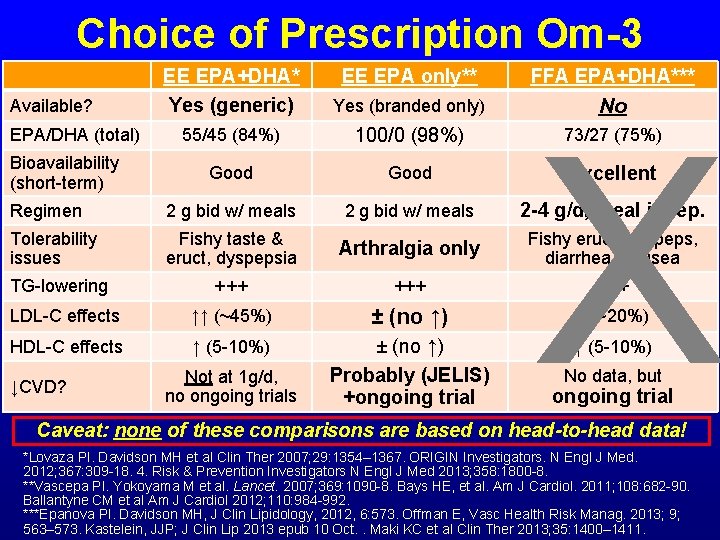
Choice of Prescription Om-3 EE EPA+DHA* Yes (generic) EE EPA only** FFA EPA+DHA*** Yes (branded only) No 55/45 (84%) 100/0 (98%) Good Regimen 2 g bid w/ meals 2 -4 g/d, meal indep. Tolerability issues Fishy taste & eruct, dyspepsia Arthralgia only Fishy eruct, dyspeps, diarrhea, nausea +++ +++ LDL-C effects ↑↑ (~45%) ± (no ↑) HDL-C effects ↑ (5 -10%) ± (no ↑) Probably (JELIS) +ongoing trial Available? EPA/DHA (total) Bioavailability (short-term) TG-lowering ↓CVD? Not at 1 g/d, no ongoing trials X 73/27 (75%) Excellent ↑ (~20%) ↑ (5 -10%) No data, but ongoing trial Caveat: none of these comparisons are based on head-to-head data! *Lovaza PI. Davidson MH et al Clin Ther 2007; 29: 1354– 1367. ORIGIN Investigators. N Engl J Med. 2012; 367: 309 -18. 4. Risk & Prevention Investigators N Engl J Med 2013; 358: 1800 -8. **Vascepa PI. Yokoyama M et al. Lancet. 2007; 369: 1090 -8. Bays HE, et al. Am J Cardiol. 2011; 108: 682 -90. Ballantyne CM et al Am J Cardiol 2012; 110: 984 -992. ***Epanova PI. Davidson MH, J Clin Lipidology, 2012, 6: 573. Offman E, Vasc Health Risk Manag. 2013; 9; 563– 573. Kastelein, JJP; J Clin Lip 2013 epub 10 Oct. . Maki KC et al Clin Ther 2013; 35: 1400– 1411.
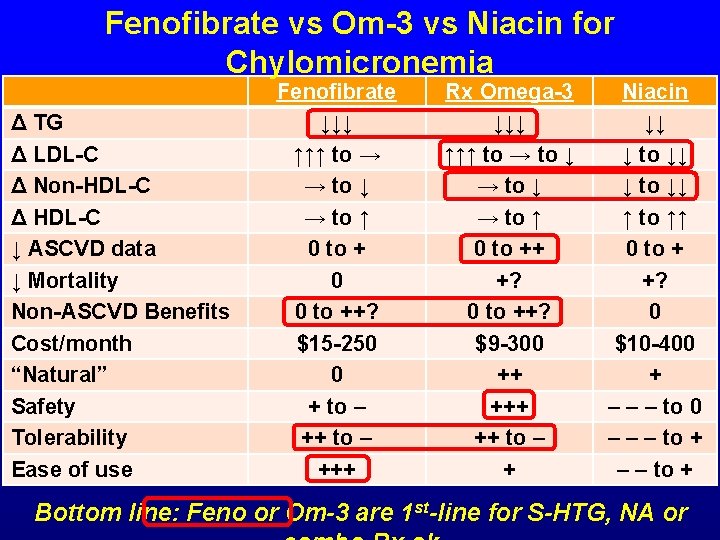
Fenofibrate vs Om-3 vs Niacin for Chylomicronemia Δ TG Δ LDL-C Δ Non-HDL-C Δ HDL-C ↓ ASCVD data ↓ Mortality Non-ASCVD Benefits Cost/month “Natural” Safety Tolerability Ease of use Fenofibrate ↓↓↓ ↑↑↑ to → → to ↓ → to ↑ 0 to + 0 0 to ++? $15 -250 0 + to – +++ Rx Omega-3 ↓↓↓ ↑↑↑ to → to ↓ → to ↑ 0 to ++ +? 0 to ++? $9 -300 ++ ++ to – + Niacin ↓↓ ↓ to ↓↓ ↑ to ↑↑ 0 to + +? 0 $10 -400 + – – – to 0 – – – to + Bottom line: Feno or Om-3 are 1 st-line for S-HTG, NA or
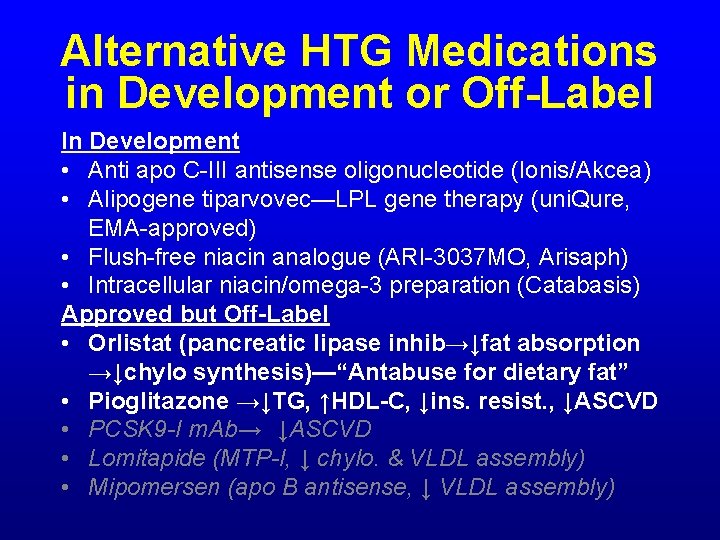
Alternative HTG Medications in Development or Off-Label In Development • Anti apo C-III antisense oligonucleotide (Ionis/Akcea) • Alipogene tiparvovec—LPL gene therapy (uni. Qure, EMA-approved) • Flush-free niacin analogue (ARI-3037 MO, Arisaph) • Intracellular niacin/omega-3 preparation (Catabasis) Approved but Off-Label • Orlistat (pancreatic lipase inhib→↓fat absorption →↓chylo synthesis)—“Antabuse for dietary fat” • Pioglitazone →↓TG, ↑HDL-C, ↓ins. resist. , ↓ASCVD • PCSK 9 -I m. Ab→ ↓ASCVD • Lomitapide (MTP-I, ↓ chylo. & VLDL assembly) • Mipomersen (apo B antisense, ↓ VLDL assembly)
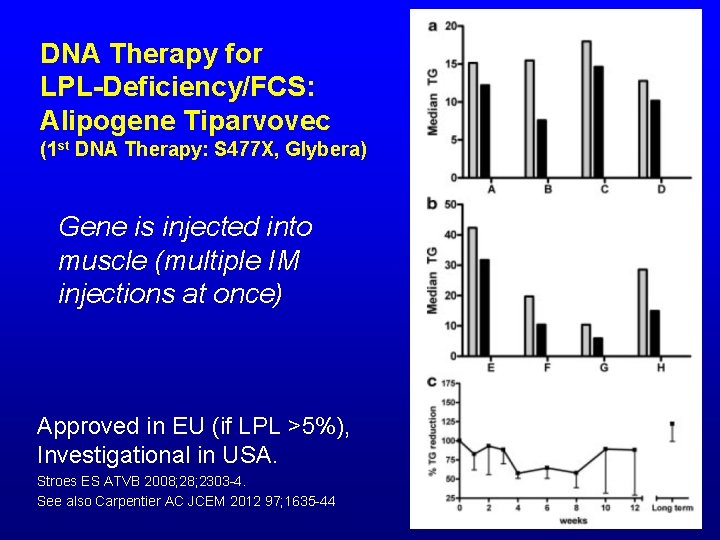
DNA Therapy for LPL-Deficiency/FCS: Alipogene Tiparvovec (1 st DNA Therapy: S 477 X, Glybera) Gene is injected into muscle (multiple IM injections at once) Approved in EU (if LPL >5%), Investigational in USA. Stroes ES ATVB 2008; 2303 -4. See also Carpentier AC JCEM 2012 97; 1635 -44
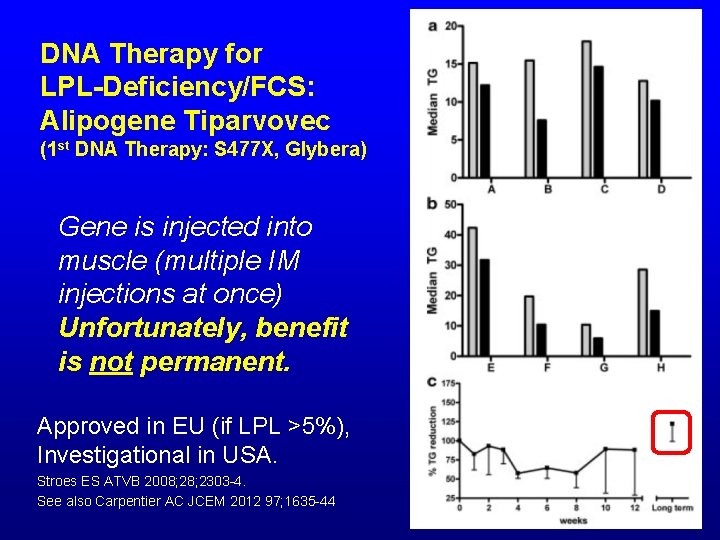
DNA Therapy for LPL-Deficiency/FCS: Alipogene Tiparvovec (1 st DNA Therapy: S 477 X, Glybera) Gene is injected into muscle (multiple IM injections at once) Unfortunately, benefit is not permanent. Approved in EU (if LPL >5%), Investigational in USA. Stroes ES ATVB 2008; 2303 -4. See also Carpentier AC JCEM 2012 97; 1635 -44
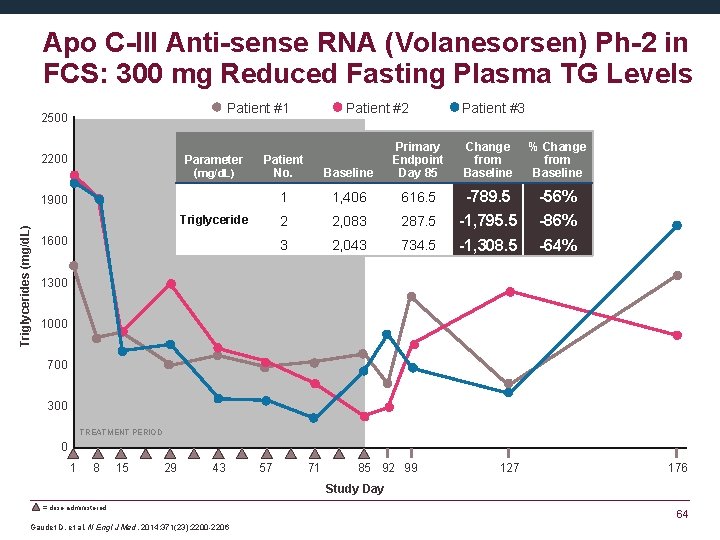
Apo C-III Anti-sense RNA (Volanesorsen) Ph-2 in FCS: 300 mg Reduced Fasting Plasma TG Levels Patient #1 2500 2200 Parameter (mg/d. L) Patient #3 Patient No. Baseline Primary Endpoint Day 85 1 1, 406 616. 5 -789. 5 -56% 2 2, 083 287. 5 -1, 795. 5 -86% 3 2, 043 734. 5 -1, 308. 5 -64% 1900 Triglycerides (mg/d. L) Patient #2 Triglyceride 1600 Change from Baseline % Change from Baseline 1300 1000 700 300 TREATMENT PERIOD 0 1 8 15 29 43 57 71 85 92 99 127 176 Study Day = dose administered Gaudet D, et al. N Engl J Med. 2014; 371(23): 2200 -2206 64
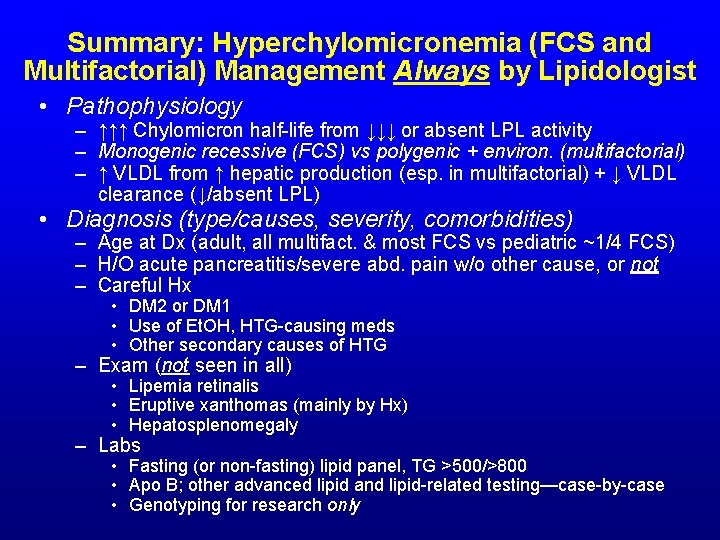
Summary: Hyperchylomicronemia (FCS and Multifactorial) Management Always by Lipidologist • Pathophysiology – ↑↑↑ Chylomicron half-life from ↓↓↓ or absent LPL activity – Monogenic recessive (FCS) vs polygenic + environ. (multifactorial) – ↑ VLDL from ↑ hepatic production (esp. in multifactorial) + ↓ VLDL clearance (↓/absent LPL) • Diagnosis (type/causes, severity, comorbidities) – Age at Dx (adult, all multifact. & most FCS vs pediatric ~1/4 FCS) – H/O acute pancreatitis/severe abd. pain w/o other cause, or not – Careful Hx • DM 2 or DM 1 • Use of Et. OH, HTG-causing meds • Other secondary causes of HTG – Exam (not seen in all) • Lipemia retinalis • Eruptive xanthomas (mainly by Hx) • Hepatosplenomegaly – Labs • Fasting (or non-fasting) lipid panel, TG >500/>800 • Apo B; other advanced lipid and lipid-related testing—case-by-case • Genotyping for research only
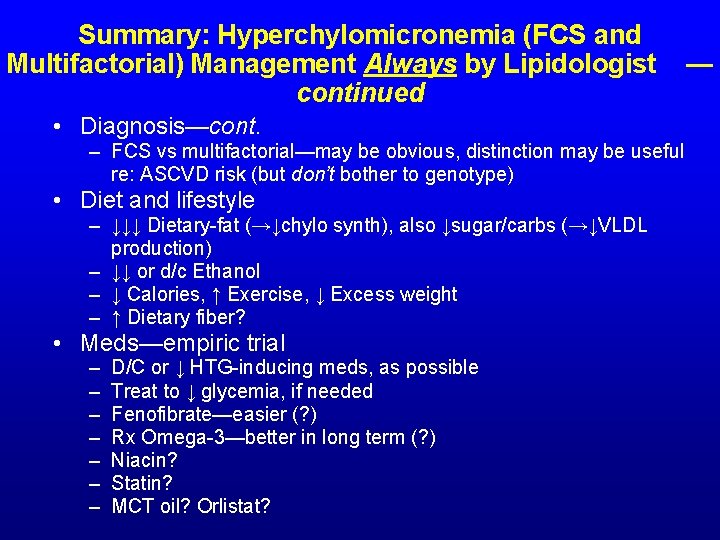
Summary: Hyperchylomicronemia (FCS and Multifactorial) Management Always by Lipidologist continued • Diagnosis—cont. – FCS vs multifactorial—may be obvious, distinction may be useful re: ASCVD risk (but don’t bother to genotype) • Diet and lifestyle – ↓↓↓ Dietary-fat (→↓chylo synth), also ↓sugar/carbs (→↓VLDL production) – ↓↓ or d/c Ethanol – ↓ Calories, ↑ Exercise, ↓ Excess weight – ↑ Dietary fiber? • Meds—empiric trial – – – – D/C or ↓ HTG-inducing meds, as possible Treat to ↓ glycemia, if needed Fenofibrate—easier (? ) Rx Omega-3—better in long term (? ) Niacin? Statin? MCT oil? Orlistat? —
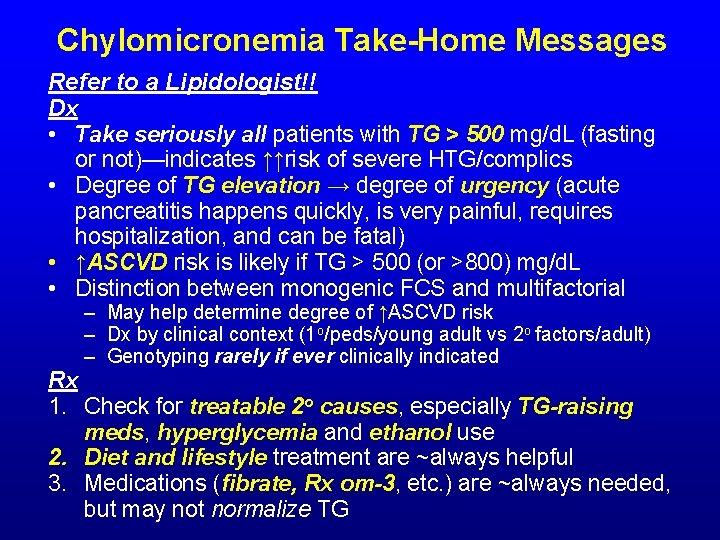
Chylomicronemia Take-Home Messages Refer to a Lipidologist!! Dx • Take seriously all patients with TG > 500 mg/d. L (fasting or not)—indicates ↑↑risk of severe HTG/complics • Degree of TG elevation → degree of urgency (acute pancreatitis happens quickly, is very painful, requires hospitalization, and can be fatal) • ↑ASCVD risk is likely if TG > 500 (or >800) mg/d. L • Distinction between monogenic FCS and multifactorial – May help determine degree of ↑ASCVD risk – Dx by clinical context (1 o/peds/young adult vs 2 o factors/adult) – Genotyping rarely if ever clinically indicated Rx 1. Check for treatable 2 o causes, especially TG-raising meds, hyperglycemia and ethanol use 2. Diet and lifestyle treatment are ~always helpful 3. Medications (fibrate, Rx om-3, etc. ) are ~always needed, but may not normalize TG
- Slides: 67