
CRCT Practice September 9 2013 Animalia Protista Fungi
CRCT Practice, September 9, 2013 Animalia, Protista, Fungi, and Plantae are A. the scientific names of different organisms. B. the names of kingdoms. C. the levels of classification. D. scientists who organize taxonomy.
Turn to the vocabulary section 32. Di- prefix that mean two 33. Dichomotomous Key-a system scientist use to identify an organism using an organism’s phenotype. Clues are always given in sets of two (pairs). The organism’s scientific name is used.
Notes September 9, 2013 When using a Dichotomous key you will need To read choice A FIRST and then read choice B. Use the choice that best fits the organism’s phenotype. Follow these rules every time: • Identify only one organism at a time. DO NOT SKIP AROUND • Read and consider both A and B choices. DO NOT JUMP TO CONCLUSIONS
• Choose the clue that BEST fits the organism’s phenotype. • Follow the directions the clue you choose gives. • Write down the organism’s name. • Choose your next organism to identify • Go back to clue one and read A and B again ALWAYS write down the clues you have used. This helps you check for errors.
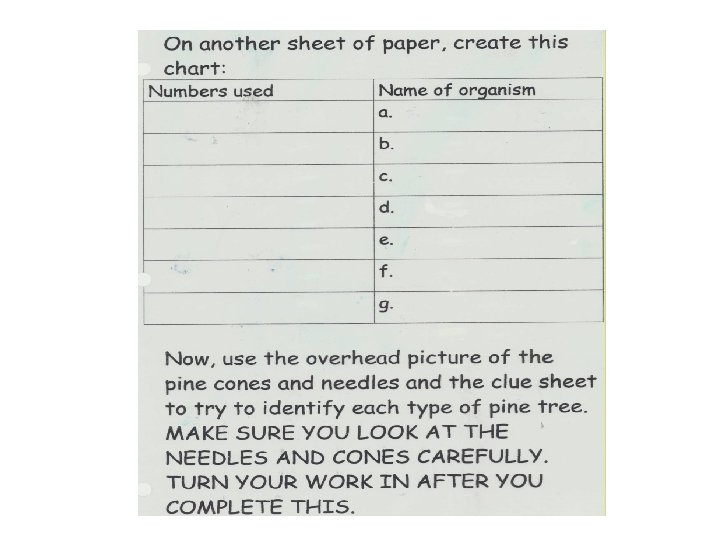
CRCT Practice September 10, 2013 A Dichotomous Key contains a series of questions that people use to A. find similar organisms. B. identify organisms. C. assign new names to unknown organisms. D. describe organisms
Today and tomorrow we will continue to practice using Dichotomous Keys. Each time you practice, you will need to make a chart like you did yesterday.
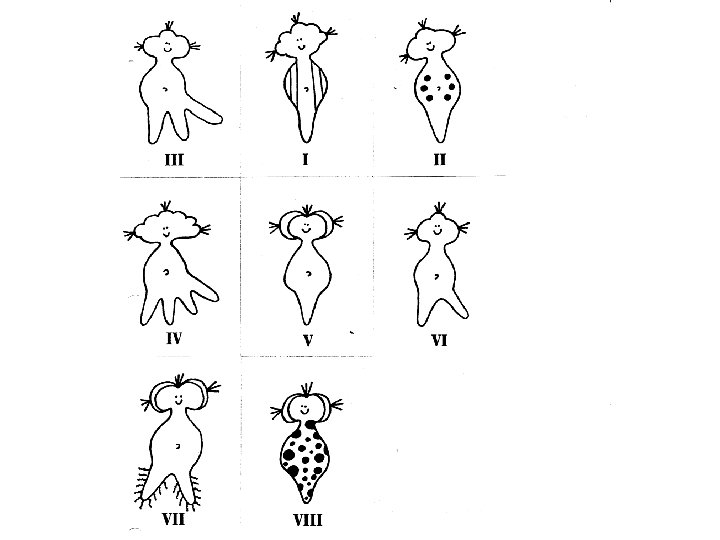
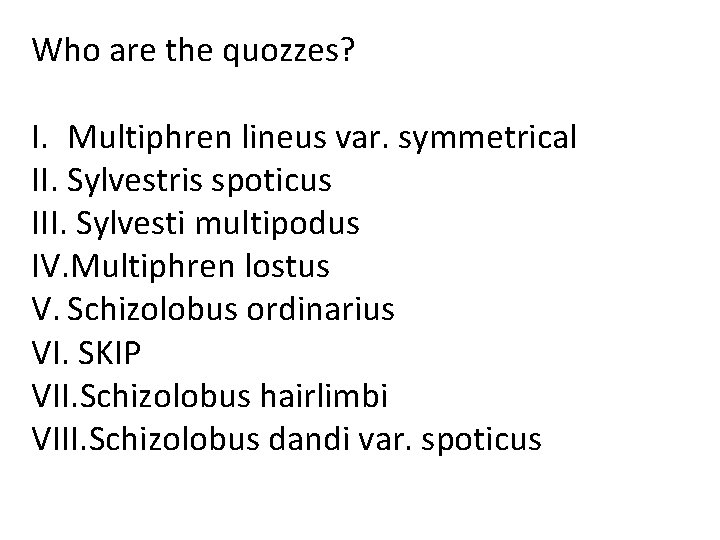
Who are the quozzes? I. Multiphren lineus var. symmetrical II. Sylvestris spoticus III. Sylvesti multipodus IV. Multiphren lostus V. Schizolobus ordinarius VI. SKIP VII. Schizolobus hairlimbi VIII. Schizolobus dandi var. spoticus

Unit test day part one

Unit test day part two
- Slides: 11