
Crayfish Parts Review Image from http biog101 104
Crayfish Parts Review
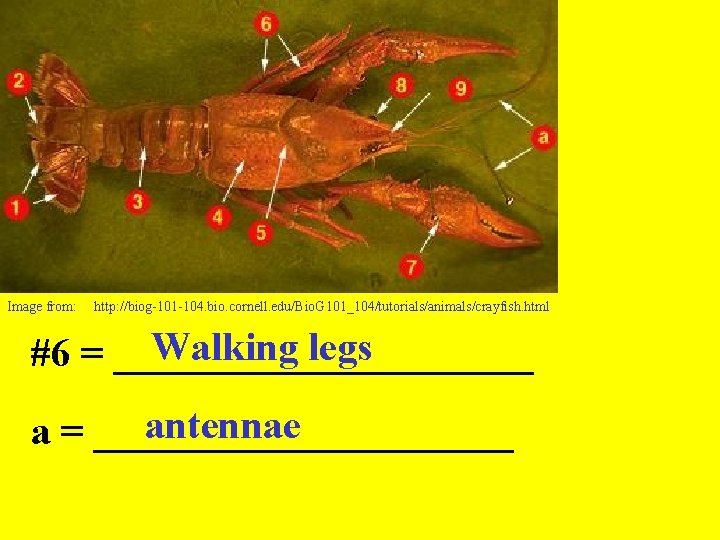
Image from: http: //biog-101 -104. bio. cornell. edu/Bio. G 101_104/tutorials/animals/crayfish. html Walking legs #6 = ___________ antennae a = ___________
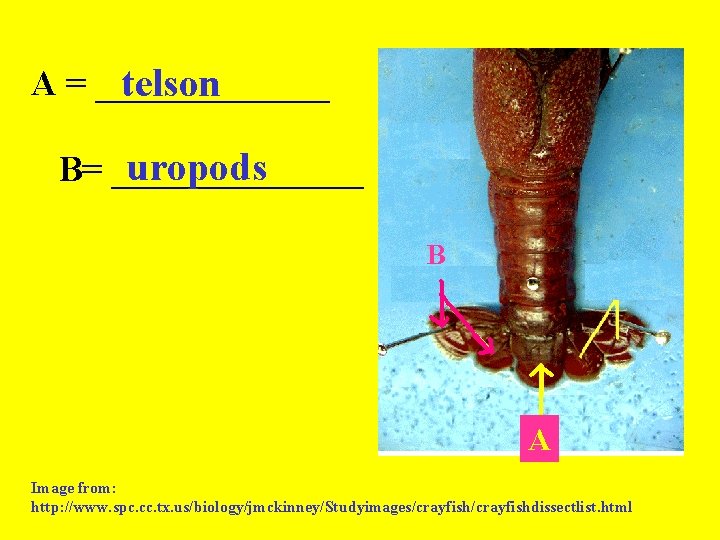
A = _______ telson uropods B= _______ B A Image from: http: //www. spc. cc. tx. us/biology/jmckinney/Studyimages/crayfishdissectlist. html
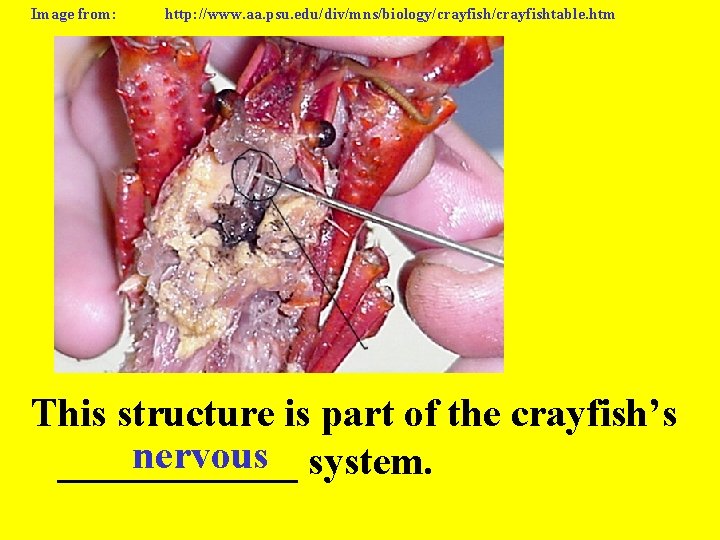
Image from: http: //www. aa. psu. edu/div/mns/biology/crayfishtable. htm This structure is part of the crayfish’s nervous system. ______
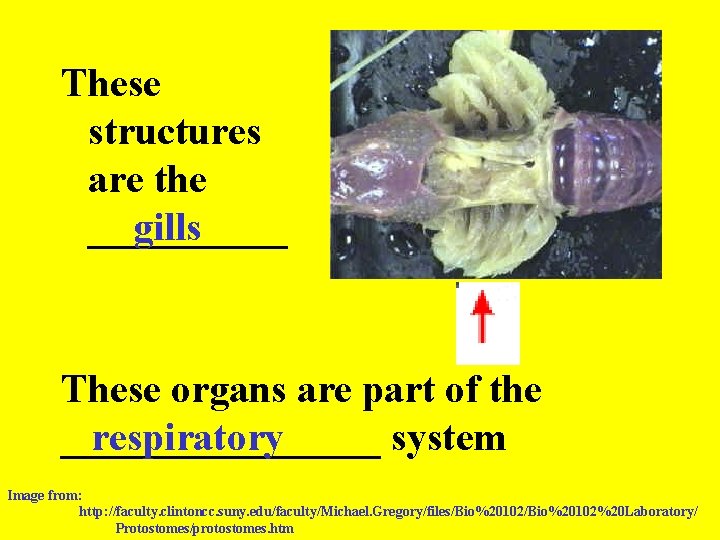
These structures are the _____ gills These organs are part of the ________ respiratory system Image from: http: //faculty. clintoncc. suny. edu/faculty/Michael. Gregory/files/Bio%20102%20 Laboratory/ Protostomes/protostomes. htm
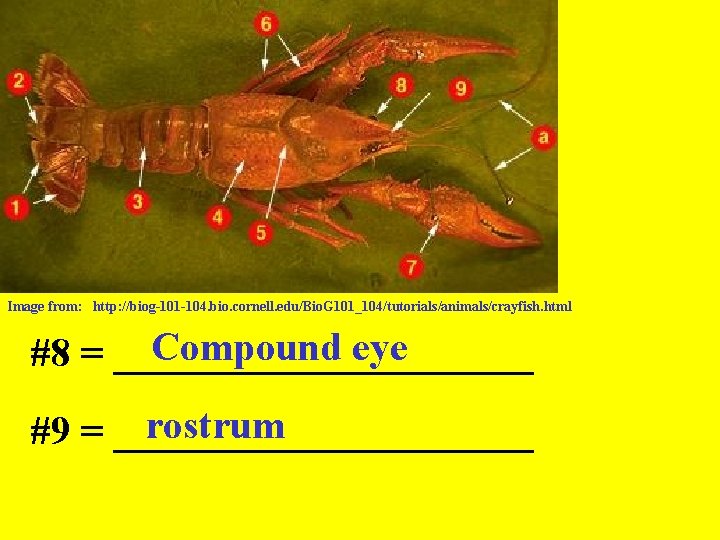
Image from: http: //biog-101 -104. bio. cornell. edu/Bio. G 101_104/tutorials/animals/crayfish. html Compound eye #8 = ___________ rostrum #9 = ___________
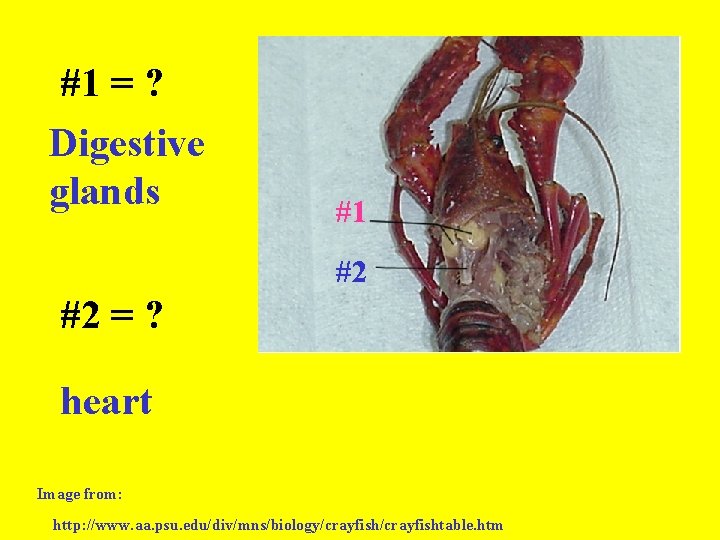
#1 = ? Digestive glands #1 #2 #2 = ? heart Image from: http: //www. aa. psu. edu/div/mns/biology/crayfishtable. htm
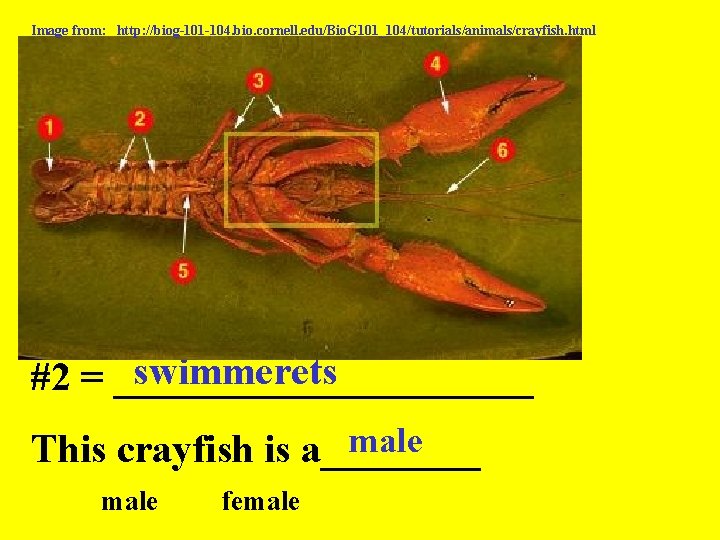
Image from: http: //biog-101 -104. bio. cornell. edu/Bio. G 101_104/tutorials/animals/crayfish. html swimmerets #2 = ___________ male This crayfish is a____ male female
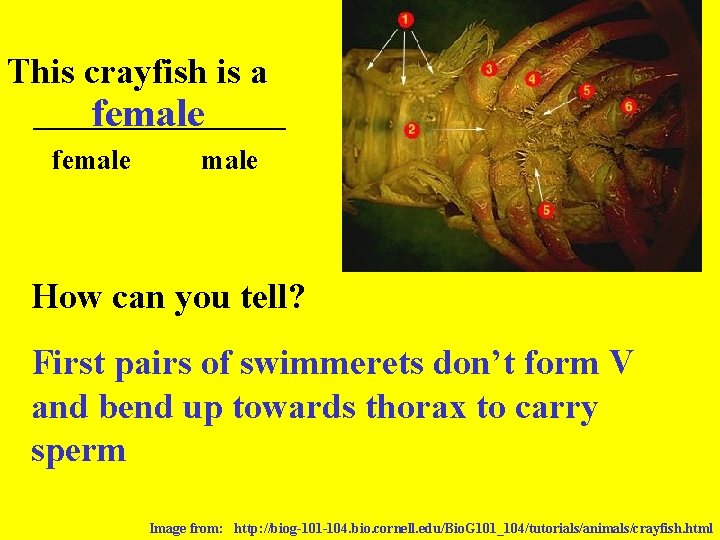
This crayfish is a _______ female How can you tell? First pairs of swimmerets don’t form V and bend up towards thorax to carry sperm Image from: http: //biog-101 -104. bio. cornell. edu/Bio. G 101_104/tutorials/animals/crayfish. html
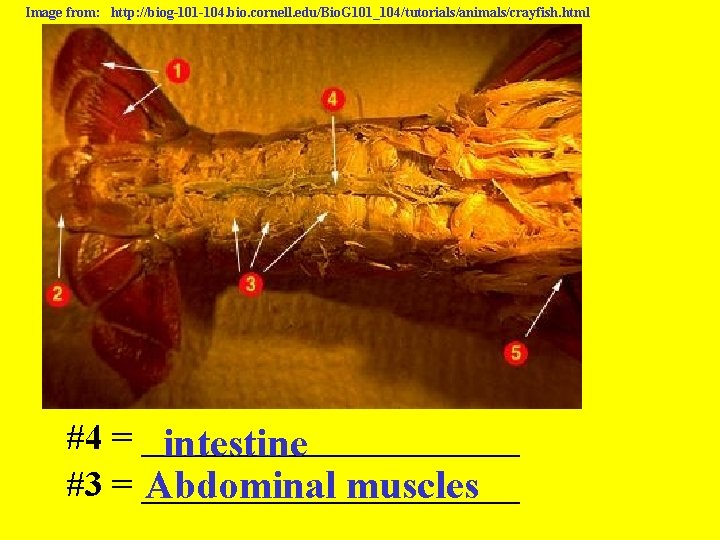
Image from: http: //biog-101 -104. bio. cornell. edu/Bio. G 101_104/tutorials/animals/crayfish. html #4 = ___________ intestine #3 = ___________ Abdominal muscles
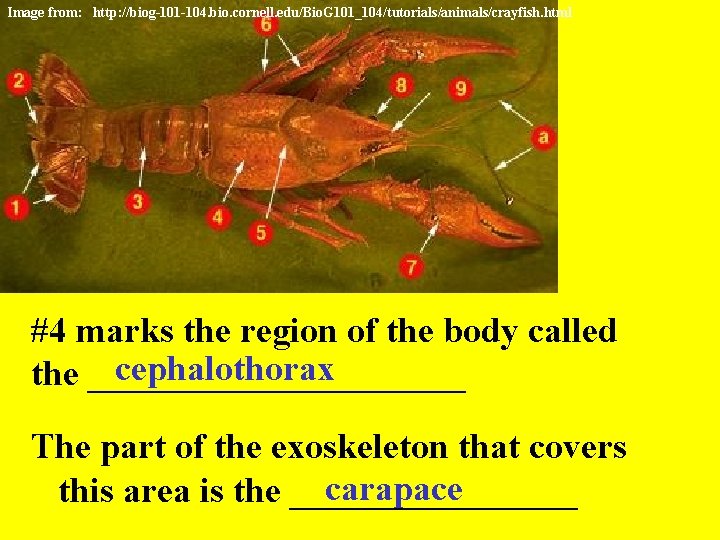
Image from: http: //biog-101 -104. bio. cornell. edu/Bio. G 101_104/tutorials/animals/crayfish. html #4 marks the region of the body called cephalothorax the ___________ The part of the exoskeleton that covers carapace this area is the ________
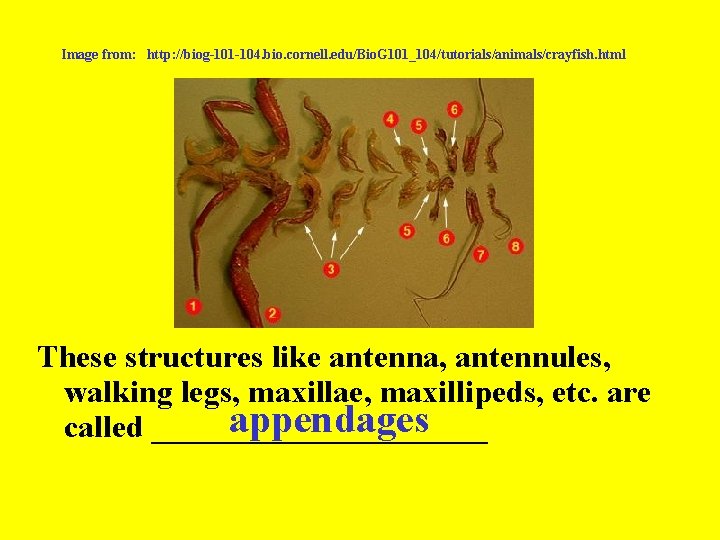
Image from: http: //biog-101 -104. bio. cornell. edu/Bio. G 101_104/tutorials/animals/crayfish. html These structures like antenna, antennules, walking legs, maxillae, maxillipeds, etc. are appendages called ___________
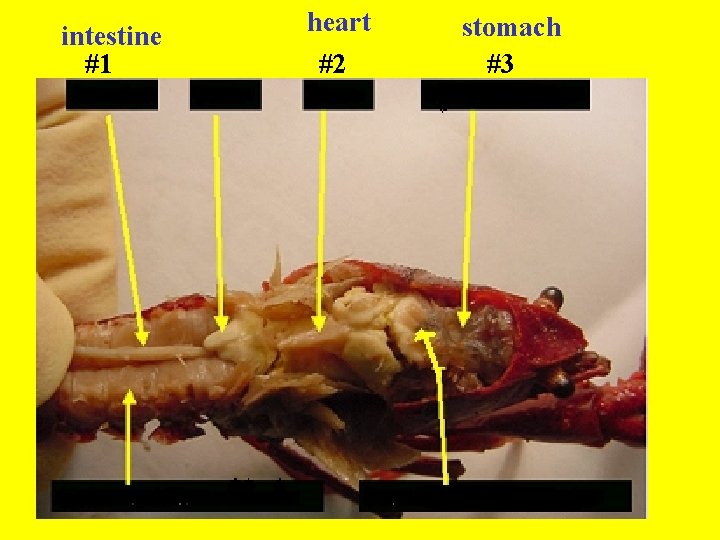
intestine #1 heart #2 Abdominal muscle stomach #3
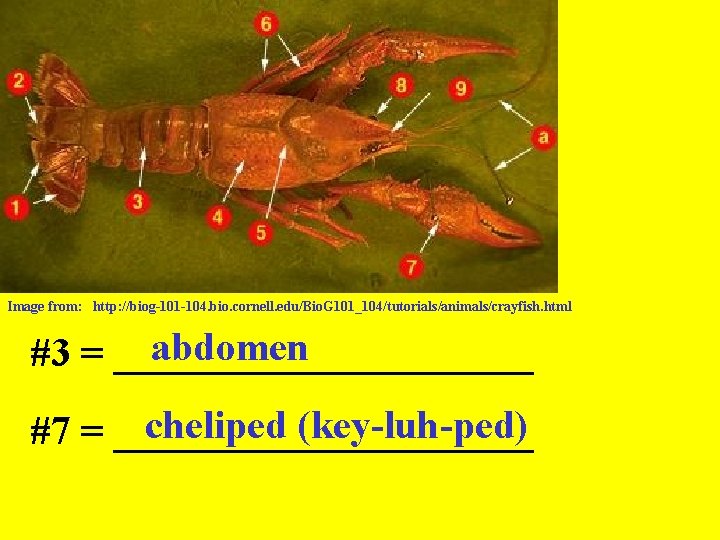
Image from: http: //biog-101 -104. bio. cornell. edu/Bio. G 101_104/tutorials/animals/crayfish. html abdomen #3 = ___________ cheliped (key-luh-ped) #7 = ___________
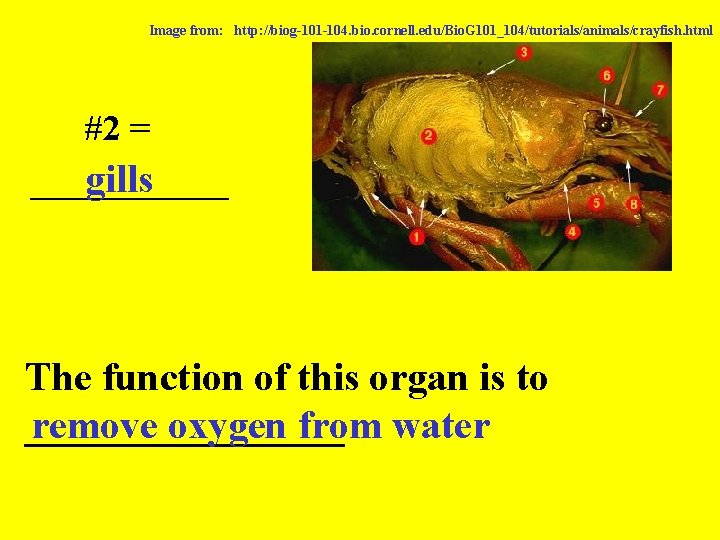
Image from: http: //biog-101 -104. bio. cornell. edu/Bio. G 101_104/tutorials/animals/crayfish. html #2 = ______ gills The function of this organ is to ________ remove oxygen from water
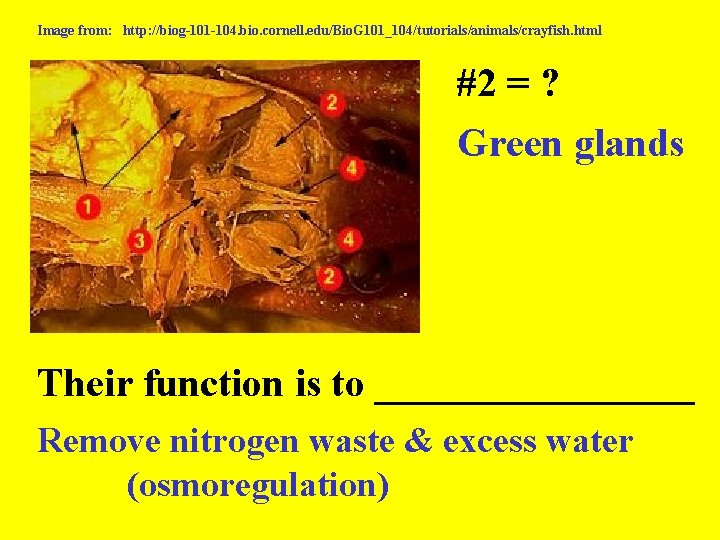
Image from: http: //biog-101 -104. bio. cornell. edu/Bio. G 101_104/tutorials/animals/crayfish. html #2 = ? Green glands Their function is to ________ Remove nitrogen waste & excess water (osmoregulation)
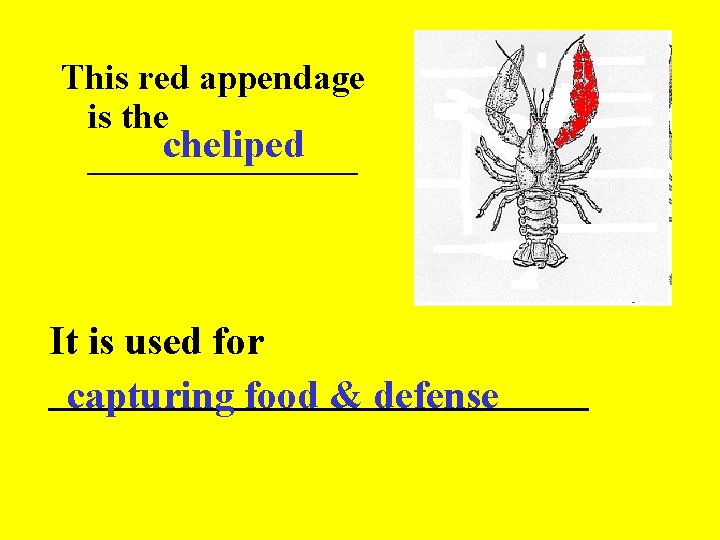
This red appendage is the cheliped ________ It is used for ______________ capturing food & defense
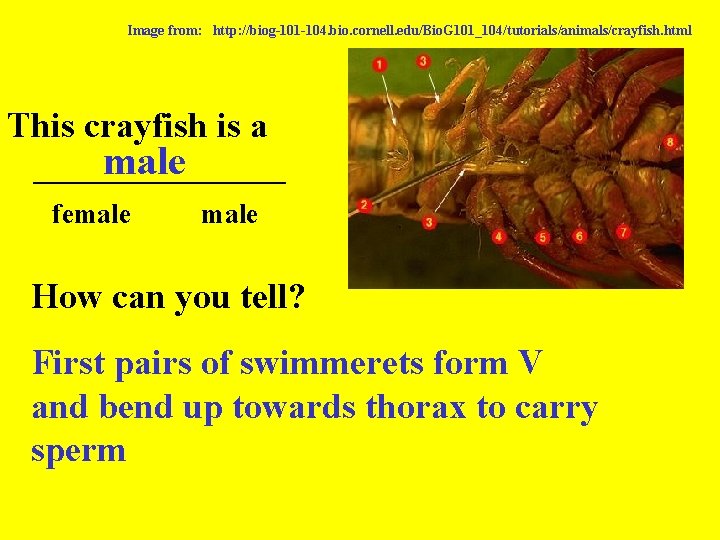
Image from: http: //biog-101 -104. bio. cornell. edu/Bio. G 101_104/tutorials/animals/crayfish. html This crayfish is a male _______ female How can you tell? First pairs of swimmerets form V and bend up towards thorax to carry sperm
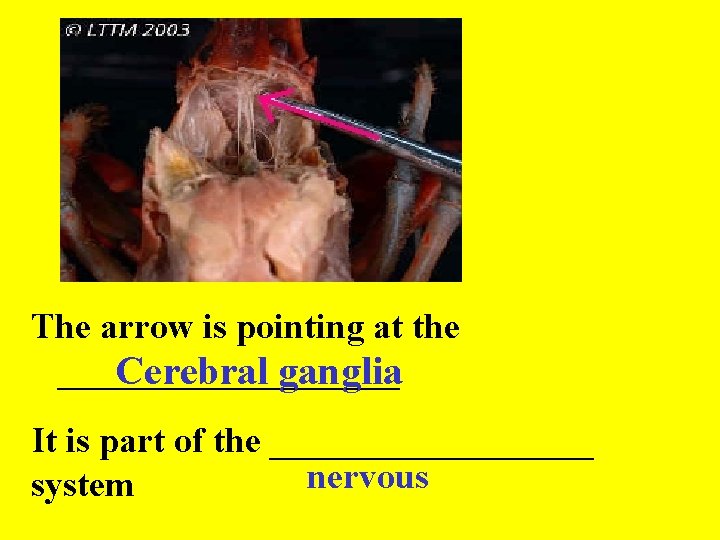
The arrow is pointing at the __________ Cerebral ganglia It is part of the _________ nervous system
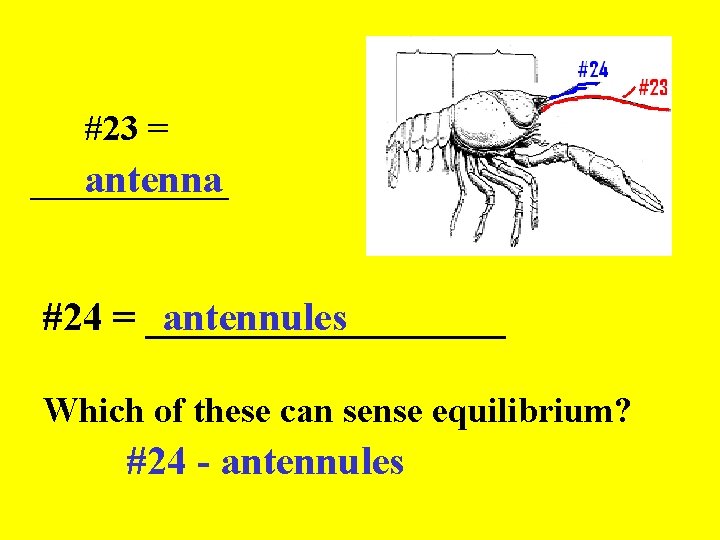
#23 = ______ antenna #24 = _________ antennules Which of these can sense equilibrium? #24 - antennules
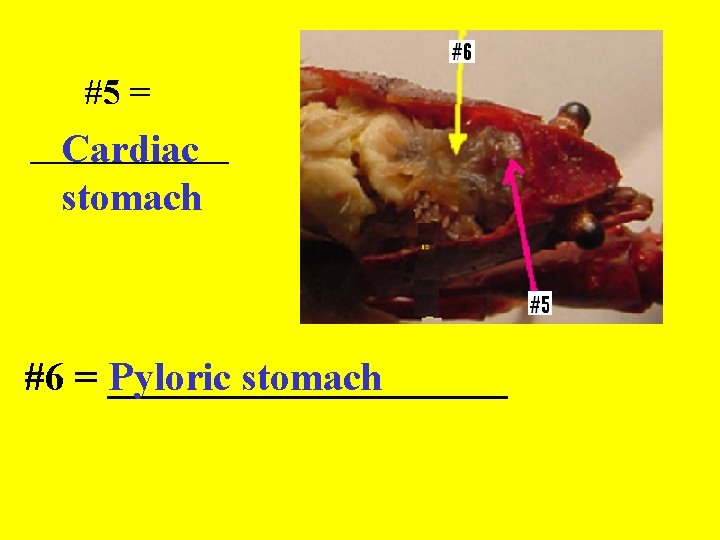
#5 = ______ Cardiac stomach #6 = __________ Pyloric stomach

These openings that allow blood back into the heart are called __________ Ostia (sing. ostium) Watch a crayfish heart movie Image from: Ostia movie: http: //www. quia. com/jg/265982 list. html http: //www. gsu. edu/~bioasx/heartbeat. html
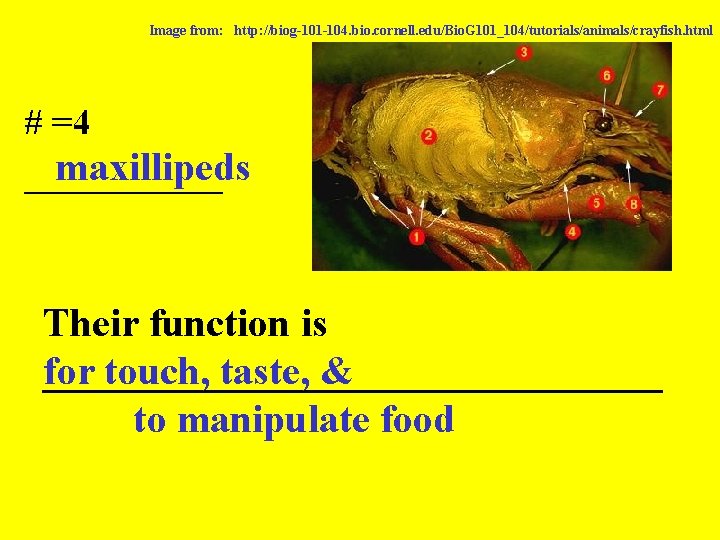
Image from: http: //biog-101 -104. bio. cornell. edu/Bio. G 101_104/tutorials/animals/crayfish. html # =4 maxillipeds ______ Their function is for touch, taste, & ________________ to manipulate food
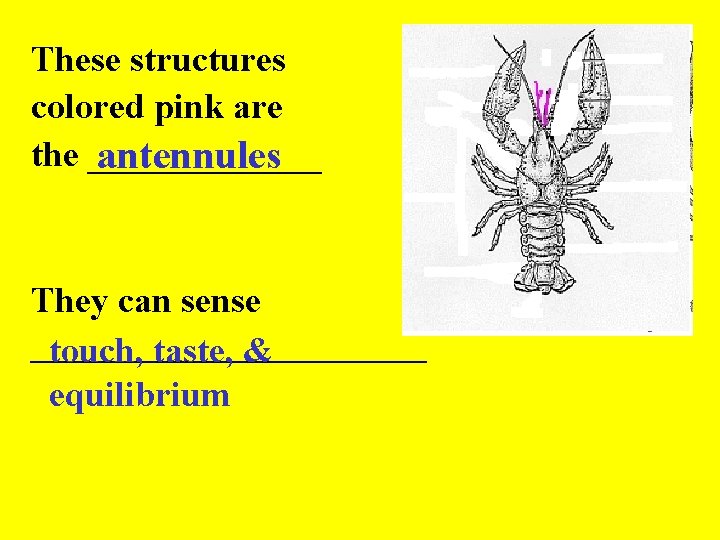
These structures colored pink are the _______ antennules They can sense ___________ touch, taste, & equilibrium
Match the body part with its function antennules Sense touch, taste, & equilibrium _________ mandible Chew food ___________ Digestive gland Make digestive enzymes _____________ swimmerets Transfer sperm/carry young ____________ Gastric mill Teeth in stomach to grind food ___________
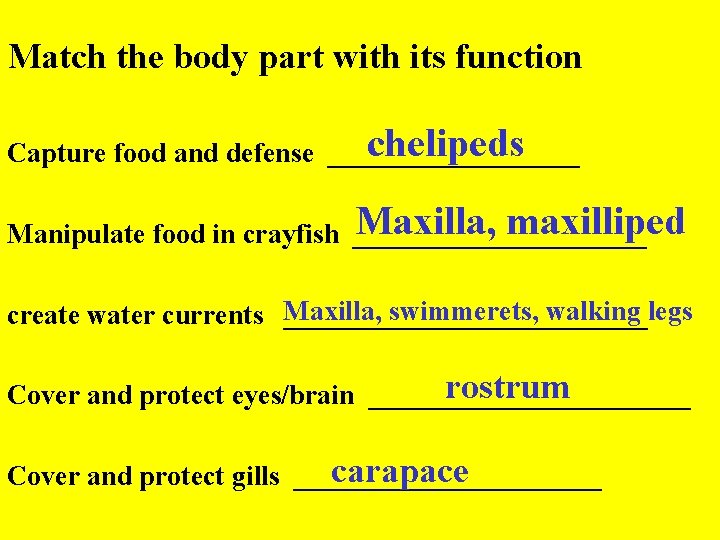
Match the body part with its function chelipeds Capture food and defense _________ Maxilla, maxilliped Manipulate food in crayfish ___________ swimmerets, walking legs create water currents Maxilla, _____________ rostrum Cover and protect eyes/brain ____________ carapace Cover and protect gills ___________
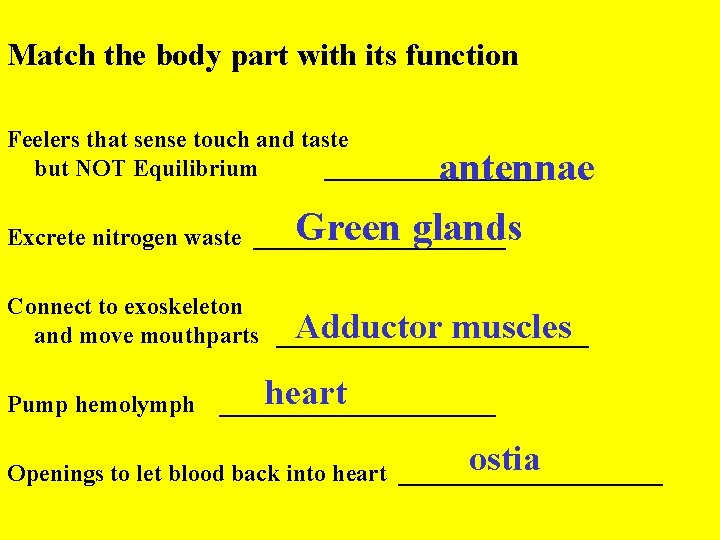
Match the body part with its function Feelers that sense touch and taste but NOT Equilibrium _________ Excrete nitrogen waste antennae Green glands ___________ Connect to exoskeleton Adductor muscles and move mouthparts _____________ Pump hemolymph heart ____________ ostia Openings to let blood back into heart ___________
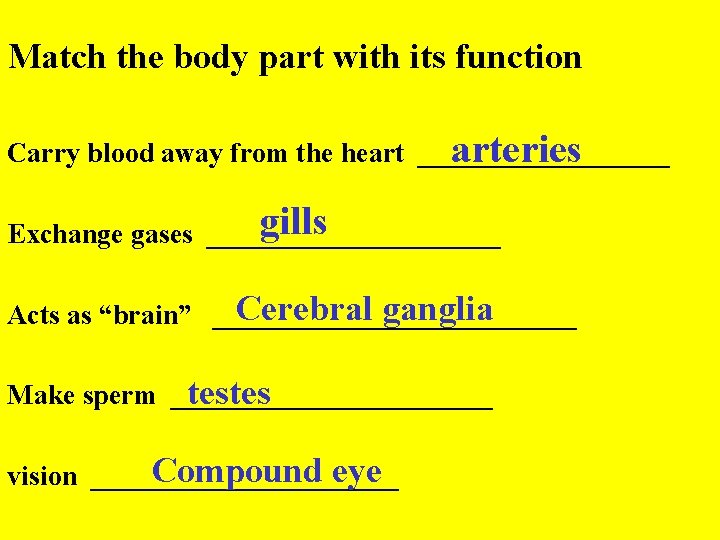
Match the body part with its function arteries Carry blood away from the heart _________ gills Exchange gases ___________ Cerebral ganglia Acts as “brain” _____________ Make sperm ____________ testes Compound eye vision ___________
- Slides: 28