
Crash Data Collection Why collectmaintain safety data Khisty

- Slides: 27
Crash Data Collection
Why collect/maintain safety data? • Khisty says: • Is that all? – Better understanding of operational problems – Accurate diagnosis of crash problems – Develop remedial measures – Evaluate the effectiveness of road safety programs
Who uses crash data? – Road safety engineers • Develop remedial measures – Police • Charging a person at fault in crash • Enforcement activities – Location of speed cameras – Breath testing stations – Insurers • Seeking facts before settling claims – Lawyers • Compensation for injuries – Road safety educators • To ensure that their efforts well targeted – Safety administrators • Report statistical information on road crashes – Researchers • Access good reliable database – Vehicle manufacturers • Assess the safety of their products Importance of good data (Video “L”)
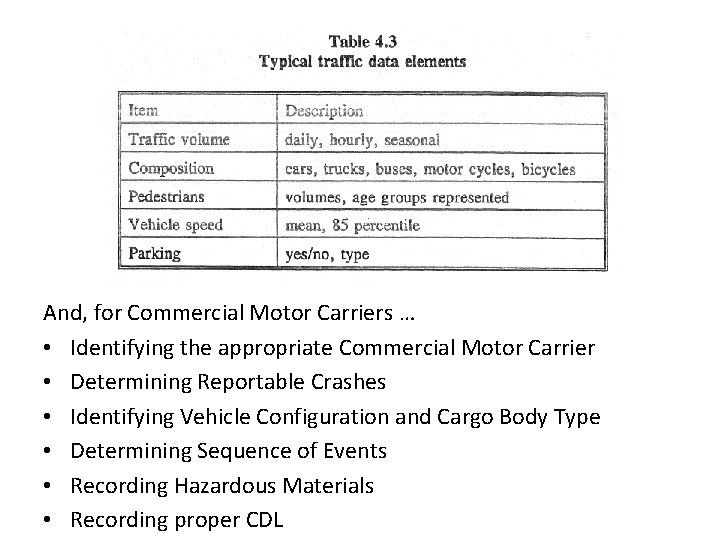
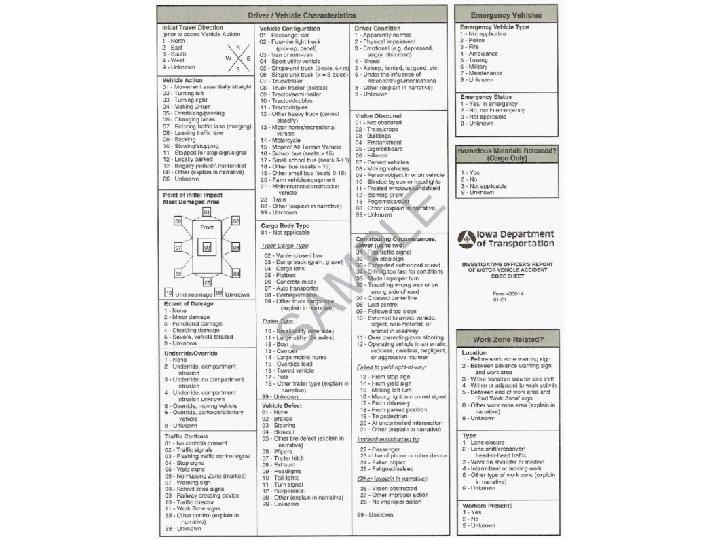
And, for Commercial Motor Carriers … • Identifying the appropriate Commercial Motor Carrier • Determining Reportable Crashes • Identifying Vehicle Configuration and Cargo Body Type • Determining Sequence of Events • Recording Hazardous Materials • Recording proper CDL
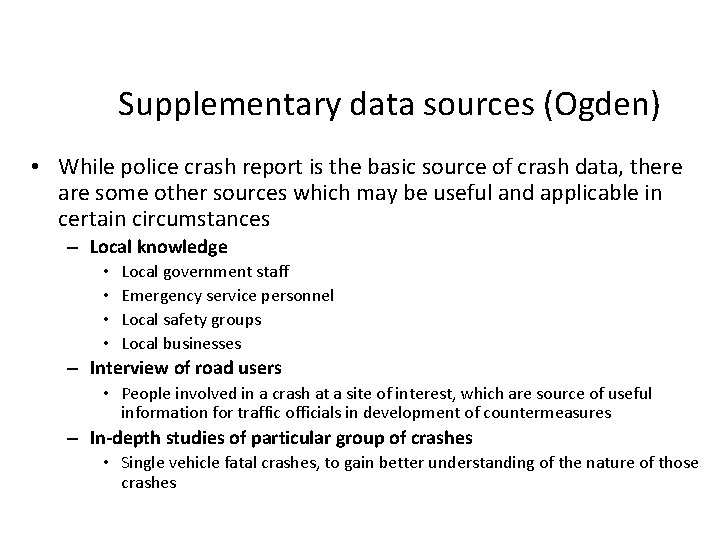
Supplementary data sources (Ogden) • While police crash report is the basic source of crash data, there are some other sources which may be useful and applicable in certain circumstances – Local knowledge • • Local government staff Emergency service personnel Local safety groups Local businesses – Interview of road users • People involved in a crash at a site of interest, which are source of useful information for traffic officials in development of countermeasures – In-depth studies of particular group of crashes • Single vehicle fatal crashes, to gain better understanding of the nature of those crashes
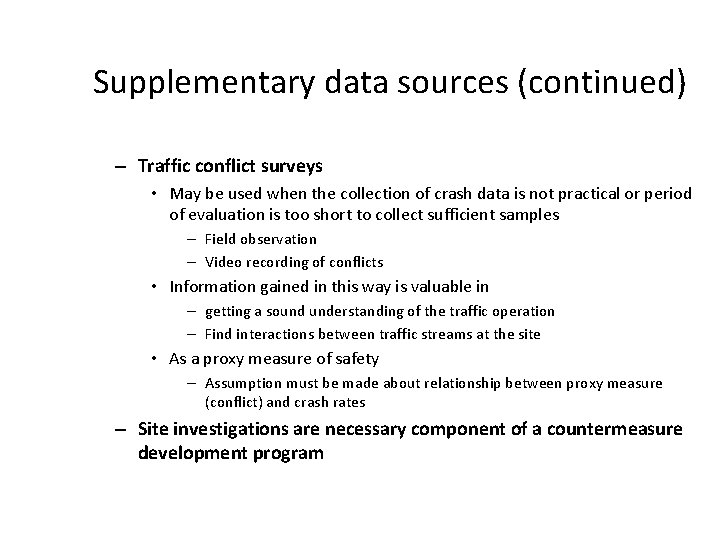
Supplementary data sources (continued) – Traffic conflict surveys • May be used when the collection of crash data is not practical or period of evaluation is too short to collect sufficient samples – Field observation – Video recording of conflicts • Information gained in this way is valuable in – getting a sound understanding of the traffic operation – Find interactions between traffic streams at the site • As a proxy measure of safety – Assumption must be made about relationship between proxy measure (conflict) and crash rates – Site investigations are necessary component of a countermeasure development program
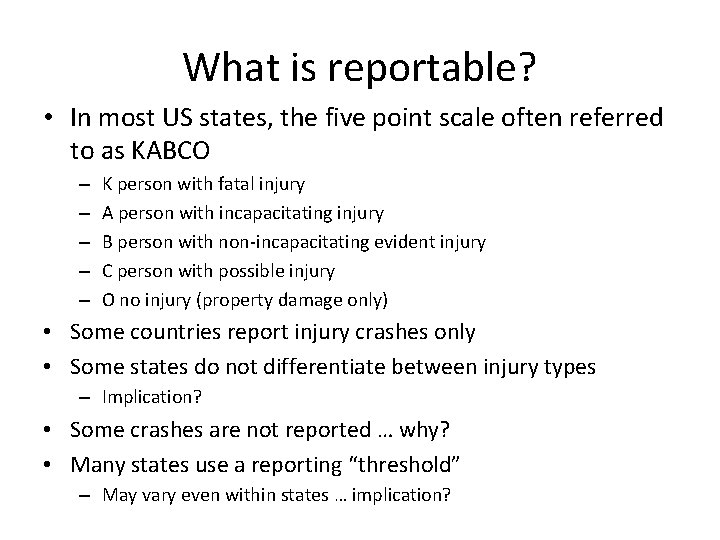
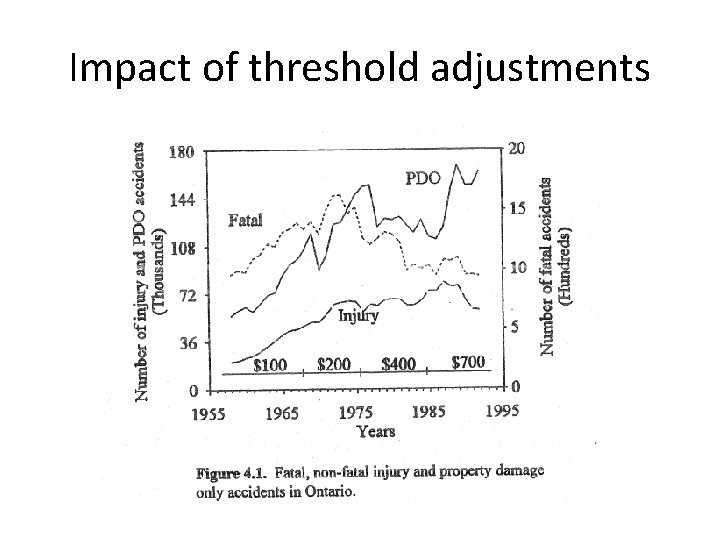
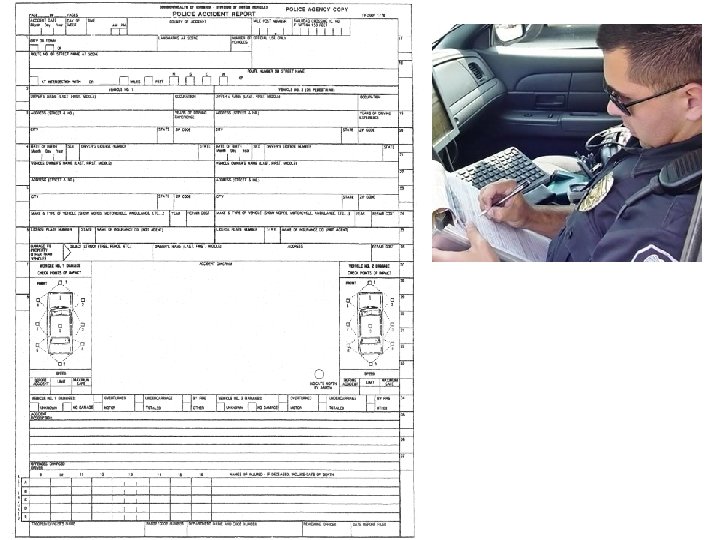
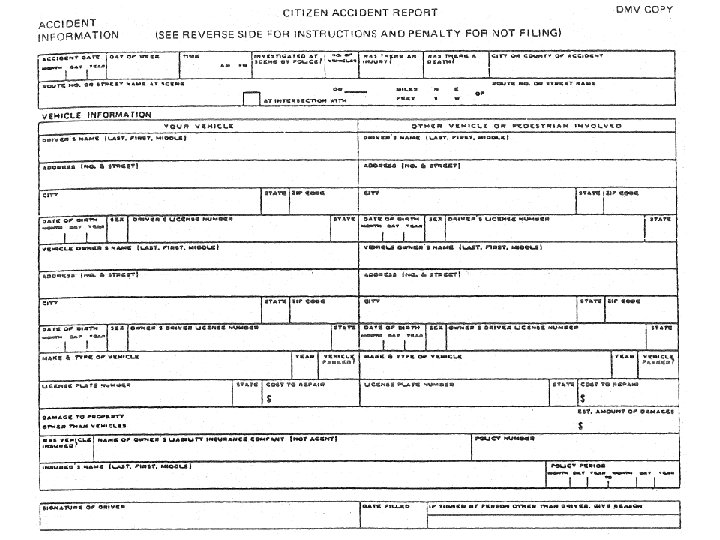
What is reportable? • In most US states, the five point scale often referred to as KABCO – – – K person with fatal injury A person with incapacitating injury B person with non-incapacitating evident injury C person with possible injury O no injury (property damage only) • Some countries report injury crashes only • Some states do not differentiate between injury types – Implication? • Some crashes are not reported … why? • Many states use a reporting “threshold” – May vary even within states … implication?
Impact of threshold adjustments
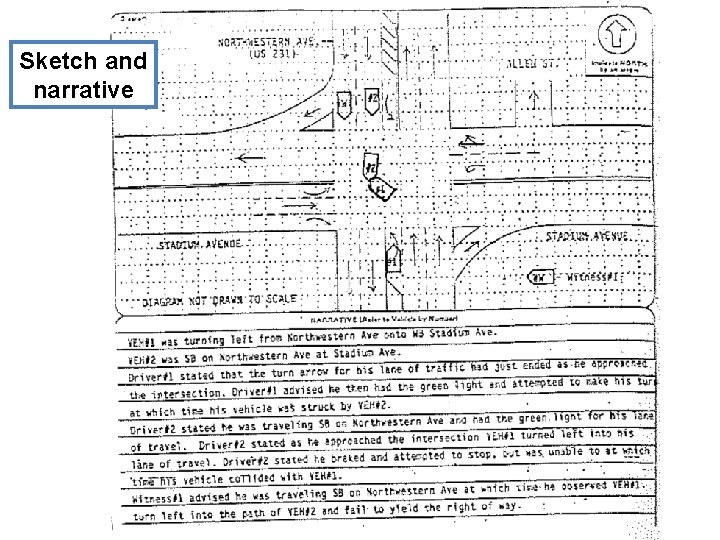
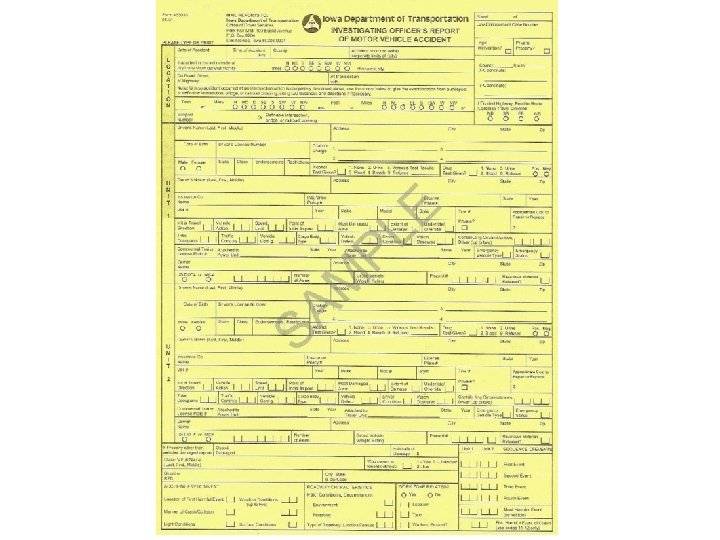
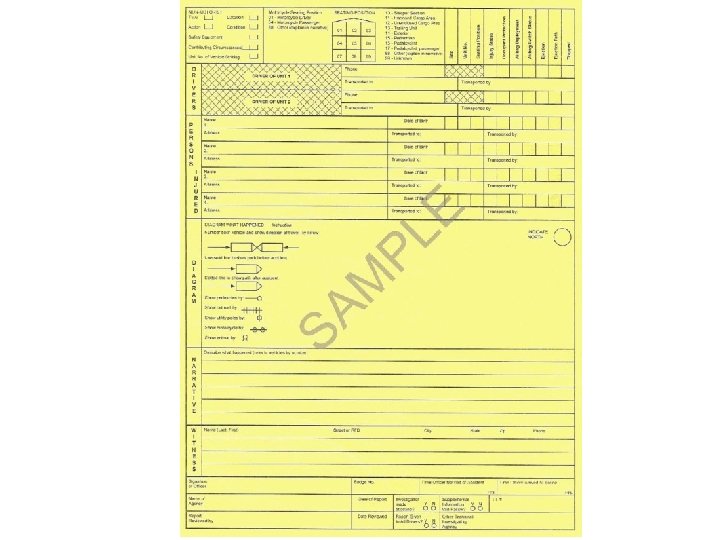
Sketch and narrative
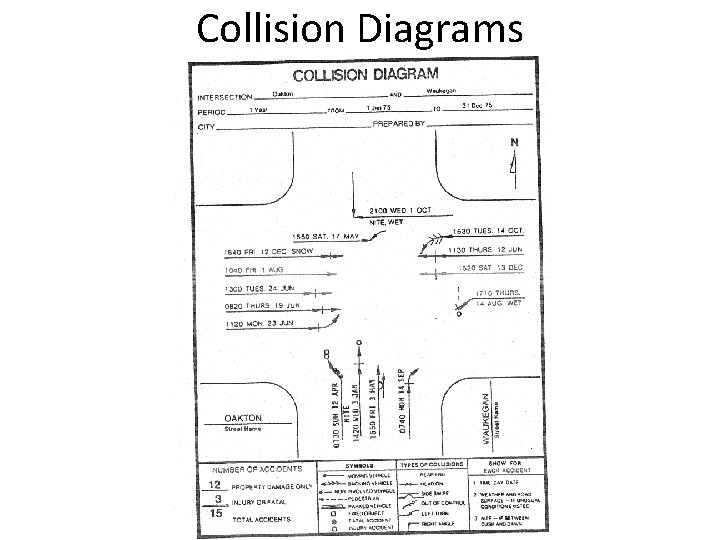
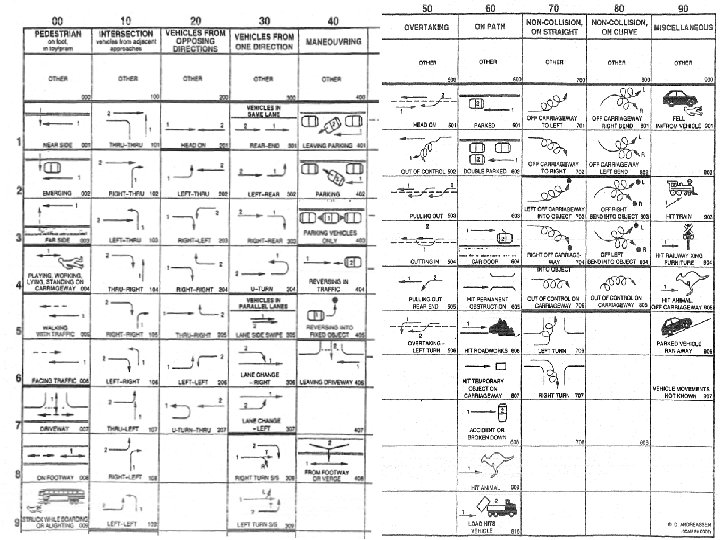
Collision Diagrams
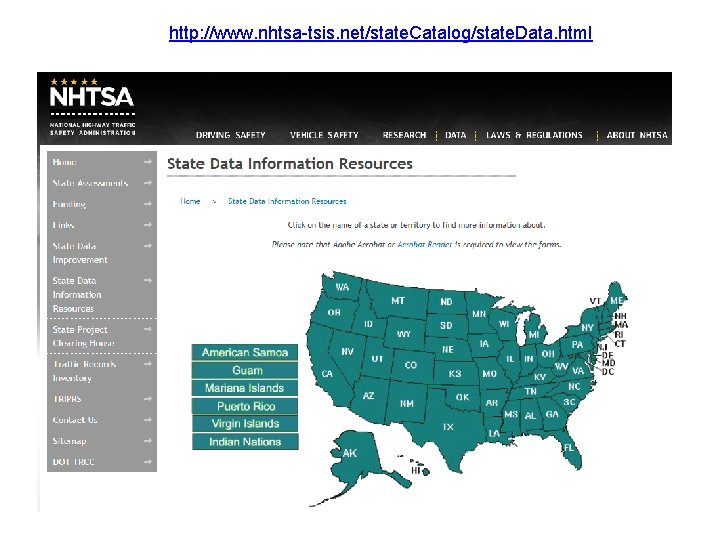
http: //www. nhtsa-tsis. net/state. Catalog/state. Data. html
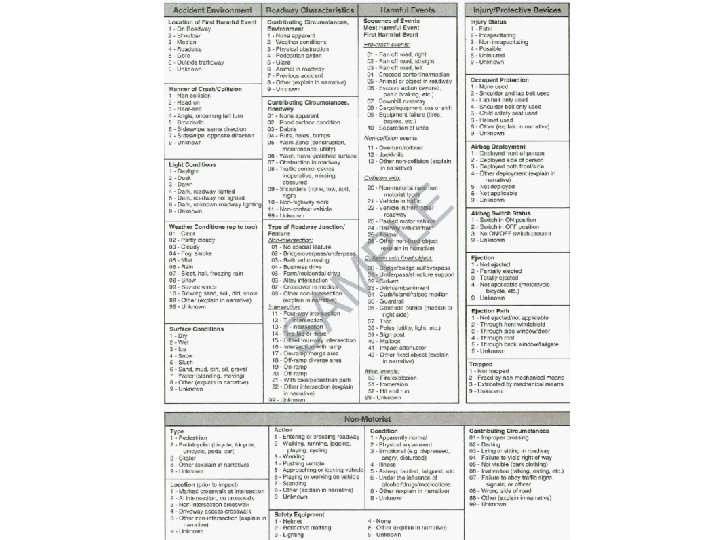
In-class exercise Crash form elements and the Haddon Matrix
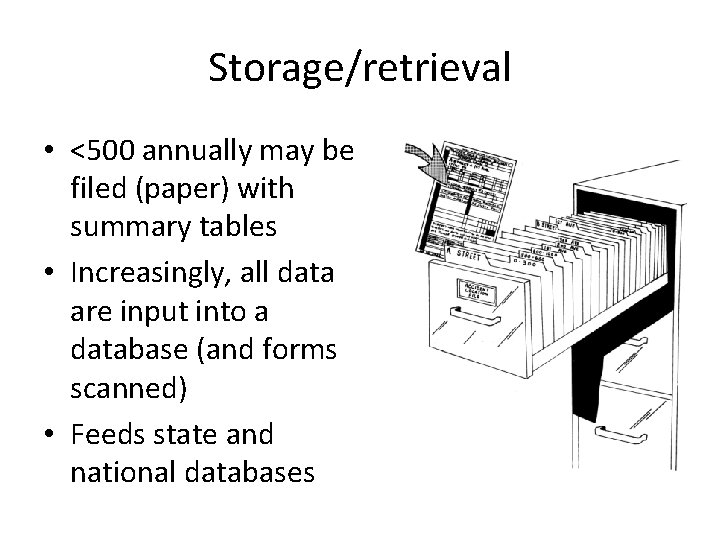
Storage/retrieval • <500 annually may be filed (paper) with summary tables • Increasingly, all data are input into a database (and forms scanned) • Feeds state and national databases
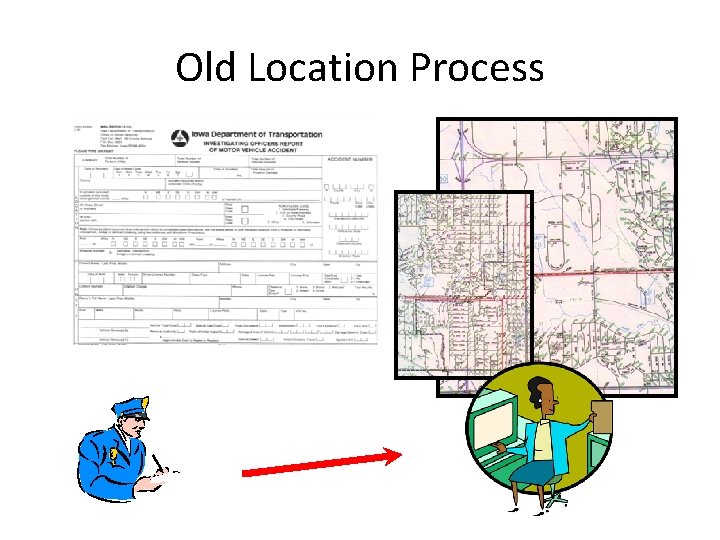
Old Location Process
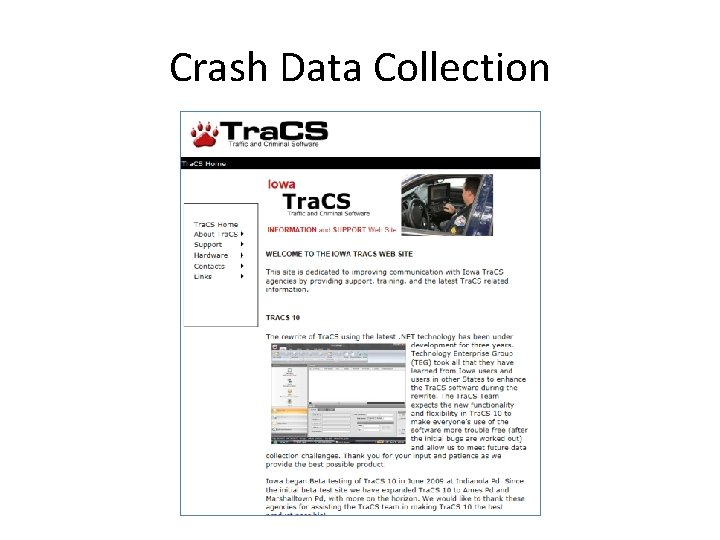
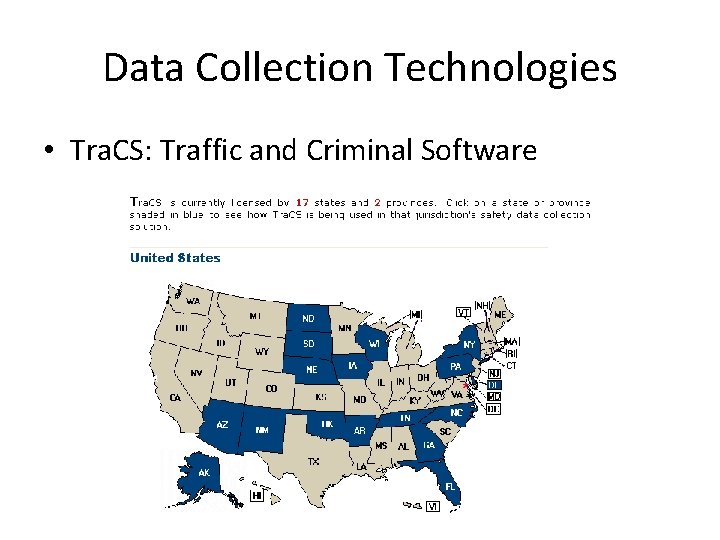
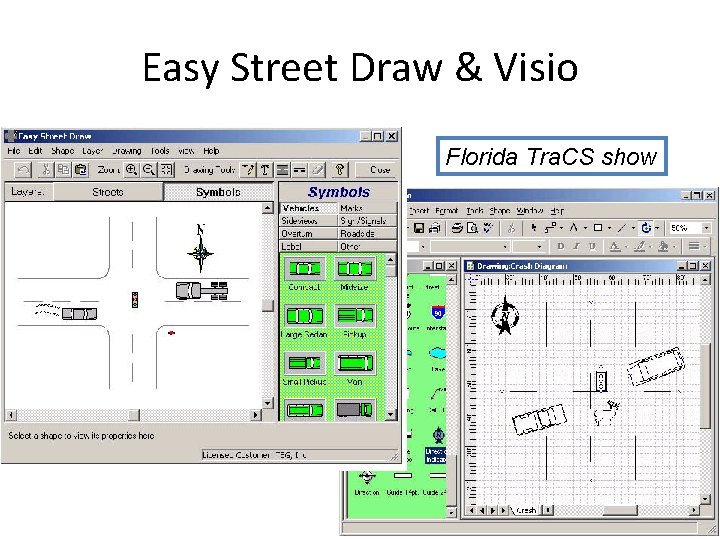
Data Collection Technologies • Tra. CS: Traffic and Criminal Software
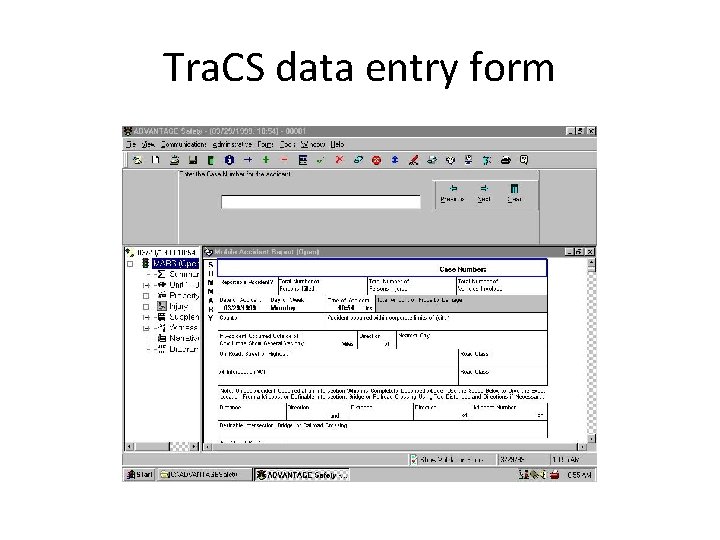
Tra. CS data entry form
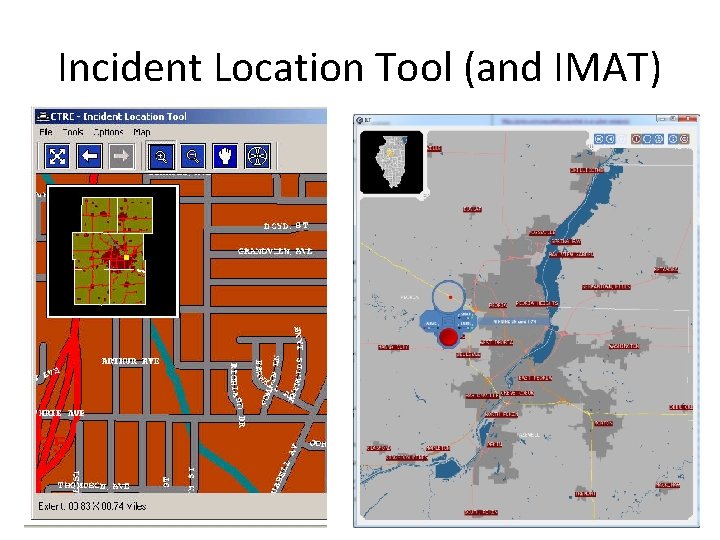
Incident Location Tool (and IMAT)
Easy Street Draw & Visio Florida Tra. CS show