
Crapemyrtle Bark Scale Acanthococcus Eriococcus lagerstroemiae Jim Robbins
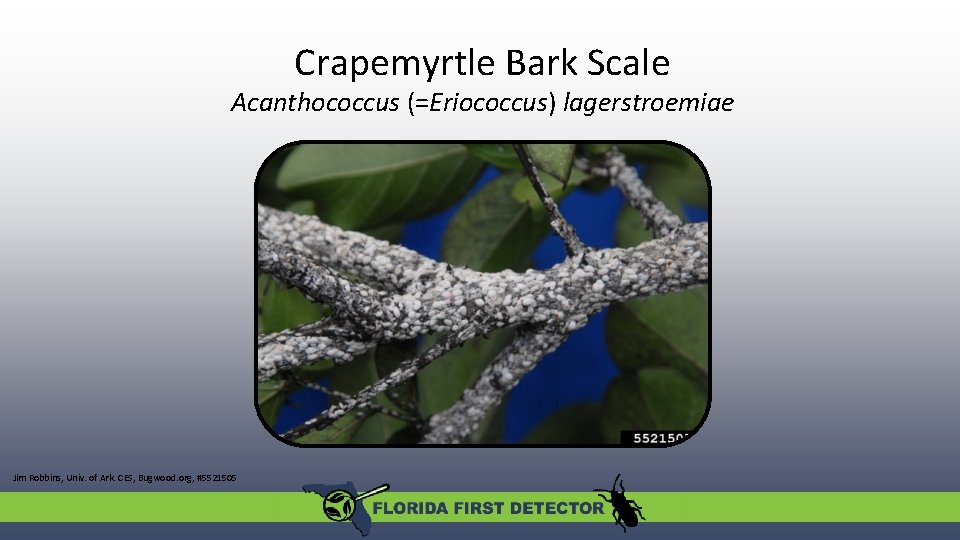
Crapemyrtle Bark Scale Acanthococcus (=Eriococcus) lagerstroemiae Jim Robbins, Univ. of Ark. CES, Bugwood. org, #5521505
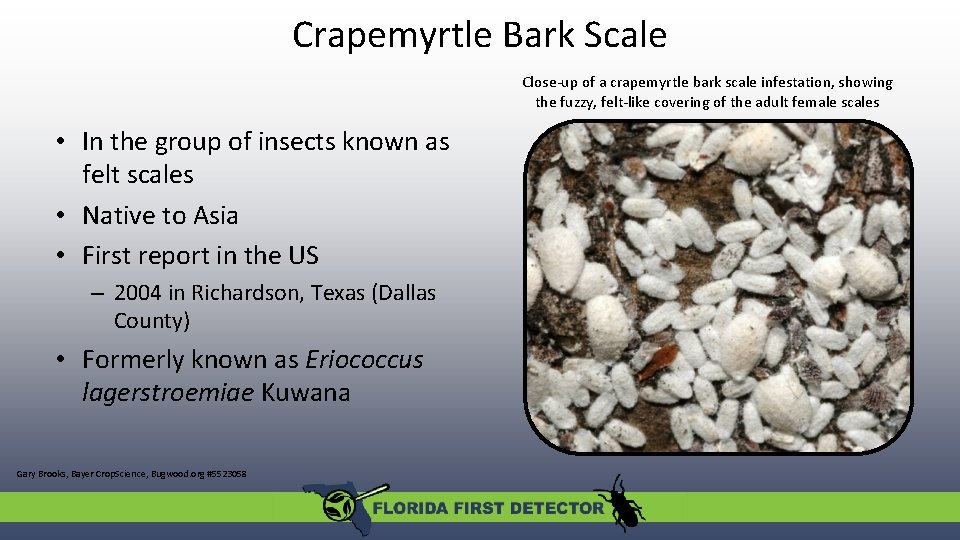
Crapemyrtle Bark Scale Close-up of a crapemyrtle bark scale infestation, showing the fuzzy, felt-like covering of the adult female scales • In the group of insects known as felt scales • Native to Asia • First report in the US – 2004 in Richardson, Texas (Dallas County) • Formerly known as Eriococcus lagerstroemiae Kuwana Gary Brooks, Bayer Crop. Science, Bugwood. org #5523058
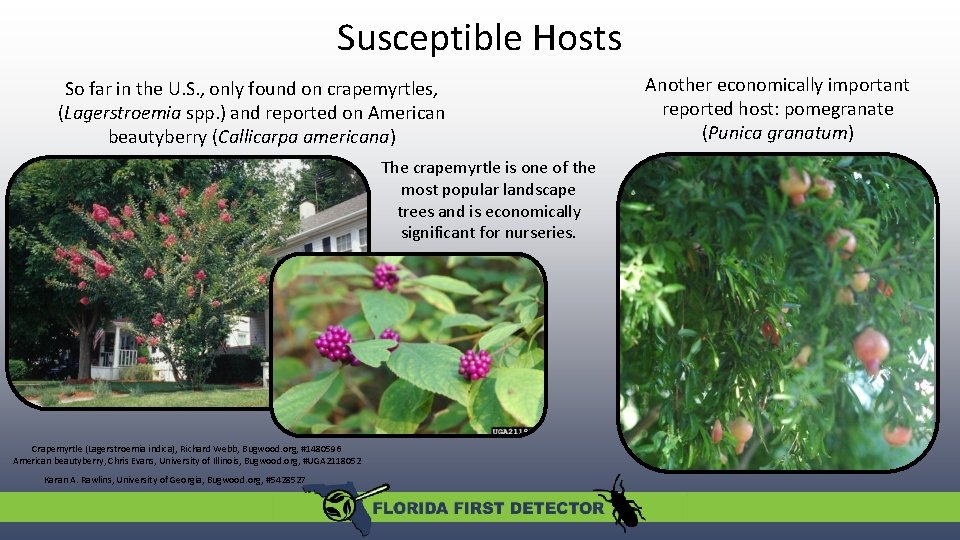
Susceptible Hosts So far in the U. S. , only found on crapemyrtles, (Lagerstroemia spp. ) and reported on American beautyberry (Callicarpa americana) The crapemyrtle is one of the most popular landscape trees and is economically significant for nurseries. Crapemyrtle (Lagerstroemia indica), Richard Webb, Bugwood. org, #1480596 American beautyberry, Chris Evans, University of Illinois, Bugwood. org, #UGA 2118052 Karan A. Rawlins, University of Georgia, Bugwood. org, #5428527 Another economically important reported host: pomegranate (Punica granatum)
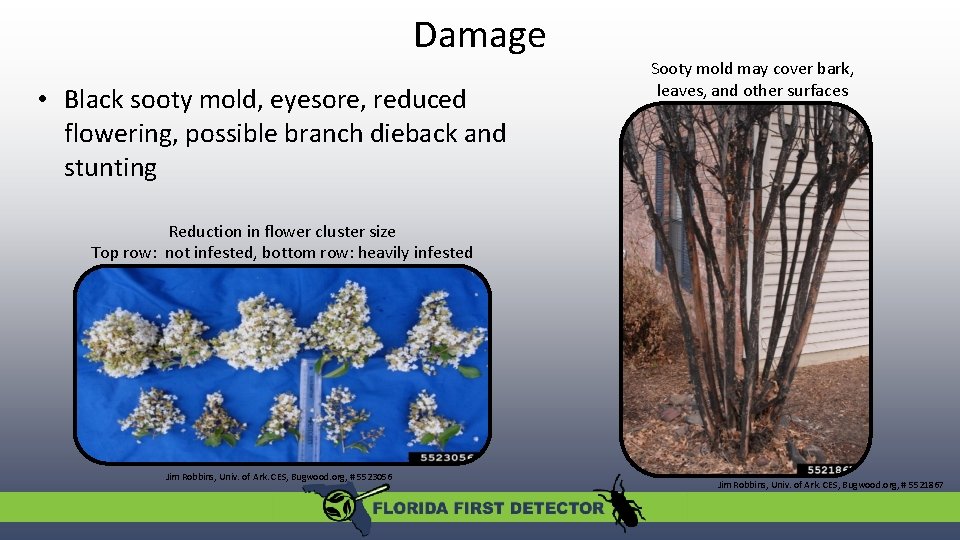
Damage • Black sooty mold, eyesore, reduced flowering, possible branch dieback and stunting Sooty mold may cover bark, leaves, and other surfaces Reduction in flower cluster size Top row: not infested, bottom row: heavily infested Jim Robbins, Univ. of Ark. CES, Bugwood. org, # 5523056 Jim Robbins, Univ. of Ark. CES, Bugwood. org, # 5521867
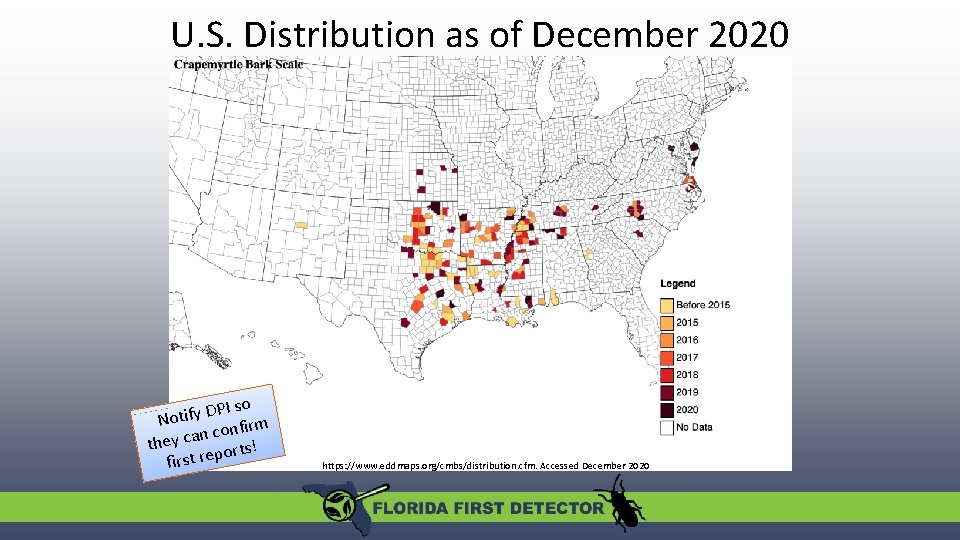
U. S. Distribution as of December 2020 I so P D y f i t No onfirm c n a c they orts! p e r t s r i f https: //www. eddmaps. org/cmbs/distribution. cfm. Accessed December 2020
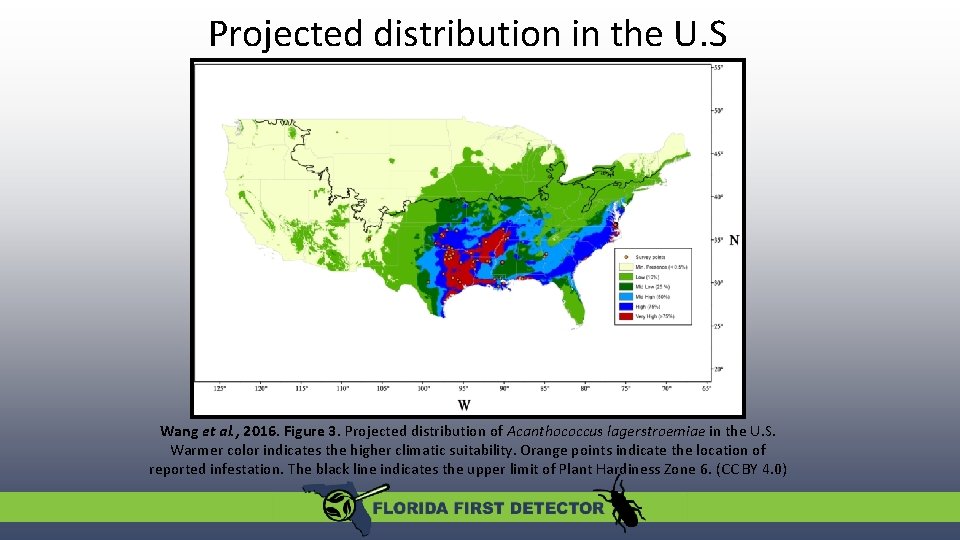
Projected distribution in the U. S Wang et al. , 2016. Figure 3. Projected distribution of Acanthococcus lagerstroemiae in the U. S. Warmer color indicates the higher climatic suitability. Orange points indicate the location of reported infestation. The black line indicates the upper limit of Plant Hardiness Zone 6. (CC BY 4. 0)
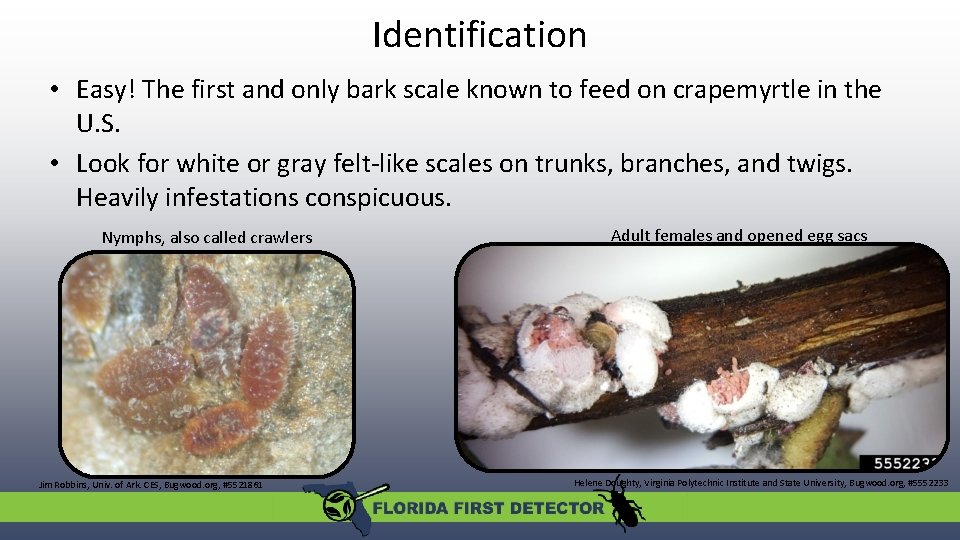
Identification • Easy! The first and only bark scale known to feed on crapemyrtle in the U. S. • Look for white or gray felt-like scales on trunks, branches, and twigs. Heavily infestations conspicuous. Nymphs, also called crawlers Jim Robbins, Univ. of Ark. CES, Bugwood. org, #5521861 Adult females and opened egg sacs Helene Doughty, Virginia Polytechnic Institute and State University, Bugwood. org, #5552233
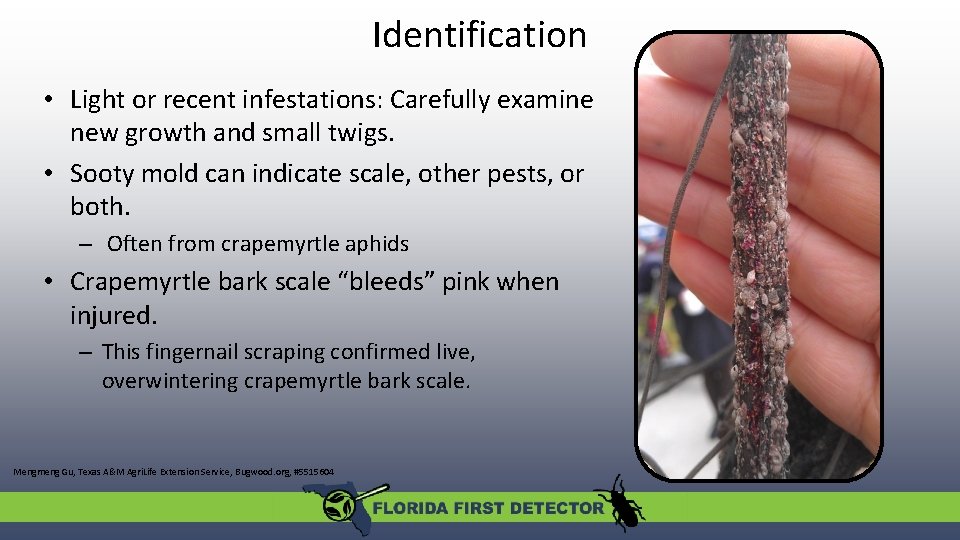
Identification • Light or recent infestations: Carefully examine new growth and small twigs. • Sooty mold can indicate scale, other pests, or both. – Often from crapemyrtle aphids • Crapemyrtle bark scale “bleeds” pink when injured. – This fingernail scraping confirmed live, overwintering crapemyrtle bark scale. Mengmeng Gu, Texas A&M Agri. Life Extension Service, Bugwood. org, #5515604

Life Cycle Wang et al. , 2016. Figure 2. Life cycle of Acanthococcus lagerstroemiae: (a) Egg; (b) Nymph; (c) Pupa covered with white sac; (c-1) Prepupa; (c-2) Pupa; (d) Adult female; (e) Adult male; and (f) Ovisac containing the gravid adult female. (CC BY 4. 0)
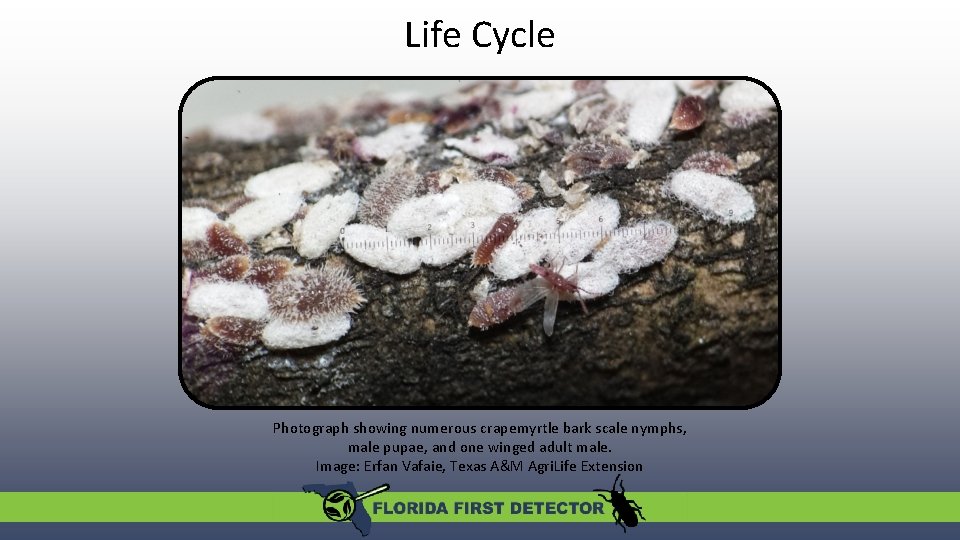
Life Cycle Photograph showing numerous crapemyrtle bark scale nymphs, male pupae, and one winged adult male. Image: Erfan Vafaie, Texas A&M Agri. Life Extension
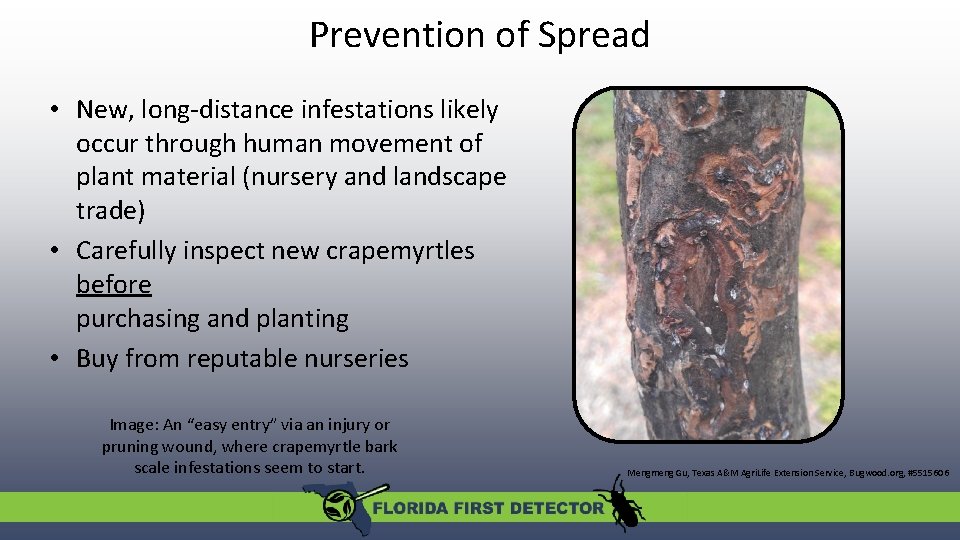
Prevention of Spread • New, long-distance infestations likely occur through human movement of plant material (nursery and landscape trade) • Carefully inspect new crapemyrtles before purchasing and planting • Buy from reputable nurseries Image: An “easy entry” via an injury or pruning wound, where crapemyrtle bark scale infestations seem to start. Mengmeng Gu, Texas A&M Agri. Life Extension Service, Bugwood. org, #5515606
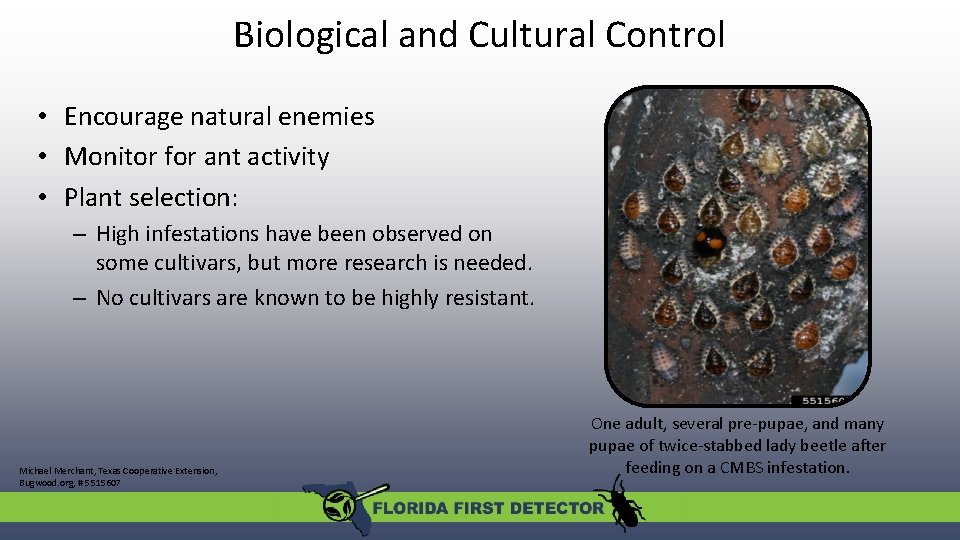
Biological and Cultural Control • Encourage natural enemies • Monitor for ant activity • Plant selection: – High infestations have been observed on some cultivars, but more research is needed. – No cultivars are known to be highly resistant. Michael Merchant, Texas Cooperative Extension, Bugwood. org, # 5515607 One adult, several pre-pupae, and many pupae of twice-stabbed lady beetle after feeding on a CMBS infestation.
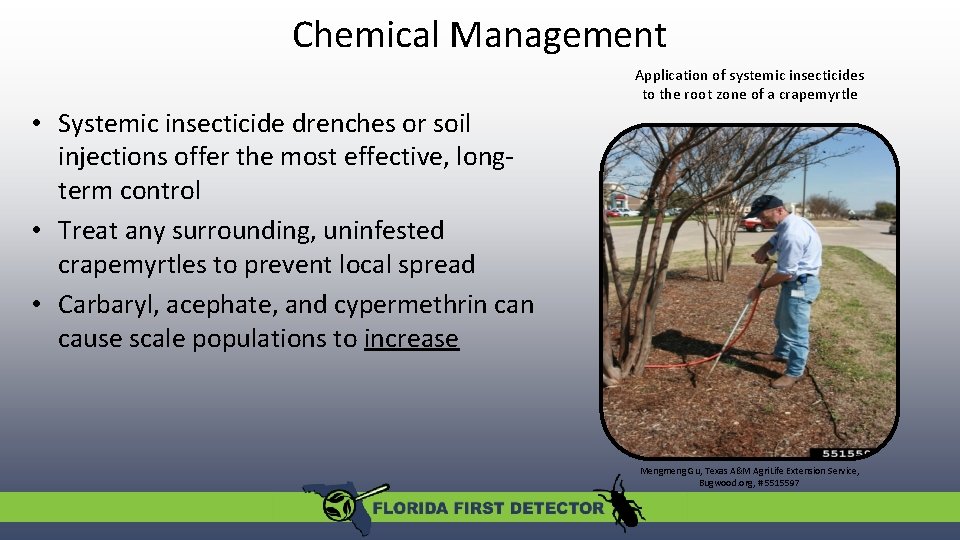
Chemical Management Application of systemic insecticides to the root zone of a crapemyrtle • Systemic insecticide drenches or soil injections offer the most effective, longterm control • Treat any surrounding, uninfested crapemyrtles to prevent local spread • Carbaryl, acephate, and cypermethrin cause scale populations to increase Mengmeng Gu, Texas A&M Agri. Life Extension Service, Bugwood. org, # 5515597
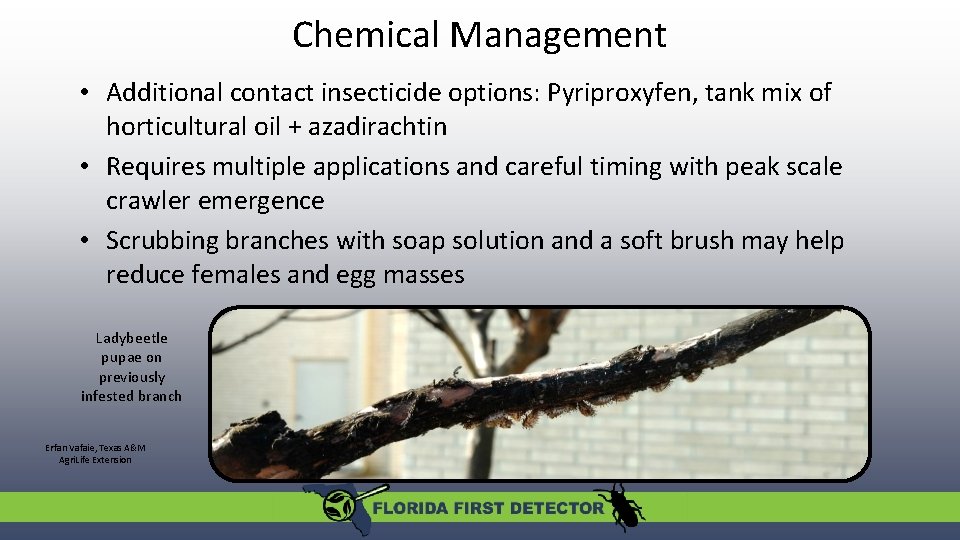
Chemical Management • Additional contact insecticide options: Pyriproxyfen, tank mix of horticultural oil + azadirachtin • Requires multiple applications and careful timing with peak scale crawler emergence • Scrubbing branches with soap solution and a soft brush may help reduce females and egg masses Ladybeetle pupae on previously infested branch Erfan Vafaie, Texas A&M Agri. Life Extension
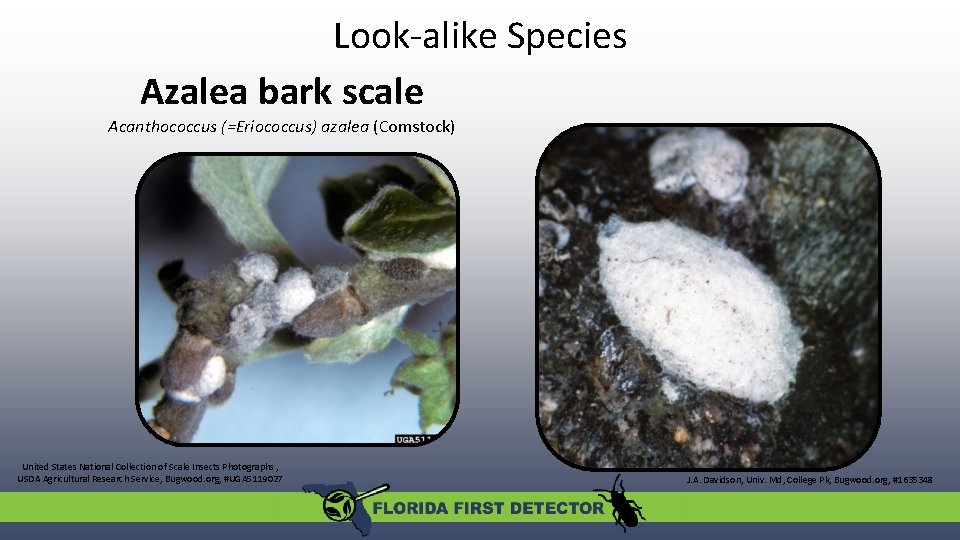
Look-alike Species Azalea bark scale Acanthococcus (=Eriococcus) azalea (Comstock) United States National Collection of Scale Insects Photographs , USDA Agricultural Research Service, Bugwood. org, #UGA 5119027 J. A. Davidson, Univ. Md, College Pk, Bugwood. org, #1635348
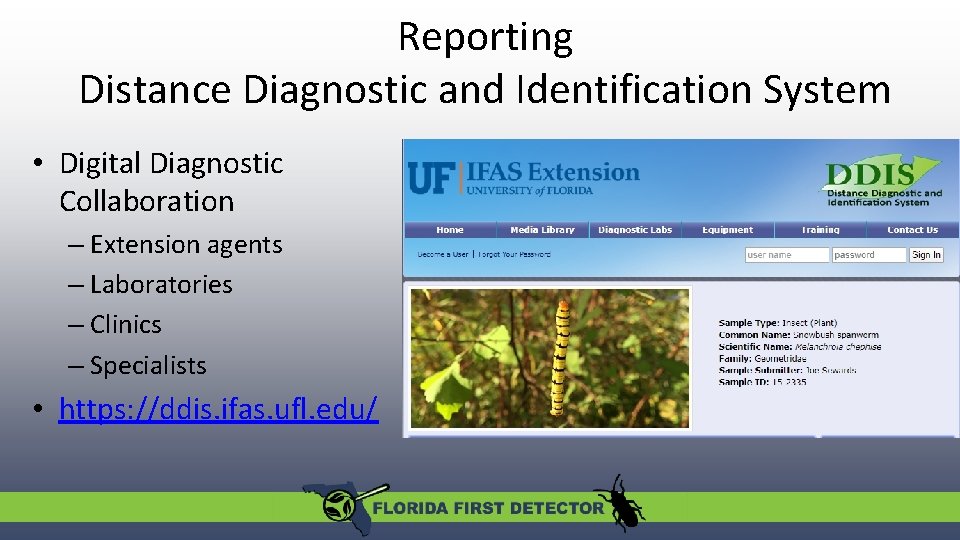
Reporting Distance Diagnostic and Identification System • Digital Diagnostic Collaboration – Extension agents – Laboratories – Clinics – Specialists • https: //ddis. ifas. ufl. edu/
Reporting a Pest in Florida UF/IFAS Faculty • Local county extension office – https: //sfyl. ifas. ufl. edu/find-your-local-office/ • Insect ID Lab- Lyle Buss – http: //entnemdept. ufl. edu/insectid/ • UF/IFAS Plant Diagnostic Center- Dr. Carrie Harmon – https: //plantpath. ifas. ufl. edu/extension/plant-diagnostic-center/
Reporting FDACS: Division of Plant Industry • FDACS, DPI Responsibility o Announcing detection or establishment of new invasive species. o Reporting is a legal obligation under Florida Statute 581. 091. • Submission Form – http: //forms. freshfromflorida. com/08400. pdf – https: //www. fdacs. gov/Agriculture-Industry/Pests-and-Diseases/How-to. Submit-a-Sample-for-Identification
FDACS, DPI Contact • Division of Plant Industry Helpline – DPIHelpline@FDACS. gov – 1 -888 -397 -1517 • Dr. Leroy Whilby, Bureau Chief of Entomology, Nematology and Plant Pathology – Leroy. whilby@fdacs. gov – 352 -395 -4661 • Dr. Paul Skelley, Chief Entomologist and Assistant Bureau Chief of Entomology, Nematology and Plant Pathology – Paul. skelley@fdacs. gov – 352 -395 -4678
This presentation was originally published on June 11 th , 2018 and was updated on December 8 th, 2020.
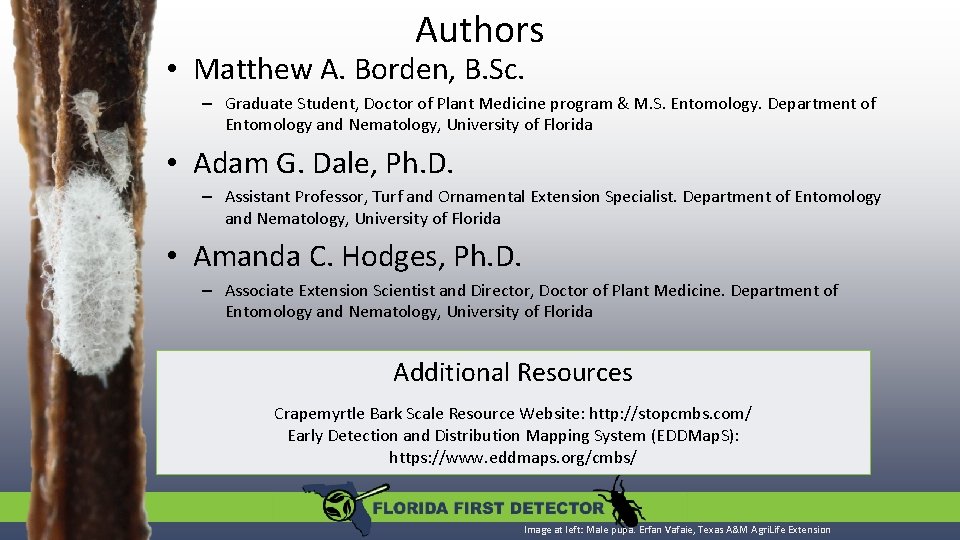
Authors • Matthew A. Borden, B. Sc. – Graduate Student, Doctor of Plant Medicine program & M. S. Entomology. Department of Entomology and Nematology, University of Florida • Adam G. Dale, Ph. D. – Assistant Professor, Turf and Ornamental Extension Specialist. Department of Entomology and Nematology, University of Florida • Amanda C. Hodges, Ph. D. – Associate Extension Scientist and Director, Doctor of Plant Medicine. Department of Entomology and Nematology, University of Florida Additional Resources Crapemyrtle Bark Scale Resource Website: http: //stopcmbs. com/ Early Detection and Distribution Mapping System (EDDMap. S): https: //www. eddmaps. org/cmbs/ Image at left: Male pupa. Erfan Vafaie, Texas A&M Agri. Life Extension
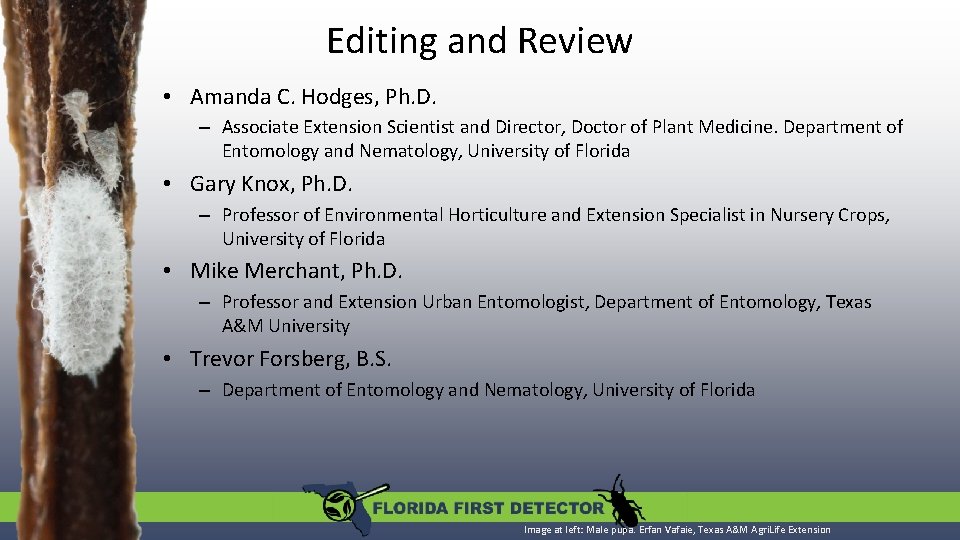
Editing and Review • Amanda C. Hodges, Ph. D. – Associate Extension Scientist and Director, Doctor of Plant Medicine. Department of Entomology and Nematology, University of Florida • Gary Knox, Ph. D. – Professor of Environmental Horticulture and Extension Specialist in Nursery Crops, University of Florida • Mike Merchant, Ph. D. – Professor and Extension Urban Entomologist, Department of Entomology, Texas A&M University • Trevor Forsberg, B. S. – Department of Entomology and Nematology, University of Florida Image at left: Male pupa. Erfan Vafaie, Texas A&M Agri. Life Extension
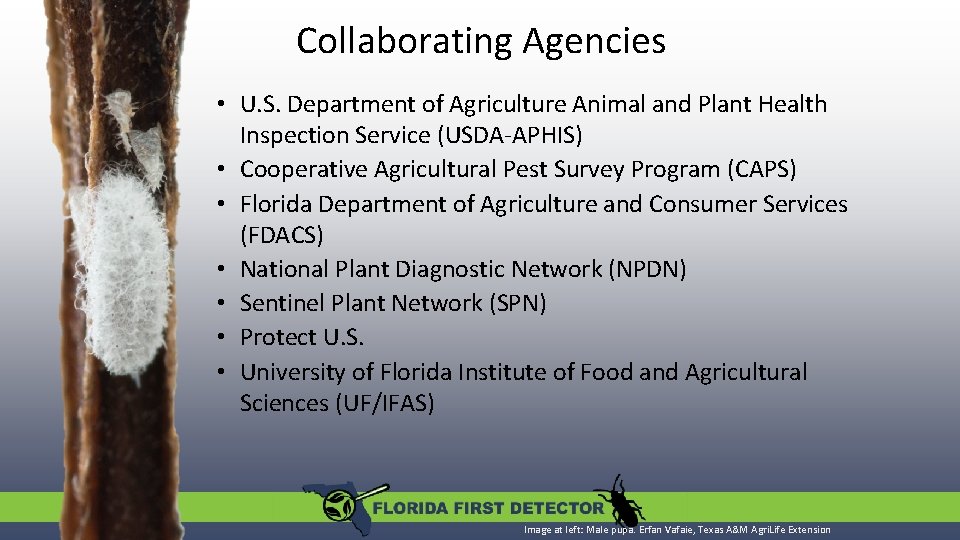
Collaborating Agencies • U. S. Department of Agriculture Animal and Plant Health Inspection Service (USDA-APHIS) • Cooperative Agricultural Pest Survey Program (CAPS) • Florida Department of Agriculture and Consumer Services (FDACS) • National Plant Diagnostic Network (NPDN) • Sentinel Plant Network (SPN) • Protect U. S. • University of Florida Institute of Food and Agricultural Sciences (UF/IFAS) Image at left: Male pupa. Erfan Vafaie, Texas A&M Agri. Life Extension
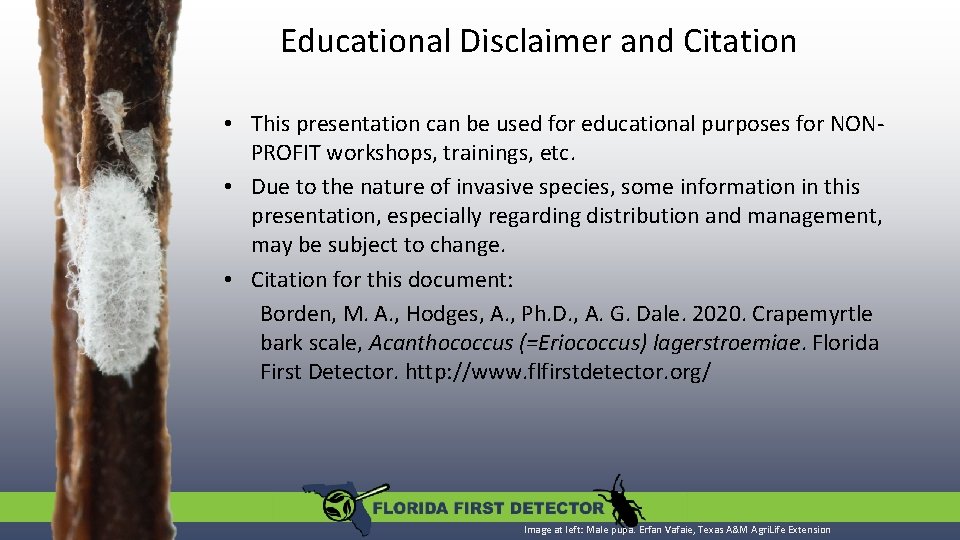
Educational Disclaimer and Citation • This presentation can be used for educational purposes for NONPROFIT workshops, trainings, etc. • Due to the nature of invasive species, some information in this presentation, especially regarding distribution and management, may be subject to change. • Citation for this document: Borden, M. A. , Hodges, A. , Ph. D. , A. G. Dale. 2020. Crapemyrtle bark scale, Acanthococcus (=Eriococcus) lagerstroemiae. Florida First Detector. http: //www. flfirstdetector. org/ Image at left: Male pupa. Erfan Vafaie, Texas A&M Agri. Life Extension
References • • Cai, X. , H. Dou, M. Gu, M. Merchant, and E. Vafaie. 2015. Update on crapymyrtle bark scale. Proceedings of the 2015 Annual Meeting of the International Plant Propagators’ Society. 1140: 415– 418. Chen, Y. , M. Merchant, E. Vafaie, M. Gu, and J. Robbins. Oct 2017. Crape myrtle bark scale management updates. Louisiana State University Ag Center. – http: //www. lsuagcenter. com/articles/page 1508343389870 García Morales M, Denno BD, Miller DR, Miller GL, Ben-Dov Y, Hardy NB. 2016. Scale. Net: A literaturebased model of scale insect biology and systematics. Database. doi: 10. 1093/database/bav 118. http: //scalenet. info. Acanthococcus lagerstroemiae (Kuwana) 1907. (5 May 2018) Gu, M. Merchant, J. Robbins, and J. Hopkins. 2014. Crape myrtle bark scale: A new exotic pest, EHT-049. The Texas A&M University System, Texas A&M Agri. Life Extension Service. – https: //aglifesciences. tamu. edu/entomology/wp-content/uploads/sites/12/2014/04/Gu-and-Merchant -2014 -Crape-mrytle-bark-scale-EHT-049. pdf • • Knox, G. , M. Gu, M. Merchant, E. Vafaie, Y. Chen and J. Robbins. 2018. Biology and potential impacts of the emerging pest, crapemyrtle bark scale. Proc. SNA Res. Conf. 62: In press. Layton, B. 2015. Crape Myrtle Bark Scale Identification and Control, Publication 2938. Mississippi State University Extension. – https: //extension. msstate. edu/sites/default/files/publications/p 2938. pdf
References 7. Merchant, M. E. , A. Texas, M. Gu, A. Texas, J. Robbins, E. Vafaie, A. Texas, N. Barr, U. Aphis, A. D. Tripodi, and A. L. Szalanski. 2014. Discovery and spread of Eriococcus lagerstroemiae Kuwana (Hemiptera: Eriococcidae), a new invasive pest of crape myrtle, Lagerstroemia spp. ‒ https: //bugwoodcloud. org/resource/pdf/ESAPoster. Discov. And. Spread 2014. pdf 8. Robbins, J. Hopkins, M. Merchant, and M. Gu. 2014. Crapemyrtle Bark Scale: A New Insect Pest, FSA 7086. University of Arkansas Cooperative Extension Service. ― https: //www. uaex. edu/publications/pdf/fsa-7086. pdf 9. Vafaie, E. K. , and C. M. Knight. 2017. Bark and Systemic Insecticidal Control of Acanthococcus (=Eriococcus) lagerstroemiae (Crapemyrtle Bark Scale) on Landscape Crapemyrtles, 2016. Arthropod Management Tests. 42: 1– 2. ― doi: 10. 1093/amt/tsx 130 10. Wang, Z. , Y. Chen, M. Gu, E. Vafaie, M. Merchant, and R. Diaz. 2016. Crapemyrtle bark scale: A new threat for crapemyrtles, a popular landscape plant in the U. S. Insects. 7: 33– 34. doi: 10. 3390/insects 7040078
- Slides: 26